电子

Search documents
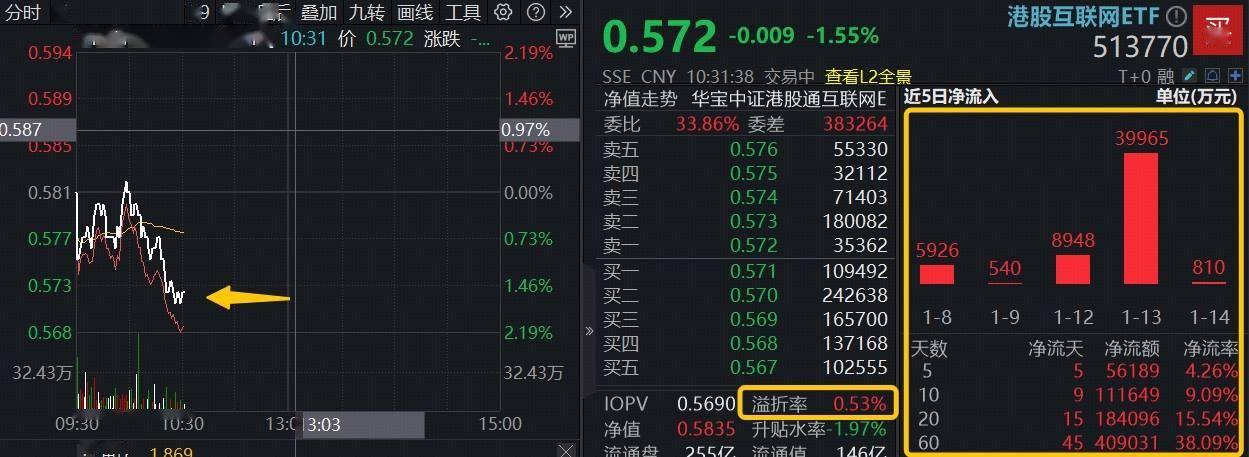
ETF盘中资讯|先于谷歌,千问推出AI购物!港股AI短线回调,港股互联网ETF(513770)宽幅溢价,连日大举吸金逾11亿元
Sou Hu Cai Jing· 2026-01-15 03:16
Core Viewpoint - The Hong Kong stock market experienced a short-term pullback in AI-related stocks, with major internet companies like Alibaba, Kuaishou, and Bilibili seeing declines, while the Hong Kong Internet ETF showed strong buying interest despite the drop [1][2]. Group 1: Market Performance - As of January 15, major internet stocks in Hong Kong, including Alibaba-W, Kuaishou-W, and Bilibili-W, fell over 2%, while Tencent Holdings dropped more than 1% [1]. - The Hong Kong Internet ETF (513770) saw a price decline of 1.55%, but it still exhibited a significant premium, indicating strong buying sentiment [1]. - Over the past 10 days, the Hong Kong Internet ETF has recorded net inflows of 1.116 billion yuan, with funds increasing on 9 out of those 10 days [1]. Group 2: AI Developments - Alibaba's Qianwen App has integrated with various Alibaba ecosystem services, enabling AI shopping functionalities, and has surpassed 100 million monthly active users within two months of launch [2]. - Analysts suggest that Alibaba's AI initiatives are entering a competitive phase focused on ecosystem development, with expectations for major model updates in 2026 [2]. - The AI applications are anticipated to evolve from usable to highly effective by 2026, with a focus on diverse business models and user engagement [2]. Group 3: Investment Opportunities - The Hong Kong Internet ETF (513770) tracks the CSI Hong Kong Internet Index, which includes major players like Alibaba, Tencent, and Xiaomi, with the top ten stocks accounting for over 76% of the index [3]. - The latest fund size of the Hong Kong Internet ETF reached 14.899 billion yuan, marking a historical high, with an average daily trading volume exceeding 600 million yuan since 2025 [4]. - For investors seeking to balance technology exposure with stability, the Hong Kong Large Cap 30 ETF (520560) is recommended, featuring a mix of high-growth tech stocks and stable dividend-paying companies [4].

凭什么行?何以千亿?透视一串串跳动数字 解锁发展“密钥”
Yang Shi Wang· 2026-01-15 03:01
Core Insights - The article highlights the economic transformation of Xiantao, Hubei, which has become the first county in the province to surpass a GDP of 100 billion yuan, driven by its non-woven fabric industry and innovative spirit [1][11]. Economic Performance - Xiantao's GDP reached 1,125.13 billion yuan in 2024, marking the highest annual increase [32]. - The city has consistently crossed significant economic milestones, achieving GDP figures of 800 billion, 900 billion, and 1,000 billion yuan from 2020 to 2022 [11]. - In 2022, the industrial added value of Xiantao surpassed 400 billion yuan, with a growth rate of 7.9% [11]. Industry Overview - Xiantao is a major hub for non-woven fabric production, generating 120,000 tons annually, which accounts for one-third of the national output, with an annual output value exceeding 20 billion yuan [3][26]. - The city has over 200 non-woven fabric enterprises, with more than half having completed product iterations and capacity upgrades [9][26]. Innovation and Technology - The non-woven fabric industry in Xiantao is evolving, with companies focusing on high-end product development and innovation to combat market saturation and declining demand [25]. - Xiantao has secured 67 national patents, achieving a technology conversion rate of 80%, fostering collaboration between enterprises and educational institutions [25][26]. Product Development - The non-woven fabric products have diversified into various sectors, including medical, construction, automotive, and daily use, with over 130 different varieties available [9][10]. - New materials, such as basalt fiber, are being utilized to create innovative products like lightweight and high-temperature resistant automotive components [5][17]. Challenges and Future Outlook - Despite its achievements, Xiantao faces challenges, including a slowdown in growth and some non-woven fabric enterprises experiencing shutdowns due to reduced orders [23]. - The local government emphasizes the importance of industrial strength for regional development, focusing on structural, product, and brand upgrades through technological and industrial innovation [33].
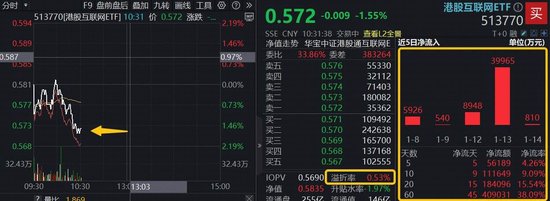
先于谷歌,千问推出AI购物!港股AI短线回调,港股互联网ETF(513770)宽幅溢价,连日大举吸金逾11亿元
Xin Lang Cai Jing· 2026-01-15 03:01
Core Viewpoint - The Hong Kong stock market experienced a short-term pullback in AI stocks, with major internet companies declining, while the Hong Kong Internet ETF showed strong buying interest despite the drop [1][7]. Group 1: Market Performance - As of January 15, major internet stocks such as Alibaba-W, Kuaishou-W, and Bilibili-W fell over 2%, while Tencent Holdings dropped more than 1% [1][7]. - The Hong Kong Internet ETF (513770) saw a price decline of 1.55%, indicating a wide premium and strong buying sentiment as investors actively sought to accumulate shares during the dip [1][7]. - Over the past 10 days, the Hong Kong Internet ETF recorded net inflows of 1.116 billion yuan, with funds increasing on 9 out of those 10 days [1][7]. Group 2: Company Developments - Alibaba's Qianwen App has integrated with various services within the Alibaba ecosystem, enabling AI shopping functionalities such as food delivery and ticket booking, and has opened testing to all users [9]. - The Qianwen App has surpassed 100 million monthly active users (MAU) within two months of launch, marking a significant milestone in its user engagement [9]. - Analysts from Dongfang Securities expect major updates to the Qianwen models (Qwen3.5, Qwen4) to be released in 2026, which could enhance AI application capabilities and expand Alibaba's AI application scenarios [9]. Group 3: Investment Insights - The Hong Kong Internet ETF (513770) and its linked funds are designed to passively track the CSI Hong Kong Internet Index, which includes major players like Alibaba-W, Tencent Holdings, and Xiaomi Group-W, with the top ten stocks accounting for over 76% of the index [10]. - The latest fund size of the Hong Kong Internet ETF reached 14.899 billion yuan, setting a new historical high, with an average daily trading volume exceeding 600 million yuan since 2025 [11]. - For investors looking to balance exposure to technology while minimizing volatility, the Hong Kong Large Cap 30 ETF (520560) is recommended, featuring a mix of high-growth tech stocks and stable dividend-paying companies [11].
29家科创板公司提前预告2025年业绩
Zheng Quan Shi Bao Wang· 2026-01-15 02:54
Summary of Key Points Core Viewpoint - 29 companies listed on the Sci-Tech Innovation Board have provided earnings forecasts for 2025, with 14 companies expecting losses, 9 companies expecting profit increases, 4 companies expecting reduced losses, and 2 companies expecting profit declines [1]. Group 1: Earnings Forecast Overview - Among the 29 companies, 31.03% (9 companies) are expected to report profit increases [1]. - The companies forecasting profit increases include 3 companies with a median net profit growth exceeding 100% [1]. - The highest expected net profit growth is from Baiwei Storage, with a median increase of 473.71% [2]. Group 2: Individual Company Forecasts - The top three companies by expected net profit growth are: - Baiwei Storage (Code: 688525) with a median increase of 473.71% in the electronics sector [2]. - Zhongke Lanyun (Code: 688332) with a median increase of 371.51% in the electronics sector [2]. - Baiaosaitu (Code: 688796) with a median increase of 303.57% in the pharmaceutical and biological sector [2]. Group 3: Companies Expecting Losses - 14 companies are forecasting losses, with notable declines including: - Rongbai Technology (Code: 688005) with a forecasted loss of -157.45% in the power equipment sector [2]. - Qin Chuan Internet of Things (Code: 688528) with a forecasted loss of -68.62% in the machinery sector [2]. - Zhongkong Technology (Code: 688777) with a forecasted decline of -57.46% in the machinery equipment sector [2].


2025年业绩高增长股提前看,36股净利润增幅翻倍
Zheng Quan Shi Bao Wang· 2026-01-15 02:51
216家公司公布了全年业绩预告,业绩预增公司有85家,占比39.35%。 | 000100 | TCL 科 | 2026.01.14 | 180.00 | 4.96 | 9.25 | 电子 | | --- | --- | --- | --- | --- | --- | --- | | | 技 | | | | | | | 002709 | 天赐材 | 2025.12.31 | 178.97 | 43.05 | -6.97 | 电力设 | | | 料 | | | | | 备 | | 301200 | 大族数 控 | 2026.01.13 | 177.24 | 135.56 | 14.14 | 机械设 备 | | 600685 | 中船防 务 | 2026.01.10 | 173.25 | 31.43 | 10.47 | 国防 军 工 | | 002107 | 沃华医 | 2026.01.14 | 167.83 | 7.22 | 15.71 | 医药生 | | | 药 | | | | | 物 | | 300620 | 光库科 技 | 2025.12.31 | 162.00 | 146.89 | -0.1 1 | 通 ...
2026年出口会继续强吗?——12月进出口数据解读
陈兴宏观研究· 2026-01-15 02:42
Core Viewpoint - China's export growth recorded a year-on-year increase of 6.6% in December, driven by strong performance in the electronics and high-tech sectors, while imports also saw significant growth, particularly in energy and electronic products [2][4][12]. Export Performance - December's export growth of 6.6% represents a 0.7 percentage point increase from November, with the growth rate exceeding the median of the past five years, indicating increased export momentum [2][4]. - The electronics sector saw a notable increase in export growth, rising by 13.6 percentage points to 15.9%, contributing 2.8 percentage points to overall export growth [4]. - High-tech product exports also increased, with a year-on-year growth of 16.9%, contributing 4.0 percentage points to overall export growth [4]. - Exports to neighboring regions surged, particularly to Hong Kong (31.5%) and ASEAN (11.3%), while exports to the US (-30.2%) and the EU (11.5%) declined [6]. Import Performance - Imports grew by 5.7% year-on-year in December, a significant increase of 3.8 percentage points from the previous month, driven by higher imports of energy and electronic products [12][14]. - Notably, imports from the EU increased by 17.9%, while imports from the US decreased by 28.6% [12]. - The import growth was supported by both volume and price increases across various categories, with energy and electronic products showing substantial improvement [14]. Trade Balance - China's trade surplus expanded slightly to $114.14 billion in December, with net exports continuing to support the economy [17]. - The outlook for exports in early 2026 remains positive, with expectations of sustained resilience despite potential declines in growth rates due to external factors [19].

携程盘中跌20%,拖累恒生科技指数跌1%!港股通科技指数震荡上行,指数不含携程
Mei Ri Jing Ji Xin Wen· 2026-01-15 02:20
Core Viewpoint - Ctrip's stock prices fell significantly due to an antitrust investigation, impacting both US and Hong Kong markets, with a notable drop of -20% in Hong Kong shares on January 15, which also affected the Hang Seng Tech Index by over -1% [1] Group 1: Ctrip's Market Impact - Ctrip's weight in the Hang Seng Tech Index is approximately 3% [1] - The decline in Ctrip's stock price has broader implications for the technology sector in Hong Kong, as reflected in the performance of the Hang Seng Tech Index [1] Group 2: Comparison of Indices - The Guozheng Hong Kong Stock Connect Technology Index (159101.SZ) does not include Ctrip and focuses on companies with a compound revenue growth rate greater than 10% over the past two years or R&D expenses exceeding 5% in the past year [1] - The Guozheng index emphasizes sectors such as internet, electronics, communication equipment, and biotechnology, contrasting with the Hang Seng Tech Index [1] - The top ten constituents of the Guozheng index, including Tencent, Xiaomi, Alibaba, and Meituan, account for a combined weight of 77.23%, the highest among similar indices [1]
北上资金在加仓哪些行业
Changjiang Securities· 2026-01-15 02:12
- The report focuses on the analysis of the industries where Northbound funds have increased their holdings, particularly highlighting sectors such as power and new energy equipment, electronics, and metal materials and mining[1][5][13] - Northbound funds' total holdings in A-shares amounted to approximately 2.59 trillion yuan as of December 31, 2025, representing an increase of about 46 billion yuan compared to September 30, 2025[1][5][13] - Relative to the CSI 300 Index, Northbound funds were significantly overweight in the power and new energy equipment sector, with an allocation ratio of approximately 18.0%, compared to 8.6% in the CSI 300 Index, resulting in an overweight of about 9.5%[5][15] - The top five primary industries with the highest net inflows of Northbound funds in Q4 2025 were metal materials and mining, electronics, power and new energy equipment, telecommunications, and insurance[6][20] - The top five secondary industries with the highest net inflows of Northbound funds in Q4 2025 were new energy vehicle equipment, basic non-ferrous metals, communication equipment, precious metals, and components and devices[6][25]
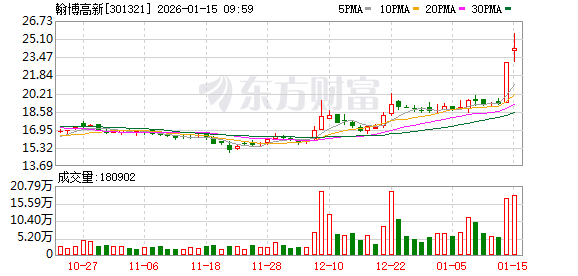
翰博高新涨7.38%,股价创历史新高
Zheng Quan Shi Bao Wang· 2026-01-15 01:58
Group 1 - The stock price of Hanbo High-tech reached a historical high, increasing by 7.38% to 24.73 yuan, with a trading volume of 5.3869 million shares and a transaction amount of 132 million yuan, resulting in a turnover rate of 3.65% [2] - The latest total market capitalization of the stock in A-shares is 4.611 billion yuan, while the circulating market capitalization is 3.649 billion yuan [2] - In the electronic industry, the overall increase is 0.21%, with 250 stocks rising, including notable increases from Sudavige (12.53%), Unisoc (10.00%), and Hanbo High-tech (7.38%) [2] Group 2 - The latest margin trading data shows that the margin balance for Hanbo High-tech is 85.2659 million yuan, with a decrease of 20.2907 million yuan over the past 10 days, representing a decline of 19.22% [2] - The company's Q3 report indicates that it achieved an operating income of 2.424 billion yuan in the first three quarters, a year-on-year increase of 44.06%, while the net profit was -8.7869 million yuan, a year-on-year increase of 91.13%, with a basic earnings per share of -0.0501 yuan [2]

华泰期货:政策调整融资保证金比例,股指冲高回落
Xin Lang Cai Jing· 2026-01-15 01:53
Core Viewpoint - The adjustment of the financing margin ratio by the Shanghai and Shenzhen Stock Exchanges aims to tighten the financing environment for investors, potentially impacting market liquidity and trading behavior [2][8]. Macro Analysis - The China Securities Regulatory Commission has approved an increase in the minimum financing margin ratio for new financing contracts from 80% to 100%, while existing contracts will remain under previous regulations [2][8]. - In the U.S., the Producer Price Index (PPI) and core PPI both rose by 3% year-on-year in November, exceeding market expectations of 2.7%, primarily driven by rising energy costs [2][8]. - The National Association of Realtors reported that existing home sales in the U.S. reached an annualized rate of 4.35 million units in December, the highest level since February 2023, with the median home price increasing by only 0.4% to $405,400, marking the slowest growth in two and a half years [2][8]. Market Performance - A-shares experienced a mixed performance, with the Shanghai Composite Index declining by 0.31% to close at 4126.09 points, while the ChiNext Index rose by 0.82% [2][8]. - Sector performance varied, with gains in the computer, communication, media, and electronics sectors, while the banking, real estate, and non-bank financial sectors faced declines [2][8]. - The trading volume in the Shanghai and Shenzhen markets approached 4 trillion yuan, setting a new record [2][8]. - In the U.S., all three major stock indices closed lower, with the Nasdaq down by 1% to 23,471.75 points [2][8]. Futures Market - In the futures market, the basis for stock index futures has decreased, with both trading volume and open interest for index futures increasing [9]. Strategy Insights - Historical data suggests that policy tightening can have a certain effect, but the current market is characterized as a long-term slow bull, making historical experience a limited reference [10]. - This tightening may lead to a "factory" type of market pattern, indicating a slowdown in short-term growth [10]. - If the tightening process is not smooth, large capital may exert pressure on the market through their holdings, particularly affecting the Shanghai 50 and CSI 300 indices [10].