餐饮

Search documents
东吴证券:维持百胜中国(09987)“买入”评级 质地稳健的高股息龙头
智通财经网· 2026-02-06 05:52
Core Viewpoint - Dongwu Securities has adjusted the profit forecast for Yum China (09987) for 2026-2027 to $10.43 billion and $11.44 billion, respectively, from previous estimates of $9.89 billion and $10.59 billion, with a new profit forecast for 2028 at $12.63 billion, reflecting year-on-year growth of 12.24%, 9.69%, and 10.41% [1] Group 1: Financial Performance - In 2025, the total system sales and total revenue increased by 4% year-on-year, with Q4 showing a 7% and 9% increase, respectively, exceeding previous expectations [1] - Adjusted net profit for 2025 increased by 2% year-on-year, with Q4 showing a significant 24% increase, attributed to automation systems, lean operations, and improved raw material prices [2] - The operating profit for KFC in 2025 increased by 8% year-on-year, while for Pizza Hut, it rose by 19%, with restaurant profit margins improving for both brands [2] Group 2: Store Expansion - By the end of 2025, the total number of stores reached 18,100, with a net addition of 1,706 stores for the year, including 1,349 KFC stores and 444 Pizza Hut stores [3] Group 3: Same-Store Sales - Overall same-store sales increased by 1% for 2025, with Q4 showing a 3% increase, marking three consecutive quarters of positive year-on-year growth [4] - KFC's same-store sales for Q4 increased by 3%, while Pizza Hut's same-store sales showed a 1% increase, indicating a focus on value products [4] Group 4: Future Outlook - The company plans to exceed 20,000 stores by 2026, with a capital expenditure of $6-7 billion and a shareholder return of $1.5 billion in 2025 [5] - The dividend yield is projected to be nearly 8%, with a significant portion of new stores being franchise locations [5]

内地宏观关键是政策发力:环球市场动态2026年2月6日
citic securities· 2026-02-06 05:43
环球市场动态 内 地 宏 观 关 键 是 政 策 发 力 股 票 A 股周四下跌,大消费板块逆市上 涨;港股午后转涨,科技股回暖; 欧洲股市小幅收跌,市场观望情绪 浓厚;美股再度大幅下跌,AI 担忧 持续困扰市场。 外 汇 / 商 品 疲软就业数据和股市下跌,周四美 元指数上升,白银和黄金再现沽压; 伊朗确认将与美国谈判,国际油价 下跌。 固 定 收 益 隔夜股市, 贵金属, 虚拟货币等价 格下挫, 加上就业数据疲软, 美债 成为避险天堂, 创年内最大单日涨 幅。日本 30 年期国债拍卖需求回 暖。欧洲和英国央行均维持利率不 变。穆迪下调印度尼西亚的信用展 望至负面。 产品及投资方案部 注:bp/bps=基点;pt/pts=百分点 中信证券财富管理 (香港) 免责声明请参考封底 2026 年 2 月 6 日 ▪ 2026 年一季度内地宏观环境的关键主线是政策的发力。政策的力度和节奏均与 2025 年较为类似。在政策呵 护、低基数效应的双重作用下,2026 年一季度经济有望迎来从低波动向高波动的转变。政策的发力方向将是 2026 年政策与 2025 年的一大差异,预计 2026 年专项债直接作用于经济基本面的比 ...
华泰证券今日早参-20260206
HTSC· 2026-02-06 05:14
Group 1: Economic and Industry Trends - The overall industry prosperity index rose for the second consecutive month in January, with significant improvements in upstream resources, midstream materials, consumer staples, and TMT sectors [3] - Price increases, AI advancements, and external demand are driving internal prosperity across various sectors, with expectations of further recovery in consumption and travel chains during the Spring Festival [3] - Specific sectors such as non-ferrous metals, petrochemicals, and certain chemicals are experiencing a rebound in prosperity, while AI-related applications are seeing differentiated growth [3] Group 2: Fixed Income Strategies - The report discusses the use of futures for enhancing returns in a low-interest-rate environment, focusing on the common strategy of cash-futures arbitrage [4] - Positive yield periods for cash-futures arbitrage were noted in the first half of 2025, particularly for specific contracts, indicating potential for increased portfolio returns [4] Group 3: Gold Market Insights - Central banks are reallocating assets towards gold, which is expected to support long-term price increases, with projections suggesting gold prices could rise to $5400-$6800 per ounce by 2026-2028 [8] - The report highlights a shift in gold pricing dynamics, potentially moving from a framework dominated by real interest rates to one influenced by credit risk hedging [8] Group 4: Renewable Energy Sector - Wind and solar companies are facing profitability pressures due to low-priced project deliveries, but a recovery trend is anticipated in 2026 as order prices for wind turbines improve [8] - The report emphasizes the potential for profitability recovery in the solar sector through enhanced supply chain management and the introduction of high-power products [8] Group 5: Construction Materials - The electronic fabric market is entering a new price upcycle due to supply constraints and recovering demand, with significant price increases reported by leading manufacturers [9] - The report indicates that high-end electronic fabrics are expected to continue experiencing supply shortages, leading to further price hikes [9] Group 6: Coal Market Dynamics - Export restrictions from Indonesia could significantly impact China's coal consumption, potentially driving up spot coal prices [10] Group 7: Macro Economic Analysis - The report analyzes the potential impacts of the Lunar New Year on macroeconomic data, emphasizing the need to filter out distortions caused by the holiday [11] Group 8: Japanese Political Landscape - The upcoming Japanese House of Representatives election is expected to favor the ruling party, which may lead to more expansive fiscal policies and impact the stock market positively while negatively affecting bonds and the yen [12] Group 9: Company-Specific Insights - Lin Qingxuan is highlighted as a rapidly growing high-end skincare brand with a clear market positioning and product strategy, receiving a "buy" rating with a target price of 130.88 HKD [19] - Google is projected to see significant growth in its cloud business, despite concerns over increased capital expenditures, maintaining a "buy" rating [15] - Sony's strong performance in gaming and sensors is noted, with a target price adjustment to 5,000 JPY while maintaining a "buy" rating [16] - Eaton is expected to benefit from data center demand and operational efficiency, with a target price of 418 USD and a "hold" rating [17]
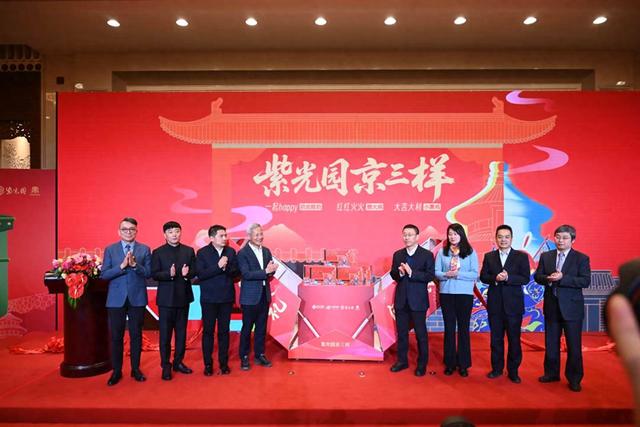
紫光园发布“京三样”,除了奶皮子酸奶还有这两样
Bei Jing Ri Bao Ke Hu Duan· 2026-02-06 04:32
Group 1 - The "Jing San Yang" gift box, featuring traditional Beijing delicacies, was officially launched by Ziguangyuan and recognized by the Beijing Municipal Bureau of Culture and Tourism as part of the "Beijing Gifts" official cultural tourism product system [1] - The gift box includes three classic products: specialty smoked chicken, sugar fire cake, and the popular milk skin yogurt, which has a daily production capacity of 300,000 cups [1] - The specialty smoked chicken emphasizes minimal additives to highlight the true flavor of the ingredients, while the sugar fire cake utilizes China's first self-developed intelligent production line to achieve standardized control of key parameters in intangible cultural heritage techniques [1][2] Group 2 - The intelligent production base for the "Jing San Yang" gift box was established in the Agricultural Zhongguancun Modern Food Nutrition Valley, with a total investment of 350 million yuan by Ziguangyuan Group [2] - This base creates a comprehensive halal food supply chain system covering research and development, production, warehousing, and distribution, setting a benchmark for intelligent manufacturing in China's halal food industry [2] - The Agricultural Zhongguancun Modern Food Nutrition Valley has become a significant source of innovation for the capital's food industry, housing 52 leading enterprises, including Wangwang and New Hope, and forming a distinctive industrial ecosystem [3]

新浪财经资讯AI速递:昨夜今晨财经热点一览 丨2026年2月6日
Xin Lang Cai Jing· 2026-02-06 04:07
Group 1 - The U.S. government has launched a $12 billion "Treasury Plan" aimed at establishing a strategic reserve of critical minerals in collaboration with companies like General Motors and Boeing to mitigate supply chain risks and reduce dependence on China [1][7] - Bitcoin has fallen below $70,000, marking a new low since October 2024, driven by forced liquidations of leveraged positions and increased market risk aversion [1][7] - Global gold ETFs saw a record inflow of $19 billion in January 2026, raising total assets under management to $669 billion, with North America and Asia being the primary demand drivers [1][7] Group 2 - Zhang Yidong has joined Guotai Junan as the head of the International Securities Stock Research Department and Chief Economist, focusing on expanding overseas business and capital markets [2][8] - Mixue Ice Cream is planning to enter the theme park business, targeting a market similar to Disney and Universal Studios, leveraging its strong supply chain and significant liquidity of over 17.6 billion yuan [3][9] - Emperor Entertainment has sold a 79 kg gold brick embedded in its hotel lobby for approximately HKD 99.7 million, aiming to capitalize on high gold prices and improve financial conditions [4][10] Group 3 - GlaxoSmithKline reported a revenue of £32.667 billion for 2025, a 7% year-on-year increase, with strong performance in its HIV drug segment and a significant rise in sales of its PD-1 drug Jemperli [4][10] - Jilin Province has initiated a special investigation into 48 drugs with hospital prices significantly higher than retail prices, including emergency medication, to address price discrepancies [5][11] - The actual controller of Beiliqingsong is under investigation for alleged market manipulation, but the company asserts that operations remain unaffected [6][12] Group 4 - UBS's Chief Economist has stated that stocks are currently the most advantageous asset class, predicting a 10% increase in the U.S. stock market and around 8% growth in European and Japanese markets by 2026 [6][13]
恒生指数早盘跌1.13% 三只新股挂牌首日均上涨
Zhi Tong Cai Jing· 2026-02-06 04:06
Market Overview - The Hang Seng Index fell by 1.13%, down 304 points, closing at 26,580 points, while the Hang Seng Tech Index decreased by 0.47% [1] - The early trading volume in Hong Kong stocks reached HKD 139.5 billion [1] New Listings and Performance - Dazhu CNC (301200) (03200) rose by 18%, recognized as China's largest manufacturer of PCB production equipment [1] - Muyuan Foods (002714) (02714) increased by 4.72% [1] - Zhuozheng Medical (02677) surged by 34%, focusing on the mid-to-high-end medical service market [1] Company Highlights - Zhongchuang Innovation (03931) saw a 3.83% increase, with a 630% year-on-year growth in commercial battery deliveries and plans for full circulation of H-shares [1] - Alibaba's Qianwen event completed over one million milk tea orders, boosting shares of Guming (01364) and Cha Baidao (02555) by over 3% [1] - Long Resources (01712) experienced a 30% intraday surge, with expected after-tax net profit growth of up to 3.8 times year-on-year [1] - Changfei Optical Fiber (601869) saw its shares rise by over 10%, with institutions optimistic about fiber optic manufacturers benefiting from price increases [1] - Innovent Biologics (09969) increased by over 11%, achieving profitability for the first time due to the volume of Orelabrutinib and growth in BD revenue [1] - Nine Dragons Paper (02689) rose by over 5%, benefiting from improved self-sufficiency in wood pulp and favorable industry supply-demand dynamics [1] - Jiaxin International Resources (03858) increased by over 5%, supported by supply contraction driving tungsten prices higher [1] - Fuhong Hanlin (02696) rose by over 5%, with a transaction worth approximately USD 388 million for the licensing of Hansoh's rights in Japan to Eisai [1] - Tongda Group (00698) increased by over 6%, expecting to turn a profit of up to HKD 125 million last year [1] - NIO-SW (09866) rose by over 5%, marking its first quarterly profit with an expected adjusted operating profit of up to HKD 1.2 billion [1] Cryptocurrency Market - Cryptocurrency ETFs and related stocks continued to decline, with a sustained sell-off in the crypto market, as Bitcoin fell below USD 65,000 [1] - Bosera Bitcoin (03008) dropped by 8%, while Huaxia Bitcoin (03042) fell by 9% [1]
晨会纪要-20260206
Guoxin Securities· 2026-02-06 03:26
Macro and Strategy - The macroeconomic review indicates that Shenzhen's GDP is expected to grow by 5.5% in 2025, achieving the anticipated growth target, with foreign trade increasing by 1.4% despite a decline in exports due to a high base in 2024 [7] - The strategy report highlights that A-share earnings are stabilizing, driven by cost reductions and the new economy outpacing the old economy, with a projected 10% growth in A-share earnings for 2026 under neutral assumptions [8][10] Industry and Company - The North Exchange's January 2026 report shows a significant increase in market activity, with a total of 292 listed companies and a total market value of 936.3 billion yuan, reflecting a 7.7% increase in total market value [11] - In the electric power equipment sector, domestic demand is expected to remain strong, with a focus on high-voltage direct current (HVDC) and smart meters, as the State Grid's fixed asset investment is projected to reach 4 trillion yuan, a 40% increase from the previous five-year plan [14][15][17] - Yum China reported a 22% year-on-year increase in net profit for Q4 2025, with total revenue reaching $2.823 billion, driven by a 34% increase in delivery sales [18][19][21]
外卖占比近五成、副牌收缩,百胜中国要剑指2万家店
Guo Ji Jin Rong Bao· 2026-02-06 03:04
Group 1 - The core viewpoint of the article highlights Yum China’s financial performance for the fourth quarter and full year of 2025, showing a total revenue growth of 4% to $11.8 billion and an operating profit of $1.3 billion, which is an 11% increase year-on-year [1] - Store expansion is identified as a key driver of Yum China's revenue growth, with a net addition of 1,706 stores in 2025, bringing the total to 18,101 stores by year-end [1] - The two main brands, KFC and Pizza Hut, experienced a store growth rate of approximately 12% in 2025, with KFC increasing from 11,648 to 12,997 stores and Pizza Hut from 3,724 to 4,168 stores [1] Group 2 - The article notes that the total number of new stores for the two main brands in the previous year was 1,793, which exceeds Yum China's total new store count of 1,706 for 2025, indicating a reduction in the number of secondary brands [3] - Yum China aims to accelerate its store expansion, targeting 20,000 stores by 2026 and 30,000 by 2030, requiring a net addition of approximately 1,900 stores in 2026, averaging over 5 new stores per day [3] - The franchise model is crucial for scaling growth, with the proportion of franchise stores increasing for both KFC and Pizza Hut from 15% to 37% and 2% to 31% respectively from 2023 to 2025 [3] Group 3 - The takeaway business has significantly impacted Yum China's performance, with a 25% year-on-year growth in delivery sales, which now account for 48% of restaurant revenue, up from 39% in 2024 [5] - In the fourth quarter, the delivery sales proportion for KFC and Pizza Hut reached 53% and 54% respectively, indicating a growing reliance on delivery services [5] - To address rising costs associated with delivery, Yum China announced a price increase for delivery products by an average of 0.8 yuan, while maintaining dine-in prices [5]
“95后带四代人来赶集”,这个“八角大集”火了!
Xin Hua She· 2026-02-06 03:02
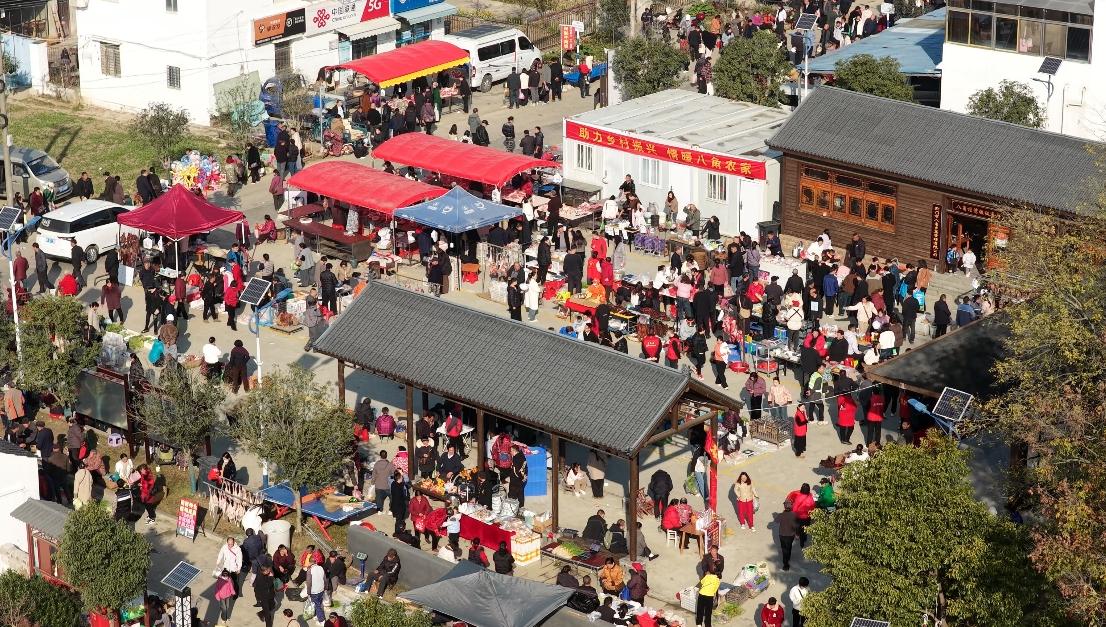
荆门"八角大集"航拍画面。新华社记者 邓楠 摄当年的繁华,在这个清晨,再次被唤醒:350多个摊位,在5000平米的广场次第铺开,像一条蜿蜒的五彩长 龙。农家蔬菜带着露水的清冽,手工"非遗雪枣"散着醉人的甜香,土色土味的特色摊位玲琅满目,叫卖声、还价声与孩童的嬉闹声交织成鲜活的晨曲。 "快,大娘这儿的菜新鲜,咱买些回去。"城区来的年轻人蔡晓辉告诉记者,前日在网上看了大集预告,特意带着家人来"打卡"。75岁的大娘简明英,坐在竹 筐旁。刚采摘的胡萝卜、白菜、香菜还带着泥土气,在晨光照耀下泛着光泽。"以前种菜,老两口够吃就好。现在有了大集,种得多些呢。"她笑着说。 02:07 新华社武汉2月6日电(记者闫睿、邓楠)"今天,你们准备买点啥乡土货?""土鸡土鸭土鳝鱼,家里来客,要张罗一桌好饭!""淘点新鲜菜,吃顿'八宝 席'"……早上六点半,晨光微露,开往湖北荆门市东宝区子陵铺镇八角村的"公交专线"上,乡亲们你一言我一语地讨论着"扫货清单",憧憬着周末的美好生 活。 车轮碾过乡间公路,浓郁的乡土气息扑面而来,半个多小时后,公交车稳稳停在八角村文化广场。在有着"中国之中"之称的荆门,八角村是有名的菜篮子 村,因守着古建筑文 ...
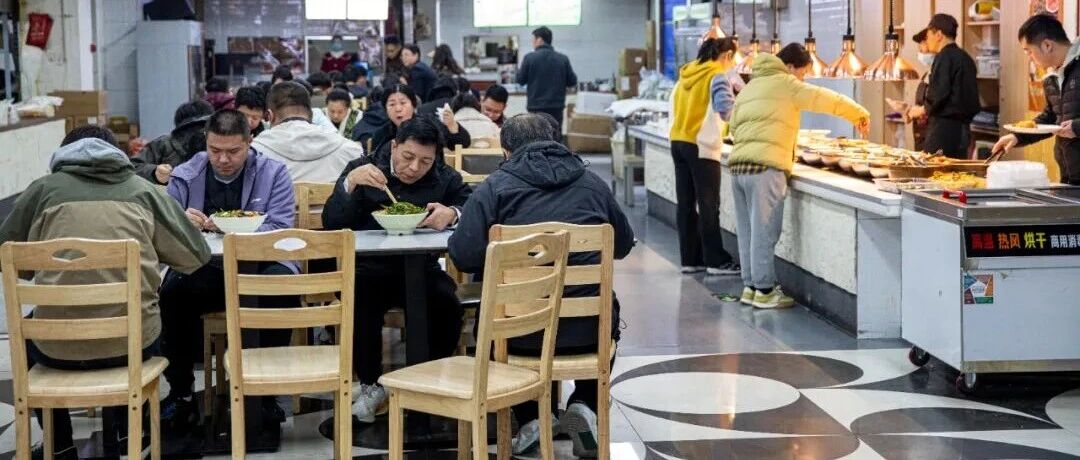
小餐馆“假装营收少”的日子结束了
第一财经· 2026-02-06 02:49
Core Viewpoint - The article discusses the impact of new tax regulations on the restaurant industry, particularly focusing on small and medium-sized restaurants that are now facing increased scrutiny and compliance requirements due to the "Internet Platform Enterprises Tax Information Reporting Regulations" implemented in 2025 [8][9][10]. Group 1: Tax Regulations and Compliance - The new tax regulation requires platforms to report merchants' real transaction data to tax authorities, affecting not only large companies but also small restaurants that previously operated in a gray area regarding tax compliance [8][9]. - The regulation has created a "survival line" of 5 million yuan in annual revenue, where exceeding this threshold forces restaurants to transition from small-scale to general taxpayers, significantly increasing their tax burden [10][11]. - The tax rate for small-scale taxpayers is 3%, while general taxpayers face a rate of 6%, with additional implications for cash flow and profit margins [10][11]. Group 2: Impact on Small Restaurants - Small restaurants, often run by individuals with limited financial literacy, have historically underreported income and avoided tax compliance, but the new regulations are forcing them to adapt [9][10]. - Many small restaurants are now scrambling to obtain business licenses and adjust their reporting practices to avoid being classified as general taxpayers, which would increase their tax liabilities [12][13]. - The article highlights the anxiety among restaurant owners as they navigate the new tax landscape, with some resorting to strategies like underreporting income to stay below the revenue threshold [11][12]. Group 3: Industry Adaptation and Future Outlook - The article suggests that the new regulations may ultimately lead to a healthier restaurant industry by eliminating unfair competition driven by tax evasion and underreporting [25][26]. - As restaurants become more compliant, the reliance on platforms like Meituan and Douyin for sales data will increase, making it harder for businesses to manipulate their reported income [16][18]. - The shift towards compliance is expected to phase out practices like "brushing orders" and low-priced meal packages that have contributed to unhealthy competition in the industry [25][26].