
美容护理

Search documents
【金工】金融地产主题基金表现占优,股票ETF资金逆势大幅流入——基金市场与ESG产品周报20251222(祁嫣然/马元心)
光大证券研究· 2025-12-23 23:04
Market Overview - In the week of December 15-19, 2025, gold prices increased while domestic equity market indices experienced fluctuations, with the ChiNext index showing a significant decline [4] - The retail trade, non-bank financial, and beauty care sectors saw the highest gains, while the electronics, power equipment, and machinery sectors faced the largest declines [4] Fund Issuance - A total of 40 new funds were established in the domestic market this week, with a combined issuance of 18.321 billion units. This includes 8 bond funds, 14 equity funds, 11 mixed funds, 3 FOF funds, and 4 money market funds [5] Fund Performance Tracking - The long-term thematic fund indices showed that financial and real estate theme funds performed well, while TMT theme funds experienced a net value decline. As of December 19, 2025, the net value changes for various thematic funds were as follows: financial and real estate (2.17%), national defense and military industry (1.75%), cyclical (1.68%), consumption (0.92%), industry rotation (-0.32%), industry balance (-0.65%), new energy (-1.66%), pharmaceuticals (-1.85%), and TMT (-2.02%) [6] ETF Market Tracking - This week, stock ETFs saw significant inflows, with various broad-based ETFs receiving increased investments. The median return for stock ETFs was -0.33%, with a net inflow of 55.232 billion yuan. Hong Kong stock ETFs had a median return of -2.06% and a net inflow of 12.373 billion yuan [7][8] - Broad-based ETFs experienced a total inflow of 33.739 billion yuan, while TMT theme ETFs saw an inflow of 6.652 billion yuan [8] ESG Financial Products Tracking - This week, 31 new green bonds were issued, totaling 18.530 billion yuan. The cumulative issuance of green bonds in the domestic market reached 5.15 trillion yuan, with 4,427 bonds issued [9] - The domestic market currently has 211 ESG funds with a total scale of 149.677 billion yuan. The median net value changes for various ESG fund types were: active equity (-1.35%), passive equity index (-0.54%), and bond ESG funds (0.06%) [9]


开源晨会-20251223
KAIYUAN SECURITIES· 2025-12-23 14:43
Core Insights - The report emphasizes that the "closure" of Hainan Free Trade Port is not about isolation but represents a higher level of openness, marking a significant shift in China's approach to foreign trade and investment [4][5]. Total Research - The Hainan Free Trade Port officially commenced its full island closure operations on December 18, 2025, establishing a customs supervision special area with a new management system [4]. - The operational model of the closure can be summarized as "one line open, two lines controlled, and free movement within the island" [4]. - The customs will simplify the clearance process for most goods entering Hainan, particularly those on the "zero tariff" negative list [4]. - The management of goods entering the mainland from Hainan will be precise, focusing on tax-exempt and value-added goods to prevent market disruption [4]. Policy Changes - The closure operation will introduce four major policy benefits: more favorable "zero tariff" policies, relaxed trade management measures, efficient supervision, and expanded tax benefits [6]. - This marks a transition for Hainan from a "policy exploration zone" to a "formal operation zone," providing unprecedented development momentum [5]. Industry Impact - The closure will reshape Hainan's industries and sectors, impacting cost structures, supply chains, market access, and competitive landscapes [7]. - In the consumption and tourism sector, Hainan aims to establish a comprehensive duty-free and high-quality service system, reinforcing its status as an international tourism consumption center [7]. - The modern service industry is expected to advance towards higher-end and international standards, attracting international financial and professional service institutions [7]. - The high-tech industry will benefit from the closure, particularly in the biopharmaceutical sector, creating a rapid pathway for innovation and reshaping global competition [7].
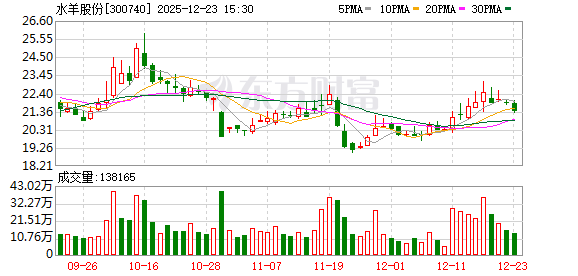
美容护理行业今日净流出资金2.09亿元,水羊股份等5股净流出资金超千万元
Zheng Quan Shi Bao Wang· 2025-12-23 09:46
Market Overview - The Shanghai Composite Index rose by 0.07% on December 23, with nine sectors experiencing gains, led by the power equipment and building materials sectors, which increased by 1.12% and 0.88% respectively [2] - The social services and beauty care sectors saw the largest declines, with decreases of 2.07% and 1.65% respectively [2] Capital Flow Analysis - The main capital outflow from the two markets totaled 44.851 billion yuan, with only four sectors experiencing net inflows [2] - The power equipment sector had the highest net inflow of 3.793 billion yuan, while the basic chemicals sector saw a modest increase of 0.22% with a net inflow of 1.002 billion yuan [2] Beauty Care Sector Performance - The beauty care sector declined by 1.65%, with a net capital outflow of 20.9 million yuan, and only one of the 29 stocks in this sector experienced an increase [3] - Among the stocks in the beauty care sector, the top net inflow was seen in Weigao Medical, with an inflow of 6.4623 million yuan, followed by Baiya Shares and Jinsong New Materials with inflows of 2.0286 million yuan and 1.9708 million yuan respectively [3] - The stocks with the highest net outflows included Shuiyang Shares, Aimeike, and Qingdao Jinwang, with outflows of 39.424 million yuan, 36.5303 million yuan, and 27.3292 million yuan respectively [3][4] Individual Stock Performance - The following stocks in the beauty care sector had significant net outflows: - Shuiyang Shares: -2.42% with a net outflow of 39.424 million yuan - Aimeike: -1.46% with a net outflow of 36.5303 million yuan - Qingdao Jinwang: -2.75% with a net outflow of 27.3292 million yuan - Other notable declines included Kesheng Shares and Huaxi Biological, with outflows of 20.9663 million yuan and 9.1295 million yuan respectively [3][4]






粤开市场日报-20251223
Yuekai Securities· 2025-12-23 07:47
Market Overview - The A-share market showed a mixed performance today, with the Shanghai Composite Index rising by 0.07% to close at 3919.98 points, and the Shenzhen Component Index increasing by 0.27% to 13368.99 points. The ChiNext Index rose by 0.41% to 3205.01 points, indicating a generally stable market with 1508 stocks rising and 3852 stocks falling [1][10]. Industry Performance - Among the primary industries, the leading sectors included Power Equipment, Building Materials, Electronics, Nonferrous Metals, and Banking, with respective gains of 1.12%, 0.88%, 0.58%, 0.42%, and 0.37%. Conversely, sectors such as Social Services, Beauty Care, Retail, Defense, and Computers experienced declines, with losses of 2.07%, 1.65%, 1.60%, 1.42%, and 1.05% respectively [1][10]. Concept Sector Performance - The top-performing concept sectors included Lithium Battery Electrolyte, Glass Fiber, Liquid Cooling Servers, Power Batteries, Copper Clad Laminates, Lithium Battery Anodes, Solid-State Batteries, Lithium Batteries, Fluorine Chemicals, Sodium-Ion Batteries, Lithium Mines, Lithium Battery Cathodes, and Lithium Iron Phosphate Batteries. These sectors showed significant upward movement, reflecting strong investor interest [2][12].
信号明确!主力资金今日集体“抢跑”,这个板块被买爆!春季行情要提前?
Sou Hu Cai Jing· 2025-12-23 07:46
Market Overview - The overall market shows a "weak Shanghai, strong Shenzhen" pattern, with the Shanghai Composite Index slightly up by 0.07%, while the Shenzhen Component Index rose by 0.27%, the ChiNext Index by 0.41%, and the STAR Market 50 Index by 0.36%, indicating a preference for growth styles [2] - A-share trading volume reached 1.9 trillion yuan, with a cumulative annual trading volume exceeding 405 trillion yuan, marking a historical high, reflecting increased market activity and liquidity depth [2] Structural Analysis - The performance of the Shenwan first-level industry indices reveals clear capital flows, with leading sectors such as power equipment (+1.12%), building materials (+0.88%), and electronics (+0.58%) showing gains, while consumer sectors like social services (-2.07%) and beauty care (-1.65%) faced significant adjustments [3] - The leading sectors benefit from clear industrial policies, improved economic cycles, or expectations of valuation recovery, while the consumer sector's adjustment reflects a reassessment of short-term recovery strength and valuation [3] Focus on Lithium Battery Industry - The lithium battery supply chain has seen a comprehensive surge, with significant increases in sub-indices for lithium battery electrolyte, lithium hexafluorophosphate, and lithium battery separators, driven by solid underlying logic rather than speculative trading [4] Market Outlook - The index is likely to maintain a volatile trend, but structural opportunities will continue to emerge, supported by a friendly policy environment, ample liquidity, gradually recovering corporate earnings, and reasonable market valuations [4] - A forward-looking judgment suggests that the "spring excitement" market in 2026 may start earlier than expected, driven by strong policy expectations, improving economic fundamentals, and a favorable global liquidity environment [4] - Key market themes are expected to revolve around technology innovation (AI applications, semiconductors, robotics), cyclical recovery (improving supply-demand dynamics in non-ferrous metals and chemicals), and balanced allocation (low-valuation sectors benefiting from market activity) [4] Summary of Market Sentiment - The market has conducted a concentrated "vote" through clear sector differentiation, indicating that funds are currently favoring directions aligned with long-term policy guidance and improving economic conditions [5] - The central economic work conference has positioned new energy as a strategic emerging industry, with potential support from special government bonds, providing clear backing for long-term industry development [5] - In a context of ample market liquidity, growth sectors attract high-risk preference funds, as evidenced by significant trading volumes in related thematic indices, indicating institutional capital's collective layout rather than retail speculation [5] - Marginal improvements in the fundamentals are noted, with a stable trend in the penetration rate of new energy vehicles and signs of price stabilization for key materials after prolonged declines, correcting pessimistic profit expectations in the supply chain [5]
2025收官倒计时6天!两大行业年内涨超85%,食品饮料恐将年线“五连阴”?
Xin Lang Cai Jing· 2025-12-23 07:35
Group 1 - The A-share market is currently in a phase of "pressure above and support below," with overall trading volume continuing to shrink, while only certain thematic sectors remain active [1] - The performance of the Shenwan first-level industries shows significant divergence, with non-ferrous metals and communications being the top performers, each with a year-to-date increase exceeding 85% as of December 23 [1] - In contrast, the food and beverage, coal, and beauty care sectors are underperforming, with the food and beverage sector experiencing a year-to-date decline of over 7%, potentially facing five consecutive years of negative returns if the trend does not reverse in the remaining trading days [1] Group 2 - Looking ahead to 2026, institutions are optimistic about a potential turnaround in the food and beverage sector, noting that stock price turning points often precede fundamental turning points [2] - Guosen Securities highlights that the food and beverage sector has characteristics of "low base, low institutional holdings, and low valuation," and expects investment opportunities in this sector due to its relative valuation reaching a new low since 2011 [2] - Investment options include the food and beverage ETF (515170.SH) and its linked funds, as well as a food ETF that excludes liquor, which is currently being launched [2]
2025年仅剩6个交易日!有色金属、通信年内大涨超85%,食品饮料第5年收阴
Mei Ri Jing Ji Xin Wen· 2025-12-23 07:15
Core Viewpoint - The A-share market is experiencing a phase of "top and bottom" competition, with reduced trading volume and localized thematic activity as it approaches the end of 2025 [1] Industry Performance Summary - In 2025, the performance of the 31 Shenwan primary industry stocks varied significantly, with the non-ferrous metals and communications sectors leading with cumulative gains exceeding 85% [1] - Conversely, the food and beverage, coal, and beauty care industries are linked to weak domestic demand, with the food and beverage sector performing the worst, showing a decline of over 7% year-to-date, potentially marking its fifth consecutive year of negative returns if not recovered in the remaining trading days [1] - The beauty care industry has seen a minimal decline of less than -1%, nearing a return to positive performance [1] Outlook for 2026 - Many institutions are optimistic about a potential turnaround for the consumer sector, including food and beverage, in 2026 after five years of adjustment from 2021 to 2025 [1] - Shenwan Hongyuan highlights the systemic repair opportunities for the food and beverage industry in 2026, with key external indicators being the Consumer Price Index (CPI) and a focus on the cyclical attributes of the liquor and restaurant supply chains [1] - Long-term investors are encouraged to start pricing high-quality companies within the food and beverage sector [1]
【盘中播报】63只A股封板 建筑材料行业涨幅最大
Zheng Quan Shi Bao Wang· 2025-12-23 06:34
Market Overview - The Shanghai Composite Index increased by 0.07% as of 13:57, with a trading volume of 970.42 million shares and a transaction value of 15,565.73 billion yuan, representing a 2.51% increase compared to the previous trading day [1] Industry Performance - The top-performing sectors included: - Building Materials: +1.30% with a transaction value of 186.70 billion yuan, led by Hainan Ruize (+10.02%) [1] - Electric Equipment: +1.04% with a transaction value of 1,722.10 billion yuan, led by N Xihua (+139.41%) [1] - Electronics: +0.92% with a transaction value of 2,589.22 billion yuan, led by Yidong Electronics (+20.00%) [1] - The sectors with the largest declines included: - Social Services: -1.88% with a transaction value of 124.28 billion yuan, led by Qujiang Cultural Tourism (-10.03%) [2] - National Defense and Military Industry: -1.69% with a transaction value of 1,003.03 billion yuan, led by Shaanxi Huada (-11.50%) [2] - Beauty and Personal Care: -1.48% with a transaction value of 26.74 billion yuan, led by Kesi Co. (-5.07%) [2] Detailed Industry Data - The following table summarizes the performance of various industries: | Industry | Change (%) | Transaction Value (billion yuan) | Change from Previous Day (%) | Leading Stock | Change (%) | | --- | --- | --- | --- | --- | --- | | Building Materials | 1.30 | 186.70 | 29.48 | Hainan Ruize | 10.02 | | Electric Equipment | 1.04 | 1,722.10 | 20.26 | N Xihua | 139.41 | | Electronics | 0.92 | 2,589.22 | -1.22 | Yidong Electronics | 20.00 | | Social Services | -1.88 | 124.28 | 2.75 | Qujiang Cultural Tourism | -10.03 | | National Defense and Military Industry | -1.69 | 1,003.03 | 12.76 | Shaanxi Huada | -11.50 | | Beauty and Personal Care | -1.48 | 26.74 | -9.70 | Kesi Co. | -5.07 | [1][2]
通信板块领涨,股指走强
Hua Tai Qi Huo· 2025-12-23 02:55
FICC日报 | 2025-12-23 通信板块领涨,股指走强 市场分析 关注十五五规划。宏观方面,国务院总理李强主持召开国务院"十五五"规划《纲要草案》编制工作领导小组会议, 深入研究《纲要草案》编制工作。李强指出,要谋划一批能够带动全局的重大工程、重大项目、重大载体,既为 未来发展积聚新动能、培育竞争力,又为当前扩大内需、稳定经济运行提供支撑。海外方面,美联储理事米兰表 示,如果美联储明年不继续降息,可能面临引发经济衰退的风险。他还表示,预计短期内不会出现经济下行,但 失业率上升应促使美联储官员继续降息。 若国内政策落地不及预期、海外货币政策超预期、地缘风险升级,股指有下行风险 股指收涨。现货市场,A股三大指数高开高走,沪指涨0.69%收于3917.36点,创业板指涨2.23%。行业方面,板块 指数涨多跌少,通信、电子、有色金属、商贸零售行业涨幅居前,传媒、银行、美容护理、轻工制造行业跌幅居 前。当日沪深两市成交额超1.8万亿元。海外方面,美国三大股指全线收涨,纳指涨0.52%报23428.83点。 期指活跃度下降。期货市场,基差方面,股指期货均为贴水。成交持仓方面,四大期指成交量和持仓量同步下降。 策略 ...
长城基金:积极布局跨年行情
Xin Lang Cai Jing· 2025-12-23 02:34
Group 1: A-Share Market Performance - The A-share market showed an overall upward trend amidst fluctuations, with strong performance in sectors such as retail, beauty care, and non-bank financials, driven by the "reward economy" concept [1][6] - New retail, spandex, and dairy industries performed well, while previously popular themes like nuclear fusion and Hainan Free Trade Zone experienced corrections, and technology growth faced adjustments [1][6] Group 2: Domestic Economic Indicators - The latest November economic data indicates signs of recovery in external demand and a rebound in price levels, although internal demand momentum remains insufficient [1][6] - The overall policy stance is focused on stability, with a need for targeted and structural policies to be implemented more quickly [1][6] - Key areas to monitor include indications of next year's policy direction from local two sessions, the potential increase in physical workload from policy financial tools, and the timing of potential policies related to real estate and service consumption subsidies [1][6] Group 3: U.S. Inflation Data - U.S. November inflation data significantly underperformed expectations, with CPI and core CPI year-on-year growth rates at 2.74% and 2.63%, respectively, both well below market forecasts and previous values [2][7] - The super core CPI growth rate for October-November dropped to its lowest since April 2021, influenced by factors such as government shutdowns leading to fiscal tightening and reduced demand [2][7] - The decline in inflation is attributed to multiple factors, including temporary disturbances from the Thanksgiving sales season and unsustainable negative growth in housing inflation [2][7] Group 4: Future Economic Outlook - Looking ahead, the U.S. economy may experience a phase of overheating in Q1 next year due to a combination of loose fiscal and monetary policies and seasonal factors [2][7] - The recent slowdown in economic activity may lead to an upward adjustment in market policy expectations, with a potential cross-year market rally beginning to take shape [2][7] - In the context of stable RMB exchange rates, expectations for the People's Bank of China to implement easing policies in 2026 are likely to rise [2][7] Group 5: Spring Market Trends - Historical patterns indicate that spring market rallies typically occur between December of the previous year and April of the following year, often characterized by a "large-cap platform, small-cap performance" style [3][8] - Given the recent deep market adjustments and expectations for increased policy support, the current period may represent an important window for positioning ahead of the upcoming spring market [3][8] - Investment strategies should focus on sectors aligned with industrial trends, particularly large-cap growth and value styles benefiting from insurance capital allocation [3][8]