
PCB

Search documents
1月15日早餐 | 金属期货集体大涨
Xuan Gu Bao· 2026-01-15 00:18
Market Overview - The three major US stock indices experienced their first consecutive declines since 2026, with the Nasdaq falling by 1%, marking its largest drop in nearly a month. The S&P 500 closed down 0.53% and the Dow Jones down 0.09% [1] - Technology stocks dragged down the market, with the "Big Seven" tech companies, including Microsoft, Amazon, and Meta, all declining by over 2%. The semiconductor index halted a three-day rise, with Broadcom dropping over 4% [1] - Despite better-than-expected Q4 earnings, Bank of America and Citigroup saw declines of nearly 4% and over 3%, respectively, while Wells Fargo, which reported weaker profits, fell over 4% [1] - The Nasdaq Golden Dragon China Index decreased by 0.23%, with Ctrip dropping 17% and Arctech down 5%. Alibaba rose by about 2%, while Century Internet gained over 7% [1] Commodity and Currency Movements - US Treasury prices rose, with the 10-year Treasury yield hitting a one-week low. The dollar index fell after approaching a four-week high, while the offshore yuan slightly rebounded, briefly surpassing 6.97 [1] - Bitcoin surged nearly 4% from its daily low, breaking the $97,000 mark, reaching a nearly two-month high [1] - Precious metals saw a resurgence, with gold and silver hitting record highs for three consecutive days. Gold rose over 1%, and silver increased by nearly 8%. Tin and copper also reached historical highs, with tin rising by 11% and nickel up nearly 6% [1] Industry Developments - SK Hynix has halted production of consumer-grade memory chips, redirecting resources towards the B2B and AI server markets [3] - Key raw materials for PCBs, such as fiberglass cloth, are in short supply, prompting major companies like Apple to seek alternative suppliers [4] - The US plans to implement a manned lunar orbit mission in February [5] - Tesla will stop selling the FSD buyout version after February 14, offering it only as a monthly subscription [6] AI and Technology Innovations - OpenAI is investing $10 billion in partnership with Cerebras to deploy 750 megawatts of computing power over three years. OpenAI and Anthropic are reportedly taking initial steps, while SpaceX is in talks with several banks [7] - OpenAI's CEO Sam Altman and former Apple design chief Jony Ive are set to launch an AI device, code-named Sweetpea, expected to be released in September with an initial production target of 40 to 50 million units [7][13] - Alibaba is set to unveil its Qianwen app on January 15, which aims to integrate various life scenarios, enhancing its capabilities in the AI era [15] Financial Sector Updates - The Chinese Ministry of Finance held a video conference to promote a package of policies aimed at boosting domestic demand [8] - Some mid-sized brokerage firms have exhausted their margin financing funds [8] - The tax rebate policy for housing exchanges will continue to support "selling old and buying new" for the 2026-2027 fiscal year [8] - The Chinese Ministry of Industry and Information Technology held a meeting to address the chaotic "price war" in the new energy vehicle sector, emphasizing strict actions against violators [8]


主力资金丨5股尾盘获主力资金大手笔抢筹
Zheng Quan Shi Bao Wang· 2026-01-14 11:16
Group 1 - The core point of the article highlights that on January 14, the main funds in the Shanghai and Shenzhen markets experienced a net outflow of 504.74 billion yuan, with the ChiNext board seeing a net outflow of 210.18 billion yuan and the CSI 300 index stocks a net outflow of 154.4 billion yuan [1] - Among the 17 primary industries, the computer industry had the highest increase, rising by 3.42%, while the banking and real estate sectors saw declines exceeding 1% [1] - Ten industries experienced net inflows of main funds, with the computer industry leading at a net inflow of 46.7 billion yuan, followed by non-bank financials and telecommunications with inflows exceeding 11 billion yuan each [1] Group 2 - In individual stock performance, the automotive parts company Shanzi Gaoke had the highest net inflow of main funds at 21.18 billion yuan, with a trading volume of 128.48 billion yuan and a turnover rate of 24.14% [2] - PCB concept stock Hu Dian shares saw a net inflow of 13.28 billion yuan, ranking second, while AI financial stock Lakala had a net inflow of 12.91 billion yuan [2] - The article also notes that over 250 stocks had net outflows exceeding 1 billion yuan, with 10 stocks seeing outflows over 10 billion yuan [3] Group 3 - The article mentions that leading sectors for net outflows included robotics, electricity, and wind power, with each seeing outflows exceeding 21 billion yuan [4] - Hai Ge Communication experienced a net outflow of 14.3 billion yuan, with the company announcing expected losses for the 2025 fiscal year [4] - The tail-end trading session saw a net outflow of 54.14 billion yuan, with the CSI 300 index stocks experiencing a net outflow of 49.52 billion yuan [5]






【招商电子】沪电股份:3亿美元战略投资CoWoP等前沿技术,加速高端产能扩充
招商电子· 2026-01-14 10:37
Core Viewpoint - The company is planning to invest in a "High-Density Optoelectronic Integrated Circuit Board Project" to enhance its strategic development and advance cutting-edge technology research and industrialization [2][3]. Investment Plan Summary - The project will involve establishing a wholly-owned subsidiary in Changzhou, with a registered capital of 100 million USD and a total investment of 300 million USD, implemented in two phases [2]. - Phase one will invest 100 million USD to lease approximately 50,000 square meters of existing factory space, focusing on developing CoWoP and mSAP technologies, creating a closed-loop system for research, pilot testing, validation, and application [2]. - Phase two will depend on the results of phase one and market demand, potentially increasing investment by 200 million USD, acquiring about 60 acres of industrial land, and constructing an additional 60,000 square meters of clean factory space [2]. Expected Outcomes - Upon full production, the project is expected to add an annual capacity of 1.3 million high-density optoelectronic integrated circuit boards, generating an estimated annual revenue of 2 billion RMB and a pre-tax profit exceeding 300 million RMB [2]. Strategic Implications - The company's significant investment in CoWoP, mSAP, and optoelectronic integration technologies is anticipated to expand high-end product capacity, optimize product structure, and increase the proportion of high-value-added products, thereby enhancing competitive advantages and overall profitability [3]. - The acceleration of capacity expansion and globalization strategy is expected to drive rapid growth in performance, particularly as global AI technology development increases demand for computing power [3]. - The company aims to deepen strategic cooperation with leading clients in Europe and the US through H-share issuance, which is projected to significantly enhance the proportion of high-value products shipped [3]. Long-term Growth Outlook - The company maintains a clear long-term growth logic, aligning with the rapid development of AI computing power and expanding high-end capacity both domestically and internationally [4]. - Revenue forecasts for 2025-2027 are projected to be in the range of **/**/** billion, with net profit attributable to the parent company expected to be **/**/** billion, corresponding to an EPS of **/**/** yuan and a PE ratio of **/**/** times based on the current stock price [4].

开源证券:AI终端开启2026年新周期 聚焦苹果华为及光学PCB等环节
Xin Lang Cai Jing· 2026-01-13 06:28
Core Viewpoint - The report from Kaiyuan Securities highlights that the AI terminal market is set to enter a new cycle in 2026, with a focus on key players like Apple and Huawei, as well as advancements in optical PCB technology [1][5]. Group 1: Industry Performance - The consumer electronics and components industry is expected to see significant performance improvements in 2025, with the PCB sector leading in growth [1][5]. - The overall electronic sector is projected to perform strongly, driven by rapid iterations and bulk shipments of AI products, alongside new product launches and government subsidies boosting demand in the consumer electronics sector [1][5]. - Traditional categories such as smartphones, PCs, and tablets are maintaining stable growth, while AI glasses and AI servers are experiencing rapid growth trends [1][5]. Group 2: AI Terminal Focus - Key investment lines for 2026 include Apple's ecosystem, Huawei's HarmonyOS, AI glasses, and OpenAI's hardware [2][6]. - Apple is positioned as a leader in the global consumer electronics supply chain, with plans to launch new products including the iPhone 17E, foldable iPhone, and AI glasses in 2026, entering a three-year innovation cycle [2][6]. - Huawei is expected to continue releasing new foldable devices in 2025, with its HarmonyOS 6 significantly enhancing user experience through AI capabilities, and increasing domestic component sourcing likely to boost sales [2][6]. - The AI glasses market is anticipated to grow significantly, with companies like Meta driving sales, positioning AI glasses as potential high-volume products [2][6]. - OpenAI's entry into terminal hardware is expected to create popular native AI hardware products from the perspective of AI model manufacturers [2][6]. Group 3: Component Upgrades - Focus areas for component upgrades include optical systems, batteries and fast charging, thermal management, and structural components [3][7]. - Enhanced optical hardware modules are crucial for AI terminals, with ongoing upgrades in mobile optical performance from both Apple and Android manufacturers [3][7]. - The demand for battery life is increasing due to enhanced AI terminal performance, leading to the adoption of new battery technologies such as steel shell batteries and solid-state batteries [3][7]. - Thermal management challenges are intensifying, with Apple expected to implement VC heat spreaders in more models, while Android manufacturers are exploring liquid cooling and micro-fan solutions [3][7]. - Upgrades in display technology are focusing on durability and lightweight designs, with advanced manufacturing techniques like 3D printing and liquid metal processes expected to penetrate more consumer electronics components [3][7]. Group 4: Resonance of AI Computing and Components - The synergy between AI computing and AI terminals is expected to drive an upward cycle for PCBs and passive components [4][8]. - As SoC performance improves and internal integration in smartphones increases, PCBs are evolving towards higher density and precision, with a greater use of flexible printed circuits in foldable devices [4][8]. - The iteration of AI chips is continuously raising the specifications and demand for PCBs, with corresponding upgrades in upstream materials [4][8]. - The increase in power consumption of AI servers is prompting a shift in data center power supply architectures towards high voltage direct current (HVDC) and solid-state transformer (SST) systems, leading to a rise in the use and specifications of various passive components [4][8].

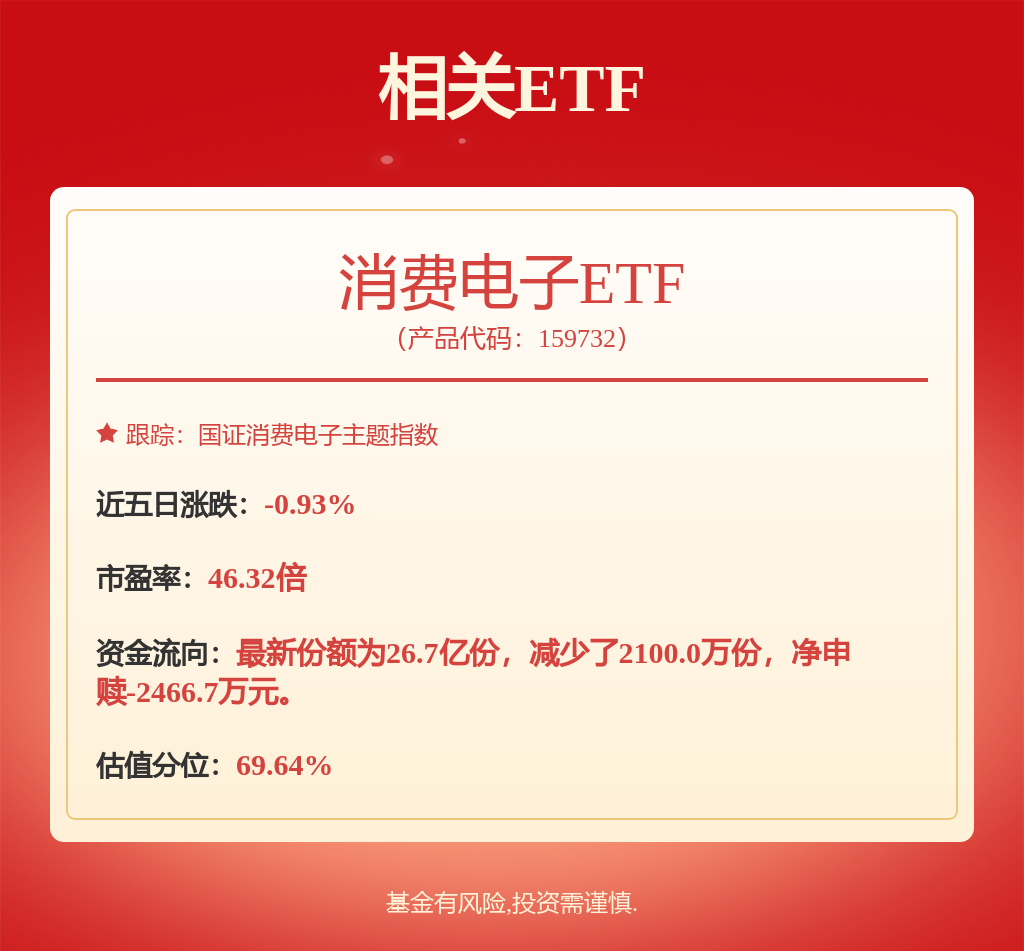
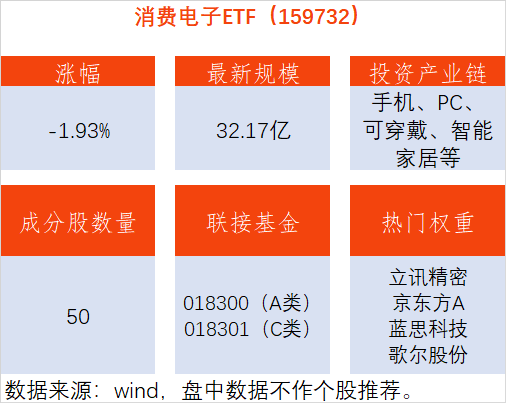
智能手机同比增2%!消费电子ETF(159732)下跌1.93%,信维通信跌8%
Mei Ri Jing Ji Xin Wen· 2026-01-13 05:53
Group 1 - The A-share market experienced a collective decline on January 13, with the Shanghai Composite Index dropping by 0.26% during the session [1] - The biotechnology, precious metals, and cultural media sectors showed strong performance, while aerospace and chemical fiber sectors faced significant declines [1] - The Consumer Electronics ETF (159732) fell by 1.93%, with individual stocks like Baiwei Storage, Sanhuan Group, and Zhaoyi Innovation showing gains of 3.11%, 2.31%, and 1.41% respectively, while Hengxuan Technology saw a decline of 8.86% [1] Group 2 - According to Counterpoint Research, global smartphone shipments are expected to grow for the second consecutive year in 2025, with a year-on-year increase of 2% [3] - Apple leads the market with a historical high of 25% market share in global shipments, while Samsung holds the second position with 17% [3] - Strong demand for AI is driving growth in PCB prices and volumes, with many AI-PCB companies experiencing robust orders and planning significant expansions, indicating potential high growth in Q4 and next year [3]

沪电股份拟3亿美元投资光电集成线路板项目
Zheng Quan Shi Bao· 2026-01-12 18:08
Core Insights - The company has signed an investment cooperation agreement to develop a "High-Density Optoelectronic Integrated Circuit Board Project" aimed at advancing cutting-edge technology research and industrialization [1][2] - The project will establish a wholly-owned subsidiary in Jintan District, Changzhou, with a total investment of $300 million, implemented in two phases [1][2] - Upon full production, the project is expected to add an annual capacity of 1.3 million high-density optoelectronic integrated circuit boards, generating an estimated annual revenue of 2 billion RMB [1] Group 1 - The project aims to enhance the company's strategic development plan, meet future business growth needs, and improve core competitiveness [2] - Implementation of the project will help expand high-end product capacity, optimize product structure, and increase the proportion of high value-added products [2] - The project involves advanced technologies such as CoWoP, mSAP, and optical copper integration, which are characterized by long R&D cycles and high technical difficulty [2] Group 2 - The second phase of the project will depend on the incubation results and market validation of the first phase, with potential delays or termination if expectations are not met [2] - The company is focused on high-growth, high-tech barrier PCB products in sectors such as high-speed network switches and routers, AI servers, HPC, general servers, wireless communication networks, and smart vehicles [2] - Recent financial reports indicate that the company achieved record high quarterly revenue and net profit in Q3 2025, with net profit exceeding 1 billion RMB for the first time [2]
阅峰 | 光大研究热门研报阅读榜 20260104-20260110
光大证券研究· 2026-01-11 00:02
Group 1 - The core viewpoint of the article emphasizes the investment potential of various companies in the context of industry trends and technological advancements, particularly in sectors like automotive, PCB, and energy [3][9][20]. Group 2 - Double Lin Co., Ltd. (300100.SZ) is positioned to benefit from the integration of screw grinding equipment and processes, with a projected net profit of 534 million, 647 million, and 811 million yuan for 2025, 2026, and 2027 respectively [4]. - The PCB industry is experiencing a capital expenditure wave driven by strong AI computing demand, with domestic PCB equipment manufacturers expected to see sustained order growth [9]. - China National Offshore Oil Corporation (600938.SH/0883.HK) is expected to achieve net profits of 135.4 billion, 139.8 billion, and 144.3 billion yuan from 2025 to 2027, benefiting from effective cost control and production growth [20]. - The strategic partnership between Mao Ge Ping (1318.HK) and the global investment firm Ru Wei Kai is aimed at enhancing global market expansion and operational efficiency [23]. - The merger between China Petroleum and Chemical Corporation and China Aviation Oil Group is anticipated to enhance the competitiveness of the refined oil business through an integrated supply chain [27].




研选 | 光大研究每周重点报告 20260103-20260109
光大证券研究· 2026-01-10 00:04
Industry Research - The solid-state battery industry is entering a new phase, with consensus on mass production validation by 2026-2027, driven by multiple catalysts. The divergence lies in the process routes and pilot verification, as well as the ability to achieve a commercial closed loop by 2030. The assessment of technology and manufacturing maturity indicates that solid-state technology will progress from stages 5-6 to 7-8. The mid-term focus is on equipment and key materials, while the long-term shift will be towards leading solid-state companies and material companies with core patents [4]. PCB Equipment - The demand for AI computing power is driving a wave of capital expenditure in the PCB industry, with domestic PCB equipment manufacturers expected to see sustained order growth. The industry outlook remains positive, with NVIDIA's Rubin architecture potentially reshaping the demand and landscape for drilling equipment and needles [6]. Company Analysis - Meilan De (688273.SH) has been a leader in the domestic pelvic floor dysfunction (PFD) market for over a decade, focusing on pelvic and obstetric rehabilitation equipment. The company is expanding into reproductive anti-aging, sports rehabilitation, light medical beauty, and brain-machine interface fields, rapidly building a product matrix for women's health throughout their life cycle through self-research and acquisitions. The company utilizes various energy source technologies, including ultrasound, laser, electrophysiology, electrical stimulation, magnetic stimulation, and high-frequency, continuously leading industry development [6]. - Shuanglin Co. (300100.SZ) has been deeply involved in the automotive parts industry for 40 years, gradually forming industrial advantages through internal improvements and external acquisitions. The equipment and screw rod business are expected to become new growth drivers for the company. The outlook for the second half of 2026 is positive, with expectations for gradual increases in robot deployment and trends towards domestic screw rod replacement. Shuanglin possesses unique advantages in screw rod grinding equipment and processes, making it a rare player in the domestic screw rod field [8].


聊一聊AI硬件和软件
傅里叶的猫· 2026-01-09 15:58
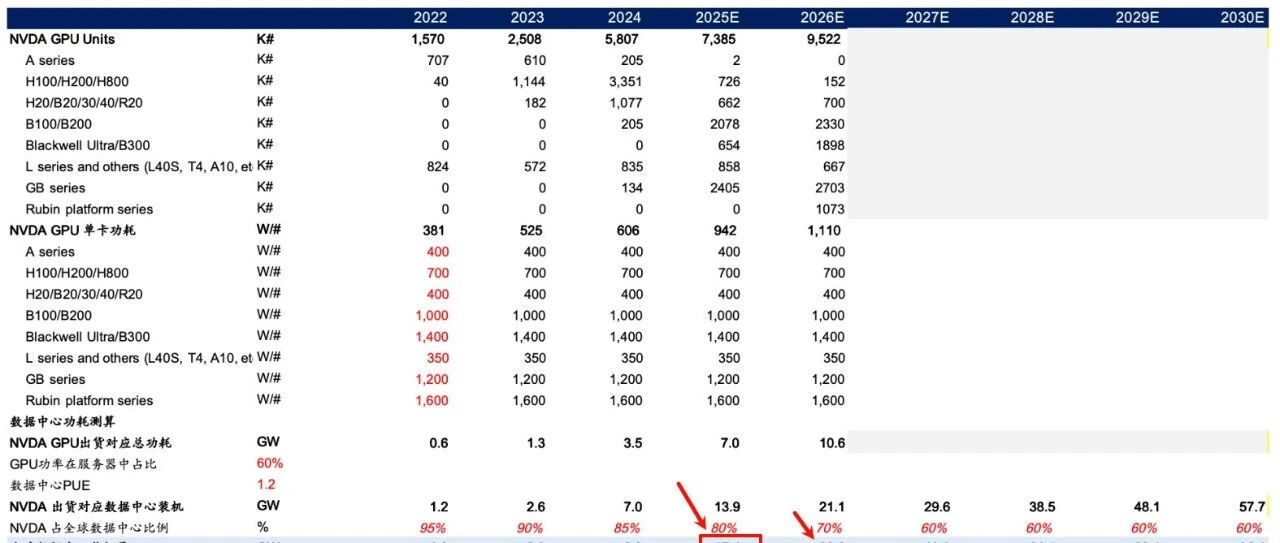
Group 1: AI Hardware Market - The recent performance of AI hardware is not strong, but the US stock market's hardware sector showed some resilience [1] - The memory shortage is exaggerated; a report from Macquarie suggests that the new DRAM capacity in the next two years can only support about 15GW of AI data center construction, which may delay global AI expansion plans [3] - A different perspective from a memory industry expert indicates that the capacity could support 20GW and 33GW this year and next year, respectively [5] - The global data center installation capacity is projected to reach 17.4GW by 2025, with an expected increase to 30.2GW this year [5] - Due to memory constraints, the growth of AI data centers (AIDC) will not be as rapid as anticipated, contributing to the recent decline in hardware market sentiment [7] Group 2: AI Software and Applications - The AI software and application market is exceeding many expectations, with a positive outlook for AI applications this year [8] - The government is intensifying support for AI policies, with initiatives in various sectors like healthcare, education, and manufacturing, aiming for quantifiable goals by 2026 [9] - Major tech companies are competing for AI traffic entry points and ecosystem development, with strategies focusing on both consumer (C-end) and business (B-end) markets [10][11] - For the C-end, companies are enhancing user engagement and monetization capabilities, while for the B-end, they are driving cloud revenue through developer ecosystems [12] - The competition has extended to physical scenarios, with companies like Waymo and Tesla accelerating their efforts in ROBOTAXI [13] - Key technological advancements in AI models are expected to focus on world models, native multimodality, and self-evolving agents, with significant breakthroughs anticipated by 2026 [14][15] - The core competitiveness of AI application companies lies in their ability to integrate technology quickly and effectively into specific scenarios, achieving commercial viability [15]


科创成长ETF南方(589700.SH)涨2.55%,寒武纪涨3.4%
Jin Rong Jie· 2026-01-09 07:37
Group 1 - The A-share market experienced a broad increase, with the Shanghai and Shenzhen indices rising, particularly in the media and domestic software sectors [1] - The Southern Science and Technology Growth ETF (589700.SH) rose by 2.55%, while Cambricon Technologies increased by 3.4% [1] - According to Galaxy Securities, the current stage of technological development is more robust across multiple dimensions, with dominant industry forces shifting from startups to established tech giants with strong cash flows and balance sheets [1] Group 2 - AI commercialization is still in its early stages and has not yet fully materialized, indicating significant growth potential [1] - Despite some localized valuation bubbles, their transmission effect on the overall stock market remains limited [1] - The global monetary easing environment has not fully unfolded, leaving room for policy adjustments [1] Group 3 - There is a persistent mismatch between technological bottlenecks and explosive demand in the hardware industry, with ongoing tight supply of computing and storage [1] - The evolution of large models towards multimodal applications (e.g., video) and the implementation of AI Agent functionalities are significantly increasing token consumption, creating a rigid demand for high-performance computing [1] Group 4 - The global data center vacancy rate is at a historical low, and the growth rate of power supply industries is accelerating [1] - PCB capacity expansion appears rational, driven mainly by high-end HDI and multilayer boards with over 14 layers, which are characterized by high technical barriers and concentrated production among leading companies [1] Group 5 - The compound annual growth rate (CAGR) for high-end PCBs is expected to reach 20.3% and 11.6% respectively from 2024 to 2029 [1] - As of the first three quarters of 2025, industry capital expenditures grew by only 8.4% year-on-year, significantly lower than demand growth, indicating a restrained and orderly capacity expansion [1] Group 6 - The aforementioned trends provide solid fundamental support for investing in science and technology growth index funds, which broadly cover core areas such as computing chips, advanced storage, high-end PCBs, and cloud computing infrastructure [1] - These funds can capture the benefits of the AI hardware boom while effectively mitigating individual stock bubble risks through diversified index-based allocation [1] - The Southern Science and Technology Growth ETF (589700.SH) is positioned to be an efficient tool for sharing in the new round of technological dividends during the critical transition from infrastructure construction to application implementation in AI [1]
