
债券

Search documents
中国大规模抛售美债,特朗普忧虑加深,美方紧急派员来华面谈
Sou Hu Cai Jing· 2025-09-26 08:26
Core Insights - China's significant reduction of U.S. Treasury holdings in July 2025, amounting to approximately $25.7 billion, signals a critical shift in financial relations, as it coincides with a continuous increase in gold reserves, totaling about 74.02 million ounces [1][2] - The U.S. faces persistent fiscal challenges, including rising interest expenses and political gridlock, which exacerbate the situation and contribute to China's accelerated divestment from U.S. debt [3][4] - The recent diplomatic engagements between the U.S. and China, including a bipartisan congressional delegation visit, aim to stabilize market sentiment but may not address the underlying issues of trust and fiscal sustainability [2][3] Group 1: China's Actions - In July 2025, China reduced its U.S. Treasury holdings below $730 billion, marking a significant withdrawal from what was once considered a safe investment [1] - The increase in gold reserves and the reduction in U.S. debt holdings reflect a strategic shift away from reliance on the U.S. dollar, indicating a long-term reconfiguration of asset allocation [2][4] - China's actions are part of a systematic strategy to diversify its reserves and reduce dependency on the U.S. financial system, as evidenced by increased cross-border RMB payments and trade settlements [2][3] Group 2: U.S. Financial Landscape - The U.S. is experiencing a structural fiscal deficit, with rising interest payments and a lack of political consensus, which raises concerns about the sustainability of its financial policies [3][5] - The urgency of the U.S. to stabilize market conditions is evident, but the focus on short-term solutions may not suffice to rebuild long-term trust with China [4][5] - The market's reaction to these developments indicates a growing fear among investors regarding the stability of U.S. debt, as evidenced by fluctuations in bond yields following news of China's actions [4]
美联储降息后最大受益者出现了!黄金股市疯涨,基金圈将彻底变天
Sou Hu Cai Jing· 2025-09-26 06:25
Market Overview - The recent market has seen significant gains, with gold rising over 35% and the stock market increasing by 14%, while the dollar index has dropped by 9.3% and crude oil has fallen by 11.4% [1] - The current market rally is attributed not only to the Federal Reserve's interest rate cuts but also to reductions in tariffs and taxes, indicating potential market bubbles [1] Historical Context - Historical data shows that since 1900, the average increase in stock market bubbles from low to peak is 244%, with current market conditions suggesting there may still be room for growth [3] - The "Seven Giants" have seen a 223% increase since March of the previous year, with a dynamic price-to-earnings ratio of 39 times, indicating that the current rally may not be over yet [3] Investment Strategies - Focus on core assets is recommended, as returns during bubble periods tend to be concentrated in specific sectors rather than widespread [6] - A "barbell strategy" is suggested, where investors hold both high-risk bubble assets for potential gains and undervalued value stocks for stability [7] - Global markets such as Brazil and the UK are highlighted for their attractive price-to-earnings ratios, suggesting opportunities beyond popular stocks [8] Bond Market Insights - Monitoring corporate bonds is crucial, as they often react more sensitively to underlying company fundamentals compared to stocks [9] - Historical patterns indicate that rising interest rates typically lead to falling bond prices, suggesting a strategy of shorting bonds in anticipation of rate hikes [10] Sector Focus - Industries that may be affected by inflation, such as large pharmaceuticals and energy companies, should be monitored closely for potential risks [12] - The depreciation of the dollar is seen as beneficial for international markets, with signs of a positive correlation between the yen and Japanese stocks, indicating potential investment opportunities [12]

外资对中国债券态度转向:是什么信号?
Sou Hu Cai Jing· 2025-09-26 05:32
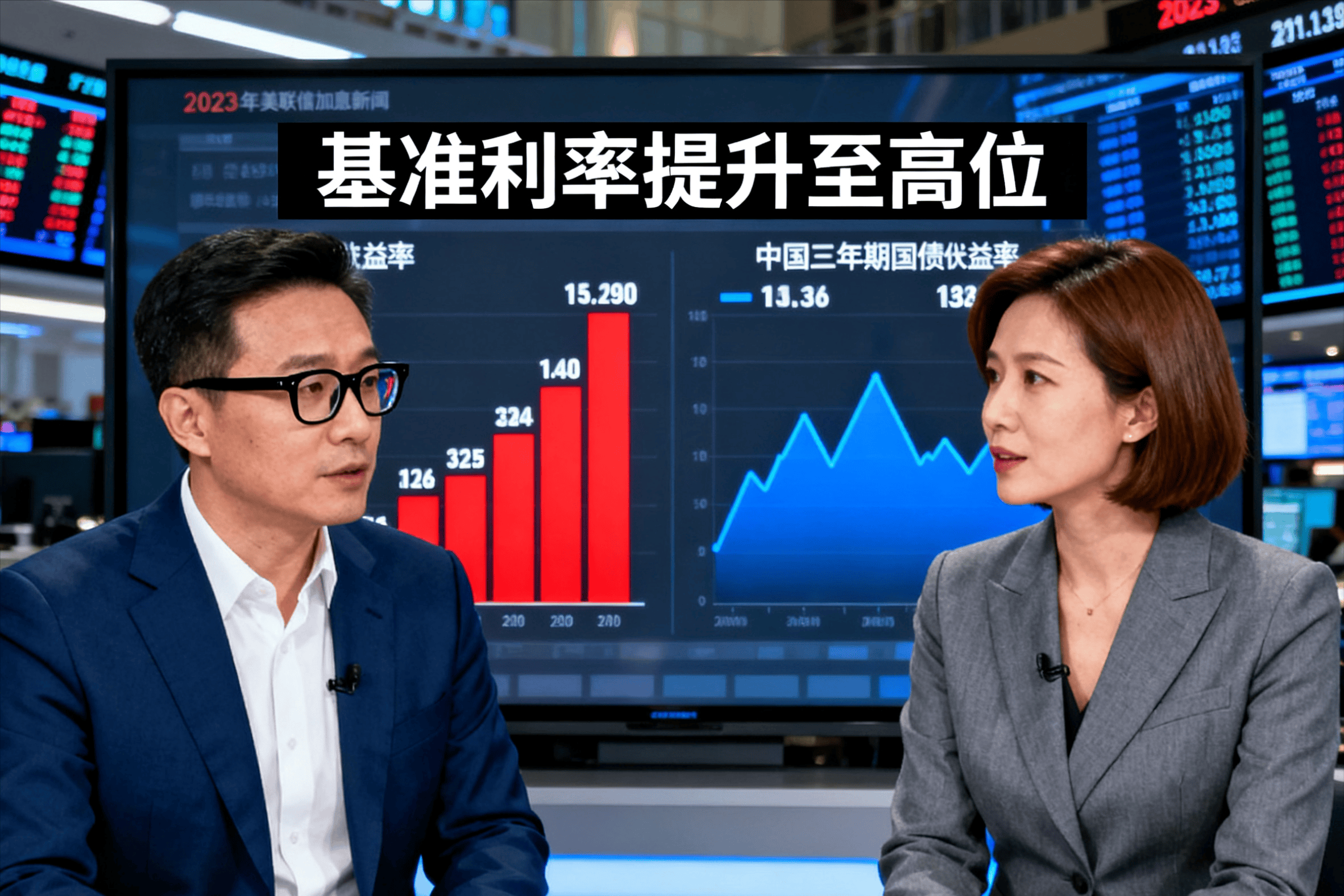
Group 1 - The core viewpoint of the article highlights a dramatic shift in foreign investment attitudes towards Chinese bonds, transitioning from reduction to increased allocation from 2023 to 2025, driven by multiple market factors [2][4]. - In 2023, foreign investors reduced their holdings of Chinese government bonds by approximately 80 billion yuan due to the aggressive interest rate hikes by the Federal Reserve, which pushed U.S. Treasury yields to a 22-year high of 5.5%-5.7%, significantly higher than China's three-year government bond yield of 2.35% [2][4]. - The turning point began in 2024, with a net inflow of 41.6 billion USD into the Chinese bond market, reversing the previous trend of outflows [4]. Group 2 - By May 2025, 1,169 foreign institutions from over 70 countries held Chinese bonds, with an increase of over 270 billion yuan compared to the end of 2024, indicating a significant return of capital [4]. - Foreign investors are focusing on mid-term, high-liquidity assets, particularly increasing their allocation to 3-5 year government bonds, with a net purchase of 144.9 billion yuan year-to-date [5][7]. - The market anticipates that as China's bonds are included in global indices and capital account openness deepens, the proportion of foreign holdings in Chinese bonds may gradually align with the emerging market average of 15%-20% [7].
中诚信国际研究院院长袁海霞:建议加快地方债支出使用
Zhong Zheng Wang· 2025-09-26 01:55
Core Viewpoint - The report emphasizes the importance of local government bonds as a macroeconomic adjustment tool, suggesting an acceleration in the use of local debt expenditures and the issuance of replacement quotas for the following year to stimulate domestic demand [1][2]. Group 1: Local Government Bond Characteristics and Trends - In 2025, local government bond issuance is expected to reach a record high, with a significant increase in the new debt limit and a notable advancement in the replacement schedule [2]. - The issuance of local government bonds is aimed at addressing fiscal deficits and promoting investment, particularly in real estate and government investment funds [2][3]. - The negative list management model has expanded the scope of special bonds, enhancing support for land reserves and the acquisition of idle land and existing housing for affordable housing [2]. Group 2: Structural Optimization and Expansion of Local Debt - Recommendations include optimizing the relationship between central and local governments to ensure sustainable fiscal and debt management [3]. - There is a call for a balanced approach between new debt and refinancing debt, ensuring that project construction and debt rollover needs are met [3]. - The establishment of a long-term regulatory system is necessary to balance quality and quantity throughout the debt cycle, with a focus on asset management and risk monitoring [3]. Group 3: Policy Development and Financial Tools - The report advocates for the accelerated use of special bonds and the early issuance of replacement quotas, with a focus on addressing public service shortfalls and boosting consumption [4]. - It suggests enhancing the coordination between special bonds, policy financial tools, and bank credit to effectively stimulate domestic demand and support economic development goals [4]. Group 4: Project Management and Funding Mechanisms - There is a proposal to optimize and broaden the scope of investment areas, including the establishment of a "positive encouragement list" for emerging sectors [5]. - The report emphasizes the need for a more rigorous project discovery and evaluation mechanism to increase the quality of project reserves [5]. - It also highlights the importance of improving funding management and establishing effective channels for information disclosure and risk monitoring [5].
资讯早班车-2025-09-26-20250926
Bao Cheng Qi Huo· 2025-09-26 01:35
1. Report Industry Investment Rating No relevant content provided. 2. Core Viewpoints of the Report - In Q4 2025, the convertible bond market shows wide - volatility characteristics, and attention should be paid to band and structural selection [27]. - Active funds reduce positions, while passive funds increase allocations. The delisting of Pufa Convertible Bonds in October may bring re - allocation demand [27]. - In Q4, the equity market tends to have a structural market. Equity - biased convertible bonds still have obvious elasticity advantages, and capital outflows bring more profit space for low - price convertible bonds [27]. - A portfolio of ten convertible bonds is recommended to select high - quality targets, focusing on elasticity, and the portfolio is adjusted monthly [27]. 3. Summary by Relevant Catalogs Macro Data Overview - In Q2 2025, GDP at constant prices increased by 5.2% year - on - year, slightly lower than the previous quarter's 5.4% [1]. - In August 2025, the manufacturing PMI was 49.4%, up from 49.3% in the previous month; the non - manufacturing PMI for business activities was 50.3%, up from 50.1% [1]. - In August 2025, the year - on - year growth rates of M0, M1, and M2 were 11.7%, 6.0%, and 8.8% respectively. The new RMB loans of financial institutions in that month were 590 billion yuan [1]. - In August 2025, CPI decreased by 0.4% year - on - year, and PPI decreased by 2.9% year - on - year [1]. - In August 2025, the cumulative year - on - year growth rate of fixed - asset investment (excluding rural households) was 0.5%, and the cumulative year - on - year growth rate of total retail sales of consumer goods was 4.64% [1]. - In August 2025, the year - on - year growth rates of export and import values were 4.4% and 1.3% respectively [1]. Commodity Investment Reference Comprehensive - The Ministry of Commerce called on the US to cancel unreasonable tariffs on China and emphasized that the biggest obstacle to Sino - US economic and trade cooperation is US unilateral restrictions [2]. - Xiaomi launched the Xiaomi 17 series, Xiaomi Pad 8 series, and many other tech home appliances. Xiaomi's founder, CEO Lei Jun, said that self - developed mobile phone SoCs should be persisted for at least 10 years with an investment of at least 50 billion yuan [2]. - According to CME's "FedWatch", the probability that the Fed will keep interest rates unchanged in October is 14.5%, and the probability of a 25 - basis - point rate cut is 85.5% [2]. Metals - On September 25, international precious metal futures generally rose. Fed officials sent mixed policy signals, reflecting the Fed's dilemma in balancing inflation and employment goals [3]. - On September 25, the closing price of the main Shanghai copper contract 2511 was 82,710 yuan/ton, up 3.4%. The suspension of production at the Grasberg mine may exacerbate the global copper supply shortage [3][4]. - The China Non - Ferrous Metals Industry Association proposed to control the expansion of copper smelting capacity. High - end analysts predicted a 500,000 - ton copper supply loss in the next 12 - 15 months [4]. - Congo (Kinshasa) extended the cobalt export ban until October 15 and implemented an export quota system. Cobalt prices have risen nearly 40% this year [4]. - Citi raised its copper price forecast. It is expected that the medium - term copper price will rise to $12,000 per ton in the next 6 - 12 months [5]. Coal, Coke, Steel, and Minerals - In August 2025, global crude steel production increased by 0.3% year - on - year to 145.3 million tons, while China's crude steel production decreased by 0.7% year - on - year to 77.4 million tons [6]. - As of mid - September, the price of coke (quasi - first - grade metallurgical coke) decreased by 4.69% month - on - month, and the price of rebar (HRB400E Φ20mm) increased by 0.29% month - on - month [6][7]. Energy and Chemicals - On September 25, international oil prices fluctuated narrowly. The resumption of crude oil exports in the Kurdish region eased supply concerns, but the unexpected decrease in US crude oil inventories offset some negative impacts [8]. - Daqing Gulong Continental Shale Oil National Demonstration Area added 158 million tons of proven shale oil reserves [8]. - Russia plans to implement a diesel export ban on resellers until the end of the year and extend the gasoline export ban on resellers and producers [8]. Agricultural Products - The Ministry of Agriculture and Rural Affairs called for stabilizing the supply of "vegetable basket" products and promoting the application of high - performance agricultural machinery [9]. - In 2024, China's organic product sales reached 124.7 billion yuan, a year - on - year increase of 22.79%, making China the world's third - largest organic consumer market [9]. - China launched an anti - dumping investigation into imported pecans from Mexico and the US starting from September 25 [10]. - The EU Commission adjusted its forecasts for wheat and corn production and exports in the 2025/26 season [10]. - Argentina resumed taxing the export of grains and their by - products after agricultural product sales reached $7 billion [10]. Financial News Compilation Open Market - On September 25, the central bank conducted 483.5 billion yuan of 7 - day reverse repurchase operations, with a net withdrawal of 3.5 billion yuan on the same day [11]. - On September 25, the central bank conducted 600 billion yuan of 1 - year MLF operations, with a net injection of 300 billion yuan, and has increased the volume of MLF for 7 consecutive months [11]. Important News and Information - China submitted a position paper on the issue of special and differential treatment to the WTO, not seeking new special and differential treatment in current and future negotiations [12][13]. - The Ministry of Commerce responded to issues related to Sino - US soybean trade and Boeing aircraft purchase negotiations, emphasizing that US unilateral restrictions are the main obstacle to normal economic and trade cooperation [2][13]. - The Ministry of Commerce launched a trade and investment barrier investigation into Mexico's measures to raise import tariffs on Chinese products [14]. - Three US companies were included in the unreliable entity list for their military - related cooperation with Taiwan [15]. - The China Foreign Exchange Trade System will optimize the "Swap Connect" operation mechanism and increase the daily net limit to 450 billion yuan from October 13 [15]. - The central bank deputy governor proposed to expand the application scenarios of the Hong Kong RMB bond market [16]. - The Hong Kong Securities and Futures Commission and the Hong Kong Monetary Authority jointly released a development roadmap for the fixed - income and money market [16]. - The scale of China's public funds exceeded 36 trillion yuan for the first time at the end of August [17]. - Internet giants such as Tencent, Baidu, and Alibaba are accelerating their layout in the dim - sum bond market [17]. - The Digital RMB International Operation Center was officially launched on September 24, with three business platforms launched [18]. - The Bank of China Research Institute predicted that more banks may cut deposit rates in Q4, and the RMB exchange rate will remain stable and may appreciate [18]. Bond Market Summary - MLF incremental roll - over had little positive impact on the bond market. Spot bonds and futures were generally weak [21]. - In the exchange bond market, Vanke bonds generally rose, while some other bonds fell [21]. - The CSI Convertible Bond Index rose 0.46%, and the Wind Convertible Bond Equal - Weighted Index rose 0.33% [22]. - On September 25, most money market interest rates rose [22]. - Shibor short - term varieties showed differentiation [23]. - The winning yields of some financial bonds issued by policy - based banks were announced [23][24]. - Inter - bank repurchase fixed - rate bonds and silver - silver inter - bank repurchase fixed - rate bonds generally rose [24]. - European and US bond yields generally rose, with some exceptions [24][25]. Foreign Exchange Market Express - The on - shore RMB against the US dollar closed at 7.1253, down 34 basis points from the previous trading day [26]. - The US dollar index rose 0.60%, and most non - US currencies fell [26]. Stock Market Important News - The A - share market showed a differentiated trend, with the ChiNext Index hitting a new stage high for two consecutive days. AI concept stocks rebounded [29]. - The Hong Kong Hang Seng Index fell 0.13%, while the Hang Seng Tech Index rose 0.89%. Geely Auto rose nearly 4% on its first trading day [29]. - The Shanghai, Shenzhen, and Beijing stock exchanges announced the holiday schedule for the National Day and Mid - Autumn Festival [29]. Today's Reminders - On September 26, 247 bonds will be listed, 88 bonds will be issued, 139 bonds will make payments, and 344 bonds will repay principal and interest [28].
配置角度看,国债有望受全球资本青睐
Mei Ri Jing Ji Xin Wen· 2025-09-26 01:06
Core Viewpoint - The article discusses the asset allocation strategy from a macroeconomic perspective, highlighting the trend of currency depreciation and its impact on capital flows and asset prices since 2022, with a recent shift towards currency appreciation and potential foreign capital inflow into Chinese bonds [1][2][3] Group 1: Currency Trends and Capital Flows - Since early 2022, there has been a trend of currency depreciation leading to capital outflows from developing countries to developed ones, primarily due to the Federal Reserve's interest rate hikes [1][2] - In July 2023, a shift occurred with the onset of the Federal Reserve's rate cut cycle and stabilization of the domestic economy, resulting in a trend of currency appreciation in China [2][3] Group 2: Investment Opportunities in Bonds - As the Chinese currency transitions from depreciation to appreciation, foreign capital is expected to flow into Chinese bonds, which are becoming increasingly attractive due to their relative stability and the country's fiscal discipline [2][3] - The global debt cycle and rising debt costs in other countries make Chinese government bonds a preferred asset for global capital seeking stability and potential appreciation [3][4] Group 3: Equity Market Outlook - The equity market is anticipated to experience a slow bull market, contrasting with previous rapid bull markets, leading to a more cautious approach to asset allocation [4] - In a slow bull market, investors are likely to rebalance their portfolios between equities and bonds, especially during periods of rapid equity price increases or corrections [4] Group 4: Specific Investment Products - The Ten-Year Government Bond ETF (511260) is highlighted as a valuable investment option, being the only product tracking the Shanghai Stock Exchange's ten-year government bond index, offering transparency and favorable trading conditions [5]
三季度债市为何调整?
Mei Ri Jing Ji Xin Wen· 2025-09-26 01:06
Group 1 - The main reason for the adjustment in the bond market in Q3 is the shift in market risk appetite due to the rise in equity markets, leading to a reallocation of funds from bonds to equities. However, the trend of residents moving their savings from fixed income to equities is not very pronounced, as many still prefer stable and relatively attractive return assets, resulting in continued interest in bond assets after the Q3 adjustment [1] - The implementation of the anti-involution policy in July has led to a rebound in various commodities in Q3, including black commodities and upstream assets in the photovoltaic industry, indicating a tightening of supply-side constraints. Some leading companies in the photovoltaic sector are investing in new companies to store capacity and eliminate outdated production [1][2] - The anti-involution policy is primarily focused on supply-side control of production capacity, which is expected to gradually stabilize prices. However, the transmission of this policy to price levels may not be evident until Q1 of next year, with the market's inflation expectations peaking around August and September [2] Group 2 - The current factors causing significant adjustments in the bond market have begun to correct, leading to a substantial rise in the bond market. Many short and long-term bonds have become attractive for allocation, as previously negative factors are dissipating [3] - The Ten-Year Government Bond ETF (511260) is highlighted as having allocation value, being the only product tracking the Shanghai Stock Exchange Ten-Year Government Bond Index, with advantages such as transparent holdings and T+0 trading [3]
192万亿元债市再迎开放红利 人民币资产吸引力凸显
Jin Rong Shi Bao· 2025-09-26 01:02
Core Insights - The Hong Kong Securities and Futures Commission and the Hong Kong Monetary Authority held the first Hong Kong Fixed Income and Currency Forum, where the Deputy Governor of the People's Bank of China, Zou Lan, emphasized the unique advantages of RMB bond assets and the robust development of China's bond market [1][2] - Zou announced four significant measures aimed at enhancing cross-border investment and financing convenience, promoting high-level financial market openness, and accelerating the development of the offshore RMB market [1][6] Group 1: China's Bond Market Development - China's bond market ranks second globally, with a market balance of 192 trillion RMB as of August 2025, and a bond issuance scale exceeding 59 trillion RMB in the first eight months of 2025, reflecting a 14% year-on-year increase [2] - The net financing from bonds accounted for 44.5% of the total social financing increment during the same period, indicating its critical role in financing the real economy [2] - The proportion of bond net financing in total social financing has risen from around 30% five years ago to over 40% currently, showcasing increased market activity and investor diversity [2] Group 2: International Investor Interest - The international appeal of China's bond market has grown, with nearly 1,170 foreign institutional investors from around 80 countries holding approximately 3.9 trillion RMB in bonds, a nearly fourfold increase since the launch of the Bond Connect [3] - Major global asset management firms have entered the Chinese bond market, with over 80 of the top 100 firms now participating [3] - Despite global market volatility, China's financial market remains stable, with Chinese bonds gaining significant representation in global indices [3] Group 3: Yield and Investment Characteristics - Chinese bonds offer competitive short-term and long-term yields, with Bloomberg data indicating a 70% return over the past decade for holders of Chinese bonds in the Bloomberg Barclays Global Aggregate Index [4] - The actual yield of RMB bonds remains relatively high even after accounting for inflation, providing a solid value retention and appreciation opportunity for global RMB holders [4] - RMB bonds exhibit low correlation with G7 and other emerging market bonds, enhancing their diversification value, while their trading liquidity is robust, with an average turnover rate close to four times [4] Group 4: Policy Measures and Future Outlook - The People's Bank of China announced four key measures to enhance cross-border investment and the offshore RMB market, including support for foreign institutional investors in bond repurchase transactions and expanding the swap market [7][8] - The measures aim to improve the efficiency of RMB bond usage and facilitate better risk management for investors [7] - The ongoing support for Hong Kong's status as an international financial center reflects China's commitment to high-level financial market openness and cooperation [8]
央行:加快推进 人民币国债期货在港上市
Zheng Quan Shi Bao· 2025-09-25 23:33
Core Insights - The Chinese bond market has experienced healthy and rapid development, significantly enhancing its international influence and attractiveness [1] - There is substantial potential for further opening of the Chinese bond market, with plans to accelerate the launch of RMB government bond futures in Hong Kong [1] Market Development - The proportion of net financing through bonds has increased from approximately 30% five years ago to over 40% currently [1] - The annual turnover rate of government bonds has risen from 2.4 to 3.8 over the past five years, indicating increased trading activity [1] - As of August 2025, the total balance of the Chinese bond market is projected to reach 192 trillion yuan, making it the second largest in the world [1] Investment Value - RMB bonds are showing strong investment value, with both short-term and long-term yields ranking among the highest globally [2] - The actual yield of RMB bonds remains relatively high even after adjusting for inflation, providing a good value retention and appreciation opportunity for global RMB holders [2] - RMB bonds exhibit low correlation with yields from G7 countries and other emerging markets, enhancing their diversification benefits [2] Liquidity and Trading Activity - RMB bond trading is active, with an average annual turnover rate close to 4 times for government and policy financial bonds, and some of the most active bonds seeing turnover rates near 150 times [2] - The bid-ask spreads for interest rate bonds have narrowed significantly, aligning closely with levels seen in developed markets [2] Foreign Investment and Market Access - Currently, foreign investors hold about 2% of the total bond market, indicating significant potential for further opening compared to developed economies [2] - Nearly 1,170 foreign institutional investors from around 80 countries have entered the Chinese bond market, with total holdings reaching approximately 3.9 trillion yuan, a nearly fourfold increase since the launch of the Bond Connect [3] Regulatory Support and Future Initiatives - The central bank is promoting the acceptance of mainland bonds as eligible collateral in Hong Kong and globally, enhancing their use in liquidity arrangements and derivative transactions [3] - Plans are in place to support various foreign institutional investors in conducting bond repurchase transactions in the Chinese bond market and to expand the "Swap Connect" quoting team [4]
央行:加快推进人民币国债期货在港上市
Zheng Quan Shi Bao Wang· 2025-09-25 23:12
Core Insights - The Chinese bond market has experienced healthy and rapid development, significantly enhancing its international influence and attractiveness [1][2] - There is substantial potential for further opening of the Chinese bond market, with plans to accelerate the launch of RMB government bond futures in Hong Kong [1][4] Market Development - The proportion of net financing through bonds has increased from approximately 30% five years ago to over 40% currently, indicating a growing role in overall social financing [1] - The annual turnover rate of government bonds has risen from 2.4 to 3.8 over the past five years, reflecting increased trading activity [1] - As of August 2025, the total balance of the Chinese bond market is projected to reach 192 trillion yuan, making it the second largest in the world [1] Investment Value - RMB bonds are showing strong investment value, with both short-term and long-term yields ranking among the highest globally [2] - The actual yield of RMB bonds remains relatively high even after accounting for inflation, providing a good value retention and appreciation opportunity for global RMB holders [2] Risk Diversification - RMB bonds offer significant diversification benefits, with low correlation to yields from G7 countries and other emerging markets [2] Liquidity and Trading Activity - RMB bond trading is active, with an average annual turnover rate close to 4 times for interest rate bonds, and some of the most active bonds seeing turnover rates near 150 times [2] - The bid-ask spreads for interest rate bonds have narrowed significantly, aligning closely with developed market levels [2] Foreign Investment - Currently, foreign investors hold only 2% of the total bond market, indicating considerable room for growth compared to developed and some emerging markets [2] - Nearly 1,170 foreign institutional investors from around 80 countries have entered the Chinese bond market, with total holdings reaching approximately 3.9 trillion yuan, a nearly fourfold increase since the launch of the Bond Connect [3] Regulatory Support - The central bank is working to make Chinese bonds widely accepted as eligible collateral in Hong Kong and global markets, enhancing their usability in various financial transactions [3] - Plans are in place to support foreign institutional investors in conducting bond repurchase transactions in the Chinese bond market [4]