
汽车

Search documents
美媒感慨:如果不是中国还在反抗特朗普,几乎全世界都向他投降了!美国贸易政策太混乱
Sou Hu Cai Jing· 2026-02-23 01:56
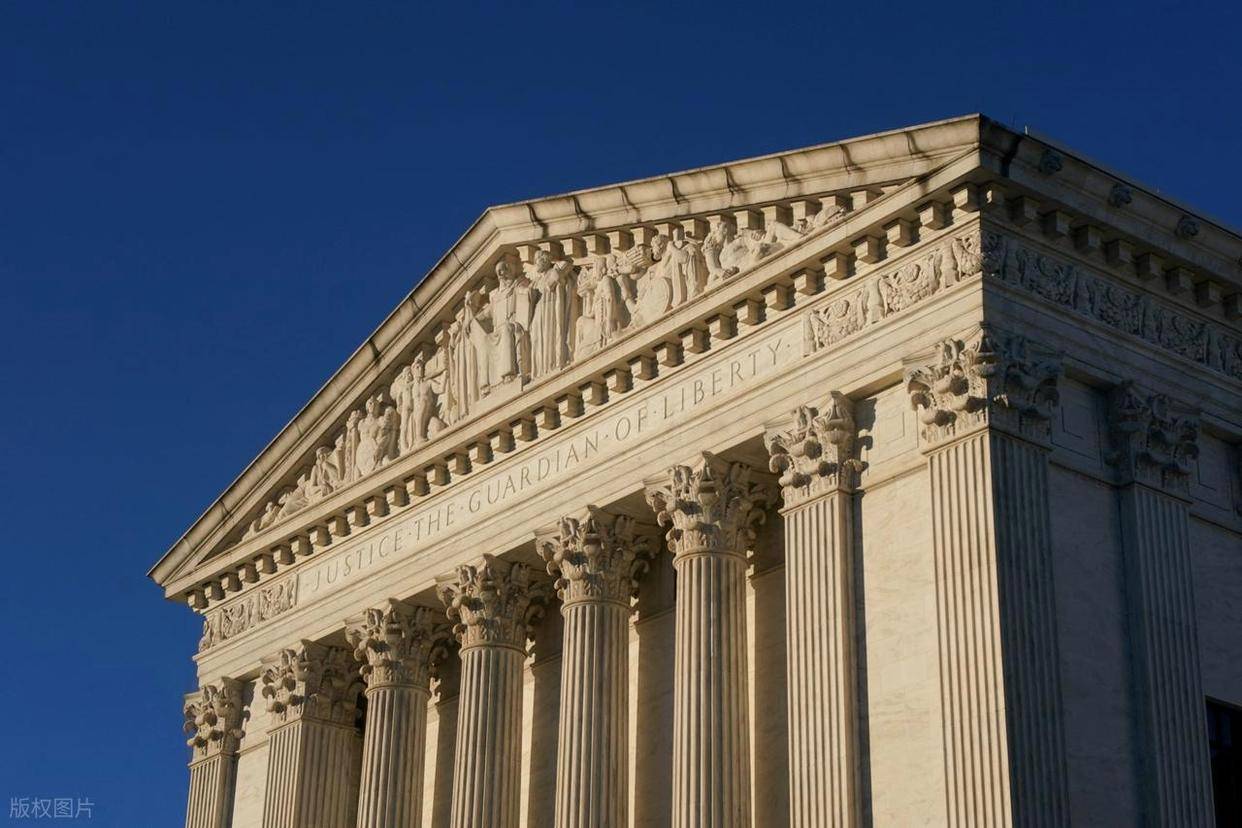
Group 1 - The U.S. Supreme Court ruled that the tariffs imposed by the Trump administration under the International Emergency Economic Powers Act were illegal, potentially affecting over $175 billion in tariffs and disrupting the administration's trade strategy [1][9]. - The tariffs initiated by the Trump administration began in early 2025, targeting various industries including steel, aluminum, and automotive parts, and escalated to a baseline 10% tariff on all global trade partners [1][3]. - The average tariff rate increased from less than 3% to nearly 30%, marking the highest level since 1900, which significantly impacted global markets and led to a decline in U.S. corporate profits [1][5]. Group 2 - The tariffs on Chinese goods reached as high as 125%, prompting retaliatory measures from China, which raised its tariffs on U.S. imports to 125% as well [3][5]. - The legal basis for these tariffs was questioned, as the Trump administration used a law intended for emergency situations to justify broad tariff increases, leading to significant market volatility and a drop in global economic growth forecasts [3][5]. - U.S. companies faced severe financial impacts, with General Motors reporting a loss of $1.1 billion due to tariffs, and overall corporate profits in the U.S. declining by $118.1 billion in the first quarter of 2025, the largest drop since Q4 2020 [5][9]. Group 3 - The Supreme Court's decision is seen as a major setback for Trump's economic agenda, undermining claims that increased tariffs would boost revenue and protect jobs, as the possibility of refunding over $175 billion in tariffs looms [9][11]. - Despite the ruling, the Trump administration quickly implemented a new 10% global tariff using a different legal framework, indicating that while one avenue for tariffs was closed, others remain available [9][11]. - Global trade partners expressed cautious optimism regarding the Supreme Court's ruling, suggesting a potential end to the era of unrestricted tariff increases by the U.S. [11].

调研火爆,机构关注这些赛道
Huan Qiu Wang· 2026-02-23 01:47
Group 1 - Over 800 listed companies have disclosed institutional investor research records since the beginning of the year, with Daikin Heavy Industries being a popular target, attracting over 300 institutions for research [1][3] - In February, Tianneng Wind Power received research attention from over 200 institutions, indicating strong interest in the wind energy sector [1][3] - Daikin Heavy Industries revealed plans for major deliveries of overseas offshore wind monopile projects by 2026, primarily using the DAP delivery model [3] Group 2 - Tianneng Wind Power anticipates accelerated domestic offshore wind bidding and construction from 2025 to 2026, particularly in Guangdong, alongside global demand from Europe, Southeast Asia, Japan, and South Korea, suggesting sustained market growth [3] - Institutional interest is notably high in sectors such as machinery, automotive, and basic chemicals, with significant attention from institutions in the past month [3] - Citic Securities has conducted the most research, exceeding 200 times this year, reflecting a strong interest in A-share listed companies, particularly in bank stocks [3]



春节要闻与市场主线:特朗普关税裁决、AI竞赛、中东局势升温
Sou Hu Cai Jing· 2026-02-23 01:46
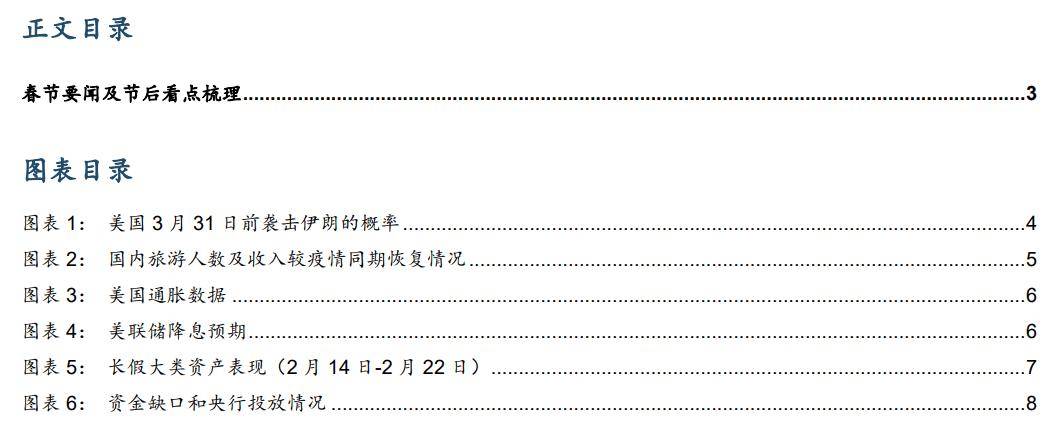
Core Viewpoint - The travel data during the Spring Festival showed strong performance, while the IEEPA tariff ruling and escalating Middle East tensions disturbed risk appetite. The AI competition accelerated, and the resilience of the US economy led to a decline in interest rate cut expectations [1][2][7] Group 1: Major Events and Market Trends - The US Supreme Court ruled the IEEPA tariffs illegal, prompting Trump to invoke the Trade Act of 1974, resulting in an average tariff rate that may not differ significantly from previous levels [2][8] - The technology sector continues to see a high level of interest with new AI and robotics products emerging [2][14] - The US economy remains resilient, with inflation pressures emerging, leading to a decline in interest rate cut expectations [2][23] Group 2: Asset Class Performance - During the Spring Festival, major asset classes showed divergence, with the Nasdaq, Korean index, and European stocks rising by 1.51%, 5.92%, and 2.44% respectively, while Hong Kong stocks weakened due to liquidity and competitive pressures [3][26] - The bond market showed mixed results, with US Treasury yields slightly rising while Japanese and German long-term bond yields fell [3][26] - Precious metals and oil performed strongly due to safe-haven demand, with gold and silver prices reaching $5104 and $84 per ounce, respectively, and oil prices rising to $71 per barrel [3][26] Group 3: Debt Market Outlook - The post-Spring Festival bond market will largely depend on the fundamentals, policy signals, supply and demand, and stock market performance [4][41] - The bond market is expected to remain in a volatile state, with limited space below 1.8% for the 10-year Treasury yield [4][41] - The demand side of the bond market is primarily driven by insurance and bank allocations, with a focus on the potential for structural opportunities in medium to short-term bonds [4][40] Group 4: Stock Market and Convertible Bonds - The stock market is expected to open slightly lower on the first trading day after the holiday, with a focus on tariff and trade issues, the Fed's interest rate decisions, and geopolitical concerns [5][42] - The overall market sentiment is expected to remain positive, with potential for a quick recovery after a slight dip [5][42] - Investors are advised to optimize their positions during the post-holiday low opening, particularly in sectors like AI applications and humanoid robots that may be undervalued due to market sentiment [5][48]
策略类●短端情绪面虽有少许扰动,但新股板块结构性活跃或依然可期
Huajin Securities· 2026-02-23 00:55
Market Overview - The new stock sector is expected to remain structurally active despite slight disturbances in short-term sentiment, with a focus on AI applications and other emerging themes[1] - The average increase of new stocks listed since 2025 is approximately -0.8%, with about 35.4% of new stocks achieving positive returns[1][29] Recent Performance - In the last trading week, the average first-day increase for newly listed stocks was around 237%, compared to 145% in the previous week, indicating a rise in trading enthusiasm[4][26] - The average first-day trading volume for newly listed stocks was 75.7%, with a notable structural difference in performance among various sectors[26] Upcoming Listings - Two new stocks are set to be listed this week, both from the North Exchange, with an average issuance price-earnings ratio of 14.4X[34] - The upcoming stocks include Tongbao Optoelectronics and Tongling Technology, both in the automotive sector, with expected earnings growth rates of 69.65% and 72.95% respectively[39][37] Investment Recommendations - Focus on technology sectors such as AI, robotics, and commercial aerospace, which have significant long-term growth potential and event-driven catalysts[2] - Consider rotating investments in sectors like innovative pharmaceuticals, new consumption, and new energy, which have shown recent performance stabilization[2] Risk Factors - Potential changes in historical volatility patterns of new stocks, data inaccuracies, systemic risk impacts, and sudden market sentiment shifts pose risks to investors[10]
陆家嘴财经早餐2026年2月23日星期一
Sou Hu Cai Jing· 2026-02-23 00:50
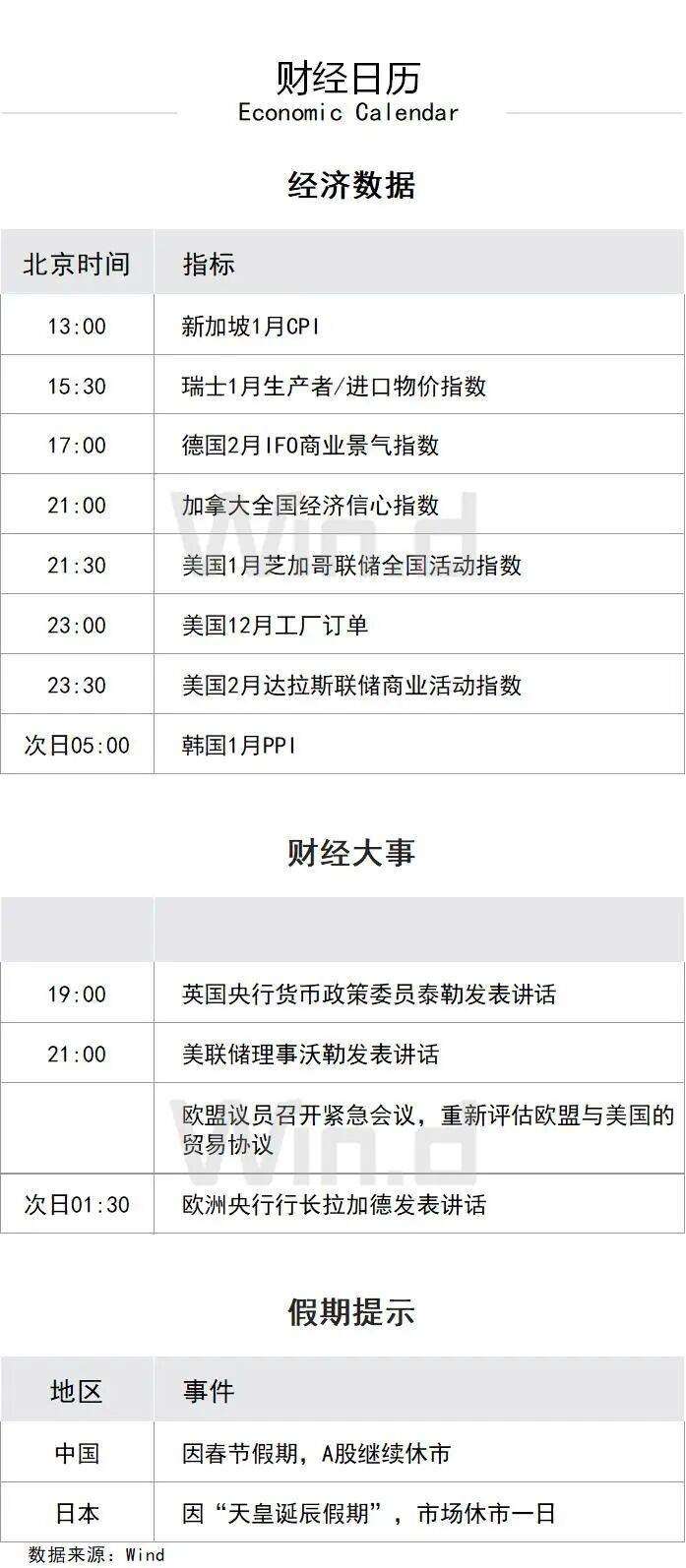
Group 1 - The global market is focused on the new 15% tariffs announced by President Trump, which may face legal challenges, while bilateral trade agreements remain valid [4][10] - The A-share market is set to open for trading after the Spring Festival, with public funds prepared for investment, anticipating a balanced market structure with a focus on "technology growth" and "Chinese advantages" [5] - The Spring Festival box office has exceeded 5 billion yuan, marking the eighth consecutive year of over 100 million viewers [6] Group 2 - The Chinese government is pushing for modernization in agriculture, emphasizing the integration of various sectors and the development of technology-driven agriculture [2] - The steel industry in China has achieved significant reductions in energy consumption and emissions, with over 80% of crude steel capacity meeting ultra-low emission standards [6] - The AI industry is experiencing strong demand, with companies like SK Hynix and Huagong Technology reporting full order books and operational capacity [8] Group 3 - The global investment landscape is seeing a surge in capital inflow into Latin American markets, with the MSCI Emerging Markets Latin America Index reaching an eleven-year high [11] - The Chinese yuan has been appreciating against the US dollar, driven by favorable external conditions and increased corporate demand for currency exchange [11]

大年初四安徽一小伙驾车出事故,刚还完贷款的宝马几乎撞报废,小伙微笑合影:人没事就好
Xin Lang Cai Jing· 2026-02-23 00:08
而这辆宝马轿车,他一个月前才刚刚还清贷款,如今车况已接近报废。 本文转自【江苏新闻】; 据阜阳公众网消息 2月20日 安徽阜阳一小伙 驾驶汽车发生交通事故 当事人小谢告诉记者,20日上午8点多,他从颍上火车站接完亲友返程,行驶至事发路口时,与一辆比亚迪轿车发生碰撞,他的宝马轿车防撞梁凹陷、大 灯爆裂、6个气囊全部弹出、前挡风玻璃也碎了…… 虽然车"废了",但万幸车里的两人均无大碍。 geom 2 公众号 江苏新闻 事故发生后,小谢笑着和事故车辆合影,并把照片发到了网上。21日,小谢接受采访时坦然说道: "事已至此,我总不能坐在那里哭吧,万幸人没事,就想着拍个照片纪念一下,有个好心态比啥都重要。" 事发后,小谢乘坐家人的车辆平安返回。目前,该起事故的责任认定工作正在进行中。 来源丨阜阳公众网 中国新闻网 ...

败诉后美国对华关税彻底归零?只下调了5%,未来大概率加回来
Sou Hu Cai Jing· 2026-02-23 00:01
Group 1 - The U.S. Supreme Court ruled that the Trump administration's imposition of tariffs under the International Emergency Economic Powers Act was illegal, leading to the potential repeal of several previously announced tariffs [1] - Following the ruling, the White House announced the termination of related executive orders, marking a new chapter in the legal battle over tariff legitimacy [1] - The Trump administration quickly shifted strategies, invoking Section 122 of the Trade Act to impose a 15% additional tariff on most imported goods, effective for 150 days, complicating the already intricate U.S. tariff policy landscape [1] Group 2 - The U.S. tariff system against China is layered, starting with the Most Favored Nation rate, which was around 2% before 2018, but the introduction of the "301 tariffs" significantly changed this, becoming a core tool in the U.S.-China trade war [3] - The Biden administration further escalated tariffs, imposing up to 100% on electric vehicles and raising semiconductor tariffs to 50% [3] - The "232 tariffs" target specific goods like steel and automobiles under the guise of national security [3] Group 3 - The tariffs known as "reciprocal tariffs" and "fentanyl tariffs," implemented under the International Emergency Economic Powers Act, were invalidated by the Supreme Court ruling, which could theoretically reduce the average tariff on Chinese imports by 20% [6] - However, the introduction of the new "122 tariffs" at 15% counteracts this reduction, resulting in a net decrease of only 5%, keeping the average tariff at approximately 30.5% [6] - This dynamic adjustment highlights the U.S. government's strategic use of various legal provisions to achieve policy goals while maintaining legal legitimacy [6][11] Group 4 - Historically, U.S. tariff policy has shown a pattern of tool iteration, with the International Emergency Economic Powers Act being favored for its expediency during the Trump administration [7] - The Supreme Court's ruling has set clear legal boundaries for tariff imposition, pushing the government to rely on legally recognized provisions like "232 tariffs" and "301 tariffs" [7] - Although these provisions require longer preparation periods, they offer stability and targeted high tariffs on specific goods, indicating a shift from rapid response to procedural compliance in U.S. tariff strategy [9] Group 5 - The U.S. judicial system does not oppose tariffs per se but corrects procedural violations, suggesting future tariffs will increasingly depend on legally vetted provisions, leading to longer implementation cycles but more predictable outcomes [11] - In the short term, a 10% tariff reduction may alleviate some export pressures for China, but the average tariff remains significantly higher than pre-2018 levels, indicating ongoing cost pressures [13] - The retention of "301 tariffs" and "232 tariffs" allows for targeted high tariffs on strategic industries, necessitating a comprehensive approach from China in formulating response strategies [13]
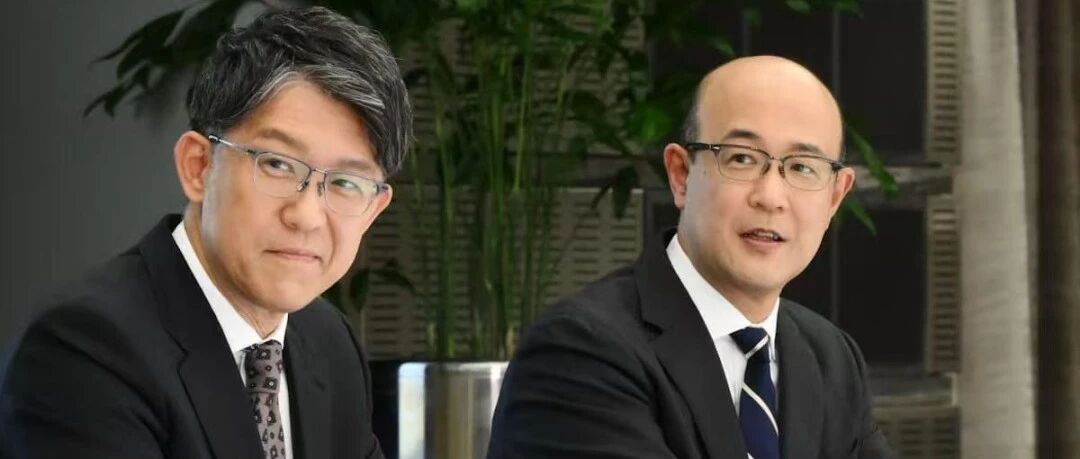
为什么丰田社长非换不可?
汽车商业评论· 2026-02-22 23:06
Core Viewpoint - The recent leadership change at Toyota reflects a strategic shift towards prioritizing financial stability and investment efficiency amid rising costs and competitive pressures in the automotive industry [5][11][19] Group 1: Leadership Transition - Toyota appointed CFO Kenta Nishikata as the new president, marking the first time since 2009 that a non-engineer has taken the helm, indicating a shift from an engineering-focused leadership to a finance-oriented approach [5][10] - Former president Akio Toyoda, who had been in charge for nearly 14 years, will now serve as vice chairman and chief industry officer, allowing him to focus on broader industry issues [5][18] - The leadership change is seen as a response to profit pressures and the need for a more robust financial strategy in light of increasing costs and competition [5][11][19] Group 2: Financial Focus - Kenta Nishikata emphasizes the importance of building a solid financial foundation to enable bold investments in future technologies, particularly in the context of the ongoing industry transformation [7][9] - Under Nishikata's leadership, Toyota aims to improve its profit structure and maintain sufficient capital reserves to navigate the challenges posed by rising costs and competition from new entrants in the market [9][16] - The company has faced significant financial challenges, including a 43% drop in net profit for the third fiscal quarter of 2025, largely attributed to the impact of U.S. tariffs [13][14] Group 3: Strategic Implications - The appointment of a finance expert as president signals a strategic pivot for Toyota, prioritizing financial discipline to stabilize operations while pursuing ambitious investments in software, AI, and autonomous driving technologies [10][14][19] - Analysts suggest that this leadership change is crucial for Toyota to effectively manage the dual pressures of external industry changes and internal operational reforms while striving for profitability [16][19] - The company recognizes the need for substantial investment in technology to catch up with competitors, particularly in software development, which is seen as critical for future success [18][19]

最高法院阻止关税重击后,特朗普开辟新道路
Xin Lang Cai Jing· 2026-02-22 20:28
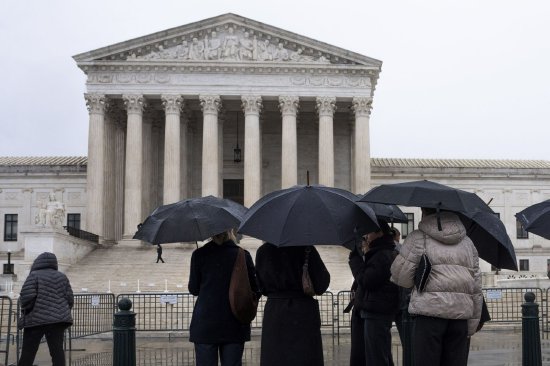
Group 1 - The U.S. Supreme Court's 6-3 ruling has overturned several tariff policies implemented by President Trump, significantly altering the landscape of trade protectionism in the U.S. [1][3][24] - Following the ruling, Trump announced a new 10% tariff on global goods, which he later increased to 15%, indicating a continued commitment to his tariff agenda despite legal setbacks [1][24][34] - The ruling limits Trump's ability to impose tariffs unilaterally, requiring adherence to complex legal procedures, which may hinder his previous flexibility in trade negotiations [2][24][34] Group 2 - The ruling is seen as a pivotal moment that reinforces judicial authority over presidential economic policy, potentially reshaping the balance of power between the executive and legislative branches [5][26] - Economic indicators show that despite a temporary boost from AI investments, the U.S. economy is facing challenges, including a slowdown in Q4 and a persistent trade deficit, which contradicts Trump's core economic goals [26][29][40] - Polls indicate that voters believe Trump's tariffs have increased financial burdens on households, prompting him to consider adjustments to tariff policies ahead of the upcoming midterm elections [26][29][38] Group 3 - The Republican Party is experiencing internal divisions regarding tariff policies, with some members voting to repeal tariffs on Canadian imports, reflecting growing concerns over economic impacts [6][27] - Businesses are expressing a desire for a more stable and predictable trade environment, as current uncertainties have led to hesitance in investment and hiring decisions [31][32][37] - The expansion of tariff exemptions to cover over one-third of U.S. imports, including essential goods, suggests a shift towards a more nuanced approach to trade policy [37][40]
以旧换新点燃春节消费活力
Xin Lang Cai Jing· 2026-02-22 17:58
Group 1 - The core viewpoint of the articles highlights the significant impact of the "trade-in for new" policy in Chengdu, which has stimulated consumer spending during the Spring Festival, with substantial application volumes and financial contributions from various sectors [1][2][3] - As of February 18, 2023, Sichuan Province recorded 1.124 million applications for home appliance trade-ins, generating a consumption boost of 4.344 billion yuan, while digital and smart product applications reached 1.618 million, contributing 4.878 billion yuan [1][2] - Chengdu has emerged as the main hub for trade-in consumption, significantly contributing to the overall figures in Sichuan Province [1][2] Group 2 - The trade-in policy has been effectively implemented in Chengdu, with a focus on optimizing service processes and enhancing subsidy policies to encourage consumer participation [2][3] - The 2026 trade-in policy will include subsidies for six categories of home appliances, with a maximum subsidy of 1,500 yuan per item, and for digital products, including new categories like smart glasses, with a subsidy cap of 500 yuan [2][4] - The policy is expected to be supported by a total of 6 billion yuan in provincial funding, which will continue to drive the trade-in consumption and promote market upgrades until December 31, 2026 [4]