自动驾驶

Search documents
速腾聚创涨超5% 与滴滴自动驾驶宣布达成新一代Robotaxi车型定点合作
Zhi Tong Cai Jing· 2025-11-25 02:21
Core Viewpoint - SUTENG JUCHUANG (02498) has seen a stock price increase of over 5%, currently trading at 32.42 HKD, with a transaction volume of 99.86 million HKD, following the announcement of a partnership with Didi Autonomous Driving for a new generation of Robotaxi models [1] Group 1: Partnership Details - SUTENG JUCHUANG and Didi Autonomous Driving have established a targeted collaboration for the next-generation Robotaxi models [1] - The partnership will utilize SUTENG JUCHUANG's unique mass-producible ultra-high line count digital main lidar EM4 and all-solid-state blind spot compensation digital lidar E1 to provide a digital lidar perception solution for Didi's Robotaxi [1] - The collaboration features a combination of 10 digital lidars on a single vehicle, aiming to create a new benchmark model for autonomous driving with comprehensive operational capabilities in all weather and time conditions [1]
【11月25日 财经信息差 】行业机会与风险预警全解析
Sou Hu Cai Jing· 2025-11-25 02:19
Group 1 - The Ministry of Industry and Information Technology of China has initiated the creation of national emerging industry development demonstration bases, covering nine major fields including new generation information technology and new energy, with a target of establishing 100 park-type and 1,000 enterprise-type bases by 2035, which will receive policy and resource support [2] - The Federal Reserve officials have signaled a potential interest rate cut in December, with an 82.9% probability of a 25 basis point cut according to CME FedWatch, leading to a 2.69% increase in the Nasdaq and a broad rise in technology stocks [2] - Former President Trump signed an executive order for the AI "Genesis Plan," opening federal scientific data sets, while Amazon plans to invest $50 billion to expand AI and supercomputing infrastructure for the U.S. government, benefiting AI-related companies [2] Group 2 - The European Union has approved a budget of €192.8 billion for 2026, focusing on defense and high-end manufacturing, with €716 million reserved for emergency funds, which will create procurement opportunities for related industries [3] - The Bank of Israel has lowered the benchmark interest rate from 4.5% to 4.25%, allowing businesses in the Middle East to optimize their capital allocation [3] Group 3 - The Nasdaq Golden Dragon China Index rose by 2.82%, with Hesai Technology increasing by over 12%, indicating strong capital interest in Chinese tech companies like Baidu and Alibaba, which will benefit their supply chain partners [4] - Spot gold has surpassed $4,140 per ounce, and WTI crude oil has risen above $59 per barrel, providing profit opportunities for energy and precious metals companies [4] Group 4 - The European Central Bank has warned about the risks of stablecoins diverting retail deposits in the Eurozone, urging companies involved in crypto assets to manage compliance costs [5] - The U.S. pressured the EU to amend digital regulations in exchange for lowering steel and aluminum tariffs, which was rejected, creating tariff volatility risks for related import-export businesses [6] - Bitcoin has surpassed $89,000, and Thailand's Bitkub plans to raise $200 million through a Hong Kong IPO in 2026, highlighting opportunities in the Hong Kong digital asset hub [6]

港股异动 | 速腾聚创(02498)涨超5% 与滴滴自动驾驶宣布达成新一代Robotaxi车型定点合作
Zhi Tong Cai Jing· 2025-11-25 02:05
Core Viewpoint - Sutech JuChuang (02498) has seen a stock price increase of over 5%, currently trading at 32.42 HKD, following the announcement of a partnership with Didi Autonomous Driving for a new generation of Robotaxi models [1] Group 1: Company Developments - Sutech JuChuang has announced a strategic partnership with Didi Autonomous Driving to develop a new generation of Robotaxi vehicles [1] - The company will provide its unique mass-producible ultra-high line count digital main lidar EM4 and all-solid-state blind spot digital lidar E1 for Didi's Robotaxi models [1] - The collaboration aims to achieve comprehensive perception capabilities through a combination of 10 digital laser radars on a single vehicle, enhancing both long-range precision recognition and near-range blind spot elimination [1] Group 2: Industry Impact - The partnership is expected to set a new benchmark for autonomous driving vehicles, focusing on all-time, all-weather operational capabilities [1]
小马智行-W高开近11% 与阳光出行建立战略合作 首批自动驾驶车队将于今年落地
Zhi Tong Cai Jing· 2025-11-25 01:46
Core Viewpoint - Xiaoma Zhixing-W (02026) experienced a significant stock increase of nearly 11%, closing at 97.5 HKD, following the announcement of a strategic partnership with Sunshine Travel to enhance autonomous driving services in major Chinese cities [1] Group 1: Strategic Partnership - Xiaoma Zhixing and Sunshine Travel announced a comprehensive strategic cooperation on November 24, focusing on autonomous driving services [1] - The partnership aims to create a large-scale autonomous driving fleet and promote high-quality development in the transportation industry through "AI + Mobility" [1] - This collaboration is an upgrade from their previous platform cooperation established in June 2024 [1] Group 2: Operational Plans - The agreement includes the formation of an autonomous driving fleet based on Xiaoma Zhixing's seventh-generation production model, with the first fleet expected to launch this year [1] - The partnership will leverage Xiaoma Zhixing's strengths in L4 autonomous driving technology and fleet management, alongside Sunshine Travel's expertise in user service and operational scheduling [1] - The operational collaboration will expand in cities such as Beijing, Guangzhou, Shenzhen, and Shanghai, targeting high-value travel scenarios including city centers, airports, and train stations [1]
港股异动 | 小马智行-W(02026)高开近11% 与阳光出行建立战略合作 首批自动驾驶车队将于今年落地
智通财经网· 2025-11-25 01:32
Core Viewpoint - Pony.ai-W (02026) has announced a strategic partnership with Suning Mobility to enhance autonomous driving services in major Chinese cities, aiming for high-quality development in the transportation industry through AI integration [1] Group 1: Strategic Partnership - The partnership focuses on comprehensive collaboration in autonomous driving, building a large-scale autonomous vehicle fleet [1] - This collaboration is an upgrade from their previous platform cooperation established in June 2024 [1] Group 2: Operational Plans - The first batch of the autonomous vehicle fleet, based on Pony.ai's seventh-generation production model, is set to launch this year [1] - The partnership will leverage Pony.ai's strengths in L4 autonomous driving technology and fleet management alongside Suning Mobility's expertise in user service and operational scheduling [1] Group 3: Expansion of Services - The collaboration will expand operations in cities such as Beijing, Guangzhou, Shenzhen, and Shanghai, targeting high-value transportation scenarios including city centers, airports, and train stations [1]
雷军斥资超1亿港元增持小米公司股份;盒马旗下平价超市正式开放加盟 | 早资道
Sou Hu Cai Jing· 2025-11-25 01:28
Group 1 - Xiaomi Group's founder and CEO Lei Jun invested over 100 million HKD to increase his stake in the company to 23.26% by acquiring 2.6 million shares [2] - Xiaomi Group repurchased 21.5 million shares on November 20 and 21, with a total expenditure exceeding 800 million HKD [2] Group 2 - Hema's budget community supermarket, Super Box, has officially opened its franchise application channel, with the first batch of cities including Shanghai, Hangzhou, Jiaxing, and Huzhou [3] - The franchise fee for Super Box is set at 50,000 RMB per year, excluding store renovation, equipment, and deposit costs [3] Group 3 - Alibaba's AI assistant Qianwen App achieved over 10 million downloads within a week of its public testing, making it the fastest-growing AI application [4] - The app reached the top three in the Apple App Store free overall rankings just three days after its launch [4] Group 4 - Didi Autonomous Driving and RoboSense have established a partnership for the next-generation Robotaxi model, with RoboSense providing digital lidar perception solutions [5] Group 5 - Doubao Input Method has officially launched, supporting both voice and keyboard input, with enhanced speech recognition and semantic understanding capabilities [6] - The input method supports multiple dialects, including Cantonese and Sichuan dialect, as well as English and mixed Chinese-English input [6]

汽车早餐 | 深蓝汽车称有计划接手北京现代重庆工厂;我国牵头制定的联合国全球技术法规《电动重型车辆车载电池耐久性》获表决通过
Zhong Guo Qi Che Bao Wang· 2025-11-25 01:24
Domestic News - The Ministry of Industry and Information Technology announced the creation of national emerging industry development demonstration bases, focusing on key areas such as intelligent connected new energy vehicles, new materials, and high-end equipment, aiming to establish around 100 park-type and 1,000 enterprise-type bases by 2035 [2] - Hebei Province plans to implement an industrial innovation project to accelerate the cultivation of industries like intelligent connected vehicles, biomedicine, and new energy, aiming for integrated cluster development and boosting consumption [4] International News - The UK government announced an additional £1.3 billion (approximately 121.09 billion RMB) in electric vehicle subsidies and £200 million (approximately 18.62 billion RMB) for charging infrastructure, further promoting the transition to zero-emission vehicles [5] Company News - VinFast reported a significant increase in Q3 electric vehicle deliveries, but its net loss expanded to approximately 240 trillion VND (about 68.4 billion RMB), a year-on-year increase of 81%, despite a 47% rise in total revenue [6] - Tesla launched its Full Self-Driving (FSD) software in South Korea, marking the software's availability in seven countries/regions [7] - BYD and Midea reached a strategic cooperation agreement to create a "people-vehicle-home" smart living paradigm, allowing users to control home appliances from their vehicles [9] - Deep Blue Automotive plans to take over Beijing Hyundai's Chongqing factory, although specific production timelines and models remain undisclosed [10] - Xiaomi Group's founder Lei Jun invested over HK$100 million to increase his stake in the company, raising his ownership to 23.26% [11] - The Ministry of Industry and Information Technology announced the establishment of a standardization technical committee for humanoid robots, with members including executives from Chery and XPeng [12] - IM Intelligent Vehicle launched its IM6 model in New Zealand, with a starting price of NZ$66,900 (approximately 267,000 RMB) [13] - Pony.ai and Sunshine Mobility announced a strategic partnership to develop a large-scale autonomous driving fleet, enhancing the quality of autonomous mobility services in major cities [14] - JD Group commenced construction of a new R&D center in Nanjing, with an investment of 3.5 billion RMB, focusing on AI, robotics, and autonomous driving technologies [15]

项目频频遇阻 估值70亿元的“独角兽”企业被曝原地解散
Zhong Guo Jing Ying Bao· 2025-11-25 01:03
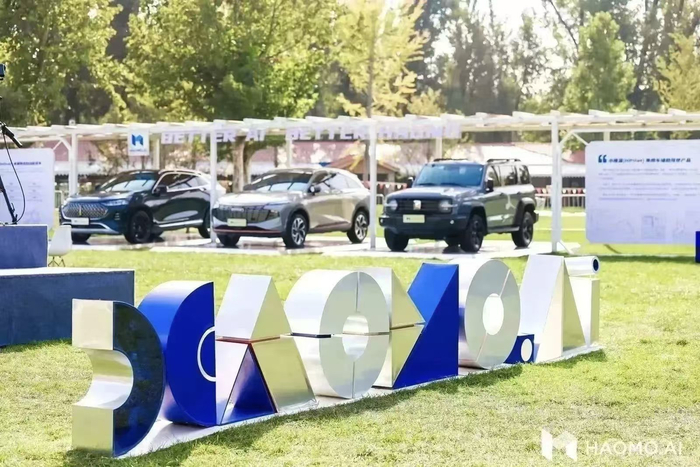
Core Insights - The autonomous driving company Haomo Zhixing, backed by Great Wall Motors and other investors, has announced that employees will not be required to report to work starting November 24, indicating potential operational issues and layoffs [1][2] - Over 200 employees have reportedly left the company, with some transitioning to Great Wall Motors, highlighting a significant workforce reduction [1] - The company, which was once valued at 7 billion yuan, is facing challenges in the competitive autonomous driving market, with its leadership indicating that 2024 will be a difficult year [1][2] Company Background - Haomo Zhixing was established in November 2019 as a subsidiary of Great Wall Motors, focusing on artificial intelligence technology for autonomous driving [1] - The company has successfully completed four rounds of financing between 2021 and 2024, with the A round raising nearly 1 billion yuan [2] - The team comprises talent from Great Wall Motors and other tech companies, including former executives from Baidu and Huawei [2] Operational Challenges - In 2023, the company faced setbacks, particularly with the launch of its HPilot 3.0 system and the rollout of its city NOH feature, which did not meet expectations [2][3] - The company’s strategy of diversifying into both passenger vehicle assistance and unmanned logistics has led to resource dilution, impacting production scale and cost efficiency [3] - As a result of these challenges, Great Wall Motors has begun seeking external partnerships, indicating a loss of confidence in Haomo Zhixing's capabilities [3]

长城“亲儿子”陨落,毫末智行没撑到 IPO
Tai Mei Ti A P P· 2025-11-25 00:52
Core Insights - The downfall of Haomo Zhixing, once a promising autonomous driving unicorn valued over $1 billion, was unexpected despite signs of trouble in the past few years [3][4][10] - The company faced significant challenges in delivering its urban NOH (Navigation on Highways) technology, which led to a loss of confidence from its parent company, Great Wall Motors [5][6][7] - Haomo's internal management issues and inability to keep pace with market demands contributed to its decline, as competitors like Yuanrong Qixing gained favor with Great Wall Motors [4][6][7] Company Background - Haomo Zhixing was established in November 2019 as a spin-off from Great Wall Motors' technology center, with a leadership team that included members from both Great Wall and major tech firms like Baidu and Huawei [4] - The company initially had strong backing and funding, completing multiple financing rounds that raised significant capital [9][10] Operational Challenges - The repeated delays in launching the urban NOH feature, initially promised for late 2022, severely impacted the company's credibility and relationship with Great Wall Motors [6][7] - By 2024, Great Wall Motors shifted its focus to external partners for autonomous driving solutions, further marginalizing Haomo [6][7] Financial Struggles - Despite a strong start with substantial investments, Haomo faced challenges in progressing towards an IPO, with reports of internal halts and layoffs surfacing in late 2024 [10][11] - The company experienced a drastic reduction in workforce, from over a thousand employees to around 200, indicating severe operational and financial distress [10][11] Industry Context - The autonomous driving sector is undergoing rapid changes, with increasing competition and a shift towards companies that can deliver tangible results [12] - Haomo's situation reflects a broader trend in the industry where companies that fail to meet production and technological standards are at risk of being eliminated [12]