债券

Search documents
中方开始掀桌子,再抛257亿美债,美国大动脉被切,逼出2个接盘国
Sou Hu Cai Jing· 2025-09-22 18:00
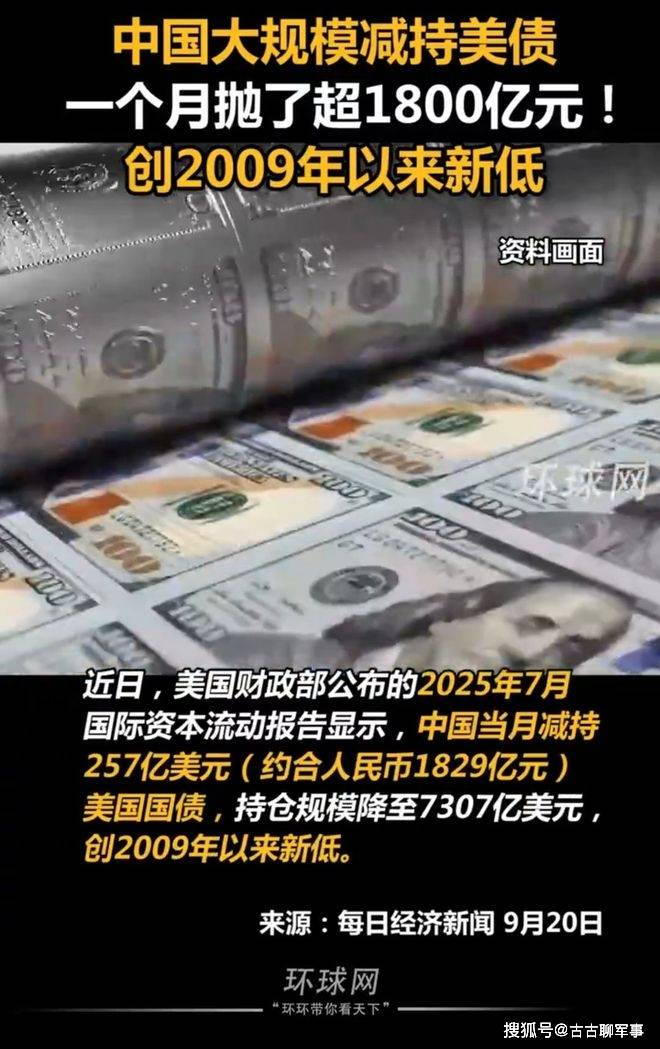
Group 1 - China's significant reduction of US Treasury holdings by $25.7 billion in July, bringing total holdings down to $730.7 billion, the lowest since 2009 [1] - In 2013, China held over $1.3 trillion in US Treasuries, indicating a nearly halved position over the past decade [3] - The decline in US Treasury holdings is a long-term, planned adjustment rather than a sudden decision [5] Group 2 - The deterioration of the US fiscal situation, including rising government debt and increasing fiscal deficits, has weakened investor confidence in US Treasuries [7][8] - Rising yields on long-term US Treasuries, which have surpassed 4%, reflect increased risk perceptions regarding the US's ability to repay debt [10] - China's gradual reduction of US Treasury holdings is a rational choice to diversify risk, avoiding market volatility while ensuring asset safety [12] Group 3 - China is actively pursuing a strategy of de-dollarization, seeking alternatives to the US dollar in international trade [14][16] - Initiatives include promoting RMB settlements in energy trade and establishing currency swap agreements with various countries [16] - The creation of a cross-border RMB payment system provides a backup channel for international transactions, enhancing financial security [18] Group 4 - China's adjustments in foreign exchange reserves include increasing holdings in gold and strategic resources, aiming for a more robust reserve structure [20] - These measures contribute to a financial safety net for China and may serve as a model for other emerging market countries [21] - The declining attractiveness of US Treasuries raises questions about who will absorb the reduced demand, as countries like Japan and the UK continue to increase their holdings [23][25] Group 5 - Japan and the UK, despite previous reductions, are increasing their US Treasury holdings, suggesting political motivations behind these decisions [25][27] - The US Treasury market is increasingly influenced by political factors, with allies expected to demonstrate loyalty through financial commitments [27][29] - The shrinking pool of buyers for US Treasuries poses long-term risks, particularly if key allies face economic challenges [31]


东大持续抛售3800亿美债;特朗普公开警告:美国政府有可能停摆!
Sou Hu Cai Jing· 2025-09-22 15:00
Core Insights - The urgency of the U.S. in Sino-U.S. trade negotiations is highlighted by significant Chinese sales of U.S. Treasury bonds, with China selling approximately $53.7 billion (about 382 billion RMB) in the first seven months of the year [1][2][3] - In July alone, China sold $25.7 billion (approximately 182.9 billion RMB) in U.S. Treasuries, bringing its total holdings down to $730.7 billion, the lowest level since 2019 [1][3] Group 1 - China's large-scale reduction of U.S. Treasury holdings has reached a new low not seen since 2009, indicating a significant shift in international capital flows [2][3] - The reduction in U.S. Treasury holdings by China could exacerbate market fears and potentially trigger a wave of selling, impacting U.S. fiscal stability and the dominance of the dollar [5][6] - The U.S. government is facing budgetary challenges, with a potential government shutdown looming if bipartisan agreement on the budget is not reached by the October 1 deadline [5][6] Group 2 - The reliance of the U.S. on borrowing is acknowledged, with measures such as tariffs and budget cuts being proposed to address fiscal issues, but these may not be sufficient to resolve underlying economic problems [7] - A call for comprehensive domestic reform and a cooperative global approach is suggested as necessary for the U.S. to stabilize its economic situation [7]
降息债市竟暴跌?投资者血亏,黄金比特币成新宠引争议
Sou Hu Cai Jing· 2025-09-22 15:00
Core Insights - The bond market, traditionally viewed as a safe investment, has experienced significant turmoil following a rate cut by the Federal Reserve, leading to rising yields in developed countries like the UK and Japan, which have reached levels not seen in over two decades [1][3][9] - Investors are losing confidence in bonds, which were once considered a "safe haven," prompting many to shift their investments to the stock market in search of better returns [3][11] - The rising inflation rates are outpacing fixed income returns, diminishing the attractiveness of bonds, particularly in countries like the UK where living costs are escalating [5][9] Market Dynamics - Financial institutions, including banks and insurance companies, are reallocating funds to higher-yielding investments, resulting in a dwindling amount of capital in the bond market [7] - Central banks are reportedly supporting the bond market while simultaneously increasing their gold reserves, indicating a shift in strategy towards more tangible assets [7][11] - The demand for gold has surged among retail investors, with significant growth in gold ETFs, reflecting a broader trend of seeking alternative safe-haven assets like Bitcoin and silver [7][11] Economic Context - The underlying issues in the global economy are becoming apparent, with rising debt levels and fiscal deficits, particularly in the UK, raising concerns about the sustainability of current financial practices [9][11] - Investors are increasingly worried about the implications of rising interest rates on debt sustainability, leading to a reevaluation of traditional investment strategies [9][11] - The current market turmoil is prompting a reassessment of risk and investment approaches, as the reliability of conventional safe havens is called into question [13]

美国承认,特朗普对华战略误判,美媒发现:中国在抛售美债
Sou Hu Cai Jing· 2025-09-22 12:45
Core Insights - The article highlights the dual crisis in the U.S. political and economic landscape, particularly focusing on China's significant reduction of U.S. Treasury holdings and the increase in its gold reserves, which reflects a strategic shift in response to external risks [1][5]. Group 1: U.S. Treasury Holdings and Economic Impact - As of July 2025, China's holdings of U.S. Treasury bonds have dropped to $730.7 billion, the lowest since 2009, with a reduction of $25.7 billion in just one month [3]. - In 2022, China reduced its U.S. Treasury holdings by $173.2 billion, followed by $50.8 billion in 2023 and $57.3 billion in 2024, indicating a trend of accelerated divestment [3]. - The U.S. Congressional Budget Office projects a potential increase of $2.8 trillion in federal deficits over the next decade, with existing debt reaching $37 trillion, raising concerns about fiscal sustainability [5]. Group 2: Political Stalemate and Public Perception - The U.S. Senate's temporary budget proposal failed to secure the necessary votes, risking a government shutdown, which has occurred almost annually since 1977 due to budgetary issues [5][7]. - A previous shutdown in 2019 resulted in an economic loss of $11 billion and a 0.2% reduction in GDP growth, highlighting the tangible economic consequences of political dysfunction [7]. - Public sentiment reflects a growing acceptance of government dysfunction, with 64% of Americans viewing it as the "new normal" [7]. Group 3: U.S.-China Relations and Strategic Adjustments - The article critiques the U.S. approach to China, suggesting that the perception of China as a challenger has led to misguided policies, including trade wars and technology restrictions, which have not achieved their intended outcomes [9]. - China's ongoing adjustments in its foreign exchange reserves, including the reduction of U.S. Treasury holdings and the increase in gold reserves, are seen as rational responses to external uncertainties [11]. - The trend of de-dollarization among U.S. allies and the increasing sensitivity of global financial markets to U.S.-China relations indicate a shift in the international monetary system [11][13]. Group 4: Future Implications and Global Dynamics - The ongoing political and economic crises in the U.S. are reshaping global financial and geopolitical landscapes, with China's strategic adjustments significantly influencing these dynamics [15]. - The article suggests that the future of U.S.-China relations cannot be simply defined by confrontation or cooperation, as each policy change and data point could serve as a turning point in the evolving global order [15].
俄罗斯计划在中国发行人民币债券,你会选择购买吗?
Sou Hu Cai Jing· 2025-09-22 11:12
俄乌战争打了三年半,俄罗斯人力、物力和财力消耗巨大,打仗是最花钱的,并且俄罗斯经济还被西方世界给制裁封锁了,没办法,普京只能把目光转向东 方。最近,普京已经连开两次紧急经济会议,直接原因都是因为俄罗斯经济"急剧放缓"。两天前的会议内容透露出,普京已经不再提"软着陆",而是暗示灾 难性困境。据西方媒体报导,俄罗斯政府已经将今年GDP预测从2.5%下调到1.2%,其中军事开支是冷战结束以来最高,占GDP的7.2%。 俄罗斯计划在中国发行人民币债券,俗称"熊猫债",是近期金融和地缘政治领域的一个重要动向。 从公开资料看,这次发债主体既有是俄罗斯财政部,也有俄天然气工业公司、俄国家原子能公司、欧亚开发银行等大型国企和机构,主权债券和大型企业债 同期推进,显示了俄罗斯迫切的融资需求。中证鹏元、大公国际等中国评级机构给予了上述俄机构AAA级最高信用评级,意味着俄企发行熊猫债已无障 碍。 为什么俄罗斯选择此时发行债券?答案只有一个,俄罗斯没钱了,真的没钱了。前些天俄罗斯杜马的高级财政官员就说:我们政府真的没钱了,俄罗斯可能 会再次解体。上次苏联解体不是因为叶利钦和戈尔巴乔夫,而是因为政府没钱了。 俄罗斯为何要来中国发债?大 ...

股票ETF资金转为净流入,科技板块基金净值涨幅优势延续:——基金市场与ESG产品周报20250922-20250922
EBSCN· 2025-09-22 10:21
The provided content does not include any quantitative models or factors, as it primarily focuses on fund performance, ETF market tracking, ESG products, and other financial market updates. There are no specific quantitative models, factor construction methodologies, or related backtesting results mentioned in the documents.
权益市场高位震荡,中长期仍需关注强势板块
Datong Securities· 2025-09-22 09:57
Group 1 - The core viewpoint indicates that the equity market is experiencing high-level fluctuations, with significant divergence observed. The A-share market has shown a volatile trend, with trading volume exceeding 3 trillion, but the upward momentum is weakening. Key sectors like optical modules and PCB are undergoing high-level adjustments, while other sectors lack sustained support [2][9][12]. - The report emphasizes that despite favorable macro factors, such as the Federal Reserve's interest rate cut and positive communication between US and Chinese leaders, the market struggles to find a new leading sector following the decline of the Nvidia supply chain. Sectors like chips, solid-state batteries, and robotics are only showing temporary strength [3][12][13]. - The report suggests a "barbell strategy" for A-share allocation, recommending to maintain positions in relatively strong sectors like chips and robotics while managing risk through defensive investments in dividend stocks that have undergone sufficient adjustments [5][14]. Group 2 - The bond market is currently in a weak adjustment phase, with initial recovery efforts failing to sustain. The overall sentiment remains subdued, and the bond market is unlikely to show significant performance without substantial positive developments [6][36]. - In the commodity market, gold is experiencing high-level fluctuations post-Fed rate cut, with limited upward momentum. However, there is potential for long-term growth in gold due to its dual role as an investment and a safe haven asset. Oil prices remain stable [7][42][43]. - The report advises maintaining gold positions in the short term while continuing to observe market conditions for long-term strategies [47].
国泰海通 · 晨报0923|机械、固收
国泰海通证券研究· 2025-09-22 09:43
Core Viewpoint - The article emphasizes the importance of focusing on export-oriented consumer companies with global manufacturing layouts, brand output capabilities, and channel integration advantages in the current changing external environment and policy dynamics [3]. Macro Summary - The Federal Reserve announced a 25 basis point rate cut, lowering the federal funds rate target range to 4.00%-4.25%, aligning with market expectations [3]. - In August, the U.S. CPI increased by 2.9% year-on-year, with a month-on-month increase of 0.4%. The core CPI rose by 3.1% year-on-year, with a month-on-month increase of 0.3% [3]. Cost Tracking - The exchange rate of the U.S. dollar against the Chinese yuan slightly depreciated, while the euro appreciated against the yuan [4]. - The shipping costs for various routes, including Europe, the U.S. East Coast, the U.S. West Coast, and Southeast Asia, have decreased year-on-year [4]. - The comprehensive index of the China Export Container Freight Index (CCFI) was 1125.30, down 38.11% year-on-year and 2.07% month-on-month [4]. Industry High-Frequency Data Tracking - The U.S. restaurant industry saw a decrease in the Restaurant Performance Index (RPI) to 99.7 in July, down 0.3% from June [5]. - The U.S. housing market index in September was 32, down 21.95% year-on-year, with existing home inventory increasing by 15.67% year-on-year [5]. - U.S. wholesale sales increased by 1.4% month-on-month in July, while retail sales rose by 0.6% in August [5]. - The export volume of golf carts from China decreased by 5.85% month-on-month and 72.12% year-on-year in July [5]. - Motorcycle exports from China saw a month-on-month decline of 3.17% but a year-on-year increase of 24.42% in August [5]. Recent Activities - The article mentions various upcoming industry events and reports, including discussions on transportation, new energy, electronics, coal, agriculture, and home appliances [20].

央行:今年6月末与2023年初相比,融资平台数量下降超过60%,金融债务规模下降超过50%
Sou Hu Cai Jing· 2025-09-22 09:24
Core Insights - The People's Bank of China (PBOC) emphasizes a balanced approach during the 14th Five-Year Plan, focusing on supporting the real economy while managing financial risks and maintaining stability [1][3]. Financial Support and Risk Management - The PBOC has taken significant steps to mitigate debt risks associated with financing platforms, resulting in a reduction of over 60% in the number of financing platforms and a decrease of more than 50% in financial debt scale compared to the beginning of 2023 [3]. - In the real estate sector, the PBOC has adjusted policies such as down payment ratios and mortgage rates, which is expected to save over 300 billion yuan in interest payments for more than 50 million households annually [3]. - The PBOC, in collaboration with regulatory bodies and local governments, has implemented measures to reduce the number of high-risk small and medium-sized banks significantly from peak levels [3]. Market Stability and Regulatory Measures - The PBOC maintains that the market plays a decisive role in exchange rate formation, ensuring the basic stability of the RMB amid external fluctuations [4]. - In the bond market, the PBOC has strengthened regulatory coordination and risk assessment, resulting in a low default rate and overall stable market operations [4]. - The PBOC is exploring monetary policy tools to maintain capital market stability, including the creation of swap facilities and stock repurchase loans in collaboration with the China Securities Regulatory Commission [4]. Overall Financial Health - The PBOC asserts that during the 14th Five-Year Plan, financial risks are generally controllable, and the financial system is operating robustly, providing strong support for high-quality economic development [4].
AI狂热+美联储放水!全球资产齐飙升,股债狂欢背后暗藏危机
Sou Hu Cai Jing· 2025-09-22 08:56
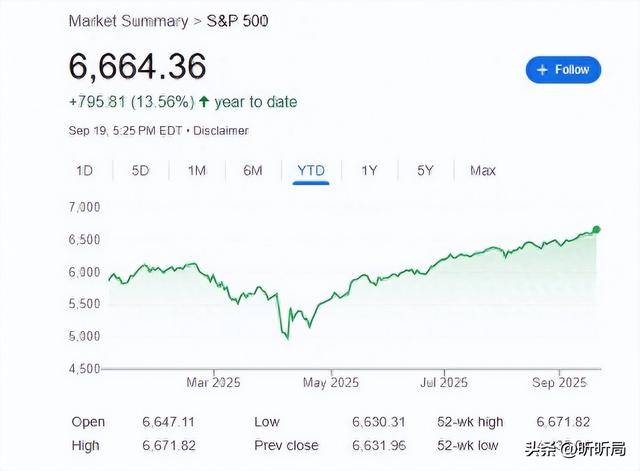
Group 1 - The core viewpoint of the article highlights the exuberance in the financial markets driven by the Federal Reserve's interest rate cuts and the hype surrounding AI technologies [3][10] - Major indices such as the S&P 500, Nasdaq, and Russell 2000 have reached record highs, indicating a collective investor enthusiasm reminiscent of a speculative bubble [5][6] - The article compares the current market behavior to a "dance party," where investors are following trends without caution, leading to irrational borrowing costs for high-rated companies [6][7] Group 2 - Despite the market's euphoria, some institutions like Nordea and Wellington are adopting defensive strategies, indicating a recognition of underlying risks such as geopolitical tensions and inflation [12][15] - The article notes a significant increase in short positions in the Russell 2000, suggesting that some investors are preparing for potential downturns by investing in safe-haven assets like gold and cash [13][15] - The overall market atmosphere is described as a high-stakes gamble, with optimistic and cautious investors holding opposing views on the sustainability of the current bull market [16]