可控核聚变

Search documents
可控核聚变,2026将有新看头
Shang Hai Zheng Quan Bao· 2026-01-01 06:59
Group 1 - The controlled nuclear fusion industry has gained significant market attention, with the Wande controllable nuclear fusion concept index showing a cumulative increase of 83.19% in 2025 [1] - The implementation of the "Atomic Energy Law of the People's Republic of China" in 2026 will encourage and support controlled nuclear fusion research, providing institutional guarantees for innovation in fusion energy [1] - The controlled nuclear fusion sector is highlighted as a key forward-looking industry in China's 14th Five-Year Plan, with regions like Anhui, Sichuan, and Shanghai focusing on its development [1] Group 2 - The recent Jinjiang Forum indicated that global fusion energy research has entered a new engineering phase, with major fusion devices' progress becoming a direct window into the field's development [2] - The ITER project, the world's largest nuclear fusion experiment, aims to simulate the sun's fusion process and is expected to achieve full power operation by 2035, with significant advancements in construction since 2025 [2] - Chinese institutions have made substantial progress in the ITER project, including the completion of key components and contracts for essential systems [2][3] Group 3 - Major domestic fusion devices like EAST, BEST, and the Chinese Circulation III and IV are making notable advancements, with EAST achieving a high plasma temperature of 100 million degrees Celsius and stable operation for 1066 seconds in 2025 [3] - The BEST project in Anhui is set to be completed by 2027, with a bidding budget of 2.043 billion yuan in 2025, while the Chinese Circulation IV aims to validate the reliability of large high-temperature superconducting magnets [4][5] Group 4 - The fusion energy industry is seeing a surge in investment, with over 150 billion yuan planned for ongoing or upcoming projects, and expected investments of 14.9 billion yuan, 24.5 billion yuan, and 17.4 billion yuan from 2025 to 2027 [11] - The industry is anticipated to enter a peak bidding period, benefiting upstream raw material suppliers, midstream equipment manufacturers, and downstream operational sectors as fusion technology progresses [10][11] Group 5 - Regions like Anhui, Sichuan, and Shanghai are intensifying their focus on nuclear fusion, with Anhui emerging as a significant hub for fusion research and industry, housing nearly 60 related enterprises [7] - Shanghai is accelerating the development of cutting-edge technologies in fusion energy, with initiatives to enhance collaboration and innovation in the sector [8] - Sichuan's historical connection to controlled nuclear fusion is being revitalized, with plans to develop new industries and technologies related to fusion energy [9]



上证指数明天能否站上4000点?2026“慢牛”有望延续?|前瞻2026
清华金融评论· 2025-12-30 10:42
Core Viewpoint - The article emphasizes that if the Shanghai Composite Index can close above 4000 points by the end of 2025, it will instill strong confidence in the market, encouraging more incremental capital to enter in the future. The market is expected to continue a slow bull trend in 2026, with a focus on technology growth, cyclical stocks, and resource stocks [2][3]. Economic Dimension - The economic landscape is characterized by accelerated structural transformation and the rise of new productive forces. Manufacturing PMI is stabilizing, and retail consumption is recovering. High-end manufacturing sectors like smart devices and new energy vehicles are growing significantly faster than the overall economy, becoming key drivers of new productive forces [5]. Financial Dimension - Valuations are aligning with performance, showing significant horizontal space. Non-financial sectors' net profit grew by 1.04% year-on-year in the first half of 2025, with technology sectors like AI (up 19.24%) and semiconductors (up 32.41%) showing remarkable profitability. A-shares are undervalued compared to U.S. stocks, with financial and infrastructure sectors still having safety margins [5]. Policy Dimension - The policy environment is focused on stabilizing expectations and increasing incremental capital. Reforms in the capital market, such as raising the equity investment cap for insurance funds to 50%, and optimizing delisting and dividend mechanisms, are enhancing investment functionality. The "15th Five-Year Plan" emphasizes support for new industries like AI and commercial aerospace [5]. Capital Dimension - Continuous inflow of capital is observed, with insurance funds increasing their equity investments to over 4.7 trillion yuan, adding more than 600 billion yuan in 2025. There is ample room for growth, as evidenced by a reduction of 1.11 trillion yuan in household deposits and a 2.14 trillion yuan increase in non-bank deposits, with funds entering the market through ETFs and mutual funds [6]. Industry Dimension - The dual focus on technology and cyclical sectors is evident. In technology growth, there is a surge in demand for AI computing power, storage, and commercial aerospace driven by policy support. In cyclical sectors, the supply-demand gap for industrial metals like copper and aluminum is widening, with expectations of a 150,000-ton shortfall in refined copper in 2026 [6]. Company Dimension - Overall profitability is improving, showcasing resilience. Leading companies in innovation-driven sectors, such as CATL, are achieving high capacity utilization rates close to 90%, with technological breakthroughs driving down costs [7]. Outlook for 2026 - Multiple brokerages express optimism for the A-share market in 2026, predicting a continuation of the slow bull market. The core driving logic is expected to shift from valuation recovery to profit support, with anticipated earnings growth of 5% to 12% [9][10]. The recovery of PPI is seen as a key factor that will drive nominal GDP growth and improve overall profitability in the market [11]. Key Investment Themes - Key investment themes include technology growth led by AI and hard technology, with a focus on areas like optical modules and computing chips. The cyclical and resource sectors are also expected to benefit from improved supply-demand dynamics, with industrial metals and energy sectors showing potential for cash flow improvement and high dividend yields [12].


可控核聚变:技术路线多样,产业化进程加速
East Money Securities· 2025-12-30 06:03
Investment Rating - The report maintains an investment rating of "Outperform" for the power equipment industry, indicating a positive outlook compared to the broader market [2]. Core Insights - The report emphasizes the acceleration of the commercialization process of controllable nuclear fusion, highlighting the diverse technological routes and the increasing industrial catalysis [5]. - It identifies Tokamak and Field-Reversed Configuration (FRC) as reliable paths for achieving nuclear fusion, with Tokamak being the mainstream route and FRC gaining attention for its potential faster commercialization [13][40]. Summary by Sections 1. Controllable Nuclear Fusion - Nuclear fusion is defined as the process where lighter atomic nuclei combine under extreme temperature and pressure to form heavier nuclei, releasing significant energy, similar to the energy generation mechanism of the sun [13][14]. - Compared to nuclear fission, nuclear fusion offers advantages such as high energy density, safety, cleanliness, and abundant raw materials [18][19]. 2. Tokamak: A Mainstream Route - The Tokamak, developed in the 1950s, utilizes a toroidal vacuum chamber and magnetic fields to confine high-temperature plasma necessary for fusion reactions [49]. - The report outlines the complexity of Tokamak components, emphasizing that the magnet system is crucial for maintaining plasma stability and achieving fusion conditions [52][59]. 3. FRC: A Simpler and Cost-Effective Approach - FRC is noted for its simpler structure and lower investment costs compared to Tokamak, with a potentially faster commercialization timeline [5][18]. 4. Global Fusion Projects - As of December 2025, there are 179 controllable nuclear fusion devices globally, with 82 being Tokamak devices, indicating a robust international effort towards fusion energy [40]. - The report highlights various national projects, including China's BEST and CFEDR, which aim to achieve significant milestones in fusion energy by 2027 and 2030, respectively [43][50]. 5. Key Companies in the Industry - The report suggests focusing on companies with capabilities in critical components for nuclear fusion, such as 合锻智能 (Hefei Intelligent), 联创光电 (Lianchuang Optoelectronics), and 国光电气 (Guoguang Electric), among others [5][44].
国泰海通|机械:欧盟聚变战略发布在即,美德联手攻克聚变激光技术瓶颈
国泰海通证券研究· 2025-12-29 14:58
Group 1 - The core viewpoint of the article highlights the significant developments in the controlled nuclear fusion sector, including increased procurement and bidding activities, the upcoming EU fusion strategy, and advancements in fusion laser technology [1][3][4] Group 2 - The procurement demand in the controlled nuclear fusion industry is on the rise, with recent bids primarily focused on essential components such as power supplies and converters, indicating a notable acceleration in industry contracts [2] - The EU's first fusion strategy is set to be released, with a high-level hearing scheduled for January 27, 2026, aimed at discussing the transition from political support to the industrialization of fusion energy [3] - The company "Zero Point Energy," associated with Peking University alumni, has successfully completed an angel round financing exceeding 50 million yuan, which will support the experimental validation of its new fusion technology route [3] - A strategic collaboration named "ICONIC-FL" has been initiated between the Lawrence Livermore National Laboratory and the Fraunhofer Institute for Laser Technology to advance inertial confinement fusion laser technology from the laboratory to industrial application [4] - The JT-60SA device has made progress with the successful manufacturing of fast plasma position control coils, which are crucial for upcoming plasma heating experiments and provide important technical validation for the ITER project [4]

九连阳!谁在推A股冲向4000点?
格隆汇APP· 2025-12-29 08:16
Core Viewpoint - The A-share market has shown strong performance recently, with the Shanghai Composite Index rising for nine consecutive trading days and surpassing 3900 points, indicating a robust influx of capital into the market [2]. Group 1: Reasons for Strength - The first reason for the recent strength in the A-share market is macro liquidity and policy expectations, with a supportive fiscal and monetary policy anticipated for 2026, which is expected to enhance market risk appetite [4]. - The second reason is the expectation of new economic drivers for the upcoming year, particularly in high-tech manufacturing and equipment manufacturing, which align with the "14th Five-Year Plan" and provide a fundamental anchor for market growth [5][6]. - The third reason is the healthy rotation within the market, with a broad-based structural rotation rather than reliance on a single sector, indicating a sustainable upward momentum [7][8]. Group 2: Market Rotation Dynamics - The market has experienced a clear cyclical rotation between high-growth sectors led by AI and value sectors represented by large-cap blue chips, creating a repetitive market pattern [9]. - This rotation is driven by multiple factors, including valuation constraints, policy rhythms, capital behavior, and macro expectations, reflecting a rational choice in response to different macro environments [10]. - Quantitatively, the market has completed at least two full cycles of growth and value style switching since September 2024, with clear trajectories observed [11]. Group 3: A500 Index Insights - The CSI A500 index has emerged as a significant player in the market, with a net inflow of 960.65 billion yuan since December, indicating a shift towards more balanced and stable investment styles [14]. - The A500 index is strategically positioned to adapt to market conditions, combining defensive and offensive characteristics, and covers a broad range of industries, making it a core asset for investors [18][24]. - The index has shown resilience during market fluctuations, outperforming the Shanghai Composite Index during growth phases and experiencing less volatility during value recovery phases [19][21]. Group 4: Investment Opportunities - The A500 index offers a balanced investment option that includes both emerging sectors and established companies with stable cash flows, appealing to long-term investors seeking to capitalize on China's economic growth [22][24]. - The A500 ETF has become a mainstream tool for market participants, providing diverse options for long-term capital allocation in the A-share market [25].

在结构性机遇中迎接新年新篇章
Sou Hu Cai Jing· 2025-12-29 07:02
Core Insights - The capital market in 2025 experienced structural fluctuations, with non-ferrous metals, TMT, and power equipment being market highlights, while dividend sectors and real estate faced pressure. As 2026 approaches, structural opportunities are emerging supported by policy stabilization, corporate profit recovery, and liquidity influx [4] Group 1: Global Liquidity Improvement - The global macro environment in 2026 is expected to release positive signals, with the U.S. fiscal and monetary policies likely to trend towards easing. The "Great Beautiful Act" could lead to a long-term tax cut, potentially increasing the federal deficit by approximately $3.4 trillion over the next decade, and the debt ceiling may rise by $5 trillion (a 12% increase) [5] - A low-interest-rate environment is expected to ease global liquidity constraints, alleviating capital outflow pressures in emerging markets and creating a relatively stable external environment for A-shares [5] Group 2: Domestic Economic Recovery - Domestic policies are aligning with micro signals to create a warming effect. The Central Economic Work Conference at the end of 2025 and the 2026 Two Sessions will emphasize "seeking progress while maintaining stability and improving quality and efficiency" [6] - Industrial enterprises are currently at the bottom of the inventory cycle, with a narrowing decline in PPI indicating an approaching replenishment cycle. The cumulative year-on-year growth of net profit excluding non-recurring gains for all A-shares in Q3 2025 was 3.2%, and asset turnover rates are stabilizing [6] - The "anti-involution" policy is expected to drive price recovery, leading to a positive cycle in corporate profits. Institutional investors such as insurance funds and bank wealth management are anticipated to become significant sources of incremental funds in 2026, further solidifying market liquidity [6] Group 3: Key Investment Areas for 2026 - Focus on the AI supercycle, with continued prosperity in domestic and international computing power chains. Attention should be given to new technology iterations and inflation-related sectors, particularly the gaming industry and the gradual development of smart terminals and AI applications [7] - High-end manufacturing going overseas should be monitored, especially in sectors like energy storage-lithium batteries and AI-related high-demand segments. Sustainable growth potential exists in domestic and overseas markets for heavy trucks, passenger vehicles, and construction machinery [8] - Long-term attention should be given to the revaluation of strategic resources, including precious and industrial metals. Energy and lithium carbonate show signs of bottoming out, while the chemical sector's resource products and significantly rebounding blue-chip varieties are also worth investing in [8] - Continuous monitoring of breakthroughs in frontier technologies such as robotics, solid-state batteries, controlled nuclear fusion, aerospace, and quantum computing is recommended [9] - New consumption trends and innovative pharmaceuticals are areas of interest, with solid fundamentals in emotional, service, and technology consumption. The innovative drug sector remains a long-term trend, with improved cost-effectiveness following recent declines [9] Conclusion - The equity market outlook for 2026, while facing challenges, is supported by a "triple support" system of policy stabilization, profit recovery, and liquidity influx, which may solidify the foundation for structural market trends. Investors are encouraged to align with industry trends and core logic while capturing opportunities from a long-term perspective [10]

中信建投证券:A股跨年行情已经启动
Xin Hua Cai Jing· 2025-12-29 05:38
Core Viewpoint - The recent eight consecutive days of gains in the Shanghai Composite Index signal a positive outlook, indicating that the A-share year-end rally has commenced [1] Group 1: Market Drivers - Three main expectations are driving the initiation of the year-end rally: a consensus of optimism among institutional investors, the anticipated early arrival of the spring market, and the conclusion of adjustments in overseas AI models, leading to improved liquidity and risk conditions [1] - Recent announcements of the 15th Five-Year Plan policies and events have heightened investor expectations regarding policy [1] Group 2: Sector Focus - Key sectors to watch for the year-end rally include non-ferrous metals and AI computing power, which are expected to experience significant catalytic growth [1] - The primary market focus remains on commercial aerospace, with secondary themes including the Hainan Free Trade Zone, controllable nuclear fusion, and humanoid robots [1]

超导-磁体-可控核聚变价值量最高环节
2025-12-29 01:04
Summary of Key Points from the Conference Call Industry Overview - The conference call focuses on the **controlled nuclear fusion industry**, specifically the **magnet segment** which holds a significant value share in the overall investment landscape. The ITER project allocates approximately **30%** of its total investment to magnets, with potential increases to **40%** for high-temperature superconducting (HTS) technologies [1][3]. Core Insights and Arguments - **Investment Potential**: 2025 is anticipated to be a pivotal year for investments in controlled nuclear fusion, with capital expenditures expected to expand rapidly from **2025 to 2028**. This will lead to active bidding across the entire industry chain, benefiting companies with secured orders [1][5]. - **Technological Advancements**: Low-temperature superconducting (LTS) technology is currently mature, while HTS is viewed as the future direction, with companies like **West Superconductor** and **Shanghai Superconductor** leading in their respective fields. HTS is expected to reduce device size and costs significantly [1][3][4]. - **Market Dynamics**: The recent bidding activity has been robust, with a notable **$4 billion** project in November, indicating that market expectations are being met and the industry is progressing steadily [6]. Company-Specific Insights - **West Superconductor**: This company has established a leading position in the LTS sector, maintaining a gross margin above **30%** and benefiting from substantial orders due to the BEST project. Their products have been certified internationally and are crucial for nuclear fusion applications [7][8]. - **Shanghai Superconductor**: Recognized as a global leader in HTS wire production, the company has a production capacity exceeding **1,000 meters** and has secured contracts for significant international fusion projects, achieving a gross margin over **60%**. Plans for further capacity expansion are underway [13][14][15]. Risks and Challenges - The controlled nuclear fusion industry faces uncertainties, including project advancement risks, policy changes, and insufficient funding. Investors are advised to closely monitor these variables as they could significantly impact industry development [2][17]. Additional Noteworthy Content - The transition from first-generation copper oxide to second-generation rare earth metal oxides in HTS materials is noted for its higher critical temperatures and stronger current-carrying capabilities, indicating a promising future for these materials in fusion applications [10][12]. - The competitive landscape includes other companies like **Yongding Co.** and **Lianchuang Optoelectronics**, which are also making strides in HTS and LTS technologies, respectively [16]. This comprehensive overview highlights the significant investment opportunities and technological advancements within the controlled nuclear fusion industry, while also addressing the inherent risks that investors should consider.
中岩大地布局可控核聚变
Guo Ji Jin Rong Bao· 2025-12-28 12:56
当下,可控核聚变正迎来前所未有的政策支持。从《中共中央关于制定国民经济和社会发展第十五 个五年规划的建议》,到国家能源局发布的《加快建设新型能源体系》,再到科技部将其纳入"十五 五"国家科技重大专项并规划超500亿元投资……一系列顶层设计明确将可控核聚变列为需前瞻布局的未 来能源技术,并将其视为新的经济增长点。 近日,北京中岩大地科技股份有限公司(下称"中岩大地")与四川束研聚创科技有限公司(下 称"束研聚创")正式签署战略合作协议,通过"投资+合资"的双重模式切入可控核聚变领域。 据悉,中岩大地在岩土工程领域已积累了深厚的技术底蕴和行业口碑。在电力短缺及国家能源自主 安全战略日益重要的大背景下,中岩大地自2023年起便主动将业务视野拓展至能源领域,并于同年正式 确立了"核心技术+核心材料"双轮驱动战略。围绕这一战略方向,公司已逐步聚焦于核电、水利水电等 国家战略关键领域,并在多个标志性项目中验证了该战略的可行性与成效。 战略方向选对了,合作伙伴的选择同样至关重要。中岩大地选择的束研聚创,其核心团队来自核工 业西南物理研究院、中科院等国家级科研机构,在可控核聚变的核心技术研发、关键部件设计及工艺创 新方面积累 ...

2025年最后三个交易日 股民需要注意什么?
Mei Ri Jing Ji Xin Wen· 2025-12-28 02:48
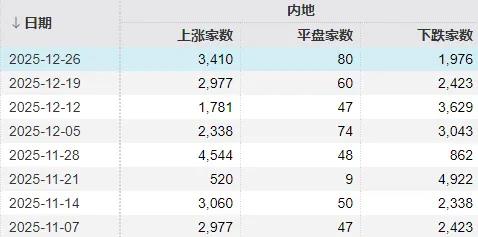
Core Viewpoint - The A-share market has shown unexpected strength, initiating a "New Year red envelope" trend, with 3,410 stocks rising in the last trading week, marking the best week in December [1][2]. Group 1: Market Performance - The average stock price across A-shares increased by 3.15% over the week, reaching a mid-week high of 27.03 yuan, matching the year's peak from September 18 [3]. - The Shanghai Composite Index has achieved an eight-day winning streak since December 17, raising investor expectations for a potential rise above 4,000 points before the year ends [7]. - Other major indices have also shown optimistic trends, with the CSI 2000 index reaching a new high [5]. Group 2: Fund Flows and Market Drivers - A significant net inflow of funds into the A500 ETF has been noted, with a total net inflow of 110.6 billion yuan in December, of which 101.9 billion yuan (92.2%) came from the A500 ETF [10]. - The strong inflow of new funds is seen as a driving force behind the market's late December rally, contributing to the eight consecutive days of gains in the Shanghai Composite Index [10]. - Historical analysis suggests that early spring market rallies typically lead to strong performances in January, influenced by policy expectations and external factors [11]. Group 3: Sector Insights - The upcoming spring market rally is expected to favor technology growth and certain cyclical industries, with recommendations for balanced investments in these sectors [11]. - High-growth sectors such as optical modules and PCB are highlighted as key areas of focus, alongside short-term supply constraints in light chips and high-speed copper cables [14]. Group 4: Economic Indicators - The National Bureau of Statistics reported a 0.1% increase in profits for industrial enterprises above designated size over the first 11 months [15]. - The total scale of China's ETFs has reached 6.03 trillion yuan, reflecting a more than 60% increase from the beginning of the year [19].