
电子电器

Search documents
价格狂飙!近13年来最高,涨幅超金价!
Sou Hu Cai Jing· 2025-06-10 08:51
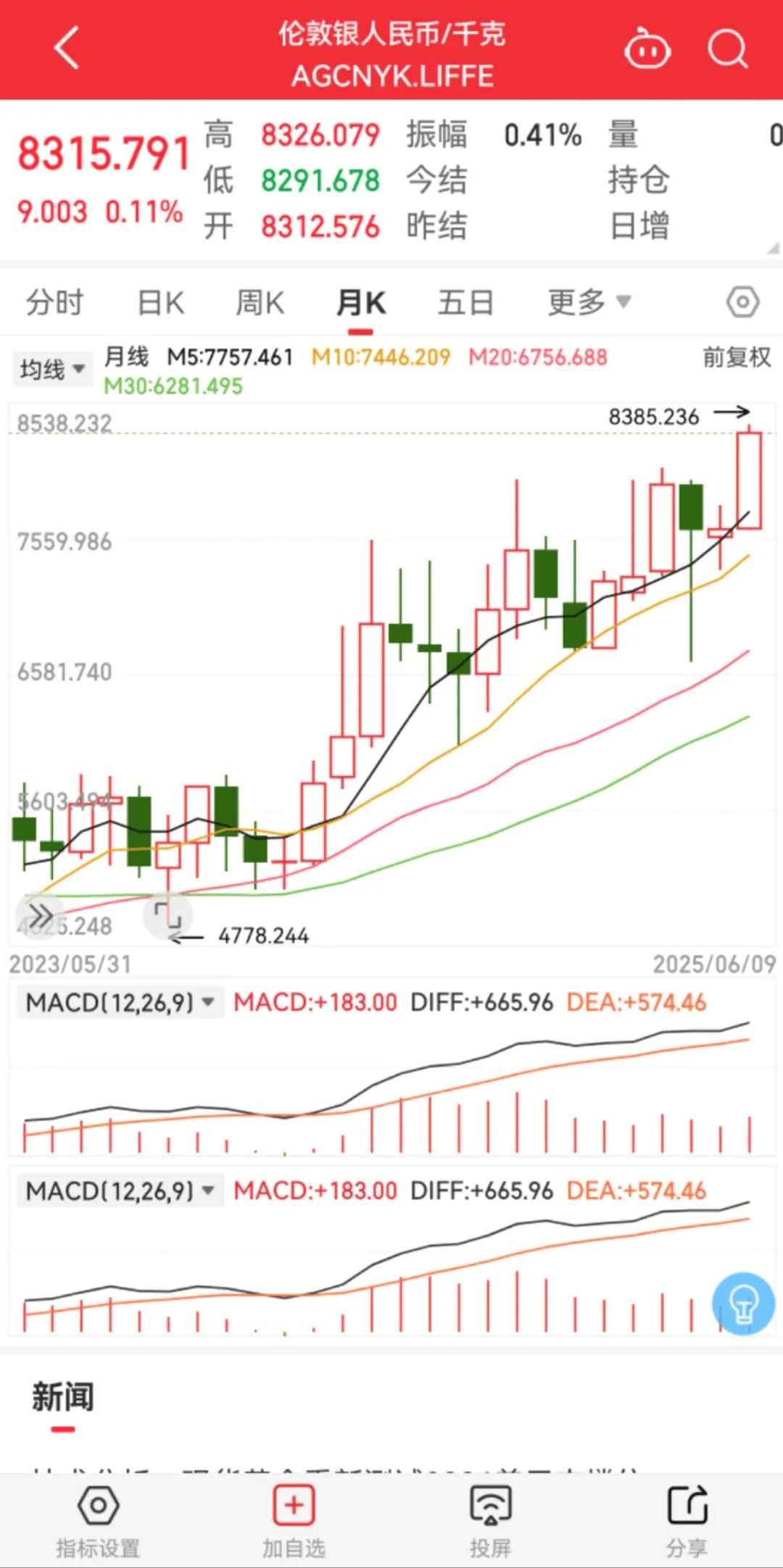
Group 1 - Silver prices have reached a nearly 13-year high, with London spot silver surpassing $36 per ounce on June 6, marking the highest level since February 2012, and a weekly increase of over 10% [1] - The Shanghai silver futures contract also saw a significant rise, exceeding 8800 yuan per kilogram, setting a new record since its listing [1] - In contrast, the spot gold price saw a modest increase of approximately 0.6% over the past week [1] Group 2 - The appeal of precious metals, including silver, as traditional safe-haven assets has increased due to escalating trade tensions, rising dollar outflows, and heightened economic uncertainty [4] - Industrial demand for silver is a crucial factor driving its price increase, with applications in electronics, photovoltaic industries, and new energy vehicles [7] - In 2023, China's industrial silver demand reached 8124 tons, reflecting a year-on-year growth rate of 44%, making it the largest industrial silver consumer globally [7] Group 3 - The supply of silver from mining is limited, leading to a tight market balance as industrial demand continues to grow [8] - The market perceives silver to be significantly undervalued relative to gold, with expectations for the gold-silver ratio to revert, contributing to silver's price recovery [8]

有色金属-海外季报:截至2025年3月31日的财政年度内 松下控股合并销售额同比下降0.5%至8458.2亿日元 归母净利润同比下降18%至3662亿日元
HUAXI Securities· 2025-06-07 07:20
Investment Rating - The report does not explicitly state an investment rating for the industry or the company [6]. Core Insights - Panasonic Holdings reported a slight decline in consolidated sales of 0.5% year-on-year, totaling 845.82 billion yen for the fiscal year ending March 31, 2025, primarily due to the impact of the split of Panasonic Automotive Systems and currency translation effects [1][2]. - The operating profit for the fiscal year 2025 increased by 18% to 426.5 billion yen, driven by sales growth and business optimization, despite rising fixed costs due to inflation and strategic investments [2]. - The net profit attributable to Panasonic Holdings shareholders decreased by 18% to 366.2 billion yen, influenced by the special liquidation of Panasonic Liquid Crystal Display Co., which reduced tax liabilities [2]. Summary by Business Segment Lifestyle - Sales in the Lifestyle segment grew by 4% year-on-year to 358.42 billion yen, supported by increased sales of air conditioning and consumer electronics in Japan and Asia [3][4]. - The operating profit for the Lifestyle segment increased by 8.2 billion yen to 127.9 billion yen, benefiting from sales growth and price adjustments in electrical building materials [5][7]. Automotive - The Automotive segment reported sales of 805 billion yen, with an operating profit of 30.1 billion yen, reflecting a decline due to the completion of the share transfer of Panasonic Automotive Systems [8][9]. Connect - The Connect segment saw an 11% increase in sales to 133.32 billion yen, driven by stable sales in avionics and process automation, despite a decline in media and entertainment sales [9][10]. - Operating profit for Connect rose by 38.1 billion yen to 77.2 billion yen, attributed to sales growth across various business areas [10]. Industry - The Industry segment's sales increased by 4% to 108.36 billion yen, supported by sales growth in ITC-related products, despite a decline in sales of automotive and industrial relays [10][11]. - Operating profit for the Industry segment rose by 12.1 billion yen to 43.2 billion yen, aided by price adjustments and sales growth in AI-related products [11]. Energy - The Energy segment experienced a 5% decline in sales to 873.2 billion yen, with significant growth in data center energy storage systems, while automotive battery sales decreased [12][13]. - Operating profit for the Energy segment increased by 31.4 billion yen to 120.2 billion yen, driven by growth in industrial and consumer electronics businesses [13]. Other - Other business activities not included in the main segments reported an 11% increase in sales to 168.94 billion yen, with operating profit rising to 7.98 billion yen [12][13]. Financial Indicators - For the fiscal year 2025, net cash flow from operating activities was 796.1 billion yen, a decrease from the previous year's inflow of 866.9 billion yen [14]. - Total assets as of March 31, 2025, amounted to 93.432 trillion yen, a decrease of 68 billion yen from the previous year, primarily due to the impact of the PAS business split [15]. - The company expects a decline in net sales for the fiscal year 2026, but growth in adjusted operating profit is anticipated due to improvements in Lifestyle, Industry, and Energy segments [16][21].
马瑙斯自贸区期待深化中巴产业与绿色合作——访马瑙斯自贸区监管局主席博斯科·萨赖瓦
Xin Hua Cai Jing· 2025-06-03 06:59
Core Insights - The Manaus Free Trade Zone aims to deepen cooperation with China in industrial collaboration and green economic development [1][2] - The Free Trade Zone has been operational for 58 years and will continue until 2073, focusing on technological innovation and consumer goods manufacturing [1][2] - The zone supports over 500 industries, with significant participation from Chinese companies, including Gree, TCL, BYD, and OPPO [1][2] Industry and Economic Impact - The arrival of Chinese enterprises has boosted local employment and economic growth, particularly in high-tech product localization [2] - The Manaus Free Trade Zone is the only zone in Brazil to retain tax incentives post-tax reform, providing a stable investment environment for Chinese companies for at least six more years [2] - The zone plays a crucial role in preserving 97% of the Amazon rainforest, contributing to global ecological safety [2] Future Prospects - The operation of the Peru Chancay Port is expected to enhance the efficiency and international competitiveness of Manaus's industrial production [3] - The Free Trade Zone is projected to achieve its highest revenue record in 2024, with ongoing positive economic indicators [3] - The zone is managed by the Brazilian federal government and has independent administrative and financial authority, focusing on economic, technological, and sustainable development [3]
中国与东盟携手打造周边命运共同体新范式
Jing Ji Ri Bao· 2025-05-29 22:03
Core Viewpoint - The completion of the China-ASEAN Free Trade Area 3.0 negotiations marks a significant step towards signing the upgraded protocol by the end of this year, aiming to foster a mutually beneficial cooperation model amidst unprecedented global trade challenges [1][2]. Group 1: Trade and Economic Cooperation - The China-ASEAN Free Trade Area 3.0 aims to counteract rising global trade protectionism and unilateralism, with 169 new trade restrictive measures reported by the WTO, affecting approximately $887.6 billion in goods trade [2]. - The trade value between China and ASEAN is projected to reach 6.99 trillion yuan in 2024, reflecting a growth of 9.0%, which constitutes 15.9% of China's total foreign trade [3]. - China and ASEAN have committed to enhancing supply chain connectivity, ensuring the free flow of key products and services, and improving infrastructure connectivity to stabilize regional supply chains [3]. Group 2: Market Integration and Consumer Protection - The combined population of China and ASEAN exceeds 2 billion, creating a significant internal market that is crucial for addressing external risks [4]. - In 2024, China's retail sales are expected to reach 48.8 trillion yuan, while ASEAN's consumer spending is projected to hit $2.2 trillion, highlighting the region's importance as a consumer market [4]. - New rules in the Free Trade Area 3.0 include online consumer protection and tourism consumer protection, aimed at optimizing the market environment and fostering new consumption patterns [4]. Group 3: Digital Economy and Innovation - China and ASEAN are enhancing digital economic cooperation by improving digital infrastructure and aligning standards for digital trade, which is essential for building an open innovation ecosystem [5]. - The collaboration in the digital economy is expected to empower ASEAN's manufacturing transformation and provide extensive market opportunities for digital technology applications [5]. Group 4: Green Economy and Sustainable Development - The Free Trade Area 3.0 emphasizes green economic cooperation, focusing on green trade, investment, and standards to promote sustainable energy and reduce carbon emissions [6]. - The partnership aims to create a mutually beneficial electric vehicle ecosystem, leveraging China's technological advantages to enhance regional automotive industry competitiveness [6]. Group 5: Inclusive and Practical Cooperation - The negotiations reflect a commitment to inclusive and practical economic cooperation, addressing development imbalances and supporting less developed ASEAN countries [7]. - China has maintained its position as ASEAN's largest trading partner for 16 consecutive years, while ASEAN has been China's largest trading partner for five years, indicating a resilient economic relationship [7].
推动中国—中东欧经贸合作向新向实(开放谈)
Ren Min Ri Bao· 2025-05-26 21:40
Group 1 - The fourth China-Central and Eastern European Countries (CEEC) Expo held in Ningbo, Zhejiang, showcased record scale, variety of exhibits, and attendance, indicating a new level of economic cooperation between China and CEEC [1] - Since the establishment of the cooperation mechanism in 2012, the trade scale between China and CEEC has grown at an annual rate of 8.8%, surpassing China's overall foreign trade growth [1] - In 2024, the trade volume is expected to reach a historical high of $142.3 billion, with cumulative Chinese investment in CEEC amounting to $24 billion [1] Group 2 - The global economic uncertainty presents an opportunity for China-CEEC cooperation to stabilize the global multilateral order, aligning with the common interests of countries worldwide [2] - China aims to import over $170 billion worth of goods from CEEC over the next five years, focusing on agricultural products, minerals, and high-end intermediate goods [2] - The initiative includes promoting tourism and digital services from CEEC to China, enhancing the trade structure balance [2] Group 3 - Domestic enterprises are encouraged to expand their investment networks in CEEC, particularly in sectors like automotive, machinery, electronics, renewable energy, and digital economy [3] - Support for establishing research and production bases in CEEC countries is emphasized, along with collaboration with EU leading companies for third-party market expansion [3] - The establishment of overseas investment platforms and economic cooperation parks in CEEC is encouraged, along with the pursuit of bilateral investment agreements [3] Group 4 - There is a call to strengthen infrastructure connectivity and enhance cultural exchanges between China and CEEC, creating a synergistic system of "hard" and "soft" connectivity [4] - Increased investment in infrastructure projects in CEEC is advocated, along with the expansion of direct flight routes by Chinese airlines [4] - The promotion of cultural exchanges through partnerships between universities and the establishment of friendly city networks is highlighted [4]
东莞康佳智能产业园正式开园
WitsView睿智显示· 2025-05-23 05:55
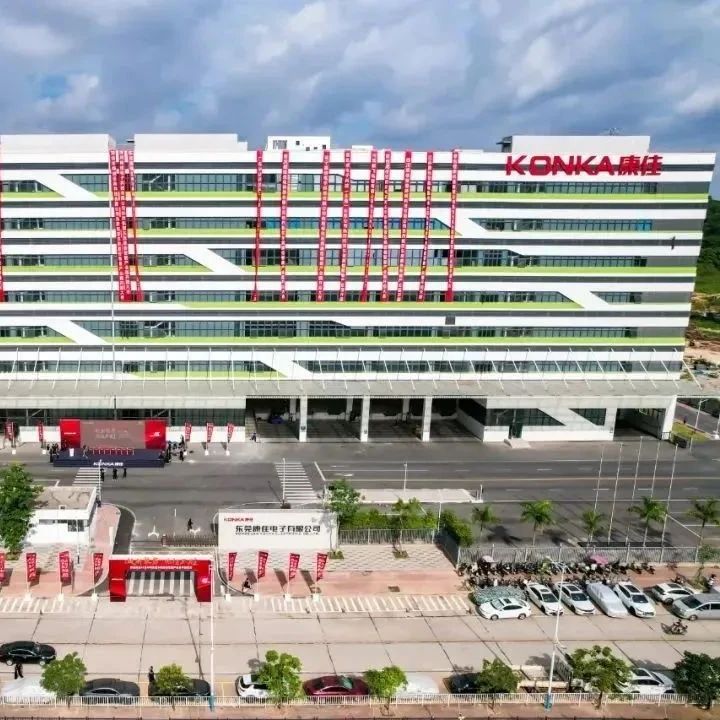
【WitsView整理】 5月22日,康佳集团官方微信消息,东莞康佳智能产业园在凤岗镇正式开园。 图片来源:深康佳 据悉,东莞康佳智能产业园分两期进行,总用地面积约164亩,总投资约17亿元,将建设包括彩 电研发大厦、生产主体厂房、物流配套仓库以及相关配套设施在内、总建筑面积42万平方米的国 内领先的工业4.0现代化工厂。该项目主要从事彩电等电子产品的研发、生产、销售,打造成为康 佳集团内外销彩电、智能多元产品生产基地,项目计划年产能约300万,预计实现年产值超30亿 元。 项目建成后,产业园还将引进5G场景应用、8K芯片与新型显示、人工智能、机器人、视听系统开 发等相关创新型高新企业入驻,共同打造成为一个以彩电及智能硬件等电子产品的研发、生产、销 售以及上下游产业链配套设施于一体的新型科技产业园区。 康佳集团表示,2024年为加速推进半导体业务产业化进程,公司在MLED(Micro LED及Mini LE D的统称)产业化方面持续加大投入,并在Mini LED显示产品销售方面取得了一定进展。 #电视面板 据介绍,东莞康佳自1993年成立以来,先后完成莞康电子城一期、二期建设,实现了从单一彩电 制造向多元化产 ...

权威解读丨从4月份数据看中国经济增长点
Xin Hua She· 2025-05-20 12:09
Economic Overview - In April, China's economy demonstrated stable growth supported by proactive macro policies, with production and demand maintaining a steady increase [1] - The industrial added value for large-scale enterprises grew by 6.1% year-on-year, while the service production index increased by 6.0% [3] - Retail sales of consumer goods reached 37,174 billion yuan, marking a year-on-year growth of 5.1% [3] Investment and Consumption - Consumption and investment both showed stable growth, with the "old-for-new" policy supporting steady consumption growth [3] - Infrastructure investment maintained a stable growth rate of 5.8%, while manufacturing investment slightly declined but remained significantly above economic growth rates [3] - High-tech industries such as information services, computers, and aerospace continued to see double-digit growth, providing crucial support for domestic demand [3] Supply Chain and Production - The production of 3D printing equipment, industrial robots, and new energy vehicles maintained rapid year-on-year growth, indicating a recovery in the economic supply-demand structure [3] - The total import and export value of goods increased by 2.4% year-on-year, with a notable 9.5% growth in the export of electromechanical products [9] Policy and Future Outlook - The coordination of monetary and fiscal policies has played a positive role in stabilizing domestic demand [7] - The government aims to implement more proactive macro policies to stabilize employment, businesses, markets, and expectations, while promoting high-quality development and strengthening domestic circulation [9]

稳企业 全力以赴纾困解难(评论员观察)——以高质量发展的确定性应对外部环境急剧变化的不确定性②
Ren Min Ri Bao· 2025-05-19 21:58
Group 1 - The article emphasizes the importance of adapting to changing global trade conditions and highlights the proactive measures taken by companies in regions like Dongguan and Jinjiang to maintain competitiveness and innovation [1][4] - Companies are encouraged to diversify their markets, innovate products, and enhance brand recognition to navigate external challenges effectively [1][4] - The Chinese government is focusing on stabilizing enterprises as a key strategy for economic growth, with initiatives aimed at providing support and alleviating difficulties faced by businesses [2][5] Group 2 - The article discusses the need for precise policies to address the specific challenges faced by different foreign trade enterprises, such as standardization and sales channel development [3] - It highlights the importance of integrating domestic and foreign trade to allow companies to adapt to market changes smoothly, as outlined in government measures from 2023 [4] - Financial reforms are being implemented to improve the financing environment for small and private enterprises, with significant loan disbursements reported [5] Group 3 - The experience of a Sichuan company illustrates the resilience of foreign trade enterprises in the face of external pressures, emphasizing the need for innovation and strategic adjustments [6][7] - Companies are encouraged to enhance their research and development efforts, leading to significant improvements in production efficiency and cost reduction [7]
上海打造首发消费品进口极速通道 两万余款新品申请入白名单
Zhong Guo Xin Wen Wang· 2025-05-16 17:16
Core Points - The announcement of the pilot measures for the facilitation of inspection of first-import consumer goods has led to over 20,000 products from 14 multinational brands being included in the whitelist [1][2] - The new facilitation measures aim to address the specific needs of the first-import economy, allowing for "fast and lossless" import inspection for various categories of consumer goods [1][2] - The measures include a "whitelist + differentiated qualification assessment" model, significantly enhancing the efficiency of customs clearance for first-import consumer products [1] Group 1 - The new measures enable "no loss, no waiting" for the inspection of first-import consumer goods, with small batches of 20 items or fewer receiving expedited clearance based on a qualified laboratory's report [2] - For larger batches exceeding 20 items, rapid clearance can be achieved with a valid testing report, eliminating the need for repeated inspections [2] - A mechanism for linking the whitelist of first-import products has been established, with recommendations from the business authorities for key enterprises and new product lists [2] Group 2 - Statistics indicate that in 2024, over 500,000 batches of imported consumer goods such as clothing and toys were processed at the Shanghai port, accounting for half of the national total [3] - The "First Launch Shanghai" series of events held annually from March to May aims to drive consumer traffic by showcasing first-import and first-show products, creating a strong aggregation effect for international brand releases [3] - From January to April of this year, Shanghai added 301 new stores, with high-level stores such as global and Asian first stores making up 16% of the total [3]
打造首发消费品进口极速通道,上海以制度创新激活消费
Di Yi Cai Jing· 2025-05-16 09:48
Core Insights - The implementation of new facilitation measures is expected to improve the average customs clearance time for single shipments by over 80%, with certain products like imported tableware potentially saving up to 2 weeks in clearance time [1][3] - Shanghai is positioning itself as a key economic hub and the largest port for imported consumer goods in China, leveraging institutional innovation to invigorate the consumption market [1][4] Group 1: Policy and Measures - The "First Release Shanghai 3.0" policy introduces three new initiatives and seven ongoing measures, focusing on the facilitation of customs clearance for newly imported products [1] - The new facilitation measures utilize an innovative "white list + differentiated qualification assessment" model, aimed at expediting the import process for various consumer goods [2] - The measures expand the scope of facilitation to include a wide range of imported consumer goods such as clothing, toys, tableware, and electronics, covering global and regional first-release products [2] Group 2: Market Impact - Since the pilot program began, 14 multinational brands have applied to be included in the "white list," encompassing over 20,000 global and regional first-release products [3] - In the first quarter of this year, the value of imported clothing and toys through Shanghai's port exceeded 5 billion yuan, representing a significant portion of the national market [3] - The new policies are expected to significantly reduce operational costs for companies and enhance the commercial conversion rate of design and research outcomes [4]