
投资银行

Search documents
聚焦艾德金融:2025上半年港股美股IPO双丰收,跨境承销“全能手”
Sou Hu Cai Jing· 2025-07-16 07:26
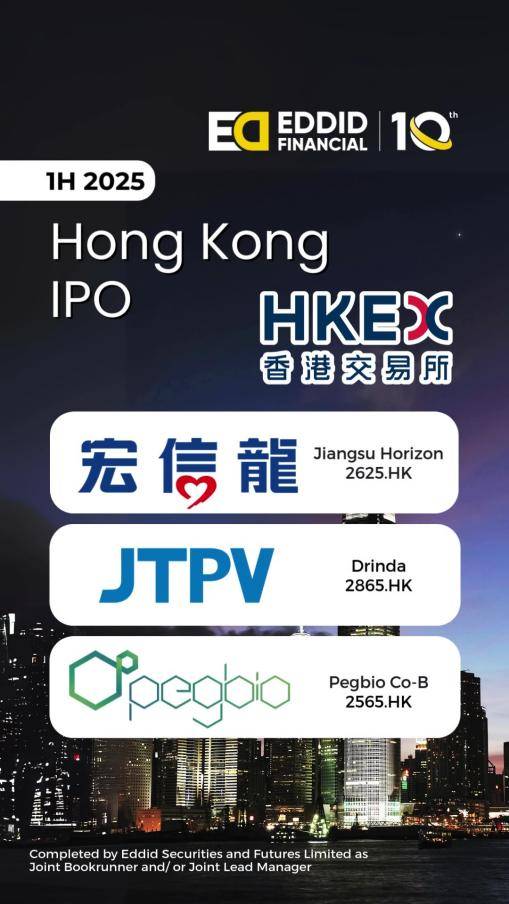
Core Viewpoint - The Hong Kong IPO market has regained its global prominence in the first half of 2025, driven by international capital interest and recovering confidence in the U.S. economy, while the U.S. IPO market continues its recovery trend. The company, aided by its comprehensive capabilities, has successfully completed multiple investment banking projects, including IPOs and bond underwriting in both markets [1]. Group 1: Hong Kong IPO Market - The Hong Kong IPO market has seen a significant increase in activity, with new stock fundraising reaching HKD 107.1 billion in the first half of the year, a sevenfold increase compared to the same period in 2024, marking the strongest record since 2021 [2]. - The company has played a crucial role in connecting mainland Chinese enterprises to international capital markets, assisting firms like Jiangsu Hongxin, Junda Co., and Paige Biopharma-B in their IPOs [2]. Group 2: Notable IPO Projects - The IPO of Paige Biopharma-B is one of the few in the Hong Kong market focusing on innovative therapies for chronic diseases, with a subscription rate of 743.78 times during the public offering, successfully listing on May 27 [4]. - Junda Co. became the first company in the photovoltaic industry to achieve a dual listing on both A-shares and H-shares, with overseas revenue accounting for 58% in Q1 2025, enhancing its global market expansion capabilities [5]. Group 3: U.S. IPO Market - The company has successfully assisted over ten enterprises from various regions, including mainland China, Hong Kong, Singapore, and the U.S., in achieving NASDAQ listings amid the ongoing recovery of the U.S. IPO market [6]. - The IPOs covered diverse sectors such as maritime technology, consumer services, healthcare, and renewable energy, showcasing the company's underwriting capabilities and investor network advantages [8]. Group 4: Bond Issuance - The company has demonstrated its comprehensive service capabilities in cross-border capital markets, extending its support to bond financing for local state-owned enterprises [13]. - Notable bond issuances include a RMB 874.7 million three-year senior unsecured bond with a coupon rate of 7.0% for Zibo City Linzi District Jiuhui Financial Holdings and a USD 60.57 million three-year senior unsecured offshore bond for Sichuan Huixing Industrial Investment [16][17]. Group 5: Future Outlook - The company aims to continue its focus on the Hong Kong market while expanding its international reach, assisting enterprises in achieving their international capital market goals in the second half of the year [17].

新闻解读20250519
2025-07-16 06:13
Summary of Conference Call Records Industry or Company Involved - The records discuss the overall economic environment in China, focusing on various sectors including industrial production, consumer retail, real estate, and the financial market dynamics in the U.S. Core Points and Arguments 1. **Industrial Production Growth**: In April, the value added by large-scale industrial enterprises grew by 6.1%, but this represents a significant decline compared to the previous month, indicating concerns among production companies [1] 2. **Consumer Retail Performance**: The total retail sales of consumer goods increased by 5.1% in April, but this is a noticeable drop from 5.9% in March, suggesting weakening demand [1] 3. **Tightening Budgets in State Institutions**: There is a trend of tightening budgets in state institutions regarding travel, office space, and dining expenses, which negatively impacts the liquor industry, particularly white liquor, indicating a long-term adjustment rather than a temporary measure [2] 4. **Real Estate Market Trends**: In April, second-hand housing prices in first-tier cities shifted from rising to falling, with cities like Guangzhou and Shenzhen showing significant declines, which adds psychological pressure to the market [3] 5. **Long-term Institutional Investment**: Financial institutions, including social security and insurance funds, have increased their long-term positions, net buying over 200 billion RMB, signaling confidence in the market despite current volatility [4] 6. **Policy Continuity**: Current policies are expected to continue as planned, without significant changes in response to negative information, maintaining a steady approach [5] 7. **Economic Metaphor - "Sweet Potato Economy"**: The term describes the Zhejiang economy's strategy of rooting down and spreading out to absorb resources, emphasizing the need for continued openness to international markets [6] 8. **Market Stability**: The capital market is perceived as stable, lacking clear upward catalysts, with a balanced policy approach without strong industry biases [7] 9. **U.S. Market Dynamics**: The U.S. market is facing downward pressure due to a recent downgrade in the country's sovereign credit rating by Moody's, which could affect corporate earnings and stock prices negatively [8] 10. **Potential for Market Reversal**: There are subtle pressures forming in the U.S. market that could lead to a reversal in asset prices, particularly affecting stocks and creating a contrasting effect with gold assets [9] Other Important but Possibly Overlooked Content - The tightening of budgets in state institutions is not just a temporary measure but is expected to become a new norm, which could have long-lasting effects on consumer behavior in specific sectors like liquor [2] - The shift in real estate prices, particularly in major cities, could indicate broader economic challenges that may affect consumer confidence and spending [3] - The ongoing stability in the capital market, despite external pressures, suggests a cautious optimism among long-term investors [4][5][7]
美联储降息救市!7月15日,今日凌晨的四大消息已全面发酵
Sou Hu Cai Jing· 2025-07-16 05:05
Group 1: Market Reactions - The announcement of tariffs by President Trump led to a significant market downturn, with the Nasdaq index dropping 0.6% and the Dow Jones Industrial Average falling by 222 points [2] - The Canadian dollar depreciated by 0.9% against the US dollar, indicating a bleak outlook for North American trade [2] - Gold prices surged to $3,337 per ounce as investors sought safe-haven assets amid rising tensions [2] Group 2: Federal Reserve Dynamics - Internal divisions within the Federal Reserve were revealed, with 7 out of 19 decision-makers advocating for no rate cuts in 2025, while 8 supported two rate cuts, highlighting a significant divergence [4] - Fed Governor Waller publicly challenged Chairman Powell's cautious stance, advocating for a reduction in policy rates due to their restrictive nature [4][6] - Powell warned of the long-term consequences of the tariffs, emphasizing the need for careful policy decisions [6] Group 3: Economic Indicators - June's non-farm payrolls showed an increase of 147,000 jobs, surpassing expectations, but the majority of new jobs were in government sectors, raising concerns about the private sector's performance [8] - The core PCE price index rose by 2.7% year-on-year, while personal consumption expenditures fell by 0.1%, indicating a disconnect between inflation and consumer spending [8] - Goldman Sachs economists revised their forecast for the Fed's first rate cut from December to September, anticipating three cuts within the year based on key economic data [8] Group 4: Global Trade Implications - The tariffs imposed by the US have caused global supply chain disruptions, with manufacturers in countries like Myanmar and Cambodia expressing concerns over potential job losses [10] - The future of the North American Free Trade Agreement (NAFTA) is under threat following the termination of trade negotiations with Canada [10] Group 5: Market Sentiment and Predictions - The probability of a rate cut in September surged to 75%, reflecting market expectations of a shift in monetary policy [12] - The dollar index fell to 97.18, marking its largest half-year decline since the 1970s, while the euro approached a three-year high against the dollar [12] - Waller outlined a plan to reduce the Fed's balance sheet, suggesting a decrease in bank reserves and an increase in the proportion of short-term Treasury securities [12]


大摩:经济与市场并不同步,而这种差距将继续走阔
贝塔投资智库· 2025-07-16 04:14
Group 1 - The core viewpoint of the article is that there is a significant divergence between economic forecasts and stock market expectations, with Morgan Stanley predicting a slowdown in the US economy while maintaining a bullish outlook for the S&P 500 index, targeting 6500 points in one year based on a projected earnings growth of approximately 10% and a price-to-earnings ratio of 21.5 times [2][6][10] - The article emphasizes that economic conditions do not directly correlate with stock market performance, highlighting that the S&P 500 index has a greater exposure to global markets than the domestic economy, which is reflected in the higher overseas profit share compared to the 12% export share of GDP [3][10] - It is noted that inflation is expected to rise in the coming months due to the delayed impact of tariffs on consumer prices, with a forecasted economic slowdown in the US driven by tariffs and immigration restrictions [4][9] Group 2 - The article discusses the anticipated increase in market volatility by the end of summer, which may create a disconnect between short-term economic risks and the long-term targets for the S&P 500 index [7][9] - The nominal GDP growth forecast of 4% is contrasted with the earnings growth predictions, indicating a persistent gap between these two metrics, influenced by factors such as dollar fluctuations and regulatory policies [9][10] - The article concludes with the expectation that the Federal Reserve will begin to lower interest rates in a context of peak inflation and a weak labor market, which could support price-to-earnings ratios despite challenges in macroeconomic assessments [10]

大越期货原油早报-20250715
Da Yue Qi Huo· 2025-07-15 03:17
1. Report Industry Investment Rating - Not provided in the given content 2. Core View of the Report - The short - term oil price will fall and fluctuate, with the short - term operating range of SC2508 crude oil between 515 and 525, and long - term observation is recommended. The market's reaction to Trump's threat of imposing a 100% tariff on Russia was relatively calm as the 50 - day buffer period provided sufficient negotiation time. Meanwhile, the EU's warning of counter - measures in the trade dispute has increased concerns about the demand side of crude oil [3]. 3. Summary by Relevant Catalogs 3.1 Daily Prompt - **Fundamentals**: The EU accused the US of resisting a trade agreement, and Trump announced new weapons for Ukraine and threatened sanctions on Russia. Goldman Sachs raised its oil price forecast for the second half of 2025 due to supply interruption risks, falling OECD oil inventories, and Russian production cuts. Overall, it is neutral [3]. - **Basis**: On July 14, the spot price of Oman crude oil was $72.33 per barrel, and that of Qatar Marine crude oil was $72.01 per barrel, with a basis of 13.96 yuan per barrel, indicating that the spot price was higher than the futures price, which is bullish [3]. - **Inventory**: The API crude oil inventory in the US for the week ending July 4 increased by 7.128 million barrels (expected to decrease by 2.6 million barrels), the EIA inventory increased by 7.07 million barrels (expected to decrease by 2.071 million barrels), and the Cushing area inventory increased by 0.464 million barrels. As of July 14, the Shanghai crude oil futures inventory remained unchanged at 4.517 million barrels, which is bearish [3]. - **Disk**: The 20 - day moving average was flat, and the price was near the average, which is neutral [3]. - **Main Position**: As of July 8, the main position of WTI crude oil was long, with a decrease in long positions; the main position of Brent crude oil was long, with an increase in long positions, which is neutral [3]. 3.2 Recent News - The EU accused the US of resisting a trade agreement to avoid punitive tariffs threatened by Trump starting from August 1. Trump said he was open to further discussions, and EU officials will go to the US for negotiations. Trump threatened to impose a 100% tariff on Russia if a peace agreement is not reached within 50 days, and announced an agreement to transport weapons to Ukraine with NATO. The market reaction was calm [5]. 3.3 Long - Short Concerns - **Bullish factors**: The intensification of the Russia - Ukraine conflict [6]. - **Bearish factors**: OPEC+ has increased production for three consecutive months, the trade relationship between the US and other economies remains tense, and Iran and Israel have ceased fire [6]. - **Market driver**: Short - term geopolitical conflicts drive up the price, and mid - to long - term prices await the peak summer demand season [6]. 3.4 Fundamental Data - **Futures market**: The settlement price of Brent crude oil decreased from $68.80 to $68.30, a decrease of 0.73%; WTI crude oil decreased from $67.00 to $62.36, a decrease of 6.93%; SC crude oil increased from 503.7 to 506.4, an increase of 0.54%; Oman crude oil increased from $68.70 to $69.78, an increase of 1.57% [7]. - **Spot market**: The price of UK Brent Dtd decreased from $71.28 to $70.91, a decrease of 0.52%; WTI decreased from $67.00 to $66.50, a decrease of 0.75%; Oman crude oil in the Pacific Rim increased from $69.84 to $70.03, an increase of 0.27%; Shengli crude oil in the Pacific Rim increased from $66.72 to $67.07, an increase of 0.52%; Dubai crude oil in the Pacific Rim increased from $69.70 to $69.85, an increase of 0.22% [9]. 3.5 Position Data - **WTI crude oil**: As of July 8, the net long position decreased by 25,319 to 209,374 [16]. - **Brent crude oil**: As of July 8, the net long position increased by 55,630 to 222,347 [19].
A股盘前市场要闻速递(2025-07-15)
Jin Shi Shu Ju· 2025-07-15 02:14
Monetary Policy and Economic Indicators - The People's Bank of China will conduct a buyout reverse repurchase operation of 1.4 trillion yuan on July 15, 2025 [1] - As of the end of June, M2 (broad money) increased by 8.3% year-on-year, reaching 330.29 trillion yuan, while M1 (narrow money) grew by 4.6% to 113.95 trillion yuan [2] - The cash in circulation (M0) reached 13.18 trillion yuan, with a year-on-year growth of 12% [2] Green Finance Initiatives - The People's Bank of China, along with financial regulatory authorities, issued the "Green Finance Support Project Directory (2025 Edition)" to enhance liquidity in the green finance market and improve asset management efficiency [2] Corporate Earnings Forecasts - Vanke A expects a net loss of 10 billion to 12 billion yuan for the first half of 2025, with a basic loss per share of 0.8433 to 1.01 yuan [4] - Yonghui Supermarket anticipates a net loss of 240 million yuan for the first half of 2025, impacted by the closure of 227 underperforming stores [5] - Longi Green Energy forecasts a net loss of 2.4 billion to 2.8 billion yuan, although it expects to reduce losses compared to the previous year [6] - Hengsheng Electronics projects a net profit of approximately 251 million yuan, a 741% increase year-on-year [7] - Wintime Technology expects a net profit of 390 million to 585 million yuan, representing a growth of 178% to 317% [8] - ST Huatuo anticipates a net profit of 2.4 billion to 3 billion yuan, a year-on-year increase of 107.2% to 159% [9] - Tianqi Lithium expects a net profit of 0 to 1.55 billion yuan, recovering from a loss of 5.206 billion yuan in the previous year [10] - Ganfeng Lithium forecasts a net loss of 300 million to 550 million yuan, compared to a loss of 760 million yuan in the same period last year [11] - Liyi Intelligent Manufacturing expects a net profit of 900 million to 1.14 billion yuan, a growth of 31.57% to 66.66% [12] - CICC anticipates a net profit of 3.453 billion to 3.966 billion yuan, a year-on-year increase of 55% to 78% [13] - Shenwan Hongyuan projects a net profit of 4.1 billion to 4.5 billion yuan, a growth of 92.66% to 111.46% [14] - Shandong Gold expects a net profit of 2.55 billion to 3.05 billion yuan, an increase of 84.3% to 120.5% year-on-year [15] - Huahong Technology anticipates a net profit of 70 million to 85 million yuan, a significant increase from 2.224 million yuan in the previous year [16] Corporate Actions and Legal Matters - Suzhou Planning intends to acquire 100% of Beijing Dongjin Aviation Technology Co., Ltd., with stock resuming trading on July 15, 2025 [17] - BOE Technology Group plans to appeal the preliminary ruling from the US International Trade Commission regarding trade secrets and has initiated a patent lawsuit against Samsung Display [18]





国泰海通:夯实科技底座 打造一流投资银行
Zheng Quan Shi Bao· 2025-07-14 18:41
Core Viewpoint - The article emphasizes the importance of financial support for technological innovation and the growth of tech enterprises, highlighting the role of Guotai Junan in promoting high-quality development through technology finance [1][2]. Group 1: Financial Strategy and Implementation - Guotai Junan is committed to enhancing its technology finance capabilities, focusing on the development of new productive forces and supporting traditional industries' transformation [1]. - The company has implemented a comprehensive action plan to strengthen its technology finance services, including ten specific measures to support the Shanghai innovation center [2]. - The organizational structure has been optimized to focus on key industries such as semiconductors, new energy, and fintech, ensuring effective support for technology finance [2]. Group 2: Notable Projects and Achievements - In 2020, Guotai Junan led the IPO of SMIC, raising 53.2 billion yuan, marking the largest fundraising in the Sci-Tech Innovation Board's history [3]. - The company assisted Shanghai Yuxin Satellite Technology Co., Ltd. in completing a Series A financing round of 6.7 billion yuan in 2024, setting a record for the largest single financing in China's satellite industry [3]. - Guotai Junan also facilitated the issuance of the first long-term technology innovation corporate bonds in 2025, aimed at supporting three leading industries in Shanghai [3]. Group 3: Comprehensive Service Capabilities - The company focuses on providing a full lifecycle service for tech enterprises, enhancing its talent pool and fostering collaboration across departments [4][5]. - Guotai Junan has established a mechanism for collaborative service, promoting synergy among investment, banking, and research functions to better serve technology companies [6]. - Since the launch of the Sci-Tech Innovation Board, Guotai Junan has supported 105 companies in their listings, with an underwriting scale exceeding 210 billion yuan, achieving a market share of 20% [6]. Group 4: Market Ecosystem Development - The company aims to enhance the quality and efficiency of technology finance services by implementing policies from seven ministries to support high-level technological self-reliance [7]. - Guotai Junan plans to establish research institutions to identify potential value in technology industries and provide professional research services [8]. - The company is committed to creating a comprehensive service ecosystem by collaborating with banks, insurance companies, and other financial institutions to better meet the needs of tech enterprises [8].

看外商赚钱又急了,印度重罚美国公司484亿
Sou Hu Cai Jing· 2025-07-14 15:03
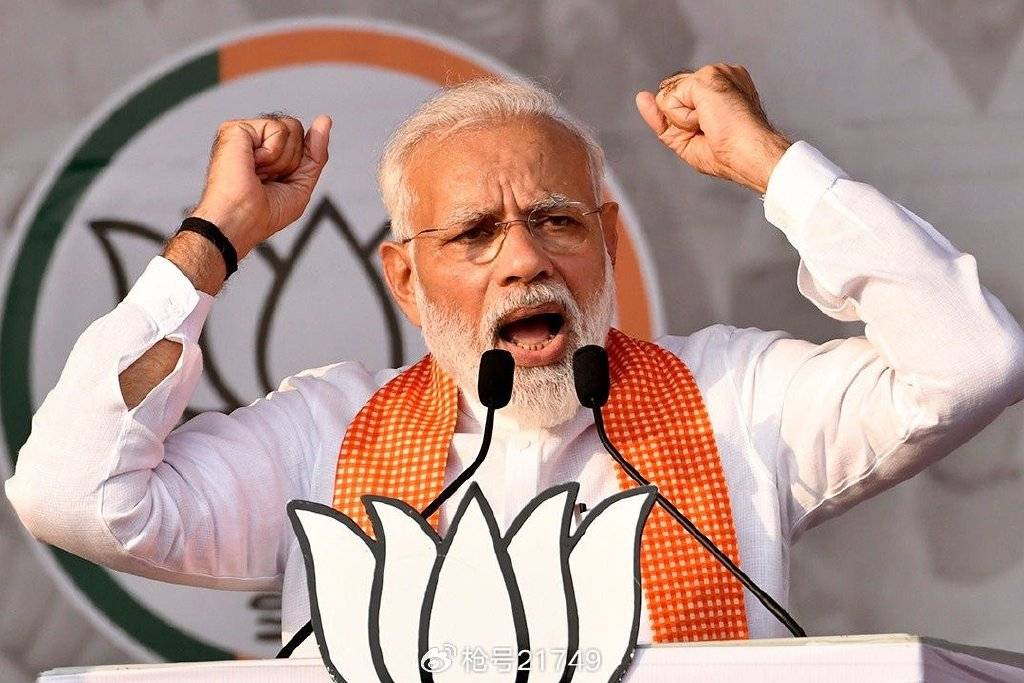
Core Viewpoint - The article discusses the tension between foreign investment in India's stock market and the Indian government's response to perceived exploitation by foreign firms, particularly highlighting the case of the U.S. investment bank Jefferies Group being fined for its significant profits in the Indian market [1][10]. Group 1: Foreign Investment in India - In recent years, India has become an attractive destination for foreign capital, with the stock market being open to foreign investments, contrasting with stricter regulations in other markets like China's A-shares [4][6]. - The Indian stock market has seen significant growth, with the Bombay Stock Exchange index doubling and becoming one of the best-performing markets globally, largely due to U.S. capital [6][10]. Group 2: Jefferies Group's Operations - Jefferies Group reportedly made substantial profits in the Indian stock market, earning 365 billion rupees in just two years through high-frequency trading and quantitative trading strategies [6][9]. - The firm's trading strategy involved manipulating stock prices by buying heavily when indices were low and then selling at a profit after retail investors drove prices up, leading to significant losses for Indian retail investors [7][9]. Group 3: Regulatory Response - The Securities and Exchange Board of India (SEBI) imposed a hefty fine of 48.4 billion rupees on Jefferies Group and mandated the firm to exit the Indian market within three months [1][10]. - The Indian government’s actions reflect a broader concern about foreign firms profiting at the expense of local investors, highlighting a potential backlash against foreign investment strategies that exploit market inefficiencies [10][13]. Group 4: Economic Implications - Despite high GDP growth rates, India's manufacturing sector has seen a decline in its contribution to GDP, raising questions about the sustainability of growth driven primarily by stock market activities rather than manufacturing [3][4]. - The article suggests that India's approach to foreign investment may deter future capital inflows, as foreign firms may become wary of regulatory risks and potential punitive actions [13].
高盛:欧洲股市或许对关税风险过于自满
news flash· 2025-07-14 13:25
Core Viewpoint - European stock market gains indicate that investors have misjudged the risks associated with U.S. tariffs [1] Group 1: Market Analysis - According to Goldman Sachs' senior European equity strategist Sharon Bell, the recent rise in European stocks suggests a miscalculation by investors regarding the potential impact of U.S. tariffs [1] - The stock market has recently recovered from the latest escalation of the trade war, but negotiations between the EU and U.S. representatives remain stalled on issues ranging from automobiles to agriculture [1] - If investors believe that a 30% tariff will ultimately be implemented, the market could experience a more significant decline [1]
