AI

Search documents
科创50指数涨超2% AI应用端普遍走强
Shang Hai Zheng Quan Bao· 2025-07-25 18:26
Market Overview - On July 25, A-shares experienced adjustments, with the Sci-Tech 50 Index rising over 2% against the trend. The Shanghai Composite Index closed at 3593.66 points, down 0.33%, while the Shenzhen Component Index and the ChiNext Index fell by 0.22% and 0.23%, respectively. The total trading volume in the Shanghai and Shenzhen markets was 1.7873 trillion yuan, a decrease of 57.4 billion yuan from the previous trading day, marking the seventh consecutive day of exceeding 1.5 trillion yuan. Notable stocks included Northern Rare Earth, China Power Construction, and Dongfang Wealth, each with trading volumes exceeding 10 billion yuan [1]. Technology Sector - The technology sector saw a significant inflow of funds, particularly in AI applications. Companies such as Insai Group and CloudWalk Technology experienced gains of 20% and over 10%, respectively. The World Artificial Intelligence Conference (WAIC) is set to take place from July 26 to 29, featuring over 60 leading domestic and foreign enterprises, showcasing more than 3000 cutting-edge exhibits, the largest scale in history. Analysts believe that the trend in the AI industry will continue to drive capital expenditure from major tech companies and boost the performance of companies in the computing power supply chain [2]. Healthcare Sector - The healthcare sector was notably active, with medical device, CRO, and AI medical stocks performing well. Kangtai Medical surged by 20%, while other companies like Nanwei Medical and Yiming Pharmaceutical also saw significant gains. Recent announcements from the National Medical Insurance Administration regarding the optimization of centralized procurement rules and the introduction of new drug directories for commercial health insurance are expected to positively impact the sector. Analysts suggest that the healthcare industry may see a recovery in valuations and performance due to these changes [3][4]. Investment Strategies - Investment strategies are focusing on two main directions: first, on generic drugs and medical devices that continue to win bids in centralized procurement, which are expected to gain market share; second, on innovative pharmaceutical companies with rich R&D pipelines that have core products entering medical insurance or are likely to be included in new drug directories [4]. - Analysts from Dongfang Securities and Zhongyuan Securities suggest that the current macroeconomic expectations are stable, with a generally ample capital environment. They recommend focusing on sectors with high growth in performance and technology, as well as high-dividend banks and public utilities [5][6]. Fund Allocation Trends - Recent fund allocation trends indicate a clear shift towards industry leaders in sectors such as communication, non-bank finance, media, agriculture, and beauty care, while significant reductions were seen in steel, coal, real estate, and food and beverage sectors. Analysts recommend focusing on four main lines: AI-driven communication and hardware, non-bank finance, new consumption trends in Hong Kong stocks, and safety-related investments [6].
淡水泉2025下半年策略:聚焦“多巴胺”出海与AI产业链,掘金中国资产价值重估
Xin Lang Ji Jin· 2025-07-25 14:59
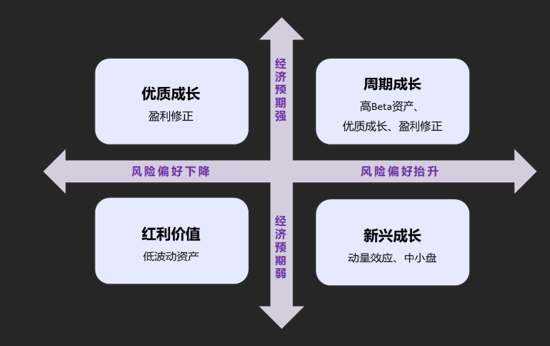
Group 1 - The core viewpoint of the article emphasizes that despite external uncertainties, the A/H stock market will present rich structural opportunities, focusing on three main directions: the value reassessment of quality Chinese assets, the globalization of Chinese advantageous industries, and technological self-sufficiency [1][3] - The investment strategy includes paying attention to opportunities arising from marginal improvements in fundamentals combined with incremental policies, particularly in economically sensitive assets that have undergone sufficient adjustments [1][3] - The "dumbbell" market characteristic is highlighted, where there are two types of assets: value dividend assets that have not performed well this year but show internal differentiation, and emerging growth assets that exhibit rapid rotation [2] Group 2 - The outlook for the second half of the year is optimistic, with major indices breaking upward, leading to a positive market sentiment [3] - Key structural opportunities identified include the value reassessment of quality Chinese assets, the globalization of leading companies in advantageous industries, and investment opportunities arising from breakthroughs in AI technology [3][4] - In the automotive sector, three directions are favored: high-end development, smart technology, and international expansion, with a focus on the rising demand for mid-to-high-end domestic brands and the impact of smart driving features on brand premium [4][5] Group 3 - The article notes that China has surpassed Japan to become the world's largest automobile exporter, with the European market replacing the U.S. as the main battleground for overseas expansion, indicating a significant increase in China's global influence in the automotive sector [5] - The investment focus in the AI sector includes opportunities in overseas computing power, domestic computing power, and AI application fields, with a particular emphasis on companies that can leverage AI to enhance their core business fundamentals [4] - The company will continue to maintain a dynamic balance between growth and value, focusing on opportunities arising from fundamental improvements and policy catalysts in an era of normalized uncertainty [7]

缪延亮:国际货币体系新形势下 可从四方面推进人民币国际化
Xin Hua Cai Jing· 2025-07-25 12:30
Core Viewpoint - The article emphasizes the need to promote the internationalization of the Renminbi (RMB) through four key strategies: advancing RMB settlement and pricing, constructing a closed-loop financing system, issuing offshore stablecoins, and enhancing exchange rate flexibility [1][5]. Group 1: Changes in the International Monetary System - The credibility of the US dollar is weakening, as evidenced by the recent volatility in US stocks, bonds, and currency, leading to a decline in the perceived safety of US Treasury bonds [1]. - The rise of "Made in China" is notable, with significant advancements in strategic emerging sectors such as new energy vehicles, 5G communication, and AI, enhancing the market's focus on Chinese manufacturing [1]. - The restructuring of the trade system is evident, with the US imposing significant tariffs on trade partners, indicating a reduced willingness to act as the global consumer, which may decrease the dollar's role in trade settlements [1]. Group 2: Implications for the Renminbi - The RMB is experiencing upward pressure on its value, moving away from depreciation expectations, particularly after strong measures were taken in April [3]. - The nominal exchange rate of the RMB against the US dollar has shown signs of undervaluation, suggesting potential for appreciation in the future [3]. - The actual effective exchange rate of the RMB has decreased by over 15% from Q1 2022 to Q1 2025, despite a significant trade surplus [3]. Group 3: Sources of Appreciation Pressure on the Renminbi - The weakening of the dollar's dual anchors has reduced depreciation pressure on the RMB, while internal manufacturing surpluses are on the rise [4]. - China possesses a complete fiscal sovereignty and a relatively healthy fiscal situation, providing the government with the capacity to expand fiscal spending and offer safe assets to international investors [4]. Group 4: Recommendations for RMB Internationalization - The first recommendation is to advance RMB settlement and pricing, particularly in the commodities sector, where China is the largest consumer [5]. - The second recommendation involves constructing a closed-loop financing system by enhancing the return on RMB assets and expanding capital project openness [5]. - The third recommendation is to issue offshore stablecoins, with a pilot program in Hong Kong, leveraging China's manufacturing advantages [5]. - The fourth recommendation is to restore and enhance the RMB's exchange rate flexibility to mitigate one-sided downward pressure and avoid excessive binding to the US dollar [5].
雅下工程令世界惊叹,但它的意义仍被很多人低估了
Guan Cha Zhe Wang· 2025-07-25 11:11
Group 1 - The Yarlung Tsangpo River downstream hydropower project represents a strategic shift in China's infrastructure investment, moving away from traditional models of economic stimulus through large-scale construction projects [1][2][4] - The project involves an investment of 1.2 trillion yuan, aimed at enhancing national energy security, driving new productive forces, and facilitating regional coordinated development [1][4] - Traditional infrastructure investment in China is declining, with local government debt exceeding 50 trillion yuan and a projected 3.3% decrease in narrow infrastructure investment in 2025 [1][8][9] Group 2 - The Yarlung Tsangpo project is expected to generate significant economic returns, particularly in the context of the growing demand for electricity from AI and data center industries [21][23] - The project aligns with China's "East Data West Computing" strategy, which aims to utilize the abundant energy resources in the west to support the digital economy in the east [24] - The hydropower project is projected to have an installed capacity of 60 million kilowatts and an annual generation of 300 billion kilowatt-hours, significantly contributing to China's clean energy supply [24][34] Group 3 - The project is anticipated to transform Tibet's economy by creating a competitive industrial core, moving from reliance on traditional industries to modern, high-value sectors [26][34] - The success of the project could mirror the economic transformation seen in Yichang, where the Three Gorges project led to a shift from resource-based to industry-driven growth [27][30] - The long-term effects of the project include increased urbanization, improved human capital, and the establishment of a sustainable economic model for Tibet [31][34]

龙岗重磅推出科技创新赋能“杀手锏”
Sou Hu Cai Jing· 2025-07-25 09:51
Group 1 - The core focus of the 2025 Longgang District Enterprise Service Conference is on multi-dimensional initiatives to empower enterprise development through technological innovation [1] - Longgang District aims to create a systematic empowerment system covering the entire innovation chain and supporting the full lifecycle of enterprises, highlighting its status as a leading industrial area with an industrial output value exceeding 1 trillion yuan [1][3] Group 2 - The establishment of large enterprise open innovation centers is a key initiative, exemplified by China General Nuclear Power Group's public call for research cooperation, providing funding, equipment, and shared results [3] - Longgang District has 48 listed companies and 8 national-level manufacturing champions, which are leveraged to build an open innovation ecosystem [3] Group 3 - The government has innovatively transformed major investment projects into "verification fields" and "order entry" for enterprise innovation products, with a focus on AI and robotics [4] - In the past six months, over 2,000 new technologies have been matched with 80 enterprises across 28 government projects, with a total procurement amount of 6.2 billion yuan [4] - Future plans include 205 government projects with a total investment of 818 billion yuan, aiming for a procurement scale exceeding 10.5 billion yuan [4] Group 4 - Longgang has developed a comprehensive financial service system covering the entire lifecycle of enterprises, including a 50% premium subsidy for technology insurance and innovative insurance products for robotics and AI systems [5] - In the past three years, 522 enterprises have received loans totaling 14.6 billion yuan through intellectual property pledge financing, with a target of exceeding 7 billion yuan by 2025 [5] - The district's guiding fund matrix, totaling 48.1 billion yuan, supports over 1,200 enterprises, focusing on early-stage investments in hard technology [5] Group 5 - Longgang District is committed to creating an innovation community centered on enterprises, with a focus on fostering a favorable technological innovation ecosystem [6] - The district's approach emphasizes a virtuous cycle of demand-driven innovation and innovation-driven industry, providing a "Longgang solution" for technological innovation in Shenzhen and the Greater Bay Area [6]

午评:沪指跌0.34% AI应用方向逆势大涨
Xin Hua Cai Jing· 2025-07-25 04:56
Market Overview - The market experienced a slight decline in early trading, with the Shanghai Composite Index falling below 3600 points, closing at 3593.38, down 0.34% with a trading volume of 500 billion [1] - The Shenzhen Component Index closed at 11160.30, down 0.29% with a trading volume of 605.6 billion, while the ChiNext Index closed at 2337.80, down 0.32% with a trading volume of 271 billion [1] Sector Performance - Sectors such as medical devices, multi-modal AI, Huawei Ascend, and cultural media saw significant gains, while sectors like Hainan Free Trade Zone, super hydropower, controllable nuclear fusion, and cement experienced notable declines [1] - AI application stocks surged collectively, with Sai Group rising by 20%, and medical device stocks also showed strength, with Kangtai Medical rising by 20% [2] - Logistics stocks saw a temporary spike, with Shentong Express hitting the daily limit, while super hydropower stocks collectively fell, with Shen Shui Gui Yuan dropping over 10% [2] Institutional Insights - Hengsheng Qianhai Fund noted that the recent high financing balance indicates strong market trading enthusiasm, with expectations for continued upward trends in indices due to improving economic fundamentals supported by policy measures [4] - Huahui Chuangfu highlighted a structural opportunity in the market, driven by economic stabilization and supportive policies, predicting alternating boosts from "policy benefits" and "profit benefits" in sectors like AI, new energy vehicles, and innovative pharmaceuticals [4] - Zhongtai Securities observed a clear shift in fund allocation towards leading industries such as communication, non-bank finance, media, agriculture, and beauty care, while significantly reducing holdings in steel, coal, real estate, and food and beverage sectors [5] Financing Activity - The total financing balance in the two markets increased by 60.25 billion, with the Shanghai Stock Exchange reporting a balance of 9730.55 billion and the Shenzhen Stock Exchange reporting 9490.57 billion [6] Policy Developments - The National Medical Insurance Administration held a series of discussions to support the high-quality development of innovative drugs and medical devices, involving representatives from medical institutions, pharmaceutical companies, and investment firms [7]


突然爆发!这类股,直线拉涨停!
Zhong Guo Ji Jin Bao· 2025-07-25 02:55
Market Overview - The A-share market experienced fluctuations with the Shanghai Composite Index down by 0.21%, the Shenzhen Component Index down by 0.11%, and the ChiNext Index down by 0.09% as of July 25 [2] - The innovative drug sector showed strong performance, while AI application sectors experienced volatility, with internet, education, and virtual human sectors also being active [4] Sector Performance - The CRO concept stocks remained active, with notable gains from Kanglong Chemical (up 11.66%), Boteng Co. (up 10.68%), and others [8] - The healthcare, biotechnology, and pharmaceutical sectors saw upward movements, with Kangtai Medical reaching a 20% limit up, and several other companies hitting their upper limits [9] AI Application Sector - AI application stocks saw a rise, with ChatGPT-related stocks performing well; Yuncong Technology increased by over 11%, and Hanwang Technology hit the daily limit up [11] - The upcoming World Artificial Intelligence Conference on July 26 is expected to showcase over 3,000 cutting-edge exhibits, including numerous AI models and products, marking a record scale for the event [13] Regulatory and Market Insights - The National Medical Products Administration reported that 43 innovative drugs were approved in the first half of the year, a 59% increase year-on-year, nearing the total expected approvals for 2024 [10] - The R&D pipeline for innovative drugs in China accounts for approximately 25% of the global total, with around 3,000 projects undergoing clinical trials annually [10] AI Development Trends - According to CITIC Securities, since the release of ChatGPT, large models are evolving towards greater efficiency and reliability, with a shift in AI computing power consumption from training to inference, highlighting a trend towards self-controlled computing power in China [14]


X @Bloomberg
Bloomberg· 2025-07-25 01:47
RT Saritha Rai (@SarithaRai)China's most influential AI event is happening this week in Shanghai. In the year of DeepSeek, AI giants, upstarts, academics, Beijing officials all at WAIC 2025. Event comes at critical juncture of US-China AI rivalryMy piece for @business w/ teamhttps://t.co/MC5NniypU3#AI https://t.co/arvlLkSyuj ...
“自愿996者,涨薪25%、股权翻倍”,“996”的这股风,吹到了硅谷AI初创?
3 6 Ke· 2025-07-25 01:30
Core Viewpoint - The article discusses the resurgence of the "996" work culture in Silicon Valley, particularly within AI startups, contrasting it with previous trends emphasizing work-life balance. Group 1: Work Culture Shift - The "996" work system, which involves working from 9 AM to 9 PM six days a week, is becoming increasingly common in U.S. startups, especially in the AI sector, as founders believe that intense effort is necessary to succeed in the technology race [1][3] - The pandemic had previously shifted the focus towards employee well-being and work-life balance, but the urgency of the AI competition has led to a cultural shift back towards high commitment and execution [3][4] Group 2: Recruitment Practices - Many startup CEOs are now asking potential hires if they are willing to accept a "996" work schedule during the interview process, making it a de facto requirement for some positions [3][4] - Companies like Rilla explicitly state in job postings that candidates uninterested in working over 70 hours a week need not apply, reflecting a growing trend in the industry [4] Group 3: Employee Incentives - Some startups are adopting a "voluntary" approach to the "996" work culture, offering higher salaries and equity to those willing to work longer hours, creating a dual-track system [5] - For instance, Fella & Delilah offers a 25% salary increase and doubled equity for employees who accept the "996" work schedule, with about 10% of employees opting in [5] Group 4: Global Perspective - The debate over extended work hours is not limited to Silicon Valley; it is a global discussion, with some investors suggesting that to build a $10 billion company, one must work seven days a week [6] - Acceptance of the "996" culture is reportedly higher in the U.S. compared to Europe, where weekend work is often met with shock [6] Group 5: Legal and Ethical Concerns - There are concerns regarding the legality of the "996" work culture in the U.S., with many companies failing to comply with labor laws and not providing proper classification or overtime pay for employees [6]

前瞻全球产业早报:12月18日海南自贸港全岛封关
Qian Zhan Wang· 2025-07-24 12:10
Group 1 - Volant Aviation has signed a tripartite cooperation agreement with Pan Pacific and China Aviation Technology International Engineering Company to procure 500 units of VE25-100 eVTOL, valued at $1.75 billion, marking the largest international order for Chinese high-grade passenger eVTOLs to date [2] Group 2 - Alibaba is set to launch its first self-developed AI glasses this week, featuring basic functionalities such as voice assistant, music playback, phone calls, real-time translation, and meeting minutes [3] Group 3 - Mitsubishi Motors has officially severed its joint venture with Shenyang Aerospace Mitsubishi Motors Engine Manufacturing Co., effectively exiting the Chinese automotive production market after 40 years [4] Group 4 - The Hainan Free Trade Port is scheduled to officially start its closure on December 18, 2025 [4] Group 5 - A report circulated that starting July 20, fuel vehicles would be completely banned from ride-hailing platforms in Beijing; however, the source was unverified and subsequently retracted [5] Group 6 - Quark Health's large model has successfully passed the written assessment for 12 core disciplines of chief physician in China, becoming the first large model to achieve this milestone [6] Group 7 - Li Auto has completed the adjustment of payment terms for direct suppliers to a 60-day period, with monthly payments scheduled twice [7] Group 8 - 360 Group's founder Zhou Hongyi announced a shift towards domestic chip procurement, primarily sourcing products from Huawei despite acknowledging the gap with NVIDIA [7] Group 9 - China National Nuclear Corporation announced the completion of the preliminary design for the country's first fourth-generation commercial fast reactor, CFR1000, which is ready for approval [8] Group 10 - Huawei has launched the Pura80 digital version, which is available for pre-sale at a starting price of 4,699 yuan, approximately 800 yuan lower than the previous generation [9] Group 11 - SenseTime is reportedly establishing an independent company focused on embodied intelligence, with a core team including its chief scientist and former head of JD's research institute [10] Group 12 - Zhiyuan Robotics has listed its quadruped robot D1 ULTRA on its official website, designed for specialized applications with a maximum running speed of 3.7 meters per second [11] Group 13 - Sales of moissanite jewelry from China have surged by 20 times on AliExpress, indicating a shift in consumer preference from traditional diamonds [11] Group 14 - Saudi Arabia's largest supermarket chain, Othaim, has joined AliExpress to expand its "hourly delivery" service [11] Group 15 - Stellantis is recalling over 121,000 vehicles in the U.S. due to potential issues with headrests that may not lock properly, increasing the risk of injury during collisions [12] Group 16 - Japan plans to utilize its local dealer network to assist in the sales of American cars [13] Group 17 - Tesla's vehicle registrations in California fell to 41,138 units in Q2, representing a year-on-year decline of 21.1%, marking the seventh consecutive quarter of decline [14] Group 18 - The European Commission is considering a partnership with Japan to jointly mine rare earth elements [15] Group 19 - OpenAI has reached a strategic partnership with the UK government to accelerate AI infrastructure development and attract private investment, building on a £674 million sovereign AI project [16] Group 20 - Surpine has completed a multi-million Pre-A financing round, backed by the Jiebai Consumer Fund [17] Group 21 - Amazon has confirmed plans to acquire wearable device startup Bee AI, which focuses on wearable voice devices [18] Group 22 - Mindray Medical is reportedly considering a secondary listing in Hong Kong, aiming to raise at least $1 billion [19] Group 23 - The three major A-share indices closed mixed, with the Shanghai Composite Index up 0.01% and the Shenzhen Component Index down 0.37% [20] Group 24 - The Hang Seng Index rose by 1.62%, while the Hang Seng Tech Index increased by 2.48% [20] Group 25 - The onshore RMB against the USD closed at 7.1610, appreciating by 146 points from the previous trading day [21] Group 26 - European stocks opened higher, with Germany's DAX index up 1.18% and France's CAC40 index rising by 1.23% [21] Group 27 - Domestic commodity futures closed mixed, with coking coal futures hitting the limit up, while lithium carbonate fell over 4% [21] Group 28 - The Nikkei 225 index closed up 3.51% at 41,171.32 points [22] Group 29 - The KOSPI index in South Korea closed up 13.83 points, a 0.44% increase, at 3,183.77 points [22]