
硬件设备

Search documents
A股活水来!定增金额大增544%,简易程序成企业“及时雨”
2 1 Shi Ji Jing Ji Bao Dao· 2025-07-29 12:27
Group 1 - The A-share market has seen a significant increase in equity financing, with 172 companies raising a total of 823.51 billion yuan, a year-on-year increase of 371.52% [1] - Among these, 90 companies completed private placements, raising 722.30 billion yuan, up 543.73% year-on-year, while 25 companies issued convertible bonds, raising 40.56 billion yuan, a 53.53% increase [1] - Major state-owned banks, including Bank of China, Postal Savings Bank, and others, have raised over 1 trillion yuan each for capital replenishment, with Bank of China leading at 165 billion yuan [1][3] Group 2 - The surge in private placements is supported by regulatory measures aimed at increasing long-term capital inflows into the market [2] - The "merger and acquisition" policy has led to a significant rise in financing for mergers and acquisitions, with 16 out of 90 private placements being used for asset acquisitions [3] - The financial sector has dominated the fundraising landscape, with major banks collectively raising 520 billion yuan, supported by government initiatives to issue special bonds [3] Group 3 - Several securities firms have also engaged in private placements to enhance their capital strength, with a total of 45.49 billion yuan raised this year [4] - The simplified procedures for small and medium enterprises have gained popularity, allowing quicker access to necessary funds [4][5] - A total of 352 companies updated their refinancing plans this year, a 162.69% increase from last year, with a significant portion being technology firms seeking to bolster working capital [6] Group 4 - The Shenzhen Stock Exchange has introduced guidelines to enhance financing flexibility for companies classified as "light asset" and "high R&D input," allowing them to bypass certain restrictions [7] - Over 200 companies are expected to meet these new standards, primarily in strategic emerging industries such as information technology and biomedicine [7] - The overall fundraising scale for private placements is projected to exceed 1 trillion yuan this year, driven by improved market conditions and corporate profitability [8]



韩国股民,狂买中国资产!
Sou Hu Cai Jing· 2025-07-20 07:54
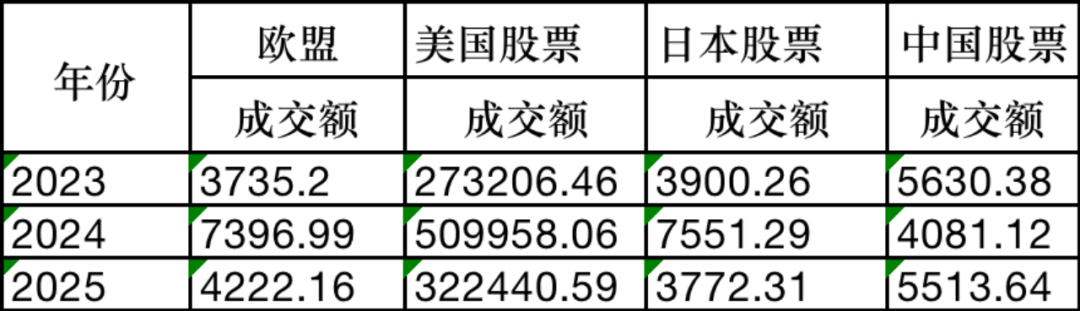
Group 1 - Korean investors have shown increasing interest in Chinese stocks, with a cumulative trading volume of approximately $5.514 billion in 2023, making China the second most favored overseas market for Korean investors, following the United States [1] - The trading volume of Korean investors in Chinese mainland and Hong Kong stocks surged to $782 million in February 2023, nearly doubling from the previous month, marking the highest level since August 2022 [2] - The recent launch of AI models in China has attracted global capital, further fueling Korean investors' enthusiasm for the Chinese market [2] Group 2 - The Hong Kong IPO market has seen a significant increase in activity, with total fundraising exceeding 100 billion HKD in the first half of 2023, surpassing levels from the past three years [3] - Notable IPOs include CATL raising 41.006 billion HKD and Hengrui Medicine raising 11.374 billion HKD, among others, indicating strong investor interest across various sectors [4] Group 3 - Citigroup's report indicates that despite macroeconomic fluctuations, Asian stock markets are performing better than global counterparts, with a constructive mid-term outlook for Chinese stocks, particularly in the consumer sector [7] - Morgan Stanley predicts sustained global investor interest in Chinese assets, while Goldman Sachs forecasts that AI advancements could lead to a 2.5% annual increase in overall earnings for Chinese stocks over the next decade [7] - JPMorgan anticipates a continued revaluation of Chinese tech stocks, projecting an average annual return of 7.8% over the next 10 to 15 years [7]

利好!A股公司,密集披露!
Zheng Quan Shi Bao· 2025-07-19 11:06
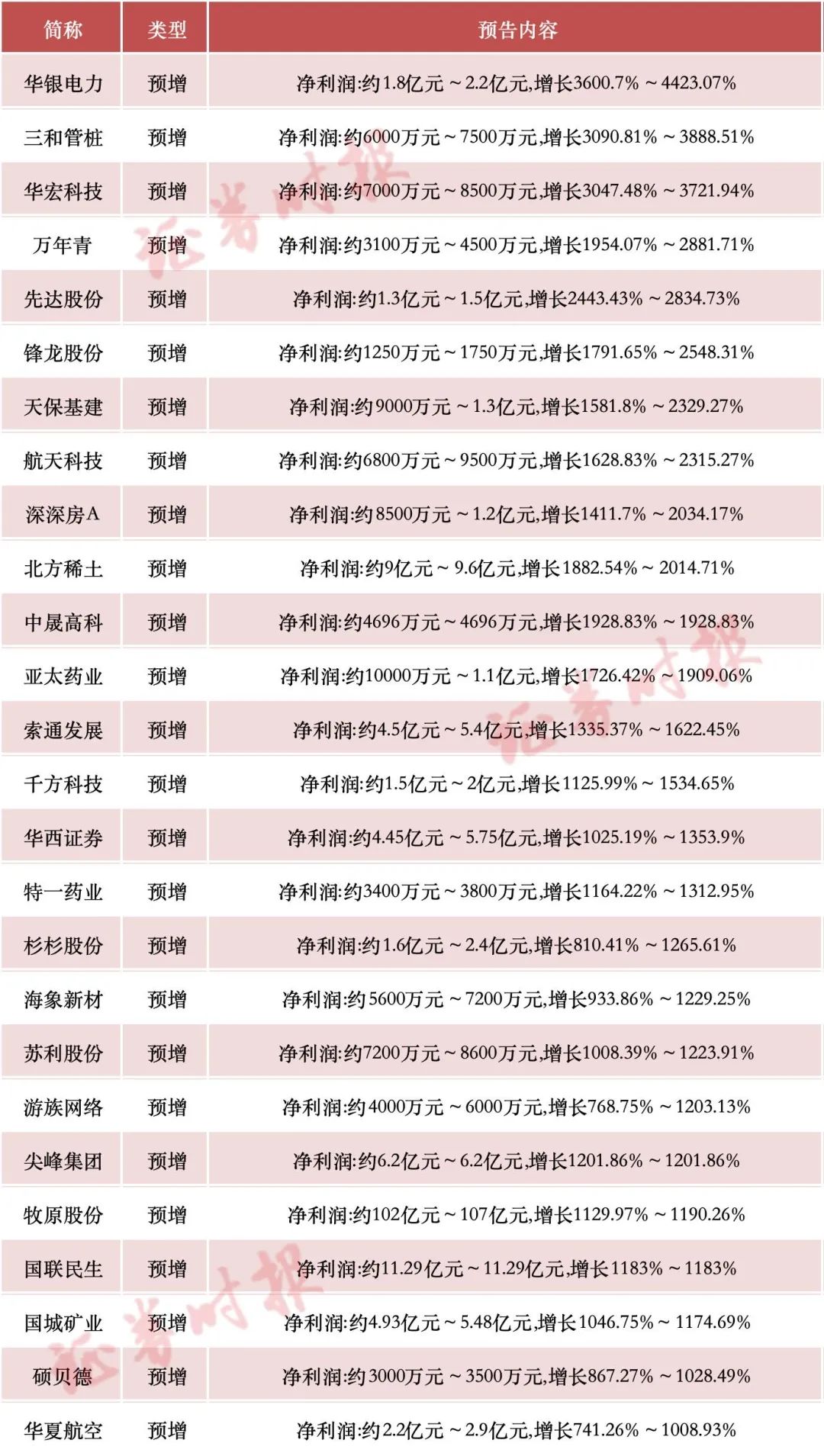
Core Insights - Over 1500 A-share listed companies have announced their half-year performance forecasts, with 676 companies expecting positive results, representing approximately 43% of the total [1][4] - 26 companies anticipate a net profit increase exceeding 1000% for the period [7] - 193 companies are expected to turn losses into profits [3][12] - The sectors with the highest concentration of companies expecting positive results include hardware equipment, chemicals, and machinery [15] Performance Forecasts - Among the companies forecasting positive results, 418 are expecting an increase, 59 slight increases, 6 to maintain profits, and 193 to turn losses into profits [4] - Notable companies with significant profit increases include: - Huayin Power: Net profit expected to be between 180 million to 220 million RMB, an increase of 3600.7% to 4423.07% [8] - Sanhe Pile: Net profit expected to be between 60 million to 75 million RMB, an increase of 3090.81% to 3888.51% [10] - Huahong Technology: Net profit expected to be between 70 million to 85 million RMB, an increase of 3047.48% to 3721.94% [10] Companies Turning Profits - 193 companies are expected to turn losses into profits, accounting for nearly 30% of the companies forecasting positive results [12] - New Hope is projected to achieve a net profit of 680 million to 780 million RMB, driven by improvements in pig farming and feed business [12][13] Industry Concentration - The majority of companies expecting positive results are concentrated in the hardware equipment (77 companies), chemicals (61 companies), and machinery (51 companies) sectors [15] - Historical trends indicate that during the mid-year reporting season, companies with stable profit growth are more likely to attract investor interest and outperform the market [15]
利好!A股公司,密集披露!
证券时报· 2025-07-19 10:38
Core Viewpoint - The article highlights the performance forecast of A-share listed companies for the first half of the year, indicating a significant number of companies are expected to report positive earnings, with a notable concentration in specific industries [2][3][4]. Summary by Sections Overall Performance - As of now, over 1500 A-share listed companies have announced their half-year performance forecasts, with 676 companies expecting positive earnings, accounting for approximately 43% of the total [2][4]. - 26 companies anticipate a net profit increase exceeding 1000% [8]. - 193 companies are expected to turn losses into profits [14]. Earnings Forecast Types - Among the companies forecasting positive earnings, 418 are expecting an increase, 59 slight increases, 6 are maintaining earnings, and 193 are turning losses into profits [5]. - Notable companies include: - China Salt Chemical: Revenue of 5.998 billion yuan, a decrease of 5.76% year-on-year, with a net profit of 52.71 million yuan [5]. - Shentong Technology: Revenue of 816 million yuan, a year-on-year increase of 22.46%, with a net profit of 64.28 million yuan, up 111.09% [5]. Companies with Significant Profit Increases - A list of companies with expected net profit increases exceeding 2000% includes: - Huayin Power: Net profit forecast of 180-220 million yuan, an increase of 3600.7%-4423.07% [9]. - Sanhe Pile: Net profit forecast of 60-75 million yuan, an increase of 3090.81%-3888.51% [12]. - Other companies like Huahong Technology and Wannianqing also show significant increases [11]. Companies Turning Losses into Profits - 193 companies are expected to turn losses into profits, with 24 of them forecasting net profits of 200 million yuan or more [14]. - New Hope is leading with a forecasted net profit of 680-780 million yuan, attributed to improvements in pig farming and feed business [15]. Industry Concentration - The companies expecting positive earnings are primarily concentrated in the hardware equipment, chemical, and machinery industries, with 77, 61, and 51 companies respectively [18]. - Historical trends indicate that during the mid-year reporting season, companies with stable profit growth are more likely to attract investor interest and outperform the market [18].



沪指冲关3600点,热点频繁切换,谁将脱颖而出?
Mei Ri Jing Ji Xin Wen· 2025-07-18 09:12
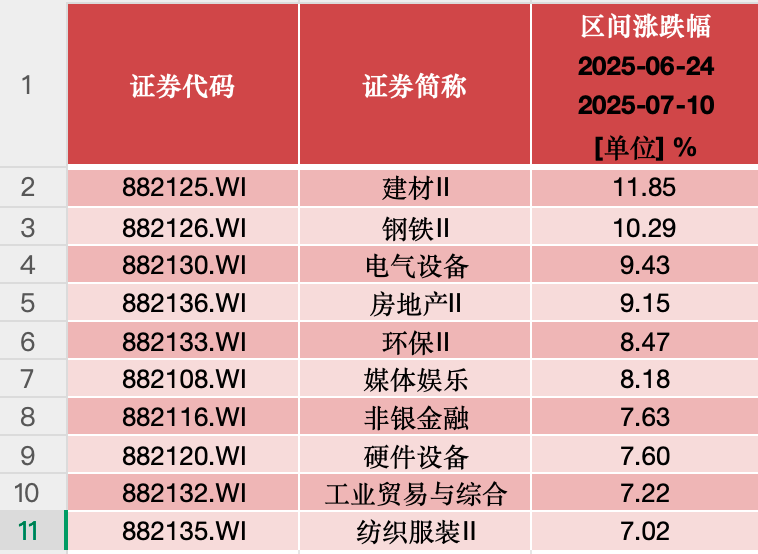
Core Viewpoint - The recent surge of the Shanghai Composite Index (SHCI) above 3500 points has been characterized by two distinct phases, with unexpected sectors leading the gains, particularly in construction materials, steel, and real estate during the initial phase [1][4]. Phase One: Initial Surge to 3500 Points - From June 24 to July 10, the construction materials sector saw an overall increase of 11.85%, while the steel sector rose by 10.29%. The real estate sector, often overlooked, also experienced a gain of 9.15% during this period [2]. - The electrical equipment sector, which includes batteries and photovoltaic devices, also recorded a rise of over 9% [3]. Phase Two: Stabilization and Sector Rotation - After breaking through the 3500-point mark, the SHCI has stabilized, leading to a noticeable shift in market focus [4]. - The pharmaceutical and biotechnology sectors emerged as the best performers recently, with significant contributions from innovative drug companies such as WuXi AppTec and Hengrui Medicine, which saw increases of 6.05% and 3.19% respectively [5]. - The hardware equipment sector has shown a cumulative increase of 13.52% since June 24, with notable stocks like Industrial Fulian and NewEase Technology leading the charge [6]. Future Outlook: Potential Sectors for Growth - Analysts suggest that as the SHCI aims for 3600 points, sectors such as high-dividend banks and green electricity will play a crucial role in supporting the index [8]. - The non-ferrous metals sector is also expected to benefit from rising copper and aluminum prices, showing an upward trend since July [8]. - Consumer sectors, including liquor and dairy products, remain at historically low valuations, presenting opportunities for investment [8]. - Growth sectors like AI computing and semiconductor equipment are anticipated to continue their strong performance, driven by recent successes in the U.S. market [8]. - The humanoid robotics sector is also expected to re-enter an upward trajectory following its adjustment period [9].

控制权变更宣告终止,*ST金比拟受让方因信披违规收监管函
Di Yi Cai Jing· 2025-07-17 12:31
Core Viewpoint - The frequent changes in control of listed companies, exemplified by *ST Jinbi's abrupt termination of its control transfer, highlight regulatory scrutiny and the complexities involved in such transactions [1][5]. Group 1: Company Specifics - *ST Jinbi announced a control transfer to Shanghai Yuanyi Chengwu Technology Co., Ltd. on June 6, 2023, but this was terminated less than two months later due to regulatory issues concerning the acquirer's actual controller [2][3]. - The company, established in 1996, focuses on mid-to-high-end maternal and infant products, with brands including "LABI BABY," "I LOVE BABY," and "BABY LABI" [2]. - The proposed share transfer involved 47.085 million shares, representing 13.30% of the total share capital, at a price of 7.34 yuan per share, totaling 346 million yuan [2][3]. Group 2: Regulatory Issues - The Shenzhen Stock Exchange issued a regulatory letter to Yuanyi Chengwu and its actual controller, Chen Keru, for failing to disclose that the ultimate controlling entity, Haoran Chunhui, was under court-ordered liquidation [4]. - The control transfer was halted due to uncertainties arising from the acquirer's family asset liquidation disputes, leading to mutual agreement to terminate the transaction [3][4]. Group 3: Industry Trends - Over 75 listed companies in A-shares have announced control changes this year, with more than 10 successfully completing transfers and three, including *ST Jinbi, terminating their transactions [5]. - The trend of control changes spans various industries, including textiles, chemicals, machinery, and pharmaceuticals, with over 40% of these companies reporting losses in 2024 [5][6]. - The involvement of private equity and local state-owned enterprises in acquiring control of listed companies is notable, with several transactions completed or in progress [6].

168家,业绩预告翻倍!
第一财经· 2025-07-14 02:27
Core Viewpoint - The article discusses the accelerated disclosure of half-year performance forecasts by A-share listed companies, highlighting the importance of these reports for investors to decode the market and plan for the second half of the year [1][2]. Group 1: Performance Forecasts - As of the report, 507 A-share listed companies have disclosed their 2025 half-year performance forecasts, with 203 companies expecting profit increases, 36 slight increases, 55 companies turning losses into profits, and 54 companies expecting profit decreases [1][2]. - Among the 298 companies with positive performance forecasts, 168 companies anticipate a net profit increase of over 100%, primarily from seven industries: hardware equipment, chemicals, machinery, biomedicine, food and beverage, non-ferrous metals, and electrical equipment [5]. Group 2: Industry Highlights - The surge in prices of non-ferrous metals and chemical products has significantly boosted the performance of related companies. For instance, Zijin Mining (601899.SH) expects a net profit of approximately 232 billion yuan, a year-on-year increase of about 54% [6]. - The rare earth market has also seen a rise, with Northern Rare Earth (600111.SH) projecting a net profit increase of 1882.54% to 2014.71% for the first half of the year [8]. - The AI industry continues to thrive, with companies like Changjiang Storage (688008.SH) expecting a revenue increase of approximately 58.17% year-on-year, driven by the demand for chips and hardware [9]. Group 3: Companies Facing Losses - A total of 53 companies are expected to report their first losses, attributed to various factors such as slow recovery in consumption and price declines in their main products [12]. - Companies like Vanadium Titanium (000629.SZ) and Shuanghuan Technology (000707.SZ) are forecasting significant losses due to falling prices of their main products [13][14]. - The coal sector is also affected, with Zhengzhou Coal Electricity (600121.SH) expecting a net loss of 2.16 billion yuan due to a 19% drop in coal prices [14].

北向资金加仓A股:数据背后暗藏哪些信号?
Tai Mei Ti A P P· 2025-07-10 02:44
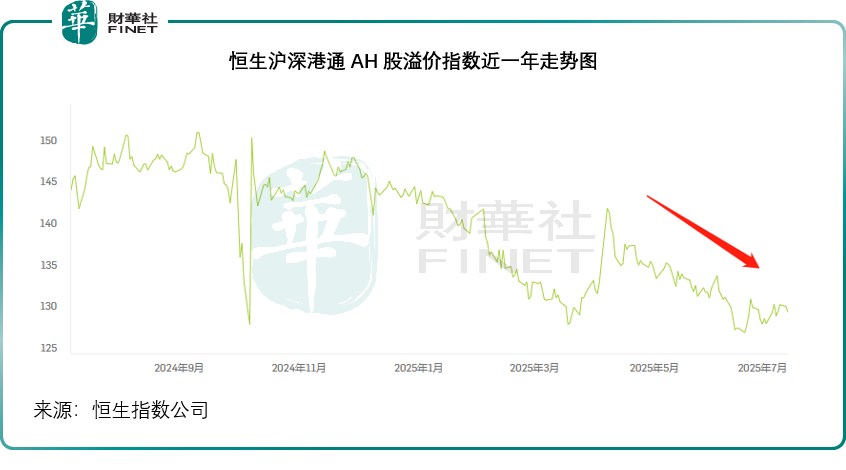
Group 1 - The A-share market shows signs of recovery, with the Shanghai Composite Index surpassing 3,500 points, attracting attention to foreign capital movements, particularly northbound funds [1] - As of the end of Q2 2025, northbound funds held a total of 2,907 A-shares, with a total shareholding of 1,232.08 billion shares, an increase of 41.19 billion shares from the previous quarter and 7.22 billion shares from the end of 2024 [2] - The total market value of northbound funds reached 2.289 trillion yuan, an increase of 537 billion yuan from the previous quarter and 871 billion yuan from the end of 2024, indicating a significant increase in investment in the A-share market [2] Group 2 - The industry with the largest increase in shareholding by northbound funds in Q2 2025 was enterprise services, with a growth of 38%, followed by telecommunications services at 27% and national defense at 26% [2] - Conversely, the industries with the largest decrease in shareholding were hardware equipment, down 15%, and home appliances and textiles, both down 13% [2] Group 3 - The stocks with the highest market value held by northbound funds as of June 2025 included CATL, Kweichow Moutai, Midea Group, and others, with CATL and Kweichow Moutai each exceeding 100 billion yuan in market value [3] - The three companies with the most significant changes in market value held by northbound funds were CATL, Hengrui Medicine, and Dongpeng Beverage, all of which have recently listed on the Hong Kong Stock Exchange [3][4] Group 4 - The decline in AH share premiums indicates a narrowing price gap between A-shares and H-shares, enhancing market efficiency and providing a fairer investment environment [5][7] - The decrease in AH share premiums may influence the allocation of northbound funds between A-shares and H-shares, shifting focus towards the fundamentals and industry outlook rather than short-term price differences [7][8]




寻找下一个明星——港股通2025年9月调整名单预测
2025-07-09 02:40
Summary of Key Points from Conference Call Records Industry Overview - The Hong Kong stock market is experiencing a slow upward trend, driven by stable profit expectations, declining risk-free rates, and increased investor interest in high-dividend sectors. The implied equity risk premium (ERP) is currently around 5.4%, indicating some upward potential in sentiment indicators [1][2] - The coconut water industry is entering a rapid growth phase, with market size expected to grow from 2 billion to nearly 8 billion RMB from 2022 to 2024, driven by health consumption trends and lower raw material costs [33] Company Insights Hong Kong Stock Market - The Hong Kong Stock Connect has a significant impact on the market, contributing approximately 25% of total trading volume, which has nearly doubled in the past few years. This trend raises the importance of companies being included in the Stock Connect for investment opportunities [4][9] - Companies removed from the Stock Connect typically face significant stock price pressure, while those added see positive average price increases [9] East Beverage - East Beverage is the leading player in the coconut water market, achieving sales of 1.13 billion RMB in 2024, capturing over 30% market share. The industry remains competitive with over 200 suppliers [34] - The company is expected to maintain a compound annual growth rate (CAGR) of 20%-30% in the coming years, with a projected P/E ratio of around 30 times if 2025 performance grows by 30% [39][40] 康耐特光学 (Kangnate Optical) - 康耐特光学 has significant manufacturing advantages, including production scale, a rich SKU variety, and integrated supply chain capabilities. The company has a 50%-60% market share in the domestic 1.74 material segment [22] - The company is benefiting from domestic substitution and consumer downgrade trends, with a revenue CAGR exceeding 15% over the past six years [24] 周六福 (Chow Tai Fook) - Chow Tai Fook has performed well since its IPO, with gold jewelry sales ranking high in retail categories, driven by a 30% increase in gold prices this year. The company has a comprehensive national layout with 4,000 stores across 31 provinces [26][27] - The product matrix includes a variety of gold products, with gold jewelry accounting for 91% of sales in 2024, up from 72% in 2022 [28] 沪上阿姨 (Hushang Auntie) - Hushang Auntie holds a 4.5% market share in the ready-to-drink tea industry, ranking fourth by cup count and fifth by GMV. The company operates primarily through a franchise model, which offers lower gross margins but higher net profit margins [31] - Despite a projected revenue decline of 2% in 2024, the company expects a rebound with a 28% revenue increase in 2025 [32] Financial Performance - Chow Tai Fook's financial performance is stable, with cash flow steadily increasing and a healthy cash reserve supporting future expansion [30] - 康耐特光学's gross margin is currently at 39%, lower than competitors like SenseTime and iFlytek, primarily due to high R&D costs and reliance on third-party procurement [16] Market Trends and Predictions - The Hong Kong stock market is expected to see a narrow range of fluctuations before the mid-year reporting season, with a potential upward space of about 1,000 points based on current sentiment indicators [2][8] - The coconut water market is projected to reach 20 billion RMB by 2029, with significant growth potential due to low current per capita consumption compared to international levels [33]
港股板块轮动加速,行情是否延续?
Yin He Zheng Quan· 2025-07-06 12:47
Group 1 - The Hong Kong stock market experienced a decline, with the Hang Seng Index falling by 1.52% to 23916.06 points, losing the 24000-point mark [4][16] - Among the sectors, healthcare, materials, and industrial sectors showed the highest gains, increasing by 5.49%, 3.24%, and 2.72% respectively, while information technology, consumer discretionary, and financial sectors faced declines of 1.82%, 1.36%, and 0.28% [7][27] - The average daily trading volume on the Hong Kong Stock Exchange was HKD 2455.12 billion, a decrease of HKD 33.71 billion from the previous week [16][27] Group 2 - As of July 4, the price-to-earnings (PE) and price-to-book (PB) ratios for the Hang Seng Index were 10.65 times and 1.12 times, respectively, both down by 1.28% from the previous week, placing them at the 73% and 75% percentile levels since 2019 [18][21] - The risk premium for the Hang Seng Index was calculated at 5.04%, which is -1.84 standard deviations from the 3-year rolling mean, indicating a low-risk appetite in the market [21][24] - The report suggests that the technology sector remains a high investment opportunity due to strong policy support and growth potential, while the consumer sector is expected to improve performance driven by domestic consumption policies [40][41]