
汽车

Search documents
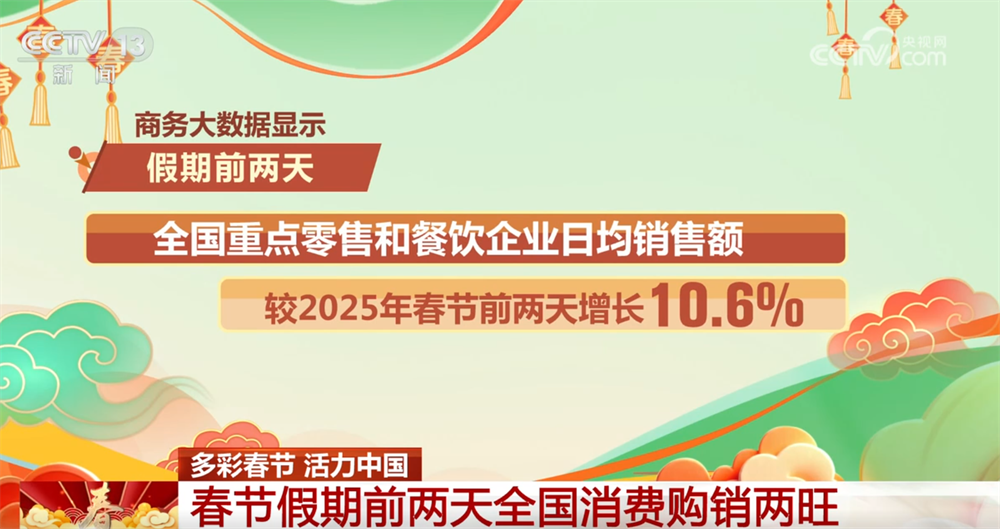
从“热”数据透视假期前两天全国消费购销两旺 “以旧换新”让需求充分释放
Yang Shi Wang· 2026-02-17 08:23
Group 1 - The core viewpoint of the articles highlights a significant increase in consumer demand during the Spring Festival, particularly in green, smart, and health-related products [1][3][5] - National key retail and catering enterprises reported an average daily sales increase of 10.6% compared to the same period in 2025 [1] - Foot traffic and sales in 78 monitored pedestrian streets increased by 23.2% and 33.2% respectively on the first day of the holiday compared to last year [1] Group 2 - The "trade-in" program has effectively stimulated consumer demand, benefiting 27.56 million people and generating sales of 193.09 billion yuan [3][5] - In the automotive sector, 607,000 vehicles were traded in, leading to new car sales worth 99.56 billion yuan [3][5] - Sales of smart wearable devices on key platforms surged by 130%, with smart blood pressure monitors and blood glucose meters increasing by over 60%, and organic food sales rising by 52% [3][5] Group 3 - In the service consumption sector, reservations for New Year's Eve dinners increased by 80.7%, hotel accommodation transactions rose by 32.7%, and car rental orders grew by 54% [7] - Ice and snow tourism consumption experienced a growth of 120%, while winter vacation travel increased by 68% [7]

美媒:中国欠特朗普一声谢谢,没有美国制裁,中国搞不到那么多钱
Sou Hu Cai Jing· 2026-02-17 08:22
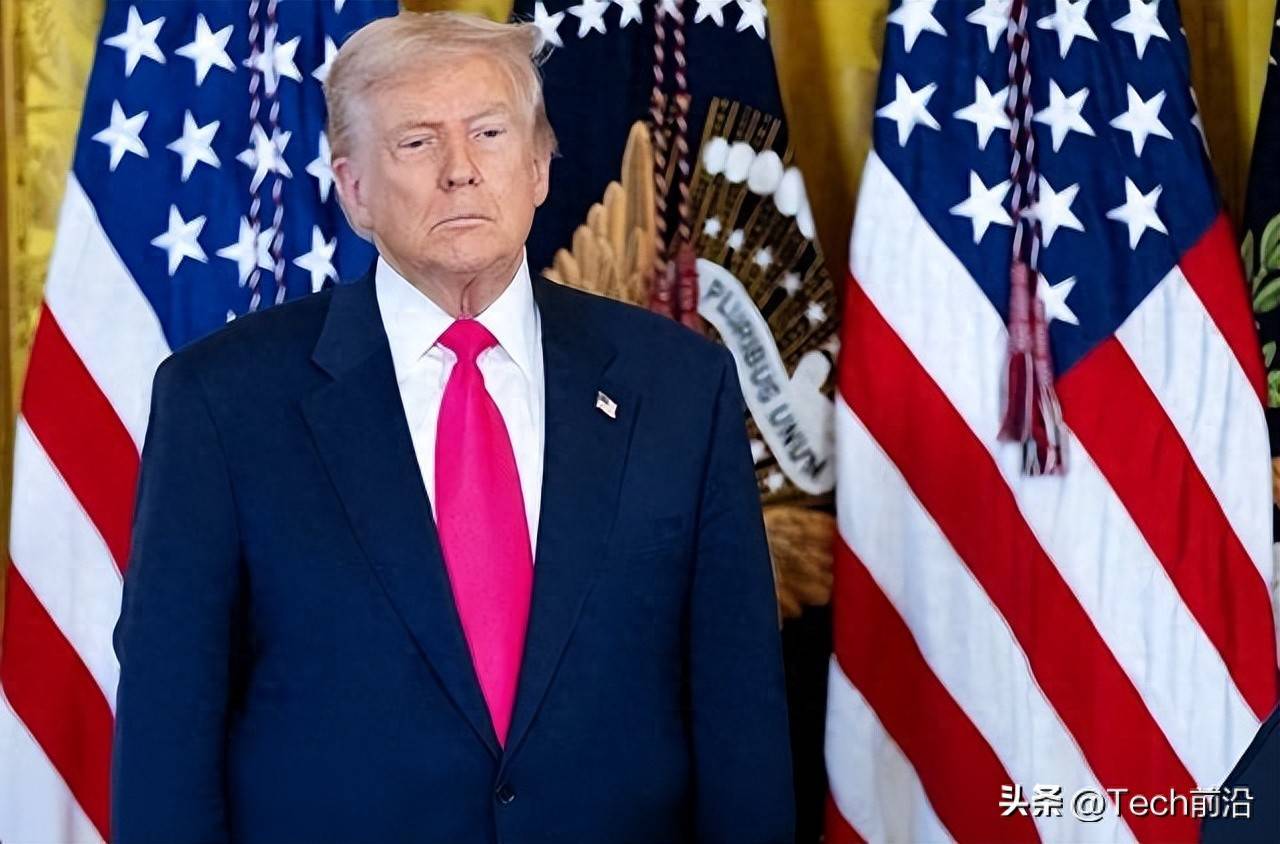
Core Viewpoint - Trump's trade policy, initiated at the beginning of his second term, has led to significant increases in tariffs on imports, particularly targeting China, Canada, Mexico, and European countries, resulting in global supply chain disruptions and rising costs for American consumers [1][3][5]. Group 1: Tariff Increases and Global Reactions - Trump's administration raised tariffs on Chinese goods from 34% to 125%, while also imposing tariffs on Canadian energy products (10%) and Mexican agricultural products, leading to widespread discontent among trade partners [1][3]. - Canada retaliated with a 25% tariff on U.S. whiskey and motorcycles, while Mexico imposed tariffs on corn and pork, affecting U.S. farmers [3][5]. - European countries, particularly Germany, faced a 15% tariff on automotive exports, disrupting production chains and prompting a collective response against U.S. unilateralism [3][5]. Group 2: China's Economic Positioning - Despite the tariffs, China's trade surplus reached nearly $1.2 trillion in 2025, a 20% increase, as it capitalized on the market opportunities left by the U.S. [5][11]. - Indonesia's collaboration with China in nickel mining exemplifies how countries are increasingly turning to China for investment and technology, integrating deeply into China's supply chain [5][13]. - China's strategic response included implementing rare earth export controls, reinforcing its dominance in global supply chains and ensuring compliance with international standards [9][11]. Group 3: Shifts in Global Alliances - Countries like Brazil and Indonesia have shifted their economic alliances towards China, with Chinese electric vehicles capturing 89% of the Brazilian market by 2025 [7][9]. - The U.S. has seen a decline in global favor, with a 46% approval rating, while emerging markets increasingly prefer China as a partner [9][11]. - Trump's tariffs, intended to isolate China, have inadvertently strengthened China's global economic ties and led to a reconfiguration of supply chains, with countries seeking alternatives to U.S. products [11][13].

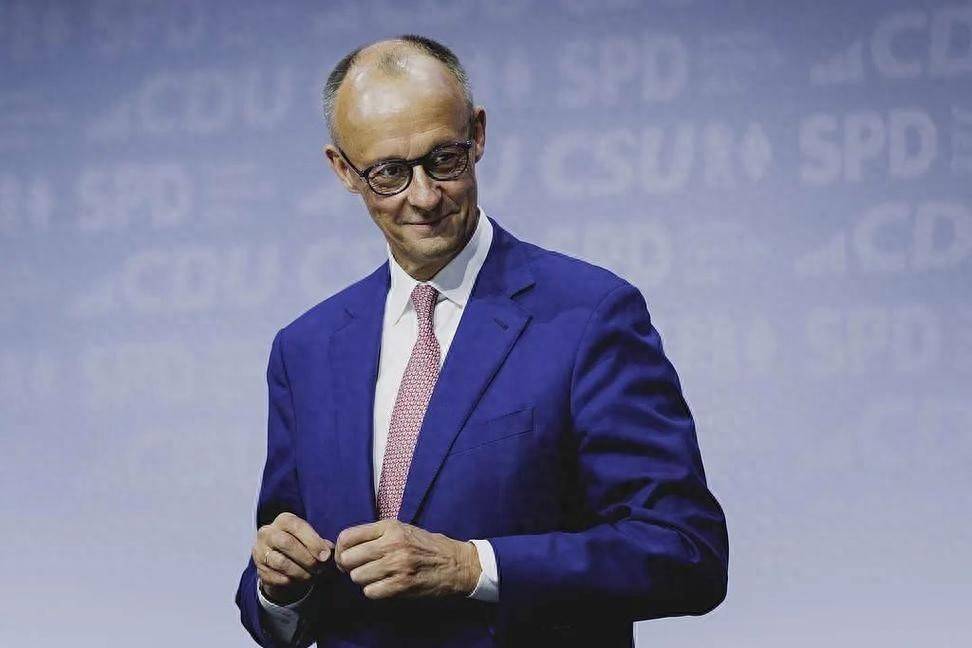
被特朗普关税逼入绝境,德国总理:欧洲若再沉默,将彻底失去未来
Sou Hu Cai Jing· 2026-02-17 05:57
Core Viewpoint - The article discusses the urgent need for Europe, particularly Germany, to adopt a more assertive geopolitical stance in response to the aggressive actions of the United States under Trump, particularly regarding trade and military spending [1][3][5]. Group 1: Geopolitical Context - Trump's return to power in 2025 marked a shift in U.S. foreign policy, exemplified by his aggressive stance on Greenland, where he imposed a 25% punitive tariff on eight European countries, including Germany, unless they pressured Denmark to sell the territory [3][5]. - This tariff has shattered Europe's illusion of security, revealing their dependency on the U.S. for protection and highlighting the vulnerability of European industries, particularly Germany's automotive and fine chemical sectors [5][7]. Group 2: Military and Economic Implications - In response to these geopolitical pressures, German Chancellor Friedrich Merz announced a significant increase in Germany's defense spending to 5% of GDP, a stark contrast to previous NATO commitments of 2% [8][9]. - This shift indicates a move away from a reliance on U.S. protection towards a more self-sufficient military capability, aiming to stimulate domestic industries and reduce dependency on American military support [8][9]. Group 3: Structural Challenges - The article highlights the fragmented political structure of Europe, where decision-making requires unanimous consent from 27 member states, often leading to inefficiencies and delays in response to global challenges [9][13]. - Merz's proposal to adopt a qualified majority voting system aims to enhance decision-making efficiency, but faces resistance from smaller nations, reflecting the ongoing internal conflicts within Europe [9][13]. Group 4: Technological and Economic Competitiveness - Europe is portrayed as lagging behind in critical technological sectors such as AI and semiconductors, with a heavy reliance on the U.S. and China, which undermines its competitive position on the global stage [11][13]. - The article argues that without a cohesive strategy and the ability to act independently, Europe risks becoming irrelevant in the face of rising powers like China and the U.S. [11][15].
太打脸了!美顾问访华后说出大实话:美国根本没赢,贸易战白打了
Sou Hu Cai Jing· 2026-02-17 05:40
Group 1 - The core argument is that despite the U.S. imposing tariffs on China during the Trump administration, China has not only remained unscathed but has made significant advancements in various sectors, even surpassing the U.S. in some areas [1] - Steven Ratner, a former advisor during the Obama administration, noted that the U.S. has not won the trade war, highlighting China's progress in fields like electric vehicles, industrial robotics, and pharmaceuticals [1] - China has doubled the U.S. in installed power generation capacity and has a clear cost advantage, while the U.S. lacks coherent industrial policies, which hampers its global competitiveness [1] Group 2 - The U.S. attempts to extend tariff threats to Iran's trade partners, particularly targeting China, which imports 80% of Iran's oil, indicating a miscalculation of China's response [3] - The U.S. struggles with internal issues, including a focus on short-term profits by private capital, which hinders long-term investments in research and innovation, leading to a competitive disadvantage against China [3] - The bipartisan consensus in the U.S. on blaming China for domestic issues reflects a misunderstanding of the root causes of its economic challenges [3] Group 3 - France's call for the EU to impose a 30% tariff on Chinese goods is seen as misguided, as it fails to address the deeper issues affecting European industry, such as the loss of cheap energy sources due to the Russia-Ukraine conflict [5] - France's significant trade relationship with China, particularly in wine and brandy, highlights the potential economic repercussions of its aggressive stance against China [5] - The EU's lack of unity on trade policies towards China suggests that France's actions could harm its own interests while benefiting the U.S. [5] Group 4 - The essence of international competition lies in strengthening domestic capabilities rather than engaging in tariff wars, as emphasized by Ratner [7] - The U.S. and Europe must recognize that protectionism is not a viable solution and that deep cooperation with China is necessary to enhance competitiveness in emerging sectors [7] - The interconnectedness of the global economy means that protectionist measures could ultimately harm the countries that implement them [7]
219票赞成211票反对!美国投票结果出来了,特朗普或再次退群
Sou Hu Cai Jing· 2026-02-17 03:44
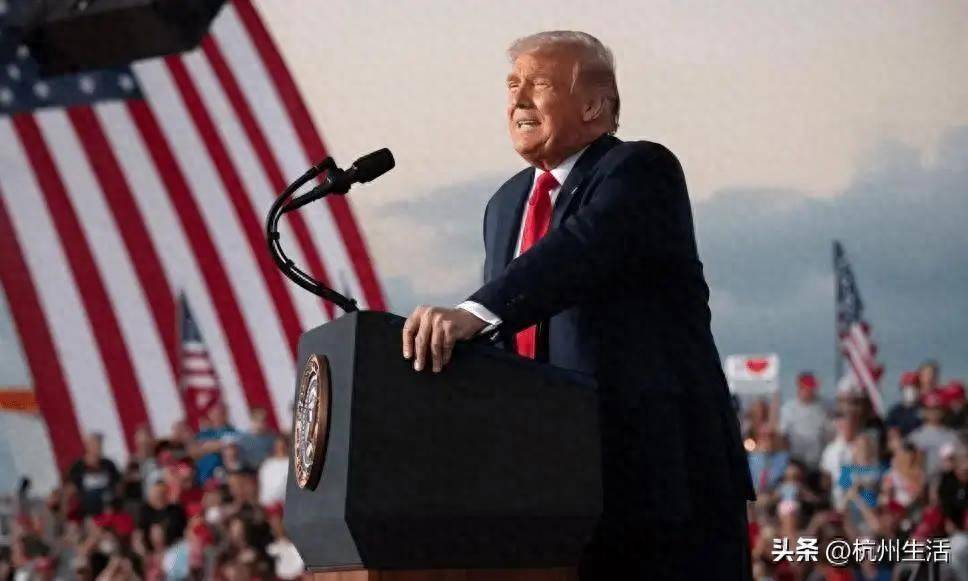
Group 1 - The U.S. House of Representatives passed a resolution with 219 votes aimed at preventing Trump from imposing punitive tariffs on Canadian goods, highlighting the deep political divide in the U.S. and the conflict between local economies and national politics [1][3] - The tariff policy, initiated shortly after Trump's second term began, was framed as a measure to combat fentanyl smuggling and protect American health, but it also revealed underlying protectionist intentions [1][3] - The manufacturing costs in the U.S. Midwest surged by 12% in Q3 2025, leading to increased prices in related industries such as automotive, putting significant pressure on suppliers and consumers [1] Group 2 - The voting outcome reflected the choices of lawmakers facing local economic pressures, with 6 Republican members voting against the resolution despite party pressure, indicating that local economic considerations outweighed party discipline [3] - Public opinion is largely against the tariffs, with over 60% of Americans opposing the imposition of tariffs on Canada, particularly in states like Ohio, Pennsylvania, and Michigan, where residents believe tariffs do not effectively combat drug trafficking but harm businesses [3][9] - The Senate's response to the House resolution remains uncertain, and even if passed, Trump is likely to veto it, requiring a two-thirds majority in Congress to override, which is currently challenging [5] Group 3 - Trump's approach to trade negotiations is characterized by a transactional logic, refusing to make concessions that would benefit other countries, using tariffs as a negotiation tool [5][9] - The interconnectedness of the supply chains, especially in the automotive sector, means that the costs of decoupling from agreements like USMCA would be high, with potential GDP losses exceeding 1% if the U.S. were to exit the agreement [7] - The ongoing debate over tariffs and trade policies is likely to continue, with public sentiment remaining against the tariffs, indicating that the political and economic landscape is fraught with uncertainty [9]
苹果官宣春季发布会:3月4日落地上海,系首次在中国举办
新华网财经· 2026-02-17 03:14
Group 1 - Apple officially announced the spring launch event scheduled for March 4 at 10 PM Beijing time, with the event taking place in Shanghai [1] - In addition to Shanghai, Apple invited media to attend simultaneous "experience" events in New York and London, with the New York event set for 9 AM ET on the same day [1] Group 2 - Multiple banks have raised deposit interest rates [4] - Xiaomi's CEO Lei Jun reported that during the Spring Festival, a Xiaomi car experienced a breakdown due to internal faults, and the company will reimburse up to 1,500 yuan for high-speed rail or flight tickets and 500 yuan for accommodation [6]


中国汽车工业协会祝业界同仁龙马精神,马到成功!
中汽协会数据· 2026-02-17 02:35
Group 1 - The article emphasizes the progress and innovation within the Chinese automotive industry, highlighting a collective effort to advance and achieve new milestones [1][4] - It reflects a positive sentiment towards the industry's future, encouraging stakeholders to continue their hard work and dedication [1][4] - The message conveys a sense of unity and motivation among industry peers, suggesting a collaborative approach to overcoming challenges and seizing opportunities [1][4]

“组合拳”激活消费市场 奋力冲刺一季度“开门红”
Sou Hu Cai Jing· 2026-02-17 01:21
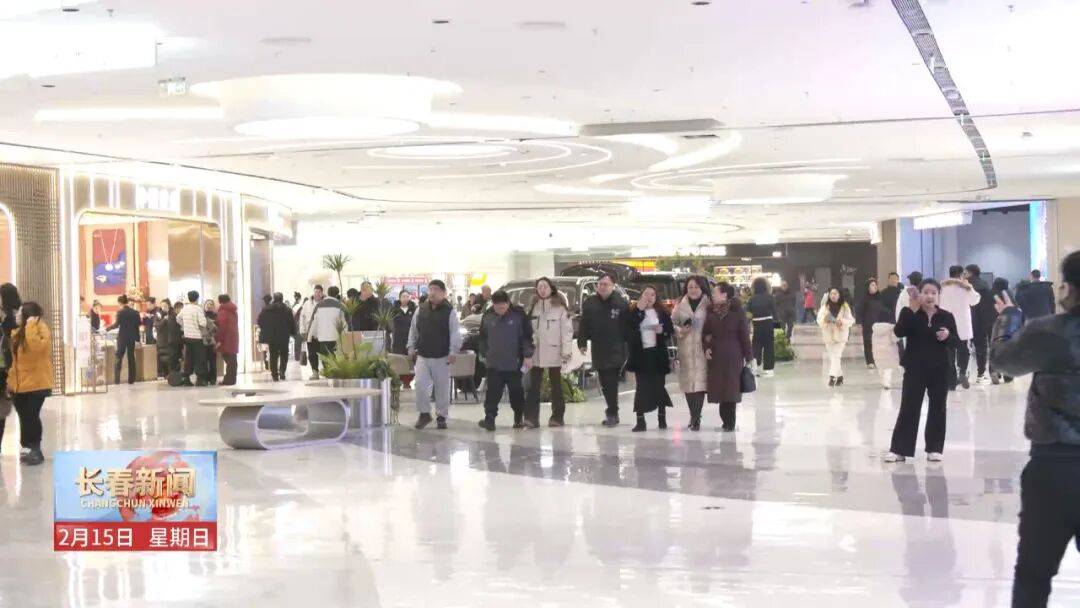
近日,我市出台《长春市加力推动2026年一季度稳增长、促转型、惠民生若干政策举措》,围绕提振消费、实体经济等六大领域精准推出22条政策举措。 在提振消费方面,我市全面激发市场活力,以消费"开门红"助推经济"开门红"。 激活消费,政策先行。在提振消费方面,我市打出政策"组合拳",重点强化促消费政策支持,支持商贸企业增量提质、释放文旅消费潜力。春节期间,我 市聚焦汽车、成品油、商超、百货等重点领域投放5000万元消费券。 在王府井奥莱·净月小镇,黄金饰品、节庆产品、服装区各个档口,都呈现出火热的销售场景。 比优特超市长春上海路万达店总经理 孔凡龙:长春市政府推出了消费券,也是比较给力。第一季度,无论从业绩达成、服务顾客,都能圆满地达成我们 的销售指标。 市民 王佳禹:我抢到了满600元减150元的消费券,跟商场的活动叠加起来会更优惠。 王府井奥莱·净月小镇总经理办公室主任 刘津言:政府给予我们的相关政策的补贴,还有我们延迟闭店的政策,对我们整体商场的客流以及销售额,都有 一个非常大的助力,同比有大幅度的提升。 针对汽车、家电等大宗消费领域。我市积极组织汽车、家电及数码等领域消费品以旧换新补贴活动,与市政府投放的5 ...
史上最强机器人阵容登台,2026总台春晚合作盘点:29家品牌覆盖AI到潮玩;豆包暂停视频通话功能;智谱:全网寻找“算力合伙人”丨邦早报
创业邦· 2026-02-17 01:06
Group 1 - The 2026 Spring Festival Gala has announced partnerships with 29 brands, covering various fields including AI technology, robotics, transportation, and consumer goods [3][4] - A record number of six robotics brands, including Magic Atom and Galaxy General, will showcase at the gala, marking the largest robot lineup in the event's history [3][4] - The gala will feature new media collaborations with platforms like Xiaohongshu and Douyin, with Bilibili serving as the exclusive bullet screen video platform [3][4] Group 2 - OpenAI's CEO announced that Peter Steinberger, the creator of OpenClaw, will join OpenAI to advance the development of next-generation personal intelligent agents [5] - Zhipu AI reported a surge in demand for GLM-5, leading to service delays, and has initiated a "computing power partner" recruitment plan to enhance service capacity [6] - Douyin's vice president stated that the 2026 Spring Festival Gala will be the first public project to deeply utilize the domestic AI video generation model Seedance 2.0 [6] Group 3 - The 2026 Spring Festival Gala has seen a significant increase in robot-related searches, with a 300% rise in search volume and a 460% increase in customer inquiries on JD.com [23] - The gala's robot-themed promotions led to a rapid sell-out of various robots, including high-value models like the GALBOT G1, which sold for nearly 630,000 yuan [23]







春晚高能时刻!领克900用“科技年味”炸场,这才是中国人的团圆新方式
Xin Lang Cai Jing· 2026-02-17 00:46
Core Viewpoint - The article highlights the innovative presentation of the Lynk & Co 900 during the Spring Festival Gala, showcasing it as a symbol of modern Chinese culture and technology, emphasizing its role in family reunions and celebrations [1] Group 1: Product Features - The Lynk & Co 900 features a length of 5.2 meters, providing ample space for comfort and utility, suitable for family gatherings [1] - It is equipped with EM-P intelligent electric hybrid technology, ensuring a powerful performance without range anxiety [1] - The vehicle includes rotating seats and versatile space configurations, allowing every seat to be a prime position, enhancing the overall experience [1] Group 2: Cultural Significance - The presentation of the Lynk & Co 900 at the gala represents a blend of technology and traditional Chinese values, embodying the essence of reunion and celebration [1] - It serves as a "Chinese manufacturing" showcase, reflecting the advancements in domestic technology and its global expression [1] - The vehicle is positioned as a "hardcore guardian" of new productive forces, symbolizing the evolution of Chinese automotive technology [1]