白酒

Search documents
小方瓶(北京)酒业有限公司董事长张晨光:逆周期布局年轻化,二次创业打造“无爹味”二锅头
Bei Jing Shang Bao· 2026-01-20 10:59
Core Insights - The article highlights the challenges faced by the liquor industry in 2025, particularly the high inventory turnover days averaging 900 days, which indicates a significant backlog in stock that needs to be addressed [3][4] - The company, Xiaofangping (Beijing) Liquor Co., Ltd., is taking a unique approach by supporting over 800 core distributors and focusing on innovative product development aimed at younger consumers [1][5] Industry Overview - The liquor industry is experiencing a downturn, with a 10% year-over-year increase in average inventory turnover days, leading to a situation where stock takes approximately two and a half years to sell [3] - The total inventory of 20 A-share listed liquor companies increased by 11.32% year-over-year, exacerbating the inventory backlog issue [3] Company Strategy - In response to the inventory pressure, the company has decided to prioritize helping distributors manage their stock rather than pushing more products onto them, a decision driven by market insights [3][4] - The company has adopted a long-term strategy that emphasizes channel health over short-term sales figures, allowing core distributors to recover their inventory turnover to a healthy two-month cycle [4][10] Young Consumer Engagement - The company recognizes the need to connect with younger consumers, who are increasingly becoming the main demographic for liquor consumption, and aims to shed the traditional "dad flavor" image associated with its products [5][6] - A new retail department has been established to focus on product innovation and content dissemination that resonates with younger audiences, marking a significant organizational shift [5][8] Product Innovation - The company plans to introduce a new product line that includes fruit-flavored, tea-flavored, and sparkling liquors, aiming to make liquor more appealing and fun for younger consumers [5][12] - The strategy includes a focus on creating products that are innovative and can be enjoyed in various social settings, moving away from traditional consumption scenarios [14][15] Distribution and Marketing - The company is adopting a dual-channel strategy, initially promoting products online before expanding into traditional retail and dining channels, ensuring a gradual and effective market penetration [13] - Marketing efforts will emphasize quality, versatility, and emotional connections, aiming to redefine the consumption experience of liquor for younger audiences [14]



专访丨小方瓶(北京)酒业有限公司董事长张晨光:逆周期布局年轻化,二次创业打造“无爹味”二锅头
Bei Jing Shang Bao· 2026-01-20 10:52
Core Insights - The article highlights the challenges faced by the liquor industry in 2025, particularly the high inventory turnover days and the pressure on both manufacturers and distributors [1][3] - It discusses the unique approach taken by Xiaofang Bottle (Beijing) Liquor Co., Ltd. under Chairman Zhang Chengguang, focusing on supporting distributors and innovating products to engage younger consumers [1][5] Industry Overview - The liquor industry is experiencing a significant downturn, with an average inventory turnover of 900 days in the first half of 2025, a 10% increase year-on-year, indicating that it takes approximately two and a half years to sell existing stock [3] - The total inventory of 20 A-share listed liquor companies increased by 11.32% year-on-year, exacerbating the inventory "dam" problem due to weak terminal sales [3] Company Strategy - Zhang Chengguang made a counterintuitive decision to focus on helping distributors reduce inventory rather than pushing sales, which stemmed from his keen market insights [3][4] - The company adopts a long-term strategy of "factory-merchant integration," where it covers all terminal channel costs, allowing distributors to focus on customer service and market maintenance [4] Young Consumer Engagement - Recognizing the shift in consumer demographics, the company aims to connect with younger consumers by making liquor more appealing and fun, moving away from traditional perceptions [5][6] - In September 2025, the company established a new retail department to innovate product offerings and engage with younger audiences through content and product development [5][8] Product Innovation - The new product strategy focuses on "fruit-flavored, beverage-like" offerings, including sparkling and mixed drinks, to attract younger consumers [5][12] - A new product line is set to launch in January 2026, featuring various flavors and innovative formats to meet evolving consumer preferences [12][14] Distribution and Marketing - The company employs a "first online, then offline" strategy for product distribution, initially promoting products through online channels before expanding to traditional retail [13] - The marketing approach emphasizes quality, emotional connection, and versatility of the product, aiming to redefine the consumption scenarios for liquor [14][15]
从国台数智酿造,看白酒行业的科技硬实力
Zheng Quan Ri Bao Wang· 2026-01-20 09:51
Core Viewpoint - The Chinese liquor industry has undergone multiple technological iterations, evolving from traditional methods to a digital and intelligent brewing era, with Guotai Liquor as a leading representative in establishing intelligent brewing standards for sauce-flavored liquor [1][2]. Group 1: Historical Development - The evolution of Chinese brewing technology spans from the Han Dynasty's invention of "jiuqu" to the Tang Dynasty's introduction of pressing and filtering devices, leading to the emergence of clear liquor [1]. - The Yuan and Ming Dynasties saw the adoption of distillation equipment, which allowed distilled liquor to replace lower-alcohol beverages, while the Qing Dynasty categorized various types of liquor based on local techniques [1]. - The 1970s marked the beginning of mechanization in the brewing industry, transitioning from manual to automated processes [1]. Group 2: Guotai's Intelligent Brewing - Guotai Liquor has developed China's first intelligent brewing standard system for sauce-flavored liquor, ensuring consistent quality and flavor through scientific methods [1][3]. - The company has spent 20 years, divided into two ten-year phases, to learn traditional brewing techniques and convert them into a complete digital production system [2][3]. Group 3: Technological Innovations - Over the past decade, Guotai has undergone six iterations, resulting in breakthroughs in data management, hardware, and technology, with numerous patents generated each year [3]. - The intelligent brewing standard system integrates multiple advantages, including digitalization, standardization, and comprehensiveness, enhancing product quality and technological advancement [3]. Group 4: Detailed Brewing Process - The brewing process for sauce-flavored liquor is complex, involving 30 procedures, 274 steps, and 1508 technical indicators, significantly more than traditional methods [4][5]. - Each step of the brewing process, from grain preparation to fermentation and distillation, is meticulously quantified and controlled through advanced technologies [5][6]. Group 5: Quality Control Measures - Guotai has established a three-tier quality assurance system that includes sensory evaluation, gas chromatography fingerprinting, and quantitative control of key indicators [12][13]. - The company has introduced 12 key flavor indicators and 8 harmful substance controls, ensuring the liquor's quality and safety exceed national standards [13]. Group 6: Recognition and Future Outlook - Guotai was recognized as the only liquor enterprise selected for intelligent transformation applications by the Guizhou Provincial Industry and Information Technology Department in 2021 [13]. - In 2023, Guotai received dual national-level awards for intelligent brewing, solidifying its position as a leader in the liquor industry [13].
食品饮料行业2026年投资策略:白酒有望调整结束,大众品优选个股
Southwest Securities· 2026-01-20 09:16
Core Insights - The report indicates that the adjustment period for high-end liquor is expected to end, highlighting the long-term investment value in this sector. The price of mainstream liquor has decreased from approximately 2200 yuan around the Spring Festival in 2025 to about 1560 yuan currently, with a notable decline since June [4][30][32] - The beer industry is anticipated to benefit from a low base effect in 2026, with emerging retail channels and government consumption stimulus policies expected to drive recovery [5][42] - The dairy industry is currently in a transitional phase, with low milk prices expected to rebound as demand improves and supply stabilizes. The long-term growth potential remains strong due to ongoing consumption upgrades [5][60][63] - The condiment sector is projected to benefit from a gradual recovery in restaurant consumption, with both B2B and B2C channels expected to see improved sales as consumer spending recovers [5][79] Liquor Industry - High-end liquor is expected to stabilize after a period of adjustment, with long-term investment value becoming more apparent. The market share of premium liquor brands continues to rise, and the consumption upgrade trend remains intact despite short-term impacts [4][30][34] - The competition in the mid-range liquor segment has intensified, with brands experiencing varying levels of performance due to market pressures. The demand for mid-range products has been notably affected by weak business consumption [36][39] - Inventory management is crucial, with manufacturers actively controlling supply to maintain price stability. The introduction of information systems has improved inventory management capabilities [40][39] Beer Industry - The beer market is expected to recover due to a low base effect from 2025, with national leaders likely to benefit significantly. The rise of instant retail channels is also anticipated to drive growth in non-on-premise beer sales [42][43] - The industry is entering a mature phase, with a focus on premiumization and product structure upgrades. The market share of high-end products is increasing, reflecting a shift in consumer preferences [47][50] - Cost stability is expected in 2026, with barley prices remaining low and contributing to profit margins. The overall cost structure is anticipated to support profitability in the beer sector [51][53] Dairy Industry - The dairy sector is currently experiencing a down cycle in milk prices, but a rebound is expected as demand improves and supply stabilizes. The long-term growth potential remains strong due to increasing consumer preferences for high-quality dairy products [60][63] - The population base in China supports the demand for dairy products, with significant growth potential in rural areas where consumption is currently lower compared to urban areas [66][70] - The industry is witnessing a shift towards high-quality growth, with leading companies focusing on improving profitability through better cost management and efficiency [60][77] Condiment Industry - The condiment sector is expected to benefit from a gradual recovery in restaurant consumption, with B2B channels likely to see significant improvements as consumer spending increases [79][84] - The industry has shown resilience, with a stable growth rate over the past five years. The market size for condiments has surpassed 650 billion yuan, driven by rising consumer demand and changing eating habits [83][84] - Cost advantages are anticipated in 2026, with raw material prices remaining low, which will help maintain stable growth in the condiment sector [79][80]




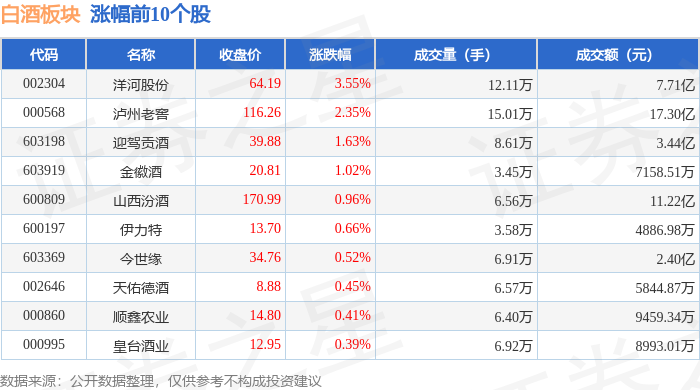
白酒板块1月20日涨0.3%,洋河股份领涨,主力资金净流入1.91亿元
Zheng Xing Xing Ye Ri Bao· 2026-01-20 08:51
Market Overview - The liquor sector experienced a slight increase of 0.3% on January 20, with Yanghe Distillery leading the gains [1] - The Shanghai Composite Index closed at 4113.65, down 0.01%, while the Shenzhen Component Index closed at 14155.63, down 0.97% [1] Individual Stock Performance - Yanghe Distillery (002304) closed at 64.19, up 3.55% with a trading volume of 121,100 shares and a transaction value of 771 million [1] - Luzhou Laojiao (000568) closed at 116.26, up 2.35% with a trading volume of 150,100 shares and a transaction value of 1.73 billion [1] - Other notable performers include: - Yingjia Grape Wine (603198) at 39.88, up 1.63% [1] - Shanxi Fenjiu (600809) at 170.99, up 0.96% [1] - Wuliangye (000858) at 104.91, up 0.34% [2] Capital Flow Analysis - The liquor sector saw a net inflow of 191 million from institutional investors, while retail investors experienced a net outflow of 1.88 billion [2] - The capital flow for key stocks includes: - Yanghe Distillery with a net inflow of 80.15 million from institutional investors [3] - Luzhou Laojiao with a net outflow of 111 million from retail investors [3] - Wuliangye with a net inflow of 10.61 million from institutional investors [3]



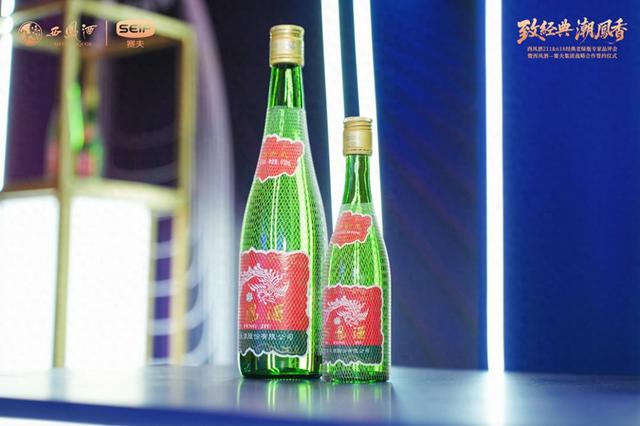
西凤酒携手赛夫集团推动白酒产业现代化转型
Xin Lang Cai Jing· 2026-01-20 08:38
Core Insights - The event themed "Reviving Classics: Tide of Fengxiang" marks the strategic collaboration between Xifeng Liquor and Saifu Group, emphasizing the upgrade of traditional liquor products and the industry's response to national strategies for high-quality manufacturing and revitalization of historical classic industries [1][9] - Xifeng Liquor aims to leverage its 3,000-year brewing history and quality control systems to fulfill its mission of producing quality liquor for the betterment of people's lives, aligning with the core requirements of revitalizing historical classic industries [1][3] Quality Assurance - Xifeng Liquor is positioned within the "historical classic industry" category, which is set to experience significant growth by 2025, focusing on quality enhancement and capacity expansion [1] - The company employs a comprehensive quality control system, ensuring product consistency and stability above 95%, and utilizes traditional brewing techniques alongside modern technology to enhance product quality [3][4] Product Innovation - The introduction of two new products, the 211mL and 618mL bottles, aims to meet market demands while adhering to the "quality without price increase" strategy, enhancing the flavor profile and aging of the base liquor [3][4] - The 211mL bottle symbolizes personal enjoyment, while the 618mL bottle caters to social gatherings, aligning with current industry trends for high-quality liquor at competitive prices [4][8] Digital Transformation - The strategic partnership with Saifu Group and support from JD.com aims to create a collaborative model that integrates quality, channel expansion, and operational efficiency, setting a benchmark for digital transformation in traditional industries [4][5] - The collaboration focuses on product innovation, channel coverage, and user engagement, utilizing AI technology to understand consumer needs and enhance the digital transition of Xifeng Liquor [5][6] Cultural Significance - Xifeng Liquor's 3,000-year brewing history serves as a cultural heritage, with the new product launch and strategic partnership revitalizing traditional craftsmanship and promoting Chinese culture [6][8] - The company engages in community initiatives, such as establishing high-quality grain bases and supporting local farmers, contributing to rural revitalization and economic benefits [8][9] Industry Implications - The transformation of Xifeng Liquor exemplifies a successful model for upgrading traditional industries, combining cultural heritage, digital empowerment, and channel integration to achieve high-quality development [9] - The event signifies a new beginning for Xifeng Liquor's strategy to appeal to younger consumers and broaden its market reach, reflecting the vitality of traditional industries under national strategic guidance [9]
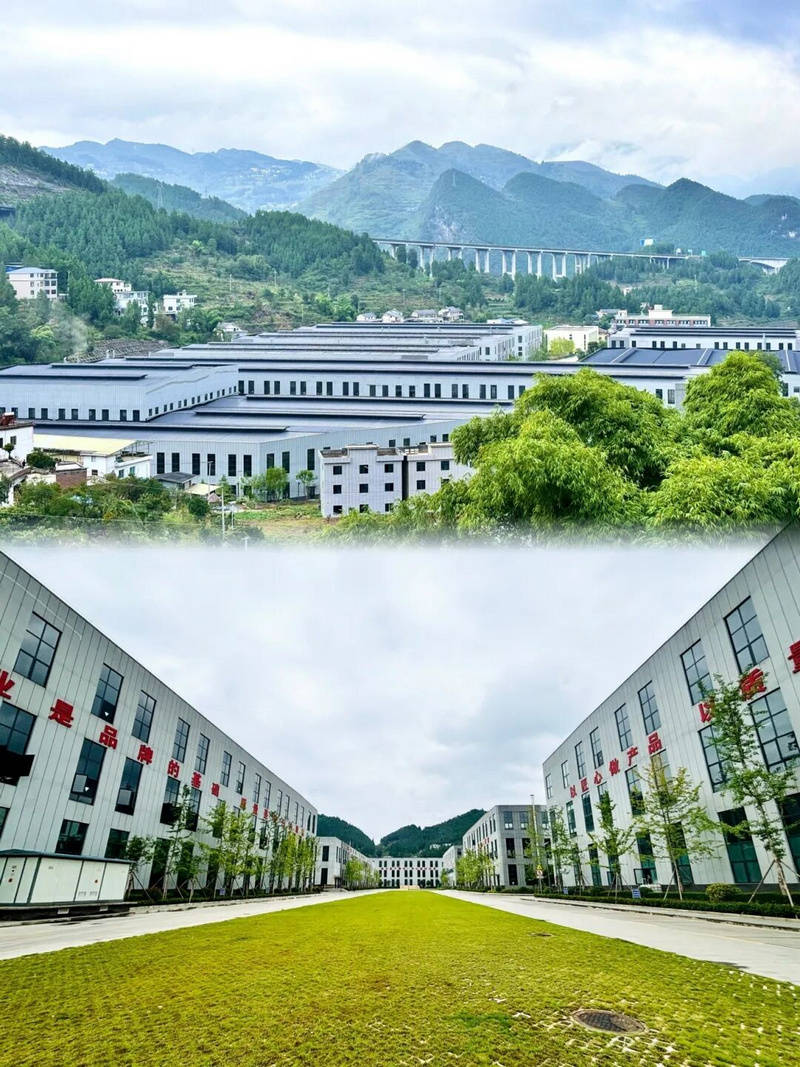
贵州习水:民企“包材兵团”锻造百亿产业新引擎
Sou Hu Cai Jing· 2026-01-20 08:25
Core Viewpoint - The article highlights the growth of the private packaging industry in the Xishui region of Guizhou, which supports the local liquor production, particularly the production of sauce-flavored liquor, and emphasizes the collaboration between packaging companies and leading liquor enterprises. Group 1: Industry Growth - The Xishui region is becoming a significant hub for sauce-flavored liquor production, with a modernized supply chain supported by private packaging enterprises [1] - The local packaging industry is evolving into a robust supply chain that enhances the production capabilities of the liquor sector [1][11] Group 2: Company Performance - Guizhou Qihang Packaging Co., Ltd. has been closely serving Xijiu since its establishment in 2021, with 95% of its orders coming from this liquor company, projecting a revenue of 107 million yuan in 2024 and 130 million yuan in 2025 [5] - Junfeng Supply Chain Management Co., Ltd. has improved efficiency by over 30% through smart upgrades, expanding its business from Xishui to the Sichuan-Chongqing region [6] Group 3: Collaboration and Strategy - The collaboration between private packaging companies and leading liquor enterprises has created a new model of deep integration and mutual growth [5] - The local packaging enterprises, including Guizhou Guixiang and Zhongcai Packaging, are responding to the provincial strategy to enhance local packaging rates, forming a collective effort in the packaging industry [9]
一个经济学家的2025年资本市场十大年度词汇
Xin Lang Cai Jing· 2026-01-20 08:11
Group 1: Tariffs and Global Market Dynamics - The concept of "reciprocal tariffs" continues to disrupt global capital markets, reflecting the interplay between major power competition and asset pricing [2][17] - The implementation of these tariffs by the Trump administration has led to significant inflationary pressures in the U.S., with household food costs rising and a technical bear market in U.S. stocks [2][17] - China's strategic response, including precise tariff adjustments and supply chain optimization, has stabilized its export share and accelerated high-end manufacturing [2][18] Group 2: Revaluation of Chinese Assets - The systematic revaluation of Chinese assets in 2025 is driven by deepening institutional reforms, technological breakthroughs, and an upgraded global role [3][19] - Institutional reforms are reshaping the capital market ecosystem, transitioning from a "scale-oriented" to a "quality-first" approach, enhancing policy consistency and attracting long-term capital [3][19] - Technological advancements, particularly in AI and high-end manufacturing, are creating a closed loop of "technological breakthroughs—commercial realization—capital feedback," leading to a systemic increase in asset profitability [3][19][20] Group 3: Gold Market Dynamics - The price of gold reached historical highs in 2025, reflecting a resurgence of "gold faith" in the capital market amid a restructuring of the global financial order [4][21] - The strength of gold is attributed to cracks in the U.S. dollar credit system, with political influences on Federal Reserve decisions undermining the dollar's status as a global public good [4][21] - The rise of gold tokens and the structural differentiation in investor behavior highlight the contrasting logics of "certainty defense" versus "growth speculation" [4][21] Group 4: Class Stabilization Funds - The introduction of class stabilization funds in China represents a significant governance innovation aimed at redefining capital market functions and correcting market failures [5][22] - These funds are designed to mitigate risks associated with asset price volatility, providing a dual protective mechanism through substantial capital reserves and market interventions [5][22] - The timely actions of these funds have effectively restored investor confidence and shifted market sentiment from pessimism to rational value assessment [5][22] Group 5: Inclusivity in Capital Markets - The concept of "capital market inclusivity" emerged as a core consensus in 2025, facilitating a multi-dimensional breakthrough in the "technology-industry-finance" ecosystem [6][24] - The establishment of the Sci-Tech Innovation Board has enabled the acceptance of unprofitable hard-tech companies, aligning capital with new productive forces [6][24] - Regulatory clarity and market-oriented principles have balanced government intervention with effective market operations, enhancing the capital foundation for industrial upgrades [6][24] Group 6: ETF Market Growth - The ETF market in 2025 reached nearly 60 trillion yuan, becoming the largest in Asia and symbolizing a significant ecological transformation in capital markets [7][25] - The rise of ETFs reflects an evolution in market efficiency, with their low management fees making them accessible to younger and smaller investors [7][25] - ETFs have also played a crucial role in stabilizing market expectations through strategic interventions by central financial authorities [7][25] Group 7: The Rise of "Han Wang" - The emergence of "Han Wang" as the new stock king in A-shares signifies a shift from consumption-driven to innovation-driven economic paradigms in China [8][27] - The rapid growth and profitability of Han Wang highlight the transition of the AI chip industry from technological challenges to commercial success [8][27] - This shift reflects a broader trend of capital markets transitioning from supporting traditional industries to empowering new productive forces [8][27] Group 8: Rare Earths as Strategic Assets - Rare earths have become a core focus in A-shares, driven by the convergence of resource revolutions and technological changes [9][29] - China's advancements in extraction technology and its dominance in global refining capacity underscore the strategic importance of rare earths in the tech revolution [9][29] - The complete industrial chain of rare earths positions China as a stabilizing force in key sectors like AI and renewable energy, enhancing its competitive edge [9][29][30] Group 9: Emotional Consumption Trends - "Emotional consumption" has emerged as a new mainline in A-share consumer sectors, reflecting a shift from material satisfaction to emotional value [10][30] - This trend is characterized by structural changes in consumer demand, with companies that resonate emotionally with consumers experiencing significant revenue growth [10][30] - The capital market's ability to capture this trend through differentiated valuation systems is crucial for the sustainable growth of the consumer sector [10][30] Group 10: Narrative Trading - "Narrative trading" has become a central symbol of ecological transformation in A-shares, intertwining behavioral finance with asset pricing [11][31] - This phenomenon has led to shifts in household asset allocation, with increased investments in thematic products driven by collective narratives [11][31] - The rise of narrative trading highlights the need for enhanced investor education to maintain market stability amid potential valuation bubbles [11][31]

水井坊业绩还在下挫,谁会成为接盘者?
Xin Lang Cai Jing· 2026-01-20 06:39
Core Viewpoint - Water Jiufang's 2025 performance is expected to decline significantly due to the deep adjustment phase in the liquor industry, with net profit projected to decrease by 71% and revenue by 42% compared to the previous year [1][2]. Group 1: Financial Performance - The company anticipates a net profit of 39,185 million yuan for 2025, down 94,918 million yuan year-on-year [1]. - Expected operating revenue for 2025 is 303,776 million yuan, a decrease of 217,900 million yuan year-on-year [1]. Group 2: Industry Context - The liquor industry is experiencing a deep adjustment phase influenced by macroeconomic cycles, industry adjustments, and policy changes, leading to a slow recovery in traditional consumption scenarios [1][2]. - High inventory levels across the industry are contributing to the performance decline [1]. Group 3: Strategic Adjustments - The company is focusing on maintaining channel health, optimizing market structure, and sustaining long-term investments in response to external changes [1][2]. - Measures include controlling shipment pace, optimizing inventory structure, and implementing policies to stabilize pricing and boost channel confidence [2]. Group 4: Parent Company Insights - As the only A-share listed liquor company controlled by foreign capital, Water Jiufang's performance is also viewed in the context of its parent company, Diageo, which is facing growth pressures [2][3]. - Diageo's organic net sales decreased by 0.6% in the 2024 fiscal year, with a slight increase of 1.7% in 2025, but operating profit still declined [2][3]. Group 5: Market Speculation - Speculation exists regarding Diageo potentially adjusting its Chinese liquor assets, including the sale of Water Jiufang, although no decisions have been made [3]. - Discussions about potential buyers for Water Jiufang include various companies and capital with experience in liquor or fast-moving consumer goods [3].

食品饮料行业:月聚焦:如何布局零食“春季躁动”?
GF SECURITIES· 2026-01-20 06:14
Group 1 - The report highlights the "Spring Excitement" in the snack sector, indicating a historical high relative win rate of 70% for the food and beverage sector in the 40 days leading up to the Spring Festival [7][16] - The report emphasizes that the "Spring Excitement" is not solely dependent on the annual beta of the food and beverage sector, as structural opportunities still exist despite a long-term adjustment period since 2021 [7][16] - Key catalysts for the upcoming Spring Festival include concentrated demand for gifts and gatherings, which leads to more planned channel stocking, creating a positive feedback loop of expectations and validations [7][16][28] Group 2 - In December, the food and beverage sector underperformed the market by 7.5 percentage points, with a decline of 5.2%, ranking last among 31 primary industries [7][61] - The report notes a divergence in performance among sub-sectors, with snacks and soft drinks showing gains while liquor and beer experienced declines [7][61][64] - The absolute and relative valuations of the food and beverage sector are at their lowest since 2010, indicating potential investment opportunities [7][61][64] Group 3 - The report tracks the recovery of consumer confidence, with a 0.9% year-on-year increase in retail sales in December, showing improvement from the previous month [7][63] - It highlights that the liquor sector is facing weak demand and declining prices, with the price adjustments for premium liquor nearing levels seen between 2011 and 2015 [7][63][64] - The report identifies structural differentiation in costs, with some packaging materials and agricultural products experiencing price increases [7][63][64] Group 4 - Investment recommendations include a focus on liquor stocks that have undergone a four-year adjustment period, with potential for a "valuation + performance" double bottom [7][64] - For consumer goods, the report anticipates a moderate increase in industry prices in 2026, with specific recommendations for companies like Anjuke Foods, Qianhe Flavor, and Eastroc Beverage [7][64] - The report suggests that the upcoming Spring Festival will provide a favorable environment for growth narratives, particularly in the restaurant supply chain and certain chain formats [7][64]