食品

Search documents
中经资料:巴基斯坦证券市场一周回顾(2025.08.11 - 2025.08.15)
Zhong Guo Jing Ji Wang· 2025-08-18 12:00
Group 1 - Moody's upgraded Pakistan's local and foreign currency issuer ratings and senior unsecured debt rating from Caa2 to Caa1, changing the outlook from "positive" to "stable" [9] - The IMF delegation is expected to visit Pakistan at the end of September for an economic review, with the anticipation of receiving a third loan tranche of $1 billion after the review [9] - As of August 8, the State Bank of Pakistan reported an increase of $11 million in foreign exchange reserves, reaching $14.2432 billion, while commercial banks' net foreign exchange reserves decreased by $10 million to $5.2535 billion [9] Group 2 - The Pakistan Bureau of Statistics reported a 0.31% increase in short-term inflation week-on-week and a year-on-year increase of 2.21%, with 17 out of 51 surveyed items experiencing price increases [9] - The Pakistan Securities and Exchange Commission announced the final revision of the public offering system, effective from August 6, 2025, aimed at enhancing IPO efficiency through competition, technology, and transparent pricing mechanisms [10] - The latest report from the Pakistan Bureau of Statistics indicated a 0.74% contraction in the large-scale manufacturing (LSM) sector for the fiscal year 2024-2025, despite a 4.14% year-on-year growth in June, with significant declines in sectors such as tobacco, textiles, and automotive [11]

食品饮料行业双周报:7月社零同增3.7%,关注中报业绩-20250818
Guoyuan Securities· 2025-08-18 10:43
Investment Rating - The report maintains a "Recommended" rating for the food and beverage industry [4] Core Viewpoints - The food and beverage sector in A-shares has underperformed compared to major indices, with a 1.11% increase over the past two weeks, lagging behind the Shanghai Composite Index by 2.73 percentage points [12] - The retail sales in July showed a year-on-year growth of 3.7%, indicating a slight slowdown compared to June [3] - The report highlights the resilience of high-end liquor companies and the growing interest in various segments such as craft beer and health-oriented products [56][57] Summary by Sections Market Review - In the last two weeks (August 4 - August 15), the A-share food and beverage industry rose by 1.11%, underperforming the Shanghai Composite Index by 2.73 percentage points, the Shenzhen Component Index by 4.74 percentage points, and the CSI 300 Index by 2.53 percentage points [12] - Year-to-date, the A-share food and beverage industry has decreased by 6.11%, again underperforming major indices [12] - Among sub-sectors, baked goods (+3.45%), snacks (+3.41%), and seasoning products (+2.98%) saw the highest gains, while dairy products (-1.26%), soft drinks (-0.23%), and pre-processed foods (-0.01%) experienced declines [12] Key Data Tracking - The average price of fresh milk in major production areas is 3.02 yuan/kg, down 5.9% year-on-year [35] - The national market price for pork is 25.16 yuan/kg, down 18.1% year-on-year [38] - The price of PET for water bottles is 6,100 yuan/ton, down 12.0% year-on-year [38] Key Events Tracking - Retail sales in July totaled 38,780 billion yuan, with a year-on-year growth of 3.7% [3] - Major liquor companies are entering the craft beer market, with new products launched by Wuliangye and Zhenjiu [3] - The Chinese coffee market is projected to reach approximately 1,461 billion yuan by 2025, with ready-to-drink coffee expected to maintain high double-digit growth [3] Important Company Announcements - Kweichow Moutai reported a 9.16% increase in revenue for the first half of 2025, totaling 910.94 billion yuan [55] - Chongqing Beer reported a slight decline in revenue for the same period, with total revenue of 88.39 billion yuan, down 0.24% [55] Investment Recommendations - Focus on high-end liquor companies with strong brand and distribution capabilities, such as Kweichow Moutai and Wuliangye [56] - In the consumer goods sector, there is growing interest in yellow wine, beer, and health-oriented snacks [57]






朱啸虎:我们投消费品牌的三个关键标准
创业家· 2025-08-18 10:14
Core Viewpoint - The article emphasizes the importance of the "3S theory" in evaluating consumer brands, which includes a sufficiently large market size, standardized products for mass replication, and defensibility against competition in the Chinese market [2][3][5][6]. Group 1: Market Size and Product Standardization - The ideal market size for consumer brands should exceed 100 billion RMB [3]. - Standardized products that can be replicated on a large scale are crucial for success [4]. Group 2: Defensibility and Competition - In the competitive landscape of China, where many entrepreneurs are quick to enter lucrative markets, having defensible business models is essential [5][6]. - Despite the proliferation of new brands, only about 10 to 20 companies are expected to reach valuations above 10 billion USD [9]. Group 3: Product and Pricing Strategy - Companies must excel in either product quality or pricing to succeed in the consumer market [10]. - For channel-focused businesses, achieving extreme pricing is vital, while brand-focused companies should prioritize product excellence [12]. Group 4: Learning from Japan - The article discusses an upcoming study trip to Japan, focusing on how Japanese brands thrive in a low-growth, aging society, and the lessons that can be applied to the Chinese market [13][14]. - Japan's consumer market changes serve as a "future laboratory" for Chinese brands, providing insights into product evolution and consumer engagement strategies [18]. Group 5: Key Insights from Japanese Brands - Three core ideas from successful Japanese brands include supply chain-driven private label products, continuous iteration of key products, and defining lifestyles that resonate emotionally with consumers [19]. - Companies like Kobe Bussan and Nitori exemplify effective supply chain management and product development strategies that lead to sustained growth [20]. Group 6: Emotional Engagement and Consumer Experience - Brands like Bandai and Muji focus on emotional value and redefining consumer experiences, which are critical in today's market [21][22]. - Understanding the emotional and functional needs of consumers post-economic bubble is essential for brand positioning and product development [25].

许家印背后的男人,终于挖出来了...
创业家· 2025-08-18 10:14
Core Viewpoint - The article discusses the recent discovery of assets belonging to Evergrande's second-in-command, Xia Haijun, highlighting the moral outrage among the public regarding the perceived unethical behavior of high-profile individuals in financial distress [4][5][8]. Group 1: Evergrande and Xia Haijun's Assets - Xia Haijun's assets, valued at approximately $24 million (around 172 million RMB), are found under his wife's name, including three properties and four cars in California [5]. - In 2022, Xia reportedly spent 140 million RMB on a luxury home in the U.S., which is now valued at 260 million RMB [6][7]. Group 2: Public Sentiment and Reactions - The public expresses anger towards Xia's actions, viewing them as morally reprehensible and lacking integrity [8]. - There is a desire among some individuals to test their own moral limits in similar situations, reflecting a broader societal frustration with perceived injustices [10]. Group 3: Loan Mediation and Financial Manipulation - The article narrates the story of a 53-year-old man, Huang, who transformed his life through loans facilitated by a middleman, despite the fraudulent nature of the process [24][25]. - Huang secured a total of 482,000 RMB in loans from various banks, showcasing the ease with which individuals can manipulate financial systems with the help of intermediaries [28][29]. Group 4: Implications of Fraudulent Practices - The article suggests that the fraudulent practices employed by intermediaries could be replicated by individuals without their involvement, raising ethical concerns about the financial system [31][32]. - Huang's experience serves as a cautionary tale, illustrating the potential consequences of such actions, including legal repercussions and becoming a debtor [36][38].

好的老板,一定是求之于势,不责于人
创业家· 2025-08-18 10:14
Core Insights - The article emphasizes the importance of strategic positioning for business leaders, advocating for a proactive approach rather than reactive management [1] - It highlights the significance of learning from Japan's consumer market evolution as a model for Chinese brands to innovate and adapt [6][8] Group 1: Japanese Market Insights - Japan's consumer market is seen as a "future laboratory" for Chinese brands, providing insights into consumer behavior and product evolution over the next decade [6] - The article discusses three core philosophies of successful Japanese brands: supply chain-driven private brand (PB) products, continuous iteration of major products, and defining lifestyle while resonating emotionally with consumers [7][8] Group 2: Supply Chain and Product Development - Kobe Bussan exemplifies a strong supply chain model with over 350 factories globally, achieving a sales scale of 200 billion RMB through integrated PB products [7] - 7-11 utilizes data from its extensive network to develop PB products that meet latent consumer needs, enhancing supply chain efficiency [7] - Nitori, a leading furniture brand, applies automotive supply chain standards to achieve consistent revenue growth for 36 years [7] Group 3: Consumer Engagement Strategies - Kikkoman has successfully transformed from producing soy sauce to creating a cultural narrative around it, demonstrating the importance of meeting consumer demands through innovation [7] - Shiseido employs a layered brand strategy to cater to both high-end and cost-sensitive consumer segments, adapting to market changes [7] - Bandai focuses on developing products that tap into fundamental human desires, creating engaging and addictive experiences for consumers [9] Group 4: Learning Opportunities - The article promotes a study tour to Japan, where participants can learn from industry leaders about the strategies that have allowed Japanese brands to thrive despite economic challenges [6][10] - The program includes insights from experts in various fields, including retail strategy and product development, aimed at fostering innovation among Chinese entrepreneurs [10][11]

“以旧换新”政策显效 1-7月北京家电类商品零售额增长6.9%
Bei Jing Shang Bao· 2025-08-18 06:43
Economic Overview - In the first seven months of 2023, Beijing's total market consumption increased by 0.7% year-on-year [1] - The total retail sales of consumer goods reached 767.43 billion yuan, showing a decline of 4.2% [1] Sector Performance - Service consumption grew by 4.6%, driven by information services, transportation, and cultural entertainment sectors [1] - Retail sales in the household appliances and audio-visual equipment category increased by 6.9%, boosted by the "trade-in" policy, with a growth rate improvement of 2.3 percentage points compared to the first half of the year [1] - Jewelry, food, cosmetics, and sports entertainment products saw significant retail sales growth of 32.7%, 12.1%, 8.2%, and 6.1% respectively [1] - Retail sales of automotive products declined by 19.0% due to insufficient market demand for fuel vehicles [1] - Cultural office supplies and communication equipment retail sales decreased by 3.6% and 24.4% respectively, influenced by the diversification of sales channels among some headquarters enterprises [1] Consumption Breakdown - Among the total retail sales, goods retail accounted for 688.23 billion yuan, down by 4.3% [1] - Restaurant income reached 79.2 billion yuan, reflecting a decline of 3.6% [1]
临沂商城周价格总指数为102.57点,环比下跌0.01点,跌幅0.01%(8月7日—8月13日)
Zhong Guo Fa Zhan Wang· 2025-08-18 04:03
Core Insights - The overall price index of Linyi Mall decreased slightly to 102.57 points, with a marginal decline of 0.01 points or 0.01% compared to the previous week [1] Price Index Summary - **Steel Category**: The weekly price index for steel rose to 98.02 points, increasing by 0.08 points. This was driven by price increases in plate steel, construction steel, and profile steel, while pipe prices remained stable. The steel futures market showed an upward trend, and the increase in raw material prices contributed to a slight rise in sales volume [1] - **Home Appliances and Audio-Visual Equipment**: The index for this category increased to 103.19 points, up by 0.04 points. Prices for kitchen appliances and electric fans rebounded, while personal appliances saw a slight increase. The wholesale prices for kitchen appliances remained stable, but sales of high-priced air conditioning fans rose [2] - **Grain, Oil, and Food**: The index for this category rose to 95.15 points, with an increase of 0.02 points. Prices for seasonings, grains, and dried fruits increased due to heightened demand from the restaurant sector and rising procurement needs for dried fruits like jujubes and walnuts [3] - **Clothing and Accessories**: The index for this category fell to 104.22 points, decreasing by 0.08 points. The decline was attributed to high inventory levels of summer clothing and low consumer willingness to spend, coupled with insufficient market acceptance of new autumn products [4] - **Board Materials**: The index for board materials decreased to 96.48 points, down by 0.05 points. The overall market for board materials was sluggish, influenced by weak demand in the real estate sector, leading to price reductions in various board products [5] - **Furniture**: The index for furniture dropped to 88.90 points, with a decrease of 0.02 points. The furniture market is currently weak, with consumers focusing on cost-effectiveness and practicality, prompting price reductions on certain furniture items to accelerate turnover [6]

中国轻工业联合会会长张崇和:五措并举 创新提升轻工质量管理
Xiao Fei Ri Bao Wang· 2025-08-18 02:31
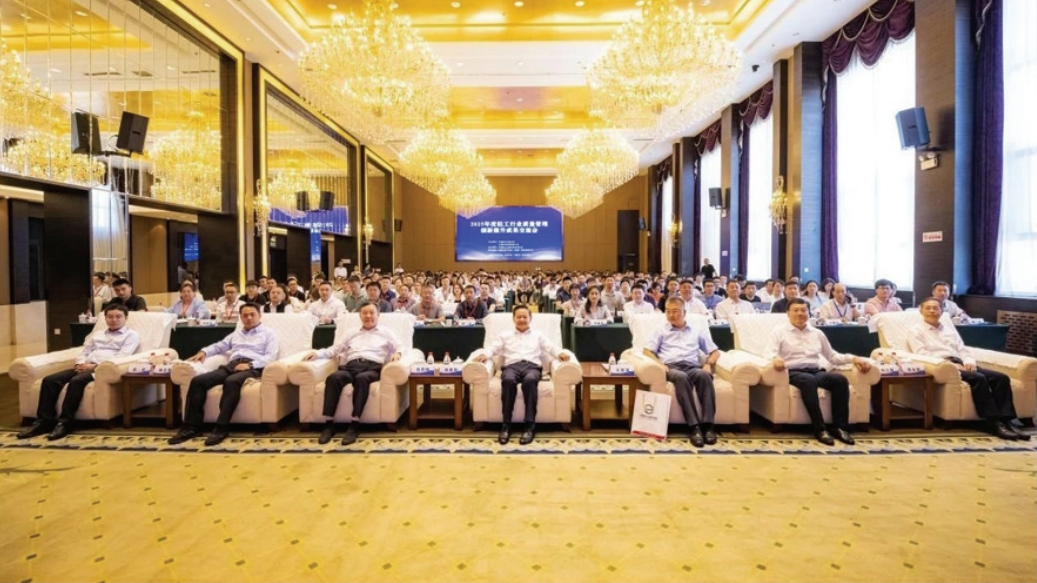
Core Viewpoint - The conference on quality management innovation in the light industry aims to enhance quality standards and promote high-quality development in the sector, aligning with national strategies for building a quality-oriented economy [3][4]. Group 1: Conference Overview - The 2025 Annual Quality Management Innovation Exchange Conference for the light industry was held in Hohhot, Inner Mongolia, from August 13 to 15, organized by the China Light Industry Federation and other associations [3]. - The conference summarized the achievements of quality management activities in the light industry and showcased advanced quality management results [3][4]. Group 2: Quality Management Innovation Achievements - Over the years, the light industry has recognized 3,643 excellent quality management teams and 1,198 trustworthy quality teams, with 44 outstanding quality managers [5]. - The establishment of a dedicated quality standards department has significantly advanced quality management innovation in the light industry [5]. Group 3: Participation and Engagement - More than 4,500 enterprises and over 200,000 individuals have participated in quality management innovation activities, fostering a culture where everyone is concerned with and contributes to quality [6]. - Leading companies like Haier and Midea have set benchmarks, encouraging widespread employee involvement in quality improvement initiatives [6]. Group 4: Impact and Benefits of Quality Management - Quality management innovations have led to cost reductions and efficiency improvements, such as a 5-fold increase in efficiency and a 50% reduction in dust for Moutai Group's new screening machine [7]. - The light industry has developed a positive mechanism focused on problem-solving and continuous improvement, resulting in significant quality enhancements across various sectors [7]. Group 5: Future Directions and Recommendations - The light industry must strengthen self-discipline and promote quality management, emphasizing a "zero defects" quality mindset and a commitment to high-quality development [9]. - Technological innovation is essential for improving product and service quality, with plans to establish collaborative innovation platforms and recognize high-level technological achievements [10]. - The industry will focus on standardization to enhance quality management, with goals to develop and revise numerous national standards during the 14th Five-Year Plan period [10]. - Building quality brands is crucial, with initiatives to evaluate and promote competitive enterprises and quality management practices [11]. - Skills training for talent in the light industry will be prioritized, with plans to train 50,000 skilled workers annually to support quality improvement efforts [12].
推动豫企“出海” 提升国际竞争力
Sou Hu Cai Jing· 2025-08-17 23:14
Core Viewpoint - The article emphasizes the importance of enhancing international cooperation and investment strategies for companies in the context of global economic changes, advocating for a shift from individual overseas ventures to a more collaborative and resilient approach in international markets [1][2]. Group 1: Trends in Overseas Investment - Companies are transitioning from "single-point overseas" strategies to systematic "group overseas" approaches, focusing on both efficiency and safety [1]. - There is a growing emphasis on localizing operations rather than merely establishing overseas points, aiming for deeper integration in foreign markets [1]. Group 2: Industry Focus and Development - The province is a significant industrial and agricultural hub, with key industries including food, equipment manufacturing, and electronic information, which are encouraged to develop into multinational corporations [1]. - Companies in energy and raw materials are supported to enhance overseas resource development and technical capabilities [1]. Group 3: International Market Network Enhancement - Companies are urged to establish a robust international market operation network, focusing on compliance, precision, and specialization [2]. - The strategy includes identifying key regions for investment, particularly in the context of the Belt and Road Initiative and RCEP [2]. Group 4: Innovative Outbound Strategies - The development of overseas industrial parks and trade cooperation zones is encouraged to facilitate cultural integration and brand building [3][4]. - Companies are advised to leverage e-commerce and digital platforms to expand their export capabilities, particularly in emerging industries like new energy vehicles and smart technology [3]. Group 5: Policy Support and Ecosystem Development - A comprehensive support system is proposed to address challenges faced by companies in international markets, including financial services and legal assistance [5]. - The establishment of a "Henan Enterprises Going Global" alliance is suggested to pool resources and provide integrated services for companies venturing abroad [5].
山东政商要情(8.11—8.17)
Jing Ji Guan Cha Wang· 2025-08-17 10:05
Group 1: Foreign Trade Performance - Shandong's total foreign trade volume reached 2.04 trillion yuan in the first seven months of the year, marking a year-on-year growth of 7.3% [2] - Exports amounted to 1.24 trillion yuan, growing by 6.6%, while imports were 793.2 billion yuan, increasing by 8.5% [2] - Shandong ranked first among the top five provinces in terms of foreign trade growth rate [2] Group 2: Trade Composition - General trade accounted for 65.7% of Shandong's foreign trade, with a total of 1.34 trillion yuan and an 8% growth [2] - Bonded logistics trade reached 342.4 billion yuan, growing by 6.7%, and accounted for 16.8% of the total [2] - Processing trade totaled 297.8 billion yuan, with a growth rate of 7.3%, making up 14.6% of the total [2] Group 3: Trade Entities - Private enterprises in Shandong reported a total import and export volume of 1.55 trillion yuan, growing by 8.5% and accounting for 75.9% of the total [2] - State-owned enterprises had an import and export volume of 183.4 billion yuan, with a growth of 12.2%, representing 9% of the total [2] Group 4: Clean Energy Expo - The 2025 Shandong Clean Energy Industry Expo will be held from September 15 to 17 in Yantai, focusing on clean energy development [4] - The expo will feature five specialized exhibition areas, covering hydrogen energy, lithium batteries, new power systems, and more, with a total area of 30,000 square meters [4] - Over 60 leading enterprises, including major state-owned companies, are expected to participate, along with various professional forums [4] Group 5: Talent Development in Yantai - The 2025 Yantai Talent Week was launched, featuring participation from over 80 universities and 200 experts to discuss talent development [6] - Yantai introduced customized support policies for top talents and aims to attract high-level professionals across various fields [6] - The city has a demand for 841 high-level talents, including 561 PhDs and 200 postdoctoral researchers [6] Group 6: Food Industry Development - The 2025 Third Shandong (Yishui) Food Expo was held, showcasing a variety of food products and attracting nearly 400 quality enterprises [8] - Yishui's food industry has evolved from small workshops to a large cluster, with over 670 food processing enterprises and an annual output of over 600 million tons [8] - The region has established significant market shares in various food categories, including a 70% share in the market for a specific snack product [8] Group 7: Green Fuel Initiatives - Qingdao Port successfully completed its first methanol bunkering operation, marking its capability to provide both biofuels and methanol [10] - Methanol is recognized as a low-carbon alternative fuel for international shipping, significantly reducing harmful emissions compared to traditional fuels [10] - The port aims to establish a comprehensive network for green alternative fuel services, contributing to the development of a world-class marine port cluster [10] Group 8: Cross-Border E-commerce Development - The opening of the Silk Road e-commerce TIR cross-border channel aims to enhance logistics support for cross-border e-commerce activities [11] - TIR international road transport is becoming an important logistics guarantee for cross-border e-commerce, offering flexibility and ease of loading [11] - The region has established several TIR international road routes, forming a preliminary international road transport hub [12]