白酒

Search documents
食品饮料行业周聚焦:当前位置如何看盐津铺子?
GF SECURITIES· 2026-03-22 10:05
Core Insights - The report highlights the potential growth opportunities for Yanjinpuzi, emphasizing its historical ability to adapt to market changes and capture new opportunities, particularly in the snack food sector [9][17][21] - The company is currently undergoing a strategic transition, focusing on enhancing its brand presence and optimizing its product offerings, which is expected to lead to improved profitability in the coming years [21][36] - The food and beverage sector has shown resilience, with the report indicating a slight decline of 0.5% in the sector's performance, outperforming the broader market index [43][59] Company Focus: Yanjinpuzi - Yanjinpuzi's stock price experienced a pullback after a surge during the "konjac boom" in April 2025, leading to market uncertainty regarding its growth trajectory [9][17] - The company has a strong track record of self-adjustment and capturing new market opportunities, which may present potential investment opportunities during this pullback period [9][17] - The management's confidence in future profitability is reflected in the new stock incentive plan launched at the end of 2025, aiming for significant profit growth by 2027-2028 [21][36] Industry Overview - The food and beverage sector's performance for the week of March 16-20 showed a decline of 0.5%, ranking 3rd among 31 sectors, with a notable outperformance against the CSI 300 index by 1.7 percentage points [43][59] - The report indicates that the white liquor and soft drink sub-sectors performed relatively well, while baked goods and other liquor categories lagged behind [43][59] - The absolute valuation for the food and beverage sector stands at a PE-TTM of 20.7X, with a relative valuation of 1.47 times compared to the CSI 300 index [59][65]
金徽酒(603919):结构升级加速,经营彰显韧性
GF SECURITIES· 2026-03-22 09:56
Investment Rating - The report maintains a "Buy" rating for the company, with a current price of 18.11 CNY and a fair value of 18.97 CNY [3]. Core Insights - The company has demonstrated resilience in its operations, with a significant upgrade in product structure, particularly in the segment of products priced above 300 CNY, which saw a revenue increase of 25.2% year-on-year [7]. - The overall revenue for 2025 was 2.918 billion CNY, reflecting a decrease of 3.4% compared to the previous year, while the net profit attributable to shareholders was 354 million CNY, down 8.7% year-on-year [7]. - The gross margin improved to 63.2% for the full year 2025, an increase of 2.3 percentage points year-on-year, attributed to structural upgrades and cost optimization [7]. Financial Forecast - Projected revenues for 2026, 2027, and 2028 are 3.014 billion CNY, 3.124 billion CNY, and 3.310 billion CNY, respectively, with growth rates of 3.3%, 3.6%, and 6.0% [2]. - The net profit forecast for the same years is 356 million CNY, 369 million CNY, and 403 million CNY, with growth rates of 0.6%, 3.7%, and 8.9% [2]. - The earnings per share (EPS) is expected to be 0.70 CNY in 2026, 0.73 CNY in 2027, and 0.79 CNY in 2028 [2]. Revenue Breakdown - In 2025, the revenue from products priced above 300 CNY reached 1.7 billion CNY in Q4, marking an 82.8% increase year-on-year, while the revenue from products priced below 100 CNY fell by 68.6% [7]. - The contribution of products priced above 100 CNY accounted for 80.7% of total revenue in 2025, up by 10 percentage points year-on-year [7]. Cost and Profitability - The selling expense ratio for 2025 was 21.6%, an increase of 1.9 percentage points year-on-year, while the management expense ratio was 10.7%, up by 0.6 percentage points [7]. - The net profit margin for 2025 was 11.6%, down by 1.0 percentage points year-on-year, primarily due to increased expenditure [7].

食品饮料2026年春季投资策略:转折之年
GUOTAI HAITONG SECURITIES· 2026-03-22 07:45
Investment Rating - The industry investment rating is "Overweight" [3] Core Views - The report emphasizes that the turning point is approaching, highlighting the importance of price increases. The white liquor sector is nearing the end of its adjustment phase, with a long-term focus on pricing and continued concentration. The consumer goods sector is bottoming out, with increasing differentiation among segments, while condiments, beer, and beverages show strong resilience [3]. Summary by Sections White Liquor - The industry is transitioning from a "U-shaped adjustment" to a "V-shaped adjustment." Compared to the adjustment period from 2013 to 2016, the current cycle has a smaller adjustment in demand and expectations, with a notably extended adjustment period. The previous cycle saw a rapid clearing of the industry, while the current adjustment is expected to accelerate the bottoming process starting from Q3 2025 [4][16]. Beer & Beverages - With the stabilization of dining scenarios and gradual recovery of consumer spending, the beer industry is expected to improve. Structural upgrades, price increases, and efficiency optimization will continue to drive profitability. Historical trends during CPI recovery periods show that the beer sector generally benefits from expanded gross sales margins and improved profitability [5][45]. Consumer Goods - As cost advantages diminish, there is an increasing focus on companies with strong price transmission capabilities in the consumer goods sector. The report anticipates a turning point for condiments, with expected price increases. The dairy sector is also expected to see a rebound in supply-demand cycles, while the snack segment favors companies with new product categories and channel expansion logic [6][14]. Market Dynamics - The report notes that the white liquor industry is still in an adjustment phase, while soft drinks and snacks are less affected by economic cycles and are expected to lead in growth rates. Beer, dairy products, and condiments are showing marginal improvements after undergoing stress tests, with consumer goods outperforming white liquor [14][30]. Structural Changes - The report indicates that the current cycle will accelerate the concentration process in the industry, with leading brands benefiting from their brand and channel advantages. The differentiation among brands is expected to increase, with high-end brands like Moutai and Wuliangye continuing to lead, while competition intensifies in the mid-range and lower segments [30][39]. Valuation and Returns - The overall valuation of the white liquor industry and individual stocks is currently at historically low levels, reflecting pessimistic expectations. The report suggests that the micro-structure of the industry has improved, with a potential for recovery in valuations ahead of fundamental improvements [36][39]. Dividend Trends - There is an increasing awareness of shareholder returns in the white liquor industry, with leading companies likely to enhance shareholder value through dividends. The report notes that several companies have raised their dividend rates, making them attractive to investors [39][40].



金徽酒:25年延续结构升级趋势-20260322
HTSC· 2026-03-22 07:45
Investment Rating - The investment rating for the company is "Accumulate" with a target price of RMB 21.30 [6][4]. Core Insights - The company reported a revenue of RMB 2.918 billion for the year 2025, a decrease of 3.40% year-on-year, and a net profit attributable to the parent company of RMB 354 million, down 8.70% year-on-year. The fourth quarter of 2025 saw a revenue of RMB 613 million, a decline of 11.57% year-on-year, and a net profit of RMB 31 million, down 44.45% year-on-year. The performance was slightly below expectations due to weak external demand and increased expenses in preparation for the Spring Festival [1][4][3]. Summary by Sections Revenue and Profitability - In 2025, the company achieved revenues of RMB 7.09 billion from products priced above RMB 300, RMB 15.32 billion from products priced between RMB 100-300, and RMB 5.36 billion from products below RMB 100, with year-on-year growth rates of +25.21%, +3.09%, and -36.88% respectively. The proportion of revenue from products priced above RMB 100 increased by 9.96 percentage points to 80.71% [2][4]. Market Strategy - The management continues to implement a strategy of "national layout, deepening the Northwest, and key breakthroughs," with revenues from provincial and non-provincial markets at RMB 2.112 billion and RMB 665 million respectively, showing a year-on-year decline of 5.34% and 0.81%. The proportion of non-provincial revenue increased by 0.60 percentage points [2][4]. Cost and Margin Analysis - The gross margin for 2025 increased by 2.25 percentage points to 63.17%, attributed to the continuous optimization of product structure. However, the sales expense ratio rose by 1.86 percentage points to 21.59%, and the management expense ratio increased by 0.57 percentage points to 10.66%, primarily due to increased expenses in response to weakened external demand. The net profit margin decreased by 0.71 percentage points to 12.13% [3][4]. Future Outlook - The company has a clear growth path, with stable management and a flexible "one strategy for one region" mechanism. The revenue growth rates for 2026-2027 are expected to be maintained, although profit forecasts have been adjusted downward due to the need for continued investment in demand recovery. The expected EPS for 2026 and 2027 is RMB 0.71 and RMB 0.79 respectively, with a new EPS forecast for 2028 at RMB 0.92 [4][10].
食品饮料行业周报20260316-20260320:茅台批价坚挺关注糖酒会反馈-20260321
Shenwan Hongyuan Securities· 2026-03-21 13:41
Investment Rating - The report maintains a positive outlook on the food and beverage sector for 2026, particularly focusing on cyclical opportunities in the liquor and restaurant supply chain [5][9]. Core Insights - The report indicates a recovery in demand for the food and beverage sector, with January-February retail sales in the restaurant sector growing by 4.8% year-on-year, and a notable increase in tobacco and alcohol sales by 19.1% [5][9]. - The white liquor sector is expected to stabilize, with Moutai prices maintaining above 1500 RMB, indicating a potential turning point in the industry cycle [5][10]. - The report highlights a trend towards consolidation in the industry, favoring large companies capable of nationwide distribution and those with regional integration potential [5][9]. - Key recommendations include Moutai, Luzhou Laojiao, Shanxi Fenjiu, and Wuliangye in the liquor sector, and companies like Anjuke Foods, Haitian Flavoring, and Yili in the consumer goods sector [5][12]. Summary by Sections Food and Beverage Sector Overview - The food and beverage sector outperformed the market, with a 0.48% decline compared to a 3.38% drop in the Shanghai Composite Index, ranking third among 31 sub-sectors [8][32]. - The report notes structural improvements in the consumer goods sub-sector, with competition shifting from price to quality, leading to a gradual balance in supply and demand [5][12]. White Liquor Sector - As of March 21, Moutai's bottle price is 1560 RMB, with a slight weekly decrease, while the case price increased by 35 RMB to 1640 RMB, indicating price stability [10][18]. - Moutai's new consignment policy aims to enhance price stability and reduce financial pressure on distributors, transitioning to a model that encourages sales volume growth [10][11]. Consumer Goods Sector - The consumer goods sub-sector is expected to recover, with a focus on supply chain-related products such as condiments and frozen foods, alongside structural opportunities in the dairy sector [12][5]. - The report anticipates a recovery in demand for convenience foods driven by tourism during the Spring Festival, recommending companies like Shuanghui Development and New Dairy [12][5].


食品饮料行业周报:茅台批价坚挺,关注糖酒会反馈-20260321
Shenwan Hongyuan Securities· 2026-03-21 12:40
Investment Rating - The report maintains a positive outlook on the food and beverage sector for 2026, particularly focusing on cyclical opportunities in the liquor and restaurant supply chain [5][10]. Core Insights - The report indicates a recovery in demand for the food and beverage sector, with a 4.8% year-on-year increase in restaurant revenue for January-February 2026, and a notable 19.1% increase in tobacco and alcohol sales [5][10]. - The white liquor sector is expected to stabilize, with Moutai prices maintaining above 1500 RMB, indicating a potential turning point in the industry cycle [5][10]. - The report highlights a trend of consolidation within the industry, favoring large companies capable of nationwide distribution and those with regional integration potential [5][10]. - Key recommendations include Moutai, Luzhou Laojiao, Shanxi Fenjiu, and Wuliangye in the liquor sector, and companies like Anjuke Foods, Haitian Flavoring, and Yili in the consumer goods sector [5][10]. Summary by Sections 1. Weekly Perspective on Food and Beverage - The food and beverage sector outperformed the market, with a 0.48% decline compared to a 3.38% drop in the Shanghai Composite Index, ranking third among 31 sub-sectors [9][36]. - Notable stock performances included *ST Spring with a 27.59% increase and New Dairy with a 4.47% increase [9]. 2. Market Performance of Food and Beverage Sectors - The report notes that the liquor sector outperformed the market by 4.44 percentage points, while other sectors like seasoning and dairy also showed positive performance [36]. 3. Industry Updates - Moutai's pricing strategy includes a new consignment policy aimed at stabilizing prices and reducing financial pressure on distributors, which is expected to enhance overall channel efficiency [11][20]. - The consumer goods sector is experiencing structural improvements, with competition shifting from price to quality, and a gradual balance in supply and demand [5][10]. 4. Valuation Table - The food and beverage sector's dynamic PE is reported at 19.57x, with a premium rate of 16%, indicating a slight increase from previous periods [20].
估值周报:最新A股、港股、美股估值怎么看?-20260321
HUAXI Securities· 2026-03-21 08:38
Group 1: A-share Market Valuation - The current PE (TTM) for the A-share market is 16.59, with a median of 13.61 and a maximum of 30.60[10] - The PE (TTM) for the Shanghai Composite Index is 14.50, while the Shenzhen Component Index is at 24.33[10] - The PE (TTM) for the ChiNext Index is 41.18, with a maximum value of 137.86[10] Group 2: Hong Kong Market Valuation - The current PE (TTM) for the Hang Seng Index is 12.38, with a median of 10.35 and a maximum of 22.67[58] - The Hang Seng Technology Index has a current PE (TTM) of 21.42, with a maximum of 65.18[62] - The Hang Seng China Enterprises Index shows a current PE (TTM) of 10.41, with a maximum of 29.92[62] Group 3: US Market Valuation - The current PE (TTM) for the S&P 500 is 26.84, with a median of 21.27 and a maximum of 41.99[81] - The NASDAQ Index has a current PE (TTM) of 37.34, with a maximum of 75.53[89] - The Dow Jones Industrial Average shows a current PE (TTM) of 26.33, with a maximum of 34.70[93] Group 4: Sector Valuation Insights - Non-bank financials, food and beverage, and home appliances sectors have lower PE ratios, indicating historical low valuations[25] - The computer and electronics sectors are currently at higher PE ratios, suggesting historical high valuations[25] - The pharmaceutical and food and beverage sectors have lower PB ratios, while electronics and non-ferrous metals sectors are at higher PB ratios[25]
国信证券晨会纪要-20260320
Guoxin Securities· 2026-03-20 01:04
Group 1: Guizhou Moutai (600519.SH) Analysis - The report highlights that Guizhou Moutai's stock price has decreased by 33% from its peak between 2022 and 2025, with a PE (TTM) decline of 63%, primarily due to reduced demand and limited consumption scenarios [7][11] - The company has historically adapted to market changes through reforms, such as introducing special distributors and developing non-standard products during periods of demand decline, which has helped maintain its leading position in the industry [8] - Guizhou Moutai is focusing on consumer-oriented pricing mechanisms and expanding its product range to include non-standard products, aiming to enhance its market presence and consumer engagement [9][10] Group 2: Growth Potential and Market Strategy - The report estimates that Guizhou Moutai's sales volume is expected to grow at a CAGR of 2-3% over the next 3-5 years, with revenue growth projected at 8-10% CAGR, driven by price increases and the introduction of new product lines [10] - The company plans to enhance its direct sales channels and improve customer service capabilities, drawing parallels with Apple’s retail strategy to increase consumer loyalty and engagement [9] - Guizhou Moutai aims to transition its brand perception from a "relationship credit tool" to a symbol of high-end lifestyle and quality goods, which is expected to support sustainable growth [9] Group 3: Financial Performance and Investment Outlook - The financial forecast for Guizhou Moutai indicates expected revenues of 1812, 1818, and 1845 billion RMB for 2025-2027, with corresponding net profits of 895 billion RMB for each year, reflecting a stable growth trajectory [11] - The report assigns a reasonable market valuation range of 21181-23426 billion RMB, suggesting a potential upside of 15-28% from the current stock price [11] - The emphasis on long-term return on equity (ROE) improvement and operational longevity supports a premium valuation for the company, maintaining an "outperform" rating [11]



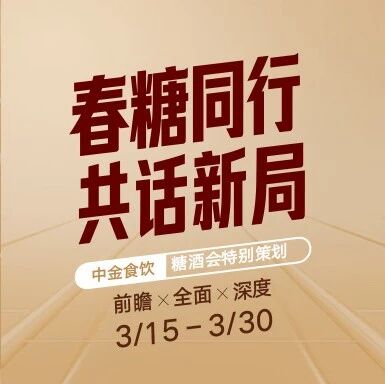
中金|糖酒会特别策划:春糖同行,共话新局
中金点睛· 2026-03-19 23:55
3/24 如需报名参加23-24日沙龙活动,以及更多上市公司交流, 中全公司 共话新 春糖回 糖酒会特别策划 中金食饮 前瞻×全面×深度 3/15 - 3/30 祝美学 陈文博 王 尧 王文丹 沈 肠 李茗蕙 王雪骄 季雯婕 武雨欣 3/15 / 前瞻|电话会 春季糖酒会前瞻:预见白酒反转? 嘉宾:名酒研究所联合创始人、总编辑 陈薏霜 20:00 ) 3/23-3/24 | 沙龙 | 线下 沙龙分享会: 相聚春糖 共话行业趋势 地址:成都香格里拉中心写字楼 3/23 09:00 ) 湖南名酒经销商 山东名酒经销商 10:00 四川综合品牌经销商 酱香型白酒资深研究嘉宾 四川高端酒嘉宾 现制茶饮加盟商 河南高端酒及酱酒经销商 全国知名咨询公司董事长 医美行业嘉宾 09:30 酒类和大众品线上平台嘉宾 马上赢公司嘉宾 量贩零食加盟商 知名一级投资人(分享量贩零食) 欢迎联系中金食饮团队及对口销售报名,更多内容拉群更新。 3/24 速读 | 电话会 速读春糖:中金食饮团队汇报一线洞察 (20:30) 主讲人:王文丹/祝美学/沈旸 3/26-3/27 \ 对谈 | 直播 消费新食代: 成都春糖 | 巅峰对话: 共话白 ...

东风集团股份退市丨今日财讯
Sou Hu Cai Jing· 2026-03-18 22:41
Group 1 - Alibaba Cloud and Baidu Smart Cloud announced price increases due to surging global AI demand and a significant rise in token usage [1][5] - Dongfeng Group has officially delisted its H-shares from the Hong Kong Stock Exchange as part of a privatization process to pave the way for its subsidiary, Lantu Automotive, to enter the capital market [1][5] - Tencent reported a total revenue of 751.766 billion yuan for 2025, with a fourth-quarter revenue of 194.37 billion yuan, reflecting a 13% year-on-year growth [3][5] Group 2 - Country Garden clarified that it is not conducting a large-scale recall of former employees, stating that re-hiring is only for specific key positions as a regular channel [3][5] - Major liquor companies, including Moutai and Wuliangye, have lowered their factory prices, indicating a trend of price adjustments across various market segments [4][5] Group 3 - Domestic gold jewelry prices have fallen for six consecutive days, with specific brands reporting price drops [6] - The number of visitors from mainland China to Japan has decreased for three consecutive months, with a 45.2% year-on-year decline in February [8] - U.S. chip stocks experienced a collective surge, with significant gains in storage chip companies, and Micron Technology reached a market capitalization of 519.6 billion USD, marking a historical high [9]