
饮料

Search documents
从便利店到家庭吧台:元气森林气泡水何以成为Z世代调酒“第一选择”?
Zhong Guo Xin Wen Wang· 2026-02-13 02:37
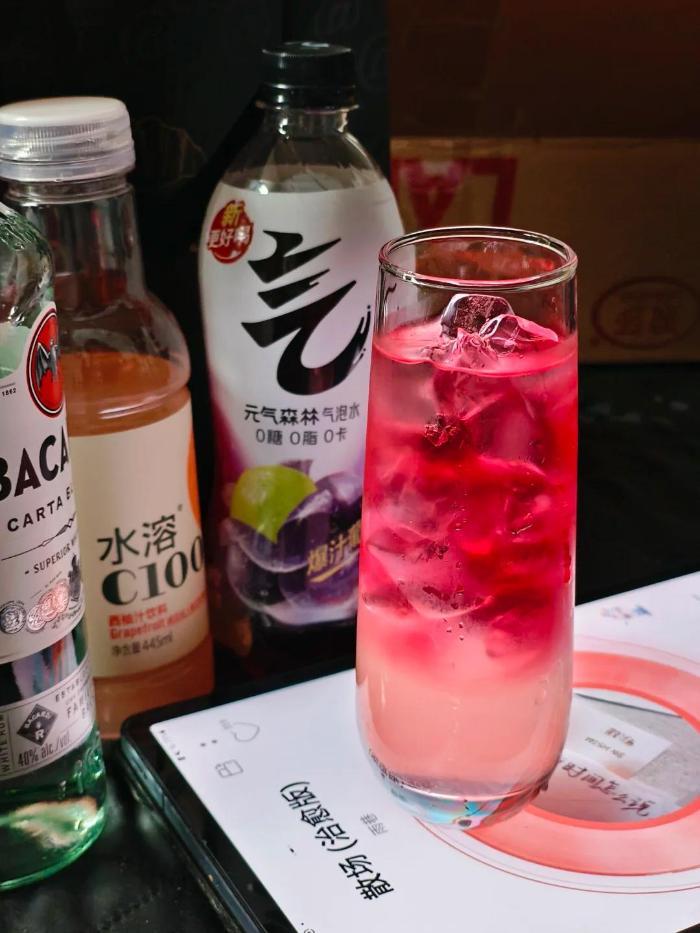
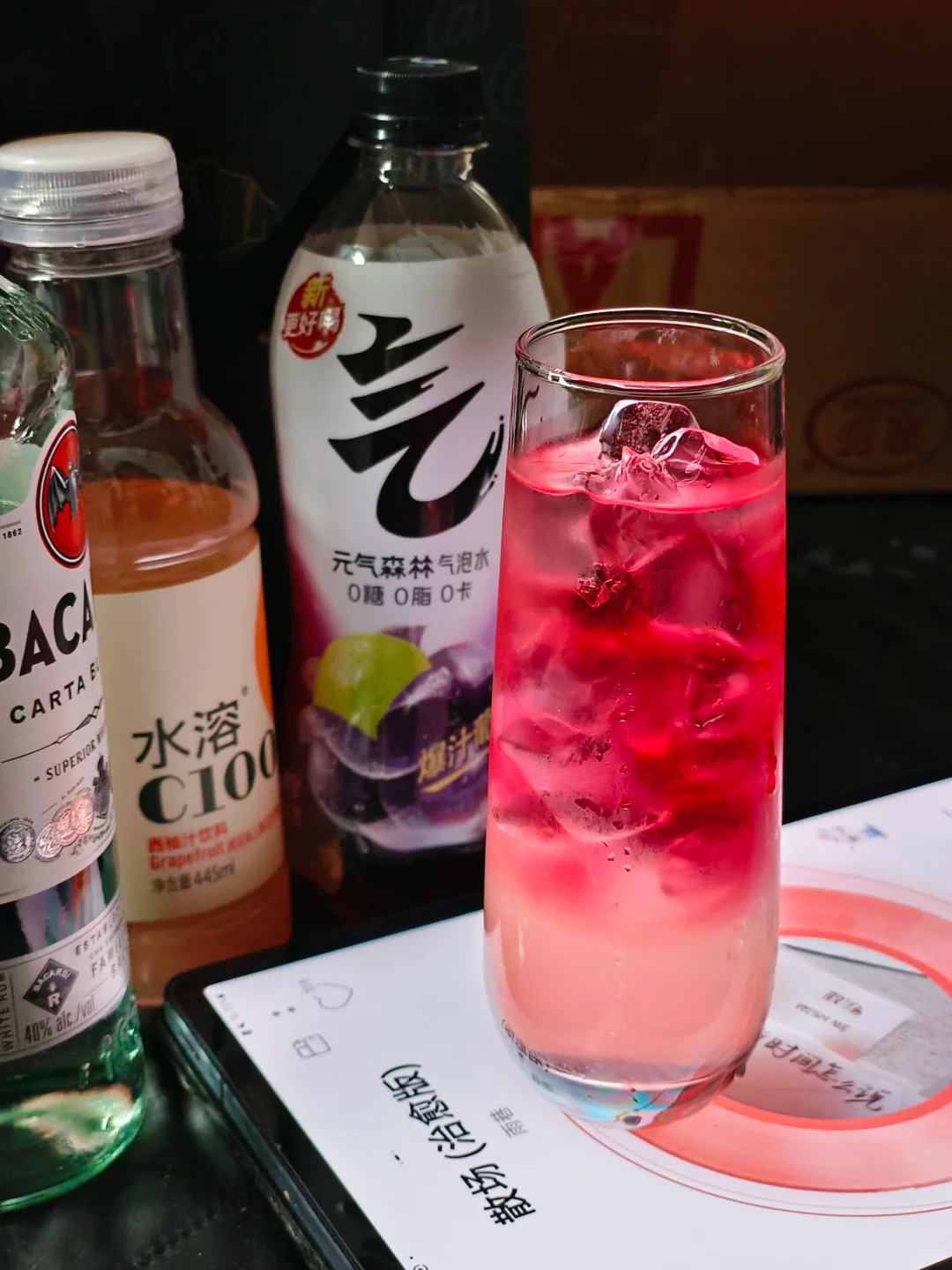
Core Insights - The "tipsy economy" is projected to reach a scale of 117.5 billion yuan by 2025, driven by a transformation in drinking habits among young consumers, emphasizing low-alcohol, personalized, and scenario-based drinking needs [1] - Over 60% of young people are willing to try homemade cocktails, with social media discussions on this topic increasing by 175% year-on-year, indicating a potential boom in the new cocktail market [1] Group 1: Market Trends - The young generation's enthusiasm for cocktail creation is being fueled by social media platforms, with topics like homemade drinks on Xiaohongshu reaching 12.2 billion views and cocktail challenges on Douyin garnering 1.19 billion views [3] - The rise of user-generated content (UGC) reflects a clear consumer trend, with "Yuanqi Forest" emerging as the preferred choice for new-style cocktails among young consumers [3][5] Group 2: Retail Dynamics - The online consumption trend is translating into offline retail strategies, with convenience stores becoming central to this transformation, actively bundling Yuanqi Forest with alcoholic products [5][7] - Nearly 30,000 convenience stores nationwide have set up cocktail combination sections, demonstrating the market's recognition of the "Yuanqi Forest + alcohol" model [7] Group 3: Product Characteristics - Yuanqi Forest's diverse flavor offerings, including white peach, grape, and orange, cater to various alcoholic pairings, enhancing the drinking experience by balancing the spiciness of alcohol [8] - The brand's early collaborations with major alcohol brands in 2023 have established a solid foundation for market acceptance and growth in cocktail culture [8] Group 4: Industry Implications - Yuanqi Forest's success in the cocktail scene illustrates the importance of breaking down category boundaries between beverages and alcohol, providing a new touchpoint for alcohol brands to reach younger consumers [9] - The emergence of the "tipsy economy" and the popularity of new-style cocktails highlight the young consumer demographic as the driving force behind market changes, emphasizing the need for brands to innovate and align with consumer demands [10]

A股开盘:三大指数集体低开,沪指跌0.44%
Jin Rong Jie· 2026-02-13 02:12
Market Overview - The Shanghai Composite Index opened down 0.44% at 4115.92 points, the Shenzhen Component Index fell 0.66% to 14188.35 points, the ChiNext Index decreased by 0.56% to 3309.43 points, and the STAR 50 Index dropped 0.72% to 1470.26 points [1] - The total trading volume in the Shanghai and Shenzhen markets was 19.977 billion yuan, with nearly 3000 stocks declining across the market [1] Sector Performance - The sectors that experienced the largest declines included energy metals, precious metals (core stocks), oil and gas, small metals, industrial metals, film (core stocks) and cinema, and communication equipment [2] - Conversely, sectors that saw gains included airport and shipping (core stocks), beverages, tourism and hotels (core stocks), liquor (core stocks), retail, and diversified finance [3] Notable Stocks - Key stocks such as Yabo Co., Ltd. opened up 2.29%, while AI application company Zhangyue Technology opened up 5.94%. However, Decai Co., Ltd. opened down 2.76% [3] - In the computing power (core stocks) leasing sector, Dwei Technology reached a bidding limit up, while YN Holdings also hit a bidding limit up [3] - Fiber optic concept stock Teifa Information opened down 2.56%, while Jinshi Technology opened up 5.31%. In the non-ferrous metals (core stocks) sector, Xianglu Tungsten Industry opened down 2.39%, and Zhangyuan Tungsten Industry opened up 3.52% [3] - Electronic cloth concept stock Honghe Technology opened up 0.08%, and Zhongcai Technology opened flat [3]
可口可乐出售非洲业务控股权 中国市场装瓶商新厂投产
Jing Ji Guan Cha Wang· 2026-02-12 20:35
以上内容基于公开资料整理,不构成投资建议。 经济观察网可口可乐公司近期宣布将可口可乐饮料非洲有限公司75%的控股权出售给可口可乐希腊装瓶 公司,剩余25%股权计划在交易完成后6年内出售。同期,可口可乐在中国市场的装瓶商亦有供应链进 展,例如中粮可口可乐陕西新厂于2025年9月投产,太古可口可乐郑州新厂于2025年10月揭幕,广东太 古可口可乐大湾区项目完成主体结构封顶。 ...

怪物饮料2025年Q3业绩强劲,2026年将推史上最大产品组合
Jing Ji Guan Cha Wang· 2026-02-12 20:35
Financial Performance - The company reported third-quarter revenue of $2.197 billion, a year-over-year increase of 16.8%, marking the highest quarterly growth rate in three years [1] - Net profit reached $524 million, reflecting a year-over-year growth of 41.4% [1] - The international market revenue share increased to 42.6%, with a year-over-year growth of 23.3% [1] Stock Performance - As of February 2, 2026, the stock price was $81.10, with a trading volume of $788 million, representing a 60.75% increase from the previous day [2] - Year-to-date stock price growth is 5.78%, while the stock has increased by 66.50% over the past 52 weeks [2] Business Development - The company plans to launch its largest-ever innovative product lineup in 2026, including a sub-brand FLRT targeting the female market, new juice and functional beverages, and several sugar-free products to attract new users and expand consumption scenarios [3] Strategic Initiatives - The company is deepening its distribution partnership with the Coca-Cola system and increasing investments in new channels such as food service and ready-to-drink markets to accelerate penetration in EMEA, Asia-Pacific, and Latin America [4] - Budget energy drink brands like Predator and Fury have been launched in 36 markets as a key strategy to tap into low-income markets [4] Institutional Insights - Morgan Stanley raised its target price from $81 to $87 due to strong retail data and pricing power in the U.S. and Western Europe [5] - Haitong International adjusted its revenue and profit forecasts for 2025-2027 based on the performance in the first three quarters but maintained a "neutral" rating, highlighting the need to monitor food safety and demand risks [5] Upcoming Events - The timing of the company's subsequent financial reports, including the fourth quarter and full-year results for 2025, is noteworthy, typically expected at the end of February or in March 2026 [6] Industry and Risk Analysis - The energy drink market is highly competitive, and fluctuations in key raw material prices may pose challenges to gross margins [7] - The alcoholic beverage segment experienced a decline of 17% year-over-year in Q3 2025, and its adjustment progress should be monitored [7]

可口可乐2025全年营收增长2%,无糖可口可乐增长13%
Zhong Guo Jing Ying Bao· 2026-02-12 15:05
Core Insights - Coca-Cola Company reported a revenue of $47.941 billion for the year 2025, reflecting a 2% year-on-year growth, while net profit surged by 23% to $13.137 billion [1][2] - The company's fourth-quarter revenue reached $11.822 billion, also growing by 2%, with net profit increasing by 5% to $2.316 billion, and earnings per share (non-GAAP) of $0.58, exceeding market expectations [2] Revenue and Profit Performance - For the full year 2025, Coca-Cola's revenue was $47.941 billion, a 2% increase compared to the previous year, while net profit was $13.137 billion, marking a significant 23% growth [1][2] - In Q4 2025, the company achieved a revenue of $11.822 billion, a 2% growth, and net profit of $2.316 billion, a 5% increase [2] Product Innovation and Market Strategy - The company's innovation in product categories, particularly the no-sugar series, has become a core growth driver, with no-sugar Coca-Cola sales increasing by 14% for the year and 13% in Q4 [2] - Diversified categories such as bottled water, sports drinks, coffee, and tea also contributed positively, with a 2% increase in sales across these segments [2] Supply Chain and Market Focus - Coca-Cola emphasized its strategic focus on the Chinese market, highlighting it as one of the most important markets, with plans for proactive investments in supply chain resilience [3] - Significant investments in new production facilities in various regions of China, including AI-driven operations and green certifications, demonstrate the company's commitment to enhancing its supply chain network [3] Brand Innovation and Community Engagement - Coca-Cola China has strengthened its connection with local consumers through product innovations and cultural resonance, such as the "sharing bottle" and limited edition designs [4] - The company has also integrated community resilience into its operations, responding to emergencies and supporting rural schools through its water initiatives, reflecting its long-term commitment to ESG principles [4] Market Outlook - Analysts believe that Coca-Cola's robust financial performance, explosive growth in no-sugar categories, and steadfast investment in the Chinese market showcase its risk resilience and strategic determination [4] - The anticipated release of production capacity in 2026 is expected to further solidify Coca-Cola's leadership position in the Chinese market [4]
加价不加量,可口可乐“负重”前行
Bei Jing Shang Bao· 2026-02-12 14:03
Core Insights - Coca-Cola's 2025 financial report reveals stagnant global unit case volume despite a 4% price increase, indicating a shift in market dynamics [2][4] - The company reported a revenue of $11.82 billion for Q4 2025, falling short of the $12.03 billion market expectation, primarily due to a 65% decline in North American operating income influenced by a $960 million impairment related to the BodyArmor acquisition [4] - The company's strategy of "volume and price growth" has failed, marking the first instance of zero volume growth in a decade [4][5] Financial Performance - Coca-Cola's total revenue for 2025 reached $47.9 billion, reflecting a 2% year-over-year increase, with organic revenue growth of 5% [4] - The global unit case volume growth rate was recorded at 0%, with all revenue growth attributed to price increases [4] - In the Asia-Pacific region, Q4 net revenue dropped by 7% and operating profit fell by 36%, highlighting core business weaknesses [5] Market Challenges - The rise of domestic brands like Nongfu Spring and Dongpeng Beverage poses significant external pressure on Coca-Cola [6] - Nongfu Spring reported a revenue of 25.62 billion yuan in H1 2025, a 15.6% increase, while Dongpeng Beverage achieved a revenue of 16.84 billion yuan in the first three quarters, growing by 34.13% [7] - The emergence of low-cost snack retail stores is disrupting traditional pricing strategies, complicating Coca-Cola's market positioning [7] Industry Context - The overall fast-moving consumer goods (FMCG) sector is experiencing collective anxiety, with the Chinese carbonated beverage market size declining by 2.6% in 2025 [8] - Coca-Cola has invested in upgrading five production bases in China over the past three years, which may support future growth opportunities [8]
香飘飘:公司当前在杭州开设了三家茶饮店
Zheng Quan Ri Bao Wang· 2026-02-12 12:09
Core Viewpoint - The company is currently operating three tea beverage stores in Hangzhou, focusing on brand promotion and consumer experience, aiming to convey a young and healthy product concept while collecting market feedback for product development and innovation [1] Group 1 - The company has established three tea beverage stores in Hangzhou [1] - The stores serve as brand promotion and experience windows [1] - The initiative aims to provide an immersive brand interaction space for consumers [1] Group 2 - The company intends to collect market feedback directly from consumers [1] - This feedback will assist in product research and innovation [1] - Future plans for large-scale store expansion will require further validation and observation [1]

巴克莱银行上调麦当劳、可口可乐的目标价
Ge Long Hui A P P· 2026-02-12 11:41
Group 1 - Barclays has raised the target price for McDonald's from $372 to $380 [1] - Barclays has also increased the target price for Coca-Cola from $77 to $83 [1]


“微醺”赛道暗战:元气森林气泡水何以成为调酒场景“隐形冠军”?
Jin Rong Jie· 2026-02-12 07:31
Core Insights - The "tipsy economy" is projected to reach a scale of 117.5 billion yuan by 2025, driven by a transformation in drinking habits among young consumers, emphasizing low-alcohol, personalized, and scenario-based drinking demands [1] - Over 60% of young people are willing to try making their own cocktails, with social media discussions on this topic increasing by 175% year-on-year, indicating a surge in the new cocktail market [1] Group 1: Market Trends - The cocktail consumption trend among young people is being fueled by their creative enthusiasm, with major social platforms becoming key channels for cocktail culture dissemination [3] - The hashtag homemade drinks on Xiaohongshu has reached 12.2 billion views, while the cocktail hashtag on Douyin has garnered 11.9 billion views, showcasing the popularity of cocktail-related content [3] Group 2: Consumer Preferences - "元气森林" (Yuanqi Forest) has emerged as the preferred choice for new-style cocktails among young consumers, with a variety of user-generated content (UGC) showcasing diverse cocktail combinations [4] - The combination of Yuanqi Forest sparkling water with various alcoholic beverages has become a popular trend, with a specific recipe gaining nearly 4,000 UGC entries, highlighting the dual empowerment of beverage and alcohol categories [4] Group 3: Retail Dynamics - The online consumption trend is translating into offline retail strategies, with convenience stores becoming central to this transformation, actively bundling Yuanqi Forest with alcoholic products [6] - By 2025, nearly 30,000 convenience stores nationwide are expected to set up cocktail combination sections, reflecting the market's recognition of the Yuanqi Forest and alcohol combination model [8] Group 4: Product Characteristics - Yuanqi Forest's product features align well with the core demands of new-style cocktails, addressing young consumers' preferences for diverse flavors, low-calorie options, and enjoyable drinking experiences [9] - The brand has established partnerships with major alcohol brands to promote cocktail culture, laying a solid foundation for market acceptance and future growth [9] Group 5: Industry Implications - The success of Yuanqi Forest in the cocktail scene illustrates the potential for integration between beverage and alcohol industries, providing a reference model for industry convergence [10] - The rise of the "tipsy economy" and new-style cocktails highlights the importance of scenario innovation in brand development, suggesting that companies must closely align with consumer needs to seize market opportunities [10]
食品饮料行业周度市场观察:行业环境头部品牌动态投资运营产品技术营销活动-20260212
Ai Rui Zi Xun· 2026-02-12 07:03
Investment Rating - The report does not explicitly provide an investment rating for the food and beverage industry Core Insights - The pre-prepared food industry is set to enter a new phase of standardized development with the introduction of the first national standard in 2026, which will clarify definitions and enhance food safety and traceability [3] - The beverage market is experiencing significant growth in various segments, with several products achieving sales exceeding 10 billion, driven by consumer preferences for low-sugar and functional beverages [5] - The competition in the milk tea market is intensifying, with small shops needing to adopt refined operations and digital tools to enhance customer loyalty and reduce costs [4] - The trend of regional cultural co-branded beverages is rising, but sustainability is challenged by product homogenization and shallow cultural exploration [6] - The coffee and bottled milk tea markets are facing potential disruption from new low-sugar products launched by major brands, indicating a shift in market dynamics [7] Industry Trends - The pre-prepared food industry is projected to reach a market size of over 600 billion by 2026, driven by health-conscious consumer demands and technological advancements [9] - The beverage industry is shifting towards health-oriented products, with a focus on transparency in ingredients and functional benefits [12] - The global health market is valued at nearly 9 trillion, with a growing emphasis on functional foods targeting gut health, weight management, and cognitive needs [14] Brand Dynamics - The report highlights the challenges faced by companies like Huangshi Group, which has struggled with diversification and is attempting to refocus on its core dairy business [15] - Junlebao is navigating a competitive low-temperature milk market while planning for an IPO, facing pressure from established giants [16] - Nova Coffee has rapidly expanded its store count through a light-asset model, but must address quality consistency and supply chain challenges [17] - The report notes the success of brands like Xi Wang in the sports drink market, emphasizing the importance of precise marketing strategies and product innovation [20]