
银行

Search documents
星展2025年全年除税前溢利达131亿新元,股本回报率为16.2%
Jin Rong Jie· 2026-02-09 08:49
截至2025年底,星展贷款总额按固定汇率计算增长6%(240亿新元)至4,450亿新元,企业及财富管理 贷款全面增长。存款则按固定汇率计算增加640亿新元(12%)至6,100亿新元,创下集团历来最大绝对 增长额,其中逾三分之二来自往来及储蓄户口(CASA)。盈余存款已配置于流动资产,有助提升净利 息收入及股本回报率,尽管净息差收窄12个基点至2.01%。 资产质素保持稳定,不良贷款比率维持1.0% 尽管第四季度将一项先前列入观察名单的房地产投资审慎下调为不良贷款,集团整体不良贷款比率仍稳 定维持于1.0%。全年特殊拨备占贷款比例升至19个基点,但部分被一般拨备回拨所抵销。 2月9日,星展集团控股有限公司(简称"星展")公布了截至2025年12月31日的全年业绩。尽管面临利率 环境挑战,集团全年除税前溢利达131亿新加坡元(下称"新元"),略高于去年水平;总收入增长3%至 229亿新元。 受惠于积极的资产负债表对冲操作及存款增长,星展有效抵销了利率大幅下跌及新加坡元走强带来的压 力,实现净利息收入微增至145亿新元。然而,受全球最低税率15%实施影响,税务支出增加,导致全 年纯利下跌3%至110亿新元。集团股 ...
资金跟踪系列之三十二:杠杆资金加速净流出,机构ETF、北上卖出放缓
SINOLINK SECURITIES· 2026-02-09 08:43
Macro Liquidity - The US dollar index has rebounded, and the degree of "inversion" in the China-US interest rate spread has narrowed. The nominal and real yields of 10Y US Treasuries have both declined, indicating a decrease in inflation expectations [1][15] - Offshore US dollar liquidity has marginally loosened, while the domestic interbank funding environment remains balanced and slightly loose. The term spread (10Y-1Y) has narrowed [1][22] Market Trading Activity - Market trading activity has decreased, with most indices experiencing an increase in volatility. Sectors such as media, communication, retail, military, and building materials have trading heat above the 90th percentile [2][30] - The volatility of most indices has increased, with military, petrochemical, and non-ferrous metal sectors reaching above the 80th percentile [2][32] Institutional Research - The banking, electronics, new energy, military, and computer sectors have seen high research activity. The research intensity in new energy, military, media, food and beverage, and utilities sectors has continued to rise [3][42] Analyst Forecasts - Analysts have continued to raise net profit forecasts for the entire A-share market for 2026/2027. The proportion of stocks with upward revisions in net profit forecasts has increased [4][50] - Specific sectors such as non-ferrous metals, retail, communication, pharmaceuticals, and machinery have also seen upward adjustments in their 2026/2027 net profit forecasts [4][21] - The net profit forecasts for the ChiNext Index and the SSE 50 have been raised for 2026/2027, while the forecasts for the CSI 500 and CSI 300 have been adjusted differently [4][23] Northbound Trading Activity - Northbound trading activity has decreased, continuing to net sell A-shares, but the magnitude of selling has slowed. In the top 10 active stocks, the buy-sell ratio in sectors like communication, food and beverage, and machinery has increased [5][31] - For stocks with northbound holdings of less than 30 million shares, there has been a net buying in sectors such as chemicals, non-ferrous metals, and petrochemicals, while net selling has occurred in TMT, pharmaceuticals, and military sectors [5][33] Margin Financing Activity - Margin financing activity has continued to decline, reaching the lowest point since July 2025. Last week, there was a net sell of 51.596 billion yuan across various sectors, with electronics, non-ferrous metals, communication, and chemicals being sold off the most [6][35] - Only the communication and non-bank financial sectors saw an increase in the proportion of financing purchases [6][38] Active Equity Funds and ETFs - Active equity funds have continued to increase their positions, particularly in non-ferrous metals, media, and steel sectors, while reducing positions in finance, food and beverage, and new energy sectors [8][45] - The correlation of active equity funds with large/mid/small-cap value has increased, while the correlation with growth has decreased [8][48] - New equity fund establishment has decreased, with both active and passive funds seeing a decline in scale. ETFs have seen renewed net subscriptions, primarily driven by individual investors [8][50]
从单点联动到全域共建,河北金融助残协同发展“加速度”
Hua Xia Shi Bao· 2026-02-09 08:36
本报(chinatimes.net.cn)记者王晓慧 北京报道 金融赋能是助残扶残、推动残疾人群体实现共同富裕的重要支撑,更是金融机构践行社会责任、传递民 生温度的生动实践。 近日,河北省残联与交通银行河北省分行签署了"金融助残"战略协议,标志着双方合作迈入全方位、制 度化、长效化新阶段,为河北构建特色金融助残体系、助力残疾人实现共同富裕注入强劲金融动能。 河北省残联党组书记、理事长史建伟,交通银行河北省分行党委书记、行长刘清军出席仪式并致辞。在 与会人员的共同见证下,河北省残联副理事长侯斯与交通银行河北省分行党委委员、副行长左飞代表双 方签署合作协议。 战略签约聚合力,构建金融助残新格局 签约仪式上,双方回顾了过往合作成果,就下一步合作方向达成共识。此前,双方已在金融服务网点无 障碍环境建设、"助残暖冬"行动提质升级、邀请中国残疾人艺术团来冀公益演出等方面开展深度合作, 积累了深厚合作基础。 事实上,自2007年起,交通银行连续18年倾情支持残疾人事业,累计慈善捐款达1.2亿元,以实际行动 诠释"金融向善"的深刻内涵。交通银行河北省分行的此次签约更是其践行金融向善、彰显社会责任的重 要举措。 史建伟对交通银 ...


长城投研速递:震荡区间下限或逐步探明
Sou Hu Cai Jing· 2026-02-09 08:16
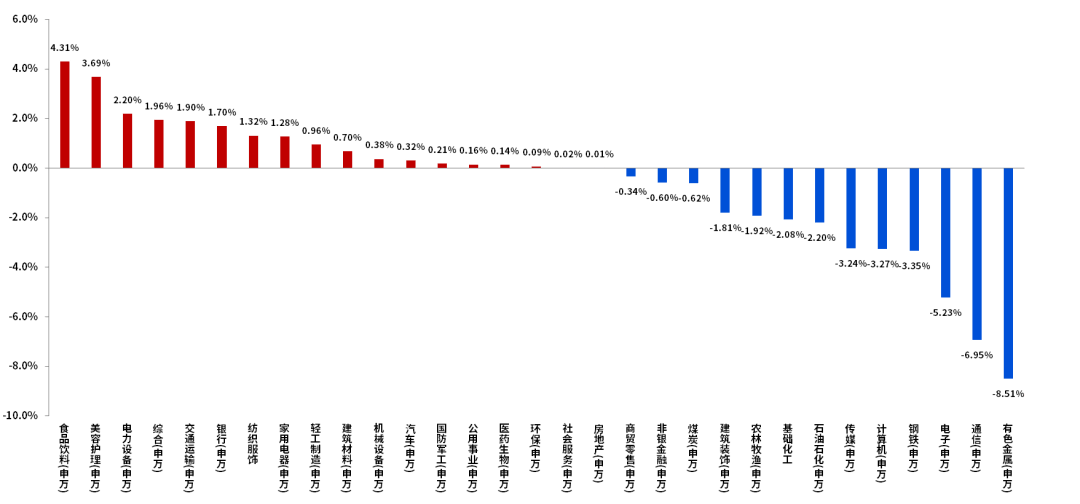
境内宏观:尽管新旧经济景气分化的结构延续,但2025Q4新经济景气中枢明显上移,并由AI向出海、资源品、服务消费等更多领域扩散。新兴科技产业 链呈现出供需两旺的特征,内部细分涨价赛道明显增多。 政策风向:各地2026年经济增长目标稳中有降,政策聚焦扩内需与强科技。15省将GDP目标下调0.5个百分点,12省GDP目标较去年基本不变。 境外宏观:1月美联储按兵不动符合预期,预计2026年或仍有2-3次降息。1月FOMC会议美联储对经济、就业和通胀都表现出了更乐观的态度,这为重启 降息增加了不确定性。 债券市场:债市方面,市场分歧加剧但难有单边行情。往后看,债券市场短期或将继续进行方向试探,但中期受当前宏观环境制约,预计难以走出单边趋 势行情。 摘要 6、投资策略 正文 1、政策风向: 权益市场:上周市场在周一大跌后维持震荡,价值股整体表现偏强。食品饮料、银行、建材行业继续上行,有色、通信、石化行业转跌,电子、计算机、 化工行业继续下跌。 投资策略:可关注:1)内需价值:春节后内需板块超额概率更高,叠加扩内需成为重要增长抓手,而市场预期与持仓均处于底部;2)新兴科技:中美的 竞争不再只是贸易的竞争,更是生产效率的 ...
新财观|重视国有大行长期配置价值 共享经济发展红利
Xin Hua Cai Jing· 2026-02-09 08:04
田维韦 国信证券股份有限公司经济研究所银行业分析师 作者:王剑 国信证券股份有限公司经济研究所金融业首席分析师 在全球经济格局深度调整、国内经济迈向高质量发展的关键阶段,国有大行作为中国金融体系的"压舱石",正日益展现出其独特的战略地位与中长期配置 价值。首先,中国经济长期向好趋势明确,为国有大行提供良好的经营环境,业绩稳定性有保障;其次,我国产业升级驱动金融机构经营模式迈向综合化 国际化,同时,金融科技飞跃式发展驱动金融机构朝着数字化迈进,大行依托牌照、客户、资金以及品牌优势,在构建综合化、国际化以及数字化上有无 可比拟的优势;最后,我国居民资金配置多元化是大势所趋,国有大行高股息、低波动特征显著,不仅契合个人投资者稳健配置需求,更天然契合社保基 金、保险资金、公募基金、银行理财等长期机构投资者新时代下的配置标准。 宏观经济的稳健增长:业绩的压舱石与稳定器 国有大行作为宏观经济的镜像,其经营业绩与宏观经济高度相关。当前中国经济已由高速增长阶段转向高质量发展阶段,但长期向好的基本面并未改变, 这为国有大行业绩稳健增长提供了坚实的保障。2025年,我国GDP增速维持在5%的合理区间,通胀温和可控,就业形势总体稳 ...

情绪周中回落,价量一致性快速下降——量化择时周报20260208
申万宏源金工· 2026-02-09 08:03
Core Viewpoint - Market sentiment has cooled, with the sentiment indicator at 2.65 as of February 6, slightly up from 2.6 the previous week, indicating a neutral stance from a sentiment perspective [4][5]. Sentiment Model Viewpoint - The sentiment model indicates a decline in market sentiment, with a rapid decrease in price-volume consistency, suggesting a significant drop in the correlation between price increases and market attention [5][7]. - The sentiment structure indicator is calculated using various sub-indicators, with a scoring method that evaluates the sentiment direction and Bollinger band positions, resulting in a 20-day moving average of the summed scores [2][3]. Market Activity - The price-volume consistency indicator has rapidly declined, reflecting a significant reduction in the degree of price-volume matching, indicating a cooling market sentiment [5][7]. - The total trading volume for the A-share market decreased significantly by 21.43% week-on-week, with an average daily trading volume of 24,066.54 billion yuan, marking a notable drop in market activity [10][14]. Sector Analysis - As of February 6, 2026, the sectors with the highest short-term scores include construction materials and petroleum & petrochemicals, both scoring 93.22, indicating strong short-term performance [28]. - The correlation between sector congestion and weekly price changes is negative at -0.30, suggesting that high congestion sectors like food and beverage are experiencing significant price increases, while low congestion sectors may have more stable valuations [31][32]. Financing and Investment Sentiment - The financing balance ratio has slightly increased and remains above the upper Bollinger band, indicating a high level of leveraged funds and a generally positive risk appetite among investors [21][24]. - The RSI indicator has shown a decline, reflecting a decrease in short-term upward momentum and an increase in selling pressure, indicating a reduction in market participation willingness [23][34]. Overall Market Signals - The current model indicates a preference for large-cap and value styles, with signals suggesting potential strengthening in these areas as indicated by the rapid decline of the 5-day RSI relative to the 20-day RSI [28][35].

长三角议事厅·周报|超越赛事,“苏超”有了新使命
Xin Lang Cai Jing· 2026-02-09 07:58
Core Insights - The Jiangsu Super League (苏超) has transitioned from a popular event to a sustainable "service consumption infrastructure" as outlined in the Jiangsu provincial government work report for 2026, emphasizing its role in promoting cultural, tourism, and commercial integration [1] - The league's first season attracted significant attention, with 243.3 million live spectators and 22.2 billion online views, demonstrating its potential for economic impact [1] - The league's operational strategy is shifting from merely attracting viewers to retaining them, focusing on deepening engagement and expanding its influence beyond Jiangsu [1] Micro Activation - The 2026 season introduces a "green channel" for small and micro enterprises to participate, allowing them to sponsor the league at a low cost of 50,000 yuan, with potential market value benefits of around 3 million yuan [3][4] - The league aims to create a distributed sponsorship network that includes local businesses, enhancing the economic impact on community-level consumption [4] Mid-level Restructuring - The 2026 season's schedule is designed to enhance audience flow, with a focus on regular matches and a "home and away" system to balance visitor distribution across cities [5][6] - The league's structure encourages local tourism and consumption, with data showing significant increases in visitor numbers and spending during match days [5][6] Macro Anchoring - The introduction of U22 regulations aims to develop a talent supply chain by mandating the participation of younger players, thus transforming the league into a platform for nurturing future football talent [7][8] - This long-term strategy is expected to attract investment in youth training and related sectors, fostering a sustainable ecosystem around the league [9] Institutional Spillover - The Jiangsu model is positioned to serve as a replicable framework for regional integration in the Yangtze River Delta, focusing on collaborative governance and cross-province consumer engagement [10][11] - Key mechanisms for this spillover include mutual recognition of rules, regional consumption integration, and a closed-loop industry model that connects youth training with league operations [10][11]
透视基金第一重仓股“魔咒”:发生概率不足五成,三招避开“光环陷阱”
证券时报· 2026-02-09 07:56
2025年四季度末,光模块龙头中际旭创以1.28亿股持股总量、782.32亿元持股市值,首次超越宁德时代登顶主动权益基金第一大重仓股,1100 多只持仓基金的"抱团"态势一度成为市场焦点。但登顶仅月余,该股便开启回调模式,截至2月6日,年内累计下跌超10%,单日最大跌幅达 8.94%,多只重仓基金净值同步回撤超5%,再度引发市场对"基金第一重仓股魔咒"热议。 要客观研判"基金第一重仓股魔咒"这一市场现象,需依托长期、大样本的实证数据。基于Wind平台2003年至2025年共92个报告期的统计显示, 在成为第一重仓股后,39只登顶标的在后续3个月跑输沪深300指数,占92个报告期的42.39%;6个月、12个月跑输比例分别为45.65%、46.74%。 这一量化结果,为理性分析该现象的统计规律提供了客观依据。 | | | | 部分主动权益基金第一大重仓股登顶后的市场表现一览 | | | | --- | --- | --- | --- | --- | --- | | 主动权益基金第一大 | | 报告期归母净利 | 报告期后3个月相对于沪深 | 报告期后6个月相对于沪深300 | 报告期后12个月相对于沪 | | ...

粤开市场日报-20260209-20260209
Yuekai Securities· 2026-02-09 07:49
Market Overview - The A-share market indices all experienced gains today, with the Shanghai Composite Index rising by 1.41% to close at 4123.09 points, the Shenzhen Component Index increasing by 2.17% to 14208.44 points, the Sci-Tech 50 up by 2.51% to 1458.16 points, and the ChiNext Index climbing by 2.98% to 3332.77 points [1][10] - Overall, 4609 stocks rose while 756 stocks fell, with a total trading volume of 22495 billion yuan, an increase of 1038 billion yuan compared to the previous trading day [1] Industry Performance - All primary industries in the Shenwan classification saw gains today, with notable increases in the telecommunications, comprehensive, media, electronics, and computer sectors, which rose by 5.17%, 4.70%, 3.50%, 2.97%, and 2.88% respectively [1][10] - Conversely, the oil and petrochemical, banking, and food and beverage sectors had lower gains, with increases of only 0.21%, 0.36%, and 0.37% respectively [1][10] Concept Sector Performance - The leading concept sectors today included optical modules (CPO), perovskite batteries, optical communications, short drama games, cultivated diamonds, optical chips, Kimi, virtual humans, BC batteries, rare earths, photovoltaic glass, Chinese corpus, multimodal models, AIGC, and WEB3.0 [2]
白宫高喊“强势美元”却没人信?投资者这次选择用脚投票
Xin Lang Cai Jing· 2026-02-09 07:47
Core Viewpoint - Goldman Sachs and Bank of America warn that tariff threats and potential aggressive rate cuts by the Federal Reserve are undermining the global reserve status of the dollar, leading investors to flock to gold and other safe-haven assets [1][7]. Group 1: Dollar's Performance - In 2025, the dollar experienced its largest annual decline in eight years, with a drop of approximately 9% [2][8]. - Despite a recent rebound, the dollar index is down about 1% year-to-date, continuing the trend from 2025 [2][8]. - The dollar has not recovered from a more than 5% drop following President Trump's announcement of tariffs in April 2025 [2][8]. Group 2: Investor Sentiment and Policy Uncertainty - Recent policy uncertainties are expected to persist long enough to hinder the dollar's recovery, as investors had initially anticipated more support for the economic cycle [2][8]. - The dollar's status as a reserve currency is increasingly questioned, with suggestions that geopolitical risks and policy uncertainties may lead to a reallocation of assets away from the dollar [2][10]. Group 3: Federal Reserve and Monetary Policy - The market is assessing the potential impact of Kevin Walsh, Trump's nominee for the Federal Reserve chair, who is seen as a monetary hawk but may lead to expectations of aggressive rate cuts [3][9]. - Trump indicated that if Walsh showed any interest in raising rates, he would not be nominated, reinforcing expectations of rate cuts [10]. Group 4: Gold and Other Assets - Gold appreciated over 60% in 2025, marking one of the strongest rebounds in history, and remains up over 70% in the past year [4][10]. - Other metals, including silver, platinum, copper, and steel, have also seen price increases alongside gold as demand for hard assets rises [5][11]. Group 5: Currency Trends - Major currencies such as the euro, pound, and Swiss franc have rebounded against the dollar, alongside emerging market currencies like the Brazilian real and Mexican peso [6][11]. - Bank of America suggests that it may be premature to label recent currency fluctuations as signs of dollar depreciation, as fundamental factors driving dollar weakness have yet to fully manifest [6][11].