
稀土

Search documents
创业板指下跌3%,稀土永磁板块逆势走强
Sou Hu Cai Jing· 2025-10-13 05:07
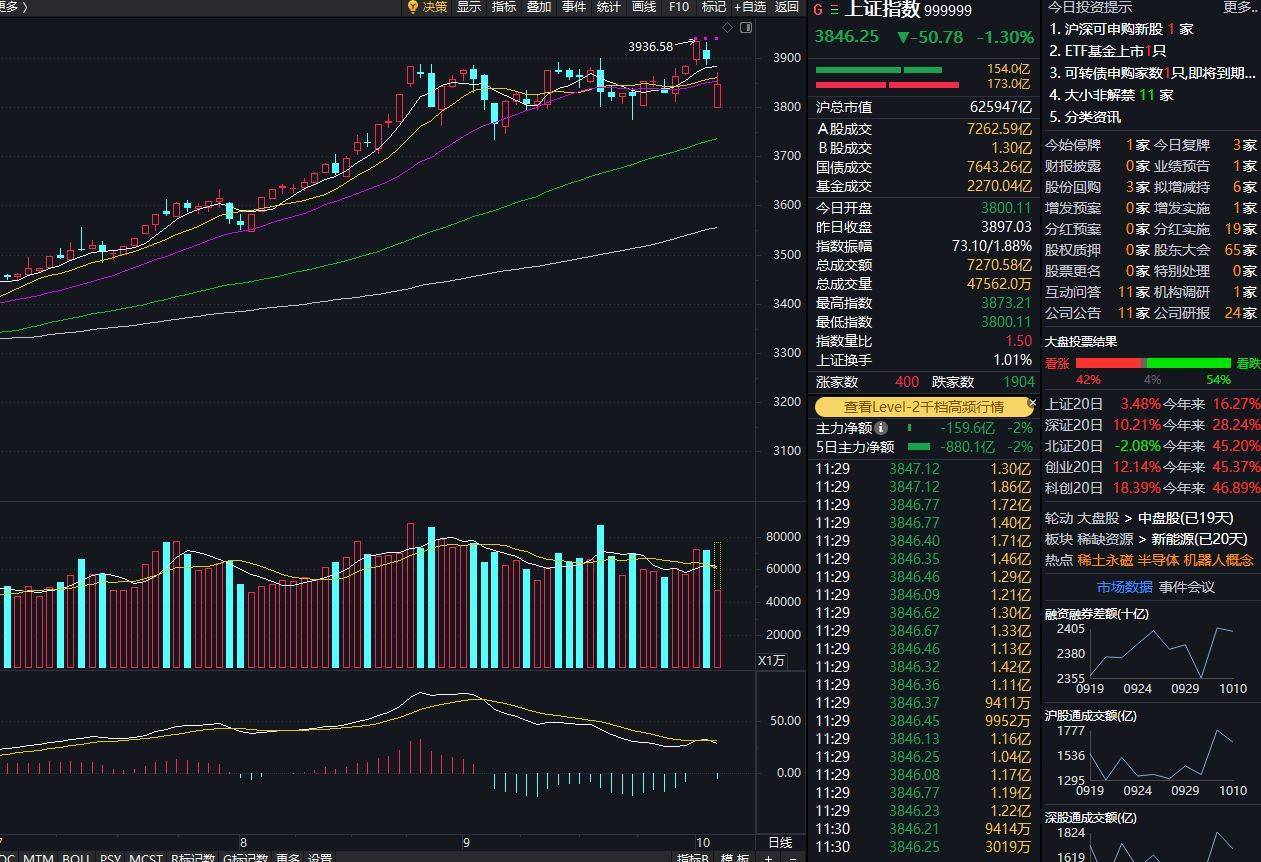
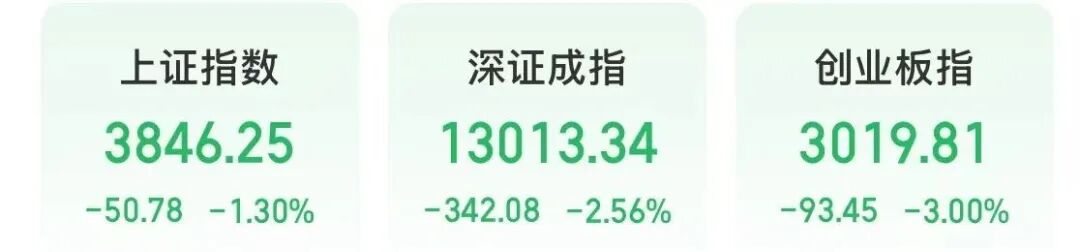
Market Overview - The A-share market experienced a collective decline, with the ChiNext Index dropping by 3% [1] - As of the midday close, the Shanghai Composite Index fell by 1.30% to 3846.25 points, while the Shenzhen Component Index decreased by 2.56% to 13013.34 points [1][2] - The total market saw 843 stocks rise and 4550 stocks fall, with a total trading volume of 15,780 billion yuan [1] Sector Performance - The top-performing sectors included rare earth permanent magnets, small metals, Huawei Euler, precious metals, EDA concepts, genetically modified organisms, and helium concepts [1] - Conversely, sectors such as robotic actuators, reducers, AIPC, 3D cameras, humanoid robots, mixed reality, smart TVs, and consumer electronics faced significant declines [1] Rare Earth Industry Insights - The rare earth industry is experiencing a supply-demand resonance, with China's quota management and export controls enhancing strategic control over the industry [5] - The global green transition and dual carbon goals are driving demand for key elements like praseodymium and neodymium, which is expected to expand the market for permanent magnet materials [5] - The demand for rare earths is anticipated to remain strong as the traditional peak season approaches, with prices expected to stabilize and potentially increase [5] Company Highlights - Zhenghai Magnetic Materials has seen a 55% year-on-year increase in the production of non-heavy rare earth magnets and an 82% increase in ultra-light rare earth magnets, focusing on humanoid robot applications [7] - Guangsheng Nonferrous Metals reported a 15% increase in mining volume and a 74% increase in output for the first half of the year, with significant production growth in its magnetic materials segment [7] - Zhongke Magnetic Materials is a key player in the permanent magnet market, producing both sintered neodymium-iron-boron and ferrite magnets, with strong competitiveness in the high-end consumer electronics market [7] - The company has a current blank production capacity of 21,000 tons, with plans to increase by 15,000 tons by 2025-2026, aiming to rank among the top three in the industry [8]


稀土永磁板块,全线爆发
Shang Hai Zheng Quan Bao· 2025-10-13 05:05
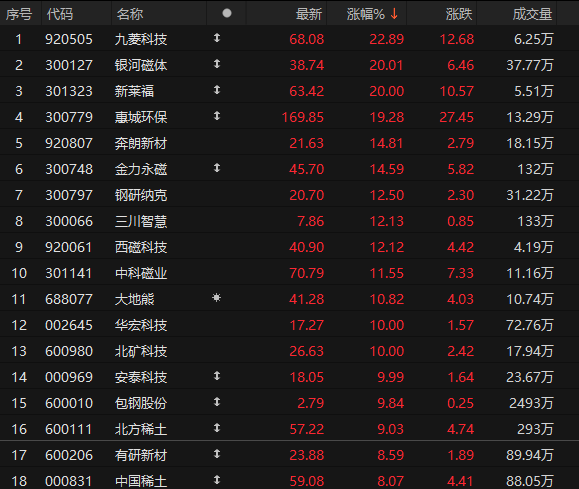
10月13日,A股三大指数早盘下跌,截至午盘,上证指数跌1.3%,深证成指跌2.56%,创业板指跌3%。沪深北三市半日成交 15907亿元,较上日缩量654亿元。 板块题材方面,稀土永磁、贵金属、光刻机、转基因、军工装备、半导体板块涨幅居前。稀土永磁板块逆势大涨,包钢股份 等股涨停;军工装备板块低开高走,长城军工涨停;可控核聚变板块走强,合锻智能走出10天6板。 两大稀土巨头再次提价 可控核聚变板块走强 合锻智能10天6板 10月13日早间开盘,可控核聚变板块走强,合锻智能再度涨停迎4连板,也是10个交易日内的第6个涨停板。安泰科技3连 板,中洲特材、中国核建跟涨。 近期,核聚变激起资本市场热情。10月10日,可控核聚变指数创下历史新高。自去年"9·24"行情以来,核聚变指数累计大涨 超120%。 稀土股逆势上涨 10月13日上午,A股市场稀土股逆势上涨。截至午间收盘,银河磁体、新莱福"20cm"涨停,惠城环保涨超19%,包钢股份、 北矿科技等纷纷涨停,北方稀土大涨超9%。 | 序号 | 代码 | 名称 | ● | 最新 | 涨幅% 7 | 涨跌 | 成交量 | | --- | --- | --- | --- ...


两大稀土龙头股,逆势大涨
Zhong Guo Zheng Quan Bao· 2025-10-13 04:50
Group 1: Rare Earth Permanent Magnet Sector - The rare earth permanent magnet sector saw significant gains, with leading stocks such as Baogang Co. (600010) hitting the daily limit and Northern Rare Earth (600111) rising by 9.03% [1][2] - Key stocks in the sector included JiuLing Technology, Galaxy Magnet (300127), and XinLaiFu (301323), which experienced substantial price increases [2][3] - Northern Rare Earth announced an adjustment in the trading price of rare earth concentrate for Q4 2025 to 26,205 CNY/ton (dry weight, REO=50%), reflecting a 37.13% increase compared to the previous period [4][5] Group 2: Financial Performance and Projections - Northern Rare Earth projected a net profit of 1.51 billion to 1.57 billion CNY for the first three quarters of 2025, representing a year-on-year increase of 272.54% to 287.34% [5] - Other companies like Yuyuan New Materials (600206) and Jinli Permanent Magnet (300748) also forecasted significant profit increases, with Jinli expecting a net profit of 505 million to 550 million CNY, a growth of 157% to 179% [5] - The overall performance of the rare earth sector is expected to improve due to favorable supply-demand dynamics, particularly driven by industries such as electric vehicles and wind power [6] Group 3: Semiconductor Sector - The semiconductor industry showed strong performance, with key stocks like Huahong Semiconductor and Huada Jiutian experiencing notable increases [1][7] - The market is reacting positively to recent adjustments in margin trading rates for stocks including SMIC, which may enhance liquidity and investor interest [10] - Upcoming events such as the 2025 Bay Area Semiconductor Chip Exhibition are anticipated to further stimulate market activity [10]



稀土永磁板块逆势走强,稀土ETF(159713)早盘涨近5%
Mei Ri Jing Ji Xin Wen· 2025-10-13 04:37
Core Insights - The Ministry of Commerce has tightened rare earth control measures, leading to price increases from two major rare earth companies. This has positively impacted the rare earth permanent magnet sector, with the rare earth ETF (159713) experiencing a significant intraday surge of 4.74%, closing with a gain of 3.90% and a trading volume of 331 million shares and a turnover of 445 million yuan [1] - Since the low point on April 8, the rare earth ETF has accumulated a rise of over 85%. The Ministry of Commerce has issued four documents to strengthen rare earth export controls, adding restrictions on five categories of medium and heavy rare earths, as well as controls on equipment, technology, and raw materials across the entire industry chain. This further solidifies the strategic position of rare earths [2] - In this context, the allocation value of the rare earth ETF (159713) is becoming increasingly prominent [3]
自主可控产业链逆势爆发,稀土概念狂飙,华虹公司涨近14%
2 1 Shi Ji Jing Ji Bao Dao· 2025-10-13 04:12
Group 1 - The market showed signs of recovery on October 13, with the three major indices narrowing their declines. The Shanghai Composite Index fell by 1.30%, the Shenzhen Component Index by 2.56%, and the ChiNext Index by 3%. The total market turnover reached 1.59 trillion yuan [1] - The self-controlled industrial chain strengthened, with significant gains in rare earth, photolithography machines, EDA, and operating systems. The Wind Rare Earth Index rose by 7.77%, with stocks like Huahong Technology and Baogang Co. hitting the daily limit [2] - The Ministry of Commerce announced export controls on rare earth-related items, expanding the scope to include technologies and equipment, which is expected to enhance the supply-demand dynamics in the rare earth sector [2][3] Group 2 - The domestic software sector saw strong performance, with stocks like China Software hitting the daily limit and Kingsoft Office rising over 18%. This surge is attributed to the increasing demand for self-sufficiency and industrial software [2][3] - The semiconductor industry continued to strengthen, with companies like Huahong and others experiencing significant gains. A report predicts that the global wafer foundry market will reach $270 billion by 2029, with a compound annual growth rate of 8.7% from 2025 to 2029 [3]
港股午评:大幅走低!恒科指跌4.54%,恒指下挫超900点,科技、金融齐跌
Ge Long Hui· 2025-10-13 04:09
盘面上,作为市场风向标的大型科技股集体下挫,其中,小米跌近8%表现较差,快手跌近7%,京东跌 6%,百度、阿里巴巴跌5.5%,腾讯、美团跌4%;大金融股(银行、保险、券商)、中字头等权重皆表现 低迷进一步拖累大市走低;苹果概念股、生物医药股、汽车股、濠赌股、家电股、航空股跌幅较大,其 中,鸿腾精密跌近11%,君实生物跌超10%,蓝思科技跌超9%。 另一方面,稀土概念股、半导体芯片股等少部分个股逆势上涨,金力永磁更是大涨超12%创下历史新 高!在弱势中表现十分抢眼,华虹半导体涨3.6%,中芯国际盘中一度涨超5%午间微幅收跌。(格隆汇) 港股早盘低开,临近午盘跌幅加大,恒生科技指数一度跌至4.8%,午间大幅收跌4.54%,恒生指数、国 企指数分别下跌3.49%及3.48%,恒指下挫超900点险守25000点关口,三大指数均创下近一个月新低, 且录得连续下跌行情。 ...
港股午评|恒生指数早盘跌3.49% 金力永磁逆市大涨超12%
智通财经网· 2025-10-13 04:08
Group 1 - Hong Kong's Hang Seng Index fell by 3.49%, down 916 points, closing at 25,373 points, while the Hang Seng Tech Index dropped by 4.54%. The morning trading volume reached HKD 281.8 billion [1] - Jinli Permanent Magnet (06680) surged over 12% as a rare earth giant announced price increases, with institutions optimistic about the strengthening strategic position of rare earths [1] - Semiconductor stocks rose against the trend, with Huahong Semiconductor (01347) increasing by 3.6%, driven by escalating competition in the technology sector and multiple catalysts for the semiconductor industry [1] - Kingsoft (03888) saw a rise of over 18% at one point, closing up over 9%, as external frictions escalate, highlighting the trend towards self-controlled industries and investment opportunities in the Xinchuang sector [1] - Gold stocks mostly rose due to risk aversion, with spot gold breaking through USD 4,060. Zijin Mining International (02259) increased by 4.6%, and Chifeng Jilong Gold Mining (06693) rose by 2.5% [1] Group 2 - MicroPort Scientific-B (02252) rose over 2% as its commercialization process accelerated, with overseas orders exceeding 60 units [2] Group 3 - Liqin Resources (02245) increased by over 5% following the implementation of cobalt export quotas in the Democratic Republic of Congo [3] - China Merchants Energy (01138) rose over 4% due to seasonal demand and event disturbances, with institutions expecting stronger freight rates [3] - Domestic insurance stocks fell across the board, with Tianan Insurance announcing a debt default of CNY 5.3 billion, which institutions suggest may mark the beginning of market-driven risk pricing. New China Life Insurance (01336) fell by 5%, China Pacific Insurance (02328) by 3.9%, and China Taiping Insurance (02601) by 3.6% [3] Group 4 - Pharmaceutical stocks continued their recent downward trend, with Junshi Biosciences (01877) dropping nearly 10.6% and Kanglong Chemical (03759) falling over 9% [4] Group 5 - Apple-related stocks experienced significant declines, with Hongteng Precision (06088) dropping over 10%, as institutions stated that the impact of tariffs on the supply chain should not be overestimated [5]

中国三管齐下直击美国命门!美霸权根基被动摇,特朗普彻底破防
Sou Hu Cai Jing· 2025-10-13 03:48
中国精准反击美国,三管齐下直击其战略要害!以美国的方式回击美国,特朗普愤怒发文,局势变得愈加复杂。中美博弈正在发生深刻的 战略逆转! 在全球聚焦中美关税"休战期"临近结束时,中国商务部发布了数份公告,精准击中了美国的薄弱环节。公告显示,中国将对稀土产品的出 口进行管制,涵盖稀土开采、冶炼、分离以及磁性材料制造的全链条技术,明确表示对用于军事目的和14纳米以下芯片研发的出口申 请"原则上不予许可"或采取"个案审查"。这一新规将于11月8日生效,恰巧在中美关税"休战期"结束的前一天。 英国《金融时报》指出,这一措施与美国常用的对第三国实施设备出口管制的做法非常相似。换句话说,中国正在利用美国惯用的"工具 箱"进行反击,美国这回也尝到了"被卡脖子"的滋味。美国的心理冲击可想而知,当中国首次以"国家安全"为理由对全球稀土供应链施加影 响时,美国的反应也很特别。 特朗普在社交媒体上发表长文,一方面宣称"美国的垄断地位比中国更强大",另一方面又称中国的这一举措"充满敌意,前所未见"。情绪 从愤怒到困惑,再到威胁,甚至荒谬地将稀土管制与加沙停火协议挂钩,质疑"时机是否巧合"。特朗普的失控反应,实际上暴露了美国战 略精英难以 ...

稀土ETF易方达(159715)涨4.18%,稀土涨价,北方稀土业绩大增!
Ge Long Hui A P P· 2025-10-13 03:40
Core Insights - The rare earth sector has experienced a significant surge, with notable stocks such as Galaxy Magnetic Materials hitting the daily limit, and Baotou Steel and Northern Rare Earth rising over 8% [1][2] - The E Fund Rare Earth ETF (159715) has increased by 4.18% year-to-date, with an impressive annual growth of 86.94%, ranking it among the top ETFs [1] Industry Developments - The Ministry of Commerce has announced export controls on certain medium and heavy rare earths, related materials, and technologies [2] - Major rare earth companies, Northern Rare Earth and Baotou Steel, have raised their prices, leading to a 37% increase in rare earth concentrate prices, the highest since Q2 2023 [2] - Northern Rare Earth is projected to report a net profit of between 1.51 billion to 1.57 billion yuan for the first three quarters, reflecting a year-on-year increase of 272.54% to 287.34% [2] Market Outlook - Everbright Securities indicates that supply constraints due to technology export controls will continue, while demand remains resilient, suggesting potential new growth points in the future [2] - The valuation of rare earths is expected to benefit from their inherent value as resources and strategic metals, maintaining a bullish outlook on the rare earth permanent magnet sector [2]
