军工

Search documents
俄罗斯,降息50个基点
证券时报· 2026-02-13 14:54
Core Viewpoint - The Central Bank of Russia has lowered the benchmark interest rate to 15.5%, marking the sixth consecutive rate cut, indicating a shift towards balanced economic growth despite temporary inflation spikes [2]. Group 1: Interest Rate Changes - The Central Bank of Russia has reduced the benchmark interest rate from 16% to 15.5% [2]. - This marks the continuation of a trend where the Central Bank has been lowering rates since June 2025, starting from a historical high of 21% [3]. Group 2: Inflation Expectations - The Central Bank has raised its inflation forecast for 2026 to a range of 4.5% to 5.5%, while expecting inflation to approach 4% in the second half of the year [2]. - The current annual inflation rate stands at 6.3%, with expectations for it to return to target levels by 2027 [2]. Group 3: Labor Market Conditions - The labor market in Russia is showing signs of easing, with the proportion of companies facing labor shortages dropping to the lowest level since mid-2023 [2].


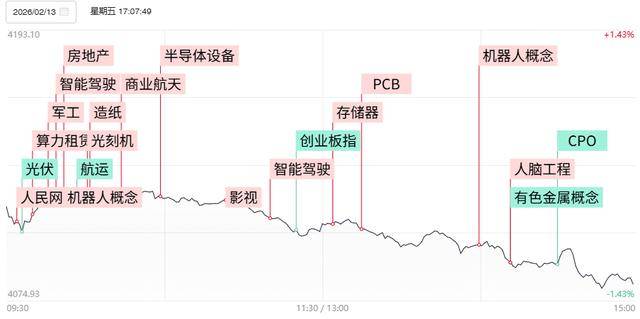
焦点复盘沪指低开低走失守4100点,军工、半导体设备板块逆势活跃
Sou Hu Cai Jing· 2026-02-13 13:29
Market Overview - A total of 32 stocks hit the daily limit up, while 11 stocks faced limit down, resulting in a sealing rate of 74%. The market saw a significant decline with over 3,800 stocks falling, and the three major indices closed lower, with the Shanghai Composite Index down 1.26%, the Shenzhen Component Index down 1.28%, and the ChiNext Index down 1.57% [1][3]. - The trading volume in the Shanghai and Shenzhen markets was 1.98 trillion yuan, a decrease of 159.1 billion yuan compared to the previous day [1]. Stock Performance - The stock "掌阅科技" (Zhangyue Technology) achieved a five-day limit up streak, while "豫能控股" (Yuneng Holdings), "美邦股份" (Meibang Shares), and "金时科技" (Jinshi Technology) recorded three consecutive limit ups [1][8]. - The performance of stocks related to military industry, film and television, paper, and semiconductor equipment showed notable gains, while sectors such as photovoltaic, non-ferrous metals, oil and gas, and shipping faced significant declines [1]. Sector Analysis - The AI review concept stocks were active in the morning session, with "汉邦高科" (Hanbang High-Tech) and "国安股份" (Guoan Shares) hitting the limit up, while "视声智能" (Shisheng Intelligent) surged over 20% [4]. - The storage chip industry is expected to see a price increase of 80% to 90% by the first quarter of 2026, driven by a significant rise in general server DRAM prices. Companies like "圣晖集成" (Shenghui Integration) and "微导纳米" (Weidao Nano) saw substantial gains [5][12]. - The commercial aerospace sector is experiencing a revival, with companies like "安达维尔" (Andavil) and "航发动力" (Hangfa Power) hitting the limit up, although "巨力索具" (Juli Rigging) faced consecutive limit downs due to negative news [6][19]. Future Outlook - The recent panic selling in the US stock market and commodity markets negatively impacted the performance of domestic stocks, leading to increased risk aversion among investors. The market is expected to remain cautious, with potential for a rebound if external markets stabilize [7]. - The demand for AI servers is driving significant capital expenditure growth in DRAM and logic chips, with expectations for the global wafer front-end equipment market to exceed $130 billion by 2026, marking a growth rate of over 20% [12][20].





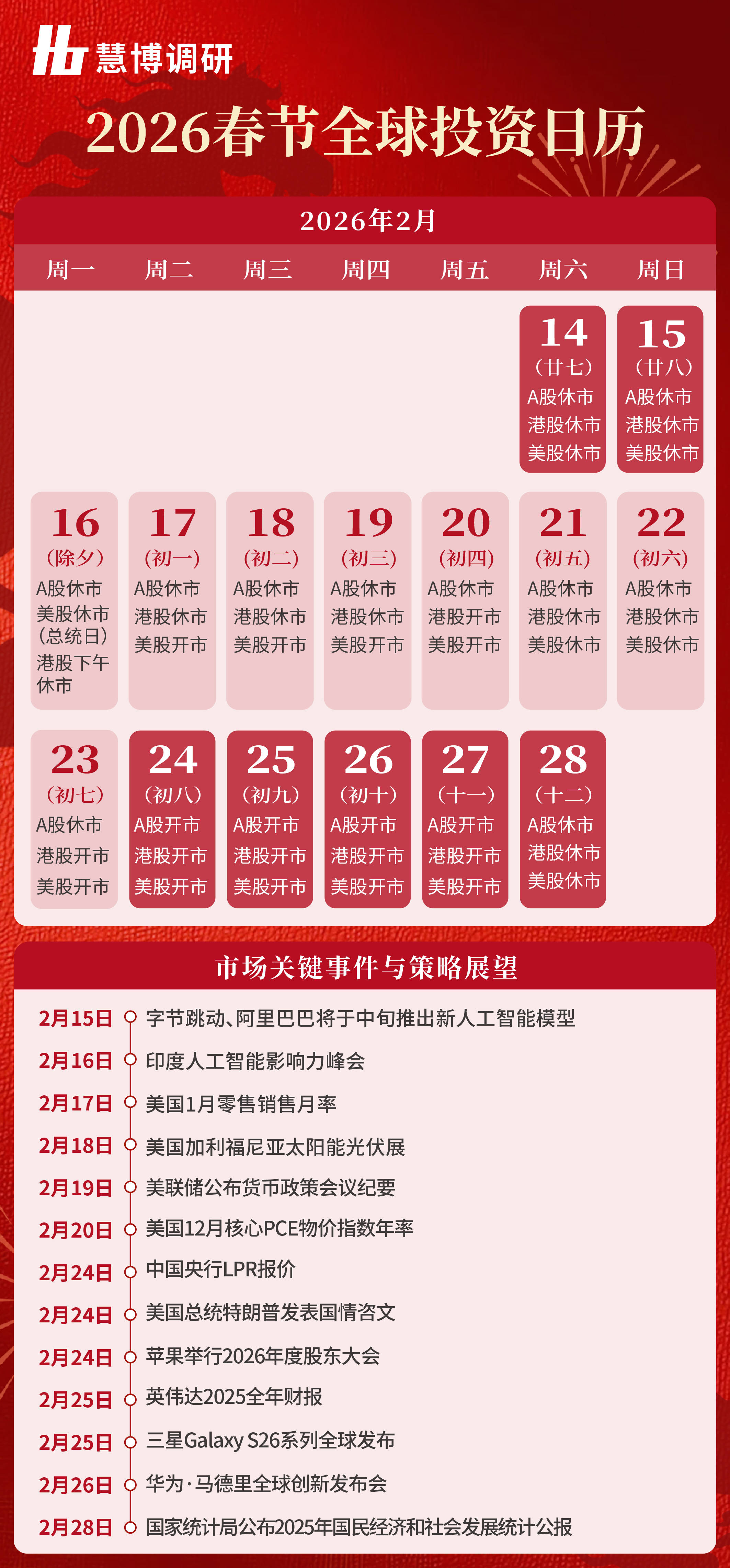
马年到,码住这份全球投资指南!
Sou Hu Cai Jing· 2026-02-13 10:46
春节假期将至,A股也将迎来长达10天的休市期。到底是清仓持币,落袋为安过节?还是持股期待节后行情呢?这是一个问题。 昨晚,海外突然全线暴跌,今天是A股的最后一个交易日,市场连日来震荡调整,持股还是持币过节,今天(2月13日)就是作出决定的最后一天。从近日 券商、公募、私募等机构的调查和建议来看,"持股过节"似乎成为主流选择。 不过,机构提醒这一建议是基于过往大数据的梳理,持股还是持币的决定性因素在于投资者的持仓结构。需要注意的是,虽然港股只在2月17日至19日休市3 天,但春节期间港股通渠道是关闭的。如果投资者是通过港股通购买的港股,那么其将和A股一起"放假"。 其实,不必纠结,我们可以结合历史的规律、当前的市场环境及自己的风险偏好,来做出最适合自己的投资决策。 马年春节到,慧博调研贴心准备了一份春节假期全球投资交易日历,并附上了假期期间全球财经大事,一起来码住这份全球投指南! 提醒一下大家,算上周末,A股春节前最后一个交易日是2月13日,其后直到2月23日,A股与港股通均进入长假模式,春节后第一个交易日是2月24日星期 二。 港股市场2月16日除夕当天上午交易,下午休市。2月17日到2月19日,即新年初一到 ...
下马威 | 谈股论金
水皮More· 2026-02-13 09:27
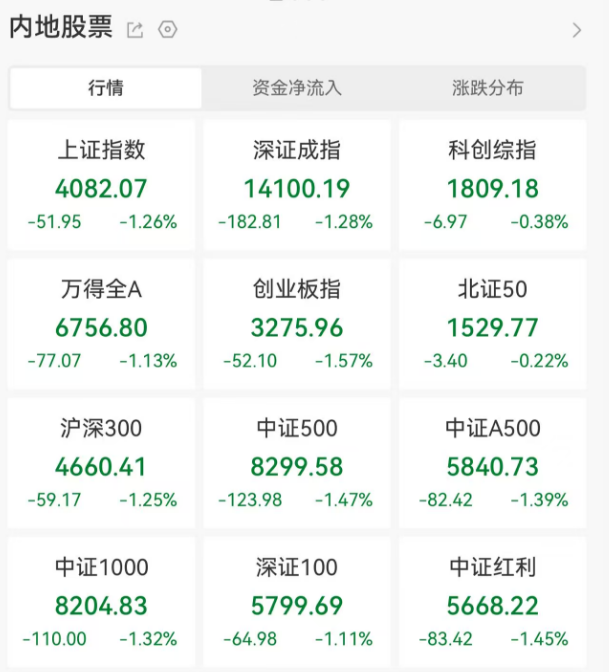
Market Overview - A-shares experienced a collective decline on the last trading day before the holiday, with the Shanghai Composite Index falling by 1.26% to 4082.07 points, the Shenzhen Component Index down 1.28% to 14100.19 points, and the ChiNext Index decreasing by 1.57% to 3275.96 points [3] - The trading volume in the Shanghai and Shenzhen markets was only 1.9991 trillion, a decrease of 161.9 billion compared to the previous day [3] Impact of External Markets - The significant drop in U.S. stocks, driven by fears surrounding AI, led to a negative sentiment in the A-share market, with major institutions not stepping in to support the market [5] - The catalyst for the U.S. market decline was a small logistics company's announcement of an AI software that could quadruple delivery efficiency, causing a sell-off in the logistics sector [5] AI Technology Concerns - The market is currently grappling with the unpredictable impacts of AI technology across various industries, leading to a preemptive risk-averse behavior among investors [5] - While AI is expected to enhance productivity and reduce costs, it poses potential threats to certain intermediary sectors, although it is not expected to cause catastrophic damage [6] A-share Market Dynamics - The A-share market has seen excessive speculation around AI-related stocks, with a notable example being the market's initial positive interpretation of ByteDance's Seedance 2.0, which may actually lower industry barriers and reduce future funding and labor needs in the film industry [6] - The market's reaction to AI advancements reflects a duality, recognizing both the productivity benefits and the potential disruptions, particularly concerning employment [6] Trading Data Insights - On the trading day, 3687 stocks declined while only 1463 stocks rose, with a median market drop of 0.77% and a net outflow of 69 billion from major funds [7] - The decline was primarily driven by heavyweight stocks in sectors like coal, electricity, and major banks, which collectively contributed to the market downturn [7] Future Outlook - The Hang Seng Technology Index showed a smaller decline than expected, indicating potential support levels for tech stocks despite the broader market's challenges [9] - As AI applications continue to gain traction and public acceptance, there is potential for a rebound in the Hang Seng Technology Index, warranting further observation [9]

全线调整 蛇年行情收官;铝价突然直线跳水 特朗普拟放松部分钢铝关税
Zhong Guo Ji Jin Bao· 2026-02-13 08:28
【导读】全线调整,蛇年行情收官;铝价突然直线跳水,特朗普拟放松部分钢铝关税 市场共1540只个股上涨,46只个股涨停,3829只个股下跌。 | 880005 涨跌家数 | | | | --- | --- | --- | | 日中 | 涨停 | 46 | | 涨幅 | > 7% | 61 | | 涨幅 | 5-7% | 48 | | 涨幅 | 3-5% | 132 | | 张唱 | 0-3% | 6621 | | 跌幅 | 0-3% | 3332 | | 跌幅 | 3-5% | 367 | | 跌幅 | 5-7% | 82 | | 跌幅 | > 7% | 48 | | 其中 跌停 | | 16 | | 上涨家数 | | 1540 | | 上跌2 | | 3829 115 | | | | 5484 | | 总品种数 总成交额 总成交 | △零负 | 19989.42 乙 | | | | 114715.37 | | 涨家增减 | | -1202 | | 涨家增幅 | | -43.84% | | 指数量比 | | 0.91 | 军工板块逆市走强,安达维尔、亚星锚链、航发动力等涨停。 | 代码 | 名称 | | 涨幅% ...
国防ETF(512670)收涨近1%,航改燃带来板块新机遇
Xin Lang Cai Jing· 2026-02-13 08:24
Group 1 - The core viewpoint is that the commercial operation cycle of modified aviation fuel engines is approximately 45 days, with a quick deployment process that allows for rapid start-up and operation, making it a favorable choice for data center power supply [1] - The demand for modified aviation fuel engines is increasing, with companies like Siemens and Baker Hughes significantly expanding production, and FTAI planning to convert CFM56 engines into 25MW turbines, aiming for an annual production of over 100 units starting in 2026 [1] - Aviation Power, as the only domestic engine manufacturer, can convert retired engines into 20-30MW modified engines, potentially generating over 10 billion in value if 100 engines are modified, benefiting not only Aviation Power but also the entire aviation industry chain [1] Group 2 - The combination of domestic computing power and modified aviation fuel engines exemplifies self-sufficiency, with a focus on exporting complete systems to regions like Southeast Asia and the Middle East, addressing global electricity shortages [2] - As of February 13, 2026, the CSI Defense Index has seen a 0.27% increase, with significant gains in stocks such as Aviation Power (10.01%) and Aviation Materials (7.92%), indicating strong market performance [2] - The CSI Defense Index reflects the overall performance of listed companies in the defense industry, including those providing equipment to the armed forces or having contracts with the military [2][3]
大国博弈加剧,军工长期趋势向好,军工ETF(512660)盘中涨超1.2%,近5日资金净流入超3亿元
Mei Ri Jing Ji Xin Wen· 2026-02-13 05:22
Group 1 - The core viewpoint is that the U.S. will accelerate the production of five key missile types, significantly increasing the production capacity of the "Tomahawk" missile, "Advanced Medium-Range Air-to-Air Missile," "Standard-3" interceptors, and "Standard-6" missiles, with many weapons' output expected to rise by 2 to 4 times compared to current levels [1] - The international environment is becoming increasingly complex and severe, necessitating advanced aircraft and missiles as winning tools, along with cost-effective equipment like rockets for sustained consumption and a reliable communication command system for support [1] - The trend of great power competition is expected to continue long-term, with the U.S. and its allies shifting their defense strategy focus towards the Indo-Pacific region, indicating a positive long-term outlook for the military industry [1] Group 2 - By 2027, the goal is to ensure the achievement of the centenary military building target, with expectations of accelerated shortfall compensation during the 14th Five-Year Plan period [1] - It is recommended to focus on key sectors in aerospace and equipment construction, as well as frontier hotspots like satellite internet [1] - The military ETF (512660) tracks the CSI Military Industry Index (399967), which consists of securities from ten major military groups whose main businesses are related to the military industry, covering areas such as aviation, aerospace, shipbuilding, weaponry, military electronics, and satellites [1]
国光电气股价下跌,军工板块波动,核聚变技术受关注
Jing Ji Guan Cha Wang· 2026-02-13 04:21
Group 1 - The defense and military industry sector has shown volatility recently, with a focus on the nuclear fusion field, where significant breakthroughs have been made [1] - The Shenyuan Military Industry Index rose by 0.21% from February 2 to February 6, outperforming the CSI 300 Index by 1.54 percentage points, while the engine sector increased by 2.25% due to the enthusiasm for large aircraft [1] - The implementation of the Atomic Energy Law on January 15, 2026, will legally support nuclear fusion research, injecting long-term momentum into the industry [1] Group 2 - Guoguang Electric is expected to face financial pressure in 2025, with projected net losses of 85 million to 105 million yuan due to delayed orders in nuclear industrial equipment and price reductions in microwave devices [2] - As of the third quarter of 2025, Guoguang Electric reported revenues of 254 million yuan, a year-on-year decline of 44.16%, and a net profit of -40 million yuan, with a gross margin dropping to 22.6% [2] - Despite short-term financial challenges, the company's long-term investments in nuclear fusion and commercial aerospace, including participation in the ITER project and low-orbit satellite network construction, are expected to support future recovery [2]

午评:创业板指跌近1%,石油、电力等板块走低,军工板块上扬
Sou Hu Cai Jing· 2026-02-13 04:14
Market Overview - The three major stock indices experienced a downward trend, with the Shanghai Composite Index testing the 4100-point support level and the ChiNext Index declining nearly 1% [1] - As of the midday close, the Shanghai Composite Index fell by 0.7% to 4105.04 points, the Shenzhen Component Index decreased by 0.67%, and the ChiNext Index dropped by 0.96%, while the Northbound 50 Index rose by 0.86% [1] - The total trading volume across the Shanghai, Shenzhen, and Northbound markets was approximately 1.21 trillion yuan [1] Sector Performance - Sectors such as oil, building materials, steel, insurance, electricity, and non-ferrous metals saw declines, while military, semiconductor sectors, storage chips, photolithography machines, and military trade concepts were active [1] Investor Sentiment - Dongguan Securities noted that with the Spring Festival approaching, investor sentiment is becoming more cautious, leading to a decrease in trading activity and a potential phase of consolidation with reduced volume [1] - Short-term vigilance is advised regarding possible market fluctuations and profit-taking pressures [1] - Investors are encouraged to maintain rationality, avoid blind chasing of highs or panic selling, and manage positions with a balanced allocation strategy [1] - Focus should be on core assets with solid fundamentals and high profit certainty, as well as growth sectors experiencing improved conditions [1]

半导体集体爆发,港股科网股下挫,智谱5天狂飙超120%
21世纪经济报道· 2026-02-13 04:14
Market Overview - On February 13, A-shares experienced a collective decline, with the ChiNext Index leading the drop, closing at a decrease of 0.96% [1] - The Shanghai Composite Index fell by 0.7%, while the Shenzhen Component Index decreased by 0.67% [1] - The total trading volume in the Shanghai and Shenzhen markets reached 1.2 trillion yuan, with over 2,600 stocks declining [1][2] Index Performance - Shanghai Composite Index: 4105.04, down 28.98 points (-0.70%) [2] - Shenzhen Component Index: 14187.44, down 95.55 points (-0.67%) [2] - ChiNext Index: 3295.99, down 32.07 points (-0.96%) [2] - Total A-shares: 6800.24, down 33.64 points (-0.49%) [2] Sector Performance - The military industry sector showed strong performance, with stocks like Yaxing Anchor Chain hitting the daily limit [3] - The semiconductor sector was active, with significant gains in stocks related to photolithography machines and materials, such as Guofeng New Materials and Fuchuang Precision [3] - Storage prices continued to rise in January, with DRAM and NAND Flash industries reaching record high outputs [3] Declining Sectors - The port and shipping sector saw a collective decline, with stocks like COSCO Shipping Energy and China Merchants Jinling experiencing significant drops [4] - The photovoltaic equipment sector weakened, highlighted by the sharp decline of Shuangliang Energy, which saw a market value loss of 2 billion yuan in one day [4] Hong Kong Market - The Hang Seng Index fell by 1.8%, with the Hang Seng Tech Index down by 1.6% [4] - Major tech stocks in Hong Kong, including Tencent Music and Meituan, experienced declines of over 10% and 4%, respectively [4][6] Notable Stock Movements - Semiconductor stocks like Aixin Yuan Zhi and Tian Shu Zhi Xin saw gains of over 16% and 9%, respectively [7] - The new stock Haizhi Technology Group had a remarkable debut, surging over 268% on its first day of trading [8] Market Sentiment - Current market sentiment in Hong Kong is relatively low, with short-selling transactions accounting for about 19.2%, indicating potential for a short-term rebound [8]