
运输

Search documents
美联储降息等于美股大涨?有一个重要前提和关键指标
Hua Er Jie Jian Wen· 2025-09-11 07:29
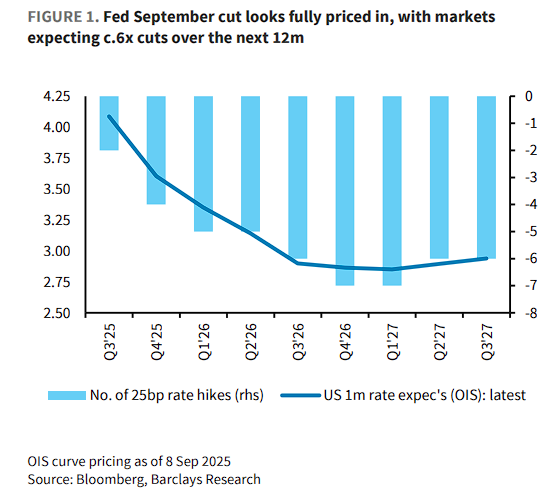
Core Viewpoint - The performance of the stock market after the Federal Reserve resumes interest rate cuts is heavily dependent on whether the economy enters a recession, with the unemployment rate being a key indicator for determining the economic trajectory [1][3]. Economic Conditions - Historical data shows that in the past fifty years, there have been seven instances where the Fed resumed rate cuts after a significant pause. Out of these, four were accompanied by economic recessions, while three saw continued economic expansion, leading to vastly different stock market performances [1][7]. - In scenarios without a recession, the MSCI World Index showed average performance increases of 1%, 2%, 8%, and 17% over 1 month, 3 months, 6 months, and 12 months respectively after rate cuts. In contrast, during recessionary periods, the average performance was -2%, 2%, 0%, and 6% [7][10]. Unemployment Rate - The unemployment rate is highlighted as a critical variable for distinguishing between recession and economic expansion. During recessions, the unemployment rate tends to rise for nearly a year after rate cuts, accumulating an increase of 2-3 percentage points. Conversely, in expanding economies, the unemployment rate only sees a slight increase before declining within a few quarters [3][14][17]. Market Expectations - Currently, the U.S. unemployment rate has risen to 4.3%, which is a significant factor driving market expectations for the Fed to resume rate cuts. Barclays economists predict that the Fed may lower the federal funds rate to 3.0% by the end of 2026 as the labor market slows [17]. Yield Curve and Sector Performance - The shape of the yield curve significantly influences sector performance. Historically, a flattening yield curve during bull markets is most favorable for the stock market, while cyclical sectors perform best during steepening phases in bear markets [6][20]. - In the absence of a recession, the yield curve tends to steepen moderately after rate cuts, while in recession scenarios, it initially steepens before flattening out, transitioning to a steepening phase again as the economy recovers [20][24].

How You Should Invest in a Tariff-Filled World
The Smart Investor· 2025-09-11 03:30
Group 1: Tariff Announcements and Responses - President Trump announced tariffs targeting over 180 countries, later suspending reciprocal tariffs for 90 days and reducing most rates to 10%, except for China, which retained a 145% tariff [1] - China retaliated with a 125% tariff on US goods, escalating fears of a trade war between the two largest economies [2] Group 2: Market Impact and Business Sentiment - The tariffs have led to increased operational costs for businesses, causing many to delay expansion plans, cut back on investments, and freeze hiring [4] - Companies may pass higher costs onto consumers, leading to price hikes that could dampen consumer sentiment and spending [5] Group 3: Stock Recommendations - Companies selling consumer staples, such as Kimberly-Clark, Procter & Gamble, and Colgate-Palmolive, are well-positioned due to their strong market presence and pricing power [7][8][9] - Cybersecurity firms like Crowdstrike, Palo Alto Networks, and Zscaler are expected to benefit from ongoing demand for security solutions despite potential tariff impacts [10][11] - Companies generating most of their revenue from Asia, such as Sheng Siong and ComfortDelGro Corporation, are insulated from US tariffs [13][15] - Singapore Exchange Limited (SGX) is likely to thrive amid market volatility, with increased trading activity expected due to its range of hedging products [16][17][18] Group 4: Portfolio Strategy - Investors are advised to reassess their portfolios in light of the tariffs, focusing on defensive positions to remain resilient amid ongoing volatility [19][20]

本届服贸会签约14家合作伙伴
Bei Jing Qing Nian Bao· 2025-09-07 18:19
Group 1 - The signing ceremony for partners of the 2025 China International Service Trade Fair took place on September 5 in Beijing, with 14 companies, including Bank of China and JD Group, signing cooperation agreements [1] - The partnership network for the 2025 service trade fair has expanded to include new partners such as Industrial and Commercial Bank of China and Beijing Beibingyang, covering diverse sectors like finance, insurance, information technology, and beverages [1] - Beijing Beibingyang will showcase its achievements in green development and its brand value during the fair, contributing to the high-quality development of service trade [1] Group 2 - Cultural and creative product development is a highlight of this year's service trade fair, with 10 licensed manufacturers creating over 50 new products inspired by the fair's mascot, integrating traditional Chinese culture and local elements [2] - The theme for the 2025 service trade fair is "Digital Intelligence Leading, Service Trade Renewed," focusing on technological and intelligent applications, showcasing new technology scenarios and solutions [2] - The fair aims to signal China's commitment to broader and deeper international openness, enhancing its core value and expanding its global influence [2]
嘉友国际(603871):中蒙业务迎拐点,非洲业务稳释放
Haitong Securities International· 2025-09-05 10:33
Investment Rating - The report maintains an "Outperform" rating for Jiayou International, with a target price of 14.43 RMB, representing a potential upside of 16% from the current price [5][8]. Core Insights - Jiayou International's performance in the first half of 2025 faced pressure, with a revenue decline of 11.99% year-on-year to 4.08 billion RMB and a net profit attributable to shareholders down 26.15% to 561 million RMB [9][10]. - The China-Mongolia business is expected to recover in the second half of 2025 due to rebounding coal prices and increased demand for Mongolian coal, with forecasts indicating a net profit of 1.32 billion RMB for 2025 [5][11]. - The company's African operations are showing strong growth, with a 34% increase in revenue from land port projects and a 40% increase in gross profit in the first half of 2025, contributing to future profit growth [11][10]. Financial Summary - Total revenue is projected to be 8.67 billion RMB in 2025, with a slight decrease of 0.9% from the previous year, followed by a significant increase to 11.08 billion RMB in 2026 [4]. - Net profit attributable to shareholders is expected to be 1.32 billion RMB in 2025, with a gradual increase to 1.96 billion RMB by 2027 [5][4]. - Earnings per share (EPS) are forecasted to be 0.96 RMB in 2025, increasing to 1.43 RMB by 2027 [5][4].

交运股份: 上海交运集团股份有限公司2025年第二次临时股东大会会议资料
Zheng Quan Zhi Xing· 2025-09-04 08:16
Core Points - The company is holding a shareholders' meeting on September 16, 2025, to ensure the legal rights of shareholders and maintain order during the meeting [1][2] - The meeting will include a combination of on-site and online voting methods for shareholders to exercise their voting rights [2][4] - The agenda includes the election of a non-independent director and the revision of the company's articles of association, which involves the cancellation of the supervisory board [4][10] Voting and Meeting Procedures - The meeting will take place at 14:00 on September 16, 2025, at a specified location in Shanghai [2] - Shareholders must register in advance if they wish to speak during the meeting [1][2] - The voting will be conducted through a combination of on-site and online platforms, with the first voting result being considered valid in case of duplicate votes [2][3] Agenda Items - The meeting will discuss the proposal to revise the company's articles of association and cancel the supervisory board, transferring its responsibilities to the audit committee of the board [4][5] - A proposal to revise the company's shareholder meeting rules will also be presented for approval [5][6] - The election of a non-independent director, Zhang Zheng, will be conducted using a cumulative voting system [10]

商务部:上半年服务进出口总额3.9万亿元,旅行服务出口增长最快
Sou Hu Cai Jing· 2025-09-03 10:58
Group 1 - The total service trade import and export in China reached 3.9 trillion yuan in the first half of the year, with a year-on-year growth of 8% [2] - Service exports amounted to 1.7 trillion yuan, growing by 15%, and accounted for 11.5% of total exports, an increase of 0.7 percentage points from the previous year [2] - The fastest-growing sectors in service exports were transportation services, which reached 418.5 billion yuan with a growth of 23.9%, and travel services, which totaled 174.87 billion yuan with a growth of 68.7% [2] Group 2 - Knowledge-intensive service trade showed continued potential, with exports of 865.04 billion yuan, growing by 7.8% [2] - Major contributors to knowledge-intensive service exports included other business services and telecommunications, with exports of 416.33 billion yuan and 377.16 billion yuan, growing by 6.9% and 14.6% respectively [2] - The global service trade is expected to maintain growth, with a projected increase of 4.0% in global service exports by 2025 [3] Group 3 - The travel service import and export scale exceeded 1 trillion yuan in the first half of the year, with a growth rate of 12.3%, and is expected to continue growing rapidly throughout the year [3] - The government plans to implement measures to promote high-quality development in service trade and will introduce policies to enhance service exports in areas such as finance and taxation [3] - Knowledge-intensive service import and export growth is expected to maintain the same level as in the first half of the year [3]
【港股红利周报】港股前期相对滞涨,后续资金面有望迎来宽松
Xin Lang Cai Jing· 2025-09-02 11:19
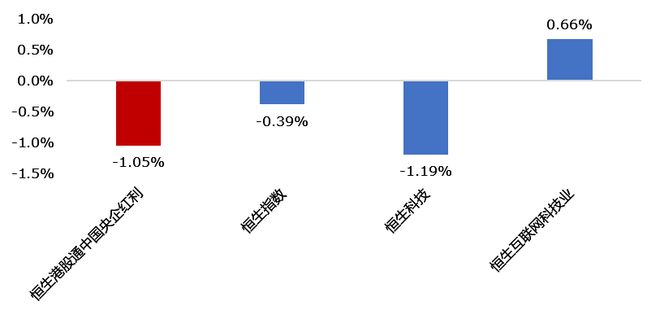
Group 1 - The core viewpoint of the article indicates that the Hong Kong stock market, particularly the dividend sector, experienced a decline last week, with the Hang Seng China Central State-Owned Enterprises Dividend Total Return Index falling by 1.72% and the Hang Seng Index down by 1.00% [1] - The materials sector led the performance among Hang Seng's primary industries, while the healthcare sector lagged behind [1] - Foreign capital continued to flow into the Hong Kong stock market, with a net inflow of 22.2 billion HKD from southbound funds last week, despite a slight outflow of 0.03 million USD from active foreign investments [1][2] Group 2 - The outlook for the Hong Kong stock market suggests a potential easing of liquidity, as the Hong Kong Monetary Authority may not need to continue withdrawing funds due to the appreciation of the HKD against the USD [2] - The anticipated interest rate cuts by the Federal Reserve in September could lead to a flow of US funds into emerging markets, benefiting the Hong Kong stock market [2] - The dividend yield of the Hang Seng China Central State-Owned Enterprises Dividend Index stands at 5.98%, significantly higher than the 4.46% yield of the CSI Dividend Index, with a price-to-book ratio of 0.60 and a price-to-earnings ratio of 6.79 [2] Group 3 - The overall performance of the Hong Kong stock market last week showed a mixed trend, with the broad-based indices reflecting varied sector performances [4] - The recent adjustments in liquidity are viewed as short-term impacts, with the Hong Kong Interbank Offered Rate (Hibor) rising sharply from 0.9% to 3.3% [1][2] - The strong dividend strategy of central state-owned enterprises is expected to continue, supported by a low interest rate environment and a weak economic recovery [2]
美国黑人失业率创新高
Guo Ji Jin Rong Bao· 2025-09-01 17:04
Group 1 - The unemployment rate for the Black community in the U.S. has reached 7.2%, the highest level since October 2021, contrasting with the overall unemployment rate of 4.2%, which is at a historical low [3][4] - Two years ago, the unemployment rate for Black workers had dropped to 4.8%, the lowest since records began in 1972, highlighting a significant regression in employment opportunities for this demographic [3][4] - Structural discrimination plays a crucial role in the disparity, as Black workers are more likely to hold low-skill jobs, making them more vulnerable to labor market fluctuations [3][4] Group 2 - The current labor market growth is primarily driven by sectors such as healthcare, local government, and hospitality, while areas where Black workers are concentrated, like transportation and warehousing, have seen a decline in hiring [4] - The federal civil service has been a significant employment channel for Black workers, who make up 18.7% of this workforce, exceeding their 13% share of the overall labor force [4] - The Trump administration's expected reduction of 300,000 federal jobs by December could further threaten job security for Black workers [4] Group 3 - Following the George Floyd incident in 2020, many companies began implementing diversity policies, but these efforts are now being undermined by the Trump administration, potentially increasing Black unemployment rates [6] - From August 2022 to July 2024, the number of DEI (Diversity, Equity, and Inclusion) job postings has decreased by 43%, indicating a significant reduction in diversity hiring initiatives [6] - The federal appeals court's decision to block funding aimed at supporting Black female entrepreneurs reflects a broader trend of diminishing support for diversity initiatives [6] Group 4 - In recent months, approximately 300,000 Black women have exited the labor market, indicating a troubling trend in employment among this demographic [7] - Personal accounts highlight the struggles faced by educated Black individuals in securing employment, with many resorting to low-paying jobs despite their qualifications [8]
中国神华(601088):高长协降成本显经营韧性,收并购拓资源筑成长空间
Xinda Securities· 2025-08-31 03:32
Investment Rating - The investment rating for the company is "Buy" [4] Core Views - The report highlights significant cost control measures in the coal sector, showcasing the company's operational resilience despite a decline in revenue and profit [4] - The company has enhanced its resource reserves and supply capabilities through strategic acquisitions, which are expected to improve integrated operational efficiency [7] - A commitment to high dividends reflects the company's focus on shareholder returns, with a planned distribution of 0.98 CNY per share for the mid-2025 period [7] - The company's long-term investment value is emphasized due to its high cash flow, sustainable dividends, and growth potential from recent asset injections [7] Summary by Sections Financial Performance - In the first half of 2025, the company reported a revenue of 138.11 billion CNY, a year-on-year decrease of 18.3%, and a net profit attributable to shareholders of 24.64 billion CNY, down 12.0% [1] - The average selling price of coal decreased by 12.9% to 493 CNY per ton, while the cost of self-produced coal fell by 7.7% to 177.7 CNY per ton [4] - The company achieved a gross profit margin of 31.3% in the coal business, an increase of 2.9 percentage points year-on-year [4] Segment Analysis - **Coal Segment**: The company produced 165.4 million tons of coal, a decrease of 1.7%, with sales volume down 10.9% to 204.9 million tons [4] - **Power Segment**: Total power generation was 98.78 billion kWh, down 7.4%, with an average selling price of 386 CNY per MWh, a decrease of 4.2% [4] - **Transportation and Chemical Segment**: The railway division's turnover decreased by 5.3%, but profit margins improved due to cost optimization [4] Future Outlook - The company forecasts net profits of 50.39 billion CNY, 52.51 billion CNY, and 53.18 billion CNY for 2025, 2026, and 2027 respectively, with EPS projected at 2.54 CNY, 2.64 CNY, and 2.68 CNY [7]

中国神华披露公司章程,明确公司治理与运营规范
Xin Lang Cai Jing· 2025-08-29 17:33
Core Viewpoint - China Shenhua Energy Co., Ltd. has released its latest company charter, which was approved by the first extraordinary general meeting of shareholders in 2025, marking the most recent revision since its initial approval in 2005 [1] Company Overview and Operations - China Shenhua was established on November 8, 2004, with a registered capital of RMB 19,868,519,955. The company aims to implement new development concepts, focusing on energy as its leading industry, and strives to build a comprehensive energy company with world-class value creation and sustainable development capabilities [2] Share Issuance and Structure - The company has issued a total of 19,868,519,955 ordinary shares, with A-share shareholders holding 16,491,037,955 shares (approximately 83% of total capital) and H-share shareholders holding 3,377,482,000 shares (approximately 17% of total capital). The founding shareholder, China Energy Investment Corporation, holds 13,812,709,196 A-shares, accounting for about 69.52% of total capital [3] Shareholder Rights and Meetings - Shareholders enjoy rights and obligations based on their share categories. The general meeting of shareholders is the company's authority, consisting of annual and extraordinary meetings. Annual meetings are held once a year, while extraordinary meetings are convened within two months under specific circumstances. Resolutions require a simple majority for ordinary resolutions and a two-thirds majority for special resolutions [4] Corporate Governance Structure - The company has established a party committee to provide leadership, with a board of directors consisting of nine members responsible for convening shareholder meetings and making key operational decisions. The board has several specialized committees, including the audit and risk committee, nomination committee, and compensation and assessment committee [5] Financial and Profit Distribution - The company adheres to legal regulations in its financial accounting system and discloses financial reports timely. After tax profits are allocated in a specific order, prioritizing cash dividends, which must be at least 35% of the net profit attributable to shareholders. The recent charter publication supports the company's standardized operations and sustainable development, providing important reference for investors regarding governance and operations [6]