
云计算

Search documents
突发黑天鹅!4.7万亿巨头 直线下挫
Zhong Guo Ji Jin Bao· 2025-11-12 15:52
Group 1 - Barclays Bank downgraded Oracle's debt rating to "underweight," warning that its credit rating could potentially fall to BBB-, which is close to junk bond territory [3][4] - Oracle's total interest-bearing debt has doubled over the past decade to $111.6 billion, with a debt-to-equity ratio of 500%, significantly higher than Amazon's 50% and Microsoft's 30% [4] - Oracle may exhaust its cash reserves, currently around $11 billion, by November 2026, leading to refinancing needs [4] Group 2 - Concerns about the AI bubble have spread to the bond market, causing investors to sell bonds issued by major cloud service providers like Google, Meta, Microsoft, and Oracle, resulting in a spike in bond spreads [5][8] - The bond spreads for hyperscalers have risen to 78 basis points, the highest level since market turmoil in April, indicating growing market concerns over the financing of AI infrastructure [8] - Major tech companies are expected to invest over $350 billion in computing centers this year, with projections to exceed $400 billion by 2026, despite their substantial cash reserves [8]

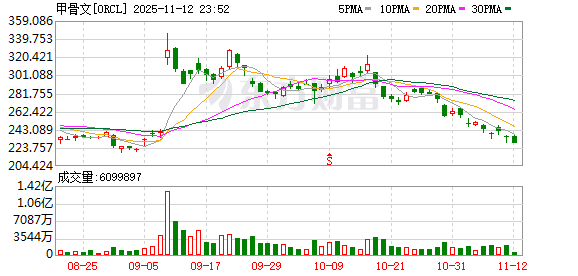
突发!硅谷4.8万亿巨头评级遭下调,负债是净资产的500%;做AI花钱如流水,投行:可能在明年耗尽现金
Mei Ri Jing Ji Xin Wen· 2025-11-12 14:23
Core Viewpoint - Barclays Bank has downgraded Oracle's debt rating to "Underweight," warning that the company may exhaust its cash reserves by November 2026 [1][5]. Financial Health of Oracle - Oracle's cash reserves, currently around $11 billion, could be depleted by November 2026, leading to refinancing needs [7]. - The company's debt-to-equity ratio is at 500%, significantly higher than competitors like Amazon (50%) and Microsoft (30%) [7]. - Oracle's capital liability ratio stands at 86.33%, again exceeding that of Amazon (49.22%) and Microsoft (42.94%) [8]. - The total interest-bearing debt has doubled over the past decade to $111.6 billion, with over $100 billion in off-balance-sheet lease commitments [8]. Industry Trends - The issuance of debt related to U.S. data centers has surged to $25.4 billion in 2025, a 112% increase from 2024, and a staggering 1854% increase since 2022 [3][11]. - Major tech companies, including Meta, Oracle, and Alphabet, have entered the credit market at unprecedented levels, raising a total of $75 billion in bonds and loans in just September and October 2025 [3][11]. - Barclays estimates that the total bond issuance by large cloud service providers could reach $160 billion in 2025 [11]. Risks in AI Infrastructure Investment - The rapid expansion of AI-driven capital investments raises concerns about whether it is building a digital foundation or creating a debt bubble [3]. - The financial structure for data center financing is becoming more complex, increasing potential financial risks [13]. - The reliance on speculative building without long-term tenant agreements poses cash flow risks, especially if AI demand slows [13]. Market Sentiment - Oracle's credit default swap (CDS) prices have surged, reflecting heightened investor concerns about potential default risks [2][14]. - Analysts draw parallels between the current AI data center investment climate and the telecom crisis of 2000, highlighting the risks of over-leveraging and optimistic demand forecasts [16].
AI时代的双11:阿里云与伙伴的集体跃迁
36氪· 2025-11-12 13:35
Core Viewpoint - The article discusses how Alibaba Cloud is leveraging the Double 11 shopping festival to showcase its AI capabilities and strengthen its ecosystem partnerships, marking a shift from consumer-focused promotions to B2B applications of AI technology [5][30][34]. Group 1: Alibaba Cloud's Strategy - Alibaba Cloud is positioning itself as a leader in AI by integrating its services with the Double 11 event, which has evolved from a consumer sales event to a platform for businesses to explore AI solutions [6][33]. - The company has defined three stages towards achieving Super AI (ASI): intelligent emergence, autonomous action, and self-iteration, indicating a long-term vision for AI development [5][6]. - The shift in cloud computing sales logic is highlighted, where the focus is moving from transactional partnerships to service-oriented partnerships that can provide comprehensive AI solutions [9][10]. Group 2: Market Response and Ecosystem Development - The first hour of Double 11 saw Alibaba Cloud's orders surpass "tens of millions," indicating a growing confidence in AI solutions among market participants [8][9]. - Alibaba Cloud is restructuring its partner ecosystem to prioritize service capabilities over mere transactional relationships, aiming to enhance the overall AI service delivery [10][11]. - The company is actively inviting AI-native partners who focus on specific industry applications, thereby expanding its ecosystem with both traditional and new partners [14][15]. Group 3: AI Applications and Industry Impact - Real-world applications of Alibaba Cloud's AI capabilities are demonstrated through partnerships in various sectors, such as satellite communication and education, showcasing the practical benefits of AI integration [20][22][23]. - The article emphasizes the importance of localized operations and the "last mile" in AI implementation, where partners play crucial roles in delivering tailored solutions to clients [27][28]. - The Double 11 event serves as a significant moment for businesses to engage with AI technologies, marking a collective movement towards AI adoption across various industries [32][33].

马云全面高调杀回来了
Hua Er Jie Jian Wen· 2025-11-12 13:20
Core Insights - Alibaba is undergoing significant transformation with a renewed focus on AI and consumer sectors, coinciding with Jack Ma's return to the company [3][4][10] - The company's market capitalization has rebounded to nearly HKD 3 trillion, with stock prices rising over 90% this year, surpassing competitors like Pinduoduo [9][10] - Alibaba's strategic shift includes the integration of its e-commerce businesses and a push towards becoming a "big consumption platform" [11][14] Group 1: Jack Ma's Return and Impact - Jack Ma's return to Alibaba has been marked by increased visibility and involvement in strategic decisions, including a notable appearance at a private enterprise forum [3][6][8] - His engagement has revitalized employee morale, with a renewed focus on innovation and reform within the company [5][6] - Ma's recent investments in Alibaba stock signal confidence in the company's future [5][10] Group 2: Strategic Changes and Market Position - Alibaba has implemented a major organizational restructuring, splitting its operations into six independent units, which is seen as a decisive move towards reform [4][10] - The company is focusing on the instant retail market, launching "Taobao Flash Purchase" to compete with rivals like JD and Meituan [12][14] - Recent data shows that Taobao Flash Purchase has achieved significant growth, with peak daily orders reaching 120 million, indicating strong market demand [14] Group 3: AI and Cloud Strategy - Alibaba is positioning itself at the forefront of the AI race, with a comprehensive strategy that includes significant investments in AI infrastructure and cloud services [15][16] - The company reported a 26% year-on-year revenue growth in its cloud segment, with AI-related products seeing triple-digit growth for eight consecutive quarters [15][16] - Analysts predict that Alibaba's capital expenditures for cloud and AI will significantly exceed previous targets, reflecting the company's commitment to these sectors [15][16]

Alphabet:持续兑现业绩,值得继续投入
美股研究社· 2025-11-12 12:59
Core Viewpoint - Google's third-quarter performance exceeded market expectations, showcasing strong revenue and net profit growth, driven by AI advancements and a resilient search business [3][4][5]. Financial Performance Overview - Revenue reached $102.35 billion, a year-over-year increase of 15.95%, surpassing analyst expectations by $2.21 billion [3]. - Net profit per diluted share (EPS) was $2.87, up 35% year-over-year, exceeding expectations by $0.61 [3]. - Operating profit margin decreased by 180 basis points to 30.5%, primarily due to a 22% increase in R&D expenses and a doubling of general and administrative expenses due to a $3.5 billion EU fine [3]. - Free cash flow grew by 39% year-over-year, totaling $73.55 billion over the past 12 months [3]. AI-Driven Growth in Search Business - The search business achieved its highest revenue growth in over three years, with double-digit growth maintained [4][5]. - AI features, such as AI Overviews and AI Mode, significantly contributed to this growth, particularly among younger users [5]. - Weekly usage of AI Mode doubled compared to the second quarter, with daily active users reaching 75 million [5]. Google Cloud Performance - Google Cloud revenue grew by 33.5% year-over-year and 11.3% quarter-over-quarter, with four out of the last five quarters exceeding 30% growth [6]. - Operating profit margin for Google Cloud improved by 660 basis points to 23.7% [6]. - The backlog for Google Cloud reached $155 billion, reflecting an 82% year-over-year and 46% quarter-over-quarter increase [6]. Capital Expenditure Insights - Concerns regarding increased capital expenditures for AI infrastructure are deemed unwarranted, as the increase is not significant [7]. - Management raised the 2025 capital expenditure guidance to between $91 billion and $93 billion, which is a modest increase [7]. - Strong demand for AI tools, evidenced by significant growth in AI product revenue, supports the rationale for increased capital spending [7][10]. YouTube Business Recovery - YouTube's advertising revenue showed strong recovery, achieving its highest growth rate since Q1 of the previous year, with revenue surpassing $10 billion for only the second time in 18 quarters [8]. - AI tools like Demand Gen have enhanced advertising efficiency, increasing conversion value by 40% for targeted advertisers [9]. Future AI Integration and Growth Potential - Future AI plans, including the integration of Gemini into various services, are expected to drive significant growth, particularly in the autonomous vehicle sector [9][10]. - The anticipated collaboration with Apple to enhance Siri using Gemini is projected to generate $1 billion annually for Apple [9].

2026年全球后端即服务市场价值将达数十亿美元
Sou Hu Cai Jing· 2025-11-12 12:34
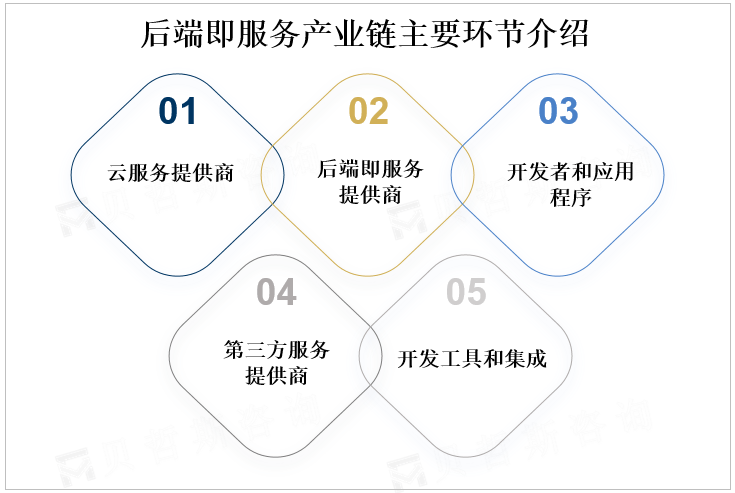
后端即服务(Backend as a Service,BaaS)是一种云计算服务模型,旨在简化和加速应用程序的开发过 程。它提供了一个托管的后端基础架构,包括服务器、数据库、存储和其他相关组件,使开发人员能够 专注于应用程序的前端开发,而无需关注后端基础设施的细节。 后端即服务的主要特点包括: 数据存储和管理:BaaS提供了数据存储和管理的功能,开发人员可以使用API来创建、读取、更新和删 除数据,而无需编写复杂的后端代码。 用户管理和身份验证:BaaS提供了用户管理和身份验证的功能,开发人员可以轻松地创建用户账户、管 理用户权限,并实现用户身份验证和授权。 云函数和业务逻辑:BaaS允许开发人员编写和部署云函数,用于处理应用程序的业务逻辑。这些云函数 可以在云端执行,从而减轻了客户端的负担。 文件存储和管理:BaaS提供了文件存储和管理的功能,开发人员可以上传、下载和管理文件,以支持应 用程序的文件操作需求。 实时通信和推送通知:BaaS提供了实时通信和推送通知的功能,开发人员可以使用API实现实时聊天、 实时数据同步和推送通知等功能。 通过使用后端即服务,开发人员可以快速构建和部署应用程序,减少了开发周期 ...
境外权益分析框架(系列二之美股篇)
Guo Tai Jun An Qi Huo· 2025-11-12 11:53
Report Industry Investment Rating No relevant content provided. Core Viewpoints of the Report - The essence of the US stock macro - strategy framework is the DDM model, with enterprise earnings, risk - free rate, and equity risk premium as the core elements [2][3]. - The position and direction of the profit cycle on the molecular end are the anchors for judging the US stock trend, and the continuous upward revision of EPS is the dominant factor driving the rise of US stocks [6][8]. - The US stock investor structure is mature, with institutional investors holding 60% of the positions, and passive investment is dominant [27]. - The current valuation of the overall US stock market is not cheap based on the next 12 - month consensus forecast PE [45]. - The performance of the US stock AI industry chain is realized from the upstream infrastructure layer to the downstream application software/media, and the upstream industry trend has strong certainty while the downstream is highly differentiated [104][106]. - The direction and degree of performance revision expectations are the core contradictions determining the three - stage market evolution of US stock AI [109][112]. Summary by Relevant Catalogs 1. US Stock Macro Strategy Framework: DDM Model 1.1 Essence of the Equity Investment Framework - The core of the market driving variables is the three elements of the DDM model: enterprise earnings (molecular end), risk - free rate, and equity risk premium (denominator end) [3][5]. 1.2 Molecular End - In the long run, the continuous upward revision of EPS on the molecular end is the dominant factor driving the rise of US stocks, and the position and direction of the profit cycle are the anchors for judging the US stock trend [6][8]. - Based on the Bloomberg style factor back - testing model, the factor representing profit growth ability has the highest winning rate in the US stock investment strategy framework [11]. - The ROE trend is strictly positively correlated with the US stock valuation in the long run [14]. - For cyclical assets, the core of the analysis framework is to grasp the position and direction of the macro - cycle, and the "soft data" of the US economy has a more significant guiding effect on US stock cyclical assets [15][18]. - For technology assets, the core of the analysis framework is to grasp the industrial prosperity/innovation cycle, and they may be desensitized from the macro - cycle under the guidance of the industrial trend [19]. - There are dynamic monitoring databases for the consensus forecast of EPS of US stock broad - based/key industries and the consensus forecast of Capex of the "Seven Sisters" in the US stock market, and the Capex of US technology giants is expected to continue to be revised upward in the next two years, with greater investment in the upstream AI segment [20][22]. 1.3 Denominator End - The US stock investor structure is mature, with institutional investors holding 60% of the positions, and passive investment is dominant, with some funds from actively managed mutual funds flowing into ETFs [27][29]. - In the long run, liquidity indicators are not strictly negatively correlated with the US stock valuation. The role of the 10Y US Treasury yield as a global asset pricing anchor has weakened, and the NFCI financial conditions index has a better effect in depicting the tightness of liquidity [32][37]. - To track US dollar liquidity from a quantitative and price perspective, one can focus on the Fed's asset purchase scale from the quantitative dimension and the repurchase market (SOFR - OIS spread), short - term/long - term financing markets (commercial paper spread/credit spread) from the price dimension [43]. 2. US Stock Special Valuation System 2.1 Future 12 - Month Consensus Forecast PE - Based on the future 12 - month consensus forecast PE, the current valuation of the overall US stock market is not cheap. This dynamic P/E ratio, which includes future profit expectations, is more suitable for evaluating high - growth industries [45][49]. - The PE TTM of the "Seven Sisters" in the US stock market is generally higher than the future 12 - month consensus forecast PE [57]. 2.2 ERP (Equity Risk Premium) - No detailed content provided other than the mention of the indicator [63]. 2.3 Global Stock Index Valuation vs ROE Dynamic Comparison - The strong cash - flow creation and profitability of US stock enterprises are the underlying logic supporting high valuations. Among US stock sectors, technology leaders represented by the "Seven Sisters" also have strong cash - flow creation and profitability to support high valuations [69][70]. 2.4 PEG - The PEG formula is P/E ratio divided by expected profit growth rate, which better measures the matching degree between stock valuation and growth. A PEG < 1 indicates a sector with low valuation and high growth. The PEG of the US stock technology sector is still lower than that of non - technology sectors [75][76]. 3. US Stock Trading Heat Tracking System 3.1 Trading - Level Indicators - For short - term timing, one can adopt reverse thinking when considering the trading volume concentration of popular US stock sectors, as buying in the downturn stage has higher cost - effectiveness than in the over - heated stage [82]. - The market breadth of US stocks has been deteriorating in the recent quarter, and the AAII bull - bear spread shows that the bullish sentiment of US stock investors has been weak during this round of the rise [92]. - Other indicators include the 14 - RSI and option sentiment of the S&P 500 and Nasdaq 100, as well as the net inflow of funds into different types of US asset ETFs [95][97][99]. 4. US Stock AI Three - Stage Investment Framework 4.1 Key Targets and Performance Realization in the US Stock AI Industry Chain - The report lists key targets in the US stock AI industry chain, including upstream infrastructure layer, mid - stream, and downstream application/software/end - side companies [103]. - The performance realization path of the US stock AI industry chain generally follows from the upstream infrastructure layer to the downstream application software/media. The upstream industry trend has strong certainty, while the downstream is highly differentiated, and most application - layer business models are still being verified [104][106]. 4.2 Three - Stage Investment Framework for US Stock AI - The direction and degree of performance revision expectations are the core contradictions determining the three - stage market evolution of US stock AI. Since 2023, the increase in different stages of the US stock AI industry chain has basically matched the degree of upward revision of performance expectations. The stock price performance of the three - stage US stock AI also follows the same pattern driven by the upward revision of EPS profit expectations [109][112]. - The commercialization of the advertising and marketing and audio - visual segments in the US stock AI application sector is the fastest, and the differentiation in EPS, revenue growth, and stock price increases among individual stocks in the application sector is well - matched [116][119]. 4.3 Concerns about the "AI Bubble" behind the Recent US Stock Risk - off - The recent borrowing boom of US technology companies has raised market concerns, which are initially reflected in the pricing of the bond market, but currently, it is more of a local and accidental risk pricing rather than a systematic risk pricing [123]. - Overall, US technology stocks have not significantly "over - invested" cash flow in Capex [124].





AI推理掀起云平台变革 边缘计算成厂商角逐的新沃土
Zhong Guo Jing Ying Bao· 2025-11-12 11:47
Core Insights - The demand for AI infrastructure is expanding significantly as AI applications evolve, with a shift from centralized cloud architectures to edge computing for real-time AI processing [1][2][5] - Akamai and NVIDIA have launched the Akamai Inference Cloud, a distributed generative edge platform designed for low-latency, real-time AI processing globally [1][5] - The AI inference workload is expected to far exceed training workloads, necessitating a reevaluation of computational infrastructure to support real-time AI processing demands [2][3] Industry Trends - The AI industry is transitioning from model development to practical application, with AI applications evolving from simple request-response models to complex multi-step reasoning and real-time decision-making [2][3] - Edge computing is becoming essential for AI inference, moving away from its previous role as a support for centralized cloud services to a primary function that enhances user experience and operational efficiency [2][3] Market Potential - The global edge AI market is projected to exceed $140 billion by 2032, a significant increase from $19.1 billion in 2023, indicating explosive growth [4] - The edge computing market could reach $3.61 trillion by 2032, with a compound annual growth rate (CAGR) of 30.4% [4] Competitive Landscape - Major tech companies, including Google, Microsoft, and Amazon, are actively investing in edge computing, leveraging their technological strengths and large user bases [5][6] - Akamai has established a global platform with over 4,200 edge nodes, enhancing its capability to support AI inference services and improve competitiveness in overseas markets [6]

巴克莱下调甲骨文债务评级:明年11月现金或将耗尽,最终可能沦为"垃圾债"
华尔街见闻· 2025-11-12 10:12
Core Viewpoint - Barclays Bank's fixed income research department highlights Oracle's excessive capital expenditure to fulfill its AI contracts, which has significantly exceeded its free cash flow capacity, leading to a heavy reliance on external financing [1][2]. Group 1: Financial Condition of Oracle - Oracle is predicted to face a severe financing gap starting from the fiscal year 2027, with cash potentially running out by November 2026 [2][19]. - Analyst Andrew Keches downgraded Oracle's debt rating to "Underweight," equivalent to a "sell" recommendation, warning that Oracle may eventually fall to a BBB- rating, close to junk bond territory [2][26]. - Oracle's debt-to-equity ratio is alarmingly high at 500%, compared to Amazon's 50% and Microsoft's 30% [2][19]. Group 2: Capital Expenditure Trends - The surge in capital expenditure is primarily driven by the skyrocketing costs of building AI data centers, which can reach up to $60 billion per gigawatt, three times that of traditional data centers [6][9]. - Capital expenditure forecasts for the industry have nearly doubled since early 2025, indicating a significant increase in future spending [7][9]. - In the U.S. alone, announced AI data center projects are expected to increase power demand by over 45 gigawatts, corresponding to over $2 trillion in investments [9]. Group 3: Debt Market Dynamics - The super-scale vendor industry is increasingly relying on issuing massive amounts of bonds to fund the AI race, which is starting to exert pressure on the credit market [2][13]. - Major super-scale vendors have issued a total of $140 billion in bonds in recent months, with the annual issuance expected to reach $160 billion [15][17]. - Even companies with AA ratings, such as Meta and Google, are experiencing significant widening of bond spreads, indicating higher risk premiums demanded by the market [17]. Group 4: Comparison with Other Tech Giants - Unlike Oracle, most super-scale vendors still generate substantial free cash flow, but companies like Google and Meta have significantly reduced cash available for capital investments due to large stock buybacks and dividend plans [11][12]. - Meta has a liquidity buffer of approximately $80 billion, while Google maintains over $70 billion in liquidity, indicating less immediate refinancing pressure compared to Oracle [21][22]. - Amazon and Microsoft are projected to maintain positive net free cash flow even under extreme capital expenditure scenarios, showing no significant refinancing needs [23]. Group 5: Future Outlook and Risks - Oracle's financial situation is the most precarious among super-scale vendors, with a negative free cash flow and a high debt-to-equity ratio [18][19]. - Barclays predicts that if capital expenditures continue to rise as expected, Oracle's funding gap will become even more pronounced, with potential capital expenditures in fiscal year 2027 exceeding market consensus by 50% [20][26]. - Oracle's growth heavily relies on supplier financing agreements with clients like OpenAI, increasing counterparty risk exposure [28].


AI时代的“绿色组合拳”! 谷歌(GOOGL.US)建算力 道达尔(TTE.US)供绿电 俄亥俄数据中心成零碳样板
智通财经网· 2025-11-12 09:28
Core Insights - TotalEnergies has signed a 15-year renewable power supply agreement with Google to provide renewable energy for Google's AI data center in Ohio, highlighting the increasing demand for clean energy in the AI era [1][2] - The agreement involves supplying 1.5 TWh of certified renewable electricity from TotalEnergies' Montpelier solar power plant, which is set to connect to the PJM grid [1] - The partnership supports Google's strategy to introduce new, renewable, and carbon-free energy into the grid system [1] Group 1: Energy Demand and AI - The energy demand from AI data centers is expected to surge, with the International Energy Agency predicting that global data center electricity demand will more than double by 2030, reaching approximately 945 TWh [3] - AI applications are projected to be the primary driver of this growth, with electricity demand for AI-focused data centers expected to increase fourfold by 2030 [3] - Clean energy supply, particularly solar and wind power, is becoming increasingly important for large data centers like Google and Microsoft due to the global trend towards decarbonization [3] Group 2: Google's Cloud and AI Investments - Google's Q3 2025 earnings report indicates a significant increase in capital expenditures to $91-93 billion, focusing on AI-related infrastructure investments [4] - Google Cloud's revenue surged by 34% year-over-year to $15.2 billion, driven by AI computing infrastructure and generative AI solutions [4] - The backlog of Google Cloud orders, including AI computing orders, increased by 46% to $155 billion, indicating a strong demand for AI data center capacity in the coming years [4]
