
外卖

Search documents
外卖补贴大战不停 餐饮人能赢得什么
Bei Jing Shang Bao· 2025-07-15 13:22
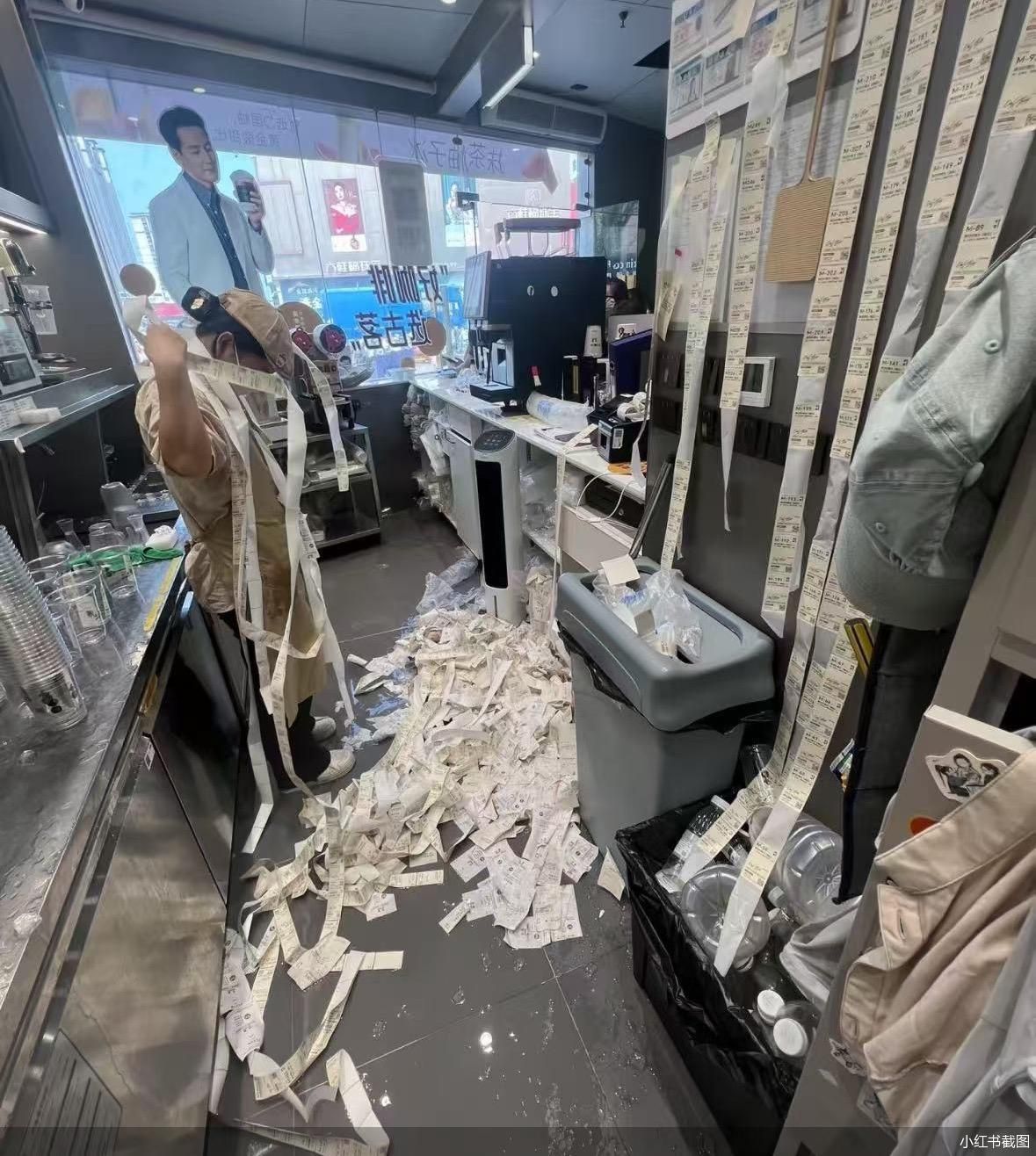
Core Viewpoint - The ongoing competition among food delivery platforms has led to a surge in order volumes, but this has not translated into significant profits for merchants, raising concerns about the sustainability of the current business model [1][7][10]. Group 1: Order Volume and Platform Performance - Food delivery platforms have reported record-breaking order volumes, with Meituan exceeding 1.5 billion daily orders and Taobao Flash Sale and Ele.me surpassing 80 million daily orders [5][10]. - The number of orders at some beverage stores has doubled, with weekend orders reaching over a thousand, creating chaotic scenes in stores [3][4]. - Delivery riders have seen significant income increases, with average daily earnings rising by 111% and some riders earning over 12,500 yuan monthly [5][8]. Group 2: Merchant Challenges and Profitability - Despite the surge in orders, merchants are struggling with profitability, often experiencing only thin margins and increased operational pressures [7][8]. - The influx of orders has led to a rise in negative customer experiences, with complaint rates increasing by 10% due to delays and order mismanagement [8][9]. - Merchants are facing a dilemma: participating in subsidy programs to gain visibility on platforms or risking reduced order volumes and exposure [9][12]. Group 3: Industry Concerns and Future Outlook - Industry experts warn that the current subsidy-driven competition may harm traditional dining businesses and create a challenging environment for sustainable growth [9][10]. - The reliance on heavy subsidies to drive sales could lead to long-term consumer behavior changes that undermine the viability of the restaurant industry [11][12]. - There is a call for platforms to adopt more balanced practices, reducing unreasonable fees and supporting merchants in improving service quality to foster a healthier market ecosystem [12].

“0元购”爆单!券商眼中的外卖补贴大战,谁将受益
Bei Jing Shang Bao· 2025-07-15 13:15
Core Viewpoint - The recent "subsidy war" among major players in the food delivery market, including Meituan, JD Group, and Alibaba, is primarily aimed at capturing market share, raising concerns about the potential impact on profit margins and investment returns for these companies [1][5][7]. Group 1: Market Dynamics - The food delivery market has seen intensified competition with the launch of "0 yuan purchase" promotions by Meituan, leading to a significant increase in consumer engagement and social media buzz [1][3]. - As of July 15, 2023, all three major companies—Alibaba, Meituan, and JD Group—experienced stock price increases of 6.97%, 4.38%, and 2.12% respectively, although year-to-date performance shows Alibaba up 40.06% while Meituan and JD Group are down 16.81% and 5.7% respectively [3][4]. Group 2: Fund Holdings - Alibaba is a significant player in public fund holdings, ranking among the top ten heavy stocks with a total market value of 50.713 billion yuan held by 765 funds as of the end of Q1 2023 [4]. - Meituan also has substantial fund backing, with 248 funds holding a total market value of 19.703 billion yuan, while JD Group has limited fund support, primarily from a single ETF [4]. Group 3: Profitability Concerns - Analysts express caution regarding the long-term profitability of the major players due to the aggressive nature of the subsidy war, which may lead to significant losses in the food delivery sector [5][6]. - Goldman Sachs projects that the ongoing subsidy war could result in substantial losses for these companies, estimating that Alibaba's food delivery business could incur losses of 41 billion yuan and JD Group 26 billion yuan by mid-2026 [6]. Group 4: Industry Impact - The subsidy war is expected to benefit leading brands in the tea and beverage sector, with stocks like Nayuki Tea and others seeing price increases since the onset of the subsidy promotions [5][6]. - The competition is anticipated to stimulate demand in the restaurant supply chain, with a potential increase in order volumes as a result of the ongoing promotions [5][6].




外卖大战的第一个「受害者」出现了?
3 6 Ke· 2025-07-15 12:48
Core Viewpoint - The rise of instant tea and coffee drinks, fueled by subsidies on delivery platforms, has significantly impacted traditional brands like Xiangpiaopiao, which is experiencing a decline in sales and profits due to changing consumer preferences and increased competition from ready-to-drink options [2][5][10]. Group 1: Company Performance - Xiangpiaopiao expects a revenue of 1.035 billion yuan for the first half of 2025, representing a year-on-year decline of over 12% [5]. - The company anticipates a net loss of 97.39 million yuan, which is an increase of approximately 67.89 million yuan compared to the same period last year [5]. - The stock price of Xiangpiaopiao has dropped over 60% from its historical high of 35.09 yuan in August 2019, closing at 13.77 yuan on July 14, 2025 [5]. Group 2: Market Trends - The price of ready-to-drink tea has fallen below 3 yuan, making it competitive against canned beverages, which poses a challenge for Xiangpiaopiao's traditional products [5][6]. - The trend towards instant drinks, especially during summer, has become a necessity for young consumers, leading to a shift in market dynamics [6][8]. - The ongoing subsidy wars among delivery platforms are intensifying competition, with brands like Mixue Ice Cream and Luckin Coffee offering prices as low as 3.5 yuan for their drinks [6][11]. Group 3: Strategic Adjustments - Xiangpiaopiao is attempting to adapt by launching new product lines, such as "original leaf fresh milk tea," which aims to meet health standards and appeal to changing consumer tastes [8][9]. - The company is also exploring new sales channels, particularly in the snack wholesale sector, with over 30,000 stores already collaborating with them [8]. - Xiangpiaopiao's new product series emphasizes quality and aims to compete with ready-to-drink beverages, with prices around 8 yuan per cup [9].
外卖补贴战,平台的钱都花哪了?
3 6 Ke· 2025-07-15 12:28
Core Insights - The entry of JD.com into the food delivery market has intensified competition, transforming it from a "Yellow-Blue" battle (Meituan and Ele.me) to a "Yellow-Blue-Red" three-way fight [2] - In July, following JD.com's 100 billion yuan subsidy, Ele.me announced a 500 billion yuan subsidy, leading to a significant increase in daily orders from 100 million to approximately 250 million [2] - The "Huaihai Campaign" initiated by Alibaba aims to boost sales through aggressive subsidies, resulting in a surge in order volumes across platforms [2] Group 1: Market Dynamics - The total daily order volume in the food delivery market increased by 30 million orders in the first week of July, with Meituan accounting for 15 million, Ele.me for 8 million, and JD.com for over 1 million [2] - New beverage and coffee brands experienced substantial order growth, with some brands seeing over 160% increase in orders [2] - The competition has raised questions about who ultimately bears the cost of these subsidies, as platforms engage in heavy discounting to attract consumers [2] Group 2: Cost Analysis - On Meituan, consumers paid an average of 31.76 yuan, while merchants received only 23.76 yuan after various deductions, resulting in a merchant revenue share of 74.81% [3] - On Ele.me, consumers paid 26.74 yuan, but merchants' actual income was reduced to 17.94 yuan, leading to a revenue share of less than 70% [5] - JD.com offered the lowest consumer prices at 16.96 yuan, with merchants receiving 18.26 yuan, indicating a loss of at least 1.3 yuan per order for JD.com [5] Group 3: Subsidy Impact - The "Huaihai Campaign" led to all three platforms entering a loss-making state, with Meituan and Ele.me increasing their subsidy levels significantly [7] - By July 12, the average losses per order were estimated at 1.86 yuan for Meituan, 2.75 yuan for JD.com, and 3.2 yuan for Ele.me [10] - The distribution of subsidy costs showed that Ele.me bore the highest burden at 58%, followed by JD.com at 40%, and Meituan at 25% [9] Group 4: Strategic Implications - The competition has highlighted different strategies: Alibaba (Ele.me) focuses on high subsidies, Meituan emphasizes cost control, and JD.com prioritizes consumer benefits [11] - The ongoing battle raises concerns about the sustainability of these business models and the long-term viability of the platforms involved [11] - The outcome of this competition will depend on each platform's ability to build a sustainable ecosystem while managing costs and consumer experience [11]
“月入3万元不稀奇”!外卖小哥成意外赢家?
21世纪经济报道· 2025-07-15 12:24
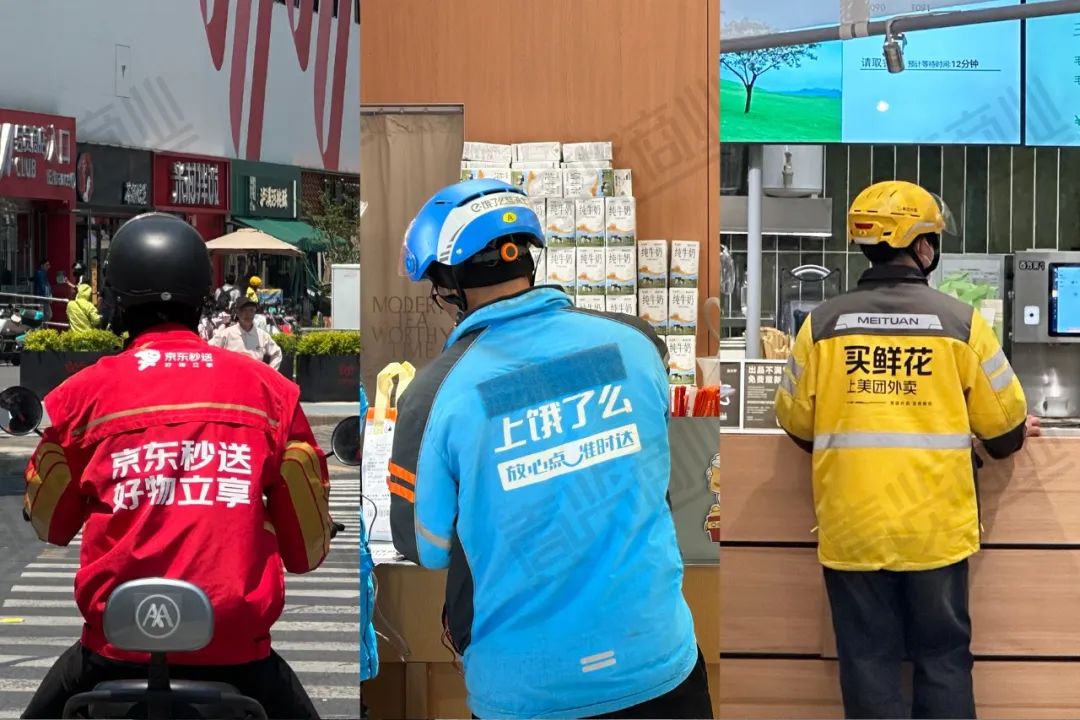
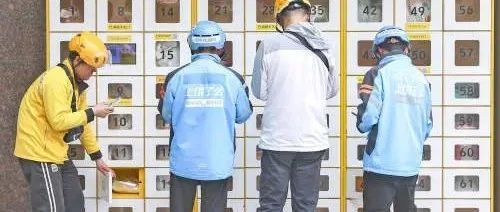
Group 1 - The core viewpoint of the article highlights the intense competition among food delivery platforms, which has unexpectedly benefited delivery workers, leading to increased earnings and job opportunities [2][4]. - Promotions such as "25 off 24" and "0 yuan milk tea" have driven daily order volumes to new highs, with figures reaching 80 million, 120 million, and 150 million [2]. - Delivery workers report hourly wages exceeding 100 yuan, with potential monthly earnings surpassing 10,000 yuan, and some even reaching 20,000 to 30,000 yuan [2][4]. Group 2 - The article discusses the concept of high-quality employment, defining it as the realization of workers' rights throughout the employment process [4]. - Experts emphasize that improving employment quality is essential for social stability, fairness, and sustainable development in the context of China's transition from a manufacturing powerhouse to an innovation-driven economy [4][5]. - There is a recognized trade-off between employment quality and quantity, with the need to prioritize job creation while enhancing job quality [5][6]. Group 3 - The discussion on employment quality particularly focuses on flexible employment groups, such as delivery workers, who often lack adequate legal protections [7][8]. - It is suggested that platform workers should be recognized as employees rather than independent contractors to ensure their rights are protected under labor laws [8]. - Collective bargaining mechanisms are proposed as a means to safeguard the rights of flexible workers, although challenges remain regarding representation and membership in labor unions [8].
对赌失败或将易主,A厂背水一战;E厂业务没进展,玄学来背锅;G厂明星游戏项目栽在「手滑」丨鲸犀情报局Vol.15
雷峰网· 2025-07-15 12:05
Group 1: 桃厂 (Peach Factory) - The ongoing speculation about the potential sale of Peach Factory has intensified, with various large companies being considered as potential buyers, but no concrete confirmation has emerged [1] - The pressure on Peach Factory has increased due to a diminishing number of hit productions and complaints from upstream partners regarding long payment terms [2] - The content team at Peach Factory is struggling, leading to concerns that continuing operations without a sale may leave the company in a more vulnerable position [3] Group 2: A厂 (Company A) - The instant retail sector has seen many ups and downs, with Company A struggling to expand nationally despite its strong regional presence [4][5] - Competition in the instant retail space has intensified, with major players like Meituan, Alibaba, and JD.com engaging in fierce battles [6] - Company A is facing pressure from investors regarding its valuation, leading to a high-stakes situation with a performance-based agreement that could jeopardize the company's future if not met [7] Group 3: B厂 (Company B) - Company B's founder previously sought acquisition by a larger company but was turned down due to the acquirer's financial constraints and strategic priorities [8] - The competitive landscape in the food delivery sector has evolved significantly, with Company B ultimately accepting an acquisition offer from another player after failed negotiations with the initial target [8] Group 4: E厂 (Company E) - Company E has struggled with a lack of clear strategic direction, leading to confusion and rapid changes in business focus, which has negatively impacted employee morale [11][12] Group 5: H厂 (Company H) - Company H has gained significant attention in the stock market due to its success with short dramas, leading to management focusing on cashing out their shares rather than long-term business strategies [18][19] - The management's actions suggest a lack of confidence in the company's sustainable growth, as they prioritize short-term gains from stock price fluctuations [20]

外卖大战小哥爆单,专家激辩高质量充分就业如何破局
2 1 Shi Ji Jing Ji Bao Dao· 2025-07-15 10:23
当前,关于就业质量的讨论主要集中在灵活就业群体。 北京交通大学经济学院教授唐代盛认为,党的二十大报告将"促进高质量充分就业"确立为新时代就业工 作的核心目标,不仅因为就业质量关系到劳动者的生活和福利水平,也因为改善就业质量是保障社会稳 定与公平、推动技术时代就业可持续发展、巩固全球竞争力的需要。 在他看来,我国正从制造业大国向创新型经济体转型,低端劳动力密集型产业逐渐被技术密集型取代, 只有在人口维度强化人力资本投资,在经济维度深化产业结构与就业结构协同,在制度维度完善现代化 治理体系,通过不断提升就业质量,才能加快推动这一转型进程。 高质量就业与充分就业之间是什么关系?浙江大学共享与发展研究院院长李实认为,就业质量包含劳动 时间、薪酬福利、劳动保护、社会保障和劳动权利等多个维度,每一个维度上的改进都意味着企业雇佣 成本的增加。 这意味着,给定经济社会发展阶段和技术进步水平,就业质量和就业数量之间必然存在替代关系。在劳 动生产率得不到提高的情况下,要求企业提高就业质量,不可避免会导致用工需求的下降。 外卖、快递、网约车、直播等新就业形态是重要的就业蓄水池,但社保和劳动保障存在短板。 如何理解高质量充分就业的政 ...
人民日报点赞!马云刘强东回归督战,外卖战场变民生竞技场
Sou Hu Cai Jing· 2025-07-15 10:17
Core Insights - The recent surge in subsidies from major players like Meituan, JD, and Taobao has ignited a fierce competition in the instant retail market, characterized by aggressive discounting strategies and promotional offers [1][3][9] - This subsidy wave is not a temporary phenomenon but may become a new industry norm, with Alibaba planning to invest 50 billion yuan over the next year and Meituan committing to a 100 billion yuan investment over three years [3][11] - The competition is driven by the pursuit of a trillion-yuan instant retail market, indicating a shift in the internet industry towards consumer welfare and protection of rights for consumers, merchants, and delivery personnel [3][11] Market Dynamics - The instant retail market in China is projected to reach 3 trillion yuan by 2025, with an annual growth rate exceeding 30% [5] - Taobao's recent subsidy campaign resulted in over 60 million orders in a single day, while JD delivered over 25 million orders, showcasing the explosive growth in order volume [5][9] - The new competitive landscape is characterized by platforms investing their own funds for subsidies, aiming to balance the interests of platforms, merchants, delivery personnel, and consumers [11] Leadership Influence - The return of founders Jack Ma and Liu Qiangdong to the public eye has reinvigorated their companies, with Ma focusing on agriculture and rural products, while Liu has emphasized worker welfare and direct engagement with delivery personnel [7][13] - Their leadership styles reflect a shift from previous market dominance strategies to a more community-oriented approach, aligning with the current societal emphasis on shared prosperity [13][15] Regulatory Environment - The recent competitive dynamics have attracted the attention of regulatory bodies, which are urging platforms to ensure fair competition and prevent chaotic capital expansion [15] - This shift in focus from aggressive market capture to consumer benefit marks a significant transformation in the Chinese internet industry, moving away from a growth-at-all-costs mentality [15]
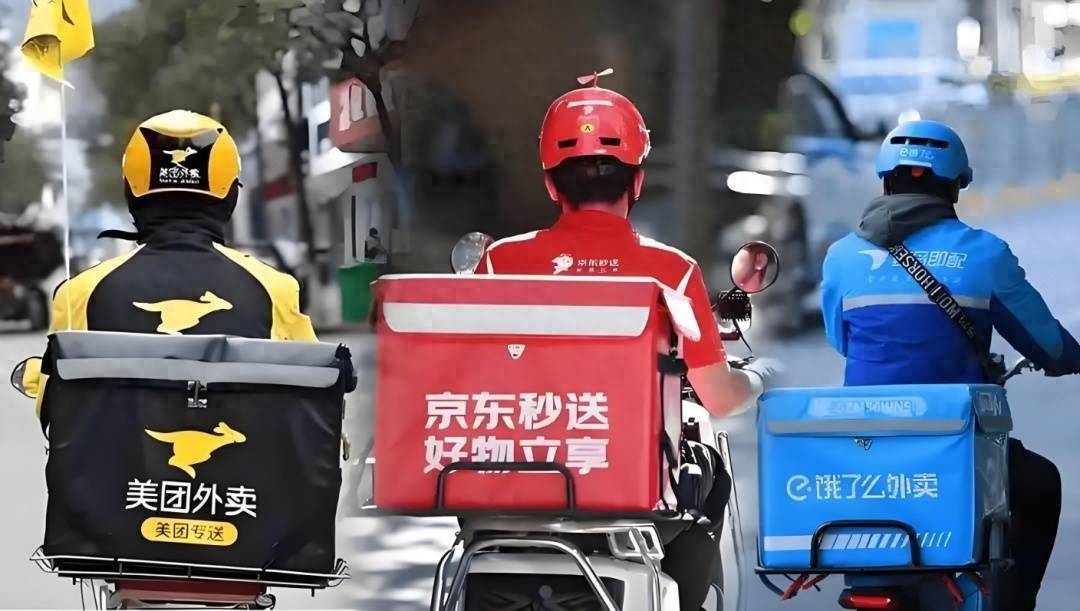
“外卖大战”,最大的受害者出现了?
华尔街见闻· 2025-07-15 10:16
Core Viewpoint - The article discusses the ongoing competition among major food delivery platforms, highlighting record-breaking order volumes and aggressive subsidy strategies to capture market share in the instant retail sector. Group 1: Record Performance - Meituan reported a record high of 150 million orders on July 12, with over 50 million for "Shenqiangshou" and over 35 million for "Pinghaofan" [1] - Taobao Flash Sale and Ele.me announced a daily order volume exceeding 80 million, with a 15% increase in daily active users, reaching over 200 million [1][12] - The overall market capacity has expanded due to increased consumer willingness and participation, driven by substantial investments from the platforms [12] Group 2: Subsidy Strategies - Meituan and Taobao Flash Sale continued their weekend subsidy campaigns, with Meituan offering various discount vouchers and Taobao providing a 188 yuan coupon package [3][5] - The competition has led to a significant increase in order volumes, with Taobao Flash Sale capturing 60% of the incremental market share [21] - JD.com has shifted to a more refined subsidy strategy, launching a "Double Hundred Plan" to support quality dining merchants, with over 200 brands achieving over 1 million orders [13][14] Group 3: Financial Implications - Despite impressive order growth, the intense subsidy competition is straining the platforms financially, with projected losses of 410 billion yuan for Alibaba and 260 billion yuan for JD.com in the upcoming year [15][18] - The total annual investment in this competition is expected to reach around 100 billion yuan, raising concerns about the sustainability of such aggressive spending [18][20] - The stock prices of Meituan, Alibaba, and JD.com have all seen declines of over 3% since July [19] Group 4: Market Dynamics - The subsidy war is expected to continue, with platforms signaling their commitment to maintaining high levels of investment to deter new entrants [20][16] - The competition has evolved into a weekly and potentially monthly occurrence, with platforms aiming to create a new promotional holiday [11][16] - The rapid growth in order volumes raises questions about the long-term viability of such strategies, as the sustainability of consumer demand remains uncertain [23][24]

外卖大战升级:0元奶茶能喝多久?如何避免中小商家成牺牲品
Nan Fang Du Shi Bao· 2025-07-15 09:36
Group 1 - The core viewpoint of the articles highlights the intensifying competition in the food delivery market, particularly following JD's entry, which disrupts the long-standing duopoly of Meituan and Ele.me [1][2][3] - JD's entry into the market has led to significant growth, with daily order volume exceeding 25 million within 90 days and coverage expanding to 350 cities with over 1.5 million quality restaurants [2][4] - The competition has escalated into a "subsidy war," with platforms offering substantial discounts and promotions to attract customers, leading to a surge in order volumes [3][5] Group 2 - The articles discuss the unsustainability of high subsidies, with experts warning that once these subsidies decline, the market may face challenges, particularly for small and medium-sized businesses [6][7] - Concerns are raised about the long-term impact of price wars on the profitability of restaurants, with some businesses reporting minimal profits per order and fears of a "low-price, low-quality" cycle [8][9] - The articles emphasize the need for regulatory oversight to ensure fair competition and protect smaller businesses from being adversely affected by the aggressive strategies of larger platforms [10][11] Group 3 - The growth of the instant retail market is highlighted, with projections indicating a rise from 650 billion yuan in 2023 to 2 trillion yuan by 2030, attracting significant interest from major e-commerce players [10][12] - The articles suggest that the entry of new players into the market could reshape the competitive landscape, potentially leading to increased market concentration and challenges for smaller operators [9][12] - The importance of maintaining market openness and accessibility is stressed, with recommendations for regulatory measures to prevent monopolistic behaviors and ensure a level playing field for all market participants [11][12]