
新能源

Search documents
两融余额首破2.6万亿元 再创历史新高
Zheng Quan Shi Bao· 2026-01-08 18:47
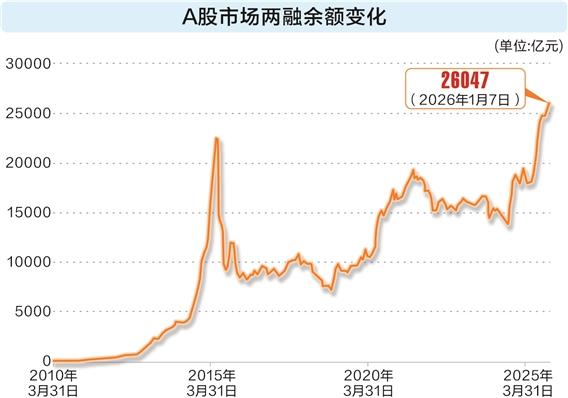
Group 1 - The A-share market's margin trading balance reached a historical high of 26,047 billion yuan as of January 7, 2026, marking a single-day increase of approximately 24.8 billion yuan [2] - Since December 22, 2025, the margin trading balance has increased by over 100 billion yuan in just 11 trading days, indicating a significant acceleration in growth [2] - On January 7, 2026, the margin trading transaction volume hit 3,312 billion yuan, the highest level in nearly three months, with a nearly 70% increase compared to the average daily margin trading volume in December 2025 [2] Group 2 - The overall trading volume in the A-share market has significantly increased, reaching 28.3 trillion yuan on January 8, 2026, with three consecutive trading days exceeding 28 trillion yuan [3] - On January 7, 2026, Nanda Optoelectronics achieved a historic trading volume of 10.43 billion yuan, which further increased to 11.36 billion yuan on January 8, setting a new record since its listing [3] - Multiple stocks, including Maiwei Co., also saw substantial trading volume increases, with Maiwei Co. reaching 4.79 billion yuan on January 8, marking a historical high [3]


股市必读:苏文电能(300982)1月8日主力资金净流出893.91万元
Sou Hu Cai Jing· 2026-01-08 17:54
Core Viewpoint - Suwen Electric Power (300982) has signed an agreement to acquire a 30% stake in Sinopec Wanbang New Energy for 7.48 million yuan, indicating a strategic move to enhance its position in the energy sector through collaboration with a major player [1][2]. Trading Information Summary - On January 8, Suwen Electric Power closed at 23.28 yuan, down 2.76%, with a turnover rate of 5.26%, a trading volume of 102,000 shares, and a transaction value of 239 million yuan [1]. - The net outflow of main funds was 8.94 million yuan, while retail investors saw a net inflow of 22.74 million yuan [1][2]. Company Announcement Summary - Suwen Electric Power signed a share transfer agreement on January 7, 2026, to acquire a 30% stake in Sinopec Wanbang New Energy for 7.48 million yuan, funded by the company's own resources [1]. - The transaction does not involve related party transactions and does not constitute a major asset restructuring [1]. - Following the acquisition, Suwen Electric Power will collaborate with Sinopec in areas such as industrial and shared energy storage, as outlined in a joint cooperation agreement [1].
从能源基地到科创高地 西部省份“十五五”谋新求变
Shang Hai Zheng Quan Bao· 2026-01-08 16:49
Group 1: Core Insights - The western region of China, comprising 12 provinces, is pivotal for clean energy development and plays a crucial role in national reform and stability [2][3] - The "14th Five-Year Plan" emphasizes the transformation of resource advantages into industrial advantages, promoting a multi-dimensional value creation model [2][4] - Ningxia is leading in new energy storage development, with a complete chain of wind, solar, and hydrogen energy, contributing to a billion-level clean energy industry cluster [3][4] Group 2: Industry Developments - Inner Mongolia aims to enhance traditional energy security while expanding new energy development, focusing on wind, solar, and hydrogen storage industries [4][5] - Gansu is set to become a significant base for new energy and equipment manufacturing, transitioning from an energy province to a strong energy province [4][6] - Sichuan plans to strengthen strategic emerging industries such as biomedicine and artificial intelligence, positioning itself as a key economic engine in the western development [6][7] Group 3: Open Cooperation - Guangxi is enhancing its port capabilities, aiming for a container throughput of over 10 million TEUs by 2025, facilitating international trade [7][8] - Yunnan is focusing on becoming a center for South Asia and Southeast Asia, leveraging various open platforms to enhance regional influence [7][8] - Inner Mongolia is expanding its open economy, aiming to strengthen trade relations with East Asia, Southeast Asia, and Europe [8][9]
液态阳光 照见未来:绿色甲醇能源产业协同破局记
Zhong Guo Jing Ying Bao· 2026-01-08 16:31
Core Insights - The second Green Methanol Energy Industry Development Conference was held in Wenzhou, focusing on the development path of green methanol as a key player in energy transformation [1] - The conference highlighted the urgent need to break through energy transition bottlenecks and build a diversified and collaborative green energy system under the "dual carbon" goals [1][2] Group 1: Industry Trends and Developments - The conference saw the launch of the "Initiative to Promote the Development of Liquid New Energy," which aims to build a methanol industry community and enhance the standard system [2] - By 2030, the number of new energy vehicles in China is expected to exceed 100 million, with a potential energy storage capacity equivalent to three times the current total capacity of pumped storage power stations [3] - There are currently 210 planned, under-construction, and operational green methanol projects in China, with a total production capacity exceeding 51 million tons per year [7] Group 2: Technological Innovations - Green methanol can achieve over 60% carbon reduction in the heavy truck sector, as demonstrated by a pilot project in Shanxi, where 300 methanol heavy trucks have been operating for two years [4] - The full industrial chain technology route for green methanol has been established in China, covering production, fuel supply, and vehicle applications [5][6] - Various technological routes for producing green methanol include biomass, electrolysis of water, and utilization of waste materials [6] Group 3: Market Opportunities and Challenges - The cost of green methanol remains high, which limits its large-scale application; low-carbon methanol is suggested as a transitional solution [10] - The integration of methanol into various applications, including drones and shipping, highlights its unique value in energy density and ease of storage and transportation [9] - The need for improved infrastructure, such as refueling stations and management standards, is critical for the promotion of methanol vehicles [10]
内蒙华电20260108
2026-01-08 16:02
Summary of Inner Mongolia Huadian Conference Call Company Overview - Inner Mongolia Huadian is a key player in the northern thermal power sector, benefiting from a recent stock price correction that has increased expected returns, presenting a secondary investment opportunity [2][3]. Key Points and Arguments Investment Potential - The company is recommended as a top pick in the thermal power sector due to the market's reassessment of the value of such companies [2]. - The integration of coal and electricity operations provides stronger profitability stability and competitiveness, especially in fluctuating coal price environments [2][4]. Capacity Price Increase - A tiered increase in capacity prices is expected in 2026, with most regions seeing prices rise from 100 RMB/kW per year to 165 RMB/kW per year, positively impacting cash flow and dividend predictability for thermal power companies [2][8]. Dividend Policy - Inner Mongolia Huadian commits to distributing no less than 70% of its distributable profits as dividends, with a minimum payout of 0.1 RMB per share, enhancing investor confidence [2][9]. Coal Supply and Cost Management - The company produces nearly 45% of its coal needs internally, which helps reduce costs and mitigate risks associated with coal price fluctuations [2][10]. Competitive Advantages - Inner Mongolia Huadian's coal power generation capacity is 11 GW, with 6 GW serving the Inner Mongolia region and 5 GW serving the North China grid, benefiting from stable electricity prices in North China [10][12]. Market Valuation - Traditional market valuations for thermal power are considered simplistic; a reevaluation based on the company's self-sufficiency in fuel supply could yield a more competitive market valuation [11]. Additional Insights Renewable Energy Initiatives - The company is actively expanding its renewable energy portfolio, with approximately 1.8 GW of wind and solar capacity, aligning with national green development strategies [4][13]. - Recent asset injections from major shareholders into wind projects indicate strong support for the company's growth [17][18]. Future Market Dynamics - The renewable energy sector is viewed as nearing a bottom in the market cycle, with long-term potential driven by policy improvements and increased demand for green certificates [14][16]. Overall Recommendation - Inner Mongolia Huadian is recommended as a key investment target due to its stable asset profitability, reasonable valuations, high dividend yield, and ongoing expansion in renewable energy, which could provide further market value growth [19].

2026 年牛市展望系列 1:入市增量资金有望超两万亿
Guoxin Securities· 2026-01-08 14:21
Group 1 - The core conclusion indicates that in 2025, the A-share market will see significant inflows of incremental funds, primarily from leveraged funds and private equity, while public funds are experiencing net redemptions [1][4] - The current inflow of funds is expected to be mainly from high-net-worth individuals, with ordinary residents likely becoming the main source of market funds by 2026 as their risk appetite recovers [1][3] - The macroeconomic and microeconomic context of 2025 shows similarities to 2020, but the structure of incremental funds differs, leading to an estimated total inflow of 2 trillion yuan in 2026 [1][4] Group 2 - In 2025, the main source of incremental funds in the A-share market will be active funds, with a notable inflow of 4.2 billion yuan from insurance funds and 7 billion yuan from leveraged funds since July [2][19] - The first half of 2025 saw a diverse inflow of funds, with retail investors contributing 240 billion yuan and foreign capital returning with approximately 100 billion yuan [2][13] - The third quarter of 2025 experienced a significant increase in market activity, with private equity funds estimated to have injected around 400 billion yuan into the stock market [2][19] Group 3 - The process of resident funds entering the market is still in its early stages, primarily driven by high-net-worth individuals, as the overall risk appetite among residents remains low [3][36] - Evidence suggests that while some resident funds are entering the market, the majority are still cautious, with a significant portion of funds remaining in low-risk products [3][37] - The willingness of residents to invest in high-risk assets has been gradually increasing, but overall expectations regarding income and housing prices remain low, limiting broader market participation [3][41] Group 4 - The expected net inflow of funds in 2026 is projected to reach 2 trillion yuan, with significant contributions from retail investors and insurance funds, alongside improvements in public and foreign capital [4][55] - The structure of incremental funds in 2025 shows a shift compared to 2020, with a greater reliance on leveraged and private equity funds rather than resident funds [4][50] - The anticipated inflow from insurance funds is estimated at 700 billion yuan, while public and foreign funds are expected to improve, contributing around 700 billion yuan each [4][57]
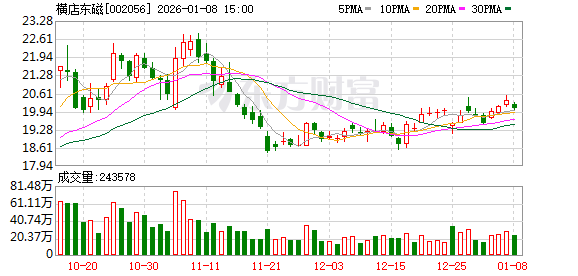
横店东磁:公司始终致力于“磁材”与“新能源”双轮驱动的战略布局
Zheng Quan Ri Bao· 2026-01-08 14:16
Core Viewpoint - The company is committed to a dual-driven strategic layout focusing on "magnetic materials" and "new energy" [2] Group 1: Business Strategy - The revenue structure of the company will change according to the different development stages of its business segments [2] - In the magnetic materials segment, the company plans to horizontally expand its multi-material system and vertically develop components to strengthen and grow [2] - The lithium battery segment will focus on cylindrical batteries, continuously enriching product categories and expanding applications across multiple fields [2] Group 2: Competitive Positioning - The company aims to build comprehensive competitiveness that can withstand industry cycles [2]

科士达联合申菱环境、投资机构 布局数据中心产业链
Zheng Quan Shi Bao Wang· 2026-01-08 14:13
Core Viewpoint - The company Keda (002518) has announced the establishment of a partnership with Shiling Environment (301018) and professional investment institutions to invest in sectors related to data centers, hard technology, AI, and renewable energy, including wind power, solar energy, and energy storage [1][2] Group 1: Investment Details - The partnership involves the creation of the Jiaxing Mutong Equity Investment Partnership (Limited Partnership) with a total investment amount of approximately 200 million yuan, with Keda contributing 50 million yuan, accounting for 24.99% of the total investment [1] - The partnership will have a duration of 7 years, with the first 4 years designated as the investment period and the remaining years as the management exit period [2] Group 2: Strategic Implications - Keda aims to strengthen its core business in data centers while expanding into the renewable energy sector, capitalizing on the current development cycle in these industries [2] - The investment is expected to enhance the company's competitive edge and create more value for shareholders by identifying high-quality targets with strong industry synergy [2] - Shiling Environment also emphasizes that this investment will not adversely affect its financial and operational status, and it is expected to have a positive impact on future financial conditions and business layout [2]

横店东磁:公司将在变局中凝聚信心,持续推进公司高质量发展
Zheng Quan Ri Bao Wang· 2026-01-08 14:13
Core Viewpoint - The company, Hengdian East Magnetic (002056), is committed to deepening its presence in niche markets and enhancing product traceability to provide value-added services to customers [1] Group 1: Company Strategy - The company has extended its employee stock ownership plan multiple times, and the expiration of the plan has led to normal liquidation behavior, with optimistic employees expected to repurchase shares [1] - The major shareholder's reduction in holdings is based on its own strategic planning and operational needs [1] Group 2: Business Outlook - By 2025, the company aims to implement a "magnetic materials + new energy" dual-drive strategy, with stable growth in the magnetic materials and lithium battery sectors [1] - The photovoltaic sector has shown strong resilience during economic downturns, achieving positive profitability [1] - Looking ahead to 2026, the company plans to consolidate confidence amid changes and continue promoting high-quality development to provide stable and sustainable returns to shareholders [1]
大类资产配置月报:攻防兼备,择机布局-20260108
Guo Yuan Qi Huo· 2026-01-08 13:12
Report Industry Investment Rating No relevant content provided. Core Viewpoints of the Report - In 2026, the equity market is expected to start a new upward wave in Q1, with a long - position overweight strategy for the stock index. The bond market may continue its weak performance at the beginning of 2026 but could have a rebound after the Spring Festival, with a short - position hedge before the Spring Festival and a long - position underweight after. Commodities should be structurally allocated, with long - position overweight on precious metals, non - ferrous metals, and new energy commodities, long - position standard allocation (timing) on black building materials and agricultural products, and short - position standard allocation on crude oil [4]. Summary by Relevant Catalogs 1. Review of the Performance of Major Asset Classes - **Equity Market**: In December 2025, the A - share market oscillated upward, switching back to the growth - oriented style. Most primary industry indices rose, with national defense, communications, non - ferrous metals, non - bank finance, and machinery leading the monthly gains [8][10]. - **Bond Market**: The performance of short - and long - term bonds diverged. Short - term Treasury yields declined while long - term yields increased, and the Treasury term spread widened significantly. By December 31, 2025, the 2 - year and 5 - year Treasury yields dropped to 1.3605% and 1.3830% respectively, while the 10 - year and 30 - year yields rose to 1.8473% and 2.2674% [13]. - **Commodities**: The prices of domestic commodity futures were differentiated, with precious metals leading the gains. As of December 28, 2025, the precious metals index soared 14.38%, the metal index rose 6.18%, the industrial products index increased 1.44%, and the agricultural products index slightly declined 0.59% [17]. 2. Outlook and Analysis of Major Asset Classes - **Macroeconomic Aspect**: Abroad, the probability of further interest rate cuts by the Fed may decrease. Domestically, the probability of interest rate cuts in Q1 2026 is low, but a reserve requirement ratio cut is still expected [19][28]. - **Equity Assets**: In the short - to - medium term, the cross - year market has started, and the equity market is expected to start a new upward wave in Q1 2026. In the long - term, the policy and liquidity environment in 2026 are favorable to the market [31][32]. - **Bond Assets**: The bond market may continue its weak performance at the beginning of 2026, with the upper limit of the 10 - year Treasury yield before the Spring Festival likely between 1.90% - 1.95%. After the Spring Festival, there may be an oversold rebound opportunity [35][36]. - **Commodities**: The differentiation pattern of commodities will continue. Crude oil may remain weak after a short - term rebound. Industrial metals may face supply - demand imbalance, and agricultural product prices may fluctuate more due to various factors. Precious metals may experience significant short - term fluctuations but maintain an upward long - term trend [37][38]. 3. Allocation Strategies for Major Asset Classes - **Domestic Stock Index**: In 2026, the equity market should be strategically allocated, with a long - position overweight in January. Focus on industries such as the AI industry chain, leading companies going global, industries with improved supply - demand relationships, and the industrialization of cutting - edge technologies [40]. - **Commodities**: Increase the weight of commodities in the asset allocation. Overweight precious metals, non - ferrous metals, and new energy commodities; standard - allocate black building materials and agricultural products (timing); and short - allocate crude oil [41][42]. - **Treasury Bonds**: Hedge with short positions before the Spring Festival and underweight long positions after the Spring Festival. The bond market will remain volatile in 2026 and should be under - allocated [43].