外卖

Search documents
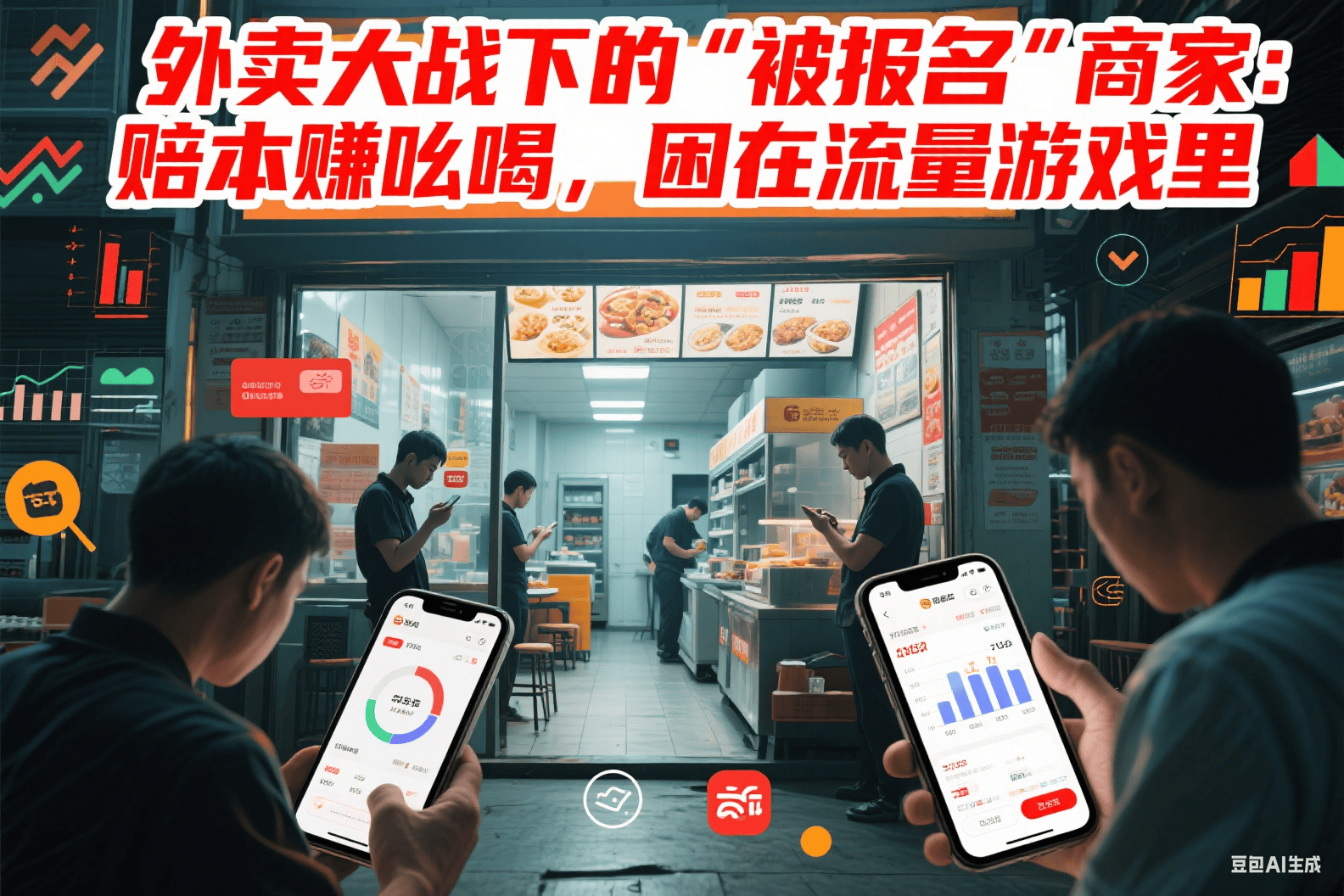
外卖大战下的“被报名”商家:赔本赚吆喝,困在流量游戏里
Sou Hu Cai Jing· 2025-07-15 03:29
Core Insights - The ongoing price war in the food delivery industry is causing significant financial strain on merchants, with many being forced into unprofitable promotional activities without their consent [2][3] - Merchants are experiencing a drastic decline in dine-in customers, with reports of a nearly 50% drop in foot traffic due to aggressive discounting strategies [3] - Regulatory bodies are taking action against the harmful practices in the industry, urging platforms to reduce predatory pricing and improve traffic distribution mechanisms [3] Group 1 - Merchants are facing severe financial losses due to forced participation in promotional activities, with some reporting that they receive as little as 3 yuan for orders after discounts and fees [2] - The pressure to participate in these promotions is driven by regional managers who are incentivized to meet high participation targets, often resorting to coercive tactics [2] - The quality of food is at risk as some merchants are substituting fresh ingredients with lower-quality or expired products to cut costs [2] Group 2 - Consumers have become accustomed to low prices, leading to a perception that food quality should match these prices, resulting in negative reviews for merchants who cannot maintain low pricing [3] - Merchants are caught in a dilemma where not participating in promotions leads to a lack of customer traffic, while participating damages their brand reputation [3] - Regulatory measures are being implemented to address these issues, including a call for major platforms to reform their marketing tools and reduce the emphasis on aggressive pricing strategies [3]

美团:1.5亿单的低调胜利,后补贴时代护城河逆向深化
Ge Long Hui· 2025-07-15 02:54
Core Insights - Meituan's instant retail orders have surpassed 150 million, marking a significant milestone in its growth trajectory, driven primarily by genuine consumer demand rather than heavy subsidies [1][10] - The company's strategic restraint in its promotional activities has led to a natural increase in order volume, indicating a shift towards sustainable growth [2][4] Group 1: Order Growth and Structure - On July 5, Meituan's daily orders exceeded 120 million for the first time, with over 100 million stemming from daily dining needs, and by July 12, this number reached 150 million [1][10] - The average order value for Meituan's food delivery remains stable at around 30 yuan, significantly higher than the industry average of 13-14 yuan, indicating a strong focus on core dining experiences rather than low-cost promotional items [3][4] - The composition of orders shows that low-priced items like milk tea and coffee account for less than 17% of total orders, emphasizing the importance of high-frequency dining orders in Meituan's business model [3][4] Group 2: Competitive Advantage and Market Dynamics - Meituan's growth is rooted in a robust user retention model and platform network effects, which have allowed it to achieve high order volumes without relying on price incentives [4][5] - The company is strengthening its supply chain and local network, which are critical for maintaining service quality and user experience, especially as the industry moves away from subsidy-driven growth [6][7] - As subsidies decline, the focus will shift to user experience and local supply capabilities, which are essential for sustaining growth in the competitive landscape [8][9] Group 3: Operational Efficiency and User Experience - Meituan's operational model effectively balances supply and demand, ensuring timely deliveries and high user satisfaction, with a near 99% on-time delivery rate reported [10][12] - The integration of various services, such as grocery and pharmacy deliveries, enhances user engagement and builds trust in the platform's reliability [11][12] - The company's cost control measures, including leveraging a shared delivery network, allow for competitive pricing while maintaining service quality, benefiting consumers and merchants alike [12][13]

如何看外卖大战?
2025-07-15 01:58
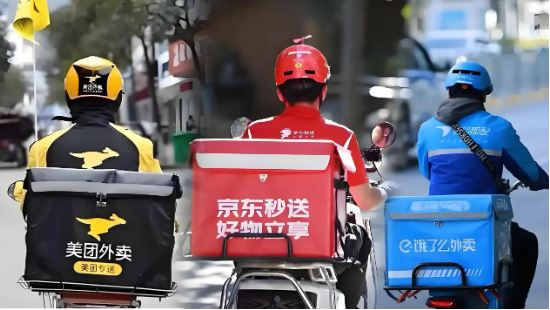
Summary of Conference Call Records Industry Overview - The takeaway from the conference call indicates a significant reshaping of the instant retail market in 2025, with Meituan maintaining a leading position with a 50% market share, followed by Taobao Flash Purchase (33%) and JD.com (17%) [1][2]. Key Points and Arguments - **Intense Competition in Food Delivery**: The competition among food delivery platforms has intensified, with JD.com rapidly increasing order volume through substantial subsidies (5-10 RMB per order), impacting the profitability of Meituan, which previously earned around 1.5 RMB per order [1][4]. - **E-commerce Market Dynamics**: Alibaba's market share has dropped from 70% to 40%, with Pinduoduo and Douyin e-commerce emerging as significant competitors. Douyin's live-streaming e-commerce has diverted advertising spending, leading to a slowdown in Alibaba's GMV growth [1][5]. - **Meituan's Competitive Advantages**: Meituan leverages strong barriers in food delivery, localized marketing, and logistics efficiency (approximately 8 million delivery riders) to maintain its market position. The company also utilizes a dual circulation model to drive traffic [1][8]. - **Investment Plans by Alibaba**: Alibaba plans to invest 50 billion RMB to subsidize Taobao Flash Purchase to boost order volume [1][8]. - **Instant Retail's Limited Impact on E-commerce**: Instant retail currently accounts for only 6% of total e-commerce volume, expected to rise to 12% in five years. However, it effectively utilizes delivery capacity to reduce costs, with Meituan achieving profitability in instant retail for the first time last year [1][10]. Additional Important Insights - **Recent Order Volume Records**: On July 5, Taobao Flash Purchase initiated subsidies, achieving 80 million orders, while Meituan reached 120 million orders. By July 12, Meituan's instant retail orders surged to 150 million, setting a new record [2]. - **Market Share Expansion**: The main players in the food delivery market have expanded from Meituan and Ele.me to include Meituan, Taobao Flash Purchase, and JD.com, with Taobao Flash Purchase replacing Ele.me as a key brand within Alibaba [2][8]. - **Long-term Industry Outlook**: In the short term, increased competition may lead to higher costs and lower profit margins across the industry. However, in the long run, this competition may benefit leading companies by reducing market education costs and expanding market size [14]. - **Challenges in New Retail Development**: The prospects for new retail are limited due to supply and demand constraints, necessitating deeper exploration of product operations to enhance diversity and supply chain efficiency [15]. Conclusion - The conference call highlights the evolving landscape of the food delivery and e-commerce sectors, emphasizing the competitive strategies of major players like Meituan, Alibaba, and JD.com. The insights provided indicate both immediate challenges and long-term opportunities for growth and market share expansion within these industries.


外卖星期六“三缺一”:东哥突然不卷了? 京东回应!
Xin Lang Ke Ji· 2025-07-15 01:21
Core Viewpoint - The ongoing food delivery war, characterized by massive subsidies, is primarily harming small and medium-sized businesses, as they bear the brunt of the costs while platforms benefit from increased customer engagement [2][6]. Group 1: Industry Dynamics - The food delivery market has seen aggressive subsidy campaigns initiated by major players like JD, Alibaba, and Meituan, with significant financial commitments, including a 500 billion yuan subsidy plan from Taobao [3][4]. - As of July 2023, daily order volumes have surged, with JD surpassing 25 million, Meituan exceeding 15 million, and Taobao and Ele.me reaching over 8 million [4][6]. - Analysts predict that the three major platforms will incur substantial losses in the coming years, with Ele.me projected to lose 41 billion yuan, JD 26 billion yuan, and Meituan's EBIT decreasing by 25 billion yuan [4]. Group 2: Merchant Concerns - Merchants are voicing their frustrations, highlighting that they are forced to participate in subsidy programs that lead to unsustainable business practices, with one example showing a merchant absorbing 27.9 yuan of a 42.9 yuan order [6][7]. - The call for regulatory measures to prevent platforms from coercing merchants into participating in subsidy wars is growing, emphasizing the need for a healthier market environment [7][8]. Group 3: Company Strategies - JD has taken a more cautious approach, emphasizing sustainable growth rather than aggressive spending, and focusing on quality offerings rather than merely increasing order volume [12]. - The absence of JD in the latest round of subsidy wars has raised questions about its strategy, with some speculating that it may be unable to compete with the established networks of Meituan and Ele.me [10][12]. - JD continues to offer subsidies but is shifting its focus towards high-quality food categories to enhance user engagement and drive growth [12][13].

上半年出口同比增长7.2%,年内第四只基金发行失败 | 财经日日评
吴晓波频道· 2025-07-15 00:17
Group 1: Trade and Economic Performance - In the first half of the year, China's goods trade exports increased by 7.2% year-on-year, with total exports reaching 13 trillion yuan and imports at 8.79 trillion yuan, a decline of 2.7% [1] - The trade scale showed stable growth, with a diverse trading network and a shift towards higher-quality exports, particularly in electromechanical products, which accounted for 60% of total exports [1][2] - Domestic demand growth has been slow, and while exports have outperformed imports, this trend may reverse in the second half of the year due to potential impacts from U.S. trade agreements with Southeast Asian countries [2] Group 2: Financial Data and Monetary Policy - The social financing scale increased by 22.83 trillion yuan in the first half of the year, with a notable rise in RMB loans and deposits [3] - The People's Bank of China has emphasized a supportive monetary policy, although the implementation of total monetary policy has been slow, focusing more on structural tools [4] - Market expectations for further interest rate cuts or reserve requirement ratio reductions are low as the financial landscape stabilizes [4] Group 3: Robotics Industry Developments - Shanghai Zhiyuan and Hangzhou Yushu Technology won a significant contract worth 1.24 billion yuan for humanoid robot manufacturing, marking a milestone in the commercialization of humanoid robots in China [7] - The humanoid robot market is projected to reach nearly 38 billion yuan by 2030, with sales expected to grow significantly [7][8] - The large-scale production of humanoid robots is anticipated to reduce unit costs and enhance their capabilities through real-world data feedback [8] Group 4: E-commerce and Delivery Market Competition - A renewed competition in the food delivery market has led to significant promotional activities, with Meituan and JD.com launching aggressive discount campaigns [9] - The market for instant retail is projected to grow substantially, but current investments may be seen as overly aggressive if market expectations are not met [9][10] - The ongoing competition among major internet companies is more about defending existing market shares rather than expanding into new markets [10] Group 5: Luxury Goods Market Trends - Singapore has retained its position as the most expensive city for luxury goods consumption for the third consecutive year, with London and Monaco following [11] - The global luxury market is facing challenges due to economic uncertainties, with a notable decline in high-end consumer confidence [12][13] - Changes in consumer behavior and the impact of tax policies have diminished the appeal of traditional luxury markets like Hong Kong and Shanghai [12][13] Group 6: Fund Market Dynamics - The year has seen the failure of four public fund issuances, with a notable number being bond funds, reflecting challenges faced by smaller fund management companies [14][15] - The bond market has shifted from a booming phase to a more differentiated structure, increasing competition among fund managers [15]

“史诗级”外卖大战,赶紧结束吧
Sou Hu Cai Jing· 2025-07-14 14:46
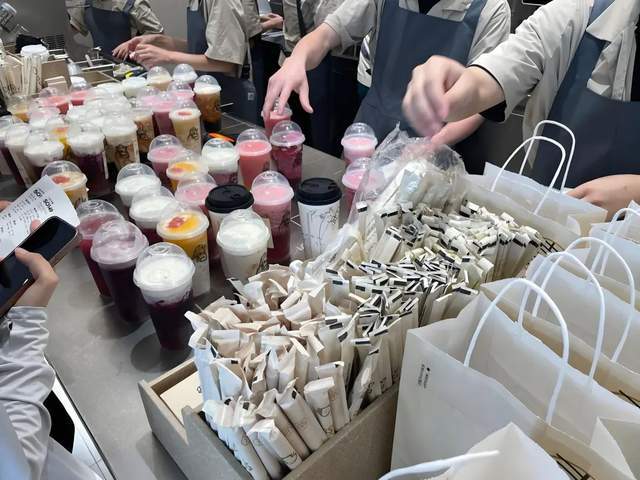
Core Insights - The latest round of the food delivery war began unexpectedly on July 5, with Taobao Shanguo (in collaboration with Ele.me) launching aggressive discounts, prompting Meituan to respond with its own unprecedented subsidy campaign [1][6] - Alibaba's market power is highlighted as it showcases its financial strength through substantial subsidies, with the goal of creating a promotional event called "Super Saturday" [1][3] - The tea and coffee sectors are the biggest beneficiaries of these subsidies, with a high chain rate and low average order value allowing for effective customer reach and perception of discounts [3][4] Group 1 - Taobao Shanguo initiated significant discounts on July 5, offering multiple high-value coupons to attract new users [1] - Meituan quickly countered with its own subsidy campaign, resulting in a record daily order volume of 1.2 billion for Meituan and over 800 million for Taobao Shanguo and Ele.me [1] - The tea and coffee sectors are experiencing a surge in orders due to high chain rates, with the tea industry expected to surpass a 50% chain rate in 2024 [3][4] Group 2 - Despite the apparent increase in sales, many restaurant owners report that profits have not improved, leading to increased operational costs due to the need for more staff [6][8] - The aggressive subsidies may lead to a distorted perception of pricing among consumers, potentially harming the long-term viability of restaurants as customers may expect similar discounts in the future [7][8] - Independent coffee brands are facing challenges as the subsidies favor larger chain brands, further squeezing their market space and threatening their survival [10]
外卖大战 “0元购”,狂欢内卷式竞争到底谁赚了?
Sou Hu Cai Jing· 2025-07-14 13:46
Core Viewpoint - The recent subsidy war among food delivery platforms like Meituan and Ele.me has sparked a frenzy of consumer spending, but it raises questions about the sustainability of such practices and their impact on market dynamics [1][3]. Group 1: Consumer Behavior - Consumers are actively participating in the subsidy-driven promotions, with offers like "18 off 18" and "0 yuan milk tea" leading to a surge in orders, creating a perception that not participating means losing out [1][3]. - A survey indicates that 46% of users believe that subsidies only provide temporary satisfaction, while 22% feel their attachment to products is based on these discounts [4]. Group 2: Market Dynamics - The aggressive subsidy strategies may lead to a fixed expectation of low prices among consumers, diminishing their sensitivity to discounts and potentially harming brand value [3][4]. - Concerns are rising that such promotional tactics could result in "involution" within the industry, leading to reduced profit margins and market stagnation [4]. Group 3: Industry Sustainability - The industry is urged to shift from a price competition model to one focused on quality to ensure sustainable growth, including better worker protections and innovative service expansions [4]. - The need for a balanced value proposition among platforms, merchants, delivery personnel, and consumers is emphasized as essential for long-term sustainability [4].
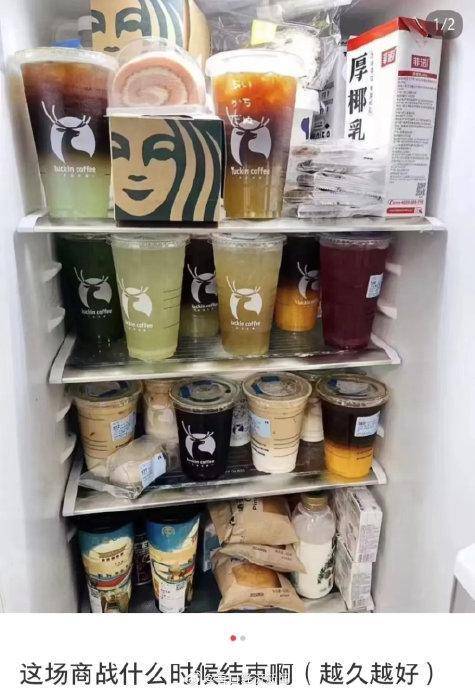
这次外卖大战,也许会培养起喝奶茶、咖啡的习惯
Sou Hu Cai Jing· 2025-07-14 13:28
Core Insights - The article discusses the ongoing competition in the food delivery and instant retail markets, highlighting the significant impact of subsidies on consumer behavior and market dynamics [3][4][10] - It emphasizes that while instant retail is growing, the expectations for its future growth may be overly optimistic, with projections suggesting a market size of only 3 trillion by 2030 [4][10] Group 1: Market Dynamics - The instant retail market, driven by food delivery, has seen substantial growth, with Meituan's orders reaching 1.5 billion and a 150% increase in the food delivery market [4][9] - Major players like Alibaba, JD.com, and Meituan are competing aggressively, with similar strategies focused on popular items like tea and coffee, rather than transaction volume [6][9] - The competition has led to a significant increase in order volume, but many small businesses are struggling to profit due to the low margins and high costs associated with delivery [7][10] Group 2: Competitive Strategies - Meituan's strong supply chain and market share in food delivery (70-80%) give it a competitive edge in instant retail, making it difficult for other platforms to catch up [9] - The article draws parallels between the current food delivery competition and past market battles, suggesting that the strategies employed by companies will determine their long-term success [8][10] - The ongoing subsidy wars are expected to lead to increased losses for companies, with estimates suggesting losses could reach tens of billions annually [10] Group 3: Consumer Behavior - The article notes that consumer habits are shifting towards instant retail, with a growing acceptance of quick delivery services, which may lead to sustained market growth [10] - The impact of subsidies on consumer behavior is significant, as they encourage trial and adoption of new products, potentially leading to long-term changes in consumption patterns [5][10] - However, the sustainability of these habits remains uncertain, as the market may revert to previous dynamics once the subsidies are reduced or eliminated [9][10]

晚点独家丨外卖混战②:淘宝不能停,美团也不能
晚点LatePost· 2025-07-14 13:20
Core Viewpoint - The ongoing competition between Meituan and Alibaba in the food delivery market is characterized by mutual distrust and aggressive strategies, with both companies continuously adjusting their tactics to outmaneuver each other [2][4][14] Group 1: Competitive Strategies - Meituan's strategy involves launching large-scale promotions and discounts to counter Alibaba's initiatives, resulting in a significant increase in order volume, reaching 1.5 billion orders in a single day [4][6] - Alibaba's Taobao Flash Sale aims to maintain a steady order volume of 80 million, focusing on building operational capacity before aggressively increasing order targets [5][10] - The overall market order volume has doubled from an average of 1 billion orders per day to approximately 2.5 billion, with Meituan capturing the majority of the increase [6][8] Group 2: Financial Investments - Both Meituan and Alibaba plan to invest a combined total of 500 billion yuan in the food delivery and retail market over the next few months, translating to over 5 billion yuan in daily subsidies [12] - The competition is expected to intensify as companies leverage their financial resources to attract consumers and increase market penetration [13][14] Group 3: Operational Performance - Meituan's delivery performance improved, with an average delivery time of 34 minutes for 1.5 billion orders, indicating enhanced operational efficiency [9] - Taobao Flash Sale reported a 96% on-time delivery rate for its 80 million orders, maintaining performance despite increased order volume [11] Group 4: Market Dynamics - The competitive landscape has shifted, with Meituan aggressively pursuing market share while Alibaba adopts a more cautious approach, focusing on stability and gradual growth [8][10] - The influx of subsidies and promotional activities has led to a significant increase in user engagement, with Meituan's app usage rising to 240 million users, up from an average of 170 million [14]

外卖大战不敢喊停:京东发起、淘宝接盘,美团绝不能输
3 6 Ke· 2025-07-14 11:32
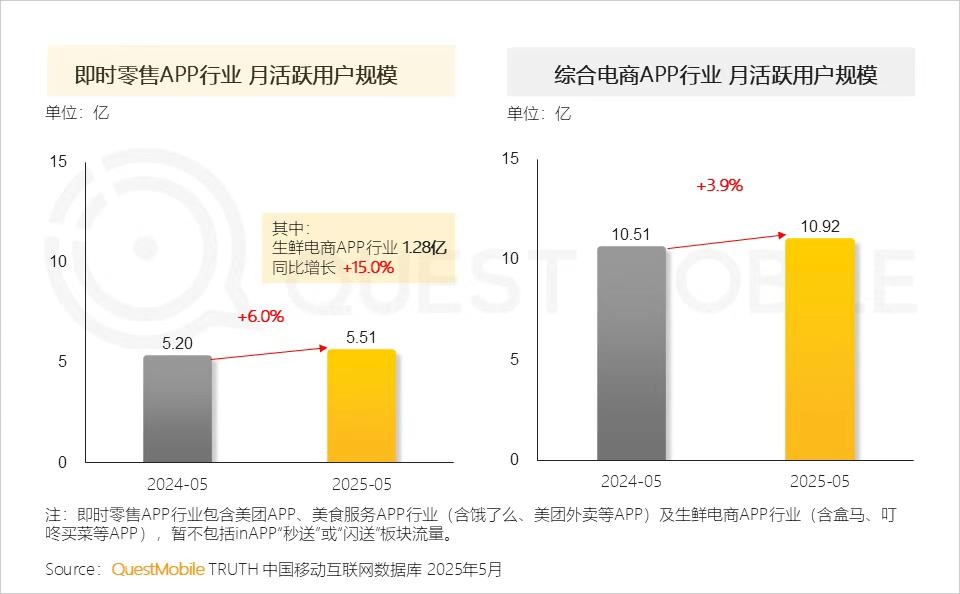
Core Insights - The competition in the instant retail and food delivery market is intensifying, with significant increases in active users and order volumes across platforms [1][3][4] - Major players like Meituan and Alibaba are launching aggressive promotional campaigns, including a new promotional event called "Super Saturday" to drive user engagement [3][4][15] - The shift from food delivery to broader instant retail services is underway, with platforms aiming to capture a larger share of the market by expanding their offerings beyond just food [6][22] Group 1: Market Dynamics - As of May 2025, the active user base for instant retail apps has reached 551 million, outpacing traditional e-commerce apps in growth [1] - Meituan reported over 150 million daily orders for instant retail, while Alibaba's Taobao Flash Sale and Ele.me announced over 80 million daily orders, excluding self-pickup and zero-cost purchases [4][9] - The competitive landscape has shifted significantly since Taobao Flash Sale's entry, disrupting the previous market equilibrium [9][15] Group 2: Strategic Moves - Alibaba is integrating Ele.me and Fliggy into its Chinese e-commerce business, indicating a strategic pivot to enhance its market position [3][9] - Meituan's promotional strategies include offering a large number of "0 Yuan Purchase" vouchers, primarily for chain restaurant products, to attract users [4][9] - The platforms are leveraging high-frequency demand for food delivery to drive user acquisition and engagement, with significant increases in active user rates during peak meal times [10][12] Group 3: Financial Implications - The intense competition is expected to lead to substantial financial losses for major players, with projections indicating losses of 41 billion RMB for Alibaba and 26 billion RMB for JD in the next year [15] - The marketing expenditures for e-commerce platforms are shifting towards food delivery as a more efficient customer acquisition channel, with Alibaba's 50 billion RMB subsidy plan seen as part of this strategy [14][15] - The long-term impact of sustained low-price promotions may alter consumer price expectations and purchasing behavior, potentially complicating future profitability [17][21] Group 4: Future Outlook - The transition from food delivery to non-food instant retail is seen as a natural progression, with significant growth in non-food categories such as groceries and household cleaning products [22] - The competition is expected to continue throughout the summer, with platforms vying for dominance in the instant retail space [24][27] - The ongoing battle among major players highlights the increasing importance of becoming comprehensive service platforms to avoid competitive disadvantages [25][26]