建材

Search documents
周末重磅!国务院批准!证监会,同意!特朗普,签了!新能源大消息......影响一周市场的十大消息
券商中国· 2025-07-20 09:31
Group 1: New Central Enterprise - China Yajiang Group - The Yarlung Tsangpo River downstream hydropower project has officially commenced, with a total investment of approximately 1.2 trillion yuan [2] - China Yajiang Group has been established as the 22nd central enterprise, following China Three Gorges Corporation and preceding State Energy Investment Corporation [2] Group 2: A-Share Merger - The China Securities Regulatory Commission has approved the merger of China Shipbuilding (600150.SH) and China Shipbuilding Industry Corporation (601989.SH), marking a significant step in the integration of major shipbuilding platforms [3] - Post-merger, the total asset scale of the surviving company will exceed 400 billion yuan, positioning it as the world's largest publicly listed shipbuilding company [4] - Both companies have reported earnings forecasts that significantly exceed market expectations, with China Shipbuilding projecting a 98.25% to 119.49% increase in net profit for the first half of 2025 [4] Group 3: New Energy Vehicle Industry Regulation - The Central Fourth Guidance Group is focusing on addressing irrational competition in the new energy vehicle industry, emphasizing the importance of regulatory measures for high-quality development [5][6] - A joint meeting by the Ministry of Industry and Information Technology, National Development and Reform Commission, and State Administration for Market Regulation has been held to further standardize competition in the new energy vehicle sector [6][7] - Key measures include enhancing supervision, establishing long-term mechanisms, and strengthening industry self-discipline to foster a healthy competitive environment [6][7] Group 4: Low-altitude Economy Development - The National Development and Reform Commission has convened a meeting to promote the safe and healthy development of the low-altitude economy, emphasizing the need for tailored approaches based on local conditions [8] - The meeting highlighted the importance of safety in development and the establishment of regulatory frameworks to prevent inefficient and harmful competition in the low-altitude industry [8] Group 5: Key Industries Growth Plans - The Ministry of Industry and Information Technology is set to release growth plans for ten key industries, including steel, non-ferrous metals, and petrochemicals, focusing on structural adjustments and the elimination of outdated capacity [9] Group 6: Stablecoin Legislation in the U.S. - President Trump has signed the "Guidance and Establishment of a National Innovation Act for Stablecoins," marking the first formal regulatory framework for digital stablecoins in the U.S. [10] Group 7: Stock Market Performance - The Nasdaq Composite Index reached a new historical high, with a slight increase of 0.05%, while major tech stocks showed mixed performance [11] - Chinese concept stocks mostly rose, with the Nasdaq Golden Dragon China Index increasing by 0.6% [12] Group 8: Upcoming Events - The 2025 World Artificial Intelligence Conference is scheduled to take place from July 26 to 28, featuring over 800 global enterprises and a record exhibition area [13] - The first batch of mid-year reports from Shenzhen Stock Exchange companies will be released soon, with several companies set to disclose their financials [14]



宏观周报(7月14日-20 日):反内卷成效初现,美国加密货币法案通过-20250720
Yin He Zheng Quan· 2025-07-20 06:49
Domestic Macro - Demand Side - The travel market is heating up during the summer, with domestic flight numbers averaging 14,500 per day, a 13.08% increase month-on-month and a 2.28% increase year-on-year[2] - Retail sales of passenger cars reached 571,000 units in the first two weeks of July, a year-on-year increase of 5.7%, but a month-on-month decrease of 6.7%[2] Domestic Macro - Production Side - The average operating rate of blast furnaces decreased by 0.3 percentage points to 83.35% as of July 20, while the operating rate of coke ovens fell by 0.94 percentage points to 72.93%[2] - The operating rate of asphalt plants increased by 6.58 percentage points to 32.4%, indicating significant growth in real estate infrastructure[2] Price Performance - As of July 18, the average wholesale price of pork rose by 0.2% week-on-week, while the average wholesale price of 28 monitored vegetables fell by 0.09%[2] - The PPI showed a decline in oil prices, with WTI and Brent crude oil prices dropping by 1.44% and 1.05%, respectively[3] Fiscal and Investment - This week saw the issuance of special government bonds increase significantly, with 123 billion yuan in new special bonds and 1,315 billion yuan in new special bonds (excluding debt relief) issued, marking a notable acceleration in issuance[3] - The cement shipment rate has rebounded, indicating an increase in construction activity, particularly in water conservancy and public facilities projects[3] Overseas Macro - The U.S. inflation rate for June was 2.7% year-on-year, with core inflation at 2.9%, indicating manageable inflation levels despite tariff impacts[4] - The U.S. "GENIUS Act" and other cryptocurrency-related bills have passed the House, supporting the development of private sector digital currencies and reinforcing the dollar's position[3]
从核心资产到老经济、从老赛道到新赛道
2025-07-19 14:02
Summary of Key Points from the Conference Call Industry or Company Involved - The conference call discusses the behavior of northbound capital in the Chinese stock market, particularly focusing on the food and beverage, home appliance, telecommunications, non-ferrous metals, real estate, and construction materials industries. Core Insights and Arguments - In Q2 2025, northbound capital significantly reduced its holdings in the food and beverage sector, with a total reduction of 13.8 billion yuan, indicating a negative outlook on economic conditions [1][3] - The home appliance sector experienced a reduction of 17.9 billion yuan, marking it as the sector with the highest reduction in holdings [3] - Notable white horse stocks closely tied to the Chinese economy, such as Midea, were significantly sold off, reflecting a contrarian view on economic prosperity [1][3] - Conversely, northbound capital increased its investments in telecommunications and non-ferrous metals, driven by clear industry trends, interest rate cuts, and overall sector performance [1][3] - The real estate and construction materials sectors saw increased investments based on policy dynamics and supply-side clearing logic, despite weak demand indicators [1][3] - Among large-cap stocks (market capitalization over 10 billion yuan), Kweichow Moutai and Midea were the most sold, while Ningde Times and Heng Rui Pharmaceutical saw the most significant increases in holdings [1][3] - Zijin Mining also received notable net inflows, indicating a shift in investment focus [1][3] Other Important but Potentially Overlooked Content - The banking sector showed a mixed response from northbound capital, with some banks being sold off while others were accumulated. Overall, the banking sector saw a net inflow of 500 million yuan, which is negligible compared to the total northbound holdings exceeding 200 billion yuan [4][5] - The investment focus in new sectors primarily centered on innovative pharmaceuticals and telecommunications, which were key areas for increased investment in Q2 [6] - A notable trend was the shift from core assets to traditional sectors and from old tracks to new tracks, exemplified by the selling of Kweichow Moutai and the buying of Zijin Mining [2][6]
完善全产业链多层次金融体系
Zhong Guo Zheng Quan Bao· 2025-07-18 20:59
Core Viewpoint - The Ministry of Industry and Information Technology (MIIT) is enhancing financial support for new industrialization, focusing on integrating finance with industry to promote innovation and development in key sectors [1][2]. Financial Support and Policy Initiatives - MIIT plans to improve financial policies to support new industrialization, emphasizing the integration of technology and industry [1]. - Over 3,100 financial and investment institutions have launched more than 800 financial products, resulting in a cumulative financing scale exceeding 1.2 trillion yuan, with an average of nearly 34 million yuan in financing support per benefiting enterprise [1]. - In the first half of the year, the A-share market raised 148.8 billion yuan for industrial enterprises, marking a 51.6% year-on-year increase [1]. Focus on Key Industries - The MIIT is collaborating with the People's Bank of China to direct more financial resources towards technology innovation, advanced manufacturing, green development, and support for small and medium-sized enterprises [2]. - The industrial added value of large-scale industries grew by 6.4% year-on-year, with the manufacturing sector's contribution to GDP stabilizing at 25.7% [2][3]. - Key industries such as electrical machinery, automotive, electronics, and chemicals have shown significant growth, contributing positively to the overall industrial economy [3]. New Growth Strategies - A new round of growth stabilization plans will be implemented for ten key industries, including steel and non-ferrous metals, focusing on structural adjustments and eliminating outdated production capacity [3]. - MIIT aims to accelerate the development of 6G technology and foster new industries, including bio-manufacturing and low-altitude industries [3][4]. Technological Advancements - The domestic hardware ecosystem has seen breakthroughs with several companies releasing globally significant products in high-growth areas such as AI and smart devices [4]. - The demand for digital consumption continues to rise, with mobile internet traffic experiencing double-digit growth for six consecutive months [4]. - As of June, China had 4.55 million 5G base stations and 1.118 billion 5G mobile users, indicating robust growth in telecommunications infrastructure [4].
上半年规上工业稳定向好 数字产业增势提速 钢铁、有色金属、石化、建材等十大重点行业稳增长方案即将出台
Zheng Quan Shi Bao· 2025-07-18 17:11
Group 1 - In the first half of the year, China's industrial added value above designated size grew by 6.4% year-on-year, with the manufacturing added value accounting for 25.7% of GDP [1] - The number of industrial enterprises above designated size reached 520,000, and profits in the manufacturing sector increased by 5.4% year-on-year [1] - The digital industry, driven by rapid advancements in digital technologies such as 5G and AI, achieved a business revenue growth of 9.3%, an increase of 3.4 percentage points compared to the same period last year [1] Group 2 - In the automotive industry, production and sales reached 15.621 million and 15.653 million units respectively, marking year-on-year growth of 12.5% and 11.4% [2] - New energy vehicles saw production and sales of 6.968 million and 6.937 million units, with year-on-year growth of 41.4% and 40.3%, making up 44.3% of total new car sales [2] - The Ministry of Industry and Information Technology plans to introduce stability growth plans for key industries such as steel, non-ferrous metals, petrochemicals, and building materials [2]
工信部:新一轮钢铁行业稳增长工作方案即将发布!
Sou Hu Cai Jing· 2025-07-18 12:00
Group 1 - The Ministry of Industry and Information Technology (MIIT) will implement a new round of growth stabilization work plans for key industries, including steel, non-ferrous metals, petrochemicals, and building materials [3] - MIIT aims to strengthen the industrial economy by promoting structural adjustments, optimizing supply, and eliminating outdated production capacity in key industries [3] - The "Artificial Intelligence +" initiative will be accelerated to enhance the deployment of large models in key manufacturing sectors, improving the level of intelligence [3] Group 2 - In the first and second quarters, the industrial added value above designated size grew by 6.5% and 6.3% year-on-year, respectively, indicating further growth on a high base from the previous year [3] - Key industries such as electrical machinery, automobiles, electronics, general equipment, chemicals, and non-ferrous metals have significantly contributed to the growth of industrial added value [3] - The proportion of added value from equipment manufacturing and high-tech manufacturing reached 35.5% and 16.4%, respectively, with profits in industries like electronics, electrical machinery, and general equipment growing by over 10% [3] Group 3 - The previous round of the steel industry growth stabilization plan was released on August 21, 2023, with a focus on maintaining dynamic balance in supply and demand, stable growth in fixed asset investment, and significant improvement in economic efficiency [4] - For 2023, the steel industry aims for a 3.5% growth in industrial added value and a research and development investment target of 1.5% [4] - In 2024, the industry plans to further optimize the development environment and industrial structure, with an expected growth in industrial added value of over 4% [4]
今年上半年规上工业增加值同比增长6.4%
Xin Jing Bao· 2025-07-18 10:53
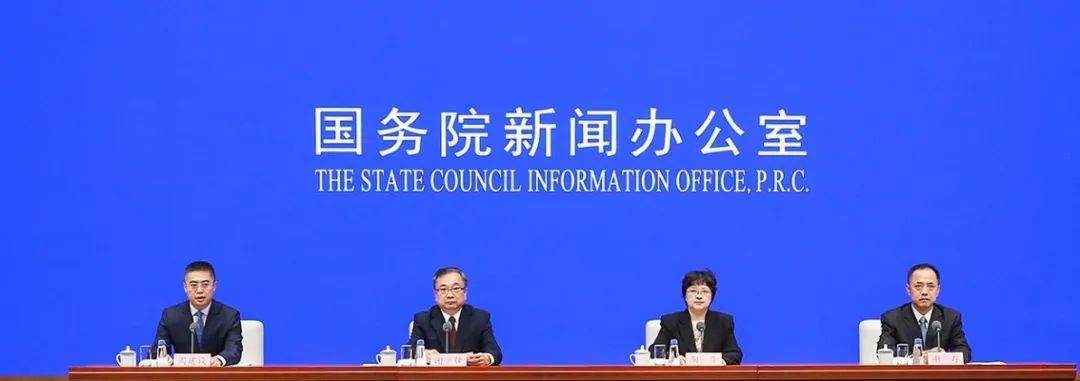
Core Insights - The industrial added value of large-scale industries in China grew by 6.4% year-on-year in the first half of the year, demonstrating strong resilience following a good start in the first quarter [1] - The manufacturing added value accounted for 25.7% of GDP, remaining stable [1] - Key industries such as electrical machinery, automobiles, electronics, general equipment, chemicals, and non-ferrous metals showed rapid growth, contributing significantly to the overall industrial growth [1] Group 1: Industrial Performance - In the first quarter and second quarter, the industrial added value grew by 6.5% and 6.3% year-on-year, respectively, building on a high base from the previous year [1] - The contribution rates of equipment manufacturing and high-tech manufacturing increased, with their added values reaching 35.5% and 16.4% of large-scale industries, respectively [1] - Profits in industries such as electronics, electrical machinery, and general equipment grew by over 10% [1] Group 2: Regional Contributions - All 31 provinces reported growth in industrial added value, with provinces like Fujian, Anhui, Henan, and Hunan achieving over 8% growth [1] - Eight industrial provinces saw profit growth rates exceeding the national average, with Henan, Hunan, Hubei, and Jiangsu achieving double-digit growth [1] Group 3: Future Initiatives - The Ministry of Industry and Information Technology plans to implement a new round of growth stabilization work for ten key industries, including steel, non-ferrous metals, petrochemicals, and building materials [1] - Support will be provided to key industrial provinces to enhance their roles, including policy implementation, new growth point cultivation, and industrial transformation [1] - The ministry aims to accelerate the "Artificial Intelligence +" initiative, promoting the deployment of large models in key manufacturing sectors to enhance intelligence levels [1]
重大利好!汽车、钢铁等十大重点行业稳增长方案即将出台
Zheng Quan Shi Bao· 2025-07-18 09:49
Group 1 - The core viewpoint of the news is the significant growth in China's industrial and information technology sectors in the first half of 2025, with a focus on digital technology advancements and manufacturing performance [1] - In the first half of 2025, the industrial added value of large-scale enterprises in China increased by 6.4% year-on-year, with the manufacturing sector accounting for 25.7% of GDP [1] - The number of large-scale industrial enterprises reached 520,000, and profits in the manufacturing sector grew by 5.4% year-on-year [1] - The digital industry saw a business revenue increase of 9.3% year-on-year, with a growth rate improvement of 3.4 percentage points compared to the previous year [1] - Significant advancements in technology and industry integration were noted, including the certification of the AG600 amphibious firefighting aircraft and the rapid application of humanoid robots across various fields [1] - The production of industrial robots and service robots increased by 35.6% and 25.5% year-on-year, respectively [1] - The equipment manufacturing sector accounted for 35.5% of the total industrial added value, demonstrating its role as a stabilizer in industrial development [1] - Fixed asset investments in key manufacturing sectors such as railways, shipbuilding, aerospace, and automobiles achieved double-digit growth [1] - Investment in equipment and tools increased by 17.3% year-on-year, contributing 86% to the overall investment growth [1] Group 2 - In the automotive industry, production and sales reached 15.621 million and 15.653 million units, respectively, with year-on-year growth of 12.5% and 11.4% [2] - New energy vehicles saw production and sales of 6.968 million and 6.937 million units, with year-on-year growth of 41.4% and 40.3%, respectively, making up 44.3% of new car sales [2] - The Ministry of Industry and Information Technology plans to ensure stable industrial economic operations and promote the integration of technological and industrial innovation [2] - Upcoming growth stabilization plans for key industries such as steel, non-ferrous metals, petrochemicals, and building materials are expected to be released [2] - The Ministry will also issue digital transformation plans for various industries, focusing on 82 typical scenarios for intelligent upgrades [2] - Future industry innovations will include the development of humanoid robots, the metaverse, and brain-computer interfaces, aiming to cultivate new industries and drive new growth [2]
工信部:实施新一轮钢铁、有色金属、石化等重点行业稳增长行动
2 1 Shi Ji Jing Ji Bao Dao· 2025-07-18 09:39
Core Insights - The industrial sector in China showed a robust performance in the first half of 2023, with a year-on-year growth of 6.4% in industrial added value, surpassing GDP growth by 1.1 percentage points [1] - Manufacturing investment increased by 7.5% year-on-year, supported by major engineering projects and technological upgrades [1] - Key industries such as electrical machinery, automotive, electronics, and chemicals contributed significantly to industrial growth, with high-tech manufacturing accounting for 16.4% of the total industrial added value [1][4] Group 1: Industrial Growth and Performance - All 31 provinces in China reported growth in industrial added value, with notable increases in Fujian, Anhui, Henan, and Hunan exceeding 8% [2] - Eight major industrial provinces achieved profit growth rates above the national average, with Henan, Hunan, Hubei, and Jiangsu recording double-digit growth [2] - The equipment manufacturing sector played a stabilizing role, representing 35.5% of total industrial added value, with profits increasing by 7.2% from January to May [4] Group 2: Policy and Future Directions - The government plans to implement a new round of growth stabilization measures across ten key industries, focusing on structural adjustments and eliminating outdated production capacity [2][5] - Emphasis will be placed on enhancing development quality through technological innovation and promoting high-end manufacturing [3] - Initiatives will be taken to support small and medium enterprises, reduce their burdens, and improve the overall business environment [3]
沪指冲关3600点,热点频繁切换,谁将脱颖而出?
Mei Ri Jing Ji Xin Wen· 2025-07-18 09:12
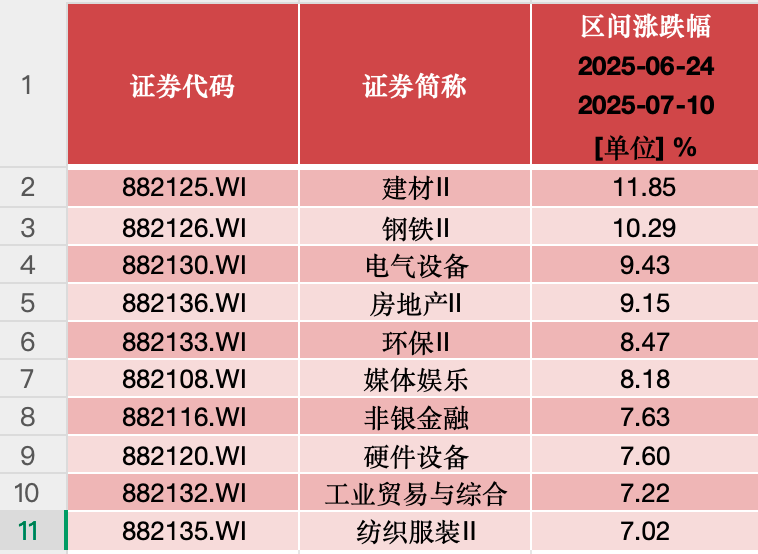
Core Viewpoint - The recent surge of the Shanghai Composite Index (SHCI) above 3500 points has been characterized by two distinct phases, with unexpected sectors leading the gains, particularly in construction materials, steel, and real estate during the initial phase [1][4]. Phase One: Initial Surge to 3500 Points - From June 24 to July 10, the construction materials sector saw an overall increase of 11.85%, while the steel sector rose by 10.29%. The real estate sector, often overlooked, also experienced a gain of 9.15% during this period [2]. - The electrical equipment sector, which includes batteries and photovoltaic devices, also recorded a rise of over 9% [3]. Phase Two: Stabilization and Sector Rotation - After breaking through the 3500-point mark, the SHCI has stabilized, leading to a noticeable shift in market focus [4]. - The pharmaceutical and biotechnology sectors emerged as the best performers recently, with significant contributions from innovative drug companies such as WuXi AppTec and Hengrui Medicine, which saw increases of 6.05% and 3.19% respectively [5]. - The hardware equipment sector has shown a cumulative increase of 13.52% since June 24, with notable stocks like Industrial Fulian and NewEase Technology leading the charge [6]. Future Outlook: Potential Sectors for Growth - Analysts suggest that as the SHCI aims for 3600 points, sectors such as high-dividend banks and green electricity will play a crucial role in supporting the index [8]. - The non-ferrous metals sector is also expected to benefit from rising copper and aluminum prices, showing an upward trend since July [8]. - Consumer sectors, including liquor and dairy products, remain at historically low valuations, presenting opportunities for investment [8]. - Growth sectors like AI computing and semiconductor equipment are anticipated to continue their strong performance, driven by recent successes in the U.S. market [8]. - The humanoid robotics sector is also expected to re-enter an upward trajectory following its adjustment period [9].