
农业

Search documents
日度策略参考-20250924
Guo Mao Qi Huo· 2025-09-24 05:48
1. Report Industry Investment Ratings - **Bullish**: Gold, Silver, Carbonate Lithium, Soybean Oil (medium to long - term), Rapeseed Oil [1] - **Bearish**: Asphalt, PTA, Pure Benzene, Styrene, Caustic Soda, LPG [1] - **Sideways**: Macro - finance (including stocks and bonds), Copper, Aluminum, Alumina, Zinc, Nickel, Stainless Steel, Tin, Polysilicon, Ribbed Bar, Hot - Rolled Coil, Iron Ore, Manganese Silicide, Ferrosilicon, Plate, Soda Ash, Coking Coal, Coke, Palm Oil, Soybean Meal, Pulp, Logs, Crude Oil, Fuel Oil, BR Rubber, Urea, PP, PVC, Container Shipping to Europe [1] 2. Core Views - The stock index is bullish in the long - term, but the probability of a unilateral upward pattern in the market before the National Day holiday is low, and it is recommended to control positions. The bond futures are favored by the asset shortage and weak economy, but the central bank's short - term interest rate risk warning suppresses the upward trend [1]. - Gold and silver prices may be strong in the short - term, but attention should be paid to the increased volatility risk before the National Day holiday [1]. - Copper and aluminum prices are under pressure in the short - term, but are expected to stabilize or have limited downside space due to overseas easing cycles and the arrival of the consumption season [1]. - The supply and demand situation of various industrial and agricultural products is complex, with different price trends affected by factors such as production, inventory, policy, and market sentiment [1]. 3. Summary by Industry Macro - finance - Stocks: Long - term bullish, low probability of unilateral rise before the National Day holiday, recommend controlling positions [1]. - Bonds: Favored by asset shortage and weak economy, but short - term interest rate risk warning from the central bank suppresses the upward trend [1]. Non - ferrous Metals - Gold and Silver: Short - term bullish, but need to be cautious about pre - holiday volatility [1]. - Copper: Pressured in the short - term, but expected to stabilize with overseas easing and domestic demand improvement [1]. - Aluminum: Pressured in the short - term, but limited downside space due to the arrival of the consumption season [1]. - Alumina: Fundamentals are weak, but limited downside space as the price approaches the cost line [1]. - Zinc: Social inventory accumulation pressures the price, and attention should be paid to policy changes [1]. - Nickel: Short - term sideways to slightly bullish, with continuous attention to supply and macro changes [1]. - Stainless Steel: Short - term sideways to slightly bullish, with attention to actual production of steel mills [1]. - Tin: There is an expectation of demand improvement in the peak season, and low - long opportunities can be focused on [1]. - Polysilicon: Supply is recovering, with production reduction expectations and market sentiment influenced by rumors [1]. - Carbonate Lithium: Bullish due to the approaching peak season of new energy vehicles and strong energy storage demand [1]. Ferrous Metals - Ribbed Bar, Hot - Rolled Coil, Iron Ore: Valuation returns to neutral, industrial driving force is unclear, and macro - driving force is positive [1]. - Manganese Silicide and Ferrosilicon: Short - term fundamentals are not optimistic, with supply recovery, possible demand weakening, and high inventory [1]. - Plate and Soda Ash: Supply surplus pressure exists, and prices are under pressure despite marginal improvement in peak - season demand [1]. - Coking Coal and Coke: After a sharp correction, there is strong bottom support, but the upward space is not open, and the pre - holiday market may be sideways [1]. Agricultural Products - Palm Oil: Short - term sideways adjustment, consider going long at the lower end of the sideways range [1]. - Soybean Oil: Bullish in the medium to long - term, with attention to the impact of Sino - US negotiations on the market [1]. - Rapeseed Oil: There is a de - stocking trend, and it is recommended to go long and conduct positive spreads between months [1]. - Cotton: Short - term wide - range sideways, and the market may face pressure with the listing of new cotton in the long - term [1]. - Raw Sugar: Starting to rebound, but limited upward space due to supply surplus, and it is recommended to short at high prices [1]. - Corn: Bearish in the short - term due to increased supply and price pressure from deep - processing enterprises [1]. - Soybean Meal: Sideways, with weak short - term market sentiment, and it is recommended to observe carefully [1]. - Pulp: The bottom range is initially showing, but there is no bullish driving force yet, and attention should be paid to the cancellation volume of warehouse receipts after September delivery [1]. - Logs: Fundamentals have no obvious changes, with falling foreign quotes and firm spot prices, and the futures are sideways [1]. - Live Pigs: Bearish as the supply continues to increase and downstream demand is limited [1]. Energy and Chemicals - Crude Oil and Fuel Oil: Sideways, affected by factors such as US inventory, OPEC+ production increase, and Fed interest rate cuts [1]. - Asphalt: Bearish, with the falsification of demand expectations and sufficient supply of raw materials [1]. - Shanghai Rubber: Bullish in the short - term due to typhoon influence and reduced inventory [1]. - BR Rubber: Sideways, with attention to the capital side due to factors such as supply and demand and changes in warehouse receipts [1]. - PTA: Bearish, affected by factors such as production recovery, falling oil prices, and PX device maintenance delays [1]. - Ethylene Glycol: Sideways, with a complex situation of supply and demand and the impact of new device production [1]. - Short - fiber: Sideways, affected by factors such as device recovery and changes in market delivery willingness [1]. - Pure Benzene and Styrene: Bearish, with increasing supply and import pressure [1]. - Urea: Sideways, with limited upward space due to insufficient domestic demand and support from anti -内卷 and cost [1]. - PP: Sideways, with weakening support from maintenance and less - than - expected downstream improvement [1]. - PVC: Sideways, with increased supply pressure and more near - month warehouse receipts [1]. - Caustic Soda: Bearish, with unfulfilled peak - season expectations and inventory accumulation [1]. - LPG: Bearish, affected by OPEC production increase, high domestic oil inventory, and weak chemical demand [1]. Others - Container Shipping to Europe: Sideways, with the possibility of a low - level rebound and expected to stop falling and stabilize [1].
2025年8月全国油菜籽(普通)集贸市场价格当期值6.34元/公斤,同比增长0.6%
Chan Ye Xin Xi Wang· 2025-09-24 03:06
近一年全国油菜籽(普通)集贸市场价格统计图 2025年8月,全国油菜籽(普通)集贸市场价格当期值为6.34元/公斤,比2025年7月上涨0.01元/公斤, 环比增长0.1%,增幅增加0.1个百分点,同比增长0.6%,增幅增加0.4个百分点。 相关报告:智研咨询发布的《2025-2031年中国油菜籽行业市场行情动态及投资前景研判报告》 数据来源:国家统计局 ...


新疆:为打造向西开放桥头堡注入金融动能
Jin Rong Shi Bao· 2025-09-24 02:11
Core Viewpoint - Xinjiang is leveraging its geographical advantages to enhance its role in the Belt and Road Initiative, significantly boosting its foreign trade and financial services to support the development of the Euro-Asian corridor [1][2][4]. Trade and Foreign Trade Development - Xinjiang's total foreign trade import and export value reached 356.31 billion yuan from January to August 2025, marking a 25.4% year-on-year increase, achieving three consecutive years of surpassing 300 billion yuan [1]. - The region has seen a substantial increase in the number of foreign trade enterprises, growing from a few to over 10,000, with cross-border receipts and payments exceeding 370 billion USD [2]. Financial Services and Policies - The People's Bank of China (PBOC) in Xinjiang has been actively improving financial service policies to support foreign trade, including the establishment of a comprehensive service window for foreign exchange [3][5]. - A series of foreign exchange management policies have been implemented to optimize the business environment for foreign-related enterprises, significantly simplifying processes and reducing transaction times [3][6]. Free Trade Zone Initiatives - The establishment of the Xinjiang Free Trade Zone on November 1, 2023, marks a significant development opportunity for the region, with various policies aimed at enhancing international trade and attracting foreign investment [4][5]. - Financial institutions in Xinjiang have introduced specialized support plans for the Free Trade Zone, focusing on infrastructure, technological innovation, and green development, with loans in the zone reaching 133.49 billion yuan by June 2025, a 7% increase [5]. Cross-Border Financial Innovations - The PBOC has introduced innovative policies to facilitate cross-border capital operations, including lowering the threshold for multinational companies to engage in cross-border fund concentration from 100 million USD to 50 million USD [7][8]. - The implementation of a "zero threshold + recommendation system" for cross-border RMB settlement has significantly reduced costs and improved efficiency for enterprises in the Free Trade Zone [6][7]. Export Growth and Confidence - The financial service enhancements have bolstered the confidence of foreign trade enterprises, with companies like Xinjiang Tianyun Organic Agriculture Co., Ltd. increasing their export share from 10% to an expected 20% of total output [8].
2025第四届海南国际设计师大赛在陵水落幕
Hai Nan Ri Bao· 2025-09-24 01:49
Core Insights - The 2025 Fourth Hainan International Designer Competition concluded in Lingshui, promoting the landing of 7 projects in the area [1][2][3] Group 1: Event Overview - The event was themed "Digital Links the World, Design Empowers Going Global," focusing on the integration of digital creativity and industry [2] - A total of 676 teams from 20 countries and regions participated, submitting 1,325 works across two main categories: IP and product design, and digital and interactive design [2] Group 2: Project Highlights - The competition emphasized the transformation of design results into industrial applications, establishing a platform that connects creative resources with Hainan's industrial needs [3] - Seven design projects are set to settle in Lingshui's Hai Gui Town, with a strategic partnership formed between Lingshui Goodies, Springlight Group, and Hai Gui Town [3] - A number of outstanding teams and works will be included in the "Hainan International Design Island Design Resource Pool," promoting the integration of design with manufacturing, cultural tourism, and agriculture [3]
我省各地全力防御台风“桦加沙”
Hai Nan Ri Bao· 2025-09-24 01:38
提前部署 严阵以待 我省各地全力防御台风"桦加沙" ① 9月23日,海口电力工人在修剪靠近电线的树枝。新华社记者 郭程 摄 ② 9月23日,海口南港码头港池防台风临时停放点,渔民将渔船拖运上岸。海南日报全媒体记者 陈元 才 摄 ③ 9月23日,琼海博鳌机场工作人员使用工具加固大门。 海南机场供图 海南日报全媒体记者 根据气象部门消息,超强台风"桦加沙"预计将于24日中午到晚上在广东台山到湛江一带沿海登陆,登陆 后向偏西方向移动穿过雷州半岛。受此影响,我省将迎来强风雨天气。风雨来袭,我省各市县、各部门、各 单位提前部署,严阵以待,推动各项防御和保障工作落实落细,全力确保人民群众生命财产安全和市场价格 稳定有序。 海口: 储备约1.2万吨蔬菜 9月23日上午,海南日报全媒体记者在海口菜篮子海航豪庭店内看到,市民正在有序排队买菜,在该店特 价菜专区,"每人限购三斤"的标识清晰可见。 记者从海口市商务局获悉,目前海口蔬菜、水果、肉蛋奶以及米面油等生活必需品储备充足,流转顺 畅。 截至9月23日17时,海口4家蔬菜批发市场和大型连锁超市,应急调运蔬菜当日出货后存货7916吨、政府 应急蔬菜储备4276吨,合计可动用蔬菜 ...

研究所晨会观点精萃-20250924
Dong Hai Qi Huo· 2025-09-24 01:25
1. Report Industry Investment Ratings No specific industry investment ratings are provided in the report. 2. Core Viewpoints of the Report - Overseas, Fed Chair Powell mentioned balancing inflation concerns and a weakening job market in future interest - rate decisions, with the US dollar index steady and global risk appetite cooling. Domestically, economic data such as consumption, investment, and industrial added - value in August were lower than previous values and market expectations, and the central bank adhered to an independent monetary policy. The market's short - term upward macro - drive has weakened, and attention should be paid to China - US trade negotiations and domestic incremental policies [2]. - Different asset classes have different trends: stock indices are expected to fluctuate in the short term, with a cautious long - position approach; treasury bonds are expected to fluctuate, with a cautious wait - and - see attitude; for commodities, black metals, energy chemicals, and glass are expected to fluctuate in the short term, with a cautious wait - and - see approach; non - ferrous metals and precious metals are expected to fluctuate, with a cautious long - position approach [2]. 3. Summaries by Relevant Catalogs 3.1 Macro - finance - Overseas, the Fed's interest - rate decision and the weakening job market impact the global situation. Domestically, economic data shows a slowdown in domestic demand, and the central bank adheres to an independent monetary policy. The short - term upward macro - drive weakens, and attention should be paid to China - US trade negotiations and domestic incremental policies. Stock indices and treasury bonds are expected to fluctuate in the short term, with a cautious long - position for stock indices and a cautious wait - and - see for treasury bonds [2]. 3.2 Stock Indices - Affected by sectors such as tourism, hotels, biomedicine, and small metals, the domestic stock market declined slightly. Economic data shows a slowdown in domestic demand, and the central bank adheres to an independent monetary policy. The short - term upward macro - drive weakens, and attention should be paid to China - US trade negotiations and domestic incremental policies. Short - term cautious long - position is recommended [3]. 3.3 Black Metals 3.3.1 Steel - The domestic steel futures and spot markets slightly corrected on Tuesday, with low trading volume. Policy expectations were disappointed, and market risk - aversion increased. Demand weakened, but there were differences among varieties. Supply is regulated by policies. The short - term steel market is likely to fluctuate within a range [4]. 3.3.2 Iron Ore - On Tuesday, iron ore futures and spot prices declined. Steel mills continued to replenish stocks before the National Day, and iron ore production increased. Global iron ore shipments decreased, while arrivals increased. The price is expected to fluctuate within a range, with a negative feedback risk after November [4][5]. 3.3.3 Silicon Manganese/Silicon Iron - On Tuesday, the spot prices of silicon iron and silicon manganese were flat, and the futures prices slightly declined. The price of silicon iron is supported by electricity costs, and the production reduction is limited. The futures prices of both are expected to continue to fluctuate within a range [5]. 3.4 Non - ferrous Metals and New Energy 3.4.1 Copper - The manufacturing PMIs in the Eurozone and the UK were weaker than expected, and the previous recovery of the global manufacturing PMI was not sustainable. Copper concentrate production is high, and future demand may decline. The upside space is limited [7]. 3.4.2 Aluminum - On Tuesday, the aluminum price continued to fall, and the position decreased. After the Fed's interest - rate cut, non - ferrous metals returned to fundamental trading. The current aluminum fundamentals are weak, with slow inventory reduction and low - intensity demand recovery [7]. 3.4.3 Aluminum Alloy - The supply of scrap aluminum is tight, and production costs are rising. It is in the off - season of demand, and orders are growing slowly. The price is expected to fluctuate strongly in the short term, but the upside space is limited [8]. 3.4.4 Tin - The combined operating rate of Yunnan and Jiangxi is low, mainly affected by maintenance and tight ore supply, but the impact is expected to be short - term. Terminal demand is weak. The price is expected to fluctuate in the short term, supported by maintenance and peak - season expectations, but the upside is under pressure [8]. 3.4.5 Lithium Carbonate - On Tuesday, the lithium carbonate futures price declined. The current supply and demand are both increasing, and the fundamentals are improving marginally. The price is expected to fluctuate, and attention should be paid to the upper pressure range [9]. 3.4.6 Industrial Silicon - On Tuesday, the industrial silicon futures price declined. There is no obvious positive factor, and the price is expected to fluctuate within a range [9]. 3.4.7 Polysilicon - On Tuesday, the polysilicon futures price declined. Spot prices have increased, and there are still strong policy expectations. It is expected to fluctuate at a high level in the short term, and attention should be paid to the support of spot prices [10]. 3.5 Energy and Chemicals 3.5.1 Crude Oil - The market is concerned about the increasing threat to Russian oil supply, and oil prices rebounded slightly. However, Iraq may resume exports, so the short - term oil price will continue to fluctuate [11]. 3.5.2 Asphalt - The rebound of oil prices drove asphalt prices up, but the peak - season demand is over, and there is still excess pressure. In the later stage, attention should be paid to the extent of following the increase of oil prices [11][12]. 3.5.3 PX - The PX futures price fluctuates with the polyester sector, with support from crude oil costs. The PXN spread has decreased, and it is expected to fluctuate weakly, with some support below [12]. 3.5.4 PTA - The stimulus of PTA production - cut rumors has ended, and there is no substantial news. Downstream demand has declined, and inventory has increased. Although there are cost supports, the futures price may decline under the influence of short - term capital [12]. 3.5.5 Ethylene Glycol - The ethylene glycol price remains in a low - level fluctuation. Port inventory has changed little, and downstream demand is weak. The price is expected to continue to fluctuate [13]. 3.5.6 Short - fiber - Short - fiber prices have declined slightly. Terminal orders have increased seasonally, but the increase is limited. Inventory has accumulated slightly, and the price is expected to fluctuate weakly in the medium term [13]. 3.5.7 Methanol - The methanol price in Taicang fluctuates weakly. In the short term, the supply is still in excess, but in the medium - to - long - term, attention should be paid to the impact of imports in October, and there may be opportunities to go long [14]. 3.5.8 PP - The PP market price has declined. Although the downstream demand has improved, the supply is still abundant. It is expected to fluctuate weakly in the short term, and attention should be paid to the peak - season demand [14]. 3.5.9 LLDPE - The LLDPE market price has declined. Supply has increased, and demand is less than expected. The price is expected to fluctuate weakly, but there is some support from oil prices [15][16]. 3.5.10 Urea - The urea market is in a situation of strong supply and weak demand, with inventory differentiation. The short - term pressure is high, and the price is expected to be weak [16]. 3.6 Agricultural Products 3.6.1 Corn - In the Northeast, the new - season corn is being harvested smoothly, with high opening prices. In North China, the price of new corn has declined, and the price of old corn is firm. In the sales area, the price is stable, and there is support from feed mills' replenishment. The market generally expects the price to decline during the peak - harvest period from mid - October to November [18]. 3.6.2 US Soybeans - The overnight CBOT soybean price increased slightly. Argentina's cancellation of export taxes on soybeans and other products has a negative impact, but there is some support from the downgrade of US soybean crop ratings and increased China - US contacts [18]. 3.6.3 Soybean Meal and Rapeseed Meal - The domestic short - term supply - demand surplus situation remains unchanged. Argentina's cancellation of export taxes has limited impact on the domestic market. The overall supply in the fourth quarter is sufficient, and soybean meal should not be overly shorted [18]. 3.6.4 Oils - The soybean oil market has a situation of strong supply and weak demand. The rapeseed oil market is cautious due to Sino - Canadian trade relations, and inventory is decreasing. The palm oil market has improved export demand and decreased production, with positive data supporting the price [18]. 3.6.5 Pigs - Pig prices have reached a new low this year, and breeding profits have shrunk. The supply of pigs is sufficient, and demand is stable. The price is expected to stabilize in the second half of the month, with limited rebound space [19].
2025中国农民丰收节辽宁城乡群众联欢暨金秋消费季活动举行
Liao Ning Ri Bao· 2025-09-24 01:02
Core Insights - The event celebrated the achievements in agricultural development and rural revitalization in Liaoning Province, emphasizing the theme "Celebrating Agricultural Harvest, Enjoying a Better Life" [1] - The event showcased the continuous improvement in grain and important agricultural product production capacity, modernization, and digitalization of agricultural machinery [1] - The integration of agriculture, culture, and tourism is enhancing rural revitalization and stimulating rural development [1] Agricultural Development - The province's agricultural production capacity has been consistently improving, with significant advancements in agricultural machinery modernization and digitalization [1] - The development of characteristic industries is gaining momentum, with accelerated progress in the "whole industry chain" development [1] Brand Value and Financial Support - The provincial agricultural and market regulatory departments released a brand value list, highlighting six brands with values exceeding 10 billion yuan, including Panjin River Crab and Dandong Strawberry [1] - Seven brands, such as Xifeng Plum Deer and Donggang Mixed Clam, have brand values between 5 billion to 10 billion yuan [1] - Financial institutions launched the "Facility Agricultural Guarantee Loan" project to support agricultural industry development [1] E-commerce Initiatives - E-commerce companies announced policies to assist farmers and promote agricultural products, facilitating the upward movement of agricultural and sideline products [1]
鲍威尔称美股估值较高,俄罗斯讨论柴油出口禁令
Dong Zheng Qi Huo· 2025-09-24 00:45
1. Report Industry Investment Ratings No relevant content provided. 2. Core Views of the Report - Overall, the report analyzes various financial and commodity markets, including macro - strategy, black metals, non - ferrous metals, and energy chemicals. It provides insights into market trends, influencing factors, and offers corresponding investment suggestions for each sector [1][2][3]. 3. Summary by Related Catalogs 3.1 Financial News and Comments 3.1.1 Macro Strategy (Gold) - Trump plans to impose strong tariffs on Russia, and Powell emphasizes employment and inflation risks. Gold prices are driven up by Fed's potential rate - cut expectations and Trump's tariff sanctions, but there is a risk of correction before the National Day holiday in China [13][14]. - Investment advice: Pay attention to the risk of price correction in the short term [15]. 3.1.2 Macro Strategy (Foreign Exchange Futures - US Dollar Index) - Three Fed officials think setting an inflation target range is more beneficial. Trump believes Ukraine can retake all its territory, and Powell says US stocks are "valued quite high". The US dollar index is expected to be weak in the short term [16][17][18]. - Investment advice: The US dollar index is expected to weaken in the short term [19]. 3.1.3 Macro Strategy (Stock Index Futures) - Wang Yi meets with US congressmen, and China's education reaches the average level of high - income countries. The A - share market shows a V - shaped reversal with increased trading volume, and the technology sector remains resilient. Short - term attention should be paid to trading volume changes [20][21]. - Investment advice: Consider moderate profit - taking [22]. 3.1.4 Macro Strategy (US Stock Index Futures) - Fed officials have different views on interest rate cuts. US September Markit manufacturing and services PMI decline. Powell mentions that the stock market is over - valued, and there may be short - term fluctuations, but the overall outlook is still positive [23][24][27]. - Investment advice: Although valuation concerns may cause short - term disturbances, maintain a bullish view overall [28]. 3.1.5 Macro Strategy (Treasury Bond Futures) - The central bank conducts 276.1 billion yuan of 7 - day reverse repurchase operations, with a net withdrawal of 1.09 billion yuan on the day. The bond market is in a weak sentiment, and short - term trading should follow a range - bound strategy [29]. - Investment advice: Adopt a range - bound trading strategy in the short term and avoid chasing up [31]. 3.2 Commodity News and Comments 3.2.1 Agricultural Products (Soybean Meal) - Domestic soybean mills' operating rates and soybean crushing volumes during the National Day holiday are reported, and some mills in Guangdong stop production due to a typhoon. Argentina suspends export taxes on grains and oilseed meals, affecting the market [32][33]. - Investment advice: Wait and see for now, and pay attention to whether M2601 can be effectively supported at 2900 [34]. 3.2.2 Agricultural Products (Soybean Oil/Rapeseed Oil/Palm Oil) - Malaysia's palm oil production from September 1 - 20 decreases. Argentina's tax - exemption policy impacts the global oil market, but short - term oversold rebound opportunities can be considered [35][36][37]. - Investment advice: Consider short - term oversold rebound opportunities in the P2601 contract, but control positions [37]. 3.2.3 Agricultural Products (Pigs) - Muyuan Co., Ltd. establishes an overseas business team. The pig market is in a negative feedback stage, with the short - term trend following the spot market and a medium - long - term view of shorting on rebounds [38]. - Investment advice: Short on rebounds unilaterally and continuously monitor reverse spreads [39]. 3.2.4 Agricultural Products (Corn) - Northeast corn spot prices continue to decline. With the approaching of the new corn season, the market expects a bumper harvest and normal listing, and the mid - term view is bearish [40]. - Investment advice: Hold existing short positions [40]. 3.2.5 Black Metals (Rebar/Hot - Rolled Coil) - The total new contracts signed by five major construction central enterprises in the first eight months exceed 4.7 trillion yuan, and the average construction machinery operating rate in August is 43.42%. Steel prices are range - bound with limited upward and downward space [41][42]. - Investment advice: Expect a range - bound rebound before the holiday, but the space is limited [43]. 3.2.6 Agricultural Products (Corn Starch) - China's corn starch exports in August decline. The price of raw corn stops falling, and the export demand is not expected to have a significant positive impact on the fundamentals [44]. - Investment advice: The long - term supply - demand situation of starch is bearish for the corn - starch price spread, but pay attention to potential changes in the regional price spread after the large - scale listing of Northeast corn [44]. 3.2.7 Agricultural Products (Red Dates) - Red dates in Xinjiang are growing normally, and the futures price of the main contract CJ601 shows a small increase. The price is expected to be range - bound, and attention should be paid to the development of jujube fruits in the production area and the purchasing situation in the sales area [45][46]. - Investment advice: The futures price is expected to be range - bound, and pay attention to the development of jujube fruits and purchasing situation [46]. 3.2.8 Non - Ferrous Metals (Alumina) - An electrolytic aluminum project in Indonesia is expected to start in stages by the end of 2025. The alumina market has an oversupply problem, and the import pressure is increasing [47][48]. - Investment advice: Short on rallies [49]. 3.2.9 Non - Ferrous Metals (Polysilicon) - A photovoltaic component tender sets a price limit. Polysilicon prices are expected to be range - bound, and the spot price is not expected to fall in October. The component price is expected to be range - bound, and the terminal demand may decline [50][51][52]. - Investment advice: The polysilicon price is expected to be range - bound between 50,000 - 57,000 yuan/ton in the short term, and consider going long at the current level [53]. 3.2.10 Non - Ferrous Metals (Industrial Silicon) - China's silicon wafer exports in August increase. The market is expected to accumulate inventory in September - October and reduce inventory in November - December. The strategy of going long on dips has a higher probability of success [54][55]. - Investment advice: Go long on dips, but be cautious when chasing up [55]. 3.2.11 Non - Ferrous Metals (Nickel) - High US tariffs disrupt the stainless - steel market. The nickel market has potential supply - side disturbances, and the low - valued nickel has long - term investment value. Consider positive spreads [56]. - Investment advice: The global nickel inventory is high, but low - valued nickel has long - term investment value. Consider positive spreads [56]. 3.2.12 Non - Ferrous Metals (Copper) - India initiates an anti - dumping investigation on Chinese copper cables. The macro - support for copper prices weakens, but the inventory accumulation pressure eases. Copper prices are expected to continue to be range - bound at a high level [57][61]. - Investment advice: Adopt a wait - and - see strategy for single - sided trading, and be cautious during the holiday. Also, wait and see for arbitrage [61]. 3.2.13 Non - Ferrous Metals (Lithium Carbonate) - A company plans to issue bonds for debt refinancing, and a lithium carbonate project is put into production. The market is in a de - stocking stage, and the price may fall after the demand peak [62][63][64]. - Investment advice: Adopt a bearish strategy, be cautious when shorting in the short term, and consider shorting on rebounds in the medium term [64]. 3.2.14 Non - Ferrous Metals (Lead) - The LME lead shows a deep contango. The domestic lead market has improved demand, and the social inventory has reached an inflection point. The price is expected to be range - bound and bullish [65]. - Investment advice: Try to go long on dips for single - sided trading and consider positive spreads for arbitrage [65]. 3.2.15 Non - Ferrous Metals (Zinc) - The LME zinc shows a backwardation, and some zinc alloy enterprises in Guangdong stop production due to a typhoon. The market has a potential soft - squeeze risk, and the domestic zinc price is affected. Consider positive spreads [66][67]. - Investment advice: Adopt a wait - and - see strategy for single - sided trading, consider positive spreads for arbitrage, and maintain a positive - spread strategy for domestic - foreign trading [67]. 3.2.16 Energy Chemicals (Crude Oil) - US API crude oil inventory decreases, and Russia discusses the possibility of a diesel export ban. Oil prices are range - bound [68][69]. - Investment advice: Wait for new market drivers as oil prices are range - bound [70]. 3.2.17 Energy Chemicals (Carbon Emissions) - The closing price of CEA on September 23 increases, but the market volume does not expand significantly. The price is expected to be range - bound and bearish [70][71]. - Investment advice: Expect a further decline in the short term [71]. 3.2.18 Energy Chemicals (Caustic Soda) - The price of caustic soda in Shandong varies. The supply is stable, and the demand is weak. The price is expected to be stable in the short term [72][73][74]. - Investment advice: The spot price is falling, but the downward space of the futures price may be limited [74]. 3.2.19 Energy Chemicals (Pulp) - The price of imported wood pulp is basically stable. The market is expected to be range - bound and bearish [75][76]. - Investment advice: The market is expected to be range - bound and bearish [76]. 3.2.20 Energy Chemicals (PVC) - The price of PVC powder in China decreases. The market is weak, but the low valuation makes it difficult for the price to fall further. Pay attention to domestic policy support [77]. - Investment advice: The PVC fundamentals are weak, but the low price limits further decline. Pay attention to domestic policy support [77]. 3.2.21 Energy Chemicals (Styrene) - China's pure benzene import data in August is reported. The pure benzene and styrene markets are range - bound and bearish. The supply of styrene is affected by maintenance, and the demand has short - term resilience [78][79]. - Investment advice: Pay attention to how to solve the inventory contradiction after the peak season, and the industrial chain profit may be further compressed [80]. 3.2.22 Energy Chemicals (Bottle Chips) - The export price of bottle chips decreases, and the market trading volume is acceptable. The demand may be over - drawn in the short term, and the long - term demand is weak. Pay attention to production cuts and new capacity [81][82][83]. - Investment advice: The demand may be over - drawn in the short term, and pay attention to production cuts and new capacity [83]. 3.2.23 Energy Chemicals (PX) - The PX price continues to fall. The supply may increase in Q4, and the demand is weak. The price is expected to be range - bound and bearish [84][85]. - Investment advice: The price is expected to be range - bound and bearish in the short term [86]. 3.2.24 Energy Chemicals (Urea) - Urea import and export data in August is reported. The supply pressure exists, and the demand is weak. The inventory is increasing. Pay attention to policy support [87][88][89]. - Investment advice: The urea futures price is expected to be under pressure, and it is recommended that strategic reserve buyers make dispersed purchases [89]. 3.2.25 Energy Chemicals (PTA) - The PTA spot price decreases, and the market trading is normal. The demand is weak, and the inventory accumulation is postponed. The price is expected to be range - bound and bearish [90][91]. - Investment advice: The price is expected to be range - bound and bearish in the short term [92]. 3.2.26 Energy Chemicals (Soda Ash) - The soda ash market in Shahe is normal, and the futures price falls. The supply is high, and the demand is stable. The price is expected to be shorted on rallies [93]. - Investment advice: Adopt a short - on - rallies strategy and pay attention to supply - side disturbances [94]. 3.2.27 Energy Chemicals (Float Glass) - The price of float glass in Shahe is stable. The market is weak, and the 01 contract has a high premium over the spot price. Consider a long - glass 2601 and short - soda ash 2601 arbitrage strategy [95][96]. - Investment advice: Consider a long - glass 2601 and short - soda ash 2601 arbitrage strategy [96]. 3.2.28 Shipping Index (Container Freight Rate) - The world's first China - Europe Arctic container express route is launched. The spot container freight rate is falling, and the 10 - month contract price may decline slightly. Consider short - term arbitrage opportunities [97][98]. - Investment advice: Consider taking profit on the 10 - month contract on dips, pay attention to low - long opportunities for the 12 - month contract after a significant decline, and consider short - term positive spreads for the 12 - 02 contract [98].
人走场净、骑行旅游、水稻旱作 “绿色低碳”融入生活
Yang Shi Wang· 2025-09-23 23:35
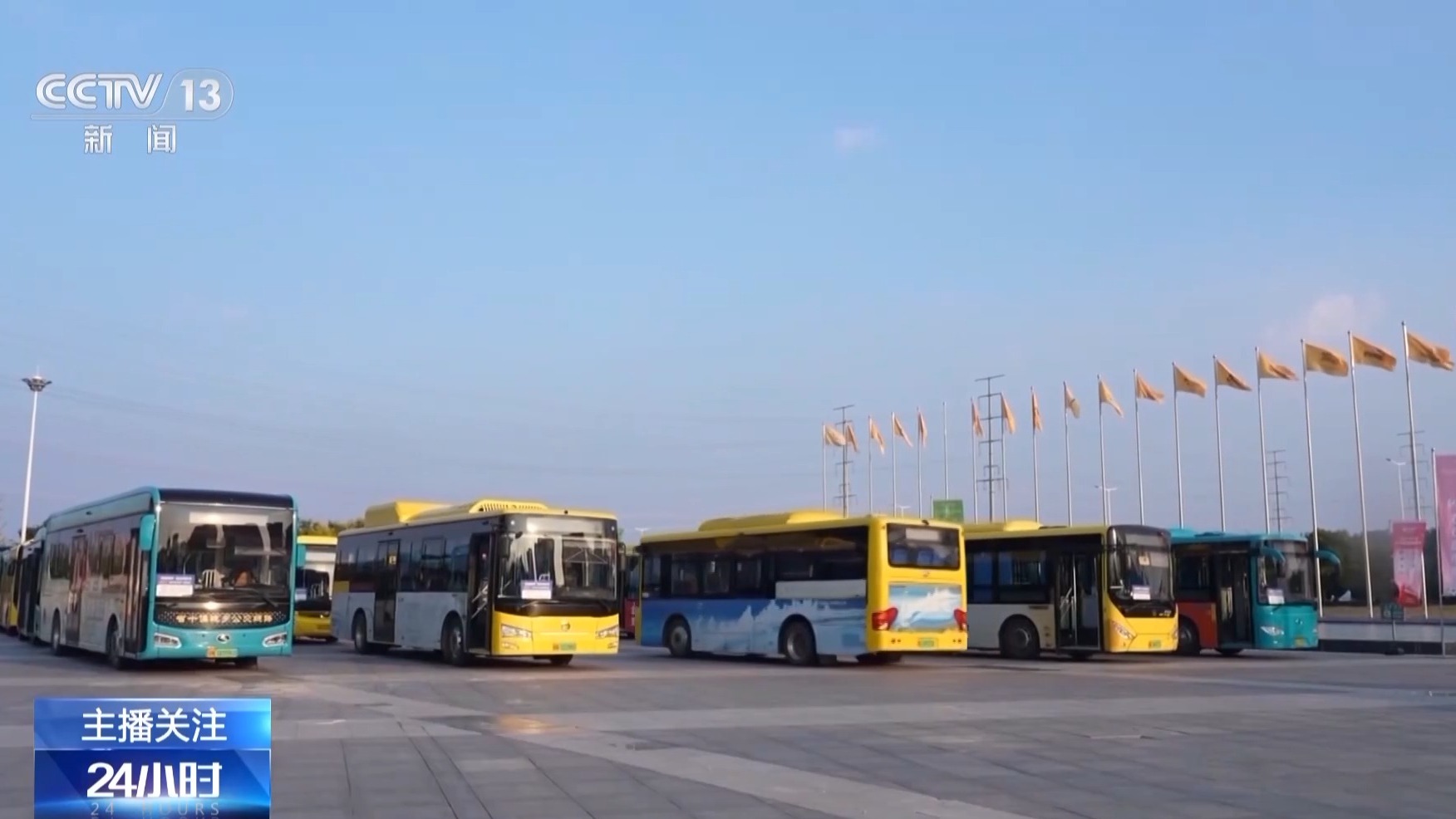
Group 1: Carbon Market and Green Initiatives - The third China Carbon Market Conference will be held on the 24th in Shanghai, highlighting the increasing integration of green and low-carbon initiatives across various sectors of daily life [1] - The concept of low-carbon has been embedded in the design of sports events, with electronic ticketing systems replacing traditional paper tickets, reducing paper consumption by over 20,000 sheets per match [6][8] - The development of a voluntary carbon market in China is expected to provide high-quality carbon credits for low-carbon and even carbon-neutral events, indicating a promising future for green sports events [8][20] Group 2: Green Innovations in Sports Events - The Jiangsu Suqian Public Transport Group deployed 80 new energy buses to facilitate transportation for the football match, emphasizing the commitment to low-carbon travel [4] - The implementation of waste classification at the venue, with 160 categorized trash bins, has led to effective waste management, ensuring that the area remains clean post-event [8] - The integration of green travel options, such as public transport and electronic ticketing, has transformed the football match into a platform for green innovation [2][6] Group 3: Low-Carbon Tourism Trends - Low-carbon tourism is gaining popularity, with travelers opting for "train + cycling" combinations to minimize their carbon footprint while enjoying nature [9] - Many accommodations are now designed with low-carbon principles in mind, utilizing eco-friendly materials and energy-saving devices [13] - The promotion of solar-powered streetlights and electric vehicles in scenic areas enhances the green travel experience, aligning with global trends towards sustainability [15] Group 4: Agricultural Innovations for Sustainability - In Yunnan, the promotion of "dryland rice" cultivation is breaking the dependency on water resources for rice farming, significantly reducing water usage and carbon emissions [16][20] - The shift to dryland rice farming can lead to a methane reduction of 60% to 90%, addressing a major source of agricultural greenhouse gas emissions [18][20] - The expansion of dryland rice cultivation from hundreds of acres to over 200,000 acres demonstrates the successful development of a full industry chain that supports both economic and ecological benefits [20]
应对美国关税压力,或将产生示范效应,欧盟印尼达成“近零关税”协议
Huan Qiu Shi Bao· 2025-09-23 22:49
Group 1 - The EU and Indonesia have reached a "near-zero tariff" trade agreement, which is expected to enhance their economic relationship amidst changing global trade dynamics due to US policies [1][2] - The agreement aims to reduce tariffs on 96% of goods between the EU and Indonesia to zero within five years, potentially increasing EU exports to Indonesia by at least 30%, equivalent to €3 billion [1] - Tariffs on Indonesian automotive imports from the EU will decrease from 50% to zero over five years, while tariffs on machinery and electrical goods will drop from 30% to zero in the short term [1] Group 2 - The trade agreement is part of the EU's strategy to diversify supply chains and explore new markets, following nearly a decade of negotiations [2] - Indonesia plays a crucial role in ASEAN and this agreement may set a precedent for other Southeast Asian countries, potentially boosting Indonesia's exports and investment growth [2] - The China-ASEAN Free Trade Area 3.0 negotiations have been completed, strengthening economic cooperation between China and ASEAN countries, which remains significant despite the new EU-Indonesia agreement [2]