
大家电

Search documents
海信家电20251126
2025-11-26 14:15
Summary of Hisense Home Appliances Conference Call Industry Overview - The domestic home appliance market is influenced by subsidy policies, with a year-on-year decline expected in 2025, but normal growth anticipated in the following year. The continuation of national subsidy policies in 2026 is expected, with potential adjustments in details, highlighting the importance of monitoring policy changes on the market [2][4][5]. Company Performance - Hisense's overseas business has shown a fluctuating trend due to Trump's tariffs, but the overall outlook remains optimistic. Emerging markets are seeing increased penetration, while mature markets maintain stability. Future overseas sales revenue is expected to grow over 10% in the next three years [2][6][16]. - The central air conditioning business faces challenges from the real estate sector's downturn, but growth is expected from the consumer and public construction channels. Hisense Hitachi is expanding into the large chiller market and accelerating overseas business development [2][7][8]. Market Dynamics - The European heat pump market is recovering after a destocking phase, indicating potential for growth. Hisense plans to increase investment in overseas markets to enhance brand influence and accelerate expansion in emerging markets [2][9][10]. - The new water machine factory in Changsha is expected to contribute approximately 20% annual revenue growth over the next 3-5 years, with a projected market share increase of about 1% annually in 2026 [2][11][12]. Financial Metrics - The overall net profit margin is expected to remain around 16% through 2026, despite pressure on gross margins from the increasing share of Hisense and York brands in the central air conditioning business [2][14]. - The company anticipates domestic sales revenue growth in the mid-single digits for 2026, while overall performance growth could reach double digits, factoring in the impact of subsidy reductions [3][26]. Strategic Initiatives - Hisense is focusing on enhancing its overseas market presence, with over 50% of revenue from overseas sales in processing and washing products. The company aims to leverage sports marketing to boost brand influence and expand into emerging markets [2][10][24]. - The company plans to streamline its product offerings by reducing SKUs by over 50% to improve operational efficiency and gradually enhance profit margins [3][28]. Challenges and Opportunities - The central air conditioning sector is experiencing pressure from the real estate market, with a 24% year-on-year decline in revenue from the refined decoration segment. However, new applications in agriculture, energy storage, and data centers are showing growth potential [2][7][8]. - The company is also addressing the competitive landscape in domestic channels by enhancing its self-owned channel strategy and reducing reliance on online platforms [2][27]. Conclusion - Hisense Home Appliances is navigating a complex market landscape with a focus on overseas growth, product efficiency, and strategic partnerships. The company is well-positioned to capitalize on emerging market opportunities while managing domestic challenges and maintaining profitability [2][10][26].
【光大研究每日速递】20251106
光大证券研究· 2025-11-05 23:05
Group 1: Industry Overview - The pharmaceutical and biotechnology sector achieved a revenue of 1825.74 billion yuan in the first three quarters of 2025, representing a year-over-year decline of 1.97%. The net profit attributable to shareholders was 139.66 billion yuan, down 1.59% year-over-year. In Q3 alone, the sector generated a revenue of 598.54 billion yuan, with a year-over-year increase of 0.78%, and a net profit of 40.51 billion yuan, up 7.67% year-over-year [5][6]. Group 2: Company Performance - Andy Su (600299.SH) reported a revenue of 12.93 billion yuan for the first three quarters of 2025, reflecting a year-over-year increase of 14%. The net profit attributable to shareholders was 990 million yuan, down 1.3% year-over-year. In Q3, the company achieved a revenue of 4.42 billion yuan, up 7.4% year-over-year and 4.9% quarter-over-quarter, with a net profit of 250 million yuan, down 37% year-over-year [5][6]. - Top Group (601689.SH) experienced a total revenue of 20.93 billion yuan in the first three quarters of 2025, an increase of 8.1% year-over-year. However, the net profit attributable to shareholders decreased by 12.0% to 1.97 billion yuan. In Q3, the revenue was 7.99 billion yuan, up 12.1% year-over-year and 11.5% quarter-over-quarter, while the net profit was 670 million yuan, down 13.7% year-over-year [7]. - Newland (000997.SZ) reported a revenue of 6.244 billion yuan in the first three quarters of 2025, a year-over-year increase of 12.04%. The net profit attributable to shareholders was 918 million yuan, up 12.15% year-over-year. In Q3, the revenue was 2.224 billion yuan, up 14.86% year-over-year, with a net profit of 323 million yuan, up 11.75% year-over-year [8]. - Glodon (002410.SZ) achieved a revenue of 4.270 billion yuan in the first three quarters of 2025, a decrease of 2.2% year-over-year. However, the net profit attributable to shareholders increased by 45.9% to 311 million yuan. In Q3, the revenue was 1.486 billion yuan, up 3.96% year-over-year, with a net profit of 73.95 million yuan, a significant increase of 244.9% year-over-year [9]. - Haier Smart Home (600690.SH) reported a strong performance with a revenue of 77.6 billion yuan in Q3 2025, reflecting a year-over-year increase of 10%. The net profit attributable to shareholders was 5.3 billion yuan, up 13% year-over-year, indicating robust operational resilience [10].


“隐形”基站破局欧美橱柜标准,科沃斯联手博西家电撬动1500亿美元智能家居市场
21世纪经济报道· 2025-09-15 12:06
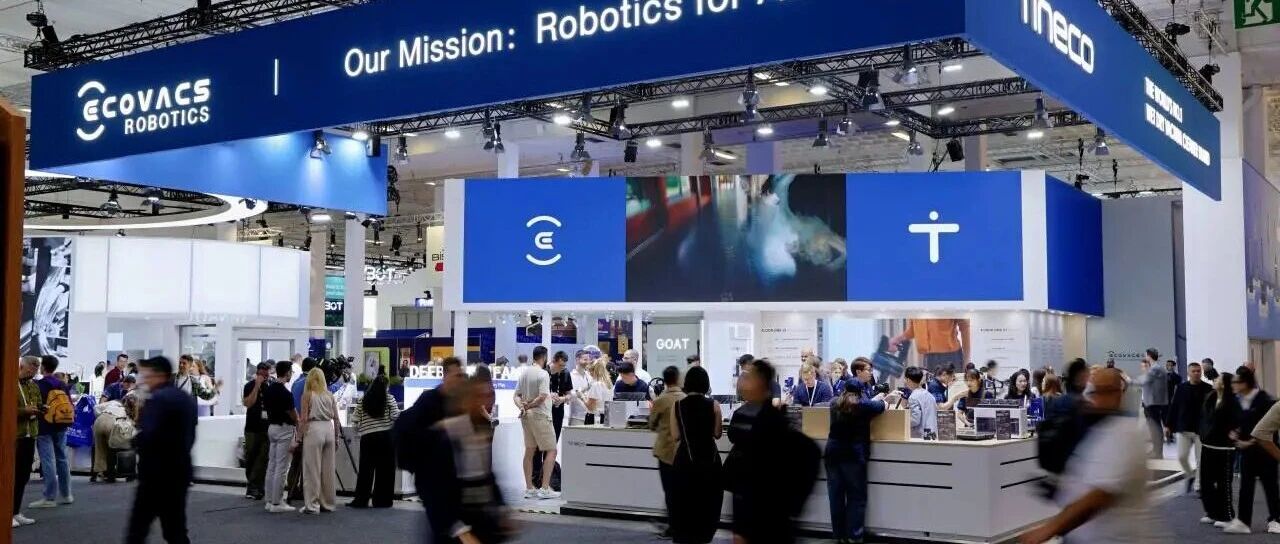
Core Viewpoint - The collaboration between Ecovacs and Bosch Home Appliances marks a significant step in the future of smart home technology, combining "Chinese manufacturing" with "German quality" to create innovative products for the global market [1][5]. Group 1: Product Launch and Features - In September, Ecovacs and Bosch jointly launched the world's first fully embedded sweeping and mopping robot at the IFA exhibition, addressing specific challenges in adapting to European and American home environments [4][6]. - The new product overcomes design challenges related to European kitchen standards, such as a 10 cm kickboard height, and features a base station that is integrated into cabinetry, representing a new paradigm in home appliance integration [4][7]. - The collaboration aims to redefine the entry barriers and competitive rules for high-end cleaning appliances in the European and American markets [5][6]. Group 2: Strategic Collaboration - The partnership leverages Ecovacs' advanced technology and Bosch's strong market presence, with Bosch holding a 20.3% market share in Western Europe and Ecovacs achieving a 52% year-on-year revenue growth in overseas markets [3][11]. - Both companies focus on mid-to-high-end products, ensuring a high degree of overlap in their target consumer base, which facilitates future product design and marketing strategies [11][14]. - The collaboration is seen as a shift from a one-way technology exchange to a mutual empowerment model, where both companies can enhance their market influence through shared expertise [5][15]. Group 3: Market Trends and Insights - The global smart home market is experiencing robust growth, with projections indicating an increase from $134.8 billion in 2023 to $154.3 billion in 2024, reflecting a growth rate of 14.47% [14]. - The trend towards integrated and ecosystem-based home appliances is becoming increasingly important, as consumers seek cohesive experiences rather than standalone products [14][15]. - The partnership is positioned to capitalize on the growing demand for smart home solutions, particularly in developed markets that are undergoing a technological upgrade [14][15].

未来五年增长确定性最高的中国科技公司,小米提前预定了
Feng Huang Wang· 2025-08-22 08:24
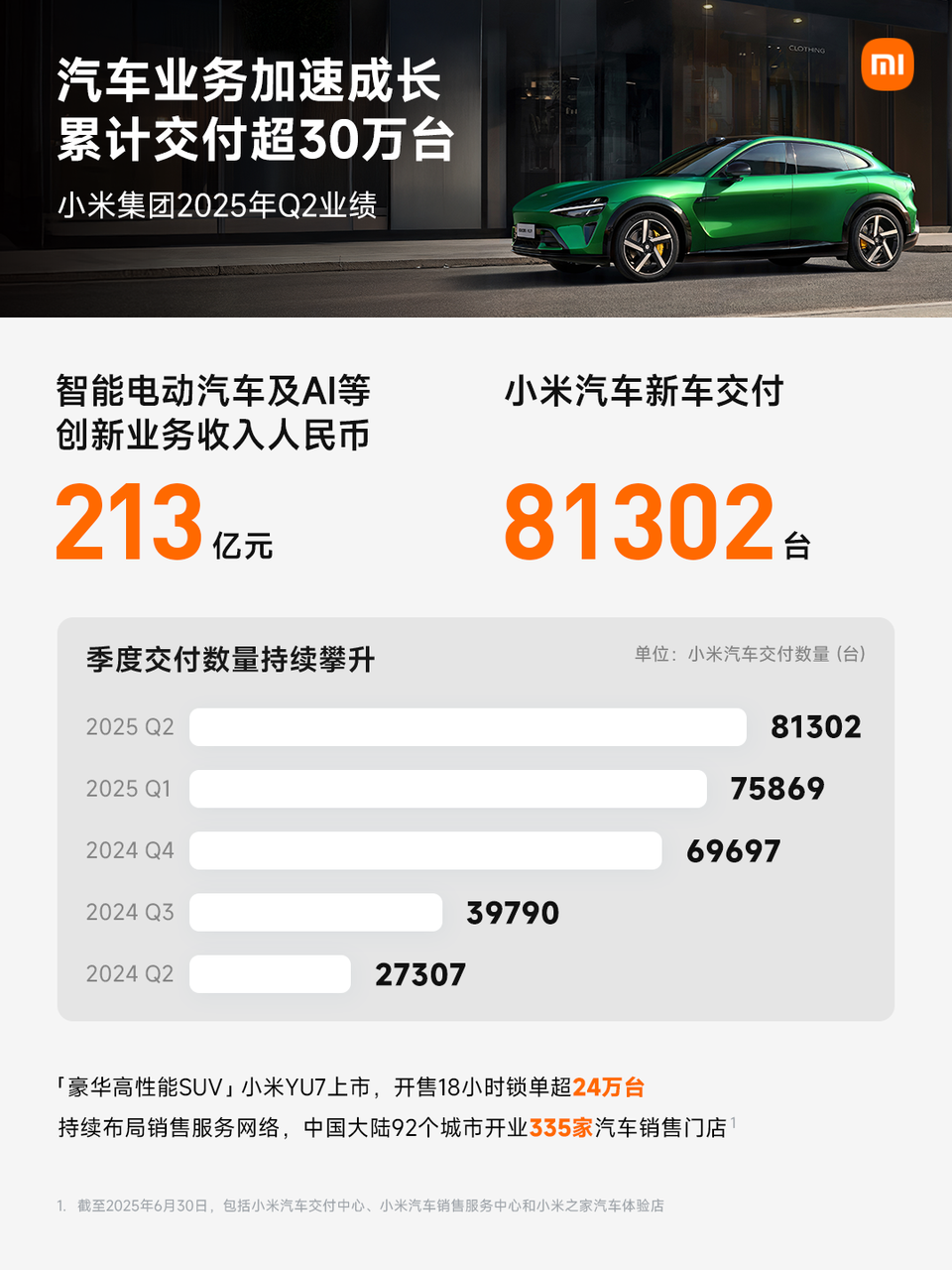
Core Insights - Xiaomi has achieved a remarkable Q2 2025 financial performance with total revenue of 116 billion yuan and a year-on-year growth of 30.5%, marking a historical high amidst a challenging industry environment [1][2][17] - The company's growth is attributed to its "human-vehicle-home ecosystem" strategy, which is not only supporting current financial performance but also establishing growth certainty for the next 3 to 5 years [1][11][17] Financial Performance - Xiaomi's Q2 2025 revenue of 116 billion yuan includes contributions from multiple business lines, with smart electric vehicles and innovative businesses contributing 21.3 billion yuan [2] - The automotive segment generated 20.6 billion yuan in revenue with a record delivery of 81,302 vehicles in a single quarter, indicating a strong position in the domestic new energy vehicle market [2][4] Automotive Business - Despite the YU7 model not yet being delivered, Xiaomi's automotive division delivered a total of 157,000 vehicles in the first half of the year, achieving an average tax-inclusive price of 280,000 yuan [4] - Xiaomi's strategy emphasizes product strength over price competition, with plans to enter the European electric vehicle market by 2027 [4][11] Smartphone and AIoT Performance - In Q2 2025, Xiaomi's global smartphone shipments reached 43 million units, maintaining a market share of 14.7% and ranking among the top three globally for 20 consecutive quarters [5] - The high-end smartphone strategy is showing results, with a 27.6% market share in the high-end segment in China, and significant growth in the 4,000-6,000 yuan price range [5] - The AIoT segment, particularly large home appliances, saw a 66.2% year-on-year revenue growth, with air conditioning units achieving both volume and price growth [5] Ecosystem Strategy - Xiaomi's "human-vehicle-home ecosystem" is a unified strategy that integrates smartphones, vehicles, and home appliances, creating a seamless user experience [9][11] - The company has established itself as a leader in this ecosystem, with other industry players beginning to adopt similar strategies, indicating a broader industry trend [11][12] Competitive Advantages - Xiaomi's competitive edge lies in its technological integration, scale, R&D investment, and strong brand loyalty, which collectively create a robust barrier to entry for competitors [15][16] - The company has invested 102 billion yuan in R&D over the past five years, with a current R&D expenditure of 7.8 billion yuan in Q2 2025, representing 6.7% of its revenue [16] Future Outlook - The automotive business is expected to continue its growth trajectory, potentially becoming a significant profit driver as new models are launched and supply chains are optimized [17] - Xiaomi aims to transition from hardware sales to a model focused on subscription services and data monetization, enhancing its profit margins [17]
交银国际:降小米集团-W目标价至60港元 次季业绩符预期
Zhi Tong Cai Jing· 2025-08-22 06:28
Group 1 - The core viewpoint of the report is that Xiaomi Group's automotive performance in Q2 is impressive, while the smartphone business adjustments are largely in line with expectations [1] - Xiaomi's Q2 revenue and adjusted net profit were 116 billion and 10.8 billion RMB respectively, meeting market expectations [1] - Automotive revenue increased by 40% year-on-year, with a gross margin of 26.4%, a historical high driven by average selling price growth and platform scale effects [1] Group 2 - Smartphone revenue decreased by 2% year-on-year, primarily due to the REDMI A5 launch lowering overseas average selling prices, while domestic average selling prices benefited from an increase in high-end model proportions [1] - Smartphone gross margin declined by 0.9 percentage points to 11.5% quarter-on-quarter, attributed to rising storage prices impacting mid-to-low-end models [2] - AIOT revenue grew by 45% year-on-year, with a gross margin of 22.5%, slightly down by 2.7 percentage points due to the 618 promotion [2] Group 3 - The company maintained a "buy" rating but adjusted the target price from 67 HKD to 60 HKD based on a 25x P/E for mobile and a 2.2x P/S for automotive business by 2026 [1] - The forecast for automotive revenue in 2026 was slightly adjusted to 182 billion RMB from a previous estimate of 181.7 billion RMB [2] - Revenue forecasts for 2025 and 2026 were lowered to 483 billion and 605.8 billion RMB respectively, along with adjusted earnings per share estimates for those years [2]

三条曲线狂飙:小米凭什么成中国科技最稳增长极?
Ge Long Hui· 2025-08-20 02:12
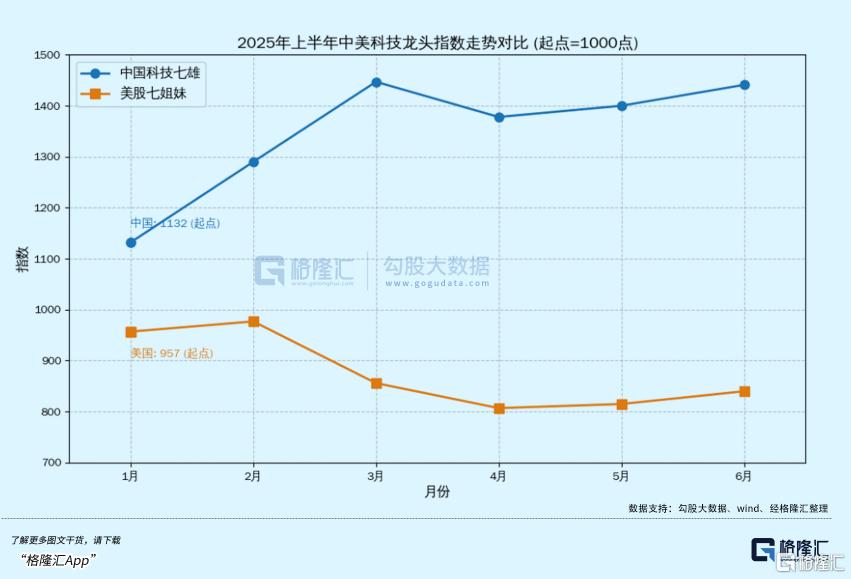
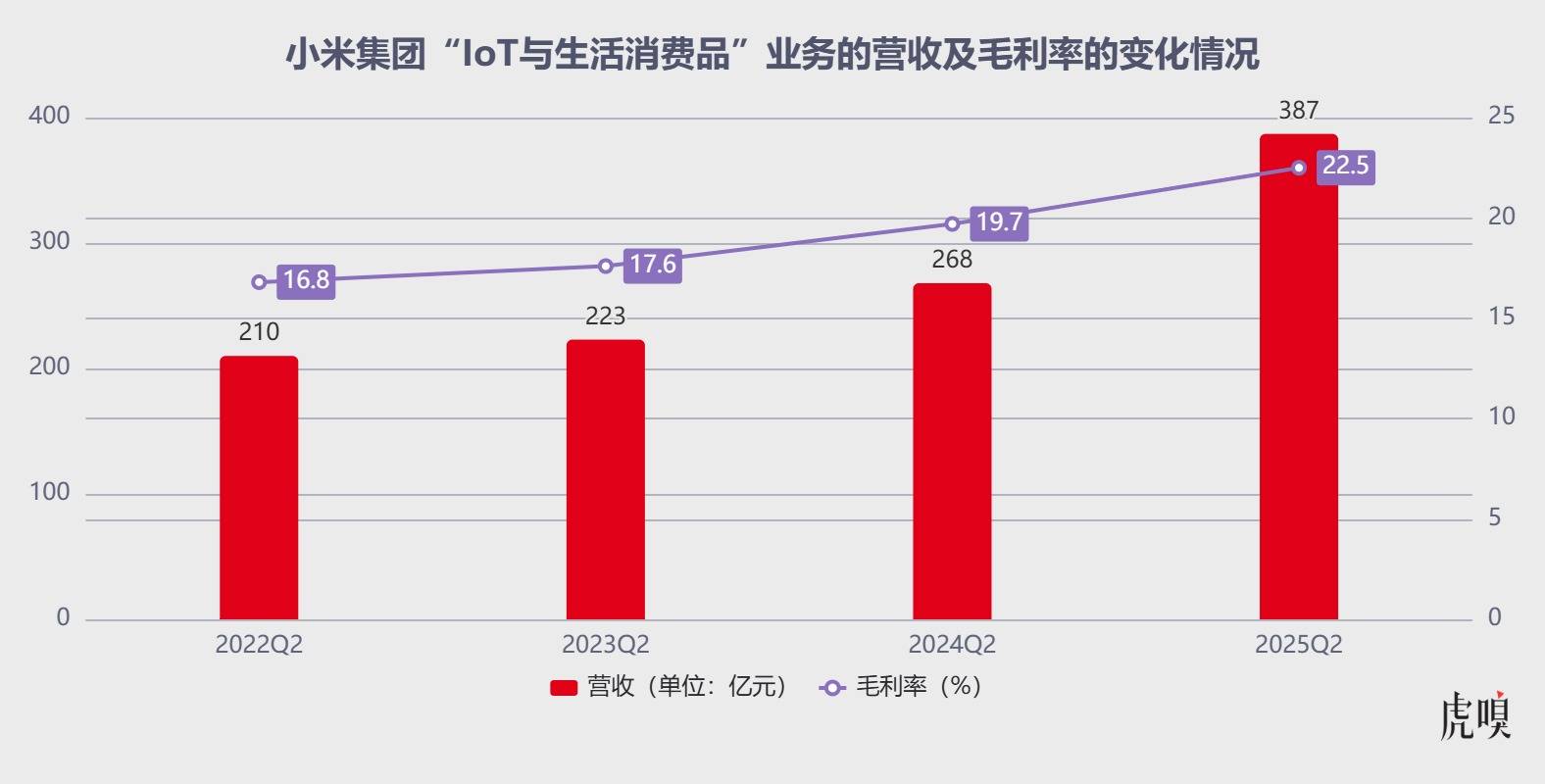
Core Viewpoint - The article highlights the strong growth potential of Xiaomi Group, which has attracted significant foreign investment due to its unique competitive advantages in technology, e-commerce, and new energy sectors. The company is compared to the "Magnificent Seven" of the US stock market, with a notable increase in its stock index and contributions from its various business segments [1][3]. Financial Performance - In Q2 2025, Xiaomi reported a revenue of 116 billion RMB, a year-on-year increase of 30.5%, marking the fifth consecutive quarter of record highs. Net profit reached 11.9 billion RMB, with adjusted net profit at 10.8 billion RMB, reflecting year-on-year growth of 134.2% and 75.4% respectively [5][6]. - The revenue growth is attributed to the operational leverage effect, where fixed costs are diluted by scale, allowing revenue increases to translate into higher profit margins [5]. Business Segments Smartphones - Xiaomi's smartphone revenue in Q2 2025 was 45.5 billion RMB, accounting for 39.3% of total revenue, down from 61.5% in Q1 2024. Despite the decline in revenue share, smartphones remain a critical revenue driver, with global shipments of approximately 4.24 million units [6][7]. Automotive - The automotive segment saw significant growth, with over 157,000 units delivered in the first half of 2025. The launch of the YU7 model generated substantial demand, with over 240,000 orders within 18 hours, surpassing Tesla's Model Y sales in the same period [7][8]. Home Appliances - Revenue from IoT and consumer products reached nearly 38.7 billion RMB in Q2 2025, a year-on-year increase of over 44.7%. The growth was primarily driven by the home appliance category, which has seen Xiaomi rise to the top three in the domestic market [9][10]. Ecosystem and Technology - Xiaomi's business model focuses on creating an integrated ecosystem through its "smartphone + automotive + home appliances" strategy, which enhances user experience and brand loyalty [12][13]. - The company is leveraging AI, self-developed chips, and its operating system to create a robust technological foundation, enabling seamless connectivity across devices [19][20]. Market Potential - The combined market size of the smartphone, automotive, and home appliance industries is approximately 28 trillion RMB, with Xiaomi's current penetration rate below 2%, indicating substantial growth potential [14][27]. - Xiaomi's unique position in multiple high-value markets allows it to maintain a competitive edge and pursue long-term growth strategies [21][22]. Competitive Landscape - Xiaomi's valuation potential is underscored by its multi-sector approach, which is difficult for competitors to replicate. The company is positioned to challenge industry giants like Apple and Tesla while also disrupting traditional home appliance manufacturers [23][24][25].
小米仍在狂飙
Hu Xiu· 2025-08-19 23:44
Core Viewpoint - The article discusses the competitive dynamics in the air conditioning industry, highlighting Xiaomi's rapid growth and market share gains against traditional players like Gree, amidst a backdrop of broader industry challenges and Xiaomi's financial performance. Group 1: Xiaomi's Market Position - Xiaomi's air conditioning market share reportedly surpassed Gree's in July, leading to public disputes over data accuracy between the companies [1] - The competitive landscape indicates that Xiaomi has become a significant threat to traditional manufacturers in the air conditioning sector [1] Group 2: Financial Performance - Xiaomi's Q2 2025 revenue reached 116 billion yuan, a 30.5% year-on-year increase, with adjusted net profit rising 75.4% to 10.8 billion yuan [2][3] - The company has achieved six consecutive quarters of record financial performance, with notable growth in non-core businesses such as home appliances [3] Group 3: Product Performance - In the home appliance sector, Xiaomi's air conditioners, washing machines, and refrigerators saw shipment increases of 60%, 25%, and 45% respectively [3] - Xiaomi's smart car business generated 21.2 billion yuan in revenue, with a gross margin of 26.4%, exceeding market expectations [3] Group 4: Strategic Approaches - Xiaomi employs a "hit product model," focusing resources on a few standout products to dominate market segments, as seen with the "Mijia Air Conditioner Pro" [11] - The company is also enhancing its ecosystem, with 20.5 million users connecting five or more devices to its AIoT platform, reflecting a 26.8% year-on-year growth [11] Group 5: Challenges in Smartphone Business - Xiaomi's smartphone revenue declined by 2.1% to 45.5 billion yuan, marking the end of seven consecutive quarters of growth [4][16] - Despite being the only domestic manufacturer to achieve positive shipment growth in Q2, the company faces a dilemma between maintaining volume and pricing strategies [4][22] Group 6: Market Dynamics - The overall smartphone market in China saw a 4.1% decline in shipments, with Xiaomi's performance being relatively strong compared to competitors [16][17] - The company is navigating a challenging environment where consumer demand has been affected by previous promotional activities and longer replacement cycles for smartphones [18][26]
小米集团第二季度收入及净利润创历史新高
Zheng Quan Ri Bao· 2025-08-19 16:35
Core Insights - Xiaomi Group reported record high revenue and net profit for Q2, achieving revenue of 116 billion yuan, a year-on-year increase of 30.5%, and an adjusted net profit of 10.8 billion yuan, up 75.4% [2] Smartphone Business - Despite a challenging global smartphone market, Xiaomi's smartphone business saw significant growth, with 11.5 million new device activations in Q2, capturing a 16.8% market share in China, ranking first [2] - Xiaomi aims to maintain its annual smartphone shipment target at approximately 175 million units, focusing on increasing average selling price (ASP) and market share in China by 1 percentage point each year [2][3] Automotive Sector - Xiaomi's smart electric vehicle and AI innovation segment generated over 20 billion yuan in revenue, entering a phase of rapid growth, with Q2 vehicle deliveries reaching 81,302 units, totaling over 300,000 cumulative deliveries by July 10 [3] - The company is committed to avoiding price wars in the competitive electric vehicle market, prioritizing order fulfillment and aiming for profitability in the second half of the year [3] Home Appliances - In the home appliance sector, Xiaomi achieved "volume and price increase" amidst fierce competition, leveraging its advantages in smart home technology and user-centric innovation to transform the traditional appliance market [4]
汽车平均售价达到28.7万元,卢伟冰:小米汽车已经成为高端车
Tai Mei Ti A P P· 2025-08-19 12:42
Core Insights - Xiaomi's automotive business has significantly contributed to its rapid revenue growth, with a notable increase in performance metrics in Q2 2023 [2][3] Financial Performance - Xiaomi reported Q2 revenue of 116 billion yuan, a year-on-year increase of 30.5%, marking the third consecutive quarter of exceeding 100 billion yuan [2] - Adjusted net profit for Q2 reached 10.8 billion yuan, up 75.4% year-on-year, continuing a trend of surpassing 10 billion yuan for two consecutive quarters [2] - The smartphone business generated 45.5 billion yuan in revenue, a slight decline of 2.1% year-on-year, while IoT and lifestyle products revenue was 38.7 billion yuan, up 44.7% [2] Automotive Business - Xiaomi's automotive revenue for Q2 was 20.6 billion yuan, reflecting a remarkable year-on-year growth of 230.3% [2] - The average selling price of Xiaomi cars reached 253,000 yuan, which could rise to 287,000 yuan when tax is included, positioning Xiaomi in the high-end vehicle market [2] - A total of 81,302 cars were sold in Q2, with over 157,000 units delivered in the first half of the year [3] IoT and Home Appliances - The IoT and lifestyle products segment, including major appliances, saw significant growth, with air conditioning units shipped exceeding 5.4 million, a year-on-year increase of over 60% [4] - Xiaomi's refrigerator and washing machine shipments also showed strong growth, with increases of over 25% and 45% respectively [4] - The company plans to expand its home appliance business internationally, targeting markets in Southeast Asia and Europe by 2025 [4] Chip Development - Xiaomi's self-developed chip, the Xuanjie O1, has exceeded expectations, indicating the company's growing capabilities in chip-level platform development [5] - The company aims to increase its market share in the Chinese smartphone market by 1% annually and targets global smartphone sales of 200 million units per year [5]

纺织服饰25W32周观点:奢侈品专题:亚太环比改善,Hermes表现相对坚挺-20250810
Huafu Securities· 2025-08-10 12:09
Investment Rating - The report maintains an "Outperform" rating for the luxury goods sector [6]. Core Insights - The luxury goods sector in the Asia-Pacific region (excluding Japan) shows a sequential improvement, with Hermes demonstrating relative resilience [3][12]. - In Q2 2025, LVMH, Hermes, and Kering reported revenue changes in Asia (excluding Japan) of -6%, +5%, and -19% year-on-year, respectively [3][12]. - Hermes continues to grow across all regions, while LVMH and Kering face challenges, particularly in the Asia-Pacific market [3][12][28]. Summary by Sections 1. Luxury Goods Sector Performance - The luxury goods sector in Asia (excluding Japan) has improved sequentially, with Hermes showing a 5.6% year-on-year revenue increase in Q2 2025 [3][21]. - LVMH's revenue decreased by 4% to €19.5 billion, with a 22% drop in net profit to €5.7 billion, affected by macroeconomic uncertainties and currency fluctuations [14][15]. - Kering's revenue fell by 18% to €3.7 billion, with Gucci and YSL brands experiencing significant declines [28]. 2. Investment Recommendations - The report suggests focusing on sectors benefiting from policy support and consumer recovery, including major home appliances and pet products [30][31]. - Key companies to watch include Midea Group, Haier Smart Home, and Gree Electric for home appliances, and brands like Anta Sports and Li Ning in the apparel sector [30][31]. 3. Market Trends - The home appliance sector saw a weekly increase of 2.3%, while the textile and apparel sector rose by 4.23% [34][36]. - Cotton prices are reported at ¥15,178 per ton, reflecting a slight decrease of 0.54% [36].