实体零售

Search documents
“生态共生”取代“单打独斗” 数字时代商业核心范式迎来转变
Sou Hu Cai Jing· 2025-12-18 15:18
Group 1 - The core message of the roundtable discussion is that the underlying logic of competition in Chinese commerce is undergoing profound reconstruction, shifting from traditional linear competition to an open, collaborative, and value-sharing business ecosystem, which is essential for survival and high-quality development [1][6] - The challenges faced by physical retail include a redefined consumer expectation for shopping experiences that provide emotional and situational value, necessitating a transformation from mere sales to becoming service providers and cultural operators [2][3] - Digital tools are evolving from enhancing internal efficiency to facilitating external ecological connections, with a focus on data flow efficiency between ecosystems, indicating that digitalization must transition from internal empowerment to external integration [3][4] Group 2 - The physical spaces in commercial digital transformation must also adapt, requiring a comprehensive digital approach throughout the lifecycle of construction, which faces structural challenges such as data silos and a lack of skilled talent [4][5] - Cultural elements play a crucial role in connecting and empowering commercial spaces, as demonstrated by the successful integration of historical architecture into modern commercial experiences, fostering a sense of community and shared value [4][5] - The role of local governments is evolving from mere management to becoming creators and maintainers of ecological conditions, with initiatives aimed at transforming regional cultural resources into commercial development momentum [5][6] Group 3 - The micro-foundation of commercial ecosystems lies in specific partnerships, shifting from a focus on rental efficiency to valuing brand resonance and collaborative efforts in creating unique market experiences [7] - The relationship between commercial entities and brands is evolving from a landlord-tenant model to a partnership model based on co-creation of value, emphasizing the importance of digital capabilities in enhancing customer service [7] - The future competitive advantage in business will increasingly depend on the ability to build, integrate, and lead ecosystems, moving away from isolated operations to collaborative co-creation [7]


经济前景不明朗 英国民众购物季消费更谨慎
Sou Hu Cai Jing· 2025-12-02 12:37
Core Viewpoint - The "Black Friday" and "Cyber Monday" shopping events in the UK have seen a shift in consumer behavior, with shoppers becoming more pragmatic and cautious due to economic uncertainties and high living costs [3][12]. Consumer Behavior - UK consumers are exhibiting a more rational approach to spending during this year's shopping events, with many adopting a wait-and-see attitude [3]. - There has been a 7.2% decline in foot traffic to physical stores compared to the same period last year, indicating a lack of consumer confidence [5]. - Consumers are increasingly skeptical about the authenticity of discounts, with many popular items not being offered at their lowest prices during "Black Friday" [5][7]. Discount Perception - A significant portion of consumers believes that discounts are not genuine, as prices may have been artificially inflated prior to the sales [7]. - Many consumers are waiting for better deals, as they perceive that prices have increased overall [8]. Spending Intentions - Despite the cautious spending, a considerable number of consumers still plan to purchase essential items or gifts during the promotional period, although 38% indicated they might not spend during "Black Friday" [10][12]. Overall Market Trend - The overall trend reflects a more practical and value-focused consumer mindset in the face of ongoing economic pressures, which is likely to shape future shopping behaviors [12].

电商与实体零售进入战略相持阶段
3 6 Ke· 2025-11-26 11:34
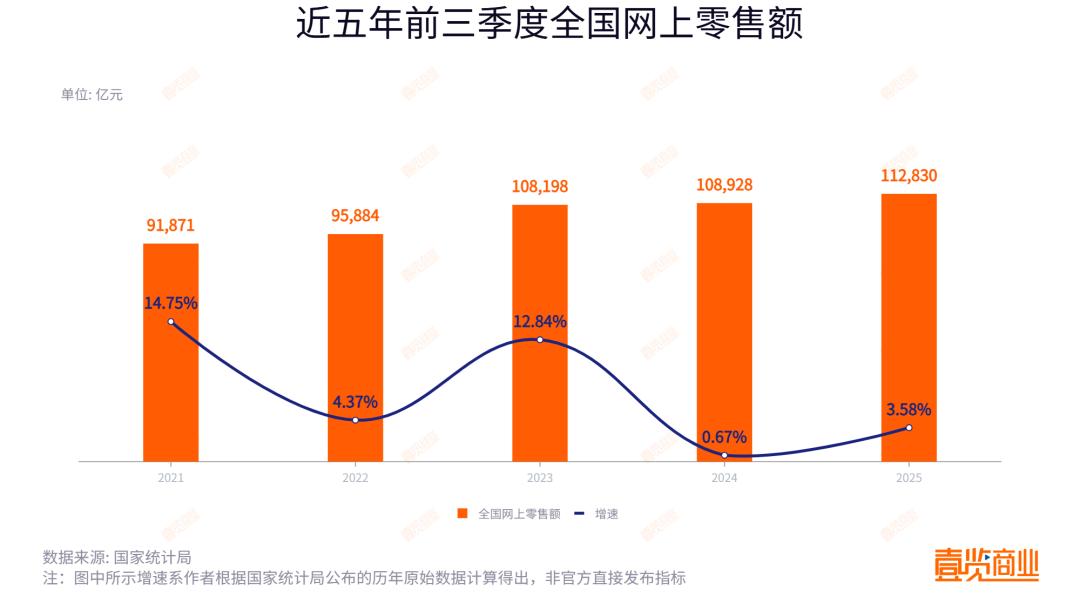
Group 1 - The core point of the article highlights the shift in China's retail landscape, indicating that the online retail growth has plateaued, leading to intensified competition for existing market share rather than expanding the overall market [1][6][28] - The online retail sales growth has entered a low-growth phase, with the growth rate dropping from 14.75% in 2021 to near zero in 2024, and only a slight rebound to 3.58% expected in 2025 [2][4] - The total e-commerce penetration rate has declined for two consecutive years, reaching a low of 25.02% in 2025, signaling that the online channel's growth potential is nearing its ceiling [6][12] Group 2 - Offline retail has shown resilience, with growth rates recovering after a brief decline in 2022, surpassing online growth in 2024 with a rate of 4.59% compared to online's 0.67% [8][12] - The market dynamics have stabilized with online and offline retail maintaining a balance of approximately 30% and 70% market share respectively, indicating a shift from pure online migration to more complex consumption and competition [15][28] - Online platforms are increasingly engaging in price wars to capture market share, with traditional platforms like Taobao and JD.com adopting low-price strategies to compete against emerging players like Pinduoduo and Douyin [16][17][18] Group 3 - The intense competition has led to increased operational pressures for merchants, with high return rates and costs associated with logistics and customer service impacting profitability [20][22] - Platforms are now focusing on internal adjustments and seeking alliances to restore balance in the commercial ecosystem, moving away from solely consumer-centric strategies [23][24] - Offline retailers are enhancing their value propositions by creating unique shopping experiences that cannot be replicated online, thus initiating a counter-offensive against online competition [25][27] Group 4 - The article concludes that the stagnation in e-commerce penetration is not indicative of retail decline but rather a sign of China's economic transition from a goods-oriented society to a service-oriented one, emphasizing the importance of experience over mere ownership [28][29] - Future retail competition will focus on creating deeper value, emotional connections, and seamless integration between online and offline experiences, rather than a zero-sum game [29][30]


美国上周首申人数回落至22万人,续请失业金人数攀升至4年来最高水平
Sou Hu Cai Jing· 2025-11-20 16:52
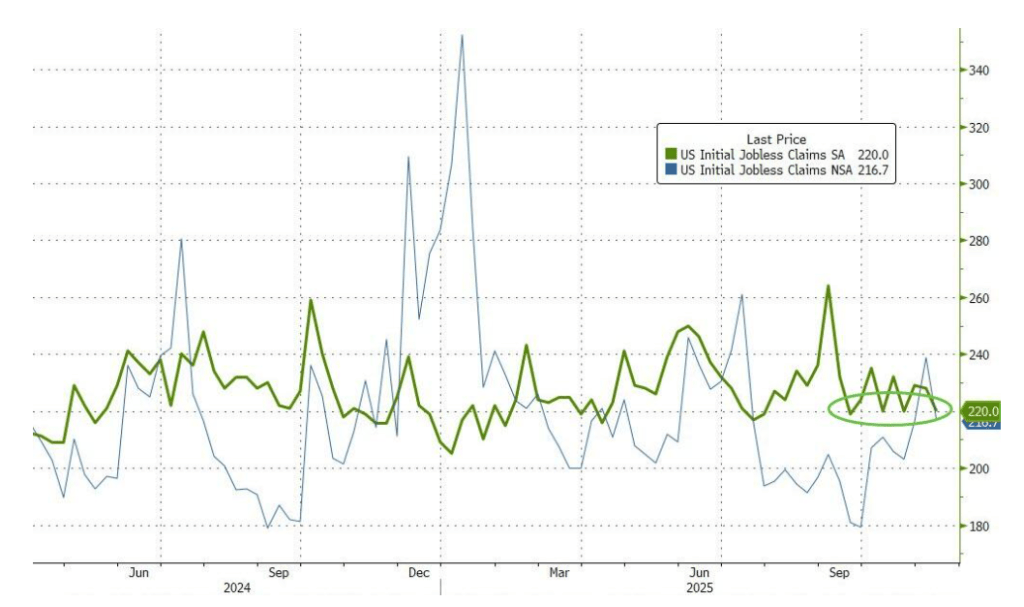
Core Insights - The number of initial jobless claims in the U.S. has decreased to 220,000, indicating that employers are still trying to maintain their workforce despite economic uncertainties [1][3] - However, the number of continuing claims for unemployment benefits has risen to 1.974 million, the highest level since October 2021, suggesting a bleak outlook for the labor market [4] Group 1: Jobless Claims Data - Initial jobless claims fell by 8,000 to 220,000, below the expected 227,000 [1] - Continuing claims increased to 1.974 million, exceeding the expected 1.95 million [4] Group 2: Labor Market Context - Major companies like Amazon and Target have announced layoffs, yet the jobless claims remain relatively stable [3] - The Federal Reserve is facing challenges in decision-making due to a lack of key employment data, which complicates the assessment of the labor market [6][7]
金荣中国:美ADP就业数据再度走低,金价触底反弹加剧震荡
Sou Hu Cai Jing· 2025-11-19 01:52
Market Overview - International gold prices experienced a rebound on November 18, closing at $4,052.90 per ounce after reaching a high of $4,081.92 and a low of $3,997.99 [1] Employment Data - According to ADP Research, U.S. companies cut an average of 2,500 jobs per week in the four weeks ending November 1, with major layoffs announced by companies like Amazon and Target [3] - Challenger, Gray & Christmas Inc. reported that planned layoffs reached the highest level for any October in over 20 years [3] - The U.S. Labor Department reported that initial jobless claims totaled 232,000 for the week ending October 18, consistent with mid-September levels [3] Federal Reserve Insights - The probability of a 25 basis point rate cut by the Federal Reserve in December is 48.9%, while the probability of maintaining the current rate is 51.1% [5] - By January, the cumulative probability of a 25 basis point cut is 49.7%, with a 31.9% chance of no change and an 18.4% chance of a 50 basis point cut [5] Technical Analysis - Gold prices showed a V-shaped recovery after hitting a low of $3,997, with a subsequent rise to $4,081 during the trading session [6] - The daily chart indicates a small bullish candle with a long lower shadow, suggesting stability above the 40-day moving average [6] - Short-term indicators are showing signs of a bottoming pattern, while the four-hour chart indicates a consolidation phase below the 60-day moving average [6] Trading Strategy - The trading strategy suggests cautious high short and low long positions, with specific entry and exit points outlined for both aggressive and conservative traders [10]

十七年从流量博弈到价值创造 今天我们还需要“双十一”吗
He Nan Ri Bao· 2025-11-10 23:19
Core Insights - The "Double Eleven" shopping festival has evolved from a single-day event to a month-long promotional period, reflecting a shift in consumer behavior towards more rational purchasing decisions [9][10][11] - The integration of online and offline retail strategies is becoming more pronounced, with businesses leveraging both channels to enhance consumer engagement and drive sales [19][20] Group 1: Changes in Consumer Behavior - Consumers are increasingly adopting a rational approach to shopping, moving from impulsive buying to need-based purchases, as evidenced by the slowing growth rates of GMV during "Double Eleven" [12][13] - The simplification of promotional strategies by e-commerce platforms indicates a maturation in consumer shopping habits, with a preference for straightforward discounts over complex promotional rules [12][13] Group 2: E-commerce Strategies - The duration of promotional activities has been extended significantly, with major platforms launching campaigns as early as September, leading to a competitive landscape focused on supply chain efficiency and customer experience [10][11] - Instant retail has emerged as a key player in this year's "Double Eleven," with platforms like Meituan and Taobao integrating rapid delivery services, enhancing consumer convenience and expanding market reach [15][16][17] Group 3: Offline Retail Participation - Physical retail spaces are actively participating in "Double Eleven," utilizing promotional events and experiential marketing to attract consumers, thereby benefiting from the increased foot traffic generated by online campaigns [18][19] - The emotional connection and experiential value offered by brick-and-mortar stores are becoming significant factors in consumer decision-making, as shoppers seek tangible interactions with products [20]



普华永道思略特进博会报告:AI驱动全球零售业价值提升 利润率有望实现四倍增长
Zheng Quan Shi Bao Wang· 2025-11-07 03:31
Core Insights - The report by PwC Strategy highlights the revolutionary impact of artificial intelligence (AI) on the retail industry, revealing that if AI is scaled and industrialized in retail, it could add $310 billion to global annual operating profits by 2030, representing an almost 20% increase in overall operating profits [1] - Retail companies that implement AI across their organizations could see their operating profit margins rise from the industry average of 3% to 14.4%, achieving more than a fourfold increase [1] Regional Analysis - North America is identified as the global leader in retail AI, benefiting from a culture that encourages risk investment and technological innovation, proximity to the global tech industry, and significant investments from leading companies in AI [1] - European retail companies are characterized as "fast followers," primarily focusing on incremental optimization of AI applications, with a cautious approach due to risk-averse cultures and insufficient growth capital [2] - In China, e-commerce giants like Alibaba and JD.com are rapidly integrating AI into core areas such as supply chain management and personalized marketing, although traditional retail faces challenges due to weak digital foundations and uneven regional development [2] Strategic Recommendations - The report emphasizes that retail companies should abandon a wait-and-see approach and instead focus on high-value scenarios to gradually implement AI at scale, utilizing a five-step method to facilitate this process [3] - Key steps include adjusting organizational structures for AI delivery, balancing platform strategies with innovation tools, enhancing data maturity, addressing regulatory and ethical issues, and fostering a data culture to improve employee acceptance of AI [2][3]
取消外卖和关闭电商,恢复市面繁荣,这种做法你同意吗?
Sou Hu Cai Jing· 2025-10-28 07:16
Core Insights - The rapid growth of China's e-commerce and food delivery sectors has significantly boosted the national economy, with e-commerce transactions reaching 43.8 trillion yuan in 2022, a year-on-year increase of 16.5%, and the food delivery market size hitting 1.1 trillion yuan, growing by 18.6% [1] - The rise of e-commerce and food delivery has posed unprecedented challenges to traditional brick-and-mortar stores, which saw a decline in revenue to 38.1 trillion yuan in 2022, down 3.9% year-on-year, raising widespread concern [1] Group 1 - Some voices suggest canceling food delivery and closing e-commerce to revive traditional markets, but this approach may backfire and lead to economic decline and increased unemployment [2] - The food delivery and e-commerce sectors employ millions, with 4 million in food delivery and 60 million in e-commerce in 2022, making them crucial for job creation [3] - The decline in brick-and-mortar sales is not solely due to e-commerce competition; post-pandemic consumer demand has decreased, and physical stores face intense competition and rising rental costs [5] Group 2 - Food delivery has become a vital revenue source for restaurants, with about one-third of their sales coming from delivery orders, meaning that canceling food delivery could further weaken their profitability [5] - Consumer reliance on food delivery and e-commerce has increased post-pandemic, and eliminating these services would cause significant inconvenience for those unable to cook, such as young people and the elderly [7] - To restore market vitality, a comprehensive approach is needed, focusing on enhancing the competitiveness of physical stores, improving the consumer environment, and stimulating demand rather than resorting to blanket cancellations of food delivery and e-commerce [7]

41亿净现金,胖东来告诉你什么才是真正的赚钱
3 6 Ke· 2025-10-21 23:22
Core Insights - The article highlights the contrasting financial health of the retail company Pang Dong Lai, which holds 4.1 billion cash with no debt, against the backdrop of struggling competitors facing significant losses and closures [1][3][4]. Financial Performance - Pang Dong Lai's sales exceeded 18.4 billion in 2025, showing a growth from 16.9 billion in 2024, with a projected net profit nearing 1 billion, maintaining a profit margin of around 5% [7]. - In contrast, competitors like Yonghui Supermarket reported a cumulative loss of over 8 billion in three years, with a net loss of 241 million in the first half of 2025 [6][14]. Business Strategy - Pang Dong Lai's strategy focuses on quality and efficiency rather than aggressive expansion, with a stable fresh produce loss rate of 0.8%, significantly lower than the industry average of 3.5% [7][8]. - The company maintains a high customer repurchase rate of 80%, double the industry average, indicating strong customer loyalty [7]. Management Practices - The management practices at Pang Dong Lai emphasize rigorous standards across all operations, from product sourcing to employee treatment, with 42% of revenue allocated to employee compensation [11][12]. - The company has a comprehensive internal management manual that covers various operational aspects, ensuring consistency and quality in service [11]. Market Position - Despite being perceived as less ambitious due to its limited expansion (only 13 stores), Pang Dong Lai's approach has proven to be effective, generating over 10 billion in revenue with a strong cash position [12][15]. - The article suggests that the focus on quality over quantity is a sustainable path for long-term success in the retail industry, especially as market conditions change [20][23].

关闭电商,取消外卖,让实体经济重获新生,这个建议靠谱吗?
Sou Hu Cai Jing· 2025-10-14 02:08
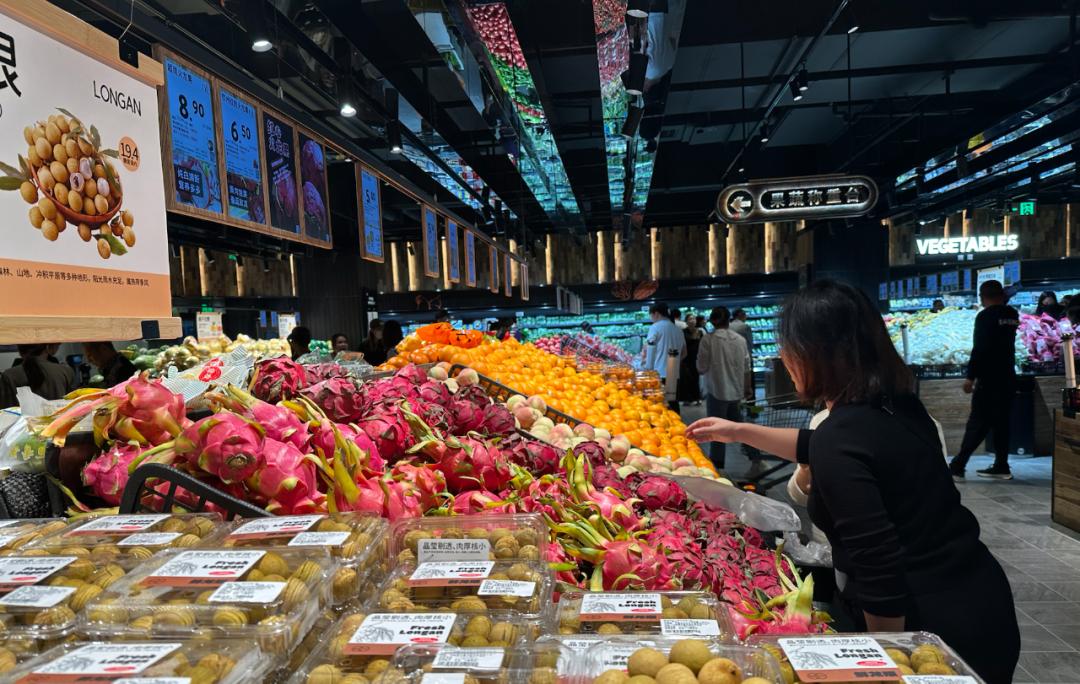
Core Viewpoint - The rise of e-commerce and food delivery services has significantly impacted the physical retail sector, leading to challenges for brick-and-mortar stores amid changing consumer behaviors and economic conditions [1][3]. Group 1: Impact of E-commerce and Food Delivery - E-commerce sales in China reached 10.8 trillion yuan, accounting for 24.5% of total retail sales, with online shopping users numbering 842 million by the end of 2021 [1]. - The food delivery market is projected to approach 941.74 billion yuan in 2022, with online food delivery users reaching 544 million [1]. - The shift towards online shopping and food delivery is driven by modern urban lifestyles, particularly among younger generations who prefer convenience and competitive pricing [3]. Group 2: Challenges Faced by E-commerce and Food Delivery - Despite the growth, e-commerce faces criticism over product quality, with consumers reporting frequent issues such as poor durability and discrepancies between online images and actual products [5]. - The food delivery sector also grapples with concerns over food safety and quality, alongside the potential negative impact on social interactions and health due to over-reliance on delivery services [5]. Group 3: Strategies for Physical Retailers - Physical stores can expand their online sales channels and adopt an O2O (online-to-offline) model to capture market share from e-commerce [6]. - Differentiation is key for physical retailers, leveraging unique advantages such as in-person product experiences and superior after-sales service to attract customers [6].