
家具

Search documents
2026年1-2月经济数据点评:投资为何意外转正?
Guolian Minsheng Securities· 2026-03-16 08:33
Economic Overview - In January-February 2026, the industrial added value increased by 6.3% year-on-year, slightly above the historical average of 6.0% since 2015[6] - The total retail sales of consumer goods reached 86,079 billion yuan, with a year-on-year growth of 2.8%[6] - Fixed asset investment (excluding rural households) was 52,721 billion yuan, showing a year-on-year increase of 1.8%[6] Investment Insights - Investment unexpectedly turned positive, rebounding from negative growth in the previous year, marking a significant highlight in the early economic data[6] - High-tech manufacturing showed remarkable performance, significantly outpacing overall industrial growth, indicating early success in cultivating new productive forces[3] Infrastructure and Fiscal Policy - Infrastructure investment saw a recovery, with public utilities, transportation, and water conservancy sectors all turning from negative to positive growth[3] - Fiscal spending accelerated, with a reduction of 350 billion yuan in February's fiscal deposits, indicating faster disbursement of funds[3] Manufacturing Sector - Manufacturing investment recorded a year-on-year growth of 3.1% in January-February, marking a strong rebound from the negative growth experienced since April 2025[4] - The leading sectors in manufacturing investment were primarily in mid-to-lower stream industries, such as transportation equipment and electrical machinery[4] Consumer Trends - The Spring Festival effect boosted retail sales, with restaurant and service retail sales growing by 4.8% and 5.6% year-on-year, respectively[4] - Consumption related to "trade-in" policies improved, although there was significant internal structural differentiation, particularly in the automotive sector, which continued to experience negative growth[5][7]
三类标准陷阱,透视消费市场“合规”漏洞|“315”特别策划
经济观察报· 2026-03-14 06:30
Core Viewpoint - The article highlights the discrepancy between product compliance with standards and consumer satisfaction, emphasizing that legal compliance does not equate to consumer approval [2]. Group 1: Standards and Compliance - In the consumer sector, standards serve as the legal basis for determining product quality, with most products adhering to a set of execution standards [2]. - The "Standardization Law" mandates that technical requirements for safety and health must meet or exceed mandatory national standards, yet many companies opt for lower general standards instead of higher industry or group standards [4][5]. Group 2: Case Studies of Compliance Issues - Case 1: "Water buffalo milk" often contains regular cow's milk, as the existing standard only requires the use of raw milk without specifying types, allowing misleading labeling [5]. - Case 2: Full aluminum furniture often adheres to general metal furniture standards, leading to issues like misrepresented aluminum thickness and quality [6]. Group 3: Gaps in Standards - Existing standards often fail to match the specific quality characteristics of emerging or niche products due to a time lag in standard development [9]. - The generality of broad standards does not adequately address the unique features of specialized products, leading to compliance issues [9]. Group 4: Information Asymmetry - Companies exploit the gap between technical standards and consumer understanding, using complex terminology to mislead consumers about product quality [15]. - Case 1: In the leather furniture market, the term "leather sofa" can refer to various types of leather, often without clear disclosure, misleading consumers [16]. - Case 2: Some brands exaggerate the UV protection of clothing, focusing on initial lab results while neglecting to inform consumers about performance degradation after washing [18].


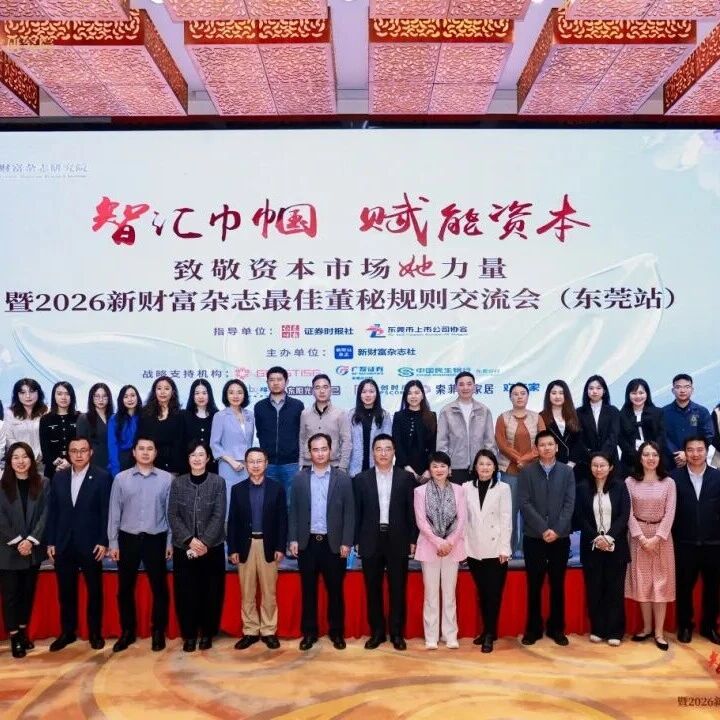
致敬资本市场她力量!新财富杂志董秘规则交流会东莞站赋能大湾区巾帼菁英
券商中国· 2026-03-12 04:00
Core Viewpoint - The event "Empowering Capital with Women's Strength" held on March 11, 2026, in Dongguan, aimed to celebrate and empower female elites in the capital market, highlighting their significant role in driving industry development and governance [2][4][24]. Group 1: Event Overview - The event gathered over 50 guests, including company secretaries and female executives from the capital market, to discuss the value of women's growth and explore professional development paths [2][11]. - It was organized by the New Fortune magazine, with support from various financial institutions, emphasizing the importance of women's contributions to the capital market [2][5]. Group 2: Professional Development and Insights - The event featured a session on "New Changes in Market Value Management," introducing a solution that integrates AI to assist company secretaries in their daily tasks, enhancing efficiency and compliance [12]. - A professional support segment included the release of the "2026 Core Interpretation of Best Secretary Rules," providing guidance on new regulations and evaluation processes for company secretaries [14][17]. Group 3: Quality of Life and Personal Development - The event also addressed the diverse needs of high-net-worth female elites, focusing on quality of life and personal well-being, with discussions on skincare and health management tailored for women in high-pressure roles [18]. - The integration of professional growth with personal quality of life was emphasized, aiming to support women in achieving both career success and personal fulfillment [24]. Group 4: Future Commitment - New Fortune magazine plans to continue its focus on empowering female elites in the capital market, creating more platforms for professional development and collaboration [24].
政府工作报告点题先进制造
21世纪经济报道· 2026-03-05 12:14
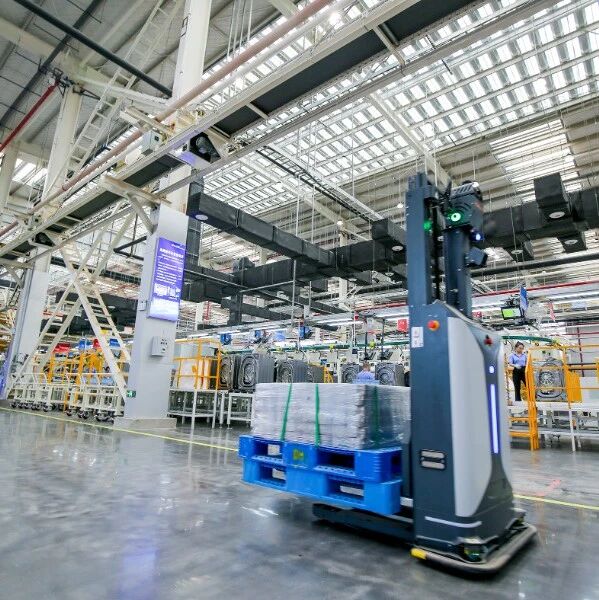
Core Viewpoint - The article emphasizes the importance of Guangdong's advanced manufacturing industry in response to the government's call for high-quality development, highlighting the integration of advanced manufacturing with service industries to foster innovation and growth [1][6]. Group 1: Government Initiatives and Industry Development - The 2026 government work report outlines a new round of actions for high-quality development in key manufacturing industries, aiming to strengthen industrial foundations and technological advancements [1]. - Guangdong has established 8 national-level advanced manufacturing clusters with a total output value nearing 10 trillion yuan, achieving world-class standards in various products and processes [1][5]. - The province's advanced manufacturing clusters are leveraging AI and data to transform production methods and service models, marking a shift towards intelligent manufacturing [1][13]. Group 2: Technological Innovation and Market Performance - The "AI Eight Steeds" initiative in Shenzhen has led to a 35% revenue increase across the region during the Spring Festival, with specific AI product categories seeing a 55% revenue growth [3][5]. - Guangdong's consumer drone market holds a 95% share of the national market, and 80% of China's exported 3D printers come from the province, showcasing its leadership in emerging industries [5][6]. - The integration of AI and advanced manufacturing is seen as a key driver for innovation, with companies like TCL and ZTE utilizing AI to enhance production efficiency and market predictions [13]. Group 3: Industry Collaboration and Ecosystem Development - The article discusses the need for deeper integration between advanced manufacturing and service sectors, with a focus on collaborative ecosystems that enhance innovation and service delivery [10][11]. - Guangdong's strategy includes using leading enterprises to drive service integration, addressing gaps in high-end services such as R&D and industrial software [10][11]. - The province aims to create a modern industrial system characterized by strong international competitiveness, supported by technological innovation and collaborative efforts [7][10].
亚洲洞察-IEEPA 失效 = 短期缓解,中期迷雾-Asia Insights - Asia_ IEEPA invalidation = Near-term relief, medium-term fog
2026-03-01 17:23
Summary of Key Points from the Conference Call Industry Overview - The conference call primarily discusses the implications of the US Supreme Court's (SCOTUS) ruling on the International Emergency Economic Powers Act (IEEPA) tariffs and its impact on trade policies affecting Asia [1][6][24]. Core Insights and Arguments - **Tariff Changes**: The SCOTUS ruling invalidated all tariffs imposed under IEEPA, leading to a temporary 15% import surcharge on most goods imported into the US under Section 122 of the Trade Act of 1974, effective for 150 days from February 24, 2026 [2][3][4]. - **Effective Tariff Rate Reduction**: The effective tariff rate is expected to decrease significantly for China (from 33.9% to 27.7%), followed by Cambodia, Indonesia, Vietnam, and India, which will benefit from lower tariffs on labor-intensive products [10][16][24]. - **Trade Policy Uncertainty**: Despite the near-term relief from lower tariffs, medium-term trade policy uncertainty is anticipated, particularly with the upcoming US midterm elections and potential future tariff increases under Sections 232 and 301 [6][25][26]. - **Impact on Trade Negotiations**: Trade negotiations between Asia and the US are expected to continue but at a slower pace due to legal uncertainties surrounding existing trade agreements [11][14][26]. Additional Important Content - **Sector-Specific Benefits**: Labor-intensive sectors such as textiles, toys, and electrical machinery are expected to benefit the most from the tariff reductions, while sectors already under Section 232 tariffs will see no changes [17][24]. - **Exemptions from Tariffs**: Certain products, including critical minerals, pharmaceuticals, and specific agricultural products, will be exempt from the new 15% tariff [7]. - **Legal Implications for Trade Deals**: The legality of existing bilateral trade agreements is uncertain, as many were based on the now-invalidated IEEPA modifications. Countries with negotiated tariff rates above 15% may face challenges in finalizing their agreements [12][13]. - **Market Reactions**: The initial market response to the SCOTUS ruling has been mixed, with expectations of a broad outperformance of Asian currencies against the USD, although potential future tariff increases could dampen this effect [27][28][29]. Conclusion - The SCOTUS ruling presents a complex landscape for Asia's trade dynamics, offering short-term relief through lower tariffs while introducing significant uncertainty regarding future trade policies and negotiations with the US. The overall sentiment is cautiously optimistic, with a focus on navigating the evolving trade environment [24][25][26].
敏华控股(01999):北美产能完善全球布局,盈利能力持续修复
Guotou Securities· 2026-02-26 12:03
Investment Rating - The investment rating for the company is "Buy-A" with a target price of 6.50 HKD over the next six months [3][7]. Core Insights - The company has acquired a US-based furniture manufacturer for approximately 58.7 million USD, enhancing its North American production capacity and mitigating potential tariff and shipping cost risks [1]. - Despite a 3.1% year-on-year decline in revenue to approximately 8.045 billion HKD for the first half of FY2026, the net profit attributable to shareholders increased by 0.6% to 1.146 billion HKD, driven by lower raw material costs and internal efficiency measures [2]. - The company is actively optimizing its channel structure in response to domestic market pressures, closing 327 offline stores while expanding e-commerce channels, resulting in a 13.6% increase in online sales [2]. Financial Performance - The company's revenue for FY2026 is projected to be 16.546 billion HKD, with net profit expected to reach 2.233 billion HKD, reflecting a year-on-year growth of 8.24% [9]. - The gross margin improved by 0.9 percentage points to 40.4%, and the net profit margin increased to 14.2% due to reduced financial costs, which fell by 45% [2]. - The company’s asset-liability ratio decreased to 19.0%, with cash and bank balances amounting to 3.947 billion HKD [2]. Market Position - The company is recognized as a leader in the functional sofa industry and soft home furnishings, with a solid fundamental base and a commitment to high dividends for shareholders [2][3]. - The North American market showed resilience with a slight revenue increase of 0.3%, while European and other overseas markets grew by 4.3%, supported by the company's manufacturing presence in Vietnam and Mexico [2].
南海擂响“开春战鼓”:102个项目动工,十大招商兵团出征
Nan Fang Du Shi Bao· 2026-02-26 01:33
Group 1 - The core event was the groundbreaking ceremony for major projects in the Nanhai District, with a total of 102 key projects announced, amounting to an investment of 916 billion yuan [1] - The annual investment plan for the 102 projects is over 130 billion yuan, with 20 infrastructure and public service projects, 45 industrial projects, 12 urban and rural appearance projects, and 26 cultural and tourism projects [2] - Industrial projects account for a significant portion, with a total investment of 652 billion yuan, including emerging industries like semiconductor equipment and life science innovation [2] Group 2 - The Nanhai District launched a "Ten Major Industry Investment Corps" strategy, focusing on ten key sectors such as smart manufacturing and modern cultural tourism, with a structured network for investment promotion [3] - A global outreach initiative was announced, with over 100 teams set to explore international markets, including Spain, the USA, and Russia, to secure orders [3] - The district aims to enhance its business environment by integrating various sectors and improving service quality, targeting 3,500 production service enterprises by 2028 [4]
皇庭智家(01575)股东将股票存入力高证券 存仓市值3640万港元
智通财经网· 2026-02-26 00:23
Core Viewpoint - The company, Huangting Zhijia (01575), has reported a significant decline in revenue and a net loss, attributed to macroeconomic factors affecting consumer spending on furniture [1] Financial Performance - Revenue decreased by approximately 44.2% to around 41.9 million HKD [1] - The net loss attributable to shareholders was 28.886 million HKD, which represents a year-on-year reduction of 68.71% [1] - Basic loss per share was approximately 0.97 HKD [1] Factors Influencing Performance - The decline in revenue is primarily due to inflation and interest rate hikes, which have reduced disposable income and demand for furniture among consumers [1] - The reduction in net loss is mainly due to a one-time provision of approximately 60.6 million HKD for receivables from related companies recorded in the same period last year, which did not recur in the current period [1]
解决“集货”问题,助力冀货出海
Xin Lang Cai Jing· 2026-02-25 23:04
Group 1 - The core focus of the article is on addressing the "consolidation of goods" issue to facilitate the export of Hebei products, emphasizing the need for specialized services to support small and medium-sized enterprises in international markets [1][3] - The Hebei provincial government aims to enhance the business environment by integrating resources for warehousing, transportation, and trade, thereby improving the efficiency of goods consolidation and export [3][4] - The province's key characteristic industrial clusters are projected to achieve a revenue of 3.86 trillion yuan by 2025, with a year-on-year growth of 7.0%, and profits of 199.41 billion yuan, reflecting a 16% increase [1][2] Group 2 - Hebei Land Port Group has established cross-border warehouses to serve local characteristic industrial clusters, streamlining the collection and transportation of goods to international ports [2][4] - The provincial government has outlined six specific measures to support the export of Hebei products, including the establishment of overseas service stations and optimization of customs processes [6][7] - The article highlights the importance of building cross-border e-commerce logistics bases and fostering collaboration between enterprises and e-commerce platforms to enhance export capabilities [5][6]
多部门联动揭穿“1元卖公司”逃债真相
Xin Lang Cai Jing· 2026-02-25 18:56
Core Viewpoint - A home furnishing company in Jiangshan, heavily in debt, attempted to transfer its shares for a symbolic price of 1 yuan, which was revealed to be a debt evasion scheme by the original shareholders [1][2] Group 1: Company Background - The company is co-owned by three individuals: Liu, Cheng, and Xia, and has faced operational difficulties leading to a complete breakdown of its financial chain [1] - Since July 2024, the company has been sued by employees and suppliers, accumulating a total debt of over 3.5 million yuan, with over 600,000 yuan owed in wages to 43 employees [1] Group 2: Share Transfer Details - In June 2024, the original shareholders transferred their shares to two investment firms in Shenzhen and Hainan for 1 yuan each, while changing the legal representative to Nie, who is also the legal representative of one of the investment firms [1] - The transfer was not a legitimate market transaction but a carefully orchestrated debt evasion strategy, as the new shareholders were also involved in multiple enforcement cases and had no intention or ability to operate the company or settle debts [2] Group 3: Legal Actions and Outcomes - The Jiangshan court took immediate action by sealing the company's assets and collaborating with various departments to investigate the case due to the suspicious nature of the share transfer [2] - The market regulatory authority determined that the share transfer concealed significant debts and wage arrears, leading to the annulment of the share transfer registration and restoration of the original shareholders' status [2] - Following the intervention of multiple departments, the original shareholders managed to raise funds to pay off all outstanding wages to the 43 employees [2]