建筑建材

Search documents
罗普斯金:截至2026年1月30日股东总户数18464户
Zheng Quan Ri Bao Wang· 2026-02-03 09:40
Core Viewpoint - As of January 30, 2026, the total number of shareholders for the combined ordinary accounts and margin financing accounts of Luopuskin (002333) is reported to be 18,464 [1] Group 1 - The company has provided an update on its shareholder count, indicating a total of 18,464 shareholders [1]

月论高股息-防御配置价值显现
2026-02-03 02:05
月论高股息:防御配置价值显现 20260202 摘要 红利股配置价值上升,周期型红利股如石油石化、建材、有色等表现强 劲。精工红利择时模型转为看多,建议关注公用事业、保险、出版等稳 定性高股息板块,以及铁路、公路、环保、大众消费和地产等潜力型高 股息板块。 险资出于现金收益和股息需求,将继续增配红利股,成为确定性主题。 年初分红险保单销售良好,保费流入增加,险资将在长债、成长股和红 利股中趋势性增配红利。 高速公路板块调整幅度较大,龙头企业如招商公路股息率达 4~4.5%, 部分小票超 5%。1 月货运量边际走强,春运旺季人流出行预测良好, 板块景气度上行,资金流入情况良好,推荐龙头企业。 建筑建材行业看好央企重组优化提速背景下低估值企业,中长期看好涂 料和定制板材赛道,推荐兔宝宝。水泥领域看好业绩稳定且具有投资收 益来源的公司,如防水企业雨虹。 建筑建材行业推荐中材国际和四川路桥等国央企或地方国企,其在局部 区域需求景气或出海业务方面具有较高的业绩增长确定性及分红确定性, 股息率约为 5.5%至 6%。 Q&A 近期市场波动较大,春节前后红利股的配置价值如何? 近期受到海外地缘冲突和美联储主席人选变动的影响 ...



华泰证券:防御配置价值显现
Sou Hu Cai Jing· 2026-02-02 23:54
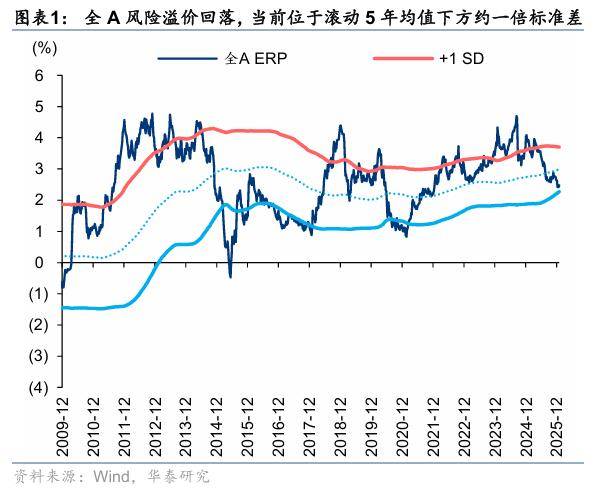
Core Viewpoint - The high dividend sector showed signs of recovery in January, driven by strong demand for dividend assets from insurance companies and the performance of cyclical high dividend stocks like oil, petrochemicals, and steel [2][4]. Market Overview - The overall market risk appetite continued to decline in January, with the full A ERP falling below one standard deviation of the past five-year average, indicating a challenging environment for market risk premium recovery [1][3]. - The volatility in cyclical stocks has impacted the market's profit-making ability, leading to a potential "small plateau" in investor risk appetite [3]. High Dividend Strategy - The configuration value of high dividend stocks has marginally increased compared to the previous month, suggesting a focus on stable high dividend stocks with defensive attributes and some potential high dividend varieties [1][3]. - The high dividend strategy's cost-effectiveness has improved, with the current full A ERP positioned at a historically significant level, requiring fundamental recovery or strong capital support for a breakthrough [3]. Sector Investment Opportunities - **Insurance**: The market sentiment remains strong, with expectations for continued positive performance in the insurance sector [5]. - **Oil and Petrochemicals**: Geopolitical tensions have raised concerns about global oil supply risks, leading to a rebound in oil prices. The Brent crude oil price forecast for 2026 has been raised to $65 per barrel [5]. - **Construction Materials**: The construction sector is expected to improve post-Spring Festival, with price increases in fiberglass, waterproof materials, and gypsum boards anticipated [5]. - **Utilities**: The electricity supply side is expected to stabilize, with coal prices remaining steady, indicating a bottoming out of electricity stock valuations [6]. - **Transportation**: The logistics sector is seeing a slight uptick in activity, particularly in road freight, as the Spring Festival travel season approaches [6]. - **Banking**: Banks are actively increasing lending, with profit margins expected to improve, particularly in light of a manageable impact from the real estate sector [7]. - **Real Estate**: The Hong Kong residential market has seen significant growth, with transaction volumes and prices rebounding, indicating a recovery trend [7]. - **Consumer Staples**: Leading companies in the consumer staples sector are expected to maintain stable cash flows and increase dividend payouts, benefiting from structural upgrades and international expansion opportunities [8].


2月度金股:蓄势再出发-20260202
Soochow Securities· 2026-02-02 12:11
Core Insights - The report indicates that after a period of volatility, the market is expected to regain momentum in February, supported by a decrease in the volatility index from a peak of 102 to around 32, which is historically low [2][3] - The report emphasizes the importance of focusing on two main investment themes: technology growth and cyclical recovery, as funds are likely to rotate towards underperforming sectors [3][4] Investment Themes - **Technology Growth**: The AI industry is experiencing significant positive changes, with expectations for OAI listings and advancements in storage, CPU, and packaging sectors. The report highlights the importance of monitoring policy catalysts and industry developments, particularly in emerging sectors like aerospace, new materials, and quantum technology [6][6] - **Cyclical Recovery**: The report suggests that sectors such as chemicals, real estate, and core consumer assets are expected to see a rebound as market sentiment improves. The report notes that these sectors are currently at low points in their economic cycles, with potential for recovery as institutional positions are historically low [6][6] Recommended Stocks - **Jingsheng Electromechanical (300316.SZ)**: The company is positioned to benefit from increasing demand in space and overseas photovoltaic equipment, with a market cap of 58.3 billion and projected EPS growth from 0.95 in 2026 to 1.17 in 2027 [7][7] - **Nuwai Co., Ltd. (603699.SH)**: As a leading industrial valve manufacturer, the company is expected to see growth driven by LNG and marine vessel demand, with a projected EPS increase from 2.51 in 2026 to 3.00 in 2027 [7][7] - **Longjing Environmental Protection (600388.SH)**: The company is focusing on green electricity and energy storage, with a projected EPS growth from 1.20 in 2026 to 1.37 in 2027 [7][7] - **Chip Microelectronics (688630.SH)**: The company anticipates significant profit growth, with EPS expected to rise from 4.18 in 2026 to 6.08 in 2027 [7][7] - **AVIC High-Tech (600862.SH)**: The company is expected to benefit from the increasing demand for aerospace materials, with projected EPS growth from 1.17 in 2026 to 1.29 in 2027 [7][7] - **Ping An Insurance (601318.SH)**: The company is projected to maintain strong growth in new business value (NBV), with EPS expected to rise from 8.59 in 2026 to 9.74 in 2027 [7][7] - **Rabbit Baby (002043.SZ)**: The company is expected to see steady growth in the decorative board industry, with projected EPS growth from 1.05 in 2026 to 1.15 in 2027 [7][7] - **Wanhua Chemical (600309.SH)**: The company is expected to benefit from improving MDI and TDI market conditions, with projected EPS growth from 5.13 in 2026 to 5.79 in 2027 [7][7] - **Tianfu Communication (300394.SZ)**: The company is positioned to benefit from the demand for optical modules, with projected EPS growth from 4.10 in 2026 to 5.38 in 2027 [7][7] - **Shaanxi Tourism (603402.SH)**: The company is expected to see growth driven by its core tourism operations, with projected EPS growth from 6.65 in 2026 to 7.61 in 2027 [7][7]




挖坑 | 谈股论金
水皮More· 2026-02-02 09:18
Market Overview - The A-share market experienced a significant decline, with the Shanghai Composite Index dropping by 2.48% to close at 4015.75 points, marking the largest single-day drop since April 7, 2025 [3] - The Shenzhen Component Index fell by 2.69% to 13824.35 points, while the ChiNext Index decreased by 2.46% to 3264.11 points [3] - Total trading volume in the Shanghai and Shenzhen markets was 260.69 billion, a decrease of 255.8 billion from the previous trading day [3] Individual Stock Performance - A total of 4465 stocks declined, while only 741 stocks rose, indicating a broad market sell-off [3] - The median decline across all stocks was 2.15%, reflecting a simultaneous drop in both volume and price [3] Sector Performance - Only two sectors, electric grid equipment and the liquor industry, saw gains, with the liquor sector's core stocks performing particularly well [4] - The banking sector attempted to stabilize the market but ultimately closed down by 0.26% [4] - The most significant declines were seen in cyclical stocks, particularly precious metals, with declines in mining, coal, non-ferrous metals, steel, and oil sectors, many of which experienced drops close to 5% [4] Commodity Market Impact - The commodity market experienced extreme volatility, with gold prices plummeting to $4559 per ounce, a drop of 3.83%, and oil prices falling by 4.88% [5] - Silver prices also fell to $73.15 per ounce, down by 6.81%, indicating a chain reaction affecting related A-share sectors [5] Economic Indicators - Recent PMI data released by the National Bureau of Statistics showed a comprehensive decline in economic activity, with manufacturing, non-manufacturing, and composite business indices all falling below the "50 boom-bust line," indicating a slowdown compared to the end of last year [5] - The real estate and construction materials sectors weakened significantly, influenced by a reported loss of 82 billion from Vanke, compounding the market's challenges [5] Future Market Outlook - The current market downturn is seen as a potential opportunity for the upcoming Spring Festival market rally, with expectations for the index to form a new range-bound trading pattern [6] - The core support logic is based on the prior cooling of large blue-chip stocks under "national team" regulation, which has mitigated some risks [6] - Blue-chip valuations are at historical lows, suggesting limited downside potential for the index, as evidenced by the stable performance of major liquor stocks and the four major banks [6]

策略周报:衡以待:行情下半场的配置思路-20260131
Guoxin Securities· 2026-01-31 12:52
Core Conclusions - The A-share market typically exhibits balanced performance during spring rallies, with both growth and value sectors showing gains. In the latter half of bull markets, sector differentiation tends to converge, leading to a more uniform upward trend [1][2] - Recently, previously lagging sectors such as liquor and real estate have performed well, indicating a structural convergence in the market as it enters the latter half of the bull market and spring rally [1][3] - The equity market is expected to remain stable with potential for further upward movement. A balanced allocation strategy is recommended, with a focus on technology represented by AI applications, as well as traditional assets like liquor and real estate, and upstream cyclical sectors [1][3] Historical Context - Historically, during spring rallies since 2005, both growth and value styles have performed similarly, with average maximum gains of 24.0% for growth and 23.5% for value [2][14] - The current market is still within a bull market atmosphere that began in September 2024, with significant structural differentiation observed. The latter half of bull markets typically sees a more balanced performance across sectors [2][18] Market Dynamics - The recent A-share market has shown notable sector rotation, with the performance gap between styles narrowing. Since December 17, 2025, the spring rally has gradually unfolded, supported by broad-based ETFs, flexible foreign capital, and leveraged funds [1][11] - As of January 23, 2026, the industry rotation strength in the A-share market was at a historical low of 18% over the past five years, but there has been a recent uptick, suggesting that structural rotation may be beginning [12][14] Future Outlook - The current spring rally is expected to continue, with historical comparisons indicating a potential index increase of around 20%. The maximum increase of the Shanghai Composite Index since December 17, 2025, has only been 9.8%, indicating room for growth [3][30] - Continued macroeconomic policy support is anticipated to provide a fundamental basis for market growth, with a focus on stabilizing the real estate market as indicated by recent government statements [30][31] Sector Allocation - The technology sector, particularly driven by the AI wave, remains a key focus, with expectations for the rally to expand from hardware to application sectors. Recent developments in AI applications have been notable, suggesting a shift towards practical implementations [31][32] - In addition to technology, traditional value sectors such as undervalued liquor and real estate assets are also recommended for consideration in the current market environment [31][32]
国资重组+“反内卷”双轮驱动,建材ETF(159745)猛吸金
Mei Ri Jing Ji Xin Wen· 2026-01-30 06:53
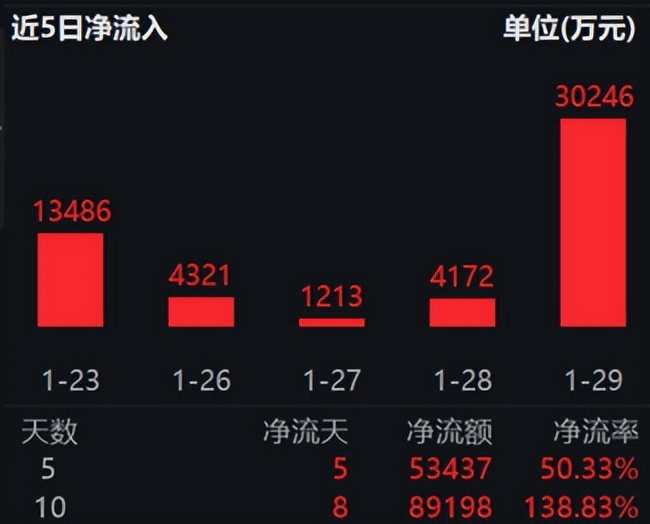
Core Viewpoint - The construction and building materials industry is undergoing a significant restructuring and value reassessment driven by the deepening "anti-involution" policies, accelerated state-owned enterprise (SOE) restructuring, and improving expectations in the real estate chain [1] Group 1: Policy Environment - The strategic restructuring of SOEs aims to merge similar entities and reduce homogeneous competition among construction SOEs, while the "anti-involution" policy promotes supply-side reforms in traditional building materials, enhancing industry concentration and optimizing competition [3] - The State-owned Assets Supervision and Administration Commission (SASAC) has indicated a strong push for strategic and professional restructuring of SOEs, which is expected to reduce internal competition and enhance overall profitability [3] - The implementation of the "anti-involution" policy has led to significant production capacity adjustments in the cement industry, with over 280 clinker production lines replaced and 150 million tons of outdated capacity withdrawn annually, creating a foundation for industry profitability recovery [3] Group 2: Industry Structure - Traditional building materials leaders are expected to benefit from supply clearing and cost transmission, leading to a recovery in profitability, while new materials serving sectors like renewable energy and AI are experiencing independent growth [4] - In the traditional sector, leading companies in waterproof materials and cement are expected to consolidate their market positions and improve profitability due to their strong pricing power amid rising raw material costs [4] - New materials, such as electronic-grade fiberglass, are positioned for growth driven by demand from consumer electronics, electric vehicles, and AI servers, indicating a clear second growth curve for the industry [4] Group 3: Demand Side - Although long-term population trends may pressure overall construction demand, short-term real estate policies are expected to stabilize demand for building materials, particularly in the consumer segment [5][6] - Recent signals from policy levels have indicated a recovery in the second-hand housing market, which is expected to stabilize demand for construction materials [6] - New demands from urban renewal and major national projects are anticipated to provide additional growth opportunities for the construction materials sector [6] Group 4: Supply Side - Rising prices of upstream raw materials are prompting certain segments of the building materials industry to initiate a price increase cycle, benefiting leading companies with pricing power [7][8] - The transition to green and intelligent production is becoming a new industry standard, raising entry barriers and investment costs, which may favor stronger companies capable of upgrading [8] Group 5: Investment Strategy - The construction materials sector is diverse, and investing through the building materials ETF (159745) allows for efficient exposure to leading companies across the entire industry chain [9][10] - The ETF tracks the CSI All-Share Construction Materials Index, providing balanced exposure to key sub-sectors and benefiting from both traditional sector recovery and new material growth [10] - The current period of industry transformation presents a unique opportunity for investors to capitalize on the shift from disordered expansion to a more optimized and concentrated market structure [10]
东方雨虹的砂粉业务为何被誉为第二增长曲线
Zhong Guo Zhi Liang Xin Wen Wang· 2026-01-30 06:41
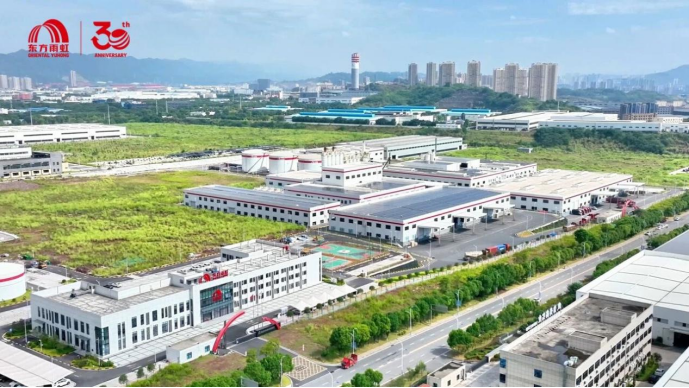
Core Viewpoint - The construction materials industry is transitioning from incremental expansion to deep adjustment focused on existing stock and value reconstruction, with Oriental Yuhong's mortar powder business achieving significant growth despite industry challenges [1] Group 1: Business Growth and Strategy - Oriental Yuhong's mortar powder business has experienced over 30 times growth in five years, with total production and sales expected to exceed 12 million tons by 2025, contributing 14.71% to the company's revenue [1] - The rise of the mortar powder business is attributed to a decade-long strategic focus and foresight, starting with the establishment of the "Hua Sha" brand in 2010 and evolving through various stages of technological development and market expansion [3] - The business was elevated to a primary subsidiary in 2021, marking the beginning of large-scale expansion, and in 2025, the establishment of the Coating and Powder Technology Group will further enhance its integrated solutions [3] Group 2: Competitive Advantages - The full industry chain advantage of Oriental Yuhong, from mining to production and manufacturing, has become increasingly prominent, with the number of owned mines increasing from 1 to 4 by 2025, ensuring stable raw material supply [5] - The company operates nearly 70 production and R&D logistics bases globally, enabling integrated operations that enhance cost control, delivery efficiency, and quality stability, creating significant competitive barriers [5] - The integrated business model of "sales, technology, supply, production, and service" effectively captures structural opportunities in urban renewal, rural construction upgrades, and home renovation [7][8] Group 3: Product Innovation and Market Position - Continuous technological innovation has led to a comprehensive product matrix covering special mortars, building powders, and high-end finishes, meeting diverse needs in construction and decoration [10] - Notable products include the Hua Sha L411 lightweight tile adhesive, which won the "2025 Outstanding Green Innovation Product Award," and various mortars tailored for urban renewal projects [10] - The development trajectory of the mortar powder business exemplifies the company's ecological philosophy of value co-creation, shared benefits, and mutual responsibility, positioning it as a strategic driver for the high-quality development of the construction industry [10]

行业竞争加剧 坚朗五金2025年度预亏
Zhong Guo Jing Ying Bao· 2026-01-30 04:30
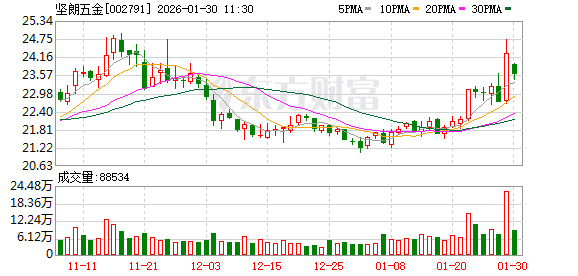
2026年1月29日晚间,坚朗五金(002791.SZ)发布2025年度业绩预告。根据公告信息,坚朗五金预计 2025年度归母净利润及扣非净利润同比均由盈转亏,其中归母净利润预计亏损7000万元至9500万元,扣 非净利润预计亏损9500万元至1.15亿元。 对于当期亏损原因,坚朗五金方面表示,2025 年度国内建筑建材行业市场竞争持续加剧,叠加房地产 市场深度调整带来的需求收缩,对公司经营产生一定影响。 "2025年公司持续围绕建筑配套件集成供应战略定位开展工作,为应对市场变化,公司积极优化业务结 构,然而公司与房地产关联度较高的国内业务订单减少;同时公司强化风险防控,审慎开展大型工程项 目合作,导致工程渠道收入同比下滑;新产品和新场景业务方面开拓进度相对滞后。"坚朗五金方面表 示,在海外市场方面,公司依托前期市场开发积累和客户资源保持了良好增长趋势,但目前海外业务总 体占比还较少,无法抵冲国内业务下滑影响。因此,2025年度公司整体营业收入预计同比下降15%左 右。 此外,坚朗五金方面指出,当期公司部分资产因市场环境变化出现减值迹象,基于谨慎性原则,公司根 据相关规定,对可能发生减值的相关资产计提相应减值 ...

国泰海通|策略:价值也会有春天——“着力稳定房地产”政策点评
国泰海通证券研究· 2026-01-23 01:11
核心 观点:稳定房地产对于稳定国民经济、稳定内需增长、减少资产收缩与提振预期具有关键作用,在行业累年下行与估值收缩后,行业政策有望 出现重要拐点,推动投资机遇。 摘要 ▶转型牛迈向新高度:价值也会有春天。 无风险收益下沉、资本市场改革、经济结构转型,构成了当下中国股市"转型牛"的三大关键动力。其中中国产业 结构转型,经济社会发展不确定性下降,对投资线索的把握尤为关键。累年下行后,传统产业L型"一竖"走向"一横",拖累边际减少;新技术产业迈入创新 扩张周期,中国制造业凭借竞争优势正在全球扩张,经济社会发展的不确定性下降。因此,"转型牛"的典型特点是经济结构转型与资本市场改革交相辉 映,2026年中国市场重估是广泛的,科技与非科技都有机会。对于传统经济而言,房地产对于稳定国民经济与内需增长、减少资产收缩与提振预期具有关 键作用,我们认为房地产政策渐行渐近,中国传统经济能见度正在提高,这将带来价值股和细分行业龙头的投资机会。 ▶行业累年下行,政策基调积极转向,地产与内需有望进入重要拐点。 中国房地产行业经过累年下行,已逐步完成深度调整,步入探底与磨底区间。截止 25Q4,我国住宅投资占GDP比重回落至4.5%,较2 ...