金属矿业

Search documents
建信期货铜期货日报-20260227
Jian Xin Qi Huo· 2026-02-27 01:42
Report Information - Report Title: Copper Futures Daily Report [1] - Date: February 27, 2026 [2] - Researcher: Zhang Ping, Yu Feifei, Peng Jinglin [3] Core Views - The Shanghai copper market showed an oscillating trend, with slight changes in the total open interest and the spread structure. The spot copper price dropped by 270 to 101,795, and the spot discount widened to 235. Due to the narrowing of the LME 0 - 3 contango structure and the decline of the Shanghai - London ratio, the loss in spot copper imports increased. In the short term, the high domestic inventory pressure was prominent, and both LME and COMEX continued to accumulate inventory. The abundance of spot goods in both domestic and international markets led to the closure of the import - export window. The macro - situation was mixed, with the strong Q4 revenue and future guidance of NVIDIA dispelling concerns about the AI investment bubble, while the unresolved Iran situation increased the geopolitical risk, enhancing the strategic resource status of copper. In the short term, with the macro and fundamental factors being both positive and negative, copper prices are expected to oscillate [10] Industry News Summary Supply Constraint Warning - On February 25, Jonathan Price, the CEO of Teck Resources, warned at an industry conference that the copper supply constraint was still severe. The output of existing mines was expected to decline from 2027. Even considering the committed projects, copper supply was expected to peak in 2029, with limited growth space thereafter. The non - planned interruptions in the copper concentrate market in 2025 were over 6% higher than the historical level, further intensifying the supply pressure. There was a significant disconnect between the construction cycle of new mine supply and potential demand drivers [10] Project Commencement - On February 24, the groundbreaking ceremony for the first phase of the Segongnong Tailings Pond Project of the third - phase project of Yulong Copper Industry was held, marking a new stage of full - speed construction. The project is crucial for Yulong Copper Mine's third - phase project, supporting the improvement of mine safety and environmental protection, ensuring production continuity, and promoting green and high - quality development. After completion, it will solve the tailings storage bottleneck, enhance production safety, stability, and sustainability, and drive the large - scale and intensive development of Yulong Copper Industry, injecting strong impetus into the high - quality development of Western Mining Group [10]
机器人需要的金属材料:一场静默的“金属革命”
Xin Lang Cai Jing· 2026-02-26 03:32
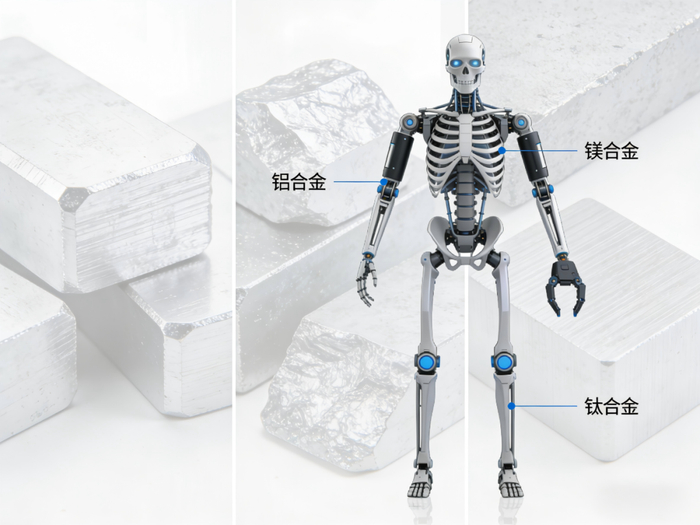
Group 1 - The core viewpoint of the article highlights a significant shift in metal demand driven by the rise of the robotics industry, which is reshaping the demand curve for various base metals [2] - The demand for lightweight metals such as aluminum, magnesium, and titanium is increasing due to the need for robots to be agile and precise, with aluminum alloy consumption exceeding 500,000 tons annually and growing at over 15% per year [2][4] - Magnesium alloys are emerging as a replacement for aluminum in applications requiring extreme lightweight properties, although they face challenges in corrosion resistance and processing difficulty [3] Group 2 - Neodymium-iron-boron magnets are essential for the robotics industry, with each industrial robot consuming 5-10 kg and humanoid robots consuming 2-3 kg, leading to an estimated demand increase of 100,000 tons by 2030 [5] - The production of neodymium-iron-boron requires significant amounts of rare earth metals, indicating that the robotics industry will drive a substantial increase in demand for rare earth oxides [5][6] - The addition of heavy rare earth elements like dysprosium and terbium is necessary to enhance the thermal stability of magnets used in high-performance robots, making dysprosium a critical and scarce resource [6] Group 3 - Copper is crucial for the internal wiring of robots, with industrial robots averaging 15-25 kg of copper and humanoid robots potentially exceeding 50 kg, necessitating high-performance copper alloys to meet durability requirements [8][9] - The market for high-strength, high-conductivity copper alloys is growing at a rate of 20% per year, posing challenges for upstream copper producers in terms of alloying and precision processing capabilities [9] - Silver is indispensable for electrical connections in robots, with an average consumption of 50-80 grams per industrial robot, leading to a significant increase in silver demand across the industry [10] Group 4 - The demand for precision transmission components in robots requires high-purity bearing steel and high-temperature alloys, with only a few companies capable of producing the necessary quality [12][13] - The rise of the robotics industry necessitates a shift in mining strategies, focusing on niche metals like dysprosium and terbium, which are becoming increasingly valuable due to their strategic importance [14][15] - The purity requirements for metals used in robotics are significantly higher than traditional industrial standards, demanding advanced purification technologies from upstream producers [15] Group 5 - The collaboration between upstream mining and downstream manufacturing is becoming critical, as high-end materials require precise management of raw materials during extraction [16] - The emergence of humanoid robots in factories and homes signals a new productivity revolution, with the raw materials for this revolution lying in previously overlooked mineral deposits [18] - Companies that can identify trends in metal demand and enhance their processing capabilities are positioned to benefit significantly from the anticipated "robotic dividend" over the next decade [18]


十个月连涨在望,白银被推上贸易避险“C位”
Jin Shi Shu Ju· 2026-02-26 03:20
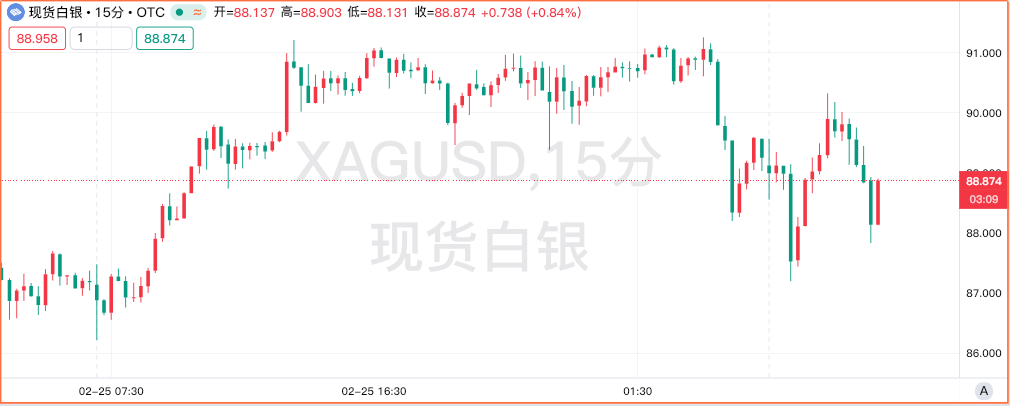
Core Viewpoint - Silver continues to outperform gold this year, becoming a preferred "hedge asset" for investors, with prices expected to record a consecutive 10-month increase, marking the longest monthly gain on record [2] Group 1: Market Performance - As of Thursday, spot silver is hovering around $88.90 per ounce, with a cumulative increase of approximately 4.3% this month [4] - The silver market is experiencing a supply deficit, projected to reach 67 million ounces by 2026, marking the sixth consecutive year of deficit [7] Group 2: Influencing Factors - Trade tensions are reigniting investor demand for hedge assets amid global economic slowdown and geopolitical polarization [5] - Ongoing tensions in Eastern Europe and security concerns in Mexico are enhancing the appeal of precious metals [6] Group 3: Market Dynamics - Silver is characterized as a "dual-purpose metal" with both investment and industrial uses, making it more sensitive to economic cycles compared to gold [5] - The market is transitioning from being news-driven to being fundamentally driven, influenced by monetary policy, inflation expectations, and dollar dynamics [7][8] - Current expectations indicate that the Federal Reserve will maintain interest rates in March, with a potential for approximately 60 basis points of rate cuts for the remainder of the year, making the monetary environment more favorable for precious metals [7] Group 4: Speculative Behavior - Speculative behavior from Asian traders is contributing to extreme volatility in precious metals, highlighting the role of short-term liquidity in amplifying price fluctuations [7] - The current market is not experiencing a price bubble but is undergoing a "speculative cycle" amid ongoing supply shortages and rising industrial demand [8]
资讯早班车-2026-02-26-20260226
Bao Cheng Qi Huo· 2026-02-26 01:30
1. Report Industry Investment Rating There is no information about report industry investment rating in the content. 2. Core Viewpoints - The overall economy shows a complex situation with different trends in various indicators. For example, GDP growth slowed down, while social financing scale increased significantly in January 2026. In the commodity market, there are changes in prices, inventories, and policies. In the financial market, there are activities in the bond, stock, and foreign exchange markets, and different institutions put forward investment suggestions [1][2][36]. 3. Summary by Directory 3.1 Macro Data - GDP growth in Q4 2025 was 4.5% year - on - year, lower than the previous quarter's 4.8% and last year's 5.4%. Manufacturing PMI in January 2026 was 49.3%, non - manufacturing PMI was 49.4%. Social financing scale in January 2026 was 7220.8 billion yuan, a significant increase from the previous month [1]. 3.2 Commodity Investment 3.2.1 Comprehensive - Agricultural Bank of China adjusted the margin ratio of Au(T + D), mAu(T + D), and Ag(T + D) contracts from 80% to 100% starting from February 26, 2026. On February 25, 32 domestic commodity varieties had positive basis, and 36 had negative basis. Some commodities' inventories increased or decreased, such as CZCE cotton and SHFE copper inventories reaching new highs [2][3]. - The CME Group had a technical glitch, interrupting trading in natural gas and metal futures for over half an hour. The UK government's sanctions on Russia included Chinese entities, and China expressed strong dissatisfaction. The US may continue the 301 investigation on China's implementation of the first - phase economic and trade agreement [4][5]. 3.2.2 Metal - The compensation plan for Guotou Silver LOF was launched, with funds from the company's own assets. Tungsten prices increased significantly, and Venezuela sold nearly 6 tons of gold in the second half of last year due to a shortage of US dollars [6][7]. - LME inventory data showed changes in copper, zinc, aluminum, etc. inventories. SPDR Gold Trust's holdings increased by 0.31%, and iShares Silver Trust's holdings decreased by 28.18 tons. Countries are hoarding metals, and the Trump administration will use AI to set reference prices for key minerals [8][9]. 3.2.3 Coal, Coke, Steel, and Minerals - Domestic stainless - steel prices rose on February 25, and Zimbabwe suspended the export of all raw ores and lithium concentrates [10]. 3.2.4 Energy and Chemicals - In 2026, China will strengthen the connectivity of oil and gas infrastructure. Russia expects the proportion of oil and gas in its budget revenue to be less than 20%. OPEC + may moderately increase production in April. Trump mentioned low gasoline prices and inflation in the US, and the US will impose anti - subsidy duties on solar - cell components from India, Indonesia, and Laos. US EIA crude inventory increased by 15.99 million barrels last week [12][13][14]. 3.2.5 Agricultural Products - ICE cocoa fell below $3000/ton, the lowest since March 2024. The US beef export volume in 2026 will decrease by 6% compared to 2025, and imports will increase by 3%. India's soybean meal exports in January increased to 132,440 tons [16][17]. 3.3 Financial News 3.3.1 Open Market - The central bank conducted 409.5 billion yuan of 7 - day reverse repurchase operations on February 25, with a net investment of 9.5 billion yuan. The central bank issued two - phase central - bank bills in Hong Kong [18]. 3.3.2 Important News - German Chancellor Friedrich Merz visited China, and China and Germany reached a series of consensuses on economic and trade cooperation. Shanghai adjusted real - estate policies. The US may continue the 301 investigation on China, and China will take necessary measures to safeguard its rights. Trump made a speech in Congress, and there were some inaccurate statements. Hong Kong's economic growth and inflation were predicted, and some policies were proposed [19][20][24]. 3.3.3 Bond Market - The inter - bank bond market adjusted, with rising yields of interest - rate bonds. Treasury - bond futures declined. Exchange - bond market showed different performances, and convertible - bond indexes had fluctuations. Interest rates in the money market had various changes, and bond - issuing and - purchasing yields were announced. European and US bond yields also changed [26][27][29]. 3.3.4 Foreign Exchange Market - After the Spring Festival, the RMB exchange rate strengthened, and the US dollar index fell. Non - US currencies mostly rose [31][32]. 3.3.5 Research Report - Xingzheng Fixed - income suggested investors to participate in long positions of T2606 and TL2606 contracts. CITIC Securities believed that the Spring Festival consumption in 2026 was in a state of differentiation, and investors should pay attention to relevant opportunities [33]. 3.3.6 Today's Reminder - On February 26, 133 bonds were listed, 117 bonds were issued, 29 bonds were paid, and 235 bonds repaid principal and interest [34]. 3.4 Stock Market - The A - share market rose on Wednesday, with cyclical resource stocks leading the gains. The Hong Kong stock market also had different performances. The A - share strong - cycle sector has been rising since January, and institutions believe it has repair potential. The Hong Kong Stock Exchange plans to consult on the "T + 1" settlement cycle and other work [36][37].
锡、镍、铜,集体大涨!一则消息引爆
Xin Lang Cai Jing· 2026-02-25 11:46
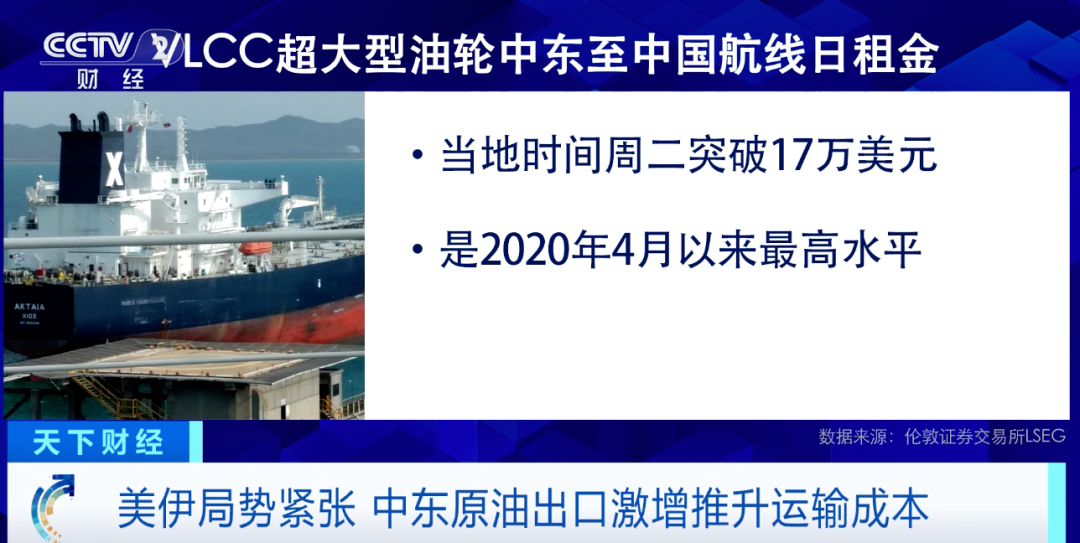
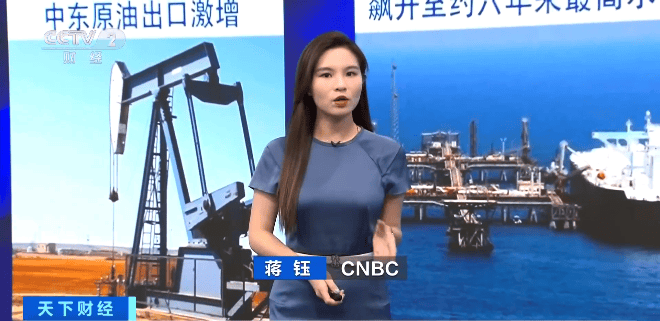
Group 1: Oil Shipping Market - The daily rental price for Very Large Crude Carriers (VLCC) from the Middle East to China has surpassed $170,000, marking the highest level since April 2020 [2] - The crude oil export volume from the Middle East exceeded 19 million barrels per day in February, also the highest since April 2020, driven mainly by Saudi Arabia, the UAE, and Iran [2] - Factors supporting the rise in VLCC rates include the return of Venezuelan oil to compliant fleets, increased production by OPEC+, and strong global refinery demand, particularly from India shifting its oil purchases from Russia to the Middle East [4] Group 2: Future Market Outlook - If the U.S. takes military action against Iran, and Iran retaliates by disrupting the Strait of Hormuz, "war risk" insurance rates may rise rapidly, increasing overall oil transportation costs [6] - Shipping brokers indicate that as market risk expectations rise, freight rates will respond quickly, influenced by higher war risk insurance rates, shipowners demanding greater compensation, and charterers locking in forward capacity early [6] Group 3: Mineral Pricing Initiative - The Trump administration plans to utilize an AI model developed by the Pentagon to set reference prices for key minerals, aiming to establish a global metal trading zone [8] - The AI pricing model will initially focus on at least four key minerals: germanium, gallium, antimony, and tungsten, with plans to expand coverage later [10] - Following the announcement, the base metal market reacted swiftly, with tin futures rising over 5.4%, nickel increasing by approximately 3.6%, and copper up by more than 2% [12]
美伊局势紧张 中东原油出口激增推升运输成本
Sou Hu Cai Jing· 2026-02-25 11:24
Group 1: Oil Market Insights - The daily rental price for Very Large Crude Carriers (VLCC) from the Middle East to China has surged to over $170,000, the highest level since April 2020, driven by increased oil exports and demand for shipping capacity amid rising tensions between the US and Iran [5][3] - Oil exports from the Middle East have exceeded 19 million barrels per day in February, also the highest since April 2020, primarily due to increased shipments from Saudi Arabia, the UAE, and Iran [5] - Factors supporting the rise in VLCC rates include the return of Venezuelan oil to compliant fleets, increased production by OPEC+, and strong global refinery demand, particularly from India, which is shifting its oil purchases from Russia to the Middle East [5] Group 2: Mineral Pricing Developments - The Trump administration plans to utilize an AI model developed by the Pentagon to set reference prices for key minerals, aiming to establish a global metal trading zone [9] - The AI pricing model will initially focus on four critical minerals: germanium, gallium, antimony, and tungsten, with plans to expand coverage later [9] - Following the announcement, prices for various base metals surged, with tin futures rising over 5.4%, nickel increasing by approximately 3.6%, and copper up by more than 2% [9]
全球矿业研究 | 2026年金属市场的七大展望
彭博Bloomberg· 2026-02-25 06:05
Core Viewpoint - The article discusses the 2026 outlook for the metals and mining sector, focusing on three main themes: persistent safe-haven demand, supply structure changes driving divergence in base metals, and resource security becoming a policy priority [3][4]. Group 1: Precious Metals - Gold is expected to outperform the S&P 500 again in 2026, with an average price projected around $5,000 per ounce [3][6]. - Silver may experience a modest correction after a strong rally, but its average price is still anticipated to be significantly above market consensus [3][5]. Group 2: Supply Structure Changes - The copper market is expected to tighten, with prices likely to remain above $12,000 per ton, while nickel may see a price drop to around $15,000 due to oversupply unless Indonesia intervenes [4][5]. - The alumina market is projected to see price support from cost curves, with a potential decline limited to about 10% [4]. Group 3: Resource Security - Government funding is driving accelerated development of rare earth resources, with an estimated $10 billion in public sector investment expected [4][5]. - U.S. steel tariffs are likely to remain in place, benefiting domestic producers [4]. Group 4: Mining Companies Outlook - Major mining companies are reflecting a rebound in market risk appetite, with a trend of capital reallocation towards tangible assets [9]. - The structural supply constraints in metals, particularly copper, support price resilience, indicating potential upward revisions in profit forecasts [9]. Group 5: Silver Mining Companies - Silver mining companies, including Fresnillo, are expected to maintain strong performance in 2026, benefiting from high precious metal prices and robust operational execution [11]. - The consensus forecast predicts a 44% year-over-year increase in earnings for silver companies in 2026, based on silver and gold prices of $83 and $4,820 per ounce, respectively [11][12].
美银:金价今年料升至5000美元 维持对金属价格的正面看法
智通财经网· 2026-02-25 03:13
Group 1 - Bank of America raised its gold price forecast for this year by 10% to $5,000 per ounce [1] - The copper price forecast is set at $13,200 per ton, maintaining a positive outlook on metal prices [1] - The bank expects continued supply shortages in the copper and aluminum markets [1] Group 2 - Anticipated demand rebound in the US, Europe, and China during the summer despite potential short-term volatility [1] - Factors supporting the expected rise in gold prices include a weak dollar, geopolitical uncertainty, sustained investment demand, and central bank purchases [1] - The bank projects gold prices will reach $4,900 to $5,000 per ounce by 2026 to 2027 [1] Group 3 - The bank's top stock pick is Zijin Mining (02899), with an expected copper production growth of 11% and gold production growth of 16% by 2026 [1] - Zijin Mining is considered attractive in terms of valuation and has strong execution capabilities [1]

Governments are rushing to hoard metals as the 'resource nationalism' era arrives
CNBC· 2026-02-24 23:16
Group 1: Project Vault and Strategic Initiatives - The U.S. has introduced Project Vault, a strategic mineral reserve initiative with an investment of approximately $12 billion aimed at enhancing supply-chain resilience for critical minerals essential for electrification, defense, and advanced manufacturing [2][3] - Project Vault complements other initiatives like the Forum on Resource Geostrategic Engagement (FORGE) and Pax Silica, which focus on critical mineral policy and safeguarding the AI-related supply chain [1] Group 2: Global Trends in Critical Minerals Stockpiling - A global race to secure critical minerals is emerging, with countries like Australia announcing an $800 million strategic critical minerals reserve focusing on antimony, gallium, and rare earth elements [4] - The European Union is advancing plans for a joint reserve of critical raw materials under its RESourceEU strategy, with Italy, France, and Germany expected to lead this effort [5] - India and Brazil have agreed to enhance cooperation on critical minerals, aiming to diversify supply sources and reduce reliance on China, thereby strengthening bilateral trade and supply chains for clean energy and defense [6] Group 3: National Strategies and Resource Nationalism - South Korea has implemented a comprehensive critical minerals strategy with about $172 million in state support, focusing on expanding stockpile volumes and infrastructure [7] - Analysts note a structural shift in commodity policy towards 'resource nationalism,' with countries increasingly viewing metal supply chains as fragile due to years of underinvestment and geographic concentration [8] - The trend of strategic stockpiling is characterized as 'resource nationalism,' with countries aiming to catch up to China's long-standing practices of building strategic stockpiles [9][10]


全球矿业巨头的“一致战略选择”:铜!
Hua Er Jie Jian Wen· 2026-02-23 07:00
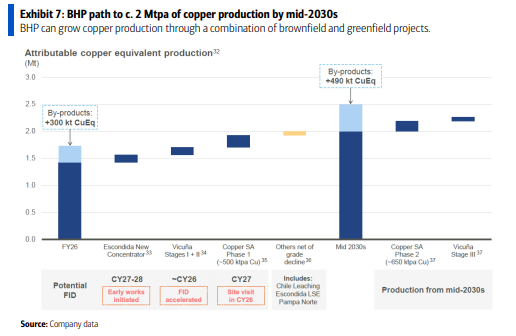
Core Insights - A clear industry trend is emerging where global mining giants are collectively shifting focus towards copper assets [1][2] - Major mining companies are significantly increasing capital expenditures, now exceeding 50% of previous peak levels, indicating renewed growth authorization [5][6] Group 1: Strategic Shift to Copper - All major mining companies are seeking more copper growth opportunities, with BHP's copper business now being the largest profit source, surpassing iron ore [2] - BHP plans to increase copper production to over 2 million tons per year by the mid-2030s through a combination of brownfield and greenfield projects [2] - Rio Tinto is also actively transitioning, with copper and aluminum EBITDA growth offsetting declines in iron ore [4] Group 2: Capital Expenditure and Growth Potential - Capital expenditures among large miners have rebounded significantly, reflecting a renewed focus on growth stories [5] - Specific projects include BHP's joint venture with Lundin Mining for the Vicuña project, expected to cost $7-8 billion and deliver approximately 300,000 tons per year of copper equivalent [5][6] - Glencore is seeking partners for its projects, particularly the El Pachon greenfield project in Argentina, highlighting a cautious approach to project risk [4][5] Group 3: Commodity Price Outlook - Bank of America maintains a bullish outlook on copper prices, forecasting them to reach $15,000 per ton [7] - The bank notes that while U.S. inventories are accumulating, other regions are not, suggesting increased apparent demand [7] - The bank's commodity research team is optimistic about various cyclical commodities, predicting copper prices of $11,750 per ton in 2026 and $13,688 per ton in 2027 [7] Group 4: Early Signs of Cycle Turnaround - Classic signals of a cycle turning point are emerging, including strengthening resource currencies and a rebound in oil prices [8] - The industry has entered a seven-month earnings upgrade cycle after three years of downgrades, affecting not only copper and gold but also coal, nickel, and zinc [8] - The core logic behind stock performance in the sector is the combination of improved positioning and the earnings upgrade cycle [8]