
餐饮零售

Search documents
南明区高校毕业生秋季专场活动 走进贵州师范大学
Xin Lang Cai Jing· 2026-01-08 22:05
Group 1 - The core event is the autumn job fair held at Guizhou Normal University, part of the 2025 national urban joint recruitment initiative for college graduates in Nanming District [1] - A total of 36 quality enterprises participated in the job fair, covering various industries such as education, finance, modern services, retail, cultural media, tourism, and renewable energy, offering 122 job positions and planning to recruit 987 individuals [1] - The event was organized by Guizhou Normal University and local government offices, effectively creating a platform for employers and graduates to connect, thereby enhancing employment opportunities for graduates [1] Group 2 - In 2025, Nanming District has conducted 12 specialized recruitment events in Guiyang, involving 575 companies, providing 1,536 job positions, and planning to recruit 18,485 individuals, with 4,477 resumes received and 1,557 preliminary employment intentions established [2] - The district aims to deepen collaboration between schools and local industries, continuously optimize employment service mechanisms, and inject sustained momentum into regional economic development and talent cultivation [2]
锅圈涨超6% 锅圈小炒今日开启试营业 场景扩展有望驱动增长
Zhi Tong Cai Jing· 2026-01-06 03:29
Core Viewpoint - The stock of Guoquan (02517) has increased by over 6%, currently trading at 3.7 HKD with a transaction volume of 64.57 million HKD, driven by the upcoming trial operation of its new business model "Guoquan Xiaochao" on January 6, 2026 [1] Group 1: Business Model and Strategy - The "Guoquan Xiaochao" project focuses on using smart cooking machines to provide efficient and flavorful Chinese meals in community settings, leveraging Guoquan's strengths in compound seasonings and supply chain management [1] - Huaxi Securities (002926) believes that the new business model can optimize labor efficiency through smart cooking machines and data analysis to identify popular menu items, potentially becoming a new profit growth point for the company once the model is proven [1] Group 2: Market Position and Growth Potential - Zhongtai Securities (600918) highlights that the company has a competitive advantage through its integrated supply chain, ensuring quality and cost leadership, along with a network of over 10,000 community stores for comprehensive sales fulfillment [1] - The company is expected to benefit in the short term from same-store sales growth and improved cost-effectiveness, while long-term growth will come from store expansion, new business models, and increased self-production ratios leading to scale profitability [1]
港股异动 | 锅圈(02517)涨超6% 锅圈小炒今日开启试营业 场景扩展有望驱动增长
智通财经网· 2026-01-06 03:25
Core Viewpoint - The stock of Guoquan (02517) has increased by over 6%, currently trading at 3.7 HKD with a transaction volume of 64.57 million HKD, following the announcement of the trial operation of its first store for "Guoquan Xiaochao" on January 6, 2026 [1] Group 1: Business Development - The new business model "Guoquan Xiaochao" focuses on using smart cooking machines to provide efficient and flavorful Chinese meals in community settings, leveraging Guoquan's strengths in compound seasoning and ingredient supply chains [1] - Huaxi Securities believes that the new model can optimize labor efficiency through smart cooking machines, leading to standardized operations and data analysis to identify the most popular menu items, which could become a new profit growth point for the company once the model is proven [1] Group 2: Competitive Advantages - Zhongtai Securities highlights the company's deep integration in the restaurant retail business, emphasizing its competitive edge through a well-integrated supply chain that ensures quality and cost leadership, along with a sales network supported by over 10,000 community stores for comprehensive fulfillment [1] - The company is expected to benefit in the short term from same-store sales growth and improved cost-effectiveness, while long-term growth will be driven by store expansion, the successful implementation of new business models, and an increase in self-produced goods from factories [1]
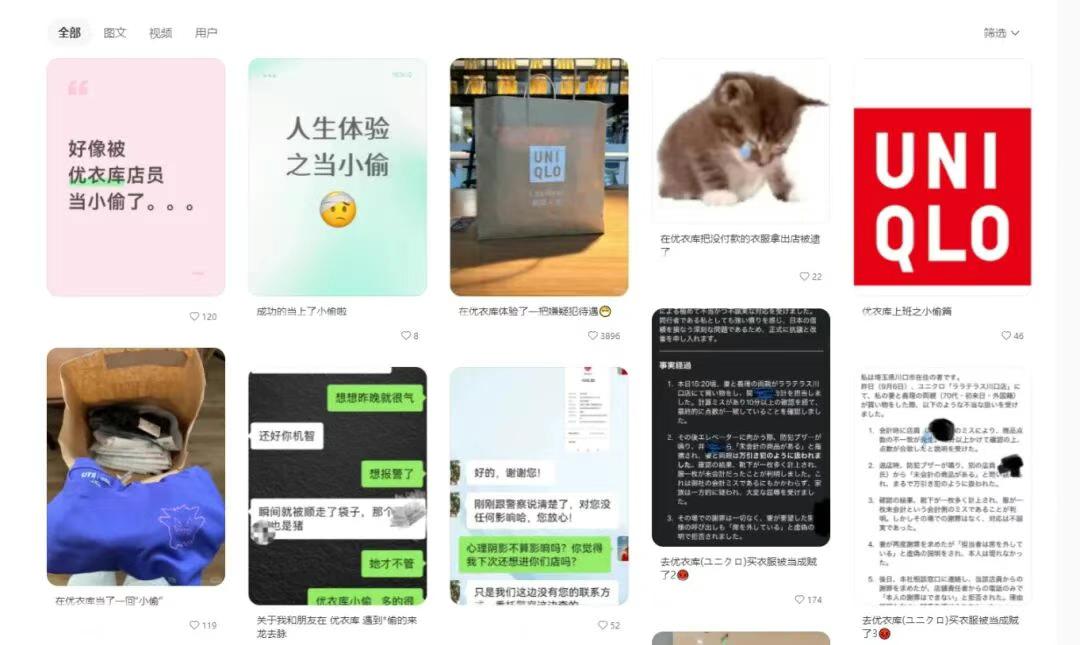
偷拍「疑似小偷」的顾客成了优衣库员工KPI?多少人逛个街吃火锅都在被商家悄悄标记
3 6 Ke· 2026-01-04 01:48
Core Viewpoint - Uniqlo has been reported to use "surveillance" on customers to prevent theft, leading to significant backlash from consumers who feel offended by being treated as potential thieves [1][3][4]. Group 1: Surveillance Practices - Some Uniqlo stores have been found to take photos of "suspicious customers," which are then shared in internal group chats with hundreds of employees [3][4]. - The criteria for being labeled as "suspicious" can be arbitrary, including simply wearing a backpack or a mask while passing by fitting rooms [3][4]. - This practice is not isolated to individual employees but is driven by management directives, with area managers pressuring staff to identify at least one suspicious case daily [4][13]. Group 2: Theft Challenges - Uniqlo's self-service shopping model, while providing a comfortable experience, also creates opportunities for theft, as the store layout allows for easy concealment of stolen items [5][12]. - Common theft methods include cutting RFID tags from clothing in fitting rooms, which has resulted in significant monthly losses for some stores [6][9]. - The increase in theft incidents has led to heightened scrutiny on loss rates, which are now tied to employee performance metrics, further pressuring staff to monitor customers closely [13][26]. Group 3: Customer Experience and Privacy Concerns - The use of surveillance and tagging customers has raised concerns about privacy and the potential for discrimination, as customers may be unfairly categorized based on superficial traits [21][26]. - The trend of labeling customers is not limited to Uniqlo; it reflects a broader industry practice where businesses collect extensive data on consumer behavior, sometimes leading to uncomfortable or invasive profiling [22][27]. - As retailers increasingly rely on technology and data to manage customer interactions, there is a growing anxiety about how this information is used and the implications for personal privacy [27][28].

锅圈(02517):重构餐饮零售效率,场景扩展驱动新一轮增长
ZHONGTAI SECURITIES· 2025-12-30 14:10
Investment Rating - The report assigns a "Buy" rating for the company, marking its first coverage [3]. Core Insights - The company, Guoquan, is positioned as a leading one-stop brand for home dining products in China, focusing on providing diverse meal solutions [11]. - The market for home dining products is projected to grow significantly, with a CAGR of 22.81%, reaching a retail value of 940 billion yuan by 2027 [6][30]. - Guoquan's competitive advantages include a well-integrated supply chain, extensive community store network, and a high-engagement membership system, which are expected to drive both short-term and long-term growth [7]. Financial Projections - Revenue is forecasted to grow from 6.1 billion yuan in 2023 to 10.27 billion yuan in 2027, with year-on-year growth rates of 21%, 15%, and 14% respectively [3][7]. - Net profit is expected to increase from 240 million yuan in 2023 to 652 million yuan in 2027, reflecting a significant growth of 96%, 22%, and 19% in the respective years [3][7]. - Earnings per share (EPS) are projected to rise from 0.09 yuan in 2023 to 0.25 yuan in 2027 [3]. Business Model and Market Position - Guoquan operates a unique "community central kitchen" model, which combines food manufacturing and community retail, allowing for cost efficiency and high-quality product offerings [44]. - The company has established a robust store network, with over 10,761 stores across 31 provinces as of Q3 2025, positioning it as the largest one-stop home dining product retailer in China [47]. - The company has a market share of 3.0% in the home dining product sector, leading among competitors [34]. Growth Strategies - Guoquan plans to enhance its store performance through a dual approach of upgrading existing stores and expanding into rural markets, aiming to replicate its successful business model [7][39]. - The company is actively exploring new business formats, including outdoor dining and ready-to-eat meals, to capture additional market segments [7]. - Digital transformation initiatives are underway to improve operational efficiency and enhance customer engagement through data-driven decision-making [83]. Supply Chain and Logistics - The company has invested in seven proprietary food factories to ensure quality control and cost efficiency across its product range [66]. - A comprehensive cold chain logistics system supports the timely delivery of products to stores, enhancing customer satisfaction and operational reliability [70]. Marketing and Brand Strategy - Guoquan leverages celebrity endorsements and social media marketing to strengthen its brand presence and engage with consumers [72]. - The company has implemented a tiered membership system to enhance customer loyalty and increase repeat purchases [76].
锅圈20251229
2025-12-29 15:50
Summary of Guoquan Company Conference Call Company Overview - Guoquan Company focuses on retailing hot pot and barbecue ingredients, operating primarily in lower-tier markets with a total of 10,761 stores as of Q3 2025, mostly franchise stores [2][4][5]. Core Business Model - The company employs a single product, single factory model to enhance bargaining power and utilizes a digital central warehouse for efficient distribution [2][11]. - Guoquan's product range includes eight categories, with 95% of products being self-owned brands [2][11]. - The average consumer spending is around 30 yuan per meal, with a popular 99 yuan hot pot package designed for a family of three [4]. Financial Performance - Revenue growth from 2020 to 2022 was rapid, but a decline was observed in 2023 due to reduced at-home dining scenarios. Revenue is expected to recover to 6.47 billion yuan in 2024, with a 6.17% year-on-year growth [2][3][8]. - In H1 2025, revenue reached 3.24 billion yuan, a 21% increase year-on-year, with net profit at 183 million yuan, up 113% [3][9]. Market Trends - The "at-home dining" market in China is large and fragmented, with a compound annual growth rate (CAGR) of 14.7% from 2018 to 2022, and the meal product segment growing at 25.5% [10]. - The market is projected to grow at a CAGR of 20.7% by 2027, indicating strong future potential [10]. Expansion Strategy - Guoquan plans to expand its store count significantly, with projections of adding over 1,000 stores in 2025, 2,500 in 2026, and 2,000 in 2027 [5][15]. - The company is focusing on rural market penetration, with 57% of its stores located in third-tier cities and below [13]. Innovation and Technology - The company has introduced 24-hour unmanned retail stores and completed smart upgrades for over 2,000 retail locations, increasing average daily sales by 300 yuan [14]. - Guoquan is set to launch "Guoquan Stir-fry" in January 2026, leveraging digital and intelligent technologies to ensure consistent quality and efficiency [14]. Profitability Forecast - Expected net profits for 2025, 2026, and 2027 are projected at 450 million yuan, 550 million yuan, and 682 million yuan, respectively, with year-on-year growth rates of 95%, 22%, and 24% [5][15]. - The gross margin is expected to remain stable at around 22.1% to 22.6% over the next three years [15]. Competitive Landscape - Compared to peers like Mixue Group, Wancheng Group, and Babi Foods, Guoquan's valuation remains attractive, with a price-to-earnings (PE) ratio lower than its competitors [16]. - The company is positioned for growth through its product, channel, and supply chain strategies, making it a recommended investment opportunity [16].
京东七鲜小厨将布局一二线城市
Bei Jing Shang Bao· 2025-12-29 01:23
Core Viewpoint - JD's quality dining brand Qixian Xiaochu has launched a nationwide partner recruitment plan, focusing on key urban areas in China [1] Group 1: Business Expansion - The first batch of recruitment targets the Beijing-Tianjin-Hebei, Yangtze River Delta, and Pearl River Delta regions, covering major cities such as Beijing, Tianjin, Shanghai, Suzhou, Hangzhou, Guangzhou, Shenzhen, Foshan, Dongguan, Zhuhai, and Zhongshan [1] - Qixian Xiaochu's first store has opened in Harbin, with new stores set to debut in Shenzhen, Guangzhou, Shanghai, and Tianjin in January 2026 [1] - The company plans to complete its layout in all first- and second-tier cities in China by the end of 2026 [1]

国泰海通:维持锅圈增持评级 目标价4.47港元
Zhi Tong Cai Jing· 2025-12-26 01:28
Core Viewpoint - The company is expected to experience significant revenue growth from 2025 to 2027, with projected revenues of 76.12 billion, 88.32 billion, and 101.75 billion RMB respectively, reflecting growth rates of 18%, 16%, and 15% [1] Group 1: Revenue and Profit Forecast - The forecast for core operating profit from 2025 to 2027 is 4.48 billion, 5.53 billion, and 6.75 billion RMB, with growth rates of 44%, 23%, and 22% respectively [1] - The projected net profit attributable to shareholders for the same period is 4.35 billion, 5.37 billion, and 6.55 billion RMB, with growth rates of 89%, 23%, and 22% respectively [1] - The target market capitalization for 2026 is set at 12.3 billion HKD, with a target price of 4.47 HKD per share [1] Group 2: Growth Strategies - The company launched a popular "99 RMB free-flow tripe hot pot package" in May 2024, generating over 500 million RMB in sales throughout the year, and plans to introduce more high-value packages in 2025 [2] - The membership strategy has evolved from a traffic-focused approach to user asset management, with a goal of increasing member retention and reaching over 60 million registered members by November 2025 [2] Group 3: Market Expansion - The company is upgrading its new town stores to better meet the consumption needs of lower-tier markets, with a strong profitability model expected as supply chains are strengthened [3] - The company is expanding its product categories to include Western food, beverages, and ice products, and has introduced a 24-hour unmanned retail model to enhance store revenue [3] Group 4: New Store Concepts - The company is set to trial its first "Guoquan Stir-fry" store in January 2026, utilizing smart cooking machines to provide efficient and tasty meals in community settings [4] - The "Guoquan Camping" concept will offer a one-stop outdoor dining solution, enhancing user engagement and brand penetration [4]

国泰海通:维持锅圈(02517)增持评级 目标价4.47港元
智通财经网· 2025-12-26 01:27
Core Viewpoint - The company is expected to experience significant revenue and profit growth from 2025 to 2027, driven by innovative product offerings and membership strategies [1][2]. Group 1: Revenue and Profit Forecast - The company forecasts revenues of RMB 76.12 billion, 88.32 billion, and 101.75 billion for 2025, 2026, and 2027, respectively, with growth rates of 18%, 16%, and 15% [1]. - Core operating profits are projected to be RMB 4.48 billion, 5.53 billion, and 6.75 billion for the same years, with growth rates of 44%, 23%, and 22% [1]. - Net profits attributable to shareholders are expected to reach RMB 4.35 billion, 5.37 billion, and 6.55 billion, with growth rates of 89%, 23%, and 22% [1]. Group 2: Product and Membership Strategy - The company launched a popular "RMB 99 free-flow tripe hot pot package" in May 2024, generating over RMB 5 billion in sales throughout the year, and plans to introduce more high-value packages in 2025 [2]. - The membership strategy has evolved from a focus on traffic to user asset management, with efforts to increase membership through advertising and community outreach, resulting in over 60 million registered members by November 2025 [2]. Group 3: Market Expansion and Store Efficiency - The company is upgrading its new town stores to better meet the consumption needs of lower-tier markets, with a profitable model expected to improve as the supply chain strengthens [3]. - The company is expanding its product categories to include Western food, beverages, and ice products, and has introduced a 24-hour unmanned retail model to enhance store revenue [3]. Group 4: New Store Concepts - The company is testing a new store concept called "Guoquan Stir-fry," which will utilize smart cooking machines to provide efficient and tasty meals in community settings, leveraging its strengths in seasoning and supply chain [4]. - The "Guoquan Camping" concept aims to offer a one-stop outdoor dining solution, enhancing user engagement and brand penetration [4].
七鲜小厨已在北京开出30家门店
Bei Jing Shang Bao· 2025-12-24 08:00
Core Insights - JD's quality dining platform, Qixian Xiaochu, has opened 30 stores in Beijing since launching its first store this year, achieving near full coverage of major urban areas within the Fifth Ring Road [1] Company Summary - Qixian Xiaochu is a subsidiary of JD, focusing on quality dining experiences [1] - The platform has rapidly expanded its presence in Beijing, indicating strong market penetration and consumer demand [1]