
航空

Search documents
新华财经早报:2月26日
Xin Lang Cai Jing· 2026-02-26 00:05
Group 1: Economic Cooperation and Policies - The Chinese government expresses hope for the U.S. to view the implementation of the Phase One trade agreement objectively and rationally, urging against blame-shifting and provocations [1] - The Shanghai government has announced a reduction in housing purchase restrictions, including an increase in the maximum loan amount for first-time homebuyers from 1.6 million to 2.4 million yuan, with potential increases for families with multiple children [1] - The Guangzhou government is supporting financial product diversification to foster investment in technology and long-term projects [1] Group 2: Financial and Economic Forecasts - The International Monetary Fund (IMF) projects the U.S. GDP to grow by 2.6% in 2026, up from a previous forecast of 2.4% [3] - The Hong Kong government forecasts economic growth of 2.5% to 3.5% for the current year, with inflation rates expected at 1.7% and 1.8% respectively [1] - The "Inclusive Finance Prosperity Index" for January 2026 reached 49.60 points, indicating a slight increase, with financing conditions improving due to seasonal demand and policy support [1] Group 3: Company Announcements - Haiguang Information expects Q1 2026 revenue to be between 3.91 billion and 4.22 billion yuan, representing a year-on-year growth of 62.91% to 75.82% [1] - Transsion Holdings anticipates a 53.43% decline in net profit for 2025, down to 2.584 billion yuan [1] - Union Medical's net profit for 2025 is projected to increase by 49.60% to 1.888 billion yuan [1]







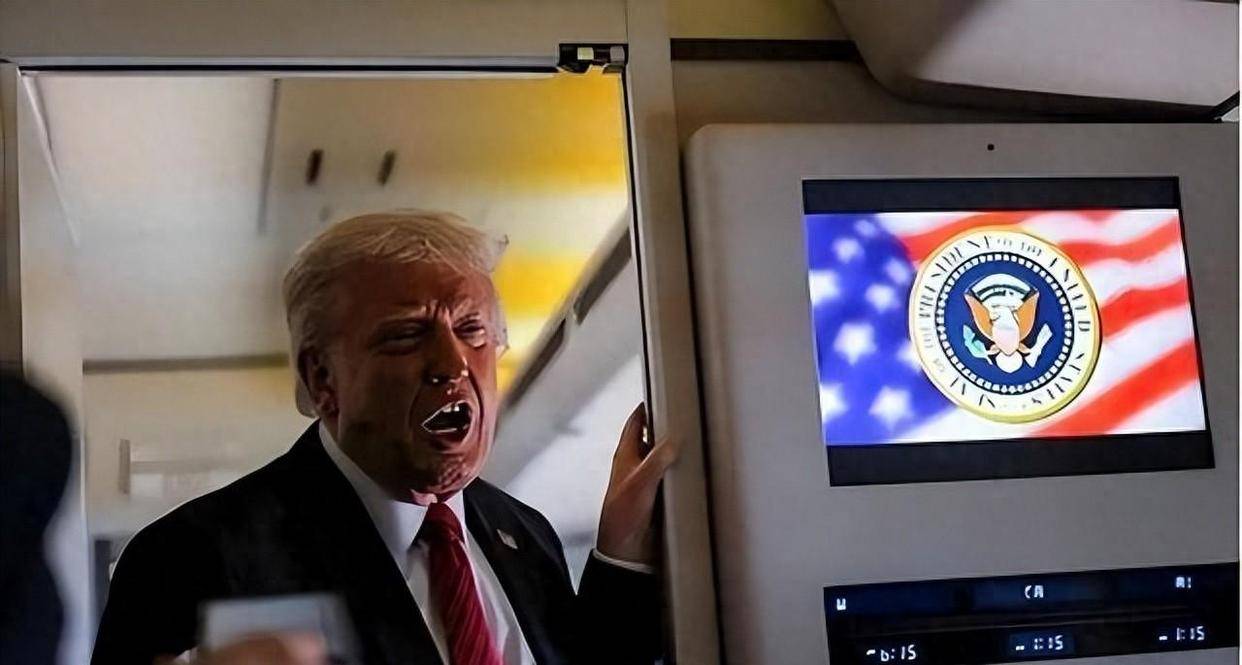
刚敲定访华行程不到一天,特朗普手中的王牌就被化解,中国敏锐捕捉到美国暴露的战略弱点
Sou Hu Cai Jing· 2026-02-25 23:43
Group 1 - The upcoming visit of Trump to China from March 31 to April 2 is primarily focused on economic and trade issues, indicating a significant diplomatic engagement rather than a routine visit [1] - The U.S. Supreme Court ruling on February 21 invalidated Trump's ability to impose global tariffs under the International Emergency Economic Powers Act (IEEPA), which has been a cornerstone of his trade strategy since 2025 [2][11] - The ruling has led to immediate actions from importers seeking tax refunds, creating a fiscal gap for the government and reducing costs for businesses, thereby enhancing their competitiveness [2][28] Group 2 - The U.S. is currently facing a significant debt issue, relying on external purchases to stabilize its economy, with China being a key holder of U.S. debt [3] - Boeing's orders are under pressure, as the manufacturing sector, particularly the aviation industry, is in need of support from the Chinese market [4] - The situation regarding rare earth elements is critical, as China's export controls starting in 2025 could severely impact U.S. military and electric vehicle industries, highlighting the dependency on Chinese supply chains [6][34] Group 3 - The recent court ruling has effectively dismantled Trump's previous leverage of tariffs, forcing a shift in negotiation strategies as he attempts to utilize temporary tariffs under the Trade Act of 1974, which have limited effectiveness [13][15] - The European Union and other allies have expressed their unwillingness to accept new tariffs beyond the agreements made in 2025, indicating a unified front against unilateral U.S. trade actions [17][18] - The U.S. is now in a position where it must negotiate from a weaker stance, as the previous tactics of imposing tariffs are no longer viable, and the international community is less intimidated by U.S. threats [24][42] Group 4 - The upcoming negotiations will require Trump to make substantial concessions, as the balance of power has shifted, with China now having the upper hand in various sectors including technology and agriculture [19][35] - The U.S. has been urged to reconsider its approach to trade, particularly in high-tech exports and agricultural subsidies, to facilitate a more balanced negotiation with China [22][35] - The court's decision serves as a political signal that the U.S. governance system imposes checks on presidential power, which could lead to a more predictable international engagement [36][44]
印度汽车巨头内讧,董事长快垮台了
汽车商业评论· 2026-02-25 23:04
Core Viewpoint - A power struggle is emerging within the Tata Group, particularly regarding the reappointment of Chairman Natarajan Chandrasekaran, which has been delayed amid internal conflicts and differing strategic visions [4][10][19]. Group 1: Leadership and Governance - Natarajan Chandrasekaran's current term is set to end in February 2027, but his reappointment is contested by Noel Tata, the chairman of the Tata Trusts, which holds a significant stake in Tata Sons [6][8]. - The Tata Trusts, which own 66% of Tata Sons, represent the true power center of the Tata empire, creating governance challenges due to the conflict between their non-profit mission and commercial objectives [8][13]. - Noel Tata's opposition to Chandrasekaran's reappointment is rooted in concerns over the latter's age and the strategic direction of the group, particularly regarding its financial performance and debt levels [10][20][19]. Group 2: Financial Performance and Strategic Concerns - Tata Group's debt has surged by 83% as it pursues high-growth strategies, with significant losses reported by key subsidiaries, including a $1.6 billion annual loss for Air India [20]. - Jaguar Land Rover has faced operational challenges, including production halts, leading to the lowest UK automotive output in 70 years [21]. - Tata Consultancy Services (TCS), the group's cash engine, has seen a 14% decline in net profit and laid off 12,000 employees due to disruptions caused by artificial intelligence [22]. Group 3: Internal Conflicts and Future Directions - Noel Tata has expressed dissatisfaction with the perceived neglect of the Tata Trusts in investment decisions, highlighting a lack of adherence to governance protocols regarding large investments [24]. - The ongoing internal power struggle is complicated by the differing views of the SP Group, which advocates for Tata Group's public listing to enhance governance and liquidity, contrasting with Noel Tata's stance against it [45][48]. - The leadership dynamics between Chandrasekaran and Noel Tata are characterized by a complex interplay of authority, with Noel holding significant influence over companies that report to Chandrasekaran [30][31]. Group 4: Historical Context and Transformation - Chandrasekaran is the first non-family member to lead Tata Group, a position that has both empowered and isolated him within the traditionally family-led organization [34][35]. - Under his leadership, Tata Group has seen substantial revenue growth, with revenues increasing from 6 trillion rupees in March 2017 to 11.9 trillion rupees in March 2025 [38]. - The group is undergoing a significant transformation, with investments of 5.5 trillion rupees aimed at future-oriented businesses, including a semiconductor manufacturing facility expected to begin operations by the end of 2026 [40].

东航3月30日起正式开航“上海—塔什干”
Zhong Guo Min Hang Wang· 2026-02-25 07:52
《中国民航报》、中国民航网 记者钱擘 报道:2026年3月30日起,东航将正式开通"上海—塔什干"直飞 航线。该航线是东航继2025年开通"西安—塔什干"航线后,围绕进一步服务高质量共建"一带一路"、深 化中国与中亚地区互联互通的又一重要举措,拓展了以上海为枢纽、面向中亚的"空中走廊",为两地经 贸合作、人文交往与旅游互动注入新动能。 塔什干是乌兹别克斯坦首都及中亚地区重要中心城市,历史上是古丝路上的商贸枢纽。随着中国与乌兹 别克斯坦两国免签政策的实施,双方人员往来更加便捷,人文交流与合作日益密切。塔什干市内既有展 现辉煌历史的帖木儿广场、哈兹拉提伊玛目建筑群,也有彰显现代风貌的独立广场等标志性场所,有着 浓郁的中亚风情。 目前,东航"上海—塔什干"航线机票已全面开放销售。即日起至3月29日,旅客通过东方航空App购买 该航线2026年3月30日至4月28日期间机票,即可参与"航段满减红包"优惠活动。此外,凡购买3月30 日、3月31日、4月2日往返航班的机票,还可享受会员积分翻倍礼遇。(编辑:李季威 校对:张彤 审 核:程凌) 东航"上海—塔什干"航线往返航班号为MU6037/MU6038,每周往返航班各四 ...

Top Charts | “春节”假期消费图鉴
申万宏源证券上海北京西路营业部· 2026-02-25 03:11
Group 1 - The core viewpoint of the article highlights the significant increase in travel and consumption during the Spring Festival holiday, indicating a strong recovery in domestic tourism and retail sectors [6][27][39] Group 2 - Characteristic 1: The total cross-regional personnel flow during the Spring Festival holiday (February 15 to February 21) reached 2.08 billion person-times, with a daily average flow increasing by 4.9% year-on-year. The intensity of travel peaked on the third day of the holiday, with self-driving travel rebounding significantly [6][36][37] - Characteristic 2: Domestic travel, particularly traditional and specialty tourism, showed better performance compared to international travel. The number of domestic flights increased by 4.1% year-on-year, while international flights decreased by 7.9%. Popular tourist destinations like Sichuan saw a 11.2% increase in visitors to A-level scenic spots [18][38] - Characteristic 3: Consumer spending during the holiday improved, with key retail and catering enterprises reporting a daily average sales increase of 8.6% year-on-year. The average ticket price for flights rose to 989.6 yuan, up 5.1% from the previous year [27][39][30] - Characteristic 4: The film market underperformed, with box office revenue during the holiday totaling 5.13 billion yuan, a decrease of 22.4% compared to the previous year's holiday [40]

三部门给低空经济上保险
Jin Rong Shi Bao· 2026-02-25 02:57
Core Viewpoint - The low-altitude economy in China is transitioning from "taking off" to "utilizing," with the market expected to reach 1.5 trillion yuan by 2025 and potentially exceed 2 trillion yuan by 2030. The traditional insurance model is inadequate for the complex demands of low-altitude flight activities, prompting the release of the "Implementation Opinions" to establish a systematic approach to low-altitude insurance development [1][2]. Group 1: Policy Framework and Development Goals - The "Implementation Opinions" outlines a phased development goal for low-altitude insurance, aiming to establish a mandatory insurance system for unmanned aerial vehicles (UAVs) by 2027 and a comprehensive policy framework by 2030 [2][3]. - The document emphasizes the importance of low-altitude insurance in building a safety management system and supporting the high-quality development of the low-altitude economy [2]. Group 2: Mandatory Insurance for UAVs - A key highlight of the "Implementation Opinions" is the establishment of a mandatory insurance system for UAVs, akin to compulsory traffic insurance, which will be integrated into flight activity approval processes [3][4]. - This mandatory insurance aims to enhance public safety and compel operators to improve safety management practices [3]. Group 3: Comprehensive Risk Coverage - The low-altitude economy's diverse applications necessitate a broad and precise risk coverage approach, prompting the "Implementation Opinions" to advocate for a comprehensive insurance service system that extends across the entire industry chain [5][6]. - The document calls for the development of insurance products that address new types of risks associated with low-altitude operations, including safety in technology, data, and environmental aspects [5][6]. Group 4: Service Enhancement and Application Scenarios - The "Implementation Opinions" stresses the need for tailored insurance solutions based on various application scenarios such as agriculture, logistics, emergency management, and tourism, ensuring that insurance services evolve from mere product supply to proactive empowerment [6]. - The establishment of a robust service guarantee system is seen as a critical measure to integrate insurance into the low-altitude economy, providing a safety net for industry development [6].
大行评级丨高盛:春节旅游数据整体健康,基本面有利于华住、亚朵等
Ge Long Hui· 2026-02-25 02:55
Core Viewpoint - Goldman Sachs reports that the overall tourism data during the Spring Festival is healthy, with domestic tourist numbers increasing by 19% to 596 million and tourism spending rising by 19% to 803 billion yuan, with a daily growth rate of 6% [1] Group 1: Domestic Tourism - Domestic tourist volume increased by 19% to 596 million people [1] - Tourism expenditure rose by 19% to 803 billion yuan, with a daily growth of 6% [1] Group 2: International Travel - Outbound traveler numbers increased by 24% to 4.8 million [1] - Japanese routes saw a year-on-year decrease of approximately 50%, but demand shifts to Southeast Asia and South Korea routes increased by 10-40%, offsetting some of the impact [1] Group 3: Hotel and Airline Performance - Hotel industry performance was strong, with revenue per available room driven by average room prices, growing at a mid to high single-digit percentage year-on-year [1] - Airline ticket prices exceeded expectations, with domestic ticket prices rising by 7% and international ticket prices increasing by 15% due to tight capacity [1] Group 4: Duty-Free and Gaming Revenue - Hainan's duty-free stores underperformed expectations, with daily sales growth of only 15%, down from 45% in January, primarily due to a decline in per capita spending [1] - Macau's daily gaming revenue was 786 million patacas, a year-on-year increase of 5%, falling short of the expected 850 million to 900 million patacas, partly due to a decrease in VIP room win rates [1] Group 5: Investment Recommendations - The company believes the fundamentals are more favorable for hotel stocks rated as "buy," including Huazhu Group and Atour Hotel [1] - Macau stocks recommended include Galaxy Entertainment and Sands China, along with airline stocks such as Air China and China Eastern Airlines [1]


券商把脉节后投资主线
Jin Rong Shi Bao· 2026-02-25 02:52
Group 1 - The Spring Festival holiday saw a record-breaking cross-regional movement of over 5 billion people, indicating strong consumer activity [1] - The average daily inbound and outbound personnel at national ports during the holiday is expected to increase by 14.1% year-on-year, reaching over 2.05 million people, nearly five times the level of the previous year [1] - The first three days of the holiday showed a year-on-year increase of 4.5% in foot traffic and 4.8% in sales for monitored pedestrian streets, reflecting a robust consumption environment [1] Group 2 - Huatai Securities noted that domestic consumption data showed an overall increase in volume with stable prices, highlighting service consumption as a new growth point [2] - Data from Meituan indicated that leisure orders in lower-tier cities grew by nearly 30% year-on-year, with a notable shift towards younger consumers [2] - The "post-Spring Festival" market outlook suggests a focus on theme investments in sectors like the export chain and service consumption, while also considering geopolitical risks [2] Group 3 - Guosheng Securities identified four key variables that may influence market trends post-holiday, including uncertainties in U.S. tariff policies and the resilience of export chain enterprises [3] - The rise of AI and robotics, validated by sales data from platforms like JD.com, is expected to attract investment in related sectors [3] - The attractiveness of assets priced in RMB is increasing, particularly in the equity market, with a trend of foreign capital inflow into Chinese assets [3] Group 4 - China Galaxy Securities recommended focusing on two main lines post-holiday: sectors benefiting from improved supply-demand dynamics and industries with structural highlights like robotics and AI [4] - Guojin Securities emphasized the importance of the "global physical assets vs. Chinese assets" theme, suggesting investment in commodities and sectors with a competitive advantage in China [4]
A股春节后首个交易日早盘急跌后反弹,恒生科技指数跌2.13%
Xin Yong An Guo Ji Zheng Quan· 2026-02-25 02:50
Market Performance - A-shares experienced a rebound after an initial drop, with the Shanghai Composite Index closing up 0.87% at 4117.41 points, and the Shenzhen Component Index rising 1.36%[1] - The Hang Seng Index fell 1.82% to 26590.32 points, with the Hang Seng Tech Index down 2.13% and the Hang Seng China Enterprises Index down 2.06%[1] - The total market turnover in Hong Kong was 2509.921 million HKD[1] Economic Indicators - The U.S. stock indices all closed higher, with the Dow Jones up 0.76% at 49174.5 points, the S&P 500 up 0.77% at 6890.07 points, and the Nasdaq up 1.04%[1] - During the Chinese New Year holiday, domestic travel spending reached a record 8034.83 billion RMB, an increase of 1264.81 billion RMB compared to the previous year[12] - The number of domestic travelers during the holiday was 596 million, an increase of 9.5 million compared to the previous year[12] Corporate Developments - The company "优乐赛共享服务" reported a revenue of 533 million RMB for the first eight months of the previous year, a year-on-year increase of 5.1%, but net profit fell by 7.8% to 22.025 million RMB[10] - "RedotPay," a Hong Kong stablecoin payment company, is considering an IPO in the U.S. with a fundraising target exceeding 1 billion USD[10] - "埃斯顿," an industrial robot manufacturer, reported a revenue of 3.804 billion RMB for the first nine months of the previous year, a year-on-year increase of 12.86%, but incurred a net loss of 253.72 million RMB[10]
A股春节后首个交易日早盘急跌后反弹,恒生科技指数跌2.13%-20260225
Xin Yong An Guo Ji Zheng Quan· 2026-02-25 02:34
Market Performance - A-shares experienced a rebound after an initial drop, with the Shanghai Composite Index closing up 0.87% at 4117.41 points, and the Shenzhen Component Index rising 1.36%[1] - The Hang Seng Index fell 1.82% to 26590.32 points, while the Hang Seng Technology Index and the Hang Seng China Enterprises Index dropped 2.13% and 2.06%, respectively[1] - The total market turnover in Hong Kong was 2509.921 million HKD[1] Economic Indicators - The U.S. stock indices all closed higher, with the Dow Jones up 0.76% at 49174.5 points, the S&P 500 rising 0.77% to 6890.07 points, and the Nasdaq increasing by 1.04%[1] - The Chinese Spring Festival saw record domestic travel spending of 8034.83 billion CNY, an increase of 1264.81 billion CNY compared to the previous year, with 596 million domestic trips taken[12] - The average daily spending by inbound foreign tourists increased by 22% compared to the previous year during the Spring Festival[8] Corporate Developments - RedotPay, a Hong Kong stablecoin payment company, is reportedly planning an IPO in the U.S. with a fundraising target exceeding 1 billion USD[10] - The industrial robot manufacturer Estun reported a revenue of 3.804 billion CNY for the first nine months of the previous year, a year-on-year increase of 12.86%[10] - The company plans to use the proceeds from its IPO to expand global production capacity and invest in R&D for next-generation industrial robot technology[10]
