制造业

Search documents
“经济火车头”发力!德国制造业意外复苏,欧元区2月PMI初值超预期
智通财经网· 2026-02-20 09:53
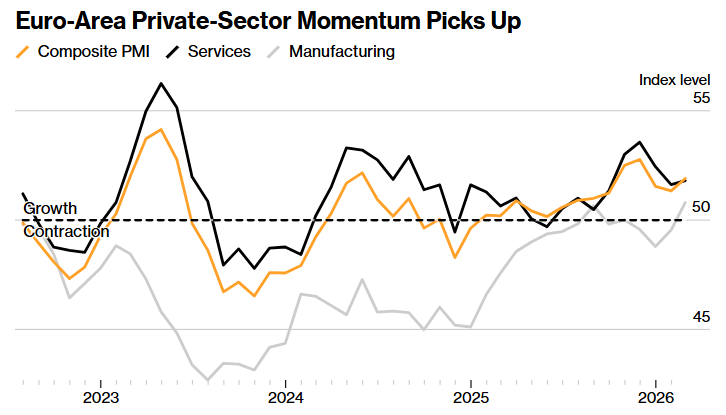
德国是该地区最大的经济体,也是主要推动力。由于德国政府加大了国防和基础设施建设方面的支出, 德国制造业三年半以来首次出现扩张。法国的指数虽然有所改善,但仍略低于50。 德国2月制造业PMI初值 50.7,预期49.5,前值49.1。德国2月服务业PMI初值 53.4,预期52.3,前值 52.4。德国2月综合PMI初值 53.1,预期52.3,前值52.1。 法国2月制造业PMI初值 49.9,预期51,前值51.2。法国2月综合PMI初值 49.9,预期49.7,前值49.1。法 国2月服务业PMI初值 49.6,预期49.2,前值48.4。 智通财经APP获悉,欧元区私营部门活动超出预期,制造业经济活动创下自 2022 年以来的最佳水平, 这主要得益于德国的意外增长。欧元区2月SPGI制造业PMI初值升至51.9,高于上月的51.3,维持在50荣 枯线以上,分析师预期为51.5。欧元区2月SPGI综合PMI初值从上月的51.5升至51.9,高于分析师预期的 51.5。 汉堡商业银行经济学家Jonas Feldhusen表示:法国私营部门仍难以真正取得发展动力。自去年11月以 来,PMI指数一直徘徊在50. ...

美国与印尼达成贸易协议 将对印征收19%关税
Sou Hu Cai Jing· 2026-02-20 05:40
Core Points - The Trump administration has finalized a reciprocal trade agreement with Indonesia aimed at expanding U.S. market access in manufacturing, agriculture, and the digital economy [2] - Indonesia will eliminate tariffs on over 99% of U.S. export products, while the U.S. will maintain a 19% reciprocal tariff rate on Indonesia, with zero tariffs on certain specific products [2] - The agreement includes approximately $33 billion in commercial cooperation, comprising about $15 billion in U.S. energy procurement, around $13.5 billion in aviation and related products, and over $4.5 billion in U.S. agricultural products [2] - The U.S. trade deficit with Indonesia is projected to be $23.7 billion by 2025 [2] - The agreement is expected to take effect after both parties complete their domestic procedures in the coming weeks [2]

报告:我国制造业数字化转型进入规模化普及阶段
Xin Lang Cai Jing· 2026-02-20 03:09
Core Insights - The report indicates that the digital transformation of China's manufacturing industry is significantly advancing, entering a phase of large-scale adoption [1] Group 1: Digital Transformation Progress - As of December 2025, 89.6% of large-scale industrial enterprises in China are expected to engage in digital transformation [1] - The penetration rate of digital equipment in the manufacturing sector is projected to reach 57.7% [1]
日本股市跳水,盘中跌超700点,韩国股市大涨,又创历史新高丨日韩股市
Xin Lang Cai Jing· 2026-02-20 01:35
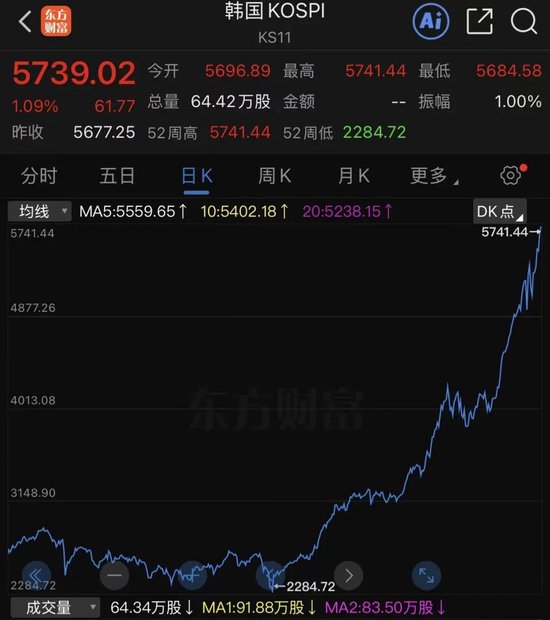
Market Performance - The KOSPI index in South Korea opened with a gain of 0.27%, reaching a peak of 5741.44 points, marking a historical high, before settling at 5739.02 points with a gain of 1.09% [1][7] - The Nikkei 225 index in Japan opened down by 0.89%, with an intraday drop exceeding 1.28%, ultimately reporting a decline of 1.11% at 56828.33 points [3][9] Economic Indicators - Japan's Consumer Price Index (CPI) rose by 1.5% year-on-year in January, while the core CPI increased by 2.0% [4][10] - The preliminary Composite Purchasing Managers' Index (PMI) for February in Japan is at 53.8, up from 53.1 in the previous month [4][10] - The preliminary Manufacturing PMI for February is reported at 52.8, an increase from 51.5, while the Services PMI is at 53.8, slightly up from 53.7 [4][10] Currency and Bond Yields - The exchange rate for the Japanese yen against the US dollar is reported at 155.1435, reflecting a slight increase of 0.09% [6][12] - Japanese government bond yields have decreased, with the 5-year yield at 1.619%, the 10-year yield at 2.123%, and the 30-year yield at 3.304% [6][12][13]
高人预测:如不出意外,春节过后,社会上会出现5种“现象”
Sou Hu Cai Jing· 2026-02-19 11:46
Group 1 - The first phenomenon observed post-Spring Festival is that many individuals experience a financial shortfall, as holiday expenses often exceed their budget, leading to reliance on credit options [3][4][6][8] - The second phenomenon is the increasing difficulty in job hunting after the Spring Festival, with a projected 12.7 million graduates in 2026, creating a highly competitive job market where employers are more selective [10][12][14] - The third phenomenon is a noticeable trend towards consumption downgrade, with nearly 60% of residents preferring to save more rather than spend, indicating a shift in consumer behavior towards more practical spending [16][18][20] Group 2 - The fourth phenomenon is a growing desire for stability in life, as evidenced by the high competition for civil service positions, with an average of 100 applicants per job, reflecting a preference for secure employment over higher salaries [22][23][25][28] - The fifth phenomenon is a decline in social obligations and "face consumption," with individuals reassessing the value of traditional gift-giving and opting for more practical and budget-friendly choices [30][32][34]

港股IPO投资指南-华泰证券
Sou Hu Cai Jing· 2026-02-18 16:25
Group 1 - The Hong Kong IPO market saw a strong recovery in 2025, with 116 companies raising HKD 286.7 billion, regaining the top position globally, and an average first-day gain of nearly 40% [1][16][21] - The historical low of 28% for the IPO failure rate indicates a favorable environment for investors, driven by the dual forces of improved regulations and increased market liquidity [1][3][21] - The Hong Kong Stock Exchange (HKEX) has implemented reforms such as the "A+H" listing mechanism and a dedicated line for technology companies, which have lowered the barriers and costs for companies to go public [1][21][60] Group 2 - The IPO process in Hong Kong typically takes about six months to a year, with a success rate of approximately 38%, and involves critical stages such as material review and marketing [1][36][37] - The IPO system includes special mechanisms like the green shoe and red shoe mechanisms, which help stabilize the market and protect small investors' chances of winning shares [1][54][52] - The listing standards are designed to be multi-channel, accommodating various types of companies, including traditional industries and new economy sectors, with flexible requirements [1][54][59] Group 3 - There are three main ways to participate in Hong Kong IPOs: cornerstone investment, anchor investment, and public offering, each with different funding thresholds and flexibility [2][8][66] - Cornerstone investors have guaranteed allocations but face a six-month lock-up period, while anchor investors have no lock-up but uncertain allocations, making them suitable for flexible institutional and high-net-worth individuals [2][8] - Retail investors primarily participate through public offerings, which have lower thresholds and are supported by the red shoe mechanism to enhance their chances of winning shares [2][8][66] Group 4 - The report provides ten investment recommendations, emphasizing the importance of long-term cornerstone participation, diversified retail investment, and the use of scoring models for short-term investments [3][10] - It highlights that the quality of IPO projects and industry characteristics are more critical to secondary market performance than the quantity of IPOs [3][10] - The report also notes that technology and pharmaceutical sector IPOs have a positive catalytic effect on their respective sectors [3][10]


美国工业生产增速创近一年来新高
Sou Hu Cai Jing· 2026-02-18 15:20
Core Insights - The industrial production in the U.S. saw its largest increase in nearly a year, driven by broad growth in manufacturing and healthy output in utilities [1] Group 1: Industrial Production - In January, industrial production rose by 0.7%, with the previous month's data revised down to 0.2% [1] - Manufacturing output, which accounts for three-quarters of total industrial output, increased by 0.6%, marking the largest gain since February 2025 [1] - The growth was widespread, including strong increases in the production of business equipment and consumer goods [1]
【美国1月工业产值创近一年最大增幅】美国工业产值1月录得近一年来最大增幅,受到公用事业和制造业产出增长的推动。美联储周三公布的数据显示,工厂、矿山和公用事业产值增长0.7%,前月数据下修为增长0.2%。占工业总产出四分之三的制造业产出增长0.6%,为2025年2月以来的最大增幅。公用事业产...
Sou Hu Cai Jing· 2026-02-18 14:46
Group 1 - The core point of the article is that the U.S. industrial output in January recorded its largest increase in nearly a year, driven by growth in utilities and manufacturing output [1] Group 2 - U.S. industrial output rose by 0.7% in January, with the previous month's data revised down to a growth of 0.2% [1] - Manufacturing output, which accounts for three-quarters of total industrial output, increased by 0.6%, marking the largest increase since February 2025 [1] - Utility output grew by 2.1%, while mining and energy extraction experienced a decline [1]
归乡记 | 烟火藏变迁,故都有新生
格隆汇APP· 2026-02-18 07:03
Core Viewpoint - The article reflects on the significance of returning home during the Chinese New Year, emphasizing the emotional connection to one's roots and the changes in the hometown over time [2][4]. Group 1: Personal Growth and Nostalgia - Personal growth is intertwined with the changes in one's hometown, highlighting the transformation of familiar places and the nostalgia associated with them [6][10]. - The anticipation of the Spring Festival is a central theme, with descriptions of traditional preparations and family gatherings that evoke a sense of warmth and belonging [7][8]. - The author notes the contrast between the past and present, where familiar streets have modernized while retaining their essence, showcasing the blend of tradition and contemporary life [11][12]. Group 2: Economic and Urban Development - Ningbo's recent development is marked by an optimization and upgrading of its industrial structure, with a projected GDP of 18,716 billion yuan in 2025, reflecting a growth rate of 4.9% [20]. - The city has transitioned from a manufacturing and port trade focus to a more diversified economy, with examples of local businesses adapting to new market demands, such as cross-border e-commerce and high-end battery manufacturing [22]. - Urban transformation is evident in the revitalization of old streets and the emergence of modern districts, blending historical charm with contemporary vibrancy [23]. Group 3: Cultural Significance and Family Values - The essence of returning home is encapsulated in family reunions during the New Year, where traditional dishes symbolize cultural heritage and familial bonds [26][31]. - The values of the "Ningbo Gang," emphasizing integrity and patriotism, are highlighted as integral to the community's identity and are passed down through generations [28]. - The article concludes with a hopeful message about the future of Ningbo, encouraging a continued connection to cultural roots amidst ongoing change [32][33].
此心安处是吾乡!马驹桥市场留守零工吃上“守岁暖心饭”
Xin Lang Cai Jing· 2026-02-18 06:59
Core Viewpoint - The article highlights the efforts made by the Majia Bridge labor market to support migrant workers during the Chinese New Year, providing a sense of community and warmth through organized meals and job opportunities. Group 1: Community Support Initiatives - The "New Year's Warm Meal" event was organized by local human resources departments to provide a festive meal for migrant workers staying in Beijing during the holiday, creating a sense of togetherness [1][3] - Over 70 companies participated in the "Warm Winter Job Delivery" initiative, offering 3,395 job positions across various sectors, attracting over 1,100 migrant workers [5] Group 2: Employment Stability Measures - Various government departments collaborated to provide support for migrant workers, including winter supplies, holiday gifts, and employment training, ensuring job stability during the festive season [6] - The labor market maintained continuous job supply during the holiday, offering approximately 300 job positions daily to meet the employment needs of migrant workers [6] Group 3: Safety and Well-being - Market management emphasized safety for workers, ensuring a secure environment while providing meals and additional treats during the festive period [8] - The event fostered a warm atmosphere, allowing workers to connect and share experiences, reinforcing the labor market's role as a supportive community hub [8]