
现制茶饮

Search documents
沪上阿姨正式登陆港交所:开盘上涨超68%,紧抓中国中价现制茶饮市场
IPO早知道· 2025-05-08 02:32
Core Viewpoint - The article discusses the successful IPO of "沪上阿姨" (Hu Shang Ayi), a leading tea beverage brand in Northern China, highlighting its market position, financial performance, and growth strategies. Group 1: IPO Details - "沪上阿姨" officially listed on the Hong Kong Stock Exchange on May 8, 2025, under the stock code "2589" [2] - The IPO involved the issuance of 2,411,340 H shares, with a subscription rate of 3616.83 times for the public offering and 2.57 times for the international offering [2] - The total funds raised from the IPO amounted to HKD 273 million, with a share price of HKD 113.12 [2] Group 2: Market Presence and Growth - As of December 31, 2024, "沪上阿姨" had a network of 9,176 stores across 300+ cities in China, with over 50% of its stores located in tier-three cities and below [4][5] - The brand achieved a GMV of over RMB 10.7 billion in 2024, marking significant growth from previous years [3][6] - "沪上阿姨" is ranked first among mid-priced tea beverage brands in Northern China and third among all mid-priced tea brands in China [4][5] Group 3: Financial Performance - The revenue figures for "沪上阿姨" from 2022 to 2024 were RMB 2.199 billion, RMB 3.348 billion, and RMB 3.285 billion, respectively [6] - The adjusted net profit for the same period was RMB 154 million, RMB 416 million, and RMB 418 million [6] Group 4: Product Innovation and Supply Chain - The company launched over 100 new products each year from 2022 to 2024, including seasonal and health-focused beverages [7][8] - "沪上阿姨" has established a robust supply chain network with 12 logistics bases and 15 cold chain warehouses, enhancing operational efficiency and reducing waste [8] Group 5: Franchise and Investment - The brand has a strong franchise model, with 30% of its 5,455 franchisees operating multiple stores [9] - Major institutional investors include 嘉御资本 (Gao Yu Capital), which has been a significant supporter since 2020, holding 9.15% of the shares prior to the IPO [10][11]

申万宏源证券晨会报告-20250508
Shenwan Hongyuan Securities· 2025-05-08 01:13
Group 1: Key Insights on Mixue Group - Mixue Group is a leading ready-to-drink beverage company in China, with a global store count of 46,479 as of the end of 2024, making it the largest in the industry [10][11] - The company focuses on the affordable price segment, with core products priced between 2 to 8 RMB, appealing to cost-conscious consumers [10][12] - Mixue's main products, including fresh lemon water, fresh ice cream, and pearl milk tea, account for over 40% of its revenue, highlighting its strong market position [10][11] - The company has established the largest and earliest supply chain in the industry, with over 60% of beverage ingredients sourced from its own production, ensuring quality and cost control [11][12] - Mixue aims to build a strong emotional connection with consumers through its brand IP, "Xue Wang," which enhances marketing efficiency and brand recognition [11][12] - Revenue and net profit are projected to grow at compound annual growth rates of 19% and 18% respectively from 2024 to 2027, driven by new franchise openings [11][12] Group 2: Key Insights on Konjac Industry - The company aims to become a leader in the konjac industry, with three main product lines: konjac powder, konjac food, and konjac beauty products [4][12] - It has a robust supply chain and deep processing capabilities, allowing it to maintain price stability and benefit from industry upgrades [4][12] - The demand for konjac products is expected to grow due to increasing health awareness among consumers, particularly among overweight individuals and the elderly [4][12] - The domestic per capita consumption of konjac is significantly lower than in Japan, indicating substantial growth potential in the market [4][12] - The company is well-positioned to capture market opportunities as it serves major downstream brands, benefiting from the rising demand for konjac products [4][12]
社会服务行业双周报(第106期)-沪上阿姨招股说明书梳理:跨价格带覆盖茶饮咖啡品类,于北方市场优势突出
Guoxin Securities· 2025-05-07 09:15
Investment Rating - The report maintains an "Outperform" rating for the social services sector [3][5]. Core Insights - The report highlights the competitive advantage of "Hushang Ayi" in the northern market with its three major brands covering various price ranges in tea and coffee [1][11]. - The company experienced a slight revenue decline in 2024, with total revenue of 3.28 billion CNY, down 1.9% year-on-year, while adjusted net profit increased by 0.5% to 420 million CNY [1][31]. - The report emphasizes the growth potential in the mid-priced tea drink segment, which is expected to continue expanding significantly [16][19]. Summary by Sections Company Overview - "Hushang Ayi" was established in 2013 and has developed three major brands: "Hushang Ayi," "Hukafe," and "Light Enjoyment Version," covering price ranges from 7 to 32 CNY [1][11]. - As of the end of 2024, the company operated 9,176 stores, with 99.7% being franchise stores, and approximately 4,000 located in northern China [1][31]. Financial Performance - In 2024, the company reported a gross margin increase of 0.9 percentage points, benefiting from a higher proportion of franchise business and improved supply chain efficiency [1][31]. - The adjusted net profit margin for 2024 was 12.7%, reflecting a 0.3 percentage point increase [31]. Market Dynamics - The report notes that the ready-to-drink tea market in China was valued at approximately 25.9 billion CNY in 2023, with a compound annual growth rate (CAGR) of 19.0% from 2018 to 2023 [16][19]. - The mid-priced ready-to-drink tea segment accounted for 51.3% of the total market GMV in 2023, with expectations to rise to 54.1% by 2028 [19][24]. Competitive Landscape - The mid-priced ready-to-drink tea segment has a higher concentration, with the top five brands holding nearly 60% of the market share by GMV [24][26]. - "Hushang Ayi" ranks as the fifth largest ready-to-drink tea brand in China by GMV, holding a market share of 4.6% [26][28]. Store Expansion and Performance - The company opened 1,387 new stores in 2024, marking a 17.8% increase in total store count [31][40]. - The average GMV per store for the main brand "Hushang Ayi" was 1.37 million CNY in 2024, reflecting a 12% decline year-on-year [40][42].
WealthBroker观察|沪上阿姨即将上市,IPO超额认购超3400倍解读
Sou Hu Cai Jing· 2025-05-07 06:23
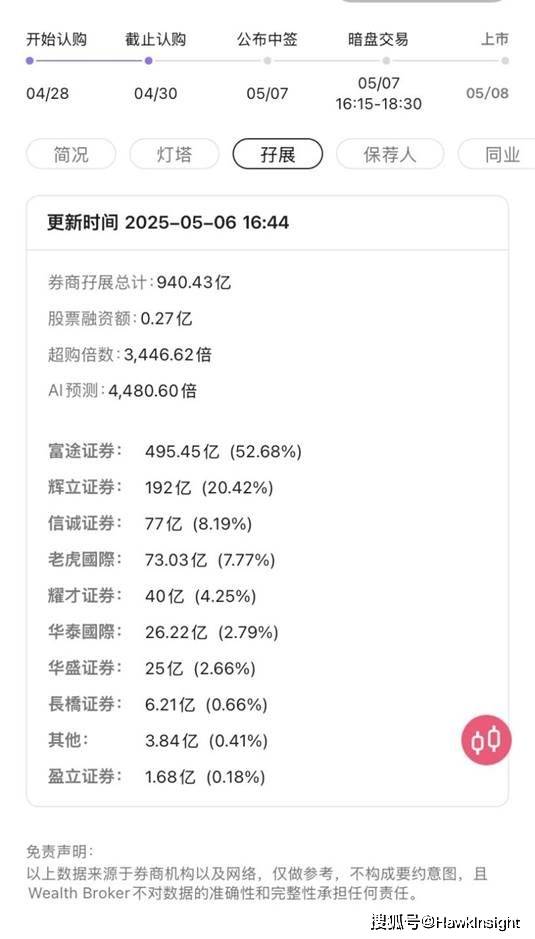
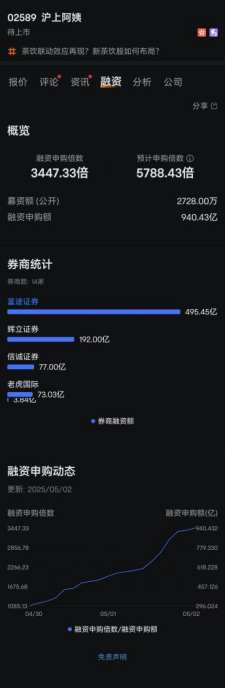
加盟模式下的中价茶饮市场崛起 沪上阿姨作为国内知名的连锁茶饮品牌,将于2025年5月8日在港交所正式挂牌上市。自4月28日启动招股以来,打 新热情高涨,截至5月6日,沪上阿姨孖展申购倍数超3400倍,申购额超940亿港元,可跻身港股历史超额认购第8 位。 如此高的超额认购倍数,与近期港股茶饮板块的热度不无关系。2025年以来,已有古茗、蜜雪集团、霸王茶姬等 茶饮股上市,且表现不错,由蜜雪冰城带起来的港股打新热,让沪上阿姨也吸引了不少资金参与。 目前现制茶饮行业在下沉市场和海外市场仍具有巨大潜力。沪上阿姨的增长也契合了这一行业趋势,其2022 - 2024年的商品交易总额(GMV)分别为60.68亿元、97.32亿元和107.36亿元,显示出强劲的增长势头,为投资者 增强信心。 不可忽视的长期增长挑战 然而,沪上阿姨也面临着一些挑战。新茶饮市场竞争异常激烈,整体增速放缓,价格战频发,可能侵蚀沪上阿姨 的利润空间。其业务高度依赖加盟商的运营表现和忠诚度,加盟商网络的健康状况近期出现波动信号,闭店数量 和流失率值得关注。2024年上半年,沪上阿姨新开1184间门店,同比下降20.6%,同期还关了531间门店,同比增 ...
孖展申购倍数超3447倍!沪上阿姨赴港上市受追捧
Zhi Tong Cai Jing· 2025-05-06 07:23
Core Viewpoint - The recent IPO of Hu Shang A Yi has generated significant interest in the Hong Kong stock market, with a subscription multiple of 3447.33 times and a subscription amount exceeding 94 billion HKD, indicating strong demand for tea beverage stocks [1][2]. Company Overview - Hu Shang A Yi is positioned as the fourth largest fresh tea beverage network in China, focusing on expanding into lower-tier cities through a franchise model [2][3]. - The company plans to utilize the funds raised from the IPO for digital upgrades, product development, and supply chain enhancement [2]. Growth Metrics - The number of Hu Shang A Yi stores has rapidly increased from 5,307 in 2022 to 7,789 in 2023, with a target of reaching 9,176 stores by the end of 2024, reflecting an annual expansion rate of approximately 2,000 stores [2][3]. - The franchise model has been a key driver of growth, with franchise store numbers increasing from 5,244 in 2022 to 7,756 in 2023, marking a growth rate of 47.9% in 2023 [3]. Financial Performance - The company's Gross Merchandise Volume (GMV) has shown robust growth, increasing from 6.068 billion CNY in 2022 to 9.732 billion CNY in 2023, representing year-on-year growth rates of 45.8% and 60.4%, respectively [3]. - Revenue figures for Hu Shang A Yi from 2022 to 2024 are 2.199 billion CNY, 3.348 billion CNY, and 3.285 billion CNY, while adjusted net profits are 154 million CNY, 416 million CNY, and 418 million CNY, indicating a strong financial trajectory [3]. Investment Interest - The IPO attracted two cornerstone investors, who collectively subscribed to approximately 9.2155 million USD of the offering, with significant contributions from Yingfeng Holdings and Huabao Shares [3].
年轻人涌入“鸣鸣很忙们”
3 6 Ke· 2025-04-30 11:49
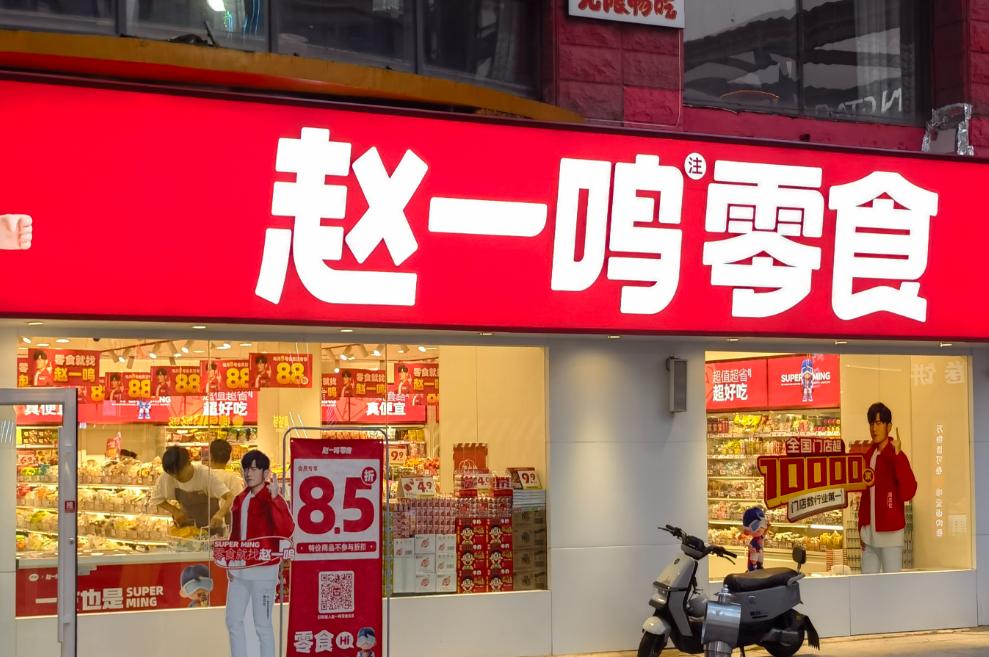
Core Insights - The article discusses the rise of snack retail chains in China, emphasizing the shift in consumer behavior towards value-for-money products and the emotional significance of snacks in modern life [1][6][17] Group 1: Market Trends - The snack industry in China has seen significant growth, with the market size increasing from over 400 billion yuan in 2010 to over 1 trillion yuan in 2021, indicating a strong economic impact [6] - The emergence of chains like "鸣鸣很忙" reflects a broader trend in the consumer market where quality and price are balanced, leading to a new consumer value system [7][12] - The number of "鸣鸣很忙" stores has surpassed 14,000 nationwide, generating over 55.5 billion yuan in revenue, showcasing rapid expansion and consumer acceptance [6][12] Group 2: Consumer Behavior - Consumers are increasingly prioritizing quality and safety over traditional notions of luxury, leading to a preference for affordable yet reliable snack options [6][11] - The concept of "消费平权" (consumer equality) is gaining traction, as consumers in lower-tier cities now have access to the same quality and pricing as those in major urban centers [10][12] - The emotional value of snacks has become significant, with consumers viewing them as a form of self-reward and companionship in a fast-paced, often isolating society [1][17] Group 3: Competitive Landscape - The success of "鸣鸣很忙" and similar chains is attributed to their efficient supply chains and direct sourcing from manufacturers, allowing them to offer competitive pricing without compromising quality [10][11] - Other brands like "蜜雪冰城" and "瑞幸咖啡" have also adopted similar strategies, focusing on high quality at low prices, which has proven effective in attracting consumers [7][10] - The snack retail sector is characterized by a mix of traditional and modern retail strategies, with new entrants challenging established brands by offering better value propositions [11][12] Group 4: Societal Implications - The rise of snack retail chains is seen as part of a larger societal shift towards valuing shared experiences and emotional connections over mere consumption [17] - The concept of "第四消费时代" (Fourth Consumption Era) is referenced, highlighting a transition from individualistic consumption to a focus on community and shared values [13][17] - The growth of snack retail chains is contributing to local economies by creating job opportunities and enabling entrepreneurship among local residents [12]
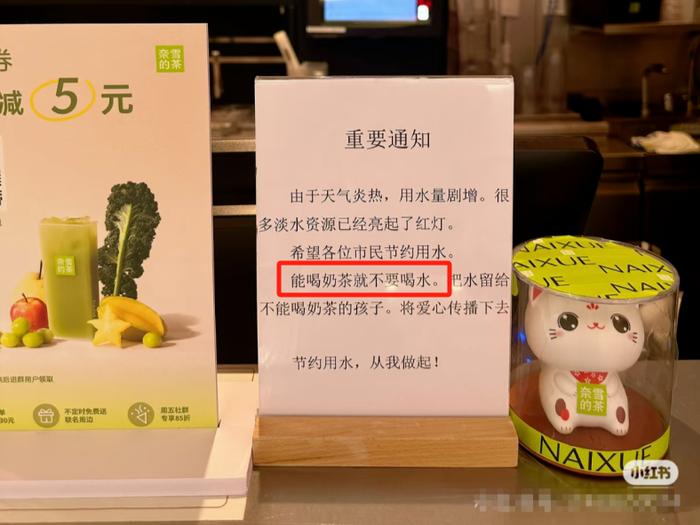
奈雪的茶回应“通知能喝奶茶就不要喝水”:我们搞笑的!去年亏损9亿元…
Bei Jing Shang Bao· 2025-04-29 11:53
Core Viewpoint - The recent controversial notice from Nayuki's Tea, suggesting that consumers should drink milk tea instead of water, has sparked significant backlash and raised concerns about misleading consumer behavior [2][4][6]. Group 1: Company Actions and Reactions - Nayuki's Tea (Jiu Long Mao Store) posted a notice on social media stating, "If you can drink milk tea, don't drink water," which was intended as a humorous take but was perceived as misleading [2][6]. - The notice was displayed for a few days before being removed following a directive from the regional manager, indicating internal disapproval of the content [6]. - The store manager explained that the notice was a playful imitation of popular online trends, not meant to mislead consumers [6]. Group 2: Industry Context and Financial Performance - Nayuki's Tea reported a revenue of 4.921 billion yuan for the fiscal year 2024, reflecting a year-on-year decline of 4.7% [8]. - The adjusted net profit shifted from a profit of 20.9 million yuan in 2023 to a loss of 919 million yuan in 2024, attributed to a weak consumer market and increased competition in the ready-to-drink tea industry [9]. - As of December 31, 2024, Nayuki's Tea expanded its store count to 1,798, with plans to explore new store formats to enhance market share in 2025 [9].
沪上阿姨启动港股IPO:下沉市场扩张驱动高增长,募资强化供应链布局
Huan Qiu Wang· 2025-04-29 06:07
Group 1 - The company "沪上阿姨" has officially launched its IPO, planning to globally offer 2.41134 million H-shares, with a price range of HKD 95.57 to HKD 113.12 per share, and is expected to list on the Hong Kong Stock Exchange on May 8 [1][3] - The company has introduced two cornerstone investors, with a total subscription amount of approximately USD 9.2155 million (around HKD 71.49 million) [3] - As of the end of 2023, "沪上阿姨" ranks fourth in China's ready-to-drink tea industry with 9,176 stores, and is the leading mid-priced tea brand in northern China, with 99.7% of its stores being franchise operations [3] Group 2 - The company focuses on lower-tier markets, with nearly half of its stores located in third-tier cities and below, which are expected to see the fastest GMV growth from 2023 to 2028 [3] - The projected GMV for 2024 is CNY 10.7 billion, a 10% increase year-on-year, despite a decline in average GMV per store from CNY 1.6 million in 2023 to CNY 1.4 million [3] - The gross profit margin is expected to improve from 30.4% to 31.3% due to economies of scale [3] Group 3 - Analysts predict that the price war in the tea beverage industry will ease by 2025, allowing leading brands to expand while weaker brands may face closure risks [3] - "沪上阿姨" is expected to leverage its first-mover advantage in lower-tier markets and its supply chain integration capabilities to navigate industry differentiation [3] - The company plans to invest further in digital tools and smart manufacturing equipment to enhance supply chain efficiency and product quality [3]

沪上阿姨,开启招股→
新华网财经· 2025-04-29 03:05
4月28日,内地现制茶饮公司沪上阿姨(上海)实业股份有限公司(简称"沪上阿姨")开启招 股。 根据公告,沪上阿姨拟全球发售241.134万股H股,其中香港发售股份24.114万股,国际发售股 份217.02万股,另有15%的超额配股权。发售价区间为95.57港元/股至113.12港元/股,每手30 股。 据招股书披露的时间表,沪上阿姨预计将于5月8日在港交所上市。届时,公司将成为继古 茗、蜜雪冰城、霸王茶姬后,今年第四家新茶饮上市公司。 此次IPO,沪上阿姨共引入2名基石投资者,包括盈峰集团旗下的盈峰控股和华宝股份旗下的 华置,合计认购921.55万美元股份(约合7149万港元)。 聚焦下沉市场 规模快速扩张 2013年,首家沪上阿姨门店在上海人民广场开业,开创"现煮五谷茶",茶饮品牌"沪上阿姨"就 此诞生。 12年过去,沪上阿姨成为中国现制饮品行业头部企业之一。根据灼识咨询资料,以截至2023 年12月31日的门店总数计算,沪上阿姨在国内北方中价现制茶饮店品牌中排名第一,在国内 中价现制茶饮店品牌中排名第三,在国内现制茶饮店行业排名第四。 截至2024年末,沪上阿姨门店网络共有9176家门店。门店网络的扩张 ...
沪上阿姨今起招股:获盈峰、华宝股份921万美元基石认购,IPO市值超100亿港元
IPO早知道· 2025-04-28 04:17
战略性聚焦下沉市场。 本文为IPO早知道原创 作者| Stone Jin 微信公众号|ipozaozhidao 据 IPO早知道消息, 沪上阿姨 (上海)实业股份有限公司 (以下简称 " 沪上阿姨 ")今起招股、至5 月2日结束,并计划于2025年5月8日正式以"2589"为股票代码在港交所主板挂牌上市。 沪上阿姨 计划在本次 IPO中发行 2,411,340股H股 ,其中香港公开发售 2 41, 1 40股H股 ,国际发 售 2, 170 , 20 0股H股 。 值得注意的是, 截至 2023年12月31日, 沪上阿姨 新店的估计初始投资成本平均约为 275,000 元,低于中国中价现制茶饮店行业约350,000元的平均初始投资成本。截至2024年12月31日,在 沪上阿姨 的 5,455名加盟商中, 有 3 0.0%或1,637名加盟商开设一 家 以上的门店。 2024年,有 48.8%或1,164 家 新加盟店由现有加盟商开设。 2023年 和 2024年,沪上阿姨的季度平均活跃会员分别 为 1,630万人 和 1,760万人; 同期 ,季 度复购率由 42.2%提升至44.3%。 在本次 IPO发行中 ...