
餐饮

Search documents
海底捞(06862):动态跟踪报告:经营多点开花,全力再造一个海底捞
EBSCN· 2026-03-05 07:07
Investment Rating - The report maintains a "Buy" rating for Haidilao [7] Core Insights - Haidilao is undergoing a strategic transformation, marking a "second entrepreneurship" phase with a focus on core business stability and breakthrough strategies, led by founder Zhang Yong returning as CEO [2][18] - The "Pomegranate Plan" aims to diversify from a single hotpot model to a multi-brand strategy, with significant growth in subsidiary brand revenues [3][45] - The main brand is showing signs of recovery, with improved customer spending and operational metrics validating demand resilience [4][66] - A high dividend policy is in place, providing a safety net for investors, with a dividend payout ratio increasing from 40% in 2022 to 90% in 2023 [4][67] Summary by Sections 1. Strategic Transformation - In early 2026, Haidilao is at a strategic turning point with a focus on upgrading management and operations, shifting from cost-cutting to maintaining core business and focusing on breakthroughs [2][18] - The management structure has been revamped, with experienced female executives joining the board to enhance operational efficiency [19][31] 2. Pomegranate Plan - The "Pomegranate Plan" is designed to break through the ceiling of the hotpot category and incentivize talent, with 14 brands and 126 stores launched by mid-2025, achieving a revenue growth of 227% year-on-year for subsidiary brands [3][45] - Key focus areas include seafood restaurants, sushi, and takeout services, with a strong emphasis on fresh ingredients and customer experience [3][49][52] 3. Main Brand Performance - The main brand has stabilized, with an average customer spending of 97.9 yuan in the first half of 2025, showing a recovery trend [4][59] - The restaurant's turnover rate has improved since July 2025, with significant customer traffic during holiday periods, confirming the brand's market strength [4][66] 4. Dividend Policy - Haidilao has significantly increased its dividend payout ratio, with plans for a 95% payout in 2024 and maintaining this level in the first half of 2025, resulting in a dividend yield of 5.4% [4][67]

2026年2月PMI点评:经济“开门红”仍较温和
Orient Securities· 2026-03-05 06:42
Economic Overview - The manufacturing PMI for February 2026 decreased by 0.3 percentage points to 49%, indicating a contraction in the manufacturing sector[7] - Despite the decline, the actual performance is considered better than seasonal expectations due to the impact of the Spring Festival[7] - The construction sector's business activity index fell to 48.2%, down 0.6 percentage points, reflecting reduced activity during the holiday period[7] Supply and Demand Dynamics - The overall supply exceeds demand, with production and new orders PMI at 49.6% and 48.6% respectively, indicating no significant improvement in the supply-demand balance[7] - The gap between raw material purchase prices PMI and factory prices PMI is narrowing, but it remains uncertain if this indicates improved bargaining power for downstream enterprises[7] Sector Performance - High-tech manufacturing PMI recorded at 51.5%, remaining a key driver of economic growth, while consumer goods PMI rose to 48.8% but still below the expansion threshold[7] - Service sector activity index increased to 49.7%, with growth driven by hospitality and entertainment sectors during the Spring Festival[7] External Factors and Risks - Risks include slower-than-expected transmission of counter-cyclical policies, uncertainties in trade policies from other countries, and potential impacts of geopolitical conflicts on commodity prices[4]
海底捞海外门店盈利承压 特海国际去年净利预增依赖汇兑收益
Jing Ji Guan Cha Wang· 2026-03-05 06:14
Core Viewpoint - The independent listing platform of Haidilao Group, Tehai International, forecasts a significant increase in net profit for 2025 primarily driven by foreign exchange gains, while restaurant operations are expected to decline due to a proactive discount strategy [1] Financial Performance - Tehai International anticipates revenue of no less than $840 million for 2025, with net profit attributable to shareholders expected to be at least $34 million, compared to $780 million in revenue and $21.8 million in net profit for the same period in 2024 [1] - The forecasted net profit growth is largely attributed to foreign exchange gains, with expected net foreign exchange gains rising from a loss of $19.7 million in 2024 to a gain of $14 million in 2025 due to currency fluctuations [1] Restaurant Operations - The operating profit margin in the restaurant segment is expected to decline as the company implements a proactive discount strategy to maintain table turnover and customer traffic amid intense competition [1] - Despite the discount strategy, restaurant traffic and turnover rates have shown growth, with total customer traffic reaching 8.1 million in Q3 2025, a year-on-year increase of 9.5%, and the average turnover rate improving from 3.8 times per day in Q3 2024 to 3.9 times in Q3 2025 [2] Cost Pressures - Tehai International is facing ongoing cost pressures, particularly in labor, with employee costs increasing by 9.7%, 12.1%, and 7.9% year-on-year in the first three quarters of 2025 [2] Competitive Landscape - The international Chinese restaurant market is becoming increasingly fragmented, with notable competitors accelerating their overseas expansion, marking a shift from a "hotpot monopoly" to a "multi-category competition" phase [2]
今年着力建设强大国内市场,活跃线下消费
第一财经· 2026-03-05 05:06
Core Viewpoint - The article emphasizes the importance of building a strong domestic market as a key task for the government in 2023, focusing on stimulating consumption and expanding investment to leverage China's vast market advantages [3]. Group 1: Government Initiatives - The government will implement special actions to boost consumption, aiming to stimulate residents' internal consumption motivation alongside consumption policies [3]. - A plan will be developed to increase income for urban and rural residents, particularly targeting low-income groups and enhancing property income, salary, and social security systems [3]. - Actions will be taken to improve service consumption quality and create new consumption scenarios, while also promoting offline consumption and activating lower-tier market consumption [3]. Group 2: Service Consumption Growth - In 2025, service retail sales are projected to grow by 5.5%, with sectors like cultural, sports, leisure, and travel showing double-digit growth [4]. - The total revenue from the catering industry in 2025 is expected to reach 5.8 trillion yuan, reflecting a year-on-year growth of 3.2% [4]. - The proportion of per capita service consumption expenditure reached 46.1% in 2025, indicating a more active service consumption market [4]. Group 3: Policy Recommendations - Suggestions were made to address issues such as the low proportion of service consumption in GDP and the mismatch between supply and demand in service consumption [5]. - The Ministry of Commerce is using these recommendations to enhance the quality of service consumption through policy formulation, scenario innovation, and digital transformation [5]. - Emphasis is placed on communicating consumption policies in a way that resonates with the public, focusing on improving quality of life and addressing consumer pain points [5][6]. Group 4: Strategic Focus - The draft of the 15th Five-Year Plan highlights the importance of strengthening domestic circulation and expanding domestic demand as a strategic foundation amid complex external environments [6]. - The plan aims to enhance the internal dynamics and reliability of domestic circulation while closely integrating consumer welfare and investment in both goods and people [6].


兼评2月PMI数据:春节效应拖累PMI,复工略快于往年
KAIYUAN SECURITIES· 2026-03-05 03:14
Group 1: Manufacturing Sector - The manufacturing PMI for February is 49.0%, down 0.3 percentage points month-on-month, indicating continued weakness influenced by the Spring Festival effect[1] - The production PMI decreased by 1.0 percentage points to 49.6%, while new orders, new export orders, and import PMIs fell by 0.6, 2.8, and 1.7 percentage points to 48.6%, 45.0%, and 45.6% respectively[12] - Large enterprises showed improvement with a PMI increase of 1.2 percentage points, while medium and small enterprises saw declines of 1.2 and 2.6 percentage points respectively[20] Group 2: Non-Manufacturing Sector - The construction PMI fell by 0.6 percentage points to 48.2%, with new orders index slightly improving by 2.1 percentage points to 42.2%[25] - The service sector PMI increased to 49.7%, up 0.2 percentage points, but new orders remain weak[32] - The issuance progress of special bonds reached approximately 18.7%, better than 13.0% in the same period of 2025[25] Group 3: Economic Outlook - The resumption of work is slightly faster than in previous years, with a construction resumption rate of 8.9% as of February 25, 2026, an increase of 1.5 percentage points year-on-year[37] - Economic fundamentals in Q1 are expected to remain under pressure, necessitating stronger growth stabilization policies, including additional policy financial tools and accelerated fiscal spending[37] - Risks include unexpected policy changes and potential downturns in the U.S. economy affecting domestic exports[42]
2025年餐饮行业热门赛道盘点报告
Hong Can Chan Ye Yan Jiu Yuan· 2026-03-05 01:30
Investment Rating - The report does not explicitly provide an investment rating for the restaurant industry in 2025 Core Insights - The restaurant industry in China is projected to reach a revenue of 5.8 trillion yuan in 2025, with a year-on-year growth of 3.2%. The growth rate is slowing down, indicating a shift from expansion-driven growth to a more rational focus on efficiency and quality [3][10] - Popular products in the restaurant sector are emerging rapidly, with items like butter rice cakes and corn egg tarts gaining significant traction on social media platforms [3][29] - Six major trends in restaurant models are identified, including "experience and scene innovation," "efficiency and cost optimization," and "social and value empowerment," which are reshaping consumer dining experiences [3][36] Summary by Sections Industry Overview - The restaurant industry is experiencing steady growth, with a focus on brand innovation and the emergence of popular concepts. The market is transitioning to a more rational growth phase, emphasizing efficiency and quality [5][10] - The revenue for limited-scale restaurants is expected to reach 1.63 trillion yuan, growing by 2.0% year-on-year [3][10] Popular Products - The report highlights a variety of trending products, including butter rice cakes, Thai milk tea, and stinky tofu hot pot, which have gained popularity through social media [3][29] - The peak popularity of certain products on platforms like Douyin (TikTok) has reached over 200 million views [29][30] Popular Models - Six key models are identified in the restaurant industry, including: - "Beautiful Rice" focusing on aesthetic presentation and social media appeal [37][39] - "Mountain Wild" emphasizing natural ingredients and a relaxed dining atmosphere [46][47] - "Store-in-Store" models that allow brands to test new concepts with lower risk [48][54] - "Large Store" models that shift focus from product sales to experiential and brand value [55][57] - "Board-Front" models that enhance consumer interaction through visible cooking processes [58][60] - "Self-Service" models that are expanding in various dining categories [61][63] Popular Categories - Strong growth is observed in categories such as black duck pot, Jiangxi stir-fry, and local noodle dishes, driven by supply chain advantages and consumer demand for regional flavors [3][64][66] - The Jiangxi stir-fry segment is particularly notable, with a 287.5% increase in related business registrations in 2025, indicating a shift towards standardization and branding [66][70] - The vegetarian food segment is also rapidly developing, with over 4,000 vegetarian restaurants and a market size of approximately 8 billion yuan by 2025 [71]
万联晨会-20260305
Wanlian Securities· 2026-03-05 01:03
Core Insights - The A-share market experienced a collective decline on Wednesday, with the Shanghai Composite Index falling by 0.98%, the Shenzhen Component Index by 0.75%, and the ChiNext Index by 1.41%. The total market turnover was 2.39 trillion yuan, a decrease of 769.6 billion yuan compared to the previous day, with over 3,600 stocks declining [3][9]. Market Performance - The closing figures for major domestic indices are as follows: Shanghai Composite Index at 4,082.47 (-0.98%), Shenzhen Component Index at 13,917.75 (-0.75%), CSI 300 at 4,602.62 (-1.14%), STAR 50 at 1,381.56 (-0.49%), ChiNext Index at 3,164.37 (-1.41%), and Shanghai 50 at 2,974.21 (-1.33%) [6]. Important News - The first press conference of the 14th National People's Congress highlighted significant economic strategies, including the approval of the "14th Five-Year" plan, a focus on expanding domestic demand, and the promotion of private economic development. The emphasis was placed on the importance of core technology being self-controlled and the introduction of more favorable policies for Hong Kong [4][9]. - The National Committee of the Chinese People's Political Consultative Conference reported that China's economy has shown resilience and vitality, with a total economic output surpassing 140 trillion yuan. Domestic tourism consumption exceeded 803.4 billion yuan during the longest Spring Festival holiday, reflecting a robust market [5][10].
债市基本面点评报告:乍暖还寒时
SINOLINK SECURITIES· 2026-03-04 15:19
Group 1: Industry Investment Rating - No information provided Group 2: Core Views - Despite the month-on-month decline in February's manufacturing PMI, the actual performance was slightly better than the seasonal average, indicating an improvement in economic sentiment [10][13] - The decline in the export order index in February may be due to the Spring Festival holiday, and export data may still maintain resilience [17] - The price index remained strong, and the rise in oil prices may accelerate the recovery of PPI, with the possibility of turning positive earlier [20][21] - During the holiday, the non-manufacturing sector showed a mixed performance, and the construction industry's resumption of work after the holiday was better than the same period last year [23] - The economic performance in the first quarter faces certain pressure, but the early issuance of special bonds and the positive performance of resumption of work create favorable conditions for a stable start [24] Group 3: Summary by Directory 1. This month's economic sentiment seems weak but is actually strong - February's manufacturing PMI fell 0.3 points to 49.0, but was slightly better than the seasonal average [10][11] - Most sub - indices weakened, but the demand side declined less than the supply side, and the finished product inventory index dropped significantly [10] - The "PMI (new orders - production - inventory) trend value" ended its downward trend and rebounded [13] - The decline in the export order index may be due to the Spring Festival, and actual export performance was not weak [17] 2. Soaring oil prices support the earlier return of PPI to positive - Although the raw material price index declined and the ex - factory price index did not rise further, both were in the expansion range [20] - The rise in oil prices may accelerate the recovery of PPI, with the possibility of turning positive as early as March in an optimistic scenario, and in May - June in neutral or pessimistic scenarios [21] 3. The construction industry's resumption of work after the holiday is stronger than the same period last year - During the holiday, the non - manufacturing sector showed a mixed performance, with high sentiment in consumer - related industries and low sentiment in some industries such as capital markets and real estate [23] - The business activity index of the construction industry declined, but the business activity expectation index returned above the critical point [23] - As of February 25, the construction site resumption rate, labor employment rate, and fund availability rate were all higher than the same period last year [23]
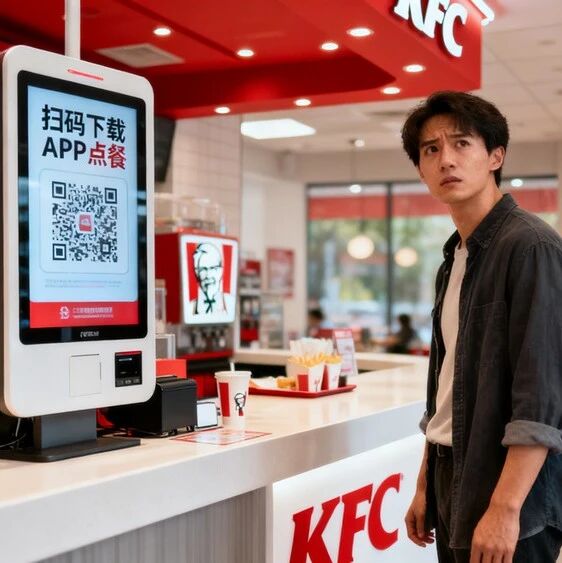
肯德基APP,“逼疯”顾客?
虎嗅APP· 2026-03-04 14:02
Core Viewpoint - The article discusses the challenges and consumer frustrations associated with KFC's mandatory app ordering system, highlighting the tension between digital transformation and customer experience [6][9][16]. Group 1: Consumer Experience - Many consumers express frustration over KFC's insistence on using the app for ordering, feeling coerced into downloading it to complete their purchases [7][10]. - Experiences shared by consumers indicate that attempts to order at the counter often lead to being redirected to the app, causing dissatisfaction and abandonment of purchases [10][12]. - The article notes that some customers feel that the app requirement diminishes their autonomy and complicates the ordering process, leading to negative perceptions of the brand [8][33]. Group 2: Employee Perspective - KFC employees report feeling pressured to encourage app downloads due to store performance metrics, with some locations requiring a minimum of 60% of orders to be placed through the app [13][15]. - Employees express frustration over the situation, stating that they face criticism from management if app usage targets are not met, regardless of customer satisfaction [14][16]. - The article highlights a divide between corporate expectations and frontline employee experiences, with some employees indicating that they would prefer customers to leave rather than face the pressure of app compliance [14][16]. Group 3: Business Strategy - KFC's focus on app ordering is tied to its broader digital strategy under Yum China, aiming to reduce reliance on third-party delivery platforms that charge high commissions [18][20]. - The app serves as a tool for better customer management and data collection, allowing KFC to enhance its marketing strategies and customer relationship management [21][22]. - The article emphasizes that the app's performance metrics are crucial for KFC's market positioning and investor confidence, making it a key component of the company's digital transformation narrative [23][24]. Group 4: Market Dynamics - The competitive landscape in the food service industry shows that many brands, including KFC, are leveraging app-based incentives to drive downloads and customer engagement [32]. - The article notes that while KFC offers promotions to encourage app usage, the method of enforcement has led to consumer backlash, indicating a need for a more balanced approach [33][34]. - The introduction of AI features in the app, such as the "one-sentence ordering" capability, is seen as a potential way to enhance user experience, but the core issue remains the lack of choice for consumers [29][31].

2026年3月核心荐股
Guoyuan International· 2026-03-04 11:24
Group 1: Company Performance and Market Trends - 和誉-B (2256.HK) has a total market value of HKD 76 million, with a current price of HKD 11.15, showing a price increase of 158.7% since its inclusion on November 1, 2024[3] - 基石药业-B (2616.HK) has a market value of HKD 92 million, with a current price of HKD 6.26, reflecting a price drop of 24.7% since February 2, 2026[3] - 宜明昂科-B (1541.HK) has a market value of HKD 15 million, with a current price of HKD 3.55, down 48.6% since April 2, 2025[3] - 石药集团 (1093.HK) has a market value of HKD 1,062 million, with a current price of HKD 9.22, showing a slight increase of 3.0% since September 26, 2025[3] Group 2: Financial Metrics and Projections - 和誉-B (2256.HK) has an EPS of HKD 0.04 for 2024, with a PE ratio of 258.13 and a PB ratio of 3.59[3] - 基石药业-B (2616.HK) has an EPS of -0.07 for 2024, with a PE ratio of -89.43 and a PB ratio of 23.52[3] - 宜明昂科-B (1541.HK) has an EPS of -0.91 for 2024, with a PE ratio of -3.91 and a PB ratio of 2.09[3] - 石药集团 (1093.HK) has an EPS of 0.40 for 2024, with a PE ratio of 23.16 and a PB ratio of 3.05[3] Group 3: Strategic Insights - 和誉-B has a strong pipeline of 16 oncology drug candidates, with 10 in clinical stages, and a licensing agreement with Merck worth USD 605.5 million[3] - 基石药业-B has successfully launched 4 innovative drugs and is conducting global clinical trials for its core product CS2009, a tri-specific antibody[3] - 宜明昂科-B's core product IMM01 is the first SIRPα-Fc fusion protein in clinical stages in China, with promising clinical data and a rich pipeline[3] - 石药集团 is focusing on oncology, neuropsychiatric, and cardiovascular treatments, with over 60 key drugs in clinical or application stages, expecting a recovery in performance post-2025[3]