
交通运输

Search documents
资金行为研究双周报:融资担保比例提高后,交易型资金如何反应?-20260123
ZHONGTAI SECURITIES· 2026-01-23 02:09
融资担保比例提高后,交易型资金如何反应? ——资金行为研究双周报(2026/01/09-2026/1/22) 证券研究报告/策略定期报告 2026 年 01 月 23 日 分析师:徐驰 执业证书编号:S0740519080003 Email:xuchi@zts.com.cn 执业证书编号:S0740522050001 Email:wangyj09@zts.com.cn 1、《A H 股市场周度观察(1 月第 2 周)》2026-01-17 2、《从春节到两会,市场轮动的节奏 将如何演绎?》2026-01-17 3、《开年市场新高后或如何演绎?》 2026-01-11 请务必阅读正文之后的重要声明部分 策略定期报告 报告摘要 分析师:王永健 市场资金流向概览:机构流出动能阶段性收敛,市场共识重新凝聚。1 月 12 日后机构 资金流出一度加速,但于 20 日后趋于收敛;散户资金对全 A 及创业板的流入在高位 后亦于 14 日起斜率放缓。全 A 与创业板资金加速度在 13 日及 21 日前后出现剧烈波 动,显示存量博弈依然活跃。截至 1 月 22 日,三大指数散户与机构净流入率差额显 著收窄并向零轴收敛,市场进入力 ...
福建等地强化寒潮应对举措
Xin Lang Cai Jing· 2026-01-22 23:18
Core Viewpoint - The article discusses the impact of a significant cold wave affecting southern regions of China, highlighting the measures taken by transportation authorities to ensure safety and maintain operations during adverse weather conditions [1]. Group 1: Transportation Measures - The Ministry of Transport has instructed local transportation departments in Hunan, Guizhou, Guangxi, and Anhui to increase road inspections and prepare for ice and snow removal [1]. - The National Railway Nanchang Bureau has increased information dissemination at stations and opened additional ticket modification windows to assist travelers [1]. - The Nanchang Bureau has established a "green channel" for coal transportation, optimizing operations to ensure timely delivery of electric coal [1]. Group 2: Weather Impact on Operations - Rain, snow, and freezing weather have been reported in Jiangxi and Fujian, prompting increased safety measures at various transport hubs [1]. - On January 21, Changsha Huanghua International Airport managed 250 inbound and 248 outbound flights, emphasizing efforts to minimize delays and ensure runway safety [1]. - The Nanchang Bureau is actively monitoring coal inventory and consumption, ensuring adequate supply during the cold wave [1].
【环球财经】2025年阿塞拜疆对外货物贸易总额为494.23亿美元
Xin Hua Cai Jing· 2026-01-22 22:53
新华财经巴库1月22日电(记者刘书辰)阿塞拜疆国家海关委员会发布的初步数据显示,2025年阿对外 货物贸易总额为494.23亿美元。其中,货物出口额为250.43亿美元,货物进口额为243.8亿美元。 按货物贸易总额计算,2025年阿前三大贸易伙伴为意大利、土耳其、俄罗斯,货物贸易额分别为118.6 亿美元、57.21亿美元和49.2亿美元。 (文章来源:新华财经) 出口结构方面,2025年阿油气领域出口额为214.15亿美元,占出口总额85.51%。 进口结构方面,2025年阿主要进口商品为机电产品、运输工具及其零件和食品,分别占进口总额的 15.18%、12.73%和10.63%。 ...
2026年第一批936亿元资金下达
Ren Min Ri Bao· 2026-01-22 19:18
本报北京1月22日电(记者邱海峰)记者从国家发展改革委获悉,近日,2026年第一批936亿元超长期特别 国债支持设备更新资金已经下达,支持工业、能源电力、教育、医疗、住宅老旧电梯等领域约4500个项 目,带动总投资超过4600亿元;同时,采取直接向地方下达资金的方式,继续支持老旧营运货车报废更 新、新能源城市公交车更新、老旧农机报废更新。 据悉,今年以来,国家发展改革委会同各有关方面优化实施"两新"政策,在前期扎实开展设备更新项目 谋划储备的基础上,抓紧组织项目申报,严格做好审核把关,加快推动设备更新政策落地见效。 国家发展改革委表示,下一步,将会同各有关方面,持续做好统筹协调和跟踪调度,加强设备更新项目 和资金全链条管理,进一步发挥"两新"政策效能。 ...
泓德红利优选混合(LOF)A:2025年第四季度利润249.87万元 净值增长率3.66%
Sou Hu Cai Jing· 2026-01-22 13:41
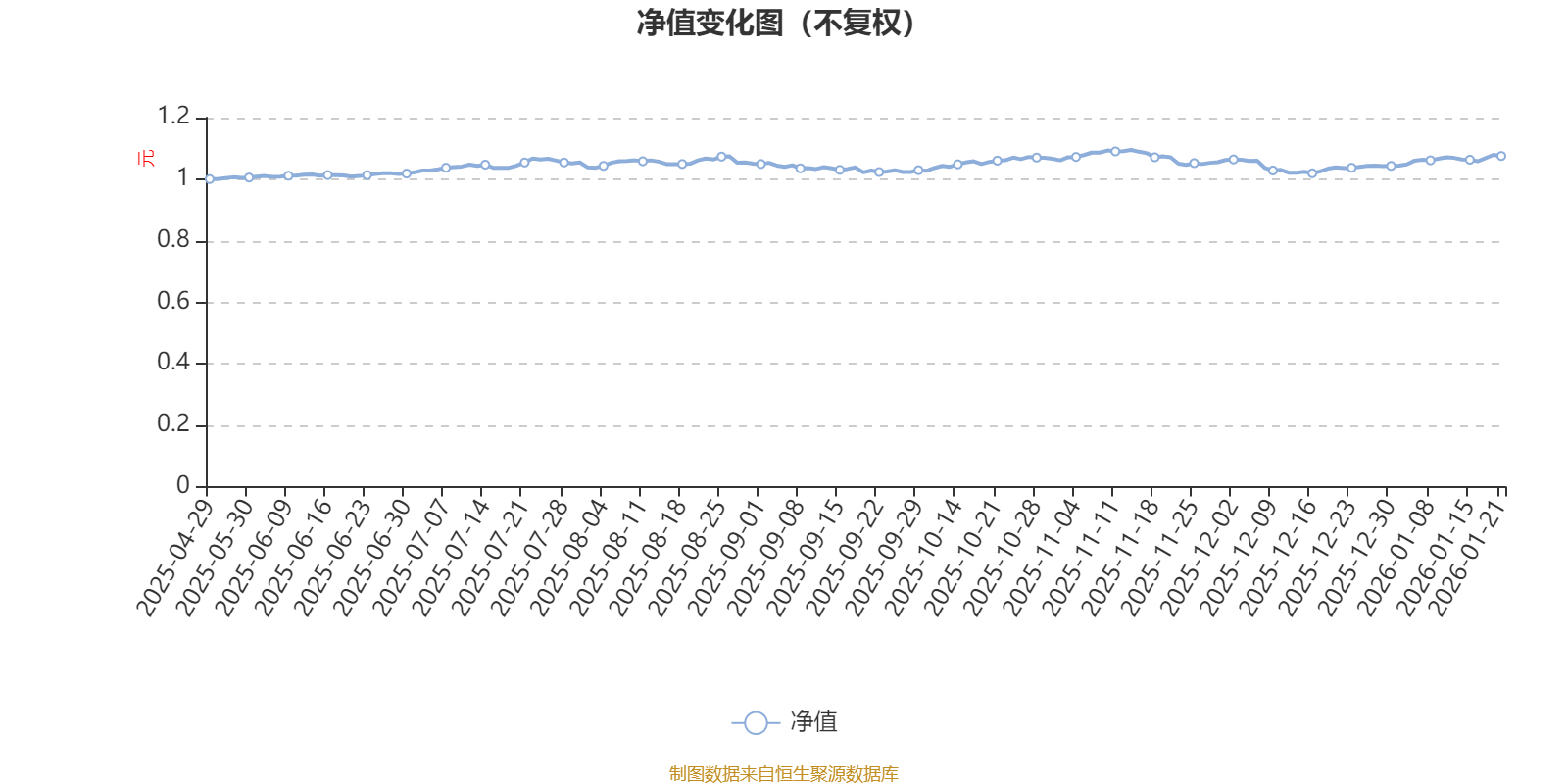
Core Viewpoint - The AI Fund Hongde Dividend Preferred Mixed (LOF) A (501227) reported a profit of 2.4987 million yuan for Q4 2025, with a weighted average profit per fund share of 0.0155 yuan. The fund's net value growth rate was 3.66%, and the fund size reached 206 million yuan by the end of Q4 2025. The fund manager anticipates a continued structural performance in the A-share market driven by technological innovation and long-term capital inflows, focusing on sectors with high growth and performance improvement [3][11]. Fund Performance - As of January 21, the unit net value was 1.075 yuan. The fund's three-month cumulative net value growth rate was 3.30%, ranking 507 out of 621 comparable funds, while the six-month growth rate was 5.90%, ranking 563 out of 621 [3]. - The fund's Sharpe ratio since inception was 0.1791 as of December 31 [4]. - The maximum drawdown since inception was 5.15%, occurring in Q4 2025 [7]. Investment Strategy - The fund maintains an average stock position of 71.83% since inception, compared to the peer average of 85.83%. The highest stock position reached 90.44% at the end of 2025, while the lowest was 51.24% at mid-2025 [10]. - The fund's top ten holdings include Jizhong Energy, Sichuan Road and Bridge, Hu Nong Commercial Bank, Shangfeng Cement, Yuntianhua, Shanghai Bank, Yunnan Agricultural Commercial Bank, Shaanxi Coal and Chemical Industry, COSCO Shipping Holdings, and Yanzhou Coal Mining [14].

聚焦顺周期行业,自由现金流ETF基金(159233)冲击4连涨
Sou Hu Cai Jing· 2026-01-22 06:03
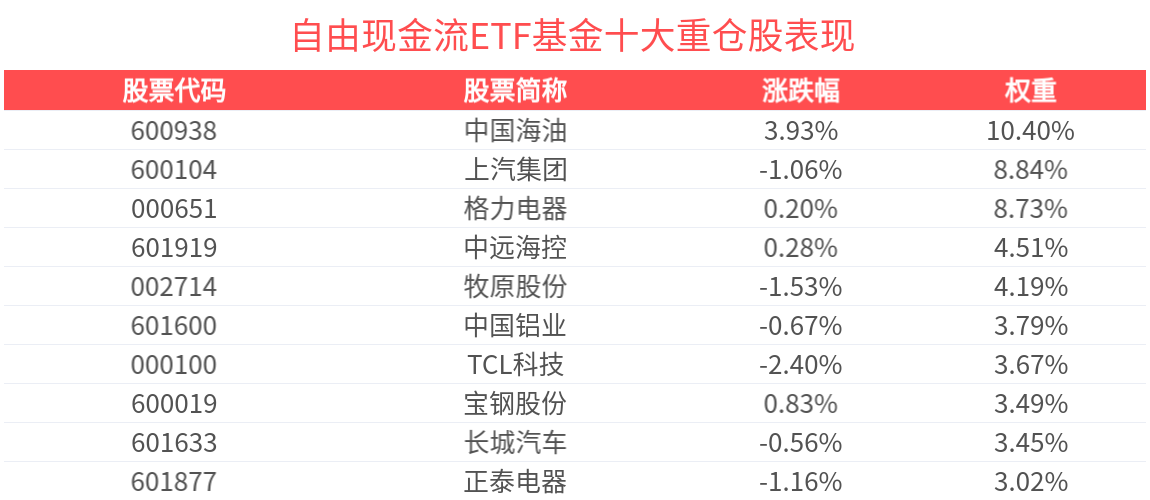
Group 1 - The core viewpoint of the news highlights the positive performance of the CSI All Share Free Cash Flow Index, which rose by 0.78%, with significant gains in constituent stocks such as Silver Nonferrous (+10.04%) and China Power (+5.53%) [1] - The Free Cash Flow ETF (159233) has also shown a 0.94% increase, marking its fourth consecutive rise, and is currently priced at 1.3 yuan [1] - The ETF tracks the CSI Free Cash Flow Index, focusing on cyclical industries, making it a useful tool for investors to capture structural opportunities amid economic recovery [1][3] Group 2 - The demand for AI computing power is experiencing exponential growth due to the increasing complexity of AI models and the expansion of application scenarios, with global AI server shipments expected to rise by 28.3% in 2026 [2] - The transportation sector is projected to see a historic high in cross-regional personnel flow during the 2026 Spring Festival, with an estimated 9.5 billion people expected to travel, driving demand in rail and air transport [2] - The Free Cash Flow ETF (159233) is designed to select high-quality cyclical assets based on free cash flow, providing investors with a convenient way to invest in these sectors [3]
关于企业所得税弥补亏损,这些热点知识请收藏!
蓝色柳林财税室· 2026-01-22 02:15
Group 1 - From January 1, 2018, companies qualifying as high-tech enterprises or technology-based small and medium-sized enterprises can carry forward their unabsorbed losses from the previous five years to offset future profits, with the carryforward period extended from five years to ten years [2] - Integrated circuit production companies that meet national encouragement criteria can also carry forward unabsorbed losses from the previous five tax years for a maximum of ten years [3] - For industries significantly affected by the pandemic, such as transportation, catering, accommodation, and tourism, the carryforward period for losses incurred in 2020 is extended from five years to eight years [4][5] Group 2 - Companies in the affected industries must ensure that their main business income accounts for more than 50% of total income (excluding non-taxable income and investment income) to qualify for the extended loss carryforward policy [5] - Affected companies must submit a declaration through the electronic tax bureau during the 2020 corporate income tax settlement to apply for the extended loss carryforward policy [7] - The film industry, specifically companies involved in film production, distribution, and screening, can also carry forward losses from 2020 for up to eight years [9][11]

新华财经早报:1月22日
Xin Lang Cai Jing· 2026-01-21 23:41
Group 1 - The Ministry of Finance and other departments announced a temporary exemption from personal income tax on capital gains from the transfer of CDRs by individual investors for the years 2026 and 2027 [1][1] - The Ministry of Industry and Information Technology reported that the first phase of 6G technology trials has resulted in over 300 key technology reserves, with the second phase of trials already initiated [1][1] - The State Administration for Market Regulation is overseeing the rectification of the logistics industry to promote fair competition and protect the rights of truck drivers [1][1] Group 2 - The National Energy Administration reported that electricity demand reached a winter record high of 1.168 billion kilowatts from January 19 to 21, a 12.2% increase from last year's peak of 1.041 billion kilowatts [2][2] - The Guangdong provincial government introduced policies to encourage the development of artificial intelligence in transportation, including support for autonomous driving technology and regulatory platforms [2][2] - Moore Threads announced an expected net loss of 950 million to 1.06 billion yuan for 2025, a reduction in loss of approximately 5.58 billion to 6.68 billion yuan compared to the previous year, representing a narrowing of 34.5% to 41.3% [2][2] Group 3 - The Danish "Academic Pension Fund" plans to sell $100 million in U.S. government bonds due to concerns over the U.S. fiscal situation [6][6] - The Japan National Tourism Organization reported a significant decline of 45.3% in the number of visitors from mainland China in December, totaling 330,400 [6][6] - The International Energy Agency projected that global oil demand will grow by 930,000 barrels per day in 2026, an increase from the previously estimated 860,000 barrels per day [6][6] Group 4 - Companies such as Yalun Technology expect revenues of 1.45 billion to 1.52 billion yuan for 2025, while Daikin Heavy Industries anticipates a net profit increase of 121.58% to 153.23% year-on-year [8][8] - JinkoSolar expects a net loss of 5.9 billion to 6.9 billion yuan for 2025, while other companies like Tianfu Communication and Hekang New Energy project significant profit increases [8][8]

2025 以实干镌刻新荣光
Xin Lang Cai Jing· 2026-01-21 22:36
Core Viewpoint - The government work report of Harbin City emphasizes the commitment to high-quality revitalization and development by 2025, focusing on industrial upgrades, improved public welfare, and enhanced urban vitality [7]. Group 1: Economic Development - The construction of "three bases, one barrier, and one highland" has made significant progress, with grain production reaching 25.775 billion jin, an increase of 753 million jin [9]. - The added value of large-scale equipment manufacturing increased by 19.6%, and the installed capacity of renewable energy reached 5.338 million kilowatts, accounting for 52.9% of the total installed capacity [9]. - Actual foreign investment grew by 18.1%, and total import and export volume increased by 4.1% [9]. Group 2: Policy Implementation - Major policies such as "two heavies" and "two new" have shown effectiveness, with 581 major construction projects and 56 equipment upgrade projects supported [9]. - Consumer incentives included 3.76 billion yuan in subsidies for replacing old consumer goods and 190 million yuan in consumer vouchers, stimulating consumption by 38.89 billion yuan [9]. - Industrial technology investment increased by 36.3%, and high-tech manufacturing investment grew by 10.8% [9]. Group 3: Tourism and Culture - Harbin successfully hosted events like the Harbin Summer Music Festival and the International Ice and Snow Festival, attracting 200 million tourists and generating a total tourism expenditure of 281.84 billion yuan, representing growth of 12.7% and 21.8% respectively [10]. - The city was awarded the title of "World Ice and Snow Tourism Excellence City" by the United Nations World Tourism Organization [10]. Group 4: Innovation and Industry Upgrade - The acceleration of industrial upgrades is evident with 733 projects underway and an investment of 50.1 billion yuan, with significant growth in aerospace, computer, and automotive engine manufacturing [11]. - The number of technology-based enterprises reached 182, with a loan balance growth of 18.7% [11]. - The employment rate of graduates from local universities is 18.3%, with 38.1% for doctoral graduates [11]. Group 5: Urban Development - High-quality urban construction is progressing, with the completion of major infrastructure projects like the expansion of Taiping International Airport [13]. - The city has implemented 32 road and bridge projects and constructed 26,600 new parking spaces [13]. - Historical and cultural preservation efforts include the restoration of 33 heritage sites and the enhancement of urban green spaces [13]. Group 6: Social Welfare - Urban employment increased by 98,900, with 2,000 affordable housing units under construction [15]. - Public services improved with the addition of 38 vocational education programs and 38,300 new quality school places [15]. - Safety and stability in the social environment were maintained, with a decrease in debt rates and criminal cases [15].

2025年杭州经济成绩单“出炉”
Mei Ri Shang Bao· 2026-01-21 22:31
Economic Overview - In 2025, Hangzhou's GDP reached 23,011 billion yuan, growing by 5.2% year-on-year, surpassing the national average by 0.2% [1] Agriculture - The total output value of agriculture, forestry, animal husbandry, and fishery in Hangzhou was 569 billion yuan, with growth rates of 3.8% for planting, 5.3% for forestry, 0.2% for animal husbandry, and 4.2% for fishery [2] - Major agricultural products included a total grain output of 599,000 tons (up 3.9%), vegetable output of 3,860,000 tons (up 3.6%), and fruit output of 900,000 tons (up 3.9%) [2] Industrial Growth - The added value of industrial enterprises above designated size was 4,624 billion yuan, with significant growth in the computer, communication, and other electronic equipment manufacturing (up 13.4%) and automotive manufacturing (up 36.7%) [3] - New quality productivity showed remarkable results, with high-tech industries, strategic emerging industries, and high-end equipment manufacturing growing by 7.5%, 10.0%, and 9.5% respectively [3] - Production of new energy vehicles, industrial robots, and 3D printing equipment saw explosive growth rates of 383.0%, 38.6%, and 15.1% respectively [3] Service Sector - The added value of the service industry was 16,997 billion yuan, with the profit-making service sector growing by 7.0% and financial services by 6.4% [4] - From January to November, the revenue of the service industry above designated size reached 21,168 billion yuan, growing by 8.1%, with the information transmission, software, and IT services sector growing by 13.4% [4] Consumer Market - The total retail sales of consumer goods in Hangzhou reached 9,499 billion yuan, indicating a stable and upgrading consumption pattern [5] - The "8+4" economic policy led to significant growth in retail sales of household appliances (up 42.8%) and communication equipment (up 31.4%) [5] - Upgrading consumption demands were strong, with sports and entertainment goods growing by 45.3% and cosmetics by 12.3% [5] Foreign Trade - The total import and export value was 9,072 billion yuan, with exports at 6,469 billion yuan and imports at 2,603 billion yuan [6] - The export of electromechanical products reached 3,107 billion yuan (up 10.9%), and high-tech products reached 1,001 billion yuan (up 9.9%) [6] - The private economy accounted for 77.0% of total exports, with exports to Belt and Road countries growing by 14.1% [6] Living Standards - The per capita disposable income of residents was 80,017 yuan, with balanced growth across four income sources [7] - Urban residents had a per capita disposable income of 86,640 yuan (up 3.9%), while rural residents had 53,565 yuan (up 5.4%), narrowing the income gap to 1.62 [7] Price Stability - In 2025, the consumer price index remained stable compared to the previous year, with six categories of goods experiencing price increases and two categories seeing declines [8] - Hangzhou aims to achieve a GDP of 30 trillion yuan and a per capita GDP of over 30,000 USD by 2030, focusing on policy coordination and market demand stimulation [8]