
公共管理

Search documents
白宫停摆3周后,美联储暗示有大动作,贝森特:中国在对抗全世界
Sou Hu Cai Jing· 2025-10-16 03:10
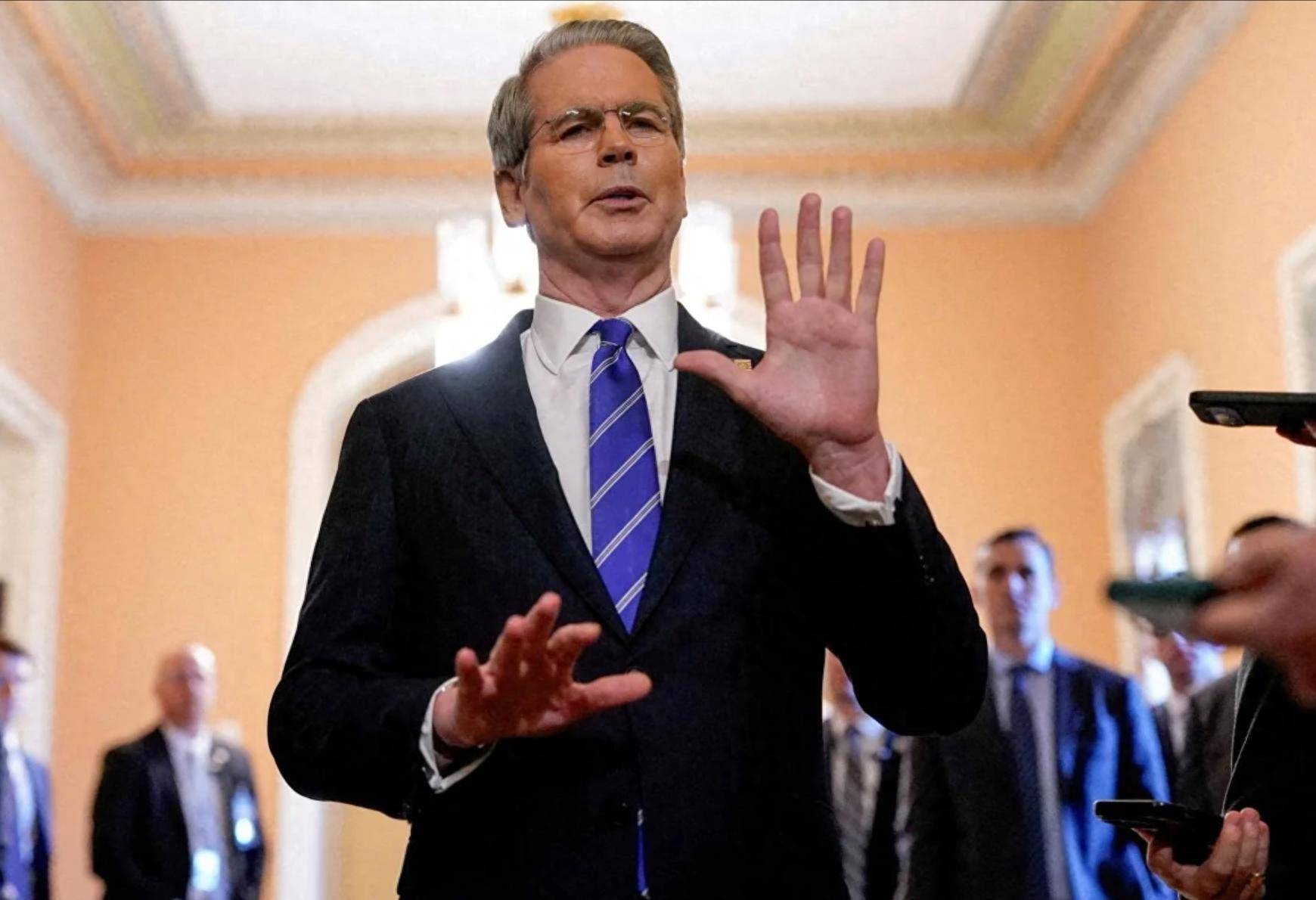
Group 1 - The ongoing government shutdown in the U.S. has entered its third week, primarily due to long-standing conflicts between the Democratic and Republican parties, with both sides attempting to leverage the shutdown to force budget compromises [1][3] - The focal point of the conflict is the subsidies under the Affordable Care Act, with Democrats advocating for their extension to protect millions from losing healthcare, while Republicans oppose it, accusing Democrats of using public welfare as a political tool [3] - The shutdown has resulted in over 800,000 federal employees being placed on unpaid leave, national parks closing, and significant flight delays due to insufficient air traffic control staff, exacerbating public welfare issues [3] Group 2 - The economic impact of the shutdown is significant, with an estimated loss of $15 billion in GDP for each week it continues, and projections indicate that over 40,000 jobs could be lost if the situation persists into November [3] - The Federal Reserve, led by Chairman Powell, is expected to implement a 0.25 percentage point interest rate cut by the end of October and will halt the withdrawal of funds from the market to maintain liquidity and encourage hiring and consumer spending [4] - The U.S. Treasury Secretary has shifted focus to China, claiming that China's control over rare earth exports is a global challenge, despite the fact that the U.S. has imposed multiple restrictions on Chinese high-tech products, indicating a potential misalignment in trade policy [4][5]

“精准充电”育尖兵 “青蓝相继”赴新程
Xin Hua Ri Bao· 2025-10-13 21:48
Core Viewpoint - The article highlights the initiatives taken by Rugao City to enhance the training and development of young cadres, focusing on tailored programs that leverage local resources and address specific needs [1] Group 1: Training Initiatives - Rugao City has implemented the "Chihai Jingrui" capacity-building project aimed at young cadres, emphasizing a comprehensive training approach that includes theoretical education, skill enhancement, and elite development [1] - The training programs are designed to ensure "full coverage in one year" and "dual improvement in capabilities," creating a structured pathway for young cadres from foundational learning to advanced leadership [1] Group 2: Local Resource Utilization - The initiatives are built upon local red resources, aligning with the core goal of constructing a high-quality cadre team, thereby fostering a unique training model for each town or district [1] - The "one town, one product, one characteristic" strategy has been adopted to create a vibrant training landscape that meets the specific needs of different regions [1] Group 3: Continuous Development Focus - Rugao City aims to continuously strengthen the training of young cadres through various methods, including ideological refinement, political practice, practical training, and professional development [1] - The goal is to invigorate young cadres with a sense of responsibility and capability, ensuring they are prepared for significant roles in driving high-quality development [1]
11月5日,“黑天鹅”来袭?
华尔街见闻· 2025-10-04 12:42
Core Viewpoint - The upcoming Supreme Court hearing on November 5 regarding the legality of tariffs imposed by the Trump administration represents a critical juncture for the U.S. market, with potential implications for presidential power and economic policy direction [1][3]. Legal Basis and Implications - The core of the legal dispute revolves around the invocation of the International Emergency Economic Powers Act (IEEPA) by the Trump administration, which allows the president to impose tariffs in response to a "national emergency" [4][5]. - The effective consumer goods tariff rate has risen to 17.9%, the highest level since 1934, due to tariffs that took effect on April 2 [6]. Government's Position - The White House expresses confidence in the legality of the tariffs, citing three main arguments: trade deficits as a unique external threat, the IEEPA not explicitly excluding tariffs as an emergency tool, and periodic congressional review of these tariffs [7]. Legal Community's Perspective - The mainstream legal opinion, including conservative scholars, suggests that the government's legal basis is weak, with a significant likelihood of losing the case based on the "major-questions doctrine," which requires explicit congressional or constitutional authorization for actions of substantial economic and political significance [8][9]. Market Reactions and Economic Impact - The outcome of the Supreme Court case is viewed as a "Damocles sword" over Wall Street, with the potential for two drastically different futures depending on the ruling [10]. - Current market pricing has somewhat incorporated the impact of tariffs, with Treasury Secretary Scott Bessenet predicting annual tariff revenues exceeding $500 billion in the coming years, which could help reduce the fiscal deficit [10]. Consequences of a Ruling - If the Supreme Court rules the tariffs illegal, the White House may need to refund billions in tariffs, significantly impacting fiscal policy and undermining the unilateral economic strategy of the Trump administration [12]. - Conversely, a ruling in favor of the Trump administration would greatly expand presidential power, allowing for unilateral economic decisions without congressional approval, effectively granting a "quasi-royal" authority [14].

王涵:从关税战到卖“金卡”,特朗普在折腾啥?——特朗普“任性”行为背后的财政逻辑
Sou Hu Cai Jing· 2025-09-28 03:18
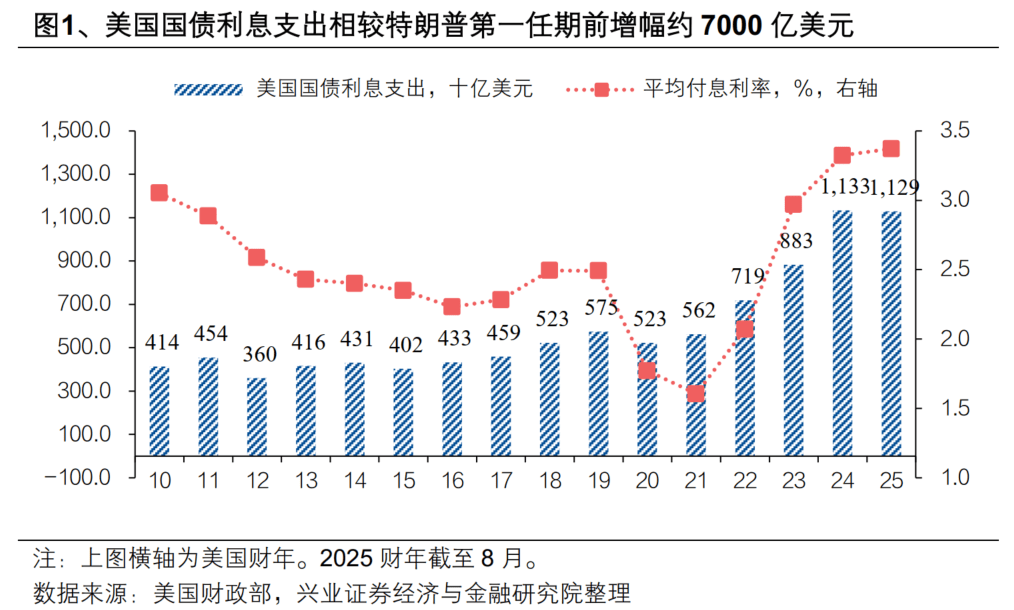
Group 1 - The core objective of recent policies by the Trump administration is to alleviate U.S. fiscal pressure, as evidenced by the significant increase in interest payments on national debt from $432.6 billion in FY2016 to nearly $1.13 trillion by FY2025 [1][5][9] - The administration's push for interest rate cuts by the Federal Reserve is aimed at reducing debt servicing costs, which have increased by approximately $700 billion since Trump's first term [1][7][9] - Despite the Fed's rate cuts potentially saving around $412 billion to $1.93 trillion in interest payments, this is insufficient to cover the existing fiscal gap of about $400 billion, prompting the administration to seek additional revenue sources [2][15][19] Group 2 - The Trump administration's policies, including the "Gold Card" initiative and increased H1B fees, are part of a broader strategy to generate revenue and address the fiscal shortfall [15][17] - The relationship between the Trump administration and the Federal Reserve has deteriorated, with the administration advocating for monetary policy to support fiscal needs, which may undermine the Fed's independence and affect the credibility of the U.S. dollar [2][17][19] - As a result of these policies, capital is expected to flow out of the U.S., benefiting non-U.S. assets such as precious metals and Chinese assets, as the dollar's creditworthiness is likely to weaken [3][19][21] Group 3 - The anticipated decline in interest rates and the weakening of the dollar may lead to increased investment in non-U.S. markets, particularly in Chinese assets, as the yuan is expected to appreciate due to narrowing interest rate differentials [3][19][21] - The Chinese capital market is expected to benefit from these trends, with a solid long-term upward trajectory supported by favorable domestic policies and the ongoing global shift towards non-U.S. assets [21][22][23] - The current geopolitical landscape and the strategic positioning of China in global markets are likely to enhance investor confidence and risk appetite, further supporting the A-share market [21][22][23]
经典重温 | 特朗普“大循环”与美元汇率的“重估”(申万宏观·赵伟团队)
申万宏源宏观· 2025-09-25 05:14
Group 1 - The article discusses the structural imbalances in global trade and the concept of the "twin deficits" in the U.S., providing a framework for analyzing potential solutions to these issues [2][8] - It highlights the paradox of Trump's economic policies, which have led to both internal and external imbalances, exacerbating the trade deficit [3][5] - The U.S. current account deficit accounts for 60-70% of the global total, indicating a significant reliance on foreign capital [4][24] Group 2 - The article outlines three potential solutions to the twin deficits: fiscal consolidation, currency depreciation, and adjustments in domestic savings and investment [6][34] - It emphasizes that the U.S. trade deficit is a reflection of domestic savings shortfalls and rising fiscal deficits, with a 1% increase in fiscal deficit correlating to a 0.3-0.5% increase in the current account deficit as a percentage of GDP [5][97] - The historical context of U.S. trade imbalances is provided, noting that the current account deficit has expanded significantly since the 1980s, particularly after the 2008 financial crisis [29][68] Group 3 - The article discusses the implications of the U.S. dollar's status as a reserve currency, which contributes to trade imbalances and the need for the U.S. to maintain a trade deficit to supply dollars globally [41][72] - It mentions that the U.S. trade deficit has not improved despite tariffs imposed during the Trump administration, with the goods trade deficit rising from $790 billion in 2017 to approximately $1.1 trillion in 2023 [37][61] - The article suggests that the structural issues in the U.S. economy, including low savings rates and high consumption, are fundamental causes of the persistent trade deficit [90][97]

数据虽降,寒意渐浓!美国上周初请失业金人数下降 难掩就业市场疲弱格局
智通财经网· 2025-09-18 13:28
Group 1 - Initial jobless claims in the U.S. decreased to 231,000 for the week ending September 13, down from a previous value of 263,000 and below market expectations of 240,000 [1] - Continuing claims also fell to 1.92 million, down from 1.939 million and below the expected 1.95 million [1] - The increase in initial claims was primarily concentrated in Texas, where there has been a rise in fraudulent applications aimed at exploiting the unemployment insurance system [1] Group 2 - The U.S. labor market is showing signs of softening, with hiring nearly stagnating and labor demand slowing due to uncertainties from tariffs [1] - The Federal Reserve lowered the federal funds rate target range by 25 basis points to 4.00%-4.25%, marking its first rate cut since December 2024 [1] - The Fed's dot plot indicates an additional 50 basis points cut in 2025 [1] Group 3 - The unemployment rate in the U.S. rose to 4.3% in August, the highest level in nearly four years, with non-farm payroll growth slowing for several months [2] - The Fed acknowledged that inflation has risen and remains at elevated levels, while the risks to the job market have increased significantly [2]
巴西7月失业率降至5.6% 创有记录以来新低
Xin Hua Cai Jing· 2025-09-16 14:14
Group 1 - The unemployment rate in Brazil decreased to 5.6% in July, down from 5.8%, marking the lowest level since records began in 2012 [1] - The number of unemployed individuals fell to 6.1 million, the lowest since the end of 2013, while the employment population reached a record 102.4 million [1] - The employment-to-population ratio remained stable at a historical high of 58.8%, indicating consistent labor force participation [1] Group 2 - The agriculture sector added 206,000 jobs, the information and professional services sector added 260,000 jobs, and public administration, education, healthcare, and social services added 522,000 jobs, driving the employment growth [1] - The average real income in July increased by 1.3% year-on-year, reaching 3,484 Brazilian Reais, indicating improvements in the quality of the labor market [1]
如何化解美国政府高债务杠杆风险——资产配置海外双周报2025年第3期(总第52期)
Bei Ke Cai Jing· 2025-09-14 22:59
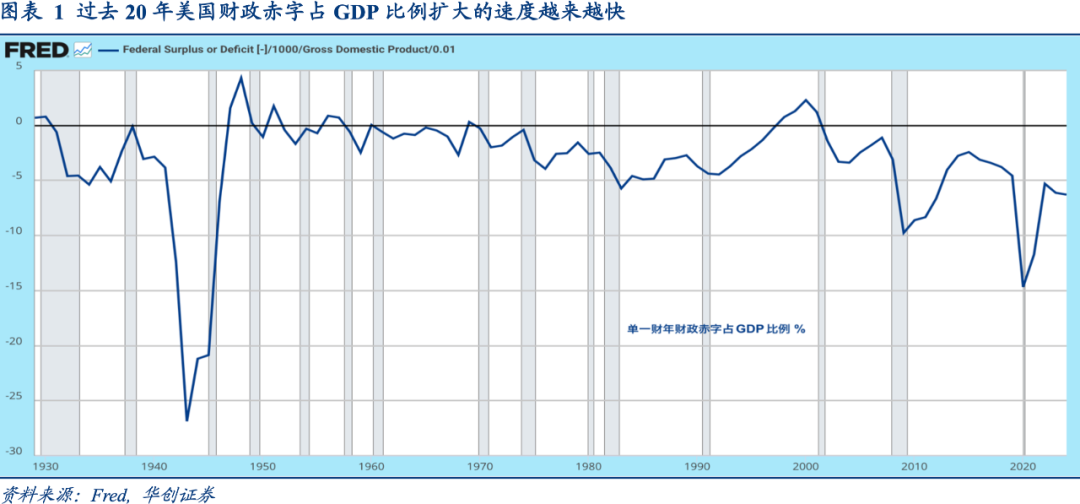
Core Viewpoint - The U.S. government debt leverage ratio has doubled over the past 20 years and is at a historical high, raising concerns about sustainability and economic stability [2][17][89]. Group 1: U.S. Government Debt Leverage Ratio - The U.S. government debt leverage ratio has increased from 42% to 106.5% over the past 20 years, marking a 150% rise [10][17]. - As of Q1 2023, the government debt leverage ratio stands at 106.5%, down from a peak of 112% in Q2 2020 [10][11]. - The federal debt held by the public, after excluding holdings by the Federal Reserve and other federal agencies, shows a leverage ratio of 68% as of Q1 2023, indicating a significant burden of interest payments [13][17]. Group 2: Historical Context and Trends - The U.S. government debt leverage ratio has exhibited a "W" shape over the past 80 years, with notable declines post-World War II and during the 1990s, followed by increases during economic crises [18][21]. - Historical data indicates that the government debt leverage ratio decreased significantly during periods of budget surpluses and low interest rates, particularly from 1947 to 1974 and from 1993 to 2001 [23][26][71]. Group 3: Factors Influencing Debt Leverage - The marginal changes in government debt leverage are influenced by fiscal spending, interest payments, and nominal economic growth, with fiscal balance being a critical factor [21][34]. - The relationship between government debt leverage and private sector leverage is crucial; increases in private sector debt can facilitate government debt reduction [36][71]. Group 4: Role of the Federal Reserve - The Federal Reserve's role in creating a stable low-inflation environment has been pivotal in supporting long-term economic growth and reducing government debt leverage [4][88]. - Historical experiences suggest that simply maintaining low interest rates is insufficient; effective monetary policy must also support economic growth to reduce debt leverage [72][88]. Group 5: Current Economic Policy Implications - Current fiscal imbalances, characterized by high non-interest spending and social security expenditures, pose challenges to reducing the government debt leverage ratio [89][92]. - The economic policies under the Trump administration, including tax cuts and tariffs, reflect a complex interplay between fiscal measures and their impact on government debt sustainability [101][102].
海外市场点评:没有货币,财政又变成问题?
Minsheng Securities· 2025-09-05 08:47
Group 1: Economic Impact and Fiscal Concerns - The recent ruling against the White House's tariff executive order has led to a downward adjustment in inflation expectations and an upward adjustment in Federal Reserve easing expectations, supporting the recession and easing trade narrative[4] - If the Supreme Court maintains the ruling, the potential loss of tariff revenue, estimated at approximately $72 billion from April to July, could impact the deficit rate by at least 0.7 percentage points[4] - Since Q3 2022, the U.S. economy has seen a decline in growth rate, with the annualized GDP growth rate dropping from 3.8% to 1.6% without fiscal support[5] Group 2: Fiscal Policy and Debt Management - The July tax cut legislation is perceived as a continuation of the previous expansionary fiscal policy, but its actual impact on the economy is uncertain due to indirect effects on corporate and consumer behavior[5] - The government’s ability to spend beyond its means is crucial, with the tax cut potentially allowing for $5 trillion in debt issuance, which requires careful timing to avoid future fiscal constraints[6] - Rising interest rates on debt refinancing are increasing the weighted average interest rate of U.S. Treasury bonds, which has risen to 3.352% as of July 2023[7] Group 3: Interest Payments and Budget Constraints - Federal interest payments are projected to exceed $1 trillion for the first time in 2024, significantly squeezing non-interest spending, which has dropped from over 95% of total spending in 2020 to around 85% currently[7] - The interest deficit rate is expected to rise from about 10% of total deficit in 2020 to nearly 50% by 2024, indicating a growing burden on fiscal policy[8] - If U.S. Treasury rates rise by 1%, the non-interest deficit rate could decrease by approximately 0.9 percentage points, leading to a potential GDP growth drag of about 0.6 percentage points[9] Group 4: Future Projections and Recommendations - To maintain fiscal stimulus effects, the U.S. may need to either issue more debt or rely on significant interest rate cuts from the Federal Reserve, which would require at least a 100 basis point reduction[10] - The current fiscal environment suggests limited support for economic growth over the next four quarters, with a potential for "stagflation" conditions[11] - Asset allocation strategies should consider precious metals as a safe haven, while also evaluating the risk of overseas assets amid rising credit concerns[11]
塞舌尔青年人口比例持续下降
Shang Wu Bu Wang Zhan· 2025-08-26 17:42
Core Insights - The youth population in Seychelles is declining, raising concerns across various sectors [1] - As of June 30, 2024, the total number of youth aged 15 to 30 is 26,388, representing 22% of the total population, a decrease of 0.5% from 2022 and 9.7% from 1987 [1] - Youth participation in the labor market is low, with only 55.5% of young people employed [1] Industry Breakdown - The public administration, defense, and social security sector employs 18.9% of the youth [1] - The accommodation and food services industry accounts for 15.4% of youth employment [1] - The wholesale, retail, and motor vehicle repair sector employs 10.8% of the youth [1] - The transportation and storage sector employs 10.5% of the youth [1]