
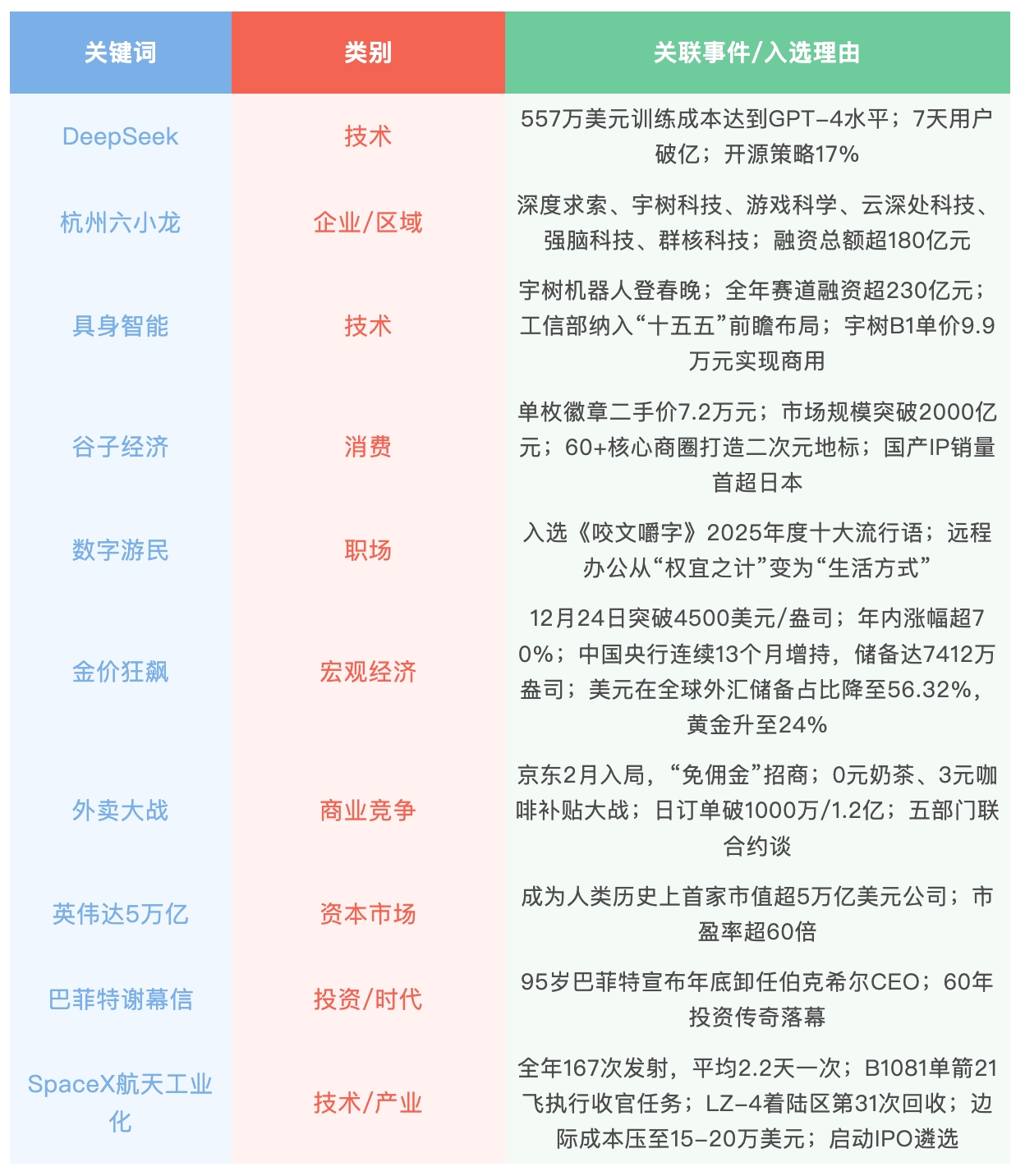
外卖

Search documents
2025:25个关键词里的中国与世界
Di Yi Cai Jing· 2025-12-30 13:27
Group 1 - The core focus of China's economic work in 2025 is to comprehensively rectify "involution" and disorderly competition, with policies aimed at improving product quality and stabilizing market prices [2] - The reform of state-owned enterprises is nearing completion, with significant progress in strategic functions, governance, and regulatory efficiency [4] - The introduction of the Private Economy Promotion Law marks a significant legal framework for promoting fair competition and protecting the rights of private enterprises [5] Group 2 - The resolution of local government debt risks is progressing rapidly, with a plan to replace 10 trillion yuan of hidden debts, achieving over half of the target by the end of 2025 [6] - The issuance of ultra-long special government bonds reached 1.3 trillion yuan in 2025, with a focus on supporting major projects and expanding consumption [6][7] - A special action plan to boost consumption was launched, emphasizing income growth and improving consumer confidence [8] Group 3 - The A-share market saw the Shanghai Composite Index reach 4000 points for the first time in ten years, driven by a recovery in technology stocks and supportive government policies [10] - Gold prices experienced a historic surge, with spot prices rising from $2625 to a peak of $4550 per ounce, driven by macroeconomic factors and central bank purchases [11] - The introduction of the "Science and Technology Innovation Growth Layer" on the STAR Market accelerated the IPO process for unprofitable companies, marking a significant shift in capital market dynamics [12] Group 4 - The deposit interest rates in China underwent a comprehensive decline, with significant adjustments across various banks, impacting personal investment behaviors [12] - The external environment, including the U.S.-China trade tensions and geopolitical factors, influenced the Federal Reserve's monetary policy, leading to interest rate cuts [14] - The rise of DeepSeek as a key player in the AI sector reshaped global competition, emphasizing open-source strategies and high cost-performance [15] Group 5 - The external delivery market saw significant changes with the entry of new players like JD.com and the upgrade of Ele.me, leading to increased competition and consumer choice [18] - The family disputes within Wahaha highlighted the complexities of family governance in business, affecting brand perception and market dynamics [19] - The success of "Nezha 2" at the box office marked a significant milestone for Chinese animation, reflecting the industry's growth and potential for global recognition [21]

拼好饭,一场定制餐品的新试验
2 1 Shi Ji Jing Ji Bao Dao· 2025-12-30 09:25
Core Insights - "拼好饭" has become a trending term among young people in 2025, reflecting a shift in consumer behavior towards value-for-money dining options amid intensified competition in the restaurant industry [1] - The service offers standardized meal packages at significantly reduced prices, ranging from 50% to 70% lower than regular orders, targeting the affordable takeaway market priced between 10-15 yuan [1][4] - The collaboration with well-known brands like KFC and Burger King has contributed to the positive reputation of "拼好饭," indicating a shift from initial consumer skepticism to acceptance [2][5] Business Model - "拼好饭" employs a C2M (Consumer to Manufacturer) model, optimizing the supply chain to enhance efficiency and predictability in demand, production, and costs [4] - The platform's approach allows for concentrated order fulfillment, enabling restaurants to focus on popular items and streamline production processes, thus improving overall efficiency [4] - The model's success is evident as it attracts more brands, ensuring that businesses remain profitable while offering lower prices to consumers [3][4] Market Trends - The demand for high-value meals is reshaping the restaurant industry, with brands increasingly focusing on structural cost advantages rather than engaging in price wars [6] - The "万家品牌" initiative has led to significant sales growth for participating brands, with some achieving over 200,000 orders in six months [6] - The rise of "拼好饭" has prompted other platforms, like Taobao, to adopt similar models, indicating a broader industry trend towards innovative dining solutions [5] Consumer Engagement - "拼好饭" has become a key channel for launching new products, with brands leveraging the platform to reach consumers effectively [7] - The initiative has also prioritized food safety by promoting transparency in food preparation through real-time updates and encouraging restaurants to adopt open kitchen practices [6]
2025,商业世界的十大关键词
3 6 Ke· 2025-12-30 03:25
Group 1 - Nvidia's stock price plummeted 17% in a single day, resulting in a market value loss of nearly $600 billion, marking the largest single-day market loss in U.S. stock market history [1] - The emergence of DeepSeek, a Chinese company, has caused significant concern on Wall Street, as it achieved results comparable to OpenAI's GPT-4 with a training cost of only $5.57 million, compared to OpenAI's $100 million [2][9] - The media has referred to this event as an "Sputnik moment" in the AI field, indicating a significant shift in technological capabilities [3] Group 2 - DeepSeek's success challenges the notion that more computational power is necessary for better AI models, suggesting that smarter algorithms can achieve similar results with less resource investment [9] - The "Six Little Dragons" from Hangzhou, including DeepSeek and other tech companies, have collectively raised over 18 billion yuan, indicating a shift towards technology-driven growth in the region [12][13] - The concept of "embodied intelligence" is gaining traction, with significant investments in humanoid robots and AI that can interact with the physical world, marking a new frontier in AI development [16] Group 3 - The "Guzi economy," referring to the market for anime and gaming merchandise, has grown to a market size of 200 billion yuan, with over 667,000 related enterprises in China [19] - The rise of "digital nomads," who work remotely and travel, is reshaping workplace dynamics and challenging traditional office structures [20] - Gold prices surged by 70% in 2025, reaching over $4,500 per ounce, driven by a decline in the dollar's global reserve status and increased central bank purchases [23] Group 4 - The competition in the food delivery market intensified with JD's entry, leading to significant consumer benefits through aggressive pricing strategies [26] - Nvidia's market capitalization surpassed $5 trillion, making it the first company in history to reach this milestone, reflecting its dominance in the AI hardware market [28][29] - Warren Buffett announced his retirement as CEO of Berkshire Hathaway, raising questions about the future of value investing in the rapidly evolving tech landscape [32] Group 5 - SpaceX achieved a record 167 rocket launches in 2025, demonstrating the industrialization of space travel and significantly reducing launch costs [35] - The developments in AI, technology, and consumer behavior in 2025 indicate a transformative year, with implications for various industries and investment strategies [36]

财报盘点| 宁愿透支当下的利润,阿里巴巴也要为AI和即时零售撕开一道口子
Sou Hu Cai Jing· 2025-12-30 02:52
对于2025年的阿里巴巴来说,在外卖市场和AI赛道风云变幻的局势下,阿里巴巴的战略重心也在无形 之中发生了调整。 这种变化,尤其是在阿里巴巴在2026财年第二季度(对应自然年2025年7月-9月)能找到答案。为了抓 住AI和即时零售这两个未来的机会,阿里正在进行一场豪赌式的巨额投入,这直接导致了利润的大幅 下滑。 利润"腰斩" 这一季度,阿里的营收虽然实现了增长,但赚钱的能力却因为战略投入而被大幅稀释。 从总营收来看,阿里巴巴在这一财季实现了2478亿元的营收,同比增长5%。如果剔除已出售的高鑫零 售和银泰业务,同口径下的收入增速高达15%,说明核心业务其实恢复得不错。 不过阿里巴巴的净利润206.1 亿元,同比大幅下滑53%,经营利润更是下滑到了53.7亿元,同比暴跌 85%。 真正让投资者出现担忧的还不是净利润,比起净利润,自由现金流才是衡量一家公司生存能力的终极指 标。本季度阿里巴巴自由现金流为-218.4亿元,这是阿里自由现金流首次大额净流出,去年同期还是净 流入137.35亿元。 这意味着什么? 阿里巴巴不仅把这季度赚的钱全花出去了,还倒贴了近200亿的家底。这种"入不敷出"的状态,如果持 续超过一 ...


破解乱收费、算法困局、大数据杀熟——外卖平台责任走向“清单化”
Zhong Guo Qing Nian Bao· 2025-12-30 00:35
Core Viewpoint - The newly implemented national standard "Basic Requirements for Delivery Platform Service Management" aims to enhance operational management and service processes across major platforms like Meituan, Taobao Shanguo, and JD, while addressing key issues in the delivery industry [1][2]. Group 1: Platform Fee Structure - The new standard mandates that fees charged to merchants must be categorized into three basic items: technology service fees, delivery service fees, and promotional service fees, prohibiting any arbitrary charges [1]. - It specifies that costs associated with promotional activities initiated by the platform must be borne by the platform itself and cannot be passed on to merchants [1]. Group 2: Delivery Personnel Rights Protection - The standard requires platforms to reasonably limit the order acceptance duration for delivery personnel and establish mechanisms for fatigue alerts and mandatory rest periods [2]. - It emphasizes that platforms cannot force or indirectly compel delivery personnel to work overtime through algorithms or incentives [2]. - Responsibilities of labor cooperation enterprises must align with those of the platform, ensuring compliance with labor laws, social security, and fair compensation [2]. Group 3: Consumer Rights Protection - The standard calls for the establishment of a consumer rights protection system throughout the service process, ensuring timely responses and safeguarding consumer rights such as the right to know and choose [2]. - It prohibits unreasonable differential treatment of consumers and mandates clear notifications for automatic renewals or extensions [2]. Group 4: Implementation and Accountability - The platform is urged to fully implement its responsibilities, transforming the rights protection framework from mere guidelines into tangible safeguards [3]. - The industry is encouraged to transition from "wild growth" to high-quality development through stronger judicial rulings and regulatory constraints [3].
骑手、主播劳动权益如何保护?警惕平台故意“去劳动关系”
Zhong Guo Qing Nian Bao· 2025-12-30 00:14
Core Viewpoint - The Shanghai First Intermediate People's Court has released a white paper on labor rights protection for new employment forms, highlighting the increasing number of labor dispute cases involving gig economy workers, particularly delivery riders and live-streaming hosts [1] Group 1: Labor Dispute Trends - From January 1, 2022, to October 31, 2025, the number of second-instance labor dispute cases related to new employment forms has shown a slight annual increase, with delivery riders making up 32% of the cases [1] - More than half of these cases involve requests for confirmation of labor relationships and claims for wage differences, overtime pay, and compensation for unused annual leave [1] Group 2: Challenges in Confirming Labor Relationships - The confirmation of labor relationships is a significant challenge for gig economy workers seeking to protect their rights, as it is a prerequisite for legal protection under labor laws [2] - In a case involving a delivery rider, the court initially found insufficient evidence to establish a labor relationship despite the rider's claims of management by the company [2][3] - The court later recognized the labor relationship based on the company's management practices, emphasizing that the essence of labor management should be the focus rather than the superficial aspects of flexible work arrangements [3] Group 3: Employer Strategies to Avoid Labor Relationships - Some employers design contracts to avoid establishing labor relationships, often requiring gig workers to register as individual business owners while still exerting significant control over their work [4][5] - The complexity of identifying the actual employer is exacerbated by the opaque nature of algorithms used for wage calculations, which are typically controlled by the platform companies [5] Group 4: Case Studies Involving Delivery Riders - In a case involving a delivery worker, the court had to navigate through multiple related companies to identify the true employer, ultimately determining that a formal agreement was merely a means to evade labor responsibilities [6][7] - The court concluded that the substantial control exercised by the company over the worker's tasks indicated a labor relationship despite the formal contractual arrangements [7] Group 5: Issues Faced by Live-Streaming Hosts - Live-streaming hosts also face challenges, particularly regarding ambiguous non-compete agreements that can lead to disputes over their obligations after leaving a company [8][9] - The court ruled in favor of a host who was not held liable for breach of contract due to unclear terms in the non-compete agreement, highlighting the need for clarity in such contracts [9]
【年终策划】2025企业回眸·市场·破浪
Xin Lang Cai Jing· 2025-12-29 19:18
Group 1 - The central economic work meeting emphasizes the importance of stabilizing employment, enterprises, markets, and expectations while promoting effective qualitative improvements and reasonable quantitative growth in the economy [2] - The focus for the upcoming year includes maintaining domestic demand as the primary driver and building a strong domestic market [2] - China’s foreign trade continues to show resilience despite the ongoing tariff wars initiated by the United States, highlighting strong global demand for Chinese products [3] Group 2 - China is set to lead the formulation of 275 international standards by 2025, with 38 standards already published in the fourth quarter across various sectors including 5G and aerospace [4] - The country is actively proposing new standards in cutting-edge fields such as quantum technology and AI, with 60 new proposals submitted [4] - Increasing numbers of Chinese companies are expanding overseas by establishing R&D centers and production bases, which enhances their brand internationalization and injects vitality into global markets [5] Group 3 - Various industries are addressing "involution" through policies aimed at shifting competition from price-based to technology and service-based, thereby restoring a healthy industrial ecosystem [6] - The introduction of social security solutions for delivery riders by major platforms like JD and Meituan marks a significant step in improving labor rights and welfare for this workforce [7] - The issuance of 1.3 trillion yuan in long-term special bonds, with specific allocations for consumer upgrades, is expected to significantly boost consumption [8] Group 4 - The year 2025 is designated as a key year for credit repair system development, with new regulations aimed at helping more businesses recover from credit issues [9] - The central economic work meeting's focus on stability provides a strong foundation for market confidence, while the push for a unified national market aims to eliminate local protectionism [11] - The ongoing tariff wars have not deterred China's foreign trade growth, showcasing the economy's robust resilience [11] Group 5 - The transition of Chinese enterprises towards establishing overseas operations reflects a deeper integration into local markets, moving beyond mere product exports [12] - The introduction of anti-involution policies is leading industries like automotive and solar to focus on innovation and value creation, as evidenced by the rebound in the solar supply chain and industrial profits [12] - The comprehensive upgrade of China's standard system is crucial for high-quality development, with the country transitioning from a follower to a leader in international standards [12]
DeepSeek一夜爆火、Labubu引爆全球抢购潮、“史诗级”外卖大战……2025年中国十大商业事件全盘点
硬AI· 2025-12-29 14:24
Core Viewpoint - The year 2025 marks a transformative period for Chinese business, driven by technological advancements and strategic market maneuvers, including DeepSeek's cost paradigm shift in AI, the establishment of a "stabilization fund" by state-owned enterprises, and fierce competition in various sectors like food delivery and consumer products [2][3][4]. Group 1: AI and Technology - DeepSeek's R1 model demonstrated a significant cost advantage, achieving comparable performance to OpenAI's models at a fraction of the cost, leading to a reevaluation of AI asset values globally [10]. - The Chinese stock market reacted positively to the implications of DeepSeek's success, with the Nasdaq China Golden Dragon Index rising over 4% shortly after [10]. - The launch of L3 autonomous driving vehicles in China signifies a major milestone in the commercialization of advanced driving technologies, with expectations of a market size exceeding 1 trillion yuan by 2030 [49][51]. Group 2: Market Stability Measures - In response to external economic pressures, the "national team" intervened in the stock market by establishing a "stabilization fund," which included significant investments from state-owned enterprises to restore market confidence [12][14][18]. - The People's Bank of China supported these efforts by promising sufficient liquidity to stabilize the market, reinforcing the government's commitment to maintaining financial security [14][18]. Group 3: Consumer and Service Sector Developments - JD.com entered the food delivery market, intensifying competition with Alibaba and Meituan, leading to aggressive pricing strategies and significant order volume growth [26][30]. - Pop Mart's Labubu character achieved global popularity, resulting in a revenue surge of 170%-175% in Q1 2025, with notable growth in international markets [20][22]. - The competition in the food delivery sector is characterized by substantial subsidies and promotional offers, indicating a shift towards efficiency and market share acquisition among major players [28][30]. Group 4: Capital Market Movements - The collective IPO efforts of China's "four little dragons" in the GPU sector highlight a significant moment for domestic chip manufacturers, with substantial market valuations and growth expectations [52][54]. - The stock prices of Pop Mart surged over 200% in the first half of 2025, reflecting strong market interest and future growth potential, despite a subsequent correction [22][25]. Group 5: Breakthroughs in Energy and Aerospace - China achieved significant milestones in nuclear fusion research, with advancements in plasma physics and the development of the next-generation fusion energy experimental device [58][59]. - The successful test flights of reusable rockets by both private and state-owned enterprises mark a new era in China's commercial space industry, aiming for cost reductions and increased launch frequency [60][63].



复盘2025外卖“三国杀”,烧钱千亿后的市场何去何从
3 6 Ke· 2025-12-29 13:11
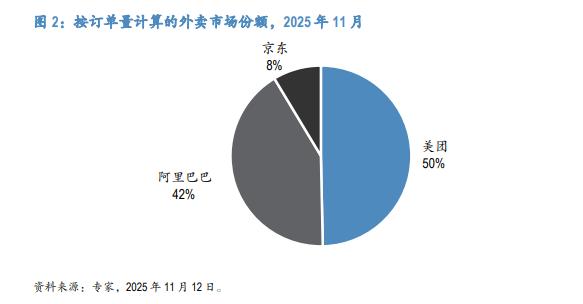
Core Insights - The food delivery industry has been significantly reshaped by a fierce competition initiated by JD.com, leading to a substantial financial outlay of nearly 100 billion yuan and a reconfiguration of market dynamics [1][2] - The future of the food delivery sector hinges on long-term ecological restructuring rather than short-term traffic battles, with each platform focusing on redefining relationships among platforms, merchants, delivery personnel, and consumers [1] Group 1: Differentiated Strategies - JD.com adopted a high-profile entry strategy into the food delivery market, leveraging a "0 commission" model to attract over 2 million merchants and implementing a 10 billion yuan subsidy plan [3] - Alibaba transitioned from a passive response to an active restructuring, rebranding Ele.me to Taobao Flash Purchase and integrating its logistics and supply chain to enhance its competitive edge [4][5] - Meituan, as the industry leader, focused on defensive strategies, increasing marketing expenditures by 90.9% to retain core users while enhancing its delivery network efficiency [6] Group 2: Gains and Losses - JD.com achieved rapid growth in food delivery orders, reaching 25 million daily orders within 90 days, but faced significant losses, with new business losses expanding to 15.736 billion yuan in Q3 [8][9] - Alibaba's integration of instant retail and e-commerce led to a 60% year-on-year revenue increase in instant retail, but it also incurred substantial marketing costs, resulting in an 85% drop in operating profit [9][10] - Meituan maintained its market leadership with a 50% market share and high customer retention rates, but reported a record net loss of 16 billion yuan in Q3 due to increased marketing expenses [11] Group 3: 2026 Outlook - The intense competition is expected to cool down, with platforms likely to shift from aggressive subsidy strategies to value-based competition, focusing on user experience and operational efficiency [12][13] - The instant retail market is projected to exceed 1 trillion yuan in 2026, indicating that competition will persist as platforms seek to secure their positions [12] - Analysts predict that Meituan may achieve breakeven by mid-2026, while Alibaba's food delivery business may continue to face challenges until late 2026 [13]

京东掀起一场风暴
Hua Er Jie Jian Wen· 2025-12-29 13:06
Core Insights - JD.com has launched a nationwide recruitment plan for its quality dining brand, Qixian Xiaochu, aiming to expand its operations across major cities by the end of 2026, marking a significant shift in the food delivery industry [1][5] - The company is adopting a differentiated strategy in the competitive food delivery market, focusing on direct involvement in food preparation rather than engaging in subsidy wars like its competitors [1][2][6] Expansion Plans - Qixian Xiaochu plans to open new stores in cities such as Shenzhen, Guangzhou, Shanghai, and Tianjin by January 2026, with a goal to cover all first- and second-tier cities in China by the end of 2026 [1][5] - The brand has already established 30 stores in Beijing, achieving significant market penetration within the city [4][5] Business Model Innovation - The core innovation of Qixian Xiaochu lies in its "Dish Partner" model, which allows partners to provide recipes while JD.com handles the cooking and quality control, thus creating a collaborative platform for restaurant brands and individual chefs [3][4] - This model includes features like 24-hour kitchen live streaming, enhancing transparency and consumer trust [3] Market Performance - Qixian Xiaochu has shown promising operational metrics, with daily orders exceeding 1,000 in its first week and reaching 1,500 within two months [5] - A promotional event led to over 16,000 orders across 30 stores in Beijing during a three-day period [5] Strategic Partnerships - The brand has demonstrated openness to cross-platform operations, having launched on Meituan and formed strategic partnerships with hotel chains like Jinjiang [5] Challenges Ahead - The rapid expansion faces challenges such as balancing standardization with regional taste preferences and managing the complexities of a centralized kitchen model [6] - The competitive landscape remains uncertain, with potential counteractions from rivals as the food delivery market evolves [6]