餐饮业

Search documents
呼和浩特:暑期文旅市场“热”力全开
Zhong Guo Chan Ye Jing Ji Xin Xi Wang· 2025-08-04 23:35
Group 1 - The tourism market in Hohhot is experiencing significant growth due to its unique natural scenery and rich cultural heritage, attracting a large number of visitors during the peak season [1][5] - Various tourism resources, such as the Chulu Ranch, are drawing crowds, with local businesses benefiting from increased foot traffic and sales [2][3] - Local food and cultural events, including concerts and food festivals, are enhancing visitor experiences and driving up food-related sales in the area [4][5] Group 2 - Local businesses, including photography studios and ethnic clothing rentals, are capitalizing on the influx of tourists, with some reporting daily customer volumes of around 10 groups for photo shoots [2][3] - The demand for local specialties, such as beef jerky and ethnic handicrafts, is high, with some stores experiencing long queues and frequent restocking [2][3] - The overall increase in tourist numbers and total tourism revenue indicates a robust recovery and growth in the tourism sector in Hohhot [5]
深圳前海上半年实际使用外资同比增长15.9% 货物进出口总值同比增长11.5%
Nan Fang Ri Bao Wang Luo Ban· 2025-08-04 08:07
Group 1 - The Qianhai Cooperation Zone has seen a 15.9% year-on-year increase in actual foreign investment in the first half of 2025, accounting for 59% of Shenzhen's total [1] - The total import and export value of the Qianhai Shekou Free Trade Zone increased by 11.5% year-on-year, representing about two-thirds of the Guangdong Free Trade Zone's total [1] - The number of multinational company headquarters in Qianhai has reached 52, making up 30.8% of Shenzhen's total [1] Group 2 - Actual foreign investment in Qianhai reached 12.326 billion yuan, with the top three industries being finance (29.5%), business services (29.4%), and software and information technology services (17.5%) [1] - Foreign investment in the finance sector grew by 19.5%, while high-tech services saw a significant increase of 72.4% [1] - The actual foreign investment in the Qianhai Shekou Free Trade Zone reached 10.702 billion yuan, a year-on-year increase of 40.5% [1] Group 3 - The Qianhai region has innovated cross-border supply chain mechanisms, establishing a "front store and back warehouse" model with Hong Kong, enhancing warehouse utilization by 52.8% [2] - Hong Kong has become the largest trading partner of Qianhai, with imports and exports to Hong Kong reaching 59.24 billion yuan in the first half of 2025, a 90.2% year-on-year increase [2] - The total retail sales of consumer goods in Qianhai reached 33.917 billion yuan, growing by 17.0% year-on-year, with retail and catering sectors increasing by 16.5% and 7.8% respectively [2]
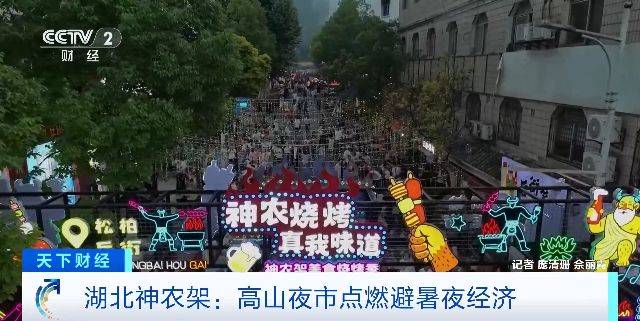
暑期活动上新!湖北神农架打造特色“高山避暑夜经济”模式
Sou Hu Cai Jing· 2025-08-03 10:59
Core Viewpoint - Hubei Shennongjia is leveraging its geographical advantages to create a unique "high-altitude summer night economy" model, attracting tourists seeking cool summer experiences [1]. Group 1: Food and Beverage - The night market in Shennongjia's Songbai Town features over thirty barbecue stalls, where vendors have developed a distinctive "mountain delicacies + honey" grilling technique, creating a recognizable "Shennongjia flavor" [3]. - The summer food and barbecue season lasts for 40 days, providing visitors with a chance to enjoy delicious food while experiencing the refreshing mountain breeze [3]. Group 2: Cultural and Entertainment Activities - In addition to food, the local area has introduced diverse cultural and entertainment activities, such as a treasure hunt in the night market of Muyu Town, showcasing local folklore through performances by villagers [5]. - The skills of intangible cultural heritage inheritors and folk art enthusiasts are prominently displayed, vividly presenting the local customs and traditions [5].

陈茂波最新发声!
证券时报· 2025-08-03 09:17
Core Viewpoint - The Hong Kong economy shows sustained growth momentum, driven by exports, local consumption, and fixed investment, with GDP increasing by 3.1% year-on-year in Q2 2023, marking the tenth consecutive quarter of positive growth [1][2]. Economic Performance - In Q2 2023, Hong Kong's GDP grew by 3.1% year-on-year, with a 0.4% increase compared to Q1 2023 [1]. - Private consumption expenditure rose by 1.9% year-on-year, while government consumption expenditure increased by 2.5% [1]. - Fixed capital formation grew by 2.9% year-on-year, with merchandise exports up by 11.5% and imports up by 12.7% [1]. - Service output increased by 7.5% year-on-year, and service input rose by 7% [1]. Real Estate and Retail Market - The retail sales value recorded a slight year-on-year growth of 0.3% in Q2 2023, with expectations of mild growth in the restaurant sector [2]. - Residential property prices remained stable, with rental performance strong and transaction volume significantly increasing by approximately 37% quarter-on-quarter [2]. - The number of negative equity cases decreased by 7% to over 37,000 as property prices stabilized [2]. Stock Market and Investment - The total market capitalization of Hong Kong stocks reached HKD 42.7 trillion in the first half of the year, a year-on-year increase of 33% [2]. - Hong Kong led the global IPO market with 52 IPOs raising HKD 124 billion, a 590% increase year-on-year [2]. Government Initiatives and Events - The Hong Kong government is actively promoting investment and talent attraction, which has increased demand for office space [2]. - Upcoming major events, such as the National Games and the Wine and Dine Festival, are expected to boost tourism and economic activity [3]. - The government aims to leverage high-value tourism and various events to enhance local consumption and market sentiment [3].

美国就业“塌方式”降温?特朗普移民政策副作用炸裂!
Jin Shi Shu Ju· 2025-08-01 11:13
Group 1 - The Trump administration's immigration policies are increasingly straining an already weakening labor market, with July non-farm payrolls expected to show only 110,000 new jobs, down from 147,000 in June and below the average of 130,000 for the year [2] - The demand for labor is decreasing due to uncertainty from Trump's tariff policies, particularly affecting industries reliant on foreign labor such as agriculture, construction, and food manufacturing [2][3] - The U.S. labor force decreased by 130,000 in June, with a total decline of 364,000 since the beginning of the year, and the labor force participation rate fell to 62.3%, the lowest since December 2022 [2] Group 2 - The number of immigrants detained by ICE has increased from an average of 15,000 per month in 2024 to nearly 40,000 by June this year, while deportations have risen from an annualized rate of 400,000 to about 600,000 [2] - The total number of foreign workers in the U.S. has decreased by over 1 million in the past four months, with a record 5.4 million people exiting the labor market in May alone [3][4] - The share of foreign workers in the U.S. labor force fell to 19.1% in June from 19.8% in March, indicating a significant impact on industries struggling to replace lost labor [5] Group 3 - The labor shortage related to immigration could reduce the potential annual economic growth rate in the U.S. from 2% to 1% [6] - The job market is experiencing a split, with labor shortages in construction, hospitality, and agriculture, while white-collar job recruitment is slowing due to economic uncertainty [6] - The stable unemployment rate, which slightly decreased from 4.2% to 4.1%, may lead the Federal Reserve to refrain from interest rate cuts despite a significant slowdown in job growth [6]
即时零售从渠道革命到生态重构 餐饮业进入提质增效攻坚期
Bei Jing Shang Bao· 2025-08-01 06:25
Group 1 - The core discussion at the recent seminar focused on innovative models and strategies to stimulate consumption in the restaurant and service industries, emphasizing the integration of digital economy with these sectors [1] - Instant retail is identified as a new engine for consumption growth, driven by the ability to capture and meet the 'immediate use' demand, which significantly enhances the restaurant industry's operational efficiency [1] - The application of digital tools such as artificial intelligence and the Internet of Things is reshaping the restaurant ecosystem, enabling businesses to overcome physical limitations and improve profit margins through online and offline channel integration [1] Group 2 - The restaurant brand Hu Da has implemented a strategy to alleviate dining pressure by establishing independent delivery outlets, which allows for increased order volume without expanding physical space [2] - The growth in online orders for Hu Da is partially attributed to platform subsidies, which have strengthened consumer willingness to spend, thus benefiting the company's growth [2] - Hu Da plans to open three to four quality delivery restaurants within a 50-kilometer radius in a core business district in Beijing, aiming to build a robust enterprise ecosystem [2]
制造业PMI低于荣枯线 国常会部署贴息政策促消费
Di Yi Cai Jing· 2025-07-31 13:51
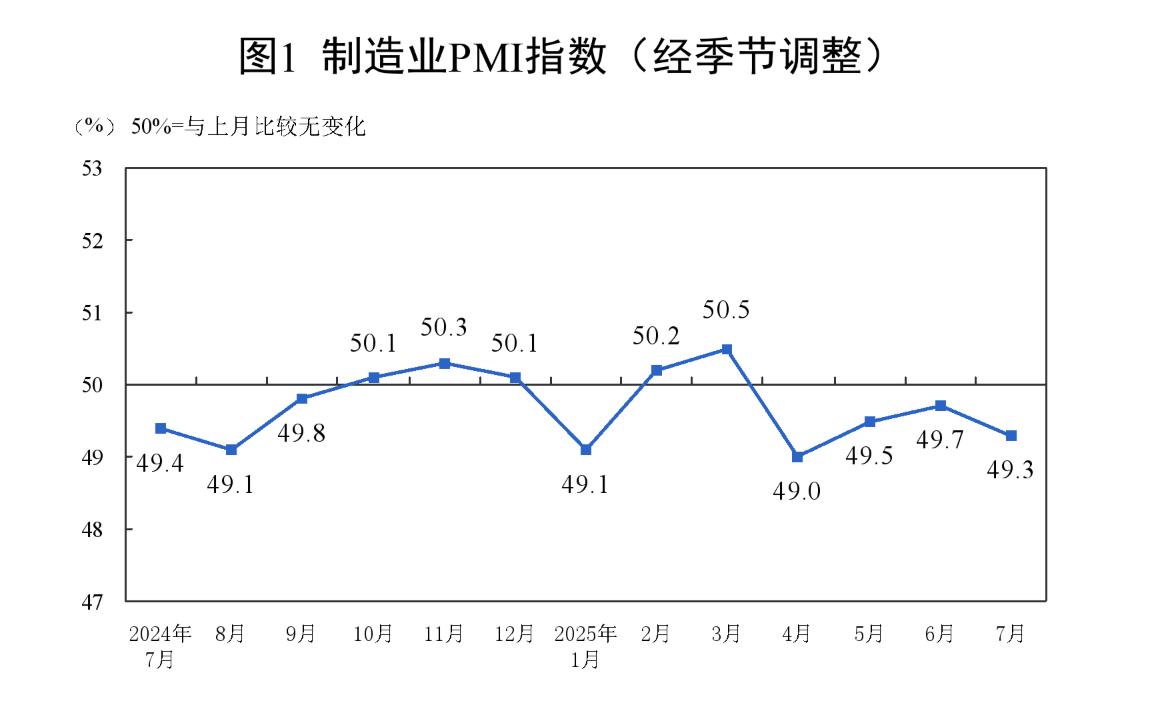
Economic Overview - The Central Political Bureau emphasized the need to enhance macroeconomic policy effectiveness and stimulate internal economic growth [1] - The State Council reiterated the implementation of personal consumption loan interest subsidy policies to better stimulate consumption potential [1][7] Manufacturing Sector - The manufacturing Purchasing Managers' Index (PMI) for July was reported at 49.3%, a decrease of 0.4 percentage points from the previous month, marking the fourth consecutive month below the growth threshold [1][4] - The new orders index for manufacturing fell to 49.4%, down 0.8 percentage points, indicating a contraction in market demand [6] - Despite the decline in demand, the production index remained at 50.5%, indicating continued expansion in manufacturing activities [6] Price Trends - The manufacturing raw material purchase price index rose to 51.5%, an increase of 3.1 percentage points, indicating a recovery in raw material prices [6] - The ex-factory price index increased to 48.3%, up 2.1 percentage points, marking the second-highest point this year [6] Business Confidence - The production and business activity expectation index rose to 52.6%, reflecting increased confidence among manufacturing enterprises regarding market development [8] - Large enterprises maintained a PMI of 50.3%, while medium-sized enterprises improved to 49.5%, indicating a mixed outlook across different enterprise sizes [8] Non-Manufacturing Sector - The non-manufacturing business activity index was reported at 50.1%, a decrease of 0.4 percentage points, but still within the expansion range [10] - The construction business activity index fell to 50.6%, influenced by seasonal weather conditions, while infrastructure-related activities continued to show robust growth [10] Consumer Behavior - The summer consumption effect began to show, with retail and postal service indices rising above 50%, indicating strong consumer spending intentions [11] - However, the accommodation and catering sectors remained below 50%, suggesting that summer consumption has not yet significantly impacted these areas [11][12] Policy Implications - The Central Political Bureau's meeting highlighted the importance of releasing internal demand potential and implementing consumption-boosting actions [12] - The focus on service consumption is expected to play a crucial role in meeting public needs and driving consumption industry upgrades [12]
制造业PMI低于荣枯线,国常会部署贴息政策促消费
Di Yi Cai Jing· 2025-07-31 13:22
Economic Policy and Measures - The State Council emphasizes the need to anchor annual development goals and enhance the effectiveness of macroeconomic policies, focusing on stimulating internal economic momentum [1][4] - Implementation of personal consumption loan interest subsidy policies and service industry loan interest subsidy policies aims to better stimulate consumption potential [1][7] Manufacturing Sector Performance - In July, the manufacturing Purchasing Managers' Index (PMI) was 49.3%, a decrease of 0.4 percentage points from the previous month, remaining below the expansion threshold for four consecutive months [1][4] - The new orders index for manufacturing was 49.4%, down 0.8 percentage points, indicating a contraction in market demand [6] - Despite weak demand, manufacturing production activities expanded, with a production index of 50.5%, although it decreased by 0.5 percentage points from the previous month [6][9] Price Trends - The manufacturing raw material purchase price index rose to 51.5%, an increase of 3.1 percentage points, indicating a recovery in raw material prices [6] - The ex-factory price index for manufactured goods was 48.3%, up 2.1 percentage points, marking the second-highest point this year [6] Business Confidence and Expectations - The production and business activity expectation index for July was 52.6%, reflecting an increase in confidence among manufacturing enterprises regarding market development [8] - Large enterprises maintained a PMI of 50.3%, while medium-sized enterprises improved to 49.5%, indicating a mixed outlook across different enterprise sizes [8] Non-Manufacturing Sector Insights - The non-manufacturing business activity index was 50.1%, a decrease of 0.4 percentage points, but still within the expansion range [10] - The construction industry index was 50.6%, indicating a slowdown in construction activities due to seasonal weather impacts [10] Consumer Behavior and Seasonal Trends - Summer consumption effects began to show, with retail and postal service indices rising above 50%, indicating strong consumer spending intentions [11] - However, the accommodation and catering sectors remained below 50%, suggesting that summer spending was more focused on outdoor and entertainment activities rather than dining [13] Future Economic Outlook - The Central Political Bureau meeting highlighted the need to effectively release internal demand potential and implement actions to boost consumption [14] - The focus on service consumption is expected to play a crucial role in meeting public needs and driving consumption industry upgrades [14]
陶然居集团董事长严琦:民营经济促进法解决痛点 助力民企前行
Zhong Guo Jing Ji Wang· 2025-07-31 08:08
对于陶然居集团而言,民营经济促进法的颁布带来了诸多实质性的改变。严琦表示,一是创新、投 融资等利好政策支持企业发展;二是更好地维护了企业合法权益;三是更好地规范企业发展,推动企业 建立现代企业制度,建设法治民企、廉洁民企。 在未来3-5年的战略规划中,陶然居集团将充分融入民营经济促进法的要求。严琦透露,集团将按 照该法关于投融资的要求,积极参与国家战略,重点参与成渝经济圈建设。同时,按照该法要求,更好 地开展创新,推动企业转型。 在"反内卷"方面,陶然居集团一直主张靠质量和诚信立企,避免恶性竞争。严琦认为,企业要靠质 量、标准和特色赢得市场,走差异化竞争路线。例如,陶然居集团与重庆罗森便利店有限公司合作建设 的陶然居数字科技5G鲜食工厂,坚持从"田间到餐桌",全程冷链物流,保证了产品的质量。在平衡员 工工作效率与福利方面,严琦强调,员工是企业最大的财富,要积极构建和谐劳动关系,让员工与企业 共享改革成果。前几年,餐饮业遭受冲击,陶然居集团采取轮岗制,让轮岗的员工去陶然居的餐饮学校 接受培训,既避免了裁员、稳定了员工,也提升了员工的技能水平,受到员工的欢迎。(中国经济网记 者鞠然) "民营经济促进法是在中国式现 ...
制造业PMI季节性回落至49.3%,下阶段走势如何
第一财经· 2025-07-31 06:06
Economic Overview - The manufacturing PMI for July is reported at 49.3%, a decrease of 0.4 percentage points from the previous month, indicating a slight contraction in manufacturing activity [1] - The non-manufacturing business activity index stands at 50.1%, also down by 0.4 percentage points, but still indicates expansion [1] - The comprehensive PMI output index is at 50.2%, down 0.5 percentage points, remaining above the critical point, suggesting overall expansion in business activities [1] Manufacturing Sector Analysis - The new orders index for manufacturing is at 49.4%, down 0.8 percentage points, indicating a contraction in market demand [6] - The new export orders index is at 47.1%, a decrease of 0.6 percentage points, reflecting weakened demand [6] - Despite the decline in demand, the production index is at 50.5%, indicating continued expansion in manufacturing activities for the third consecutive month [6] Price Trends - The raw materials purchase price index for manufacturing is at 51.5%, up 3.1 percentage points, indicating a recovery in raw material prices [7] - The ex-factory price index is at 48.3%, an increase of 2.1 percentage points, marking the second-highest point this year [7] - Price stability in the manufacturing sector is primarily driven by the basic raw materials industry, with significant increases in both purchase and ex-factory price indices [7] Business Expectations - The production and business activity expectation index is at 52.6%, up 0.6 percentage points, indicating increased confidence among manufacturing enterprises [8] - Large enterprises maintain a PMI of 50.3%, while medium and small enterprises show PMIs of 49.5% and 46.4%, respectively, indicating varying levels of economic health across different enterprise sizes [8] Non-Manufacturing Sector Insights - The non-manufacturing business activity index is at 50.1%, down 0.4 percentage points, but still indicates expansion [13] - The construction sector's business activity index is at 50.6%, down 2.2 percentage points, reflecting a slowdown due to seasonal weather impacts [13] - Summer consumption shows positive trends, with retail and postal service indices rising above 50%, indicating strong consumer spending [15] Future Outlook - The construction sector is expected to rebound post-rainy season, with infrastructure activities projected to grow steadily [14] - Continued implementation of macroeconomic policies aimed at boosting demand is anticipated to support economic recovery in the second half of the year [9][16]