
Futures

Search documents
南华期货锡风险管理日报-20250826
Nan Hua Qi Huo· 2025-08-26 03:04
Report Summary Investment Rating No investment rating for the tin industry is provided in the report. Core Viewpoints - The rise in tin prices on Monday was a passive increase, not closely related to its fundamentals. The speech of the Federal Reserve Chairman at the global central bank meeting lifted the valuation of the non - ferrous metal sector, and the over - rise may be corrected within the next trading day. The continuous two - week decline in tin ingot social inventory may provide upward momentum for tin prices. Tin solder enterprises have a good start - up situation and are willing to take delivery when the price is below 270,000 yuan per ton [3]. - There are both利多 and利空 factors in the tin market.利多 factors include the easing of Sino - US tariff policies, the semiconductor sector being in an expansion cycle, and Myanmar's复产 being less than expected.利空 factors include the recurrence of tariff policies, the inflow of Myanmar's tin ore into China, and the semiconductor sector's expansion slowing down and moving towards a contraction cycle [4][5]. Key Points by Category Price and Volatility - The latest closing price of tin is 269,570 yuan/ton, with a monthly price range forecast of 245,000 - 263,000 yuan/ton. The current volatility is 14.36%, and the historical percentile of the current volatility is 26.1% [2]. - In the tin futures market, the prices of沪锡主力,沪锡连一, and沪锡连三 are 269,570 yuan/ton, 269,890 yuan/ton, and 270,160 yuan/ton respectively, with no daily change. The price of伦锡3M is 33,845 dollars/ton, with a daily increase of 370 dollars and a daily increase rate of 1.11%. The沪伦比 is 7.86, with a daily decrease of 0.11 and a daily decrease rate of 1.38% [2][6]. Risk Management Suggestions - For inventory management, when the finished product inventory is high and there are concerns about price drops, it is recommended to sell 75% of沪锡主力期货 contracts at around 275,000 yuan/ton and sell 25% of SN2511C275000 call options when the volatility is appropriate. - For raw material management, when the raw material inventory is low and there are concerns about price increases, it is recommended to buy 50% of沪锡主力期货 contracts at around 230,000 yuan/ton and sell 25% of SN2511P260000 put options when the volatility is appropriate [2]. Spot Market - In the weekly spot market, the prices of various tin - related products have increased. For example, the price of Shanghai Non - ferrous tin ingot is 269,700 yuan/ton, with a weekly increase of 2,900 yuan and a weekly increase rate of 1.09%. The price of 40% tin concentrate is 257,700 yuan/ton, with a weekly increase of 2,900 yuan and a weekly increase rate of 1.14% [12]. Import and Processing - The latest tin import profit and loss is - 16,766.65 yuan/ton, with a daily decrease of 144.42 yuan and a daily decrease rate of 0.87%. The 40% and 60% tin ore processing fees are 12,200 yuan/ton and 10,050 yuan/ton respectively, with no daily change [16]. Inventory - In the daily inventory data, the total warehouse receipt quantity of tin is 7,032 tons, with a daily decrease of 21 tons and a daily decrease rate of 0.3%. The LME tin inventory is 1,785 tons, with a daily increase of 45 tons and a daily increase rate of 2.59% [18].

南华期货锡风险管理日报-20250825
Nan Hua Qi Huo· 2025-08-25 11:42
Report Summary 1. Report Industry Investment Rating - Not provided in the content 2. Core Viewpoints - Tin prices rose slightly and then fell recently. Domestic smelter production cuts briefly pushed up tin prices this week, but the impact was limited, and prices returned to the trading range. In the short term, tin prices may remain range - bound. The Fed Chairman's speech at the Global Central Bank Annual Meeting lifted the valuation of the non - ferrous metals sector, and the over - rise may be corrected within the next 1 trading day. Fundamentally, the continuous two - week decline in tin ingot social inventory may provide upward momentum for tin prices. The production start - up of tin solder enterprises on the demand side is okay, and they still have the willingness to take delivery when the price is not higher than 270,000 yuan per ton [3]. - There are both positive and negative factors. Positive factors include the easing of Sino - US tariff policies, the semiconductor sector being in an expansion cycle, and Myanmar's resumption of production falling short of expectations. Negative factors include the recurrence of tariff policies, the inflow of Burmese tin ore into China, and the semiconductor sector's expansion slowing down and gradually moving from the expansion cycle to the contraction cycle [4]. 3. Summary by Relevant Catalogs 3.1 Tin Price Volatility and Risk Management - The latest closing price of tin is 265,930 yuan, with a monthly price range forecast of 245,000 - 263,000 yuan. The current volatility is 14.36%, and the historical percentile of the current volatility is 26.1% [2]. - For inventory management with high finished - product inventory and concerns about price drops, it is recommended to sell 75% of the Shanghai Tin main futures contract at around 275,000 yuan and sell 25% of the SN2511C275000 call option when the volatility is appropriate. For raw material management with low raw - material inventory and concerns about price increases, it is recommended to buy 50% of the Shanghai Tin main futures contract at around 230,000 yuan and sell 25% of the SN2511P260000 put option when the volatility is appropriate [2]. 3.2 Tin Futures and Spot Data - **Futures Data**: The latest prices of Shanghai Tin main, Shanghai Tin continuous one, and Shanghai Tin continuous three are 265,930 yuan/ton, 266,130 yuan/ton, and 266,510 yuan/ton respectively, with no daily change. The price of LME Tin 3M is 33,845 dollars/ton, up 370 dollars with a daily increase of 1.11%. The Shanghai - London ratio is 7.97, up 0.05 with a daily increase of 0.63% [5]. - **Spot Data**: The latest prices of Shanghai Non - ferrous tin ingot, 1 tin premium, 40% tin concentrate, 60% tin concentrate, 60A solder bar, 63A solder bar, and lead - free solder are 266,000 yuan/ton, 400 yuan/ton, 254,000 yuan/ton, 258,000 yuan/ton, 172,750 yuan/ton, 180,250 yuan/ton, and 272,250 yuan/ton respectively. The 1 tin premium increased by 100 yuan/ton with a weekly increase of 33.33%, while other spot prices had no weekly change [11]. 3.3 Tin Import and Processing - The latest tin import profit and loss is - 16,622.23 yuan/ton, up 1,109.34 yuan with a daily decrease of 6.26%. The processing fees for 40% and 60% tin ore are 12,200 yuan/ton and 10,050 yuan/ton respectively, with no daily change [15]. 3.4 Tin Inventory - The latest total tin warehouse receipt quantity on the Shanghai Futures Exchange is 7,053 tons, down 205 tons with a daily decrease of 2.82%. The warehouse receipt quantities in Guangdong and Shanghai are 4,925 tons and 1,267 tons respectively, down 121 tons (- 2.4%) and 84 tons (- 6.22%) respectively. The total LME tin inventory is 1,740 tons, up 25 tons with a daily increase of 1.46% [17].
南华煤焦产业风险管理日报-20250822
Nan Hua Qi Huo· 2025-08-22 11:36
Report Overview - Report Name: Nanhua Coal and Coking Industry Risk Management Daily Report - Date: August 22, 2025 - Research Team: Nanhua Research Institute, Black Research Team - Analyst: Zhang Xuan [2] 1. Report Industry Investment Rating - Not provided in the report 2. Report's Core View - This week, the macro sentiment cooled down. The speculative inventory of futures and cash entered in the early stage was partially unwound. Coupled with mine复产, near - month delivery game, and pressure on the apparent demand for finished products, the static fundamental of coking coal weakened marginally, and the spot price increase was weak. Looking forward, the details of the "anti - involution" policy need time to be introduced, and the macro sentiment may fluctuate. The long - term price trend of coking coal is relatively optimistic. It is recommended to buy coking coal 2601 contract on dips. To break through the previous high, a substantial reduction in coking coal supply or an unexpectedly positive policy is needed [3]. 3. Summary by Relevant Catalogs 3.1 Double - Coking Price Range Forecast - Coking coal price range (monthly): 1060 - 1350, current volatility (20 - day rolling): 32.68%, current volatility historical percentile: 63.87% - Coke price range (monthly): 1600 - 1800, current volatility (20 - day rolling): 25.37%, current volatility historical percentile: 49.13% [2] 3.2 Black Warehouse Receipt Daily Report | Variety | Unit | 2025 - 08 - 22 | 2025 - 08 - 21 | 2025 - 08 - 15 | Day - on - day | Week - on - week | | --- | --- | --- | --- | --- | --- | --- | | Rebar | Tons | 158633 | 137310 | 120312 | 21323 | 38321 | | Hot - rolled coil | Tons | 32215 | 33992 | 79286 | - 1777 | - 47071 | | Iron ore | Lots | 2000 | 2000 | 3100 | 0 | - 1100 | | Coking coal | Lots | 0 | 800 | 0 | - 800 | 0 | | Coke | Lots | 820 | 820 | 820 | 0 | 0 | | Ferrosilicon | Sheets | 20474 | 20202 | 20916 | 272 | - 442 | | Silicomanganese | Sheets | 70094 | 71820 | 74797 | - 1726 | - 4703 | [2] 3.3 Coal and Coking Futures Price and Basis - Coking coal: Multiple indicators such as warehouse receipt cost, basis, and inter - month spreads are provided, showing different changes compared with the previous day and the previous week [9] - Coke: Similar to coking coal, multiple indicators including warehouse receipt cost, basis, and inter - month spreads are presented with corresponding changes [9] 3.4 Coal and Coking Spot Price - Coking coal: The spot prices of various types of coking coal, such as Anze low - sulfur coking coal, Mongolian coal, and imported coal, are shown, with some prices remaining unchanged and some having slight changes over different time periods [10] - Coke: The spot prices of different types of coke, including quasi - first - grade wet coke and dry coke in different regions, and export prices are provided. The current volatility of coke prices is relatively small, and the profit of coke export remains stable [10] 3.5利多 and 利空 Factors - **Likely Positive Factors** - The expectation of "anti - involution" in coal mines still exists, and the production increase space of mines in the second half of the year may be limited [8] - A safety accident in a mine in Fujian may cause market concerns about strong safety supervision [8] - Before the Fourth Plenary Session of the 10th Central Committee in October, there is room for policy expectation games [8] - **Likely Negative Factors** - The apparent demand for rebar is poor, and there is pressure on the real - end of finished products [8] - The Dalian Commodity Exchange has restricted the position of the main coking coal contract, and the speculation degree of coking coal is expected to decline [8] - The 7 - round price increase of coke has been implemented, and it is more difficult to continue the price increase. The market may anticipate the peak of the price increase in advance [8]
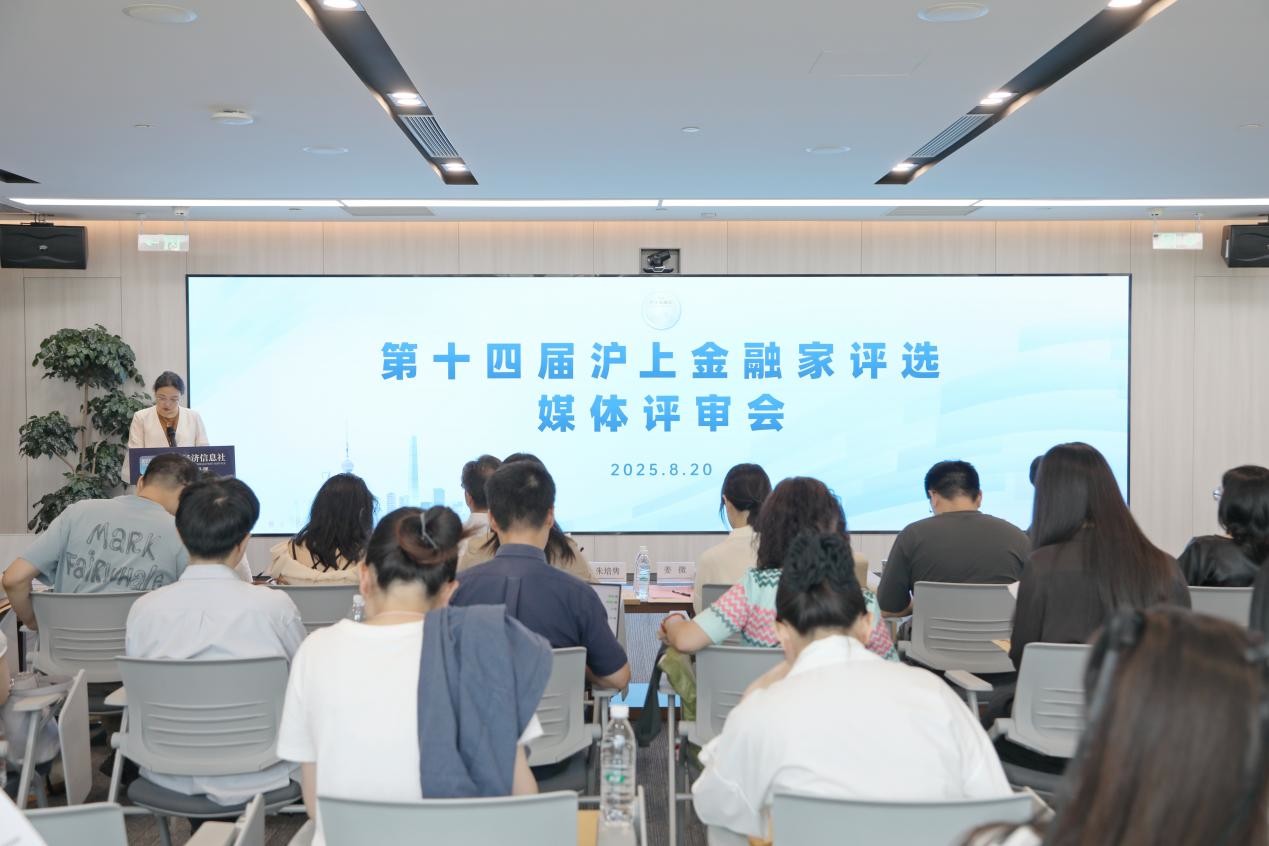
打好国际金融中心“人才牌”,第十四届“沪上金融家”评选启动媒体评审
Guo Ji Jin Rong Bao· 2025-08-21 12:41
Core Viewpoint - The 14th "Shanghai Financial Professionals" selection has commenced, emphasizing the importance of a strong financial talent pool for building a financial powerhouse [1] Group 1: Event Overview - The selection features three awards: "Annual Person of the Shanghai International Financial Center Construction," "Leading Figures in Shanghai's Financial Industry," and "Innovative Figures in Shanghai's Financial Industry" [1] - Participants must be from licensed financial institutions and have worked full-time in Shanghai for at least two years [1] Group 2: Talent Development - The revised "Shanghai International Financial Center Construction Regulations" for 2024 includes a dedicated chapter on financial talent environment construction, focusing on market-oriented policies for talent cultivation, evaluation, and service [1] - The event encourages top talents who contribute to long-term capital cultivation and high-level financial openness to participate [1] Group 3: Participant Characteristics - The current selection has attracted nearly a hundred financial professionals, showcasing three distinct characteristics: - Broad coverage across traditional sectors like banking, securities, and insurance, as well as emerging fields like green finance and financial information [1] - International representation, including foreign financial professionals and those with extensive overseas experience, particularly in areas like the Belt and Road Initiative and cross-border financial infrastructure [1] - Strong innovation, with candidates actively involved in promoting long-term capital, technological finance, green finance, inclusive finance, pension finance, and digital finance [1] Group 4: Selection Process - The selection process combines self-nomination, committee nominations, media reviews, online voting, and expert evaluations [2] - The results will be announced in September 2025 [2]
瑞达期货国债期货日报-20250821
Rui Da Qi Huo· 2025-08-21 09:12
Report Industry Investment Rating - Not provided in the content Core Viewpoints - The current bond market lacks a new main - line driver. The strengthening of the equity market has significantly increased market risk appetite, suppressing bond market sentiment, especially increasing the selling pressure on the ultra - long end of interest - rate bonds and widening the spread between long - and short - term yields. The "stock - strong, bond - weak" linkage effect has intensified. In the short term, liquidity factors may become the core logic guiding bond market trading. The issuance of new 10 - year and 30 - year treasury bonds on August 22 may trigger a switch of the CTD bonds for far - month contracts under the policy of levying VAT on interest from interest - rate bonds. It is recommended to pay attention to the opportunity of the widening of the inter - period spread brought by the issuance of new bonds [2] Summary by Relevant Catalogs 1. Futures Market a. Futures Prices and Volumes - T主力收盘价108.000,环比上涨0.06%,成交量63938,环比增加11704;TF主力收盘价105.450,环比上涨0.06%,成交量38506,环比减少16805;TS主力收盘价102.326,环比持平,成交量36357,环比增加5932;TL主力收盘价116.110,环比上涨0.34%,成交量62804,环比减少37112 [2] b. Futures Spreads - Multiple futures spreads showed changes, such as the TL2512 - 2509 spread increasing by 0.05 to - 0.46, while the T12 - TL12 spread decreasing by 0.42 to - 8.11 [2] c. Futures Positions - T主力持仓量57904,环比减少11640;TF主力持仓量50434,环比减少12248;TS主力持仓量35544,环比减少7131;TL主力持仓量40766,环比减少7308. The net short positions of different contracts also had corresponding changes [2] 2. Bond Market a. CTD Bonds - The net prices of several CTD bonds changed, with most showing a decline, such as 2500802.IB (6y) dropping to 98.8632, a decrease of 0.1253 [2] b. Active Treasury Bonds - The yields of active treasury bonds with different maturities changed, with the yields of 3y, 5y, 7y, and 10y increasing by 0.50bp, 1.25bp, 1.75bp, and 1.40bp respectively, while the 1y yield remained unchanged [2] c. Short - term Interest Rates - Short - term interest rates such as silver - pledged overnight and Shibor overnight decreased, while the silver - pledged 14 - day rate remained unchanged [2] d. LPR Rates - The 1 - year and 5 - year LPR rates remained unchanged at 3.0% and 3.5% respectively [2] 3. Public Market Operations - The issuance scale of open - market operations was 2530 billion yuan, the maturity scale was 1287 billion yuan, and the interest rate was 1.4% for 7 days [2] 4. Industry News - From January to July, the national general public budget revenue was 13583.9 billion yuan, a year - on - year increase of 0.1%. The stamp duty was 255.9 billion yuan, a year - on - year increase of 20.7%, and the securities trading stamp duty was 93.6 billion yuan, a year - on - year increase of 62.5%. The August LPR quotation remained stable. The yields of treasury bonds strengthened on Thursday, and the treasury futures also showed an upward trend. Domestically, economic data in July showed a mixed performance, and overseas, the Sino - US tariff suspension period was extended by 90 days, and the Fed's July meeting minutes showed a hawkish monetary policy [2] 5. Key Events to Watch - On August 21 at 21:00, the number of initial jobless claims in the US for the week ending August 16 was to be released. On August 22 at 22:00, Fed Chairman Powell will speak at the Jackson Hole Global Central Bank Annual Meeting [3]

打好国际金融中心“人才牌” 第十四届“沪上金融家”吸引近百名金融英才参选
Zheng Quan Shi Bao Wang· 2025-08-21 07:20
Core Viewpoint - The 14th "Shanghai Financial Talent" selection has been launched, emphasizing the importance of a strong financial talent pool for building a financial powerhouse [1][2] Group 1: Event Overview - The selection attracted nearly 100 financial professionals, with three awards established: "Annual Person of the Shanghai International Financial Center Construction," "Leading Figures in Shanghai's Financial Industry," and "Innovative Figures in Shanghai's Financial Industry" [1] - Participants must be from licensed financial institutions and have worked full-time in Shanghai for at least two years [1] Group 2: Talent Characteristics - The candidates exhibit three distinct characteristics: broad coverage across traditional and emerging financial sectors, international representation including foreign financial professionals, and strong innovation capabilities in areas like green finance and digital finance [2] - The selection process combines self-nomination, committee recommendations, media reviews, online voting, and expert evaluations, with results to be announced in September 2025 [2] Group 3: Historical Context - The "Shanghai Financial Talent" selection has been held for thirteen consecutive years, with over 200 financial talents recognized, significantly enhancing Shanghai's international financial center's soft power and cultural atmosphere [2]
国富期货成功举办防范非法期货与甲醇期货分析线上培训
Qi Huo Ri Bao Wang· 2025-08-21 07:19
2024年9月27日上午,由国富期货有限公司主办的"防范非法期货及甲醇期货知识培训会"——"郑商所 2024年度投资者教育专项活动"线上专场顺利举办。本次活动特邀大连海大益乐教育科技有限公司法务 主管赵子朋老师与杭州亿嘉柏和投资管理有限公司基金经理金杰老师担任主讲,围绕非法期货识别防范 和甲醇期货基本面分析,为投资者带来实用知识与风险提示。 赵子朋老师系统讲解了非法期货交易的定义、典型特征与严重危害,结合真实案例揭示了虚假宣传、市 场操纵等常见欺诈手法。他建议投资者增强自我保护意识,理性判断、审慎决策,不轻信"高收益"承 诺,并通过持续学习法律法规、关注监管动态提升辨识能力。他还介绍了监管部门在立法完善、执法强 化与投资者教育等方面的重要举措,强调了健全适当性管理、补偿机制等投资者权益保护措施的必要 性。 金杰老师聚焦甲醇期货品种特性与市场分析框架,指出我国甲醇生产以煤炭为主要原料,因此与焦煤、 焦炭价格关联密切。他从供需两端解析甲醇市场:供应端需关注煤制成本变动和进口情况(进口依赖度 约15%),需求端重点跟踪MTO装置(甲醇制烯烃)开工状况,特别是华东沿海地区运行情况,因其 占下游需求一半以上。此外,他强 ...
机构看金市:8月21日
Sou Hu Cai Jing· 2025-08-21 04:48
Core Viewpoint - The articles discuss the potential for gold prices to rise due to various factors, including anticipated interest rate cuts by the Federal Reserve, geopolitical uncertainties, and strong demand for gold from central banks and ETFs. However, there are also warnings about the possibility of gold prices weakening in the short term due to market volatility and mixed signals from the Fed [1][2][3][4][5][6]. Group 1: Federal Reserve and Economic Indicators - The Federal Reserve's July meeting minutes indicate a division among decision-makers regarding inflation and employment risks, which may influence future interest rate decisions [1] - The expectation of a potential interest rate cut by the Federal Reserve is seen as a new driving force for gold prices, especially following disappointing U.S. non-farm payroll data [2] - Market participants are cautious ahead of the Jackson Hole meeting, with a focus on how the Fed's stance on interest rates may impact gold prices [3] Group 2: Geopolitical Factors - Geopolitical developments, including Trump's comments on U.S.-Russia-Ukraine relations and a new ceasefire agreement involving Hamas, are contributing to a reduction in market risk aversion [1] - The ongoing trend of "de-dollarization" and "anti-globalization" is viewed as beneficial for gold's investment and hedging value [2][4] Group 3: Gold Price Predictions - MKS PAMP has adjusted its average gold price forecast for the year to approximately $3,200 per ounce, with an expectation that prices could reach $3,600 per ounce by year-end [4] - UBS has raised its gold price forecast for the second quarter of 2026 to $3,600 per ounce, citing macroeconomic risks and strong investment demand as key factors [5] - The global demand for gold is projected to grow by 3% in 2025, reaching 4,760 metric tons, marking the highest level since 2011 [6]

打好国际金融中心“人才牌” 第十四届“沪上金融家”评选启动媒体评审
Xin Hua Cai Jing· 2025-08-21 01:45
Group 1 - The 14th "Shanghai Financial Talent" selection has commenced, with media evaluation involving 50 mainstream and professional financial journalists voting on candidates [1] - This year's selection features three awards: "Annual Person of the Shanghai International Financial Center Construction," "Leading Figures in Shanghai's Financial Industry," and "Innovative Figures in Shanghai's Financial Industry," with candidates required to be from licensed financial institutions and have worked full-time in Shanghai for at least two years [1][2] - The selection process includes self-nomination, committee nominations, media evaluation, online voting, and expert reviews, with results to be announced in September 2025 [3] Group 2 - A strong financial talent pool is identified as a key element for a financial powerhouse, with the revised 2024 "Shanghai International Financial Center Construction Regulations" emphasizing the need for policies that support financial talent development and evaluation [2] - Nearly 100 financial professionals have registered for this year's selection, showcasing a broad representation across traditional sectors like banking, securities, and insurance, as well as emerging fields such as green finance and financial information [2] - The candidates exhibit international diversity, including foreign financial professionals and those with extensive overseas experience, contributing to initiatives like the Belt and Road and cross-border financial infrastructure [2] Group 3 - The event is organized by several prominent institutions, including the China Economic Information Service and Xinhua News Agency, with support from various financial regulatory bodies and organizations [4] - The selection has been held for thirteen consecutive years, with over 200 financial talents recognized, enhancing Shanghai's international financial center's soft power and cultural atmosphere [3]

相伴同行 共赴山海
Qi Huo Ri Bao Wang· 2025-08-21 00:51
Core Insights - The evolution of the polyester industry in China is closely linked with the development of the futures market, transitioning from a "price taker" to a "rule maker" [2] - The recognition of futures as essential tools for polyester enterprises highlights their role in risk management and market insight [1][2] - The upcoming decade is expected to see rapid innovation in the futures market, with new products and tools emerging to address complex market challenges [2] Group 1 - The personal journey of a company executive reflects the broader growth of the polyester industry alongside the futures market [1] - Futures are not just for price discovery and hedging; they embody responsibility, wisdom, and trust within the industry [1] - The Zhengzhou Commodity Exchange is actively promoting the opening of polyester-related futures and options, enhancing the competitiveness of domestic enterprises [2] Group 2 - The future of the polyester industry is anticipated to be more stable and prosperous through collaboration with the futures market [3] - The importance of continuous learning and respect for market dynamics is emphasized for companies navigating future challenges [2]