医美

Search documents
商贸零售行业 2026 年度投资策略:细分需求企稳,甄选供给优化
Changjiang Securities· 2025-12-15 01:49
Investment Rating - The report maintains a positive investment rating for the retail industry [12] Core Insights - Domestic demand is expected to gradually stabilize, while export demand presents several structural opportunities. The focus is on supply-side logic and selecting sub-industries with optimized supply patterns [3][6] - The report highlights the potential of the Belt and Road Initiative and structural demand in North America for export opportunities, alongside the advantages of leading export companies during compliance improvements [6][25] - In the beauty and personal care sector, high-end brands and extreme cost-performance products are identified as stable segments with high entry barriers [6][8] - The physical retail sector is seeing thorough adjustments from leading companies, which, combined with ongoing supply chain reforms, is expected to lead to profit optimization [6][9] - The gold and jewelry sector continues to favor brands with strong product differentiation capabilities, aligning with growing consumer demand [6][10] Summary by Sections Cross-Border Expansion - The report emphasizes the strong performance of the Belt and Road Initiative, with exports to these regions growing by 10.4% year-on-year from January to October 2025, while overall export growth has slowed to 5.3% [25] - Structural opportunities in the U.S. market are noted, with high-end retail showing resilience and discount retail experiencing accelerated growth [34][35] Beauty and Personal Care - The cosmetics industry is experiencing a slight recovery in growth, but competition among mid-tier brands is intensifying. The report recommends focusing on high-end and cost-effective brands [8][19] - The medical aesthetics sector is seeing increased compliance with more approved products, but competition is expected to intensify, necessitating a focus on companies with strong product innovation [8][19] Supermarkets and Department Stores - The demand in the supermarket and department store sector remains stable, with a slowdown in store closures. Leading supermarket companies are maintaining their market positions, particularly quality retail firms [9][18] - Adjustments in supply chain and compensation mechanisms are enhancing operational efficiency and promoting private label products [9][18] Gold and Jewelry - The gold and jewelry sector is adapting to high gold prices, with an increase in lightweight products and a stable demand for gifting scenarios. The report suggests focusing on companies with strong design capabilities and expansion potential [10][19]
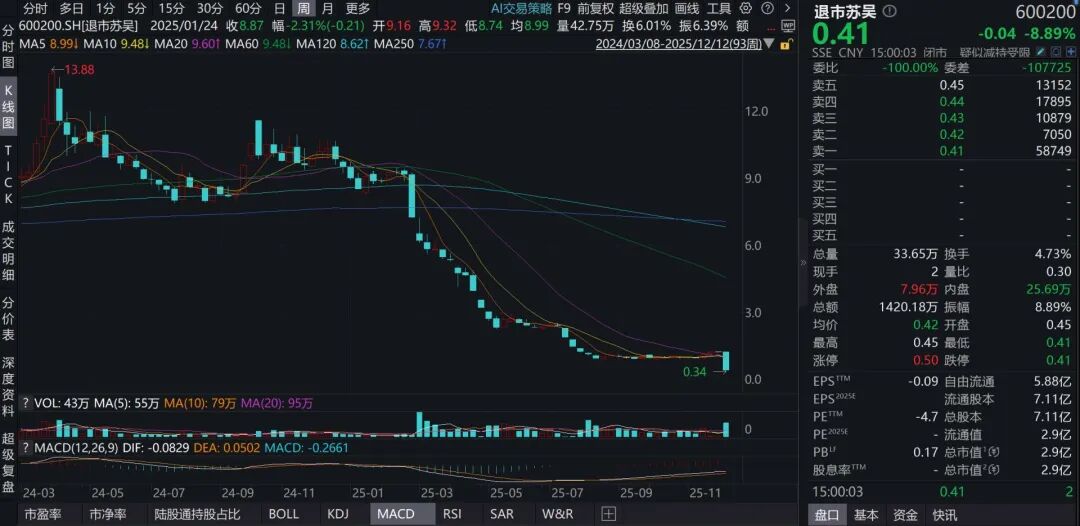
“一针两千,童颜针年销3亿元”背后:多家关联方注册地“查无此人”,股民追问“钱呢”,钱氏姐弟几乎“掏空”江苏吴中,公司即将退市
3 6 Ke· 2025-12-15 01:28
Core Viewpoint - Jiangsu Wuzhong, a company involved in financial fraud, is facing delisting due to years of financial misconduct, with its stock price plummeting by 66.94% since entering the delisting period on December 9, 2025 [1] Financial Misconduct - Jiangsu Wuzhong's chairman and vice-chairman, Qian Qunshan and Qian Qunying, allegedly created a network of related transactions through at least six companies, resulting in inflated revenues exceeding 1.7 billion yuan over four years [1][4] - The company has been found to have engaged in non-commercial trade activities with its subsidiaries, leading to inflated revenue, operating costs, and profits while occupying company funds [4][5] Company Operations and Investigations - Investigations revealed that four out of five related companies had non-existent registered addresses, indicating potential fraudulent activities [4][6] - The China Securities Regulatory Commission issued an administrative penalty against Jiangsu Wuzhong, confirming the long-term illegal activities of the Qian siblings [4] Financial Impact - From 2020 to 2023, Jiangsu Wuzhong reported fictitious revenues of 4.95 billion yuan, 4.69 billion yuan, 4.31 billion yuan, and 3.77 billion yuan respectively, with related parties occupying significant funds [7][10] - By the end of 2023, the company was nearing a state of being financially drained, with non-operating fund occupation reaching 96.09% of its net assets [10] Stakeholder Reactions - During a shareholder meeting, concerns were raised about the sudden drop in cash flow, prompting management to acknowledge the irregularities in trade operations [11][13] - Qian Qunshan has denied involvement in the fraudulent trade activities, claiming ignorance of the lack of commercial substance in the transactions [13][14] Future Outlook - Despite the financial turmoil, Jiangsu Wuzhong's new product, Aisufei, has shown promising sales, generating over 3.26 billion yuan in revenue in 2024, which helped the company return to profitability [16][17] - The stock price experienced a significant increase, rising from 5.43 yuan to a peak of 13.88 yuan, reflecting investor optimism despite the underlying issues [17]


商社2026年年度策略报告:周期复苏与AI创新的共振-20251214
CAITONG SECURITIES· 2025-12-14 11:54
Group 1: Retail and Service Industry Insights - The report highlights a recovery in the hotel and duty-free sectors, suggesting that the hotel prices have gradually increased since the second half of this year, with a recommendation to focus on hotel stocks such as Huazhu Group, Jinjiang Hotels, and ShouLai Hotels [6][12][17] - Duty-free sales are showing signs of bottoming out, with new policies implemented to expand the range of duty-free products and eligible consumers, leading to a significant increase in sales figures [12][15][16] - The report emphasizes the importance of service consumption policies, particularly in the context of the ice and snow economy, silver-haired economy, and sports events, recommending investments in companies like Changbai Mountain and Sanchuan Tourism [26][28][29] Group 2: AI Applications in Various Industries - The report discusses the acceleration of AI applications in the education and human resources sectors, with companies like Keri International and Beijing Renli leveraging AI to enhance recruitment efficiency [39][44] - AI's integration into 3D printing and e-commerce is highlighted, with a focus on companies like Huina Technology and Xiaogoods City, which are expected to benefit from cost reductions through full-chain penetration [6][39] - The report notes that AI applications are driving significant changes in operational efficiency and commercial opportunities across various sectors, particularly in human resources [39][44] Group 3: Beauty and Personal Care Sector - The beauty and personal care industry is experiencing a mild recovery, with domestic brands showing strong performance during the Double Eleven shopping festival, indicating a shift in competitive dynamics [6][32] - The report identifies key players in the beauty sector, recommending brands like Mao Ge Ping and Shanghai Jahwa, while also suggesting a focus on high-growth segments within the industry [6][32] - The medical beauty sector is under pressure but is seeing consolidation and innovation, with recommendations for companies like Jinbo Biological and Kedi-B [6][32] Group 4: Jewelry and Precious Metals - The jewelry sector is undergoing a transformation, with a focus on overseas expansion as a second growth curve, recommending companies like Laopu Gold and Chaohongji [6][32] - The report emphasizes the importance of high-value jewelry products and the impact of new tax regulations on the market dynamics [6][32] Group 5: Food and Beverage Industry - The food and beverage sector is witnessing a shift, with a focus on leading brands expanding their store counts and product categories, particularly in the tea and dining segments [32][38] - The report highlights the competitive landscape in the restaurant industry, noting the resilience of Western fast food and the growth of Chinese casual dining brands [32][38]


——化妆品医美行业周报20251214:11月化妆品淘系略承压,胶原医美赛道再添两员-20251214
Shenwan Hongyuan Securities· 2025-12-14 11:20
Investment Rating - The report indicates a weak performance in the cosmetics and medical beauty sector, with the Shenwan Beauty Care Index declining by 1.6% from December 5 to December 12, 2025, underperforming the market [3][4]. Core Insights - The cosmetics sector faced pressure in November, with overall GMV in the Taobao system showing weakness due to the pre-promotion of the Double 11 sales event and the rise of Douyin as a sales channel. Brands like Han Shu and Lin Qingxuan maintained stable GMV, while others like Feicui continued to grow significantly [3][9]. - The collagen medical beauty segment is expanding, with two new animal-derived collagen products approved for market entry, expected to drive growth in this area [3][9]. - The report highlights the leading market share of Minoxidil products from Mandi International in the hair loss treatment market, with a steady revenue growth from 982 million yuan in 2022 to approximately 1.455 billion yuan in 2024, reflecting a CAGR of 21.7% from 2022 to 2024 [10][11]. - L'Oréal's acquisition of an additional 10% stake in Galderma, raising its total ownership to 20%, signifies a strategic shift towards the medical beauty and skin health sectors, aiming to adapt to the slowing growth in the Chinese beauty market [3][18]. Summary by Sections Industry Performance - The Shenwan Beauty Care Index and its sub-indices for cosmetics and personal care products have shown declines of 1.2% and 1.7%, respectively, indicating underperformance compared to the Shenwan A Index [4][6]. Key Market Developments - The overall GMV for cosmetics in November was weak, influenced by earlier sales spikes in October and competition from Douyin [9]. - The approval of new collagen products is expected to enhance the supply side of the medical beauty market, with projections for continued expansion in 2026 [9][22]. Company Highlights - Mandi International has maintained a dominant position in the Minoxidil market, with its products accounting for approximately 57% and 71% of the market share in the hair loss treatment and Minoxidil categories, respectively, as of 2024 [11][13]. - The report notes that the Chinese consumer healthcare market is projected to grow from 931.3 billion yuan in 2018 to 16.42 trillion yuan by 2024, with significant growth in hair health and skin health segments [12][13].
化妆品医美行业周报:11月化妆品淘系略承压,胶原医美赛道再添两员-20251214
Shenwan Hongyuan Securities· 2025-12-14 09:49
Investment Rating - The report maintains a "Positive" outlook on the cosmetics and medical beauty industry, despite recent underperformance compared to the market [3][4]. Core Insights - The cosmetics and medical beauty sector has shown weaker performance, with the Shenwan Beauty Care Index declining by 1.6% from December 5 to December 12, 2025, underperforming the market [4][5]. - The report highlights that the November sales in the cosmetics sector were impacted by pre-Double 11 promotions and the rise of Douyin as a sales channel, leading to a weaker overall GMV [4][10]. - The collagen medical beauty segment is expanding, with two new animal-sourced collagen products approved for market, indicating growth potential in this area [4][10]. - The report emphasizes the strong market position of Mandi International in the minoxidil hair growth market, with a revenue increase from 982 million yuan in 2022 to approximately 1.455 billion yuan in 2024, reflecting a CAGR of 21.7% [4][11][12]. - L'Oréal's recent acquisition of an additional 10% stake in Galderma signifies a strategic shift towards medical aesthetics and skin health, aiming to adapt to the slowing growth in the Chinese beauty market [4][21]. Summary by Sections Industry Performance - The Shenwan Beauty Care Index decreased by 1.6%, with the Shenwan Cosmetics Index down by 1.2% and the Shenwan Personal Care Index down by 1.7% during the specified period [4][5]. - Notable stock performances included Water Sheep Co. (+5.9%) and Jinsong New Materials (+4.3%), while Hongmian Co. (-10.6%) and Juzhi Biological (-8.4%) faced significant declines [7]. Market Trends - The overall GMV for cosmetics in November was weak, influenced by the earlier sales surge in October and the emergence of Douyin as a competitive sales platform [4][10]. - The report notes that brands like Han Shu and Lin Qingxuan maintained stable GMV, while brands like Feicui continued to experience high growth [4][10]. Company Highlights - Mandi International has established a leading position in the minoxidil market, with a market share of approximately 57% in the hair loss treatment sector and 71% in the minoxidil product market as of 2024 [4][15]. - The company has shown consistent revenue growth, with a net profit increase from 2022 to the first half of 2025, indicating a robust business model [4][12][15]. Investment Recommendations - The report recommends focusing on companies with strong product lines and high profitability in the medical beauty sector, such as Ai Meike, while also suggesting attention to companies like Langzi Co. and Ru Yi Chen [4][10].
服装线上稳增,关注降温下龙头动销,动物胶原连获双证,三大维度突破
SINOLINK SECURITIES· 2025-12-14 06:34
Investment Rating - The report does not explicitly state an investment rating for the industry Core Insights - In November, the online apparel and accessories sector experienced a year-on-year growth of 9.1%, with an increase in growth rate compared to October. The average temperature in November was 4.2°C, which is 0.9°C higher than the historical average but 0.9°C lower than last year, indicating robust sales despite lower temperatures [2][11] - The outdoor segment continues to lead the industry with brands like Descente, Kelong, and Aon running year-on-year growth rates of 32.8%, 32.4%, and 21.4% respectively. In the home textile and menswear sectors, brands like Luolai Life and Bosideng saw year-on-year growth of 16.0% and 8.8% respectively [2][11] - The report highlights the approval of two animal collagen products by the National Medical Products Administration, marking significant advancements in concentration, implant materials, and indications [3][13] Industry Data Tracking - In October, apparel retail sales grew by 6.3% year-on-year, with the growth rate improving from September. This was attributed to seasonal promotions and a recovery in offline store traffic due to reduced extreme weather [4][19] - The cosmetics sector also showed resilience, with retail sales increasing by 9.6% year-on-year, reflecting a 11.6 percentage point increase from September [4][29] - The jewelry retail sector continued to recover, with a year-on-year growth of 9.6% in October, supported by rising gold prices and increased regional consumer enthusiasm [4][19] Investment Recommendations - For the apparel sector, Hai Lan Home is recommended for its innovative urban outlet expansion and strong profitability, while Li Ning is expected to see a turning point in 2025 [5][27] - In the beauty and personal care segment, recommendations include Juzi Biological for its strong data resilience and Jinbo Biological for its anticipated new product launches [5][31] - The gold and jewelry sector is recommended for brands with strong market presence, such as Laopu Gold, due to the favorable gold price trends [5][31]
新氧再“撕”上游供应商:过度控价时代一去不复返
Bei Jing Shang Bao· 2025-12-13 03:16
Core Viewpoint - Beijing Xinyang Technology Co., Ltd. (referred to as "Xinyang") has issued a statement in response to recent public criticisms from upstream medical beauty manufacturers regarding its product procurement channels and service capabilities, asserting that these claims are misleading and damaging to its reputation [1][2] Group 1: Company Response - Xinyang emphasizes that all medical devices used are sourced from legally qualified suppliers and are traceable through proper documentation [2] - The company asserts that its chain of clinics operates as legally established medical institutions, with physicians practicing in accordance with the Medical Practitioners Law [2] - Xinyang criticizes upstream manufacturers for prioritizing internal rules over regulatory requirements and consumer rights, stating that these manufacturers have a legal obligation to provide support to compliant medical institutions [2] Group 2: Industry Context - The statement highlights a shift in the medical beauty industry from a market dominated by scarce registration certificates and price control to one characterized by price transparency and fair competition [2] - Xinyang argues that attempts by upstream companies to create a sense of consumer anxiety through terms like "official" and "certified" are detrimental to market dynamics and consumer interests [2]

韩国实施近十年的医美退税政策月底终结,失去这张“折扣券”后外国消费者还会去吗?
Sou Hu Cai Jing· 2025-12-12 10:08
Core Viewpoint - The termination of South Korea's tax refund policy for medical beauty services, effective December 31, 2023, is expected to significantly impact the medical tourism industry, which has thrived on this incentive for nearly a decade [1][2]. Group 1: Policy Changes - The tax refund policy, which allowed foreign patients to claim a 10% VAT refund on medical beauty services exceeding 30,000 KRW (approximately 143.7 CNY), has been officially removed from the revised Tax Special Cases Limitation Act [1][2]. - This policy was instrumental in attracting a large number of overseas medical beauty tourists, contributing to the growth of South Korea's medical tourism sector [1][2]. Group 2: Economic Impact - The total medical expenditure by foreign patients in South Korea is projected to rise from approximately 400 billion KRW (about 1.912 billion CNY) in 2019 to 12.4 trillion KRW (around 59.272 billion CNY) by 2024 [2]. - The cancellation of the tax refund is expected to increase the cost of medical services for foreign patients, potentially leading to a significant decrease in medical beauty tourists [4]. Group 3: Industry Response - Industry professionals have expressed strong opposition to the policy change, warning that it could diminish South Korea's status as a leading destination for medical tourism, especially as other countries enhance their competitive advantages [6]. - Analysts suggest that while the immediate impact of the tax refund cancellation may be limited, the long-term success of South Korea's medical beauty industry will depend on maintaining high standards of quality, reputation, and safety [7].
策略+医药 “春季躁动”看方向,医药细分谁先行
2025-12-12 02:19
Summary of Key Points from the Conference Call Industry Overview - The conference call primarily discusses the **pharmaceutical industry** and its performance in the context of the upcoming Spring Festival and the Two Sessions in China. The focus is on the investment opportunities within the pharmaceutical sector, particularly in innovative drugs and services [1][2][3]. Core Insights and Arguments - **Market Performance**: Historically, small-cap stocks such as the CSI 500, CSI 1000, and National 2000 have shown a strong performance with a 90% excess win rate and a median excess return of approximately 3% from the New Year to the pre-Spring Festival period [1][2]. - **Consumer Sector**: The consumer sector has performed well with a 60% win rate in Q1, particularly peaking at 67% in March, making it the top performer among major styles [2]. - **Pharmaceutical Sector**: Despite recent adjustments, the pharmaceutical sector had a notable performance in February with a 73% excess win rate and a median excess return of 1.1%, ranking it among the top ten in the Shenwan primary industry [1][2]. - **Investment Opportunities**: During the Spring Rally, segments such as innovative drugs, medical devices, and traditional Chinese medicine are highlighted as key areas for investment due to their growth potential and strong domestic demand [1][5][6]. Additional Important Insights - **Long-term Outlook**: By 2026, the pharmaceutical innovation sector is expected to benefit from an engineer dividend, enhancing research efficiency, cost, and speed. The innovative drug market is seen as entering a long-term growth phase, with projections indicating that by 2030, the revenue and profit share from pharmaceutical innovation could rise significantly [2][7]. - **CRO and Life Sciences**: Since 2025, there has been a recovery in demand for Contract Research Organizations (CRO) and upstream life sciences, with a strong rebound anticipated in 2026, particularly in preclinical CROs [8][9]. - **Traditional Chinese Medicine**: The traditional Chinese medicine sector is expected to recover normal growth by 2026, supported by policy changes and decreasing raw material costs, which will enhance profit growth [10]. - **AI in Healthcare**: The potential for AI in healthcare is significant, with applications in diagnostics and drug discovery. The need for milestone events to catalyze this sector's growth is emphasized [17][20]. Conclusion - The pharmaceutical industry is positioned for growth, with various segments offering unique investment opportunities. The overall sentiment is optimistic, particularly regarding innovative drugs and the recovery of traditional medicine, supported by favorable market conditions and policy changes.
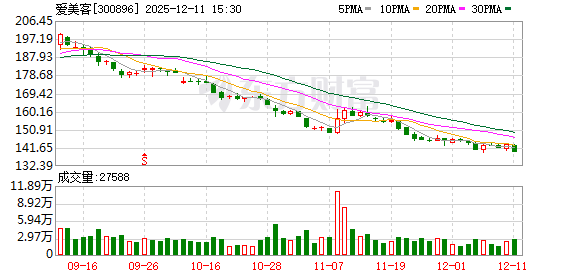
爱美客:截至2025年12月10日公司股东人数为60403户
Zheng Quan Ri Bao· 2025-12-11 10:36
证券日报网讯 12月11日,爱美客在互动平台回答投资者提问时表示,截至2025年12月10日,公司股东 人数为60403户。 (文章来源:证券日报) ...