
电商

Search documents
帮主郑重:美股涨了,但美联储内部“打起来了”
Sou Hu Cai Jing· 2026-02-19 04:03
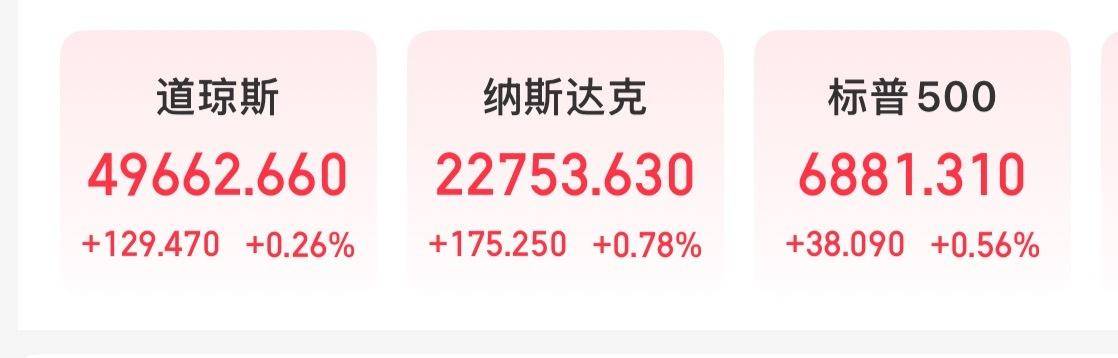
朋友们,今天凌晨美股收了根小阳线,纳指涨0.78%,英伟达、亚马逊这些老朋友都回来了。但你要是 只看指数,可能会错过真正的大戏——美联储那份会议纪要,简直是一部"宫斗剧"。 先给你翻译一下核心看点:降息派、暂停派、加息派,三派人马在同一份纪要里同时登场。 什么意思?有的官员说,如果通胀按预期下降,进一步降息是合适的;有的说,现在就得按兵不动,等 通胀明确了再说;最狠的是,首次有官员明确提出:不排除重新加息的可能性。你没看错,不是"降不 降",是"加不加"都摆上台面了。 美联储传声筒Nick Timiraos总结得很到位:官员们对劳动力市场的担忧减轻了,对通胀的担忧却增加 了。这就解释了为什么美股涨得那么纠结——不是不想涨,是不知道该信哪一派。 再往下看,科技股的反弹也不是普涨。英伟达涨1.6%,因为Meta说要继续买它的芯片;亚马逊涨 1.8%,因为阿克曼加仓了65%;美光大涨5.3%,因为大卫·泰珀也进来了。这些都不是"AI信仰"的全面 回归,而是个股层面的"贵人相助"。 有机构已经开始讨论:AI抛售潮是不是临近尾声了?但更多交易员的态度是:等英伟达财报出来再 说。毕竟,庞大的资本开支是真金白银在烧,回报却 ...


美伊风险助燃 原油大涨超4%!美联储会议纪要曝光 降息与加息同时被提及 内部分歧罕见加剧
Sou Hu Cai Jing· 2026-02-19 01:29
Market Performance - The three major US stock indices closed higher, with the Nasdaq up 0.78%, the S&P 500 up 0.56%, and the Dow Jones up 0.26% [1] - Major tech stocks saw gains, with Nvidia and Amazon rising over 1%, while Apple, Tesla, Meta, and Microsoft experienced slight increases [3] Company Updates - Google launched the new entry-level Pixel 10a smartphone, aiming to enhance its appeal with new AI software features and minor hardware improvements, maintaining a price of $499 [3] - Micron Technology, a chip giant, saw its stock rise over 5%, while Western Digital increased by over 4% [3] Chinese Stocks - The Nasdaq Golden Dragon China Index fell by 0.04%, closing at 7580.87 points, with notable declines in companies like WeRide and Xiaoma Zhixing, while Pinduoduo and Baidu saw gains [6] Oil Market - International crude oil futures experienced a significant increase, with WTI crude oil for March rising by 4.59% to $65.19 per barrel, and Brent crude for April up by 4.35% to $70.35 per barrel [8] Geopolitical Risks - Reports indicate an increased risk of US military action against Iran, with preparations underway for potential strikes, although a final decision by President Trump has not been made [8][9] - The lack of substantial progress in US-Iran negotiations has led to speculation about imminent military action [10] Federal Reserve Insights - The latest FOMC meeting minutes revealed significant divisions among Federal Reserve officials regarding future interest rate policies, with some advocating for potential rate hikes if inflation remains above target levels [10][11] - The minutes highlighted concerns about persistent inflation risks, with most participants acknowledging that the process of inflation returning to 2% may be slower and more uneven than expected [11][12]
外媒热议中国迎新春:机器人“出圈”彰显科创实力
Huan Qiu Wang Zi Xun· 2026-02-19 01:26
Group 1: Economic Impact of Chinese New Year - The Chinese New Year not only holds cultural significance but also plays a crucial economic role, typically leading to a surge in consumption across multiple industries [2] - During the Spring Festival, hundreds of millions of people travel across the country to reunite with family, presenting a significant opportunity to boost domestic consumption in the world's second-largest economy [2] - There is a notable increase in consumer spending in areas such as food, festive goods, entertainment, and tourism, with retail and e-commerce platforms experiencing substantial sales growth before the holiday [2] Group 2: Technological Advancements in Robotics - The annual Spring Festival Gala showcased significant advancements in humanoid robotics, highlighting China's rapid development in this field, particularly in industrial and agricultural applications [3] - The performance featured humanoid robots demonstrating complex martial arts moves with high precision, showcasing the progress made in just one year since a viral video of robots performing traditional dances [4] - Humanoid robots and AI assistants were prominently featured in various segments of the gala, illustrating innovations in control, perception, and collaboration [5]

AI巨额投入引发市场担忧 亚马逊股价今年开局不利 华尔街仍视其为“被低估赢家”
智通财经网· 2026-02-19 00:03
Core Viewpoint - Amazon's stock has faced challenges this year, but some Wall Street analysts see the recent pullback as a potential buying opportunity for investors optimistic about long-term returns from artificial intelligence (AI) [1] Group 1: Stock Performance and Market Sentiment - Amazon's stock has declined by 9.2% over the past 12 months, underperforming the Nasdaq Composite Index, which has risen by approximately 13% during the same period [1] - Following the earnings report on February 5, the stock fell about 7.5% due to concerns over disappointing earnings and significant AI capital expenditure plans [1] - The stock's expected price-to-earnings ratio is currently around 25.8, significantly lower than its five-year average of 48.1 [1] Group 2: AWS and Growth Potential - Analysts, including Morgan Stanley's Brian Nowak, view Amazon Web Services (AWS) as a "market undervalued generative AI winner," highlighting that demand for cloud computing services is a key growth driver for the company [2] - Amazon's backlog of unfulfilled contracts has reached $244 billion, a 40% year-over-year increase, indicating strong future demand [2] - AWS is expected to see accelerated capital expenditure, which is necessary to expand data center capacity to meet growing demand [2] Group 3: Cash Flow and Investor Confidence - Amazon's free cash flow for the past 12 months was $11.2 billion, significantly lower than the $38.2 billion reported in the same period last year [3] - As AI capital expenditures become a long-term theme, investors are expected to pay closer attention to the company's guidance on free cash flow prospects [3] - Despite a recent stock price rebound, Berkshire Hathaway has reduced its Amazon holdings by approximately 80% to 2.3 million shares, although this news did not hinder the stock's short-term recovery [3]

一香港居民在日本札幌遭酒瓶砸头,中领馆发布提醒;段永平1200亿元持仓曝光;金银原油全线大涨;老铺黄金即将调价丨每经早参
Mei Ri Jing Ji Xin Wen· 2026-02-18 23:47
Group 1 - The Chinese Consulate in Sapporo has advised Chinese citizens to avoid traveling to Japan following an incident where a Hong Kong resident was assaulted in Sapporo [8] - As of the end of 2025, H&H International Investment, managed by Duan Yongping, has a total portfolio value of approximately $17.489 billion, equivalent to over 120 billion RMB [13] - International crude oil futures saw a significant increase, with WTI crude oil rising by 4.59% to $65.19 per barrel, and Brent crude oil increasing by 4.35% to $70.35 per barrel [4][20] Group 2 - The U.S. stock market indices closed higher, with the Nasdaq up 0.78%, S&P 500 up 0.56%, and Dow Jones up 0.26%, driven by gains in major tech stocks [3] - The market for gold and silver also saw increases, with spot gold rising by 2.08% to $4,979.56 per ounce and spot silver increasing by 5.04% to $77.2335 per ounce [4] - The State Council's Safety Committee and the Ministry of Emergency Management have emphasized the need for strict safety regulations regarding fireworks to prevent accidents [6] Group 3 - Several domestic gold jewelry brands have reduced their prices below 1,500 RMB per gram, with Chow Tai Fook and Lao Miao Gold both pricing at 1,499 RMB per gram [7] - On February 17, the total cross-regional movement of people in China reached 22.4182 million, a 15.5% increase from the previous day and a 9.4% increase compared to the same day last year [7]



深夜美股全线大涨,芯片股走强
2 1 Shi Ji Jing Ji Bao Dao· 2026-02-18 23:45
Group 1: Technology Sector - Nvidia's stock rose over 2% as Meta plans to deploy millions of chips over the next few years, marking the first use of the Grace CPU [2] - The Philadelphia Semiconductor Index increased by 1.72%, with Micron Technology up over 5% and Western Digital rising by 4% after announcing the sale of all its SanDisk common stock for approximately $3.09 billion [2] Group 2: Gold and Silver Market - Gold and silver stocks saw significant gains, with notable increases in companies like Coeur Mining and Vista Gold, as spot gold rose over 2.6% to surpass $5,000, while silver prices increased by 6% to $78 per ounce [2] Group 3: Chinese Stocks - The Nasdaq Golden Dragon China Index rose by 0.49%, with notable gains in companies like Arctech Solar and Alibaba, while some companies like WeRide and iQIYI experienced declines [4] - Hillhouse Capital's HHLR Advisors reported a significant increase in holdings of Alibaba and Pinduoduo, while reducing positions in NetEase and Futu Holdings, focusing on e-commerce, biomedicine, and technology sectors [4] Group 4: Oil Market - International oil prices surged, with WTI and Brent crude futures increasing by 3%, attributed to Slovakia's declaration of a national oil emergency due to disruptions in Russian oil transit [4] Group 5: Cryptocurrency Market - Major cryptocurrencies reversed their downward trend, with Bitcoin climbing back above $67,000, while over 80,000 traders faced liquidation in the past 24 hours [4]


AI巨额投入引发市场担忧 亚马逊(AMZN.US)股价今年开局不利 华尔街仍视其为“被低估赢家”
智通财经网· 2026-02-18 23:27
Core Viewpoint - Amazon's stock has faced challenges this year, but some Wall Street analysts see this pullback as a potential buying opportunity for investors optimistic about long-term returns from artificial intelligence (AI) [1] Group 1: Stock Performance and Market Sentiment - Amazon's stock has declined by 9.2% over the past 12 months, underperforming the Nasdaq Composite Index, which has risen by approximately 13% during the same period [1] - Following the earnings report on February 5, the stock fell by about 7.5% due to concerns over disappointing earnings and significant AI capital expenditure plans [1] - Despite a recent rebound, the stock's expected price-to-earnings ratio for the next 12 months is around 25.8, significantly lower than its five-year average of 48.1 [1] Group 2: AWS and Growth Potential - Morgan Stanley's analyst Brian Nowak views AWS as a "market undervalued generative AI winner," highlighting that demand for cloud services continues to drive growth for the company [2] - As of the latest earnings call, Amazon's backlog of unfulfilled contracts reached $244 billion, a 40% year-over-year increase [2] - Nowak maintains a bullish outlook on AWS's capital expenditure expansion, giving Amazon an "overweight" rating with a target price of $300, indicating over 45% upside potential from current levels [2] Group 3: Cash Flow and Investor Confidence - Amazon's free cash flow for the past 12 months was $11.2 billion, significantly lower than the $38.2 billion reported in the same period last year [3] - As AI capital expenditure becomes a long-term theme, investors are expected to closely monitor the company's guidance on free cash flow prospects [3] - Recent stock movements suggest some investors may be regaining confidence in Amazon, as the stock rose after a nine-day consecutive decline, marking the longest losing streak since July 2006 [3]
2月19日收盘:美股收高科技股领涨 市场关注联储会议纪要
Xin Lang Cai Jing· 2026-02-18 21:09
来源:环球市场播报 北京时间2月19日凌晨,美股周三收高。最新联储政策会议纪要凸显通胀担忧,并且官员们对随后的货 币政策方向存在分歧。美国声称仍然存在对伊朗动武的可能性,导致国际油价大涨。 道指涨129.47点,涨幅为0.26%,报49662.66点;纳指涨175.25点,涨幅为0.78%,报22753.63点;标普 500指数涨38.09点,涨幅为0.56%,报6881.31点。 英伟达收高1.6%,此前有报道称,Meta Platforms宣布将在其数据中心建设中使用数百万块英伟达芯 片。 此外,同为"科技股七巨头"成员的亚马逊上涨1.8%,此前监管文件显示著名投资者比尔-阿克曼的潘兴 广场(Pershing Square)基金在第四季度将其在这家电商巨头的持股增加了65%。这使得亚马逊成为该 基金的第三大重仓股。 在此之前,亚马逊遭遇连续九天的下跌。从2月2日到上周五,该股市值下跌了约18%,创下自2006年以 来最严重的连跌纪录,市值蒸发超过4500亿美元,原因是投资者质疑其人工智能支出计划的价值。 美光科技大涨5.3%,因有报道称著名对冲基金经理大卫-泰珀(David Tepper)旗下的Appal ...

尾盘:美股微涨英伟达领涨科技股 交易员评估美联储会议纪要
Xin Lang Cai Jing· 2026-02-18 20:01
其他市场方面,随着华尔街消化美国和伊朗之间的最新进展,油价跳涨。美国副总统JD·万斯周二表 示,伊朗在本周的核谈判中未能回应美国的红线,军事行动仍有可能。 科技股七巨头的另一成员亚马逊在监管文件显示比尔·阿克曼的Pershing Square基金在第四季度将其在这 家电商巨头的持股增加了65%后,股价也上涨了2%。这使得亚马逊成为该基金的第三大重仓股。该股 此前刚刚结束了连续九天的下跌。 美光科技股价在大卫·泰珀的Appaloosa Management增持这家芯片制造商股份后也出现上涨。该股尾盘上 涨超过5%。 在這些股票提振大市的同时,Logan Capital Management的斯蒂芬·李指出,科技领域中一些"不太为人熟 知"的股票也表现良好,包括工业技术类股,例如天宝导航公司(Trimble)。该公司股价当日上涨2%。 "当我们剥开表象,审视相对赢家时,我不确定今天是否真的推翻了市场正在扩大的观点,"这位创始负 责人表示,并补充说市场正变得"越来越有辨别力"。 投资者仔细考虑了美联储1月的会议纪要。纪要显示,与会者普遍赞同央行将关键利率维持在3.5%至 3.75%区间不变的决定。然而,官员们对随后 ...
宝尊电商业绩改善但股价低迷,转型成效与市场观望并存
Jing Ji Guan Cha Wang· 2026-02-18 19:24
Company Performance - The company reported a total net revenue growth of 5% year-on-year to 2.2 billion yuan in Q3 2025, with a narrowing operating loss under non-GAAP standards [1] - The e-commerce business turned profitable during the off-season, while the brand management business saw a revenue increase of 20% year-on-year [1] - Despite the improvement in Q3 2025, the company has faced continuous losses from 2021 to 2024, leading to market skepticism regarding its sustainable profitability [1] Industry and Risk Analysis - The e-commerce industry is experiencing a peak in traffic dividends, resulting in rising customer acquisition costs; sales and marketing expenses increased from 2.55 billion yuan in 2021 to 3.381 billion yuan in 2024, with 2025 H1 expenses reaching 1.738 billion yuan, a 13% year-on-year increase [2] - High marketing costs are identified as a common challenge across the industry [2] Market Conditions - From February 12 to 16, 2026, the average daily trading volume in the Hong Kong stock market was approximately 5.7 billion HKD, with a turnover rate close to 0%, indicating low market participation [3] - The online retail sector declined by 0.55% during the same period, influenced by fluctuations in the Hang Seng Index [3] Institutional Perspectives - In February 2026, 75% of institutional views rated the stock as "buy or hold," with a target average price of 9.54 HKD; however, there is a divergence in profit forecasts [4] - The projected net profit for Q3 2025 is estimated at -15.3 million HKD, reflecting a 24.03% year-on-year improvement, but it remains a loss [4] Future Developments - In February 2026, the subsidiary Luoke Xun received "Diamond Service Provider" certification from Douyin E-commerce, with support from local government; however, stock price increases were limited and trading volume remained low, indicating a muted market response [5] - The brand management business needs to achieve profitability through economies of scale, but competition in the offline fashion industry is intense, and the effectiveness of the transformation requires time to validate [6]