科技

Search documents
长三角14城2025年GDP榜单来了!78%城市增速超5%,这些黑马城市藏不住了!
Sou Hu Cai Jing· 2026-01-27 22:06
Core Insights - The GDP performance of the 14 cities in the Yangtze River Delta for 2025 indicates a steady economic recovery, with significant contributions from key cities like Shanghai, Hangzhou, and Ningbo [1][3]. Group 1: GDP Rankings and Growth Rates - The 14 cities are categorized into three tiers based on GDP: Shanghai leads with a GDP of 56,708.71 billion yuan and a nominal growth rate of 5.49% [3][6]. - The second tier includes Hangzhou with a GDP of 23,011 billion yuan (growth rate of 5.26%) and Ningbo with 18,715.7 billion yuan (growth rate of 3.13%) [3][6]. - The middle tier consists of cities like Wenzhou, Shaoxing, and Jiajing, with GDPs ranging from 7,005 to 10,213 billion yuan and growth rates between 3.72% and 6.73% [3][7]. - The lower tier includes cities like Huzhou and Ma'anshan, with GDPs between 1,415 and 4,452 billion yuan, but growth rates are strong, ranging from 4.89% to 6.78% [3][9]. Group 2: Economic Contributions and Trends - 11 out of the 14 cities have growth rates exceeding 5%, representing 78% of the total, which is significantly higher than the national average [3][9]. - The top three cities (Shanghai, Hangzhou, and Ningbo) account for over 52% of the total GDP of the 14 cities, highlighting their leading role in economic growth [3][9]. - Shanghai's GDP growth is supported by strong industries such as integrated circuits and artificial intelligence, with a production value exceeding 500 billion yuan [9][10]. Group 3: Emerging Cities and Growth Dynamics - Cities like Tongling, Shaoxing, and Chuzhou have shown remarkable growth rates, with Tongling achieving 6.78% due to industrial upgrades and a shift from traditional copper processing to new energy materials [9][10]. - The integration of cities like Ma'anshan into the Yangtze River Delta has led to significant economic benefits, particularly in the automotive manufacturing sector [9][10]. - The economic resilience of the region is evident, with a focus on sustainable growth and employment opportunities, driven by unique industrial characteristics [10][13].

美股前瞻 | 三大股指期货涨跌不一 保险股盘前集体闪崩 瑞银看高标普500至8400点
智通财经网· 2026-01-27 12:53
Market Overview - As of January 27, U.S. stock index futures showed mixed results with Dow futures down 0.48%, S&P 500 futures up 0.23%, and Nasdaq futures up 0.60% [1] - European indices also displayed varied performance, with Germany's DAX down 0.12%, UK's FTSE 100 up 0.36%, France's CAC40 up 0.37%, and the Euro Stoxx 50 up 0.29% [3] - WTI crude oil decreased by 0.23% to $60.49 per barrel, while Brent crude oil fell by 0.25% to $64.61 per barrel [3] Investment Insights - UBS forecasts the S&P 500 could reach 8,400 points by year-end, driven by opportunities in artificial intelligence, longevity technology, and energy [4] - Amundi highlights a shift from dollar assets to gold, predicting continued strength in gold prices due to rising U.S. fiscal deficits and uncertainty in monetary policy [6] - Silver prices have surged over 7%, but concerns about speculative trading and potential corrections have been raised [7] Company-Specific Developments - UnitedHealth reported Q4 revenue of $113.22 billion, slightly below expectations, and provided a 2026 revenue guidance of $439 billion, also below market forecasts [10] - Boeing exceeded revenue expectations with Q4 revenue of $23.9 billion [10] - UPS reported Q4 revenue of $24.5 billion, surpassing expectations, and raised its 2026 revenue guidance to approximately $89.7 billion [10] - General Motors' Q4 revenue fell 5% to $45.3 billion, but it announced a $6 billion stock buyback plan and provided a positive 2026 earnings outlook [11] - Micron Technology plans to increase investment in storage chip manufacturing in Singapore to address global shortages [13] - Nike is cutting 775 jobs in its U.S. distribution centers as part of a strategy to streamline operations and enhance automation [14]



公募基金重点产品、策略回顾与展望:主动超额延续,固收增强突围
Ping An Securities· 2026-01-27 09:09
1. Report Industry Investment Rating - The report does not explicitly mention the industry investment rating. 2. Core Viewpoints of the Report - ETFs will continue to develop, with a trend of diversification and intensified competition. Active equity funds are expected to continue to generate excess returns in 2026, and institutional confidence in them has increased. For fixed - income enhanced funds, attention should be paid to the balanced and flexible medium - volatility strategy, and new - stock income contributions are expected to rise [2]. 3. Summary by Directory ETF Review and Outlook - **Issuance and Scale**: Passive equity funds continued large - scale issuance, but the growth rate slowed. In 2025, the issuance scale of active and passive equity funds was 165.7 billion shares and 411.9 billion shares respectively, with year - on - year increases of 130.04% and 69.97%. By the end of the third quarter of 2025, the scale of active and passive equity funds was 4.04 trillion yuan and 4.71 trillion yuan respectively, up 21.91% and 38.34% from the end of the previous year [5]. - **Fund Flows**: In 2025, funds flowed from broad - based ETFs to industry - themed ETFs. In 2026, satellite/commercial space, non - ferrous metals, and AI - themed ETFs had significant net inflows. Technology - themed ETFs had the highest net inflows in 2025, followed by financial real - estate and cyclical - themed ETFs [8][10]. - **Learning from Overseas**: Referring to the development of the US fund industry, the trend of ETF development will continue. Although the scale will maintain stable growth, the growth rate may slow down. Some active managers can consider the US active ETF model [13]. - **Policy Impact**: Policies have optimized the product registration and benchmark setting mechanisms, reduced fees, and encouraged the development of passive equity products. The future development of ETFs will be diversified and competitive [15]. Active Equity Fund Review and Outlook - **Performance**: In 2025, the scale of active equity funds stopped falling and rebounded, and both the overall market and industry - themed active equity funds outperformed passive equity funds. In the long run, overall market funds and active management funds in cyclical, pharmaceutical, and technology themes can achieve relatively stable excess returns [20]. - **Excess Return Characteristics**: Active equity funds have significant excess returns when the growth style is dominant and when new industrial trends emerge. There is a certain correlation between the concentration of active equity fund holdings and excess returns. In 2026, active equity funds are expected to continue to generate excess returns, and the proportion of institutional holdings has stopped falling and rebounded [23][26]. - **Performance Back - testing of Technology Bottom - Position Varieties**: As of December 31, 2025, the annual net value of selected technology bottom - position varieties increased by 74.02%, significantly outperforming the CSI TMT index by 29.55 percentage points. The position adjustment operations in the first three quarters of 2025 were more focused and offensive [29][31]. - **Performance Back - testing of Pharmaceutical Bottom - Position Varieties**: As of December 31, 2025, the annual net value of selected pharmaceutical bottom - position varieties increased by 43.06%, significantly outperforming the Shenwan Pharmaceutical Index by 31.12 percentage points. The positions in 2025 significantly over - allocated the innovative drug sector and were flexibly adjusted [36][41]. - **Policy Impact**: Policies have strengthened benchmark constraints, bound the interests of managers, fund managers, and investors, and guided active equity funds to return to the origin of investment. Active and passive management will co - exist, and theme - stylization may be an important way for active funds to break through in the future [42]. Fixed - Income Enhanced Fund Review and Outlook - **Focus on the Balanced and Flexible Medium - Volatility Fixed - Income + Strategy**: In the context of the continuous decline of the risk - free interest rate, the scale of wealth management is expected to continue to expand, and fixed - income enhancement is an important direction for the overflow of wealth - management funds. The medium - volatility fixed - income enhancement strategy can better play the advantage of diversified asset allocation and should be focused on [48]. - **New - Stock Income Contribution**: In 2026, as the A - share market is expected to continue to recover slowly, the new - stock income contribution is also expected to increase [50]. - **FOF Funds**: The scale of FOF funds has significantly rebounded, and the proportion of passive products in FOF holdings has continued to increase. The asset allocation of FOF is becoming more diversified [52]. - **Performance Review of Fixed - Income Enhancement Strategies**: The medium - high - volatility balanced strategy outperformed the secondary bond fund index in 2025. The rotation strategy aiming for absolute returns also outperformed the ChinaBond Composite Wealth Index in 2025 [61][65]. - **Policy Impact**: Policies encourage the development of equity - containing medium - low - volatility products and asset - allocation products, and promote the coordinated development of equity and fixed - income investments. They also encourage long - term investment [69].
银行股延续强势,科技股分化回撤,中概股低开低走,黄金再创新高
Ge Long Hui· 2026-01-27 06:25
银行股延续强势,其中阿莱恩斯西部银行上涨1.63%,摩根士丹利上涨1.61%,花旗集团/高盛/摩根大通 等股涨幅均在1%上方;联合银行逆势收跌。 科技股弱势分化,其中英特尔大跌5.72%,超威公司下跌3.22%,特斯拉下跌3.09%,奈飞/亚马逊/英伟 达/高通等股均小幅收跌;苹果逆势大涨2.97%,META上涨2.06%,谷歌上涨1.63%。 小幅高开后全天维持在中轴上方盘整,截至收盘三大指数集体收涨,其中道指上涨0.64%,纳指上涨 0.43%,标指上涨0.5%。盘面上,银行股延续强势,科技股分化回撤,中概股低开低走,黄金再创新 高。 COMEX黄金跳空高开后全天维持在高位盘整,再创新高,截至收盘上涨1.21%报5043.4美元/盎司,盘 中最低报5145.2美元/盎司,最高报5022.9美元/盎司。 理财就是一场修行,有人修有人度,结果就是看谁踩准了点,把握住了机会。 中概股低开低走后全天维持在低位盘整,截至收盘中国金龙下跌0.63%,其中理想汽车上涨1.38%,腾 讯控股/网易/拼多多/哔哩哔哩/腾讯控股等股均小幅收涨;百度逆势大跌3.32%,小鹏汽车下跌2.39%。 ...
安永陈凯,最新发声
Zhong Guo Ji Jin Bao· 2026-01-27 06:16
Core Insights - The report highlights that over 90% of executives expect geopolitical and economic uncertainty to persist for more than a year, with 62% believing it will last over three years [2][3] - Companies are proactively adapting to these uncertainties through strategic adjustments, digital transformation, and deepening cross-border cooperation to explore new growth opportunities [2][3] Group 1: Uncertainty as the New Normal - The majority of global CEOs view the turbulent environment as the "new normal," with high-performance companies embedding "resilience design" into their core strategies [3] - Executives are no longer waiting for uncertainty to dissipate but are closing execution gaps and accelerating transformations to respond to challenges [3] Group 2: Driving Forces Behind Strategic Shifts - Three disruptive forces are driving rapid and large-scale transformations in companies: disruptive technologies, geopolitical restructuring, and global economic slowdown [4][5] - 52% of companies prioritize digital transformation (including AI and automation) to enhance productivity, while 58% focus on reshaping their business portfolios [5] Group 3: Overseas Expansion as a Growth Engine - Approximately 80% of executives set a target growth rate of over 5% for the next three years, with 40% aiming for growth rates exceeding 10% [6] - 54% of companies plan to increase their overseas business share, with Asia-Pacific identified as a key region for expansion [6] Group 4: Challenges in Compliance and Localization - Over 60% of executives identify political factors, regulatory uncertainty, and compliance complexity as the main challenges in localization [8] - Companies are increasingly relying on partnerships to mitigate risks, with 68% of leaders favoring business collaborations [8] Group 5: Hong Kong's Unique Role - More than 78% of executives view Hong Kong as a critical hub for achieving growth strategies in Asia, leveraging its financial ecosystem and connectivity with mainland China [9] - Hong Kong is encouraged to evolve from being a "super connector" to a "super value creator," acting as a trust hub for capital, compliance, and connectivity [9] Group 6: Strategic Responses to Uncertainty - Companies are advised to embed "resilience thinking" into their strategies, preemptively addressing disruptions and building flexibility from the outset [10] - The report emphasizes the importance of diversifying market presence and leveraging Hong Kong's advantages to expand into Asian and global markets [11]
中国首个万亿GDP地市辖区在粤港澳大湾区诞生
Xin Hua Wang· 2026-01-27 02:57
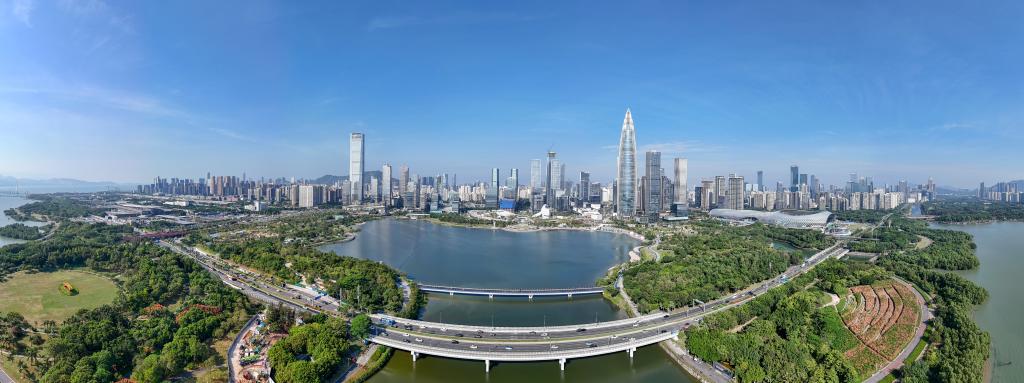
这是深圳湾文化广场所在的深圳市南山区后海中心区(2025年11月1日摄,无人机全景照片)。新华社记者 梁旭 摄 新华社深圳1月27日电(记者王攀、孙飞)记者27日在深圳市南山区八届人大六次会议上获悉,位于粤港澳大湾区的深圳市南山区2025年成为中国 首个地区生产总值(GDP)过万亿元的地市辖区。 中国(深圳)综合开发研究院常务副院长郭万达说,南山区的经济发展实践表明,科技创新可以不断突破资源的瓶颈和限制,凸显新质生产力的 强劲动能,折射中国经济的广阔前景、巨大潜力。 南山区隔深圳湾与香港元朗区比邻,西南隔珠江口与澳门、珠海相望。便利的区位优势,助力当地成长为粤港澳大湾区重要的科技创新和产业制 造中心。记者此前从广东省十四届人大五次会议获悉,粤港澳大湾区建设向纵深推进,预计2025年经济总量突破15万亿元。 统计数据显示,南山区战略性新兴产业增加值占GDP比重达60%,一大批港澳科技创业团队在此扎根发展。同时,南山区还加强与港澳科研资源 对接,积极布局低空经济、人工智能等未来产业,一批科技企业在全球市场占据重要份额。 2025年4月29日,来访者走在位于深圳市南山区的全球服务中心内。新华社记者 毛思倩 摄 南山 ...
本周五至周日 来武林广场逛新潮年货市集
Mei Ri Shang Bao· 2026-01-27 02:55
Group 1: Core Insights - Hangzhou is positioning itself as a leader in consumption transformation and upgrade, focusing on expanding service consumption and developing new consumption formats such as silver economy, pet economy, and emotional consumption [1] - The "2026 Hangzhou New Spring Goods Market" will feature a theme exhibition showcasing new consumption scenarios and cases from the Hangzhou metropolitan area, blending traditional flavors with innovative vitality [1] Group 2: Health and Wellness Products - There is a growing consumer preference for natural, green, and regionally distinctive agricultural products, with a focus on health-oriented items becoming increasingly popular for New Year purchases [2] - Products from Qiandao Lake, such as local pork sausages and handmade grilled sausages, will be highlighted, emphasizing authentic flavors and traditional preparation methods [2] Group 3: Unique Local Flavors - The exhibition will also feature unique culinary offerings from Wenzhou, including local seafood and specialty herbal teas, providing a taste of southern Zhejiang [3] - The "Qubeiji" brand will present various local delicacies, such as grilled shrimp and duck tongues, along with a traditional nut ginger tea that combines nourishment with local flavor [3] Group 4: Innovative Health Products - The "Zhenbuer" brand will showcase a series of home health products developed in collaboration with Zhejiang Chinese Medical University, incorporating traditional herbal wisdom into modern lifestyles [4] - Award-winning products include herbal patches and steam eye masks, designed for convenience and wellness [4] Group 5: Creative Consumer Experiences - The exhibition will feature interactive and innovative consumer experiences, including AI-powered plush toys and 3D-printed coffee, creating engaging shopping environments [5][6] - The "Shufuxiong" AI plush toy offers voice interaction capabilities, enhancing emotional connections with consumers [5] Group 6: Event Details - The "Hangzhou Metropolitan Area" theme exhibition will take place from January 30 to February 1 at Wulin Square, serving as a platform for experiencing diverse consumption trends and innovations [7] - The event aims to blend traditional cultural elements with modern vitality, providing a rich and engaging experience for visitors [7]
刚刚直线跳水!关税利空突袭韩国!特朗普宣布
Zheng Quan Shi Bao Wang· 2026-01-27 00:36
(原标题:刚刚直线跳水!关税利空突袭韩国!特朗普宣布) 1月27日清晨,据央视新闻,当地时间1月26日,美国总统特朗普在其社交平台"真实社交"发文表示,由 于韩国国会未批准并落实此前与美国达成的贸易协议,美方将提高对韩国商品征收的关税税率。 特朗普突然对韩国出手。 美东时间1月26日,美国总统特朗普宣布,因韩国国会迟迟未批准美韩贸易协议,他已决定将对韩国汽 车、木材、制药产品以及其他"对等关税"项目的税率从15%上调至25%。受此影响,在美上市的韩国 ETF(韩国ETF-iShares MSCI)在美股盘后直线跳水,一度大跌超2%。 特朗普宣布 特朗普称,韩国立法机构"未能履行与美国达成的协议",称该协议是其与韩国总统李在明于2025年7月 30日达成,并在其2025年10月29日访韩时再次确认。 特朗普表示,鉴于韩国方面尚未通过该项"具有历史意义的贸易协议",他已决定将对韩国汽车、木材、 制药产品以及其他"对等关税"项目的税率从15%上调至25%。 受此影响,在美上市的韩国ETF-iShares MSCI在美股盘后直线跳水,一度大跌超2%,截至北京时间 06:50,跌幅达1.64%。 另外,贵金属市场也遭遇 ...
刚刚,直线跳水!关税,利空突袭!特朗普宣布
券商中国· 2026-01-26 23:26
Core Viewpoint - The article discusses President Trump's decision to increase tariffs on South Korean goods due to the South Korean National Assembly's delay in approving a trade agreement, which has led to significant market reactions, particularly in ETFs and precious metals [1][3]. Group 1: Tariff Increase - Trump announced a tariff increase on South Korean products, raising rates from 15% to 25% on items such as automobiles, wood, and pharmaceuticals due to the failure of the South Korean legislature to ratify the trade agreement [1][3]. - The trade agreement was initially reached between Trump and South Korean President Moon Jae-in, with a significant investment commitment from South Korea to the U.S. [3][5]. Group 2: Market Reactions - Following the tariff announcement, the iShares MSCI South Korea ETF experienced a sharp decline, dropping over 2% in after-hours trading [1][3]. - Precious metals markets saw extreme volatility, with silver prices initially surging over 14% before retracting to a modest gain of 0.86%, while gold prices fluctuated, ultimately closing up 0.51% after a peak of 2.5% [6][9]. Group 3: Economic Context - The article highlights the broader economic implications, noting that the U.S. stock market indices closed higher, with significant gains in major tech stocks, indicating investor optimism despite the tariff news [9]. - The ongoing financial dynamics, including the capital outflow limits set by the trade agreement and the potential impact on the South Korean won, are also discussed, suggesting a complex interplay of factors affecting market stability [5].

出席市政协十六届四次会议的委员报到
Xin Lang Cai Jing· 2026-01-26 21:05
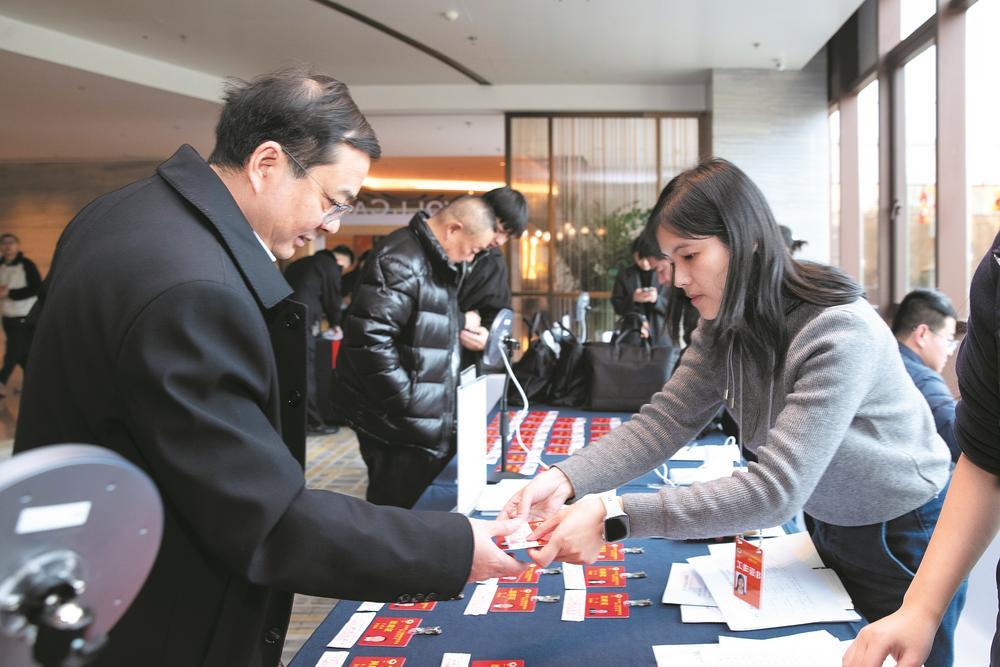
认真履职、建言献策。1月26日,出席市政协十六届四次会议的委员陆续抵达驻地报到,成都进入2026两会时间。 转自:成都日报锦观 建务实之言 献可行之策 出席市政协十六届四次会议的委员报到 出席市政协十六届四次会议的委员陆续抵达驻地报到。 "数字经济不是'选择题',而是传统产业提质增效的'必答题'。"市政协委员、成都市产业数字化促进会秘书长徐震长期聚焦产业数字化转型, 他带来的两项提案都与传统产业数字化升级息息相关。他表示,要明确传统产业数字化转型升级的清晰路径,避免企业"盲目转、不会转";更 要打通"科研端"与"产业端"的壁垒,让实验室里的人工智能技术真正落地到传统产业的质改体系中,让技术创新转化为实实在在的生产效能。 "'进解优促'像'精准手术刀',解决产业链各节点的具体难题;'立园满园'则像'生态培育师',搭建产业集聚平台,二者相辅相成,能有效推动 产业生态完善和产业链完整。"他建议,"十五五"期间,要持续深化这两项行动,针对不同产业的发展困境精准施策,让数字经济与实体经济 深度融合,推动产业在成都落地生根、集群发展,实现可持续增长。 聚焦文商旅体: 打造流量变现与城市品牌"金名片" 坐拥丰富的文旅资源, ...