
证券业

Search documents
7个月发行规模超1.5万亿元!谁是科创债发行主力军?
Xin Lang Cai Jing· 2025-12-28 04:56
Core Insights - The core focus of the news is the rapid expansion of the technology innovation bond market in China, which has seen significant growth since its launch in May 2023, with a total issuance of 2.26 trillion yuan by December 26, 2023 [1][6]. Market Growth - The issuance scale of technology innovation bonds reached 2.26 trillion yuan, covering over 2,000 bonds, marking a substantial year-on-year increase and providing strong financial support for technology innovation enterprises [1][6]. - Since the launch of the "technology board" in May, the issuance scale has exceeded 1.5 trillion yuan in just seven months, significantly surpassing the total issuance for the previous year [2][7]. - The issuance cost remains low, with over 40% of the bonds having interest rates below 2%, and most bonds issued at rates below 3%, which is advantageous compared to similar credit bonds [2][7]. Policy Support - The People's Bank of China and the China Securities Regulatory Commission have introduced several measures to support the issuance of technology innovation bonds, enhancing the product system and support mechanisms [2][7]. - The strong policy backing has injected significant momentum into the market, leading to a surge in demand and subscription rates for these bonds [2][7]. Issuer Diversity - The range of issuers for technology innovation bonds has expanded to include technology enterprises, financial institutions, and private equity firms, covering multiple industries [4][9]. - As of December 26, the interbank market's issuance scale surpassed 1 trillion yuan, with commercial banks contributing around 300 billion yuan, indicating a notable growth in smaller banks' participation [10]. Future Outlook - The technology innovation bond market is expected to continue expanding, driven by increasing financing needs in the technology sector and ongoing policy reforms aimed at enhancing the bond market's support for innovation [5][10].



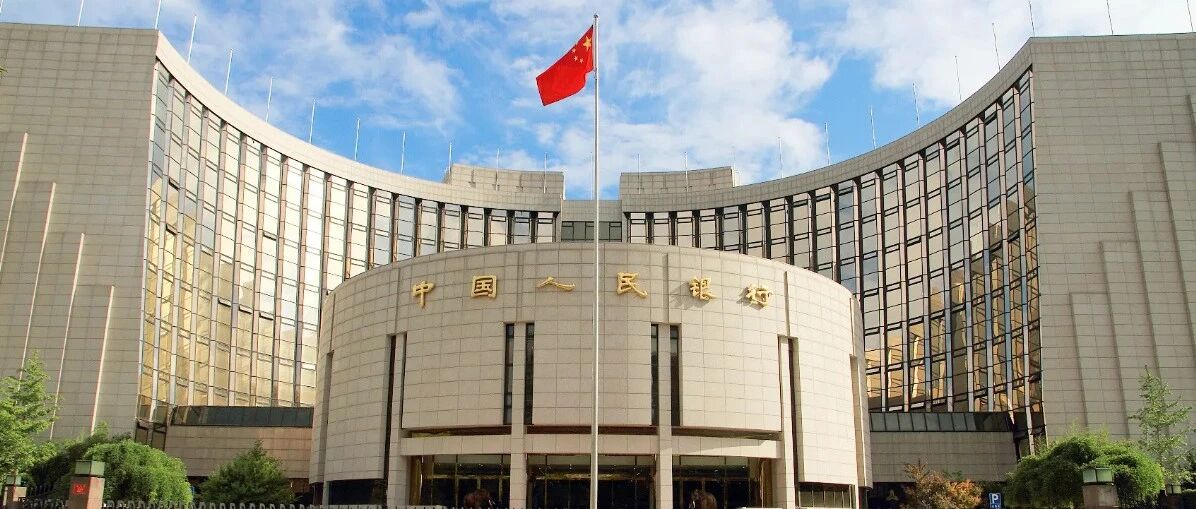
央行重磅发布
中国基金报· 2025-12-27 07:11
Core Viewpoint - The People's Bank of China (PBOC) released the "China Financial Stability Report (2025)", indicating that the overall operation of the financial sector is stable, with financial risks under control and key indicators within reasonable ranges [2]. Group 1: Interest Rate Marketization Reform - The PBOC is advancing interest rate marketization reform with the goals of "letting go, shaping, and adjusting" [4]. - The "letting go" goal has been largely achieved, with administrative controls on interest rates lifted and a market-based interest rate system established [4]. - Challenges remain in "shaping" and "adjusting", as loan rates have decreased more than policy rates, while deposit rates have not fallen as much, impacting banks' net interest margins and profitability [4]. Group 2: High-Quality Development and Market Value Management of Listed Companies - The China Securities Regulatory Commission (CSRC) has introduced a market value management system to guide listed companies in enhancing quality and market value [6]. - Future actions include regular visits to listed companies to address challenges, enhancing regulatory measures against financial fraud, and ensuring companies take responsibility for their market value management [6][7]. - Increased regulatory efforts will focus on preventing market risks and protecting investor rights [6]. Group 3: Promoting Long-Term Investment - The report emphasizes the importance of attracting long-term funds into the market to support stable capital market development and better serve the real economy [7]. - Various departments will collaborate to create a favorable policy environment for long-term investments, aiming to increase the scale and proportion of long-term funds invested in A-shares [8]. Group 4: Real Estate Market Stability - The report highlights the ongoing urbanization in China as a foundation for the long-term stability of the real estate market [9]. - The PBOC will monitor changes in the real estate market and financial conditions, ensuring the implementation of financial policies to support stable development [9]. Group 5: Overall Economic Strategy - The financial system will adhere to a stable yet progressive approach, implementing proactive macro policies and enhancing counter-cyclical adjustments to mitigate risks in key areas [11]. - The focus will be on promoting stable economic growth and maintaining reasonable price levels while ensuring liquidity and managing exchange rate stability [11].

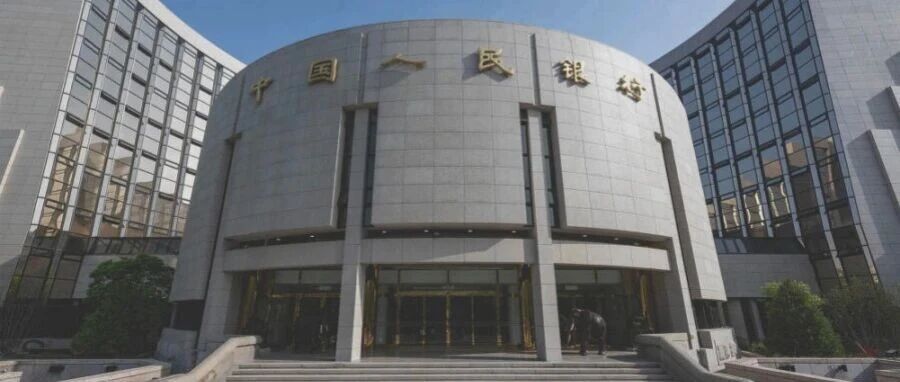
央行发布重磅报告,背后信号很大
21世纪经济报道· 2025-12-27 05:28
Core Viewpoint - The People's Bank of China (PBOC) released the "China Financial Stability Report (2025)", indicating that the financial system is generally stable, with overall risks under control and financial institutions operating within reasonable parameters [1]. Group 1: Financial System Stability - The report emphasizes the need for increased counter-cyclical and cross-cyclical adjustments to continuously prevent and mitigate risks in key areas, aligning with the directives from the Central Economic Work Conference and the Central Financial Work Conference [3]. - It highlights the importance of maintaining ample liquidity and promoting stable growth in social financing costs, while ensuring the stability of the RMB exchange rate [3]. Group 2: Long-term Capital Market Development - The report outlines a collaborative effort among various regulatory bodies to enhance the institutional environment for long-term investments, aiming to significantly increase the scale and proportion of long-term capital invested in A-shares [2][16]. - It stresses the importance of a healthy cycle between the preservation and appreciation of long-term capital, stable capital market operations, and high-quality development of the real economy [2][16]. Group 3: Support for Technology and Innovation - The PBOC plans to deepen financial supply-side structural reforms to support technology finance, focusing on early, small, long-term, and hard technology investments [6]. - It aims to enhance credit support for technology SMEs and promote high-quality development in the venture capital sector [6][7]. Group 4: Financing Platform Risk Mitigation - The report indicates that significant progress has been made in mitigating financing platform debt risks, with a notable reduction in the scale of operating financial debt by approximately 25% compared to the beginning of 2023 [8]. - It emphasizes the need for continued support for debt restructuring and maintaining financing for key areas and projects [9]. Group 5: Interest Rate Marketization - The PBOC is committed to advancing interest rate marketization reforms, focusing on improving the pricing capabilities of financial institutions and ensuring a balance between supporting the real economy and sustainable operations [10][11]. Group 6: Market Value Management for Listed Companies - The China Securities Regulatory Commission (CSRC) has introduced a market value management system to guide listed companies in enhancing their quality and investment value [12]. - The report outlines four key areas for future work, including regular visits to listed companies, promoting quality improvements, enforcing management responsibilities, and increasing regulatory oversight to prevent market risks [12][14]. Group 7: Liquidity Risk Monitoring - The PBOC has conducted liquidity stress tests on open-ended bank wealth management products, finding that overall liquidity risks are manageable [15]. - It plans to enhance daily monitoring of liquidity risks and address potential risks arising from external shocks [15]. Group 8: Macro-Prudential and Financial Stability Functions - The PBOC aims to expand its macro-prudential and financial stability functions, continuously optimizing existing tools and exploring new financial instruments to maintain market stability [17][18].
广东正式发布低空金融“十二条”
Sou Hu Cai Jing· 2025-12-27 01:19
Core Viewpoint - The Guangdong Financial Regulatory Bureau, in collaboration with multiple financial and regulatory bodies, has introduced the "Twelve Measures for Financial Support of Guangdong's Low Altitude Economy," aiming to create a comprehensive and specialized financial service system to boost the low altitude economy in Guangdong [1][5]. Group 1: Financial Support and Development - The low altitude economy in Guangdong has rapidly developed, with its output value surpassing 100 billion yuan, accounting for approximately 60% of the national financing scale in this sector [6][1]. - The financial regulatory framework is designed to empower innovation in financial services, with a focus on creating a dual-driven mechanism of "regulatory empowerment and institutional innovation" [6][1]. - Major banks have already provided strategic investments totaling 350 million yuan to the low altitude industry, with a total financing scale of nearly 50 billion yuan for core enterprises in this sector [6][1]. Group 2: New Policies and Regulatory Framework - The "Twelve Measures" emphasize inclusive regulation and differentiated regulatory incentives to encourage beneficial financial explorations in the low altitude economy [7][2]. - The establishment of regulatory sandboxes for technology branches aims to foster innovation and the development of targeted financial products for the low altitude economy [7][2]. - The measures also focus on enhancing management mechanisms to address the insufficient financial supply in specific areas of the low altitude economy [7][2]. Group 3: Collaborative Ecosystem - The "Twelve Measures" promote collaboration among financial institutions, encouraging partnerships across banks, securities, insurance, and investment firms to create comprehensive service models [8][3]. - Financial tools are encouraged to support the growth of the Guangdong low altitude industry fund, with a focus on resource allocation for high-quality enterprises receiving government subsidies [8][3]. - The integration of industry and finance is emphasized, with a push for regular communication and information sharing between regulatory and industry departments to enhance the precision of financial services [9][4].
【笔记20251226— 快速致富 or 慢慢变富?】
债券笔记· 2025-12-26 14:41
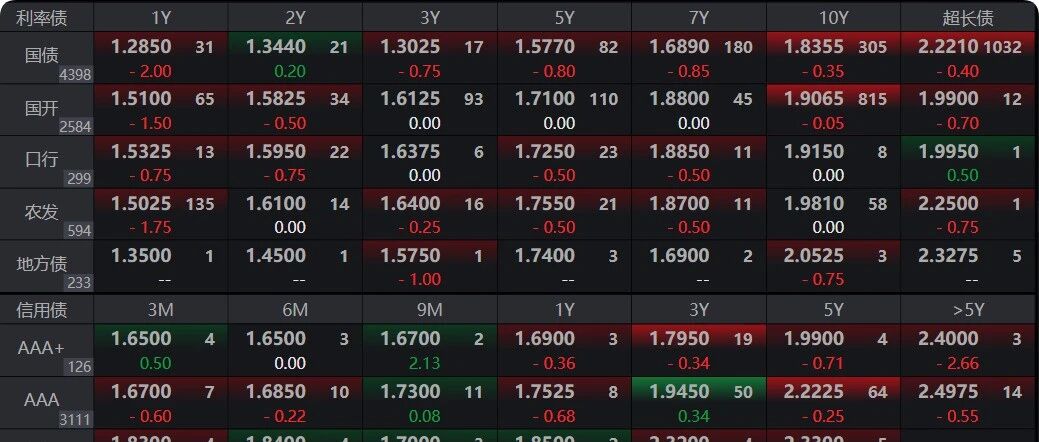
Core Viewpoint - The article discusses the challenges investors face in the capital markets, emphasizing the importance of understanding one's own capabilities and the types of investments that can be successfully managed. It suggests that many investors rely on luck rather than skill, leading to inconsistent financial outcomes [1]. Group 1: Market Conditions - The stock market experienced slight fluctuations with a mild increase, while the funding environment remained balanced and slightly loose. The central bank conducted a net injection of 246.8 billion yuan through reverse repos and treasury cash deposits [3][5]. - The overnight funding rates remained stable, with DR001 around 1.26% and DR007 slightly increasing to approximately 1.52% due to year-end factors [3]. Group 2: Bond Market Insights - The bond market showed narrow fluctuations in interest rates, with the 10-year government bond yield stabilizing around 1.84% [5]. - Recent data indicated that the weighted average rates for various repo codes were as follows: R001 at 1.35% (down 1 bp), R007 at 1.53% (unchanged), and R014 at 1.84% (unchanged) [4]. Group 3: Investor Sentiment - A survey indicated that investors are most optimistic about commodities and stocks for the upcoming year, while bonds are largely disregarded [5]. - The article highlights a trend where investment education courses are being marketed, suggesting a perception that investing is inherently risky, with a common outcome of "one profit, two breakevens, and seven losses" [5].
央行:防范化解重点领域金融风险,做好房地产金融宏观审慎管理
Sou Hu Cai Jing· 2025-12-26 12:40
三是支持房地产市场平稳健康发展。下调房贷最低首付比例,取消全国层面房贷利率政策下限,下调公 积金贷款利率,推动降低存量房贷利率,设立保障性住房再贷款,健全住房租赁金融政策体系,推动加 快构建房地产发展新模式。 四是进一步拓展中央银行维护金融市场稳定职能。基于市场化原则,创设证券、基金、保险公司互换便 利和股票回购增持再贷款两项工具,支持资本市场稳健发展。就长期国债收益率作风险提示,与市场加 强沟通,防范长期国债收益率单边下行可能潜藏的市场风险。完善外汇市场"宏观审慎+微观监管"两位 一体管理框架,有效维护外汇市场稳健运行。 五是稳步推进重点机构和重点区域风险处置。央地协同配合,"一省一策"有序推进地方中小金融机构改 革化险工作,按照市场化、法治化原则,综合运用兼并重组、市场退出等多种方式稳妥处置中小银行风 险,高风险中小银行数量明显压降。 中国人民银行发布《中国金融稳定报告(2025)》 近日,中国人民银行发布了《中国金融稳定报告(2025)》。报告认为,2024年,面对复杂严峻的外部 环境,我国积极统筹有效市场和有为政府、总供给和总需求、培育新动能和更新旧动能、做优增量和盘 活存量、提升质量和做大总量的关系 ...
12.26犀牛财经晚报:水贝铂金条被买到缺货
Xi Niu Cai Jing· 2025-12-26 10:51
Group 1 - The Shenzhen Stock Exchange has announced a reduction in fees for 2026, with an expected total reduction exceeding 800 million yuan, covering various financial products including stocks, funds, and bonds [1] - The measures include waiving listing fees for companies and funds, transaction fees for bonds (excluding convertible bonds), and halving the service fees for online voting at shareholder meetings [1] Group 2 - As of the end of Q3 2025, China's financial institutions reported total assets of 531.76 trillion yuan, a year-on-year increase of 8.7%, with the banking sector's assets at 474.31 trillion yuan, growing by 7.9% [2] - The securities sector's assets reached 17.05 trillion yuan, marking a 16.5% increase, while the insurance sector's assets were 40.4 trillion yuan, up by 15.4% [2] Group 3 - The risk reserve ratio for personal public funds is expected to be lowered, as current regulations require a minimum of 20% of management fee income for personal funds, compared to 10% for non-personal funds [3] - This adjustment aims to alleviate constraints on the development of personal public fund companies [3] Group 4 - The lithium battery industry in China is projected to see a total investment exceeding 820 billion yuan in 2025, with over 282 investment projects, reflecting a year-on-year growth of over 74% [4] Group 5 - The SSD and HDD markets are expected to experience significant growth by 2026, with manufacturers advised to strengthen collaborations with major clients and plan for capacity expansion [5] Group 6 - Various regions in China have introduced additional subsidies for automobile sales, totaling over 1.1 billion yuan, as part of efforts to boost the car market before the year's end [6] Group 7 - The price of platinum has surged to a historical high, leading to a shortage of available stock in the Shenzhen market, with consumers needing to place orders and wait for delivery [7] Group 8 - Luckin Coffee is reportedly considering acquiring Blue Bottle Coffee, with no official comments from either party regarding the speculation [8] Group 9 - Midea Building Technology has announced a price increase of 5% across all product lines due to rising raw material costs, effective from December 15, 2025 [9] Group 10 - Annoqi has decided to terminate its investment in a 50,000-ton dye intermediate project due to significant changes in market conditions and related industry policies [11] - The company had initially planned to invest 421 million yuan in the project, with 43.26 million yuan already spent [11] Group 11 - Shengyi Electronics has adjusted its share repurchase price limit to not exceed 144.36 yuan per share, while other terms of the repurchase plan remain unchanged [12] Group 12 - China Electric Research has proposed a cash dividend of 2.5 yuan per 10 shares for the first three quarters of 2025 [13] Group 13 - Weiteou has signed a strategic cooperation agreement with Huairuixin Energy to develop new materials and applications, establishing a joint laboratory for product development [14] Group 14 - Zhuolang Intelligent plans to increase its wholly-owned subsidiary's capital by 900 million yuan, utilizing self-owned funds and fixed assets [15] Group 15 - Zhenhua Heavy Industry has signed a contract worth 1.149 billion yuan with Guangzhou Salvage Bureau for the construction of a deep-water crane vessel [16] Group 16 - Huayin Technology's subsidiary has signed a framework agreement worth 392 million yuan for the processing of aircraft engine components [18] Group 17 - The Shanghai Composite Index recorded a slight increase of 0.1%, marking an eight-day consecutive rise, with significant trading volume and active market sectors [19]
2026年社融与M2能否利好债市?
CAITONG SECURITIES· 2025-12-26 07:02
1. Report Industry Investment Rating No relevant content provided. 2. Core Views of the Report - Although the central bank is gradually downplaying quantitative targets and transitioning towards price - based tools, social financing and M2 are not decoupled from the bond market. The transformation takes time, and the central bank does not completely abandon quantitative targets. A decline in social financing is inherently favorable for the bond market. In 2026, the growth rate of social financing is expected to decline in a volatile manner, with the first and fourth quarters being relatively stable and the second and third quarters facing greater downward pressure. In particular, the disturbance of social financing to the bond market will significantly bottom out in the first quarter, so the bond market can be somewhat optimistic [2]. - The predicted growth rate of social financing in 2026 is 7.6%, corresponding to a new social financing of around 33.5 trillion yuan. The growth rate of M2 is expected to be around 7.1% [3]. 3. Summary According to Relevant Catalogs 3.1 Total Perspective on Social Financing and M2 in 2026 3.1.1 How to View the Growth Rates of Social Financing and M2 with the Downplaying of Quantity and Optimization of Intermediate Variables? - In November 2025, the central bank proposed to optimize intermediate variables of monetary policy and gradually downplay the focus on quantitative targets. This sets the tone for the adjustment of the intermediate target of monetary policy in 2026. The growth rate of financial aggregates will decline naturally due to the large base and the shift from high - speed to high - quality economic growth [10][13]. - Downplaying quantitative targets does not mean having no requirements for social financing and M2. The transformation of the intermediate target of monetary policy takes time, and in the short term, the central bank still adheres to the "basic matching" principle [15]. 3.1.2 What Changes are There in the "Basic Matching" Principle? - Reasons for setting the "basic matching" principle: It is conducive to cross - cycle policy design, stabilizing the monetary aggregate in the long term, providing a scientific "anchor" for macro - policies, guiding market expectations, and stabilizing the macro - leverage ratio [15]. - Understanding of "basic matching": It does not mean "exactly equal"; it requires comprehensive consideration of nominal economic growth, potential output, and economic growth targets; and it is a medium - to - long - term concept, not a short - term one [19]. - By taking annual data as an example, the years when the growth rates of social financing and M2 were mentioned as "basically matching" with the nominal GDP growth rate are 2018, 2019, and 2021. The annual intervals for the "basic matching" of the growth rate differences between social financing and nominal GDP and between M2 and nominal GDP are [- 0.2%, 3.2%] and [- 2.4%, 1.2%] respectively. When refined to quarters, the time periods when the central bank quantitatively mentioned "basic matching" cover the third quarter of 2018 to early 2020, 2021 - 2023 (related to the economic cycle), and 2024 (switched to "economic expected targets") [20][22][23]. 3.2 Forecast of Social Financing and M2 in 2026 3.2.1 Total Forecast - Based on the predicted nominal GDP growth rate of about 4.5% in 2026, referring to the "basic matching" principle, the predicted growth rate of social financing is around 7.6%, corresponding to a new social financing of around 33.5 trillion yuan. Considering the strong base effect of M2 in 2026, the growth rate of M2 is expected to be around 7.1% [26][27]. 3.2.2 Sub - item Analysis of Social Financing in 2026 - **Credit**: The new credit in 2026 is expected to be around 15.2 trillion yuan, with a growth rate of around 5.6%. The rhythm is expected to be high in the front and low in the back, and the structure will continue to focus on the "Five Major Articles" [30][31]. - **Government Bonds**: The net financing of government bonds in 2026 is expected to be around 15.5 trillion yuan. The issuance rhythm is expected to be balanced and front - loaded, with the possibility of an increase in the fourth quarter [34][35]. - **Corporate Bonds**: The net financing of corporate bonds in 2026 is expected to be around 1.7 trillion yuan, with a rhythm of low in the front and high in the back [40]. - **Other Items**: The net financing of off - balance - sheet items is expected to be around 0 trillion yuan, and the total of stock financing, credit write - offs, ABS, and foreign currency loans is expected to be around 1.1 trillion yuan, with a rhythm of low in the front and high in the back [41]. 3.2.3 Forecast of the Rhythm within the Year - The overall new social financing is 33.5 trillion yuan, corresponding to a stock growth rate of 7.6%. The rhythm of social financing and M2 is expected to be high in the front, low in the middle, and stable in the back. The predicted credit growth rates/ social financing growth rates/M2 growth rates for Q1/Q2/Q3/Q4 are (6.3%/5.7%/5.8%/5.6%)/(8.1%/7.8%/7.6%/7.6%)/(7.6%/7.2%/6.8%/7.1%) [4][5]. 3.3 How to View Interest Rates When Social Financing is at a Low Level and Credit is Declining? - Currently, policies are downplaying the focus on financial aggregates, and the intermediate variables of monetary policy are shifting from quantitative to price - based tools [45]. - However, the relationship between social financing, M2, and interest rates does not change with monetary policy. A downward trend in social financing growth allows for moderate optimism in the bond market. The bond market is under less pressure in the first quarter [46].
“十五五”时期或将面临哪些国际挑战?陈文玲:全球货币体系调整、美股泡沫等七大风险需警惕
Jin Rong Jie· 2025-12-26 06:57
Group 1 - The conference "Qihang·2025 Financial Annual Meeting" was held in Beijing, focusing on the theme of "New Starting Point, New Momentum, New Journey," with over 100 guests and more than 500 financial institutions and listed companies in attendance [1] - Chen Wenling, Deputy Director of the Academic Committee of the China International Economic Exchange Center, discussed potential international uncertainties, including "gray rhinos" and "black swans," that may impact China's economy and the global economy during the 2026 and "15th Five-Year" period [1] Group 2 - Seven major international risks were highlighted by Chen Wenling, including risks from economic bubbles in certain countries, significant adjustments in the global monetary system, uncertainties in China-U.S. relations, geopolitical tensions, structural changes in the global energy landscape, risks in the Japanese economy, and risks from extreme weather and public health events [3] - Specific risks related to the global monetary system adjustment were discussed, including potential over-tightening or over-easing by the Federal Reserve, the rapid expansion of virtual currencies, the accumulation of bubbles in the U.S. stock market, and the potential risks from financial derivatives [3] - The global trend of de-dollarization is noted, with 159 countries entering this wave, and the U.S. introducing stablecoins linked to the dollar to counteract this trend, indicating significant adjustments and changes in the international monetary system [3]

2026:信用债投资的风险边界与机会展望
2025-12-26 02:12
Summary of Key Points from the Conference Call Industry Overview - The conference call primarily discusses the credit bond market, focusing on the outlook for 2026 and the performance of various sectors within the industry, including local government financing platforms (城投) and non-bank financial institutions. Core Insights and Arguments 1. **2025 Credit Bond Market Performance**: The credit bond market in 2025 is expected to be stable, with coupon yields providing solid returns, particularly during the March allocation window. However, long-term credit bonds face challenges as the credit spread for long-term bonds is expected to widen, making trading more difficult [3][5]. 2. **Investment Opportunities in 2026**: The focus for 2026 will be on the value of coupon yields in a volatile market, with attention on the transformation of local government financing platforms, risks in financial and industrial bonds, and opportunities arising from the expansion of southbound investment channels [6][11]. 3. **Risks in a Low-Interest Environment**: There is a need to be cautious of tail risks in the current low-interest environment, emphasizing the importance of fundamental research to understand valuation fluctuations and liquidity loss [7][49]. 4. **Transformation of Local Government Financing Platforms**: The transformation of local government financing platforms is accelerating, which will significantly impact local government construction. The focus will be on policy guidance to ensure the successful resolution of hidden debt issues [8][9][12]. 5. **Regional Disparities**: Investment demand is increasing in coastal regions and first-tier cities, while some southwestern and northern regions face significant debt pressure and limited financing support [2][14]. 6. **Institutional Behavior Impact**: The expansion of wealth management scale has increased demand for short-term credit bonds, while the decline in fund sizes has reduced allocations for medium to long-term bonds. This shift in institutional behavior significantly affects pricing and demand structures [10][11]. 7. **Future of Local Government Financing**: Local government financing platforms are expected to gradually de-platform, no longer assuming debt responsibilities, yet they will remain crucial for local government operations in the next 5-10 years [12][13]. 8. **Policy Adjustments**: Recent policy adjustments have aimed to alleviate fiscal pressures, including the resumption of issuing special bonds and flexible adjustments in their usage [16]. 9. **Credit Risk in Non-Bank Financial Institutions**: Non-bank financial institutions face various risks, including market, liquidity, credit, and refinancing risks. The central bank's new liquidity support mechanism aims to prevent individual liquidity issues from escalating into systemic risks [4][27][29]. 10. **Investment Strategy for 2026**: The investment strategy should focus on identifying coupon yield opportunities, recognizing credit risks based on fundamentals, and observing structural changes and opportunities from the product and institutional behavior perspectives [11][60]. Other Important but Potentially Overlooked Content - The credit bond market is expected to face a significant gap in high-yield assets in 2026, with a large volume of high-yield deposits maturing, which could push credit spreads and yields higher [47][48]. - The performance of the real estate sector remains uncertain, with ongoing liquidity and credit risk issues, particularly highlighted by the Vanke incident, which has affected overall market sentiment [40][43]. - The future of the credit bond market will likely see a rise in credit risk premiums due to potential unexpected risk events, necessitating careful monitoring and strategic adjustments [52][68]. This summary encapsulates the key points discussed in the conference call, providing insights into the credit bond market's current state and future outlook, as well as the implications for investment strategies.