汽车制造

Search documents
【周度分析】车市扫描(2026年3月9日-3月15日)
乘联分会· 2026-03-18 08:36
Group 1: Market Overview - From March 1 to 15, the national passenger car market retail sales reached 561,000 units, a year-on-year decrease of 21%, but a month-on-month increase of 2%. Cumulative retail sales for the year reached 3.14 million units, down 19% year-on-year [2][5] - During the same period, wholesale sales of passenger cars reached 648,000 units, a year-on-year decrease of 20%, but a month-on-month increase of 36%. Cumulative wholesale sales for the year reached 4.141 million units, down 12% year-on-year [2][9] - The penetration rate of new energy vehicles (NEVs) in retail sales was 50.7%, while the wholesale penetration rate was 50.1% [2] Group 2: Production and Sales Trends - In the first week of March, production of pure fuel light vehicles was 220,000 units, down 15% year-on-year, while production of hybrid and plug-in hybrid vehicles was 71,000 units, down 37% year-on-year [3] - The average daily retail sales for the first week of March were 31,000 units, down 24% year-on-year, while the second week saw an increase to 45,000 units, down 19% year-on-year [5][9] - The overall market performance in March is expected to improve gradually, with the second week showing signs of recovery [5][6] Group 3: Economic and Policy Environment - The automotive industry faced challenges due to rising prices of raw materials, oil, and chips, alongside geopolitical uncertainties affecting fuel vehicle sales negatively [6][10] - The government is expected to implement more proactive macro policies to stimulate demand and optimize supply, aiming for a stable market demand [10] Group 4: Investment and Consumer Behavior - Fixed asset investment in the automotive industry grew by 2.6% year-on-year in January and February 2026, outperforming the average growth rate of 1.8% across all industries [10] - Consumer pressure in the passenger car market remains high, with expectations for strong follow-up policies to stimulate car purchases [11] Group 5: Pickup Truck Market Analysis - In February 2026, pickup truck sales reached 41,000 units, down 13.2% year-on-year, while production was 42,000 units, down 3.1% year-on-year [12] - The export of pickup trucks in February 2026 was 23,000 units, a year-on-year increase of 15%, indicating strong growth in the export market [12] Group 6: Pricing Trends - The average retail price of passenger cars in February 2026 was 180,000 yuan, an increase of 15,000 yuan year-on-year, despite a significant decline in sales [6][13] - The average price of new energy vehicles has shown a structural change, with a recent increase to 188,000 yuan in February 2026, reflecting a shift in consumer preferences [13][14]


吉利汽车(00175) - 2025年全年业绩演示材料
2026-03-18 08:31
本档包含对吉利汽车控股有限公司("本公司")以及本公司的子公司和关联公司(与本公司合称为"本集团")一般经营计划和战略的前瞻监院 述。前瞻性陈述通常包含"将"、"预期"和"期望"以及其它类似词语。就其本质而言,前瞻性陈达具有一定风险和不确定性,因为其涉及将在 未来发生的事件和情况。许多因素都会导致实际结果与前瞻性陈述出现重大差异,包括本公司未来经营的变化与发展,竞争环境、落实经营战略及 措施的能力,应对技术变革的能力,以及本集团经营所在市场的政治、经济、规管及社会状况。本公司没有任何对这些前瞻性陈述进行更新或修改 以反映未来事件或发展的义务。 2025年全年业绩 吉利汽车控股有限公司 (于开曼群岛注册成立之有限公司) 股票代号: 175( 港币柜台 )及 80175( 人民币柜台 ) 2026/03/18 重要告示 本档之内容仅作演示用途,而任何其他人士不应利用或依赖相关信息。本档亦不应被视为替代阁下作出判断。阁下应单独负责对本演示材料之讨论 要点作独立调查及评估,吉利汽车控股有限公司对本演示材料之内容的准确性、完整性、可靠性服不作任何表示或保证。未经我方事先同意、不得 复制及/或份发本演示材料之内容。吉利汽 ...

英伟达:与现代汽车、起亚深化合作,共同推进下一代辅助驾驶技术发展
Huan Qiu Wang Zi Xun· 2026-03-18 07:09
Core Insights - NVIDIA announced a deepened collaboration with Hyundai Motor Group and Kia to advance next-generation driver assistance technology based on the NVIDIA DRIVE Hyperion™ platform [1][2]. Group 1: Collaboration Details - NVIDIA's accelerated computing, AI infrastructure, and driver assistance software will be combined with Hyundai's software-defined vehicle development capabilities, global fleet scale, and experience in driver assistance development [2]. - Hyundai plans to integrate NVIDIA's driver assistance technology into certain models, providing L2 and above driver assistance systems to enhance safety and intelligent driving capabilities [2]. - The collaboration will also explore expanded cooperation with Motional, Hyundai's autonomous driving joint venture, to enhance L4 autonomous taxi technology and accelerate the development of next-generation autonomous mobility services [2]. Group 2: Technology Development - The partnership aims to develop a scalable data-driven driver assistance technology stack on the NVIDIA DRIVE Hyperion platform, supporting a range of functionalities from advanced driver assistance to higher-level autonomous driving, covering L2 to L4 levels [2]. - By combining Hyundai's large-scale fleet data and software-defined vehicle development capabilities with NVIDIA's AI computing platform, the collaboration will accelerate the creation of a continuous development loop encompassing real-world driving data collection, AI model training and optimization, simulation, validation, and deployment in production vehicles [2][3]. - This model will help Hyundai strengthen the development of data-driven driver assistance technology, allowing vehicles to continuously learn in real driving environments, train advanced AI models, and drive system iteration and upgrades [3].

吉利汽车2025年实现高质量发展,全年营收3452亿元,核心归母净利润劲增36%
Zhong Guo Qi Che Bao Wang· 2026-03-18 06:12
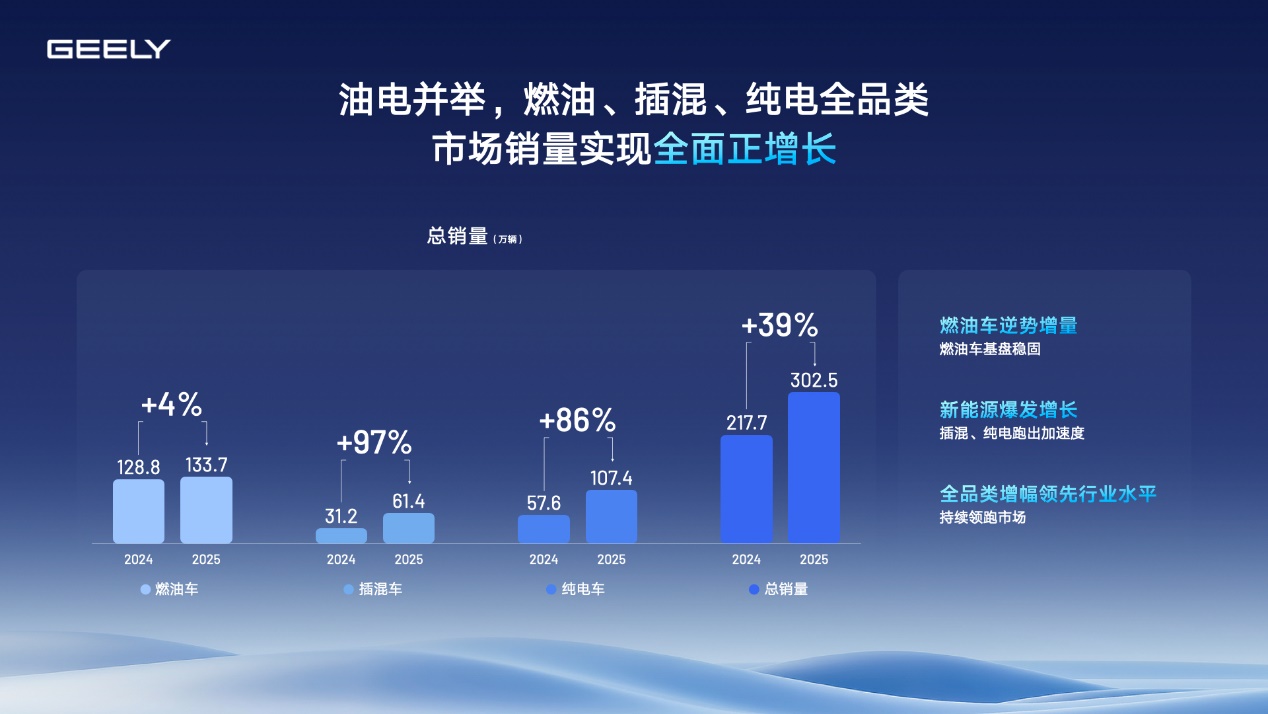
Core Insights - Geely Automobile Holdings Limited reported a record total revenue of 345.2 billion yuan for 2025, marking a 25% year-on-year increase, with core net profit rising 36% to 14.41 billion yuan, indicating high-quality growth [1] - The company plans to increase its dividend by 51.5% to 0.5 HKD per share, totaling 5.39 billion HKD, reflecting its commitment to sharing growth with shareholders [1] - Geely's total sales reached 3.025 million units in 2025, a 39% increase, with new energy vehicle sales exceeding 1.68 million units, up 90%, solidifying its position in the industry [1] Financial Performance - Total revenue for 2025 was 345.2 billion yuan, a 25% increase year-on-year [1] - Core net profit reached 14.41 billion yuan, reflecting a 36% growth [1] - Total cash reserves increased by 46% to 68.2 billion yuan, indicating strong liquidity [1] Sales and Market Position - Geely's total sales for 2025 were 3.025 million units, exceeding the adjusted target of 3 million units [1] - New energy vehicle sales reached 1.68 million units, marking a 90% increase and positioning Geely among the top players in the sector [1] - In the first two months of 2026, Geely maintained its industry-leading position with sales of 476,000 units [1] Strategic Developments - The "One Geely" strategy was further deepened in 2025, integrating Zeekr to create a comprehensive brand portfolio across mainstream, high-end, and luxury markets [3] - The Zeekr brand achieved sales of 224,000 units in 2025, with significant monthly sales milestones [4] - Lynk & Co maintained a growth trajectory with annual sales of 350,000 units, a 23% increase [6] Technological Advancements - Geely launched its first comprehensive AI technology system in 2025, enhancing its capabilities in smart and electric vehicle technology [12] - The company achieved significant advancements in battery technology, including the ShenDun JinZhuan battery and the upcoming all-solid-state battery [16] - Geely's AI-assisted driving system has gained global recognition, with successful deployments and partnerships [14] Global Expansion - Geely's overseas sales reached 420,000 units in 2025, with over 120,000 units being new energy vehicles, reflecting a strong international presence [20] - The company entered 13 new markets in 2025, expanding its global footprint significantly [22] - Geely's global manufacturing capabilities were enhanced with the launch of new plants in Egypt and Indonesia [22] Sustainability and ESG Initiatives - Geely was included in the S&P Global "Global Sustainability Yearbook 2026," highlighting its leadership in ESG practices [25] - The company achieved a 25.5% reduction in carbon emissions per vehicle compared to 2020, exceeding its carbon reduction targets [25] - Geely aims to launch multiple new products in 2026, targeting a total sales goal of 3.45 million units [25]
生物基产业解读②:奔驰/宝马/小米押注! 合成生物材料进入供应链了?
合成生物学与绿色生物制造· 2026-03-18 05:46
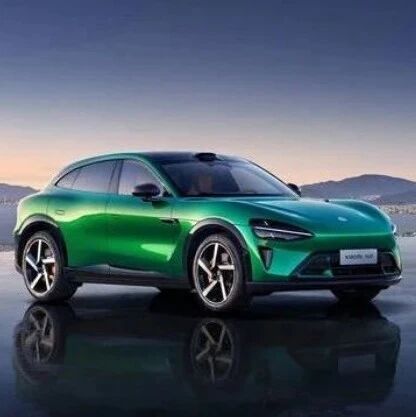
Core Viewpoint - The automotive industry is undergoing a transformation towards lower carbon and more sustainable practices, driven by regulatory pressures and consumer demand for environmentally friendly materials [6][7]. Group 1: Opportunities for Bio-based and Synthetic Biological Materials - The application of bio-based materials in the automotive sector is shifting from niche experimentation to mainstream adoption, with natural plant fibers and microbial synthetic plastics being integrated into various components [6]. - Regulatory frameworks, such as the EU's new ELV and REACH regulations, are imposing high environmental standards, mandating that 25% of plastics used in new cars must come from recycled materials, and that the use of bio-based materials in car interiors must reach at least 35% by 2025 [7]. - Consumer awareness is rising, with 85% of car buyers considering interior environmental friendliness in their purchasing decisions and willing to pay a 5%-10% premium for bio-based materials [7]. - The cost of bio-based materials is decreasing due to innovations in large-scale production and raw material sourcing, with some materials now costing less than 1.1 times that of traditional petroleum-based materials [7]. Group 2: Leading Companies in Bio-based Material Adoption - Mercedes-Benz has introduced animal-free interiors using AMSilk spider silk-based materials and plant proteins in concept car door handles [8]. - BMW is investing in natural fiber-reinforced materials from Bcomp and exploring the use of coffee grounds in automotive parts, with recent models utilizing hemp fiber composites [8]. - Xiaomi's YU7 model features "Misu Leather," derived from corn stalks, and bio-based biodegradable interior materials [8]. - Volkswagen has used AMSilk's Biosteel fibers in the door handles of its VISION EQXX concept car, which are biodegradable and recyclable [8]. - Volvo's EX30 incorporates BCOMP's AmpliTex™ natural fiber composite technology, and the company has invested in Bcomp's Series B financing [9]. - Hyundai collaborates with UNCAGED Innovations to use high-performance bio-based leather, enhancing touch and durability [9]. - Ford has integrated bio-based materials into various components, including seat cushions and dashboards [10]. - Chery is developing bio-based interior products in collaboration with Fengyuan Bio, including bio-based polyurethane adhesives [11]. Group 3: Accelerating Low-Carbon Transition - Chinese automotive parts manufacturers are increasingly entering the global supply chain of luxury brands, adapting to stringent EU environmental regulations to avoid high carbon tariffs [14]. - The upcoming Bio-based Conference in Shanghai will focus on the development and application of bio-based materials in automotive contexts, inviting collaboration among various stakeholders [15].
国泰海通晨报-20260318
GUOTAI HAITONG SECURITIES· 2026-03-18 05:34
Group 1: Financial Engineering Research - The report identifies four dimensions (macro, technical, sentiment, and economic) to drive industry rotation and constructs an ETF monthly rotation portfolio based on primary industry recommendations [2][3] - The strategy has shown strong performance since its inception in 2018, with an annualized excess return of 13.85% and a compound factor strategy annualized excess return of 7.28% by the end of 2025 [2][3] - In 2025, the single-factor multi-strategy portfolio achieved an absolute return of 36%, with an excess return of 12.29% compared to an equal-weight benchmark [3] Group 2: Power Equipment and New Energy Research - The company, Megmeet (麦格米特), is expected to significantly increase its product value from 2 RMB/W to 5-6 RMB/W by forming a complete AI power solution [5][6] - The company has been innovating alongside NVIDIA, developing a comprehensive product layout including high-power PSUs, HVDC, BBU, and supercapacitors, and is positioning itself to enter the ASIC supply chain [6] - The AI power market is projected to exceed 100 billion RMB, with increasing demand for power supply as NVIDIA's chip power consumption rises [6] Group 3: Medical Devices Industry - The report maintains an "overweight" rating for the medical device sector, highlighting the acceleration of commercialization for surgical robots [10][11] - The approval of a unique integrated surgical robot platform by 精锋医疗 is expected to enhance commercialization processes [10] - The report notes that the global commercial orders for 微创机器人 have surpassed 200 units, indicating strong growth in overseas sales [11] Group 4: Hydrogen Energy in Construction Engineering - The report discusses the government's initiative to promote hydrogen energy applications, with a target to reduce hydrogen prices and increase the number of fuel cell vehicles [13][25] - 华电科工 is actively exploring integrated projects in renewable energy and hydrogen production, aiming to lead in the hydrogen market [14][15] - 中钢国际 has successfully implemented hydrogen metallurgy technology, contributing to the steel industry's transition to low-carbon processes [24][27] Group 5: Wealth Management in Financial Services - The report indicates a significant increase in non-cash fund holdings among the top 100 institutions, with a 14.7% increase to 11.7 trillion RMB [16][19] - The growth in equity funds is primarily driven by third-party channels, reflecting a shift in wealth management strategies [17][19] - The concentration of fund holdings among leading institutions is becoming more pronounced, indicating a trend towards headquarter concentration in wealth management [19]
吉利汽车发布年度业绩 总收入同比上升25%达3452亿元 再度创下历史新高
Zhi Tong Cai Jing· 2026-03-18 05:16
Core Viewpoint - Geely Automobile reported a significant increase in revenue and vehicle sales for the year ending December 31, 2025, driven by its successful transformation in the new energy and smart vehicle sectors [1][3] Financial Performance - The company achieved a revenue of 345.23 billion RMB, a year-on-year increase of 25% [1] - Profit attributable to shareholders was 16.85 billion RMB, reflecting a slight increase of 0.24% year-on-year [1] - Basic earnings per share were 1.67 RMB, with a proposed final dividend of 0.5 HKD per share [1] Vehicle Sales and Market Strategy - Geely sold a total of 3.02 million vehicles in 2025, a 39% increase year-on-year, exceeding the revised target of 3 million units [1] - Domestic wholesale volume increased by 48% to 2.60 million units, while export wholesale volume rose by 1% to 420,100 units [1] New Energy Vehicle (NEV) Development - The Geely Galaxy brand saw a 150% increase in sales to 1.24 million units, making it the second-largest NEV brand in China [2] - The Lynk & Co brand achieved sales of 350,500 units, a 23% increase, with 65% of sales coming from NEV products [2] - The premium NEV brand Zeekr sold 224,100 units, a 1% increase, with the Zeekr 9X becoming a top seller in the high-end SUV segment [2] Market Position and Future Outlook - In 2025, Geely's NEV sales are projected to grow by 90% to 1.69 million units, accounting for 56% of total sales, positioning the company as the second-largest NEV seller globally [2] - The company benefited from economies of scale, cost efficiencies from its new energy architecture, and the introduction of high-end products, leading to a gross profit increase of 25% and a gross margin of 16.6% [3]
吉利汽车(00175)发布年度业绩 总收入同比上升25%达3452亿元 再度创下历史新高
智通财经网· 2026-03-18 05:14
Core Viewpoint - Geely Automobile reported a revenue of 345.23 billion RMB for the year ending December 31, 2025, marking a 25% year-on-year increase, with a profit attributable to shareholders of 16.85 billion RMB, a slight increase of 0.24% [1] Group 1: Financial Performance - The company achieved a basic earnings per share of 1.67 RMB and proposed a final dividend of 0.5 HKD per share [1] - Gross profit increased by 25% year-on-year, with a gross margin of 16.6%, reflecting a slight rise of 0.1% despite intense price competition in the industry [3] Group 2: Sales and Market Performance - Total vehicle sales reached 3.02 million units, a 39% increase year-on-year, exceeding the revised target of 3 million units [1] - Domestic wholesale volume grew by 48% to 2.60 million units, while export wholesale volume increased by 1% to 420,100 units [1] Group 3: New Energy Vehicle (NEV) Development - The mainstream NEV brand, Geely Galaxy, launched several successful models, contributing to a 150% year-on-year increase in sales to 1.24 million units, securing the second position in China's NEV brand sales [2] - The mid-to-high-end brand Lynk & Co saw sales rise by 23% to 350,500 units, with NEV products accounting for 65% of total sales [2] - The luxury NEV brand Zeekr maintained its growth, with annual sales of 224,100 units, a 1% increase, and its model Zeekr 9X became a top seller in the large SUV segment priced above 500,000 RMB [2] Group 4: Strategic Focus - The company continues to balance the development of both fuel and NEVs, enhancing the intelligence of fuel vehicles to maintain sales growth amid rising NEV penetration in China [1] - Geely is accelerating its NEV exports to diversify its global market presence [1]
港股午评:恒指跌0.17% 科指跌0.81% 汽车股普跌 石油股下挫 理想汽车跌超6%
Xin Lang Cai Jing· 2026-03-18 04:02
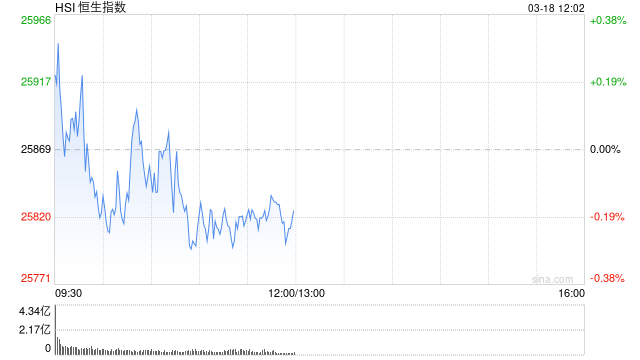
Market Overview - The Hong Kong stock market indices collectively declined, with the Hang Seng Index falling by 0.17% to 25,824.70 points, the Hang Seng Tech Index down by 0.81%, and the National Enterprises Index decreasing by 0.61% [1][9]. Sector Performance - The technology sector saw mixed results, with Bilibili rising by 4% while Kuaishou and Xiaomi both dropped over 1% [1][9]. - The semiconductor sector performed well, highlighted by a more than 10% increase in Zhaoyi Innovation [1][9]. - The automotive sector experienced a pullback, with Li Auto declining over 6% [1][5][12]. - Oil stocks fell, with CNOOC down more than 3% [1][8][12]. Semiconductor Insights - UBS noted that the current storage cycle is influenced by HBM taking up DRAM capacity and AI driving up storage value weight. Traditional price acceleration methods for predicting market peaks have low accuracy, with operating profit being a more effective leading indicator. Historically, stock prices peak in 90% of cases in sync with or ahead of profit peaks. UBS expects the current profit peak to occur in Q3 2027, suggesting a potential continuation of the semiconductor stock rally until Q2 2027 [2][10]. Automotive Sector Challenges - Automotive companies, including NIO, Li Auto, and Xiaomi, have warned about cost challenges due to rising chip prices. Chery's high-end brand announced a price increase for its ET5 model by 5,000 yuan, and there are reports of upcoming price adjustments for the Zeekr 007GT model, with increases expected between 5,000 to 8,000 yuan [5][11]. Oil Market Dynamics - Morgan Stanley warned that the current $55 price differential is due to regional inventory surplus and policy interventions, which do not reflect the true global supply tightness. If the Strait of Hormuz remains blocked, Brent and WTI prices are expected to realign upwards towards Middle Eastern spot prices [8][12].


异动盘点0318 | 智谱盘中涨超10%,汽车股集体回落;Swarmer上市首日飙升520%,美股太空概念股表现活跃
贝塔投资智库· 2026-03-18 04:01
Group 1 - Zhipu AI (02513) saw a price increase of over 10% during trading, currently up 7.4%, following the announcement of its first closed-source model GLM-5-Turbo and a 20% price hike for its new model API [1] - Capital Airport (00694) dropped over 4% after JPMorgan downgraded its investment rating from "Neutral" to "Underweight" and cut the target price by 40% to HKD 1.8, citing structural challenges and potential selling pressure from being removed from the Hong Kong Stock Connect list [1] - Cloudwalk Technology (02670) rose over 7% after signing a strategic cooperation agreement with SF Express to define new standards for building delivery [1] Group 2 - Yiming Anke-B (01541) increased by over 8% after receiving approval for its II phase clinical study of IMM0306 for treating Primary Membranous Nephropathy [2] - WanGuo Data-SW (09698) surged over 12.6% after reporting a net revenue of RMB 11.4323 billion (USD 1.6348 billion) for the year, a 10.8% year-on-year increase, with adjusted EBITDA also up by 10.8% [2] - Automotive stocks collectively fell, with Li Auto-W (02015) down 6.24%, Xpeng Motors-W (09868) down 4.35%, and Great Wall Motors (02333) down 2.64%, amid warnings from multiple CEOs about rising chip costs [2] Group 3 - Smoore International (06969) opened slightly higher but fell 15.21% after reporting a revenue of approximately RMB 14.256 billion for 2025, a 20.8% increase, but a net profit decline of 18.5% [3] - China Cosco Shipping Energy Transportation (01138) rose 5.39% as reports indicated significant impacts on the tanker and energy markets due to ongoing Middle East conflicts [3] Group 4 - China Oriental Education (00667) increased by 6.57% after reporting a revenue of RMB 4.616 billion for 2025, a 12.1% year-on-year increase, with net profit up 47.5% [4] - Changfeng Pharmaceutical (02652) surged over 21%, currently up 9.99%, after announcing the acceptance of its IND application for a new inhalation powder for treating pulmonary arterial hypertension [4] Group 5 - Swarmer (SWMR.US) debuted on the US stock market with a staggering opening price increase of 315.4%, currently up 520%, focusing on AI-driven drone swarm control systems [5] - 36Kr (KRKR.US) rose 37.39% after reporting a total revenue of RMB 227 million for 2025, with a gross margin increase to 58% and a net profit of approximately RMB 11.42 million [5] - Space-related stocks saw active trading, with Rocket Lab (RKLB.US) up 10.21% and Planet Labs PBC (PL.US) up 10.08% [5] Group 6 - Solaris Energy Infrastructure (SEI.US) rose 10.88% after announcing agreements worth USD 620 million to add approximately 900 MW of gas turbine capacity between 2026 and 2029 [7] - Uber (UBER.US) increased by 4.19% following a partnership with NVIDIA to deploy autonomous taxi fleets in major US cities by 2027 [8] - Aiko Solar (CSIQ.US) rose 1.94% after announcing a supply agreement for a 500 MW energy storage project [8] - Atour (ATAT.US) saw a price increase of 5.98% after reporting a net revenue of approximately RMB 2.788 billion for Q4 2025, a 33.8% year-on-year increase [8]