
农产品加工

Search documents
新春走基层丨宁夏:“CEO”的下沉与生长
Sou Hu Cai Jing· 2026-02-27 02:34
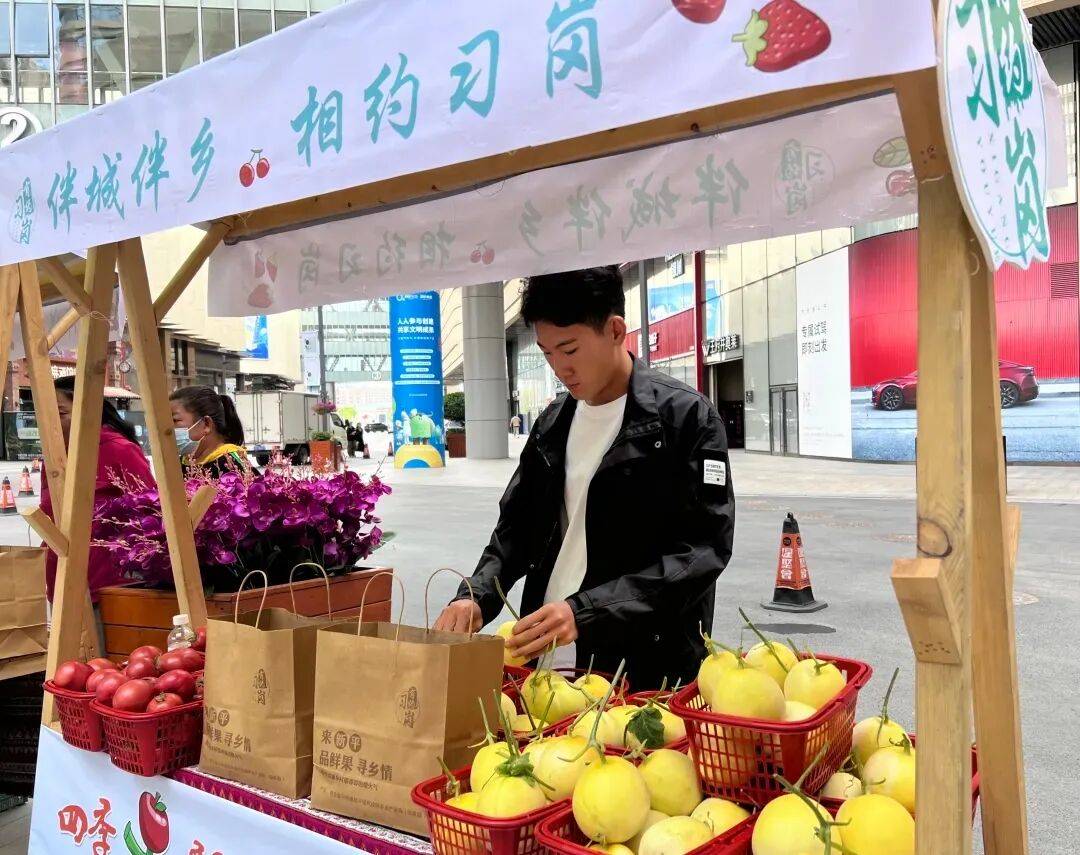
■何玲 告别在写字楼里谈论商业模式,年轻人开始把"CEO"的办公室搬到了田间地头。 去年底,陈亮代表宁夏参加了农业农村部在厦门举办的全国万名乡村CEO培养计划学习班,对自己和团队一年多的实践又有了新的思考。 在西部经营乡村与发达地区有什么不同?乡村CEO的作用机制和运营效果如何?陈亮团队在宁夏贺兰县习岗镇的实践,给出了一些答案。 乡村职业经理人到底是做什么的? 懂经营、善管理、会运营、能创新的现代化管理人才下沉到乡村,是从"千万工程"开始的试点探索,壮大新型农村集体经济是其核心定位。 "我们咨询公司以前服务的重点都是农业企业,和村里沟通也比较多,2023年贺兰县委组织部、农办开展职业经理人试点,2024年我们接手新平村职业经 理人服务,后来扩展到习岗镇的6个村。"陈 亮表示,习岗镇是银川市城乡融合示范镇,紧扣村域发展特质与产业基础,工作团队化、项目化、市场化,重点围绕产业规划运营、专业技术支持、市场 对接营销等方面开展工作。 项目运作最能体现运营效果。团队精准对接政策导向,引入前沿生物菌种技术落地设施果蔬栽培领域,斩获35万元专项科技资金;深度参与"数智绿色果 蔬产业小院"村企合作项目,撬动800多万元乡村振 ...

党旗引领产业兴 面粉厂“磨”出共富路
Xin Lang Cai Jing· 2026-02-26 14:30
转自:草原云 2月26日,走进通辽市经济技术开发区东升村的现代化面粉加工厂,机器运转,面香四溢。麦粒经过研 磨等工序,变为雪白的面粉,被工人们熟练地封袋、装车。 这座由村党支部牵头打造的加工厂,不仅让当地优质小麦实现了"从田间到餐桌"的增值,更串联起一条 土地流转、合作社经营、科技赋能、品牌销售的完整产业链,奏响了乡村振兴的"丰收曲"。 "以前种地'单打独斗',一年忙到头也挣不了多少钱。现在不一样了,土地流转给合作社有租金,我在 面粉厂上班还有工资,年底还能分红,这日子是越过越有奔头了!"村民王佰昌脸上洋溢着幸福的笑 容,朴实的话语道出了东升村村民共同的心声。 然而,村党支部并未满足于此。"只卖原粮和初级农产品,利润薄,抗风险能力也弱。要想让土地生 金,让村民持续增收,就必须在精深加工上做文章。"东升村党支部书记代洪波在介绍产业发展历程时 表示。2021年,村党支部瞄准农产品加工短板,依托合作社稳定的优质小麦原料供应,投入125万元集 体经济资金,建起了占地4.5亩的现代化面粉加工厂,并精心打造了"蒙祥稼禾"特色品牌。从仓储到加 工,再到线上线下销售,一体化的运营体系逐步完善,形成了完整的产业闭环。如今,包装 ...
一致魔芋:2025年归母净利润同比下降23.53%
Bei Jing Shang Bao· 2026-02-26 13:00
公告表示,营收增长主要得益于公司有效的营销策略和魔芋产品的销售单价及销量提升,特别是魔芋粉 的销售增长;净利润下降则是由于魔芋原材料涨价和产品毛利率收窄所致。 北京商报讯(记者 郭秀娟 王悦彤) 2月26日,一致魔芋发布业绩快报,公司2025年实现营收7.39亿元, 同比增长19.91%;归母净利润为6631.46万元,同比下降23.53%。 ...
瑞达期货红枣产业日报-20260226
Rui Da Qi Huo· 2026-02-26 08:50
| 项目类别 | 数据指标 | 最新 | 环比 数据指标 | 最新 | 环比 | | --- | --- | --- | --- | --- | --- | | 期货市场 | 期货主力合约收盘价:红枣(日,元/吨) | 8935 | 25 主力合约持仓量:红枣(日,手) | 116996 | 3580 0 | | | 期货前20名持仓:净买单量:红枣(日,手) | -17012 | -290 仓单数量:红枣(日,张) | 3869 | | | | 有效仓单预报:红枣:小计(日,张) | 83 | 0 | | | | 现货市场 | 喀什红枣统货价格(日,元/公斤) | 6.5 | 0 河北一级灰枣批发价格(日,元/斤) | 3.95 | 0 | | | 阿拉尔红枣统货价格(日,元/公斤) | 5.65 | 0 河南一级灰枣批发价格(日,元/斤) | 4.15 | 0 | | | 阿克苏红枣统货价格(日,单位:元/公斤) | 5.15 | 0 河南红枣特级价格(元/公斤) | 9.5 | 0 | | | 河北红枣特级价格(元/公斤) | 9.2 | 0.02 广东红枣特级价格(日,元/公斤) | 10 | 0 | ...
湖北“新春第一会”定调,锚定支点建设启新程
2 1 Shi Ji Jing Ji Bao Dao· 2026-02-26 06:54
Core Insights - The "New Spring First Meeting" serves as a significant platform for local economic development discussions, emphasizing "high-quality development" as a common theme across various provinces and cities in China [1][2] Group 1: Economic Development Strategies - Hubei's focus for the "New Spring First Meeting" is to establish itself as a crucial strategic pivot for the rise of the central region, aiming for a total economic output of 6 trillion yuan by 2025, with Wuhan's economy expected to exceed 2 trillion yuan [2] - The meeting highlighted Hubei's commitment to leveraging technological innovation and industrial upgrades as key drivers for economic growth, particularly in the context of artificial intelligence and low-altitude economy [4][5] Group 2: Technological Advancements - Hubei showcased significant advancements in humanoid robotics, with 31 units displayed, indicating a rapid industrialization process. Key innovations include increased joint flexibility and local supply chain integration [3] - The province aims to achieve an artificial intelligence output of 1,107 billion yuan by 2024, with a target of surpassing 1,500 billion yuan by 2025, supported by local research institutions [4] Group 3: Industrial Growth and Infrastructure - Hubei is focusing on building modern industrial clusters, with five major industries reaching trillion-level scales, and plans to establish new enterprises in various categories [7] - The province is also prioritizing the development of county-level consumption and enhancing trade, aiming to become the leading province in foreign trade in the central region [7] Group 4: Governance and Implementation - To ensure the successful execution of its strategic plans, Hubei has introduced initiatives to enhance the capabilities of its workforce, focusing on high-quality development and proactive engagement [8]
银河期货每日早盘观察-20260226
Yin He Qi Huo· 2026-02-26 05:21
Report Industry Investment Rating No relevant content provided. Core Viewpoints of the Report - Wednesday saw continued rises in stock index futures, with the overall market showing an upward trend driven by price - rising themes. The bond market was affected by real - estate policies and showed a complex short - term trend but remained optimistic in the medium - term. In the agricultural products market, factors such as weather and production forecasts influenced prices. The black metal market was affected by policies and demand recovery, with steel prices expected to oscillate. The non - ferrous metal market was influenced by macro and geopolitical factors, with prices showing different trends. The shipping and carbon emission markets were affected by geopolitical and policy factors. The energy and chemical market was affected by supply - demand relationships and geopolitical situations, with prices fluctuating [20][24][28]. Summary by Relevant Catalogs Financial Derivatives - **Stock Index Futures**: On Wednesday, the stock index continued to rise, with small - cap indexes performing better. Price - rising themes supported the market, and trading volume steadily increased. The trading strategies included going long on dips, conducting IM/IC 2609 long + ETF short cash - and - carry arbitrage, and using bull spreads [20][21][23]. - **Treasury Bond Futures**: On Wednesday, treasury bond futures closed down across the board. The relaxation of real - estate policies in Shanghai was a negative factor for the bond market. In the short - term, the bond market may fluctuate, but in the medium - term, the outlook is relatively optimistic. The trading strategies included a neutral - to - bullish approach for single - side trading and waiting and seeing for arbitrage [24][25]. Agricultural Products - **Protein Meal**: CBOT soybeans and soybean meal indexes rose. Weather disturbances in the producing areas affected crop yields, and the domestic soybean market was volatile. The trading strategies included waiting and seeing for single - side trading, arbitrage, and using a short strangle strategy for options [27][28]. - **Sugar**: ICE and London sugar prices were volatile. Brazil's sugar exports decreased, and India's sugar production increase was adjusted downward. The domestic Zhengzhou sugar was expected to maintain a bottom - oscillating trend. The trading strategies included waiting for the international sugar price to break through the previous high, waiting and seeing for arbitrage, and shorting put options in the short - term [30][33][34]. - **Oilseeds and Oils**: CBOT soybean oil and BMD palm oil prices changed slightly. Malaysia's palm oil exports and production decreased in February. The domestic oil inventory was at a moderately high level, and the market was expected to oscillate. The trading strategies included short - term oscillation, considering reverse arbitrage for p59 and y59, and waiting and seeing for options [36][37][38]. - **Corn/Corn Starch**: CBOT corn prices rose. The domestic corn market had stable prices in the northeast and falling prices in the north - central region. The inventory situation was complex, and the futures price was expected to oscillate. The trading strategies included a long - on - dip approach for the outer - market 05 corn, short - selling the 05 corn on rallies, and widening the 05 corn - starch spread [40][41][42]. - **Hogs**: Hog prices were stable overall, with supply pressure remaining. The trading strategies included lightly going long on the 05 contract, waiting and seeing for arbitrage, and using a short strangle strategy for options [43][45]. - **Peanuts**: Peanut spot prices were stable, and the futures price oscillated narrowly. The trading strategies included lightly going long on the 05 contract on dips, waiting and seeing for arbitrage, and shorting the pk605 - P - 7800 option [47][48][49]. - **Eggs**: Egg prices were stable to slightly falling after the holiday. The trading strategies included short - selling the June contract on rallies, waiting and seeing for arbitrage, and waiting and seeing for options [50][51][52]. - **Apples**: Apple inventory decreased, and high - quality apple prices were firm. The 5 - month contract price was expected to be strong. The trading strategies included going long on dips for the 5 - month contract, long 5 short 10 for arbitrage, and waiting and seeing for options [53][54][55]. - **Cotton - Cotton Yarn**: The outer - market cotton price rose. The global cotton supply - demand situation was relatively tight, and the domestic cotton price was expected to rise. The trading strategies included going long on dips for Zhengzhou cotton, waiting and seeing for arbitrage, and waiting and seeing for options [56][57]. Black Metals - **Steel**: Steel prices oscillated at night. After the holiday, the steel inventory increased, and the demand recovery was uncertain. The trading strategies included oscillating trends, shorting the coil - coal ratio on rallies, and waiting and seeing for options [59][60]. - **Coking Coal and Coke**: Australian coking coal prices were inverted, and port coke inventory decreased. After the holiday, coal mines resumed production. The trading strategies included going long on dips for coking coal, waiting and seeing for arbitrage, and waiting and seeing for options [61][62][63]. - **Iron Ore**: Iron ore prices fell slightly at night. The supply was abundant, and the demand might decline. The trading strategies included a weakening trend for single - side trading, waiting and seeing for arbitrage, and waiting and seeing for options [66][67]. - **Ferroalloys**: The cost of ferroalloys was strongly supported. The trading strategies included holding previous long positions, waiting and seeing for arbitrage, and shorting out - of - the - money put options [68][69]. Non - Ferrous Metals - **Gold and Silver**: London gold and silver prices rose. The dollar index fell, and the 10 - year US Treasury yield oscillated at a low level. The prices of gold and silver were expected to oscillate at a high level. The trading strategies included holding long positions against the 5 - day moving average, waiting and seeing for arbitrage, and buying out - of - the - money call options or using a bull call spread strategy [71][72][74]. - **Platinum and Palladium**: Platinum and palladium prices oscillated. Geopolitical and macro factors supported precious metals. The trading strategies included going long on platinum on dips, waiting and seeing for palladium, and long platinum short palladium for arbitrage [75][76]. - **Copper**: The copper price was expected to oscillate strongly in the short - term. The macro environment was favorable for copper consumption, but inventory increases limited the upside. The trading strategies included a short - term strong - oscillation trend, waiting and seeing for arbitrage, and buying out - of - the - money call options [79][80]. - **Alumina**: The alumina price was expected to oscillate strongly in the short - term. Attention should be paid to the resumption of production of northern capacity. The trading strategies included a short - term oscillating - to - strong trend [83][84]. - **Electrolytic Aluminum**: The electrolytic aluminum price was expected to oscillate strongly. NVIDIA's performance boosted the market, and the supply - demand relationship was supportive. The trading strategies included an oscillating - to - strong trend, waiting and seeing for arbitrage, and waiting and seeing for options [87]. - **Cast Aluminum Alloy**: The cast aluminum alloy price was expected to oscillate strongly following the aluminum price. The trading strategies included an oscillating - to - strong trend, waiting and seeing for arbitrage, and waiting and seeing for options [88]. - **Zinc**: The zinc price was expected to be bought on dips after a correction. The macro and fundamental factors influenced the price. The trading strategies included buying on dips after a correction, waiting and seeing for arbitrage, and waiting and seeing for options [91][92]. - **Lead**: The lead price was expected to oscillate within a range. The market was affected by inventory and demand. The trading strategies included going long on dips with light positions, waiting and seeing for arbitrage, and buying deep out - of - the - money call options [93][94]. - **Nickel**: The nickel price was dominated by macro factors. Indonesian policies and demand were the focus. The trading strategies included holding long positions at low levels, waiting and seeing for arbitrage, and shorting out - of - the - money put options [96][98]. - **Stainless Steel**: The stainless steel price followed the nickel price. The cost was supportive. The trading strategies included holding long positions at low levels, waiting and seeing for arbitrage [99][100]. - **Industrial Silicon**: The industrial silicon price was affected by the resumption of production of leading manufacturers. The trading strategies included waiting and seeing, with the option of short - term long positions [101][102]. - **Polysilicon**: The polysilicon market was bearish fundamentally. Attention should be paid to spot transactions. The trading strategies included waiting and seeing [104][105]. - **Lithium Carbonate**: The lithium carbonate price was likely to rise due to supply disruptions. The trading strategies included holding long positions at low levels, waiting and seeing for arbitrage, and shorting out - of - the - money put options [107][110]. - **Tin**: The tin price was expected to be strong. NVIDIA's performance boosted demand, and supply factors needed attention. The trading strategies included a short - term strong - oscillation trend, waiting and seeing for options [111][113]. Shipping and Carbon Emissions - **Container Shipping**: The spot freight rate of container shipping decreased. The market was affected by the Iran situation and seasonal factors. The trading strategies included short - term oscillation and waiting and seeing [114][115]. - **Dry Bulk Freight**: The BDI index rose. The market was influenced by demand recovery and geopolitical factors. In the long - term, the supply and demand situation needed attention. The trading strategies included a positive short - term trend [116][117]. - **Carbon Emissions**: The domestic carbon market had sporadic transactions, and the EU carbon market was affected by policies and public opinion. The carbon price in China was expected to be supported in the short - term, and the EU carbon market was in a tight supply situation. The trading strategies included waiting and seeing [121][122]. Energy and Chemicals - **Crude Oil**: OPEC+ might slightly increase production in April. The oil price was expected to oscillate at a high level. The trading strategies included high - level oscillation, waiting and seeing for arbitrage, and buying out - of - the - money call options [124][125]. - **Asphalt**: The demand for asphalt had not recovered, and the supply was expected to increase. The trading strategies included going long on the BU2606 contract on dips, waiting and seeing for arbitrage, and waiting and seeing for options [126][127]. - **Fuel Oil**: The fuel oil price was affected by supply and geopolitical factors. The trading strategies included a strong - oscillation trend, going long on the FU2605 contract on dips, and waiting and seeing for options [129][131][132]. - **LPG**: The LPG outer - market was strong. The domestic market was expected to oscillate at a high level. The trading strategies included high - level oscillation, waiting and seeing for arbitrage, and waiting and seeing for options [133][136]. - **Natural Gas**: The natural gas market was waiting for geopolitical guidance. The demand risk decreased, but the supply risk remained. The trading strategies included holding short positions for the US HH second - quarter contract, waiting and seeing for arbitrage, and waiting and seeing for options [137][138][139]. - **PX & PTA**: The PX and PTA prices were expected to oscillate. The supply - demand situation was gradually improving. The trading strategies included oscillating consolidation, waiting and seeing for arbitrage, and waiting and seeing for options [141][142]. - **BZ & EB**: The overseas supply of benzene and styrene was in a vacuum period. The domestic supply was stable. The trading strategies included oscillating consolidation, reverse arbitrage, and waiting and seeing for options [143][144][145]. - **Ethylene Glycol**: The ethylene glycol market had obvious inventory - building pressure. The supply - demand structure was improving, but the inventory was increasing. The trading strategies included range - oscillation, waiting and seeing for arbitrage, and waiting and seeing for options [146][149]. - **Short - Fiber**: The short - fiber price was expected to oscillate. The trading strategies included oscillating consolidation, narrowing the processing fee on rallies for arbitrage, and waiting and seeing for options [150][151]. - **Bottle Chips**: The supply of bottle chips was expected to be tight. The trading strategies included oscillating consolidation, waiting and seeing for arbitrage, and waiting and seeing for options [153][154]. - **Propylene**: Some propylene supply returned. The market was stable with a weakening trend. The trading strategies included oscillating consolidation, waiting and seeing for arbitrage, and waiting and seeing for options [155][156]. - **Plastic PP**: The PPI of plastic products declined for consecutive months. The trading strategies included holding long positions for the L 2605 contract, short - selling the PP 2605 contract on a small scale, and waiting and seeing for arbitrage and options [157][158]. - **Caustic Soda**: The caustic soda price oscillated. The supply pressure was still there, and the demand was improving. The trading strategies included a weak - oscillation trend, waiting and seeing for arbitrage, and waiting and seeing for options [160][161]. - **PVC**: The PVC price oscillated weakly. The supply was high, and the demand was low. The trading strategies included a weak - oscillation trend [163][164]. - **Soda Ash**: The soda ash price oscillated strongly. The supply was high, and the demand was resilient. The trading strategies included going long on dips, shorting glass and going long on soda ash for arbitrage, and waiting and seeing for options [166][169][170]. - **Glass**: The glass price oscillated strongly, but the fundamentals were weak. The trading strategies included short - selling on rallies, shorting glass and going long on soda ash for arbitrage, and waiting and seeing for options [171][172]. - **Methanol**: The methanol price oscillated widely. The international and domestic supply - demand situations were complex. The trading strategies included a strong - oscillation trend [174]. - **Urea**: Urea factories were reluctant to sell. The supply was at a high level, and the demand was expected to increase. The trading strategies included going long on dips, paying attention to the 5 - 9 positive arbitrage, and shorting put options on corrections [176][177]. - **Pulp**: The high inventory of pulp restricted the rebound. The market was in a supply - surplus situation. The trading strategies included holding previous long positions, waiting and seeing for arbitrage, and shorting the SP2605 - P - 5250 option [179][182][183]. - **Offset Printing Paper**: The demand for offset printing paper was average. The market rebound was limited. The trading strategies included short - selling on rallies, waiting and seeing for arbitrage, and shorting the OP2604 - C - 4200 option [184][185]. - **Logs**: The log market had weak supply and demand. The price was affected by supply and demand and cost. The trading strategies included waiting and seeing, with the option of lightly going long for aggressive investors, and paying attention to the 5 - 7 reverse arbitrage [185][186]. - **Natural Rubber and 20 - grade Rubber**: The ANRPC had marginal production cuts. The prices of natural rubber and 20 - grade rubber rose. The trading strategies included holding long positions for the RU 05 contract, going long on the NR 04 contract on opportunities, and holding the RU2605 - RU2609 spread [187][189]. - **Butadiene Rubber**: The inventory build - up of domestic automobiles slowed down. The butadiene rubber price fell. The trading strategies included holding short positions for the BR 04 contract, waiting and seeing for arbitrage, and waiting and seeing for options [190][192].
综合晨报-20260226
Guo Tou Qi Huo· 2026-02-26 02:45
gtaxinstitute@essence.com.cn 综合晨报 2026年02月26日 (原油) 铸造铝合金跟随沪铝波动,宏观驱动且铝价处于高位,铸造铝合金与沪铝价差季节性表现将持续弱 于往年。 (氧化铝) 夜盘时段,油价维持区间窄幅波动。EIA最新数据显示,上周美国原油库存增加1600万桶,创下 2023年2月以来最大单周增幅;库存总量升至4.358亿桶,为八个月以来的最高水平。前一日API数 据公布后我们曾提示美国原油库存超预期大幅增加对油价的利空影响总体有限。美伊第三轮谈判将 在26日于日内瓦举行,伊朗方面表示决心在最短时间内达成一项公平合理的协议。美国方面则持续 保持军事威慑,但当前冲突整体仍处于可控范围。总体来看,近期美伊地缘局势的演变仍是主导油 价波动的核心变量。 【责金属】 隔夜贵金属偏强运行。美国贸易代表称正研究推进提升全球关税。地缘方面美伊新一轮谈判在即, 双方释放缓和信号但也保留军事行动选项。短期地缘和关税均处于关键节点,责金属等待进一步驱 动。 【铜】 隔夜铜价短线倾向震荡稳固在密集均线上方。贵金属与有色板块对美国关税不确定性的反映并不一 致,有色需求端主要关注关税相对低执行期,对国 ...
棕榈油:减产兑现,暂持逢低做多思路豆油:现货情绪扰动,区间震荡为主
Guo Tai Jun An Qi Huo· 2026-02-26 02:04
油脂基本面数据 | | | 单 位 | 收盘价 (日盘) | 涨跌幅 | 收盘价 (夜盘) | 涨跌幅 | | --- | --- | --- | --- | --- | --- | --- | | | 棕榈油主力 | 元/吨 | 8,848 | 0.27% | 8,780 | -0.77% | | | 豆油主力 | 元/吨 | 8,228 | 1.08% | 8,182 | -0.56% | | | 菜油主力 | 元/吨 | 9,244 | 0.48% | 9,182 | -0.67% | | 期 货 | 马棕主力 | 林吉特/吨 | 4,052 | -0.05% | 4,045 | -0.20% | | | CBOT豆油主力 | 美分/磅 | 60.63 | 0.21% | | | | | | 单 位 | 昨日成交 | 成交变动 | 昨日持仓 | 持仓变动 | | | 棕榈油主力 | 手 | 389,654 | 120731 | 386,410 | 15,453 | | | 豆油主力 | 手 | 282,357 | 94,318 | 664,427 | 33,779 | | | 菜油主力 | 手 | 18 ...
铜冠金源期货商品日报-20260226
Tong Guan Jin Yuan Qi Huo· 2026-02-26 01:34
投资咨询业务资格 沪证监许可[2015]84 号 国内方面,春假假期客流量、消费数据总体向好:全国春运跨区域客运创历史新高,单 日出行量 2 月 20 日突破约 3.5 亿人次,前 20 天累计跨区域出行已超 50 亿人次,整个春运 预计可达约 9.5 亿人次规模;假期消费稳步增长,主要商圈零售与餐饮销售同比提升逾 8%, 部分免税及服务消费显著增加,旅游与文化娱乐消费保持活跃,总体呈现"消费景气度提升" 的季节性特征,更全数据等待后续相关部门披露。总体而言,2 月处于经济数据和政策真空 期,短期市场焦点或将转向开年经济成色以及 3 月初两会的政策预期。 贵金属:美国关税不确定性加大,金银价格走强 国内春节长假期间,国际贵金属价格维持震荡偏强走势,国际金价重返 5200 美元上方, 银价走势更强,国际银价再度站上 87 美元/盎司。美国经济整体仍具韧性,但部分增速不及 预期。通胀方面,回落进程受阻、粘性特征凸显,12 月美国 PCE 价格指数同比升至 2.9%、 环比 0.4%,核心 PCE 同比升至 3%,均高于预期,核心 PCE 结束连续走平态势反弹,仍高 于美联储 2%目标。美联储 1 月议息会议纪要显 ...
招商势起 万象更新
Xin Lang Cai Jing· 2026-02-25 17:54
Core Viewpoint - The article highlights the vigorous efforts of the Xinjiang Production and Construction Corps (XPCC) in promoting investment and project development through the "Winter Investment Promotion" initiative, aiming for high-quality economic growth and structural adjustment. Group 1: Investment Promotion Activities - The XPCC has signed a total of 259 investment projects with a total investment amount of 66.18 billion yuan by the end of 2025 [1] - In January 2023, the Five Corps Shuanghe City signed 12 projects with a total investment of 4 billion yuan, covering diverse industries from agricultural processing to new energy [2] - The XPCC's business system has mobilized comprehensively, focusing on project-oriented work and enhancing the level of investment promotion [2] Group 2: Project Implementation and Management - The XPCC emphasizes the importance of early signing, landing, and effectiveness of investment projects to convert task lists into actual development results [3] - A clear roadmap and task assignments have been established for the investment promotion teams, which are equipped with industry chain maps and precise policies [3] - The Twelve Corps has implemented a project lifecycle management system, ensuring dedicated follow-up and service for each new project signed [7] Group 3: Service Optimization and Support - The Six Corps Wujiaqu City has adopted a full lifecycle service model, providing dedicated support for each project to facilitate quick signing and construction [6] - The Four Corps Keke Dara City has streamlined approval processes and established a closed-loop service mechanism to support key projects [7] - The "One Network for All" service model has been deepened, making business operations as convenient as online shopping [8] Group 4: Infrastructure and Future Outlook - The article mentions ongoing improvements in infrastructure, such as digital industrial parks and road networks, which enhance the capacity and support for industries [8] - The XPCC is poised to enter a new phase of development in 2026, marking the beginning of the 15th Five-Year Plan with a strong commitment to economic vitality [8]