大飞机

Search documents
利好来了!上海,重磅发布!事关商业航天、机器人……
券商中国· 2026-01-10 06:46
Core Viewpoint - The article discusses the Shanghai Municipal Government's newly released "Three-Year Action Plan for Supporting the Transformation and Upgrading of Advanced Manufacturing Industry (2026-2028)", which aims to enhance the manufacturing sector through various initiatives and support for emerging industries [1][2]. Group 1: Action Plan Overview - The action plan includes four main actions: structural adjustment and upgrading, innovation-driven foundational support, quality and efficiency improvement, and resource factor support [1]. - It outlines 17 specific measures to be implemented from January 1, 2026, to December 31, 2028 [1]. Group 2: Industry Development Goals - By 2028, the plan aims to add 100 manufacturing enterprises with an annual output value exceeding 1 billion yuan, totaling over 600 such enterprises [2]. - The plan emphasizes the development of new-generation electronic information, smart connected vehicles, high-end equipment, advanced materials, green low-carbon products, and fashion consumer goods [2]. Group 3: Support for Emerging Industries - The action plan encourages investment in low-altitude economy, commercial aerospace, embodied intelligence, biomanufacturing, and smart terminals, aiming to overcome bottlenecks in the industrial scale development of innovative products like eVTOLs, commercial rockets, and humanoid robots [2][3]. Group 4: Innovation and Technology Advancement - The plan supports increased investment in basic research, offering financial subsidies based on the annual research expenditure of enterprises [4]. - It focuses on core technology breakthroughs in areas such as laser manufacturing, quantum technology, and new energy materials [4]. Group 5: Quality and Efficiency Enhancement - The plan promotes the "AI + manufacturing" initiative, aiming for large enterprises to achieve full coverage of intelligent applications by 2027 and to increase robot density to 600 units per 10,000 people by 2028 [5]. - It also emphasizes green transformation, encouraging the development of low-carbon products and the establishment of green factories [5]. Group 6: Financial Support Mechanisms - The action plan outlines financial support for key industries, including lower interest rates and higher loan amounts for manufacturing loans, as well as customized insurance services for major technological equipment [6].


A股收评:沪指微跌录得15连阳!全市场成交额2.82万亿元,军工、商业航天板块爆发
Ge Long Hui· 2026-01-08 07:08
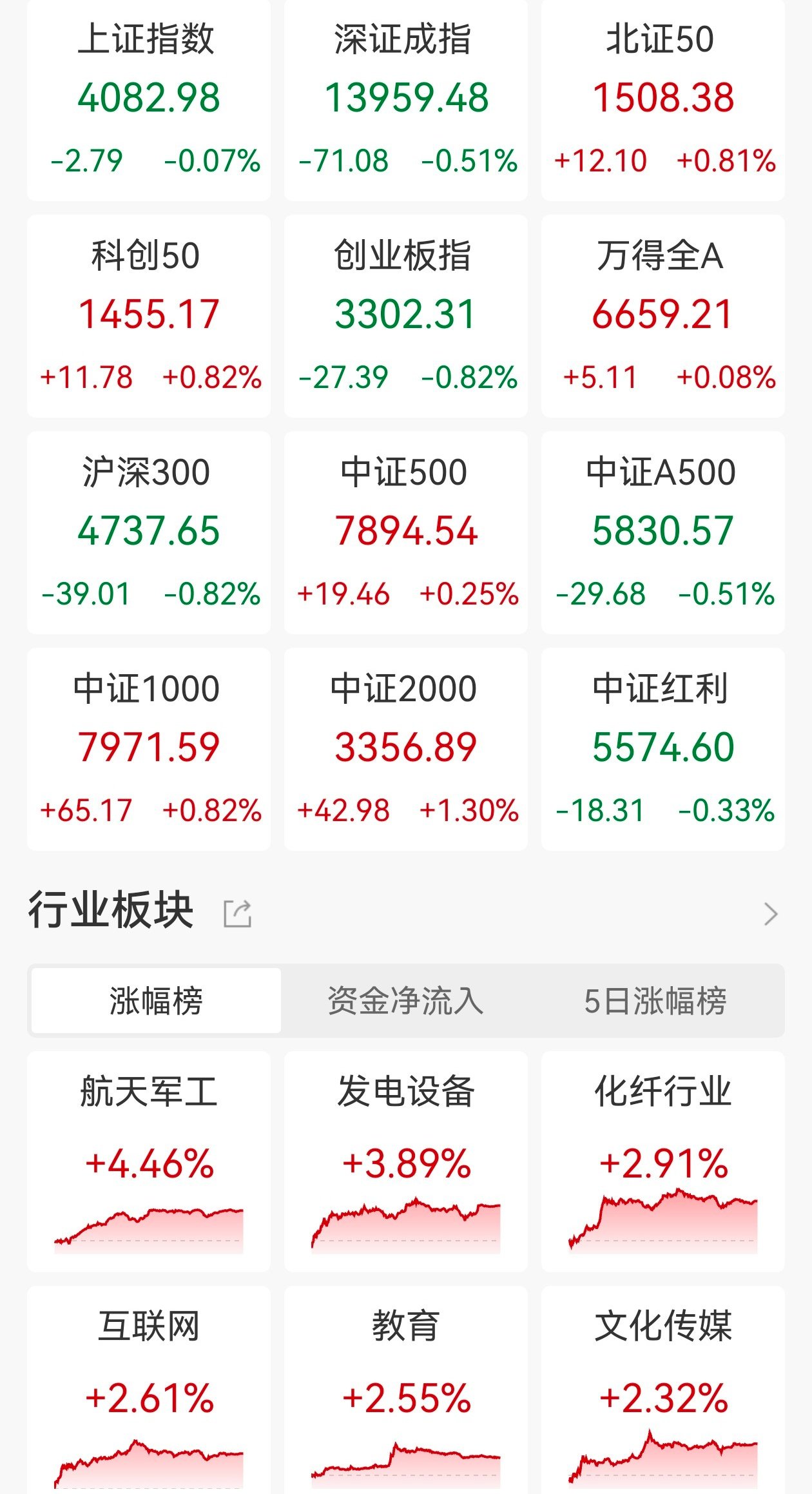
Market Overview - The three major A-share indices experienced fluctuations and closed lower, with the Shanghai Composite Index slightly down by 0.07% at 4082.98 points, marking a 15-day consecutive rise [1] - The Shenzhen Component Index fell by 0.51%, while the ChiNext Index decreased by 0.82% [1] - Total market turnover was 2.82 trillion yuan, a decrease of 568 billion yuan compared to the previous trading day, with over 3700 stocks rising and more than 100 stocks hitting the daily limit [1] Sector Performance - The U.S. significantly increased its military budget to 15 trillion yuan, leading to a surge in military, large aircraft, and aircraft carrier sectors, with multiple stocks such as Hailanxin and China First Heavy Industries hitting the daily limit [1] - The commercial aerospace and satellite internet sectors were actively traded, with stocks like Aerospace Electronics and Tongyu Communication also reaching the daily limit [1] - The brain-computer interface sector saw gains, with stocks like Sairui Medical hitting the daily limit [1] - Sectors related to 6G, controllable nuclear fusion, and AI pharmaceuticals showed strong performance [1] Declining Sectors - The large financial sector collectively retreated, with insurance and brokerage stocks leading the decline, including Hualin Securities hitting the daily limit down [1] - The lithium mining sector experienced a downturn, with Zhongmin Resources dropping over 7% [1] - The CPO concept weakened, with Dekeli falling nearly 7% [1] - Other sectors such as titanium dioxide, small metals, and fluorochemical industries also faced significant declines [1] Top Gainers - The top gainers included sectors such as chemical fibers, aerospace and military, and power generation equipment, with respective increases of 4.46%, 3.89%, and 2.91% [2] - Other notable sectors with gains included education, internet, and cultural transmission, with increases of 2.61%, 2.55%, and 2.32% respectively [2]
竞速未来产业 各地如何抢占新增长极
Xin Lang Cai Jing· 2026-01-07 16:09
Group 1 - The core viewpoint of the articles emphasizes the strategic importance of future industries in the "14th Five-Year Plan" across various provinces, highlighting the focus on emerging sectors such as artificial intelligence, low-altitude economy, and commercial aerospace as key growth areas for regional economic development [1][2][6] - Provinces are leveraging their unique resources and industrial foundations to create differentiated development paths, with examples including Guangdong's focus on "AI + robotics" and Hainan's integration of agriculture, deep-sea, and aerospace [1][3] - The integration of technology and industry is a common theme, with provinces like Beijing aiming to cultivate a leading AI industry ecosystem and Jiangsu focusing on deepening integration within the Yangtze River Delta's aerospace industry cluster [2][4] Group 2 - The articles highlight the importance of regional collaboration, such as the Beijing-Tianjin-Hebei model, which optimizes resource allocation through a cooperative framework, and the Guangdong-Hong Kong-Macau Greater Bay Area, which fosters differentiated policy matrices to support industrial development [5][6] - The need for systemic innovation in mechanisms to support future industries is emphasized, including talent cultivation, technological breakthroughs, and ecosystem development, as well as the importance of capital support from various sources to drive growth in these sectors [7][8] - The articles suggest that achieving successful outcomes in future industries requires not only market-driven initiatives but also precise policy support to facilitate the transformation of research results into marketable products [8]
利好来了!刚刚,八部门重磅发布!
Zheng Quan Shi Bao Wang· 2026-01-07 11:00
Core Insights - The Chinese government aims to enhance the integration of artificial intelligence (AI) and manufacturing, with a target for key AI technologies to achieve reliable supply by 2027, maintaining a leading position globally in terms of industry scale and empowerment levels [5][6] - The initiative includes the development of 3-5 general large models for deep application in manufacturing, the creation of 100 high-quality industrial data sets, and the promotion of 500 typical application scenarios [5][6] Group 1: AI and Manufacturing Integration - The Ministry of Industry and Information Technology (MIIT) and seven other departments released the "AI + Manufacturing" implementation plan, focusing on the collaborative development of smart chips and key technologies [2][3] - The plan emphasizes the establishment of a robust AI model training and inference framework tailored for the manufacturing sector, promoting lightweight model deployment and application in industrial scenarios [2][3] Group 2: Industrial Internet and AI Fusion - The "Industrial Internet and AI Fusion Empowerment Action Plan" aims to significantly enhance the integration level of industrial internet and AI by 2028, targeting the upgrade of at least 50,000 enterprises with new industrial networks [7][8] - The action plan includes the development of a nationwide integrated computing network and encourages the deployment of edge computing devices to improve real-time data processing capabilities [8][9] Group 3: Support for Enterprises - The initiative supports the cultivation of small and medium-sized enterprises (SMEs) specializing in AI, encouraging local governments to provide resources such as "computing power vouchers" to reduce development costs [4][6] - The plan aims to establish a national manufacturing innovation center in the AI field to enhance the supply capacity of key common technologies and promote the development of specialized service providers in industrial data and models [4][9]
竞逐新赛道,都有啥新招?
Xin Lang Cai Jing· 2026-01-04 22:08
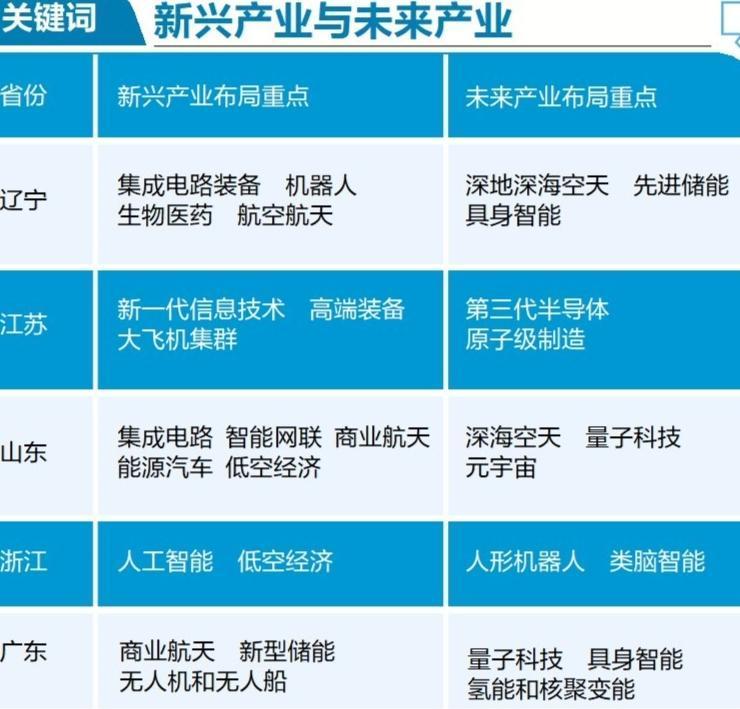
Group 1: Emerging and Future Industries - Various provinces are focusing on emerging and future industries, with specific emphasis on sectors like integrated circuits, robotics, and advanced energy storage [1][6] - Jiangsu aims to deepen integration into the Yangtze River Delta's aircraft manufacturing cluster and emphasizes atomic-level manufacturing [6] - Provinces like Shandong and Guangdong are prioritizing sectors such as quantum technology and hydrogen energy, indicating a trend towards high-tech and sustainable industries [1][7] Group 2: Digital Development - Provinces are actively developing digital infrastructure, with Liaoning focusing on data annotation industries and integrating AI into traditional industries [2][9] - Beijing aims to become a global benchmark city for digital economy, emphasizing core technologies like high-end chips and software [2][9] - Guangdong is enhancing its data trading platforms to foster industrial clusters, showcasing a strong market-driven approach [2][9] Group 3: Marine Economy - Coastal provinces are shifting their focus to marine economies, with Guangdong and Shandong aiming to create comprehensive marine industry ecosystems [8][19] - Liaoning and Jiangsu are leveraging their industrial bases to upgrade traditional marine industries towards high-end and green solutions [8][19] - The emphasis on marine economic development reflects a strategic pivot towards utilizing ocean resources for economic growth [8][19] Group 4: Consumption and Economic Growth - Guangdong is promoting the establishment of international consumption centers, aiming to enhance service industry standards and consumer environments [10][11] - Provinces like Beijing and Jiangsu are emphasizing high-energy consumption innovations, focusing on cultural and tourism integration to stimulate local economies [11][15] - The strategies aim to release local market potential and enhance consumer confidence through improved infrastructure and services [11][15] Group 5: Strategic Technology and Talent Development - Provinces are prioritizing the establishment of national laboratories and major scientific facilities to strengthen strategic technological capabilities [12][14] - There is a focus on integrating education, technology, and talent development to foster innovation and address regional needs [13][14] - Collaborative efforts across provinces aim to enhance the overall effectiveness and resilience of the national innovation system [12][14]
沪指7连阳,跨年行情进行时,关注低估消费
Sou Hu Cai Jing· 2025-12-26 02:09
Core Viewpoint - The A-share market is experiencing a continuous upward trend, with the Shanghai Composite Index recording seven consecutive days of gains, driven by sectors such as commercial aerospace, large aircraft, and satellite navigation [1] Group 1: Market Trends - The macro environment characterized by the Federal Reserve's interest rate cuts and a weakening dollar is expected to create a favorable allocation window for emerging markets represented by A-shares [1] - In 2025, commodity prices, including gold, are anticipated to continue rising, while the narrative around AI remains active [1] - Domestic policies aimed at reducing internal competition are expected to boost military industry enthusiasm, with sectors such as non-ferrous metals, communications, electronics, new energy, and military industry leading the gains [1] Group 2: Future Outlook - Guotai Junan is optimistic about the performance of A-shares in 2026, believing that the "transformation bull market" is not over and that market style will shift towards quality growth [1] - An improvement in the profitability of listed companies is expected next year, along with an expansion in the scale of new market entrants, indicating more pronounced "deposit migration" trends [1] - Looking ahead to 2026, the AI theme is likely to continue, and under the backdrop of policies aimed at boosting domestic demand, undervalued consumer sectors are expected to see fundamental improvements, with a focus on specific ETFs in food and beverage (515170) and tourism (562510) [1]
沪指七连阳 外资看好新兴市场投资机遇
Zhong Guo Zheng Quan Bao· 2025-12-25 21:11
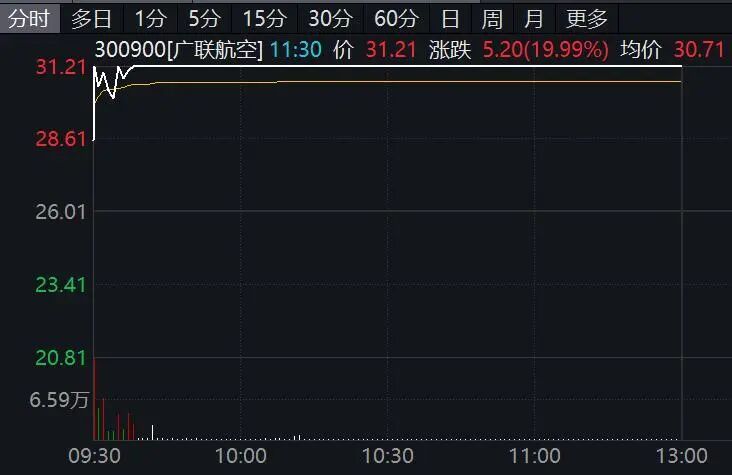
Group 1 - The A-share market continues to rise, with the Shanghai Composite Index recording a seven-day increase, supported by sectors such as commercial aerospace, large aircraft, satellite navigation, and satellite internet [1][2] - The MSCI Emerging Markets Index has shown a cumulative increase of nearly 30% this year, outperforming major US stock indices, indicating a favorable environment for emerging market assets [1][2] - The commercial aerospace sector has seen significant stock price increases, with companies like Superjet Co. and Guanglian Aviation reaching the 20% limit up, reflecting strong market interest and policy support [2] Group 2 - Emerging market fixed income assets have also performed well, with the issuance of hard currency bonds by emerging market governments growing from approximately $700 billion to $1.4 trillion over the past decade [3] - UBS forecasts that with the Federal Reserve's interest rate cuts and a weaker dollar, emerging market assets will present a favorable allocation opportunity [3] - Morgan Stanley's chief equity strategist for China anticipates continued net inflows into the Chinese stock market, highlighting significant opportunities in high-quality companies and sectors aligned with China's 14th Five-Year Plan [4]
300900,秒速20%涨停,A股这一板块批量封板
Zheng Quan Shi Bao· 2025-12-25 04:28
Group 1: Defense and Military Industry - The defense and military sector has experienced a significant surge, with stocks like Guanglian Aviation (300900) hitting a 20% limit up [1][3] - The sector index has reached a new 10-year high, driven by strong performances from various sub-sectors including aerospace and military electronics [3][5] - Geopolitical tensions are escalating, with the U.S. increasing military presence in the Caribbean and announcing plans for new warships, which may further boost the defense sector [5][6] Group 2: Robotics Industry - The robotics industry is witnessing a collective rise, particularly in humanoid robots, with multiple stocks hitting their daily limit up [8][10] - UBTECH announced plans to acquire approximately 43% of Fenglong Co., with a total transaction value of 1.665 billion yuan, leading to a limit up for Fenglong upon resumption of trading [10] - Tesla's humanoid robot, Optimus, is progressing towards mass production, with plans for a million-unit capacity by the end of 2026, indicating a pivotal year for the humanoid robot market in 2025 [11]

充分释放长三角的辐射带动力
Xin Hua Ri Bao· 2025-12-18 07:40
Core Viewpoint - The integration and development of the Yangtze River Delta (YRD) face deep-seated issues that need to be addressed to enhance development quality, efficiency, and radiative impact [1] Group 1: Radiative Power - The radiative power of the YRD is characterized by a dual-cycle mechanism driven by regional potential differences, moving from "unidirectional diffusion" to "bidirectional co-construction" [2] - The spatial structure consists of four layers: core area, surrounding hinterland, other domestic regions, and international associated cities, with Shanghai as the core and Nanjing, Hangzhou, and Hefei as secondary hubs [2] - The radiative power encompasses both tangible (innovation, industry, infrastructure, talent, investment) and intangible (institutional, cultural, data, ecological) dimensions, forming a complete system [2] Group 2: Development Trends - The core area consists of 27 closely collaborating cities, creating a strong synergy [3] - Effective industrial transfer is being implemented to drive surrounding hinterlands like northern Anhui and northern Jiangsu [3] - By 2024, the YRD's trade with "Belt and Road" countries is expected to account for 34.9% of the national total, becoming a key growth pole for trade cooperation [3] Group 3: Tangible Dimension - Over the past decade, more than 800,000 patent transfers have occurred among the YRD provinces and cities, significantly enhancing technological innovation [4] - Infrastructure connectivity is accelerating, with Shanghai and Ningbo-Zhoushan ports forming a global logistics hub [4] - Talent mobility and technology sharing are fostering a virtuous cycle, improving talent capabilities and employment structures in surrounding areas [4] Group 4: Soft Dimension - Shanghai's Free Trade Zone has set 138 breakthrough experiences that have been widely adopted nationwide [4] - Market-oriented reforms in data elements are leading the way, with multiple cross-regional data standards forming the "YRD Norm" [4] - Ecological governance is deepening, with unified environmental standards established in the YRD ecological green integration development demonstration zone [4] Group 5: Real Constraints - The construction of a unified market faces obstacles due to regional differences in market access standards, increasing logistics costs [5] - The radiation methods among cities in the inner circle are rigid, with limited cooperation and fragmented platforms [5] - The radiation effects on outer circle regions need further deepening and expansion, with administrative policies significantly influencing enterprise layout and factor flow [5] Group 6: Enhancement Pathways - To enhance the YRD's radiative power, a collaborative system of "proactive government + effective market + system optimization" is needed [7] - Promoting differentiated development across the four layers and establishing a common data flow community are essential steps [7] - Strengthening the linkage between core cities and optimizing the port resources to create a world-class port cluster is crucial for enhancing resilience [7]
晚报 | 12月18日主题前瞻
Xuan Gu Bao· 2025-12-17 14:37
Group 1: Transformer Industry - The U.S. market is experiencing a transformer shortage due to electricity constraints impacting AI computing power expansion, with delivery times for transformers increasing from 30-60 weeks to 115-130 weeks, and large transformers taking 2.3-4 years [1] - North America is projected to face a hard electricity capacity and energy shortfall by 2026/2027, necessitating accelerated power and grid construction, with transformer demand expected to grow at an annual rate of 30% [1] - Chinese transformer companies are positioned to fill the gap in North America due to their complete supply chain, cost advantages, and UL/CSA certifications, leading to significant growth in overseas orders for leading firms [1] Group 2: Brain-Computer Interface - A significant breakthrough has been achieved in the second invasive brain-computer interface clinical trial in China, enabling users to control devices with their thoughts at speeds comparable to typical smartphone and computer usage [2][3] - The brain-computer interface industry in China is expected to see substantial development by 2025, with a market size projected to exceed 5.5 billion yuan by 2027, and global medical applications potentially reaching $40 billion to $145 billion by 2030-2040 [3] Group 3: Edge AI - ByteDance's Volcano Engine is set to hold a major technology conference on December 18-19, showcasing new AI hardware and tools, which is expected to drive significant growth in the edge AI market [4] - The edge AI market in China is anticipated to grow from under 200 billion yuan in 2023 to over 1.9 trillion yuan by 2028, with an annual growth rate of 58% driven by hardware improvements, application expansion, and policy support [4] Group 4: Sodium Battery - CATL's sodium-ion battery is expected to begin mass production by December 2025, featuring a high energy density of 175 Wh/kg and a lifespan exceeding 10,000 cycles, marking a significant advancement in battery technology [5][6] - The sodium battery industry is transitioning from R&D to commercialization, with 2026 being a critical year for scaling production and shipments [6] Group 5: Aircraft Maintenance - The aircraft maintenance industry in Hainan is experiencing unprecedented growth due to the benefits of the free trade port policy, with maintenance capacity expected to reach around 700 aircraft annually [7] - Hainan's unique geographical advantages and policy incentives are attracting foreign airlines for aircraft maintenance, potentially saving them 10% to 15% in maintenance costs [7] Group 6: Emotional Interaction Robots - Sichuan's humanoid robot "AIQ," designed for emotional interaction, has been launched, utilizing advanced emotional computing technology to enhance human-robot communication [8] - The introduction of "AIQ" is expected to draw significant market attention due to its innovative approach to emotional interaction and communication [8] Group 7: Phosphate Fertilizer - A meeting organized by key agricultural associations in China emphasized the importance of maintaining high production rates of phosphate fertilizers to ensure supply stability and price control [9] - The rising sulfur prices have impacted the phosphate fertilizer market, with significant price increases observed in recent months [9] Group 8: Hard Disk Drives - The mechanical hard disk market is experiencing a price increase of approximately 4% in Q4, the largest rise in eight quarters, driven by renewed demand from the PC market [10] - The shift towards domestic CPUs and operating systems in China is boosting HDD installation demand as users seek reliable long-term data storage solutions [10] Group 9: Satellite Internet - The UK has approved a new regulatory framework for mobile satellite services, allowing mobile network operators to partner with satellite operators for direct satellite connectivity [11] - The satellite communication sector is transitioning from specialized equipment to mainstream applications, with significant potential in emergency services and outdoor operations [11]